


 Claim Ownership
Fitness Business University Podcast
Subscribed: 47Played: 3,067
Subscribe

© 2026 Fitness Business University Podcast
Description
The Fitness Business University Podcast — The #1 Fitness Business Podcast — is the go-to educational show for gym owners, by gym owners. Hosted by Vince Gabriele, a seasoned pro with 18 years in the trenches of the fitness industry, this podcast pulls back the curtain on the real strategies, systems, and money-making wisdom that have helped gyms around the world grow and thrive.
If you’re a Gym Owner or Fitness Entrepreneur ready to get more clients, make more money, and free up your time to do what you love, this is your playbook. Vince delivers a funny, straight-talking, no B.S. approach — no fluff, no theories, just the proven, real-world skills you need to win in business and in life.
517 Episodes
Reverse
Click Here to Learn How InBody Can Help Grow Your Gym:https://inbodyusa.comContact Dorota Directly:[email protected] 414 874511 years. That's how long I've owned an InBody. Thousands of scans, countless fat loss challenges, and a whole lot of conversations with members about what's actually happening inside their bodies. And guys, I can tell you that having a piece of equipment that goes beyond telling somebody how much they weigh has made a big difference in how we run our gym.I brought Trevor and Dorota from InBody onto the podcast to talk about why I believe this technology is one of the most valuable investments a gym owner can make. Because there's a big difference between telling somebody they're making progress and actually being able to show them. We're talking muscle mass, body fat, water distribution, and a whole bunch of other things that your average bathroom scale isn't going to tell you.But here's where things get interesting. InBody isn't just about measuring progress. It's about what you can actually do with that information. Trevor shares how he used InBody to build a nutrition program that helped take his gym from $112,000 to $600,000 in annual revenue. We also get into how gym owners are using these machines to improve consultations, run better challenges, and give people another reason to keep showing up.And we talk about the mistakes, too. I've made plenty of them. Including running fat loss competitions with an old scale that had people crying because the numbers made no sense. We get into how to properly explain InBody results, the new SWYMO software, when it makes sense to upgrade, and why spending thousands of dollars on something doesn't automatically make it a good investment.5 Key Takeaways30 seconds can tell you a whole lot more than somebody's weight. Dorota walks us through what InBody measures, including body fat, muscle mass, and water distribution. We also talk about the five professional devices they offer, ranging from $8,000 to $34,000, and how to figure out which one actually makes sense for your gym.My InBody has cost me about $37 a month over 11 years. I bought my machine back in 2015. We've used it for thousands of scans and more challenges than I can count. I explain why I look at this as a long term investment in my business rather than just another piece of equipment taking up space.Trevor used InBody to help save his gym. He was doing $112,000 a year in a 6,000 square foot facility. After building a nutrition program around InBody testing, he eventually grew to $600,000 in annual revenue and has coached more than 850 nutrition clients. We get into how he made the technology part of his business instead of just something clients stepped on occasionally.One InBody scan changed a gym owner's offer. A member of our mastermind had a trial offer that wasn't getting much attention. He added an InBody scan without changing anything else and told us the response completely changed. I share why this caught my attention and what gym owners can learn from testing one change at a time.43 pounds lost doesn't always tell the whole story. Trevor walks us through a client who lost 43 pounds but also lost 17 pounds of muscle from her previous peak. When she returned to nutrition coaching, she was able to regain 10 pounds of muscle while reducing her body fat percentage. It's a great example of why I think gym owners need to understand what their clients are actually losing and gaining.Click Here to Learn How InBody Can Help Grow Your Gym:https://inbodyusa.comContact Dorota Directly:[email protected] 414 8745
Click Here to get your copy of The Four Stages of Gym Business Mastery:https://4stagesbook.com/I decided to build a turf field behind my gym. Didn't get permits. Didn't ask the landlord. Just started knocking down trees and bringing in truckloads of stone. Next thing I know, I've got a cease and desist order from the town threatening to shut us down. And after all that time, money, and aggravation, we barely used the damn thing.That's what happens when you own a gym but have no idea what your actual job is supposed to be.A gym owner came in for a consulting day recently, and about five minutes into our conversation, he looked at me and asked, "Am I going to be okay?" We were talking about AI, GLP1, the economy, and everything else changing around us. But I started wondering if he was really afraid of those things or if he just wasn't sure he had what it takes to run a successful gym. I've been there, dude.In this episode, Big Tom and I get into the four stages of owning a gym, why the things that got you to $25,000 a month won't necessarily get you to $50,000, and why some owners doing $30,000 a month might be better off working for somebody else. We also talk about a gym owner who went from $8,000 a month to multiple locations, and another who hit seven figures in about 18 months when it took me roughly five years.And yes, the new book is finally done. I actually finished a version with AI six months ago. It sucked. I threw the entire thing out and rewrote it. This is the book I wish somebody had handed me when I was sitting in my office wondering what the hell I was supposed to be doing all day.5 Key Takeaways:The turf field that almost got my gym shut down. After Hurricane Sandy in 2012, I had an idea to build an outdoor turf field. We brought in somewhere between 10 and 20 truckloads of dirt and stone, did a massive construction project, and ended up with a cease and desist order. We eventually finished the field, but it never made us any money. I was busy doing something that had almost nothing to do with growing my business.Why a 10 out of 10 problem doesn't have to feel like a 100. I share a formula I learned from Nick Peterson. Anxiety equals uncertainty times powerlessness. A surprise tax bill creates uncertainty, but the owner with money in the bank is in a much different position than the guy with nothing saved. A 10 times 10 is 100. A 10 times 3 is 30. The goal is to give gym owners more certainty and more ability to do something about their problems.The difference between a $25,000 gym and a $50,000 gym isn't just revenue. Stage one is doing everything yourself. Stage two is being a player coach, where you're still training clients while trying to run the company. Stage three is becoming a general manager. Stage four is getting into the owner's box. These stages change what your job should look like, and trying to operate like a stage one owner forever is how guys end up burning out.Why $30,000 a month might not be worth the risk. A gym doing $30,000 a month generates $360,000 a year. At a 20% profit margin, that's $72,000 in annual profit. You can potentially earn that as a good trainer without taking on the responsibilities of owning a business. Sure, you could run at 40% margins and make $144,000. But in a lot of cases, those margins mean you're still doing most of the work yourself. I want gym owners to make money and have some freedom.The gym owner who hit seven figures in 18 months. Jason Marr had already owned a gym in San Diego that didn't work out. He sold it, moved, and eventually decided to start over. This time, he joined our coaching program before opening his doors. He got a single location to seven figures in about 18 months. It took me around four or five years. The difference wasn't some secret marketing trick. He knew what mistakes to avoid because he'd seen what happened to other owners.Click Here to get your copy of The Four Stages of Gym Business Mastery:https://4stagesbook.com/
2 years into owning my gym, I got a tax bill I couldn't pay. I was ready to quit. I went to my dad and told him I probably should have just gotten a job in finance like everyone else in my family. What he said to me that day changed the way I looked at business.This episode is a little different. It's been 5 years since my dad, Joe Gabriele, passed away. Big Tom and I sat down to talk about some of the things I learned from him. Some of them were lessons he taught me directly. Others were things I picked up just by watching him.My dad was a Wall Street guy. He started his own company, worked his ass off, and helped a lot of people become incredibly successful. I recently went to a reunion with people who worked for him 40 years ago. Think about that. 40 years later, these people are still getting together because of what that company meant to them. There's a lesson there for anybody trying to build a business.We also get into some pretty personal stuff. His stroke in 2017, the unexpected way it changed my career, and what I learned watching him go through some really difficult years. And because my dad was also one of the goofiest guys I ever knew, Big Tom shares a story about him having a conversation with a cardboard cutout.Guys, this one means a lot to me. There are some lessons in here about business, but there are also some things about being a parent, taking care of yourself, and figuring out what actually matters.5 Key TakeawaysThe tax bill that almost made me quit. About 2 years into owning my gym, I was hiring people, spending money, and doing a terrible job managing payroll and taxes. I couldn't afford a tax bill that came due in October. My dad told me I had already proven I was a good trainer. What I hadn't proven was that I knew how to run a business. That conversation changed what I started studying and who I went to for help.The gamble my dad took on Wall Street. In the early 80s, my dad left a successful job and opened his own municipal bond business. He signed a massive lease at what I believe was 44 Wall Street. An electrician came in, looked at the space, and told him he was going to lose his shirt. My dad told him the place would be filled in a month. I didn't have that kind of confidence when I first started. It took me years to develop it.How his stroke helped start my consulting business. In 2017, my dad had a devastating stroke. I spent about 2 months away from my gym helping my family. The business kept running without me. That's when I realized we had built something that other gym owners wanted. That experience helped lead to the consulting business, the books, the mastermind, and this podcast.The thumbs up I'll never forget. After his stroke, my dad couldn't walk, couldn't talk, and needed 24 hour care. But whenever someone asked how he was doing, he'd give a thumbs up. Even near the end of his life. I was reading Viktor Frankl at the time, and it made me think differently about suffering, attitude, and finding meaning when things get really hard.Why a $100 sale isn't worth losing a customer. My brother in law told me about the early days of selling bonds and trying to make a $100 commission. My dad would listen to sales calls and remind him not to chase the single transaction. Build the relationship. Earn the trust. I've carried that into the gym business. You can pressure somebody into a sale today and lose years of potential business because of it.
Click Here to learn more about how I help gym owners:https://vincegabriele.com20 years of owning a gym, and one thing I've learned is that being busy and knowing what you're doing are two very different things.It's easy to get caught up in the day to day. You have a million things demanding your attention. Your staff needs answers. There are decisions to make. And somehow, with all that going on, you can still feel like you're not getting anywhere.That's where clarity comes in. Not another complicated business strategy or another 50 things to add to your plate. I'm talking about getting a better understanding of where you are, where you're trying to go, and what actually deserves your attention.Because, guys, sometimes the hardest part of running a business isn't doing the work. It's figuring out which work matters in the first place.Click Here to learn more about how I help gym owners:https://vincegabriele.com
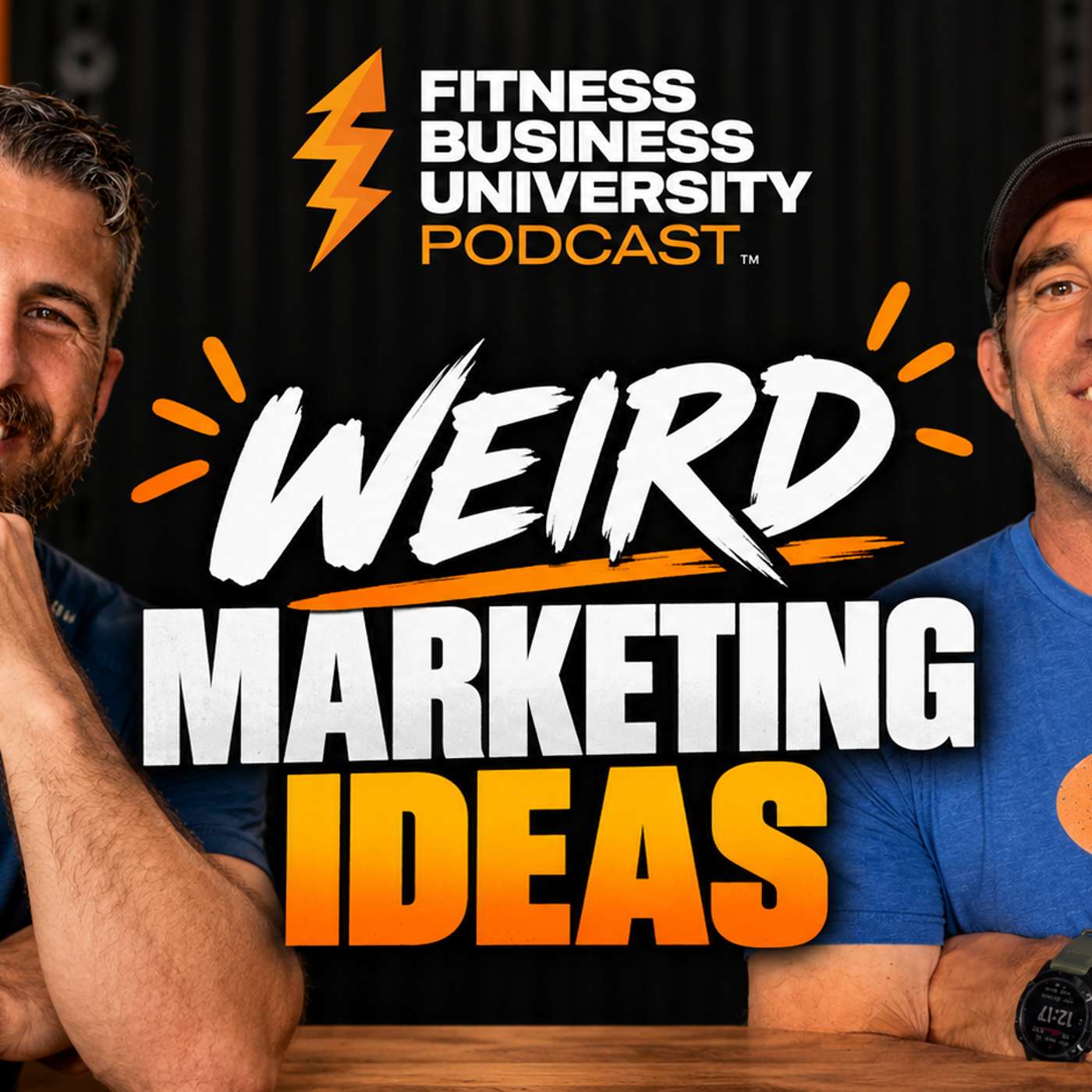
Click Here to get free books and resources to grow your gym:https://www.vincegabriele.com/15% of one gym owner's customers came from BNI. I went to one BNI meeting years ago and hated it. Thought it was boring, weird, and had no interest in ever going back. So naturally, I just had Mike join one. I'll explain why.Facebook ads are getting more expensive, the quality of leads is getting worse, and a lot of gym owners are sitting around wondering what happened. The funny thing is, some of the most successful guys I work with are getting new customers from places most gym owners wouldn't even think to look. Radio stations. Local newspapers. Networking groups. Stuff that sounds like it belongs in 1995.In this one I walk Tom through what I'm actually seeing work. Not ideas I came up with sitting at my desk. Actual gym owners doing these things right now. One guy put together a giveaway with local businesses that ended up generating well over six figures in new business over the lifetime of the leads. Another made a local online newspaper his number one source of new customers. And I've got a couple in Massachusetts who went from $8,000 a month to over $80,000 a month and are now doing something pretty interesting with radio.I also get into how we built our entire sports performance program by changing the way we approached sponsorships. Why I think a lot of gym owners are making a mistake with their Facebook lead forms. And what finally got me excited about our own gym's social media, which, if I'm being fair, was pretty bad for a long time.5 Key Takeaways15% of Tony's customers came from BNI, and I still don't like BNI. Tony is one of those guys who can walk into a room and talk to anybody. I'm not that guy. I went to one of these meetings and wanted nothing to do with it. But Tony told me that 15% of his current customers came from that networking group. That's a pretty significant number. So we had Mike join a local chapter. He might be pissed at me for it, but if it works, I don't really care. The bigger point is that sometimes the thing you personally hate doing is exactly what somebody else in your business should be doing.Bobby and Maria went from $8,000 a month to over $80,000 a month, and now they're doing radio. They own Big Day Fitness in Massachusetts and have done a phenomenal job growing their business. They've got two locations now, and they're testing something most gym owners wouldn't even consider. Instead of just buying commercials, they're going on local radio stations and getting interviewed as fitness experts. They're filming the interviews, cutting them into videos, and putting them on YouTube. The interesting part is that they're seeing more customers come in across all their marketing, not necessarily directly from the radio. And that's something I've been trying to get gym owners to understand for years. People usually need to see you in a bunch of different places before they finally make a decision.Devin Gage generated well over six figures in new business from a giveaway that didn't cost anybody anything to enter. He went around to local businesses and bought gift cards, roughly $50 or $100 each, and put them together into a massive community giveaway. Then he got the participating businesses to promote it to their customers. So instead of just advertising to his own audience, he had all these other businesses helping him reach people. The money came from following up with the people who entered, measured over their lifetime as customers. Devin actually came on one of our mastermind calls and spent about two hours walking us through how he did it. What I like about this is that he didn't invent some revolutionary new marketing strategy. He took a few old ideas and combined them into something that worked.Dustin made a local online newspaper the number one source of customers for his gym. He's in Kansas, and he's been writing a weekly fitness column in the Johnson County Post for years. He educates people, gives them something interesting to read, and includes an offer to come try his gym. That's it. He's been incredibly successful with it. And here's the mistake I think a lot of gym owners make. They'll say nobody reads newspapers anymore because they don't read newspapers. Tom brought up the same thing about radio. But you're not trying to market to yourself. I'm 47 years old now, which puts me right in the middle of our target market. I actually read the local newspaper. When I asked our own members whether they read a publication called Renna Media, they told me they read it cover to cover. So we started advertising in it.We built our entire sports performance program by changing what we asked for in sponsorship deals. Little League teams and local organizations would come to us asking for $250 to put our logo on a banner or the back of a shirt. I never thought that was a particularly good way to get customers. So instead of giving them exactly what they asked for, I'd offer them more money in exchange for three emails sent to their list with an offer from our gym. I'd even write the emails for them. All they had to do was copy and paste. At one point we had around eight of these annual sponsorships going at the same time, with promotional emails going out every quarter. That was how we built our GRIT sports performance program. The organization got the money it needed, and we got something a lot more valuable than our logo on an outfield fence.Click Here to get free books and resources to grow your gym:https://www.vincegabriele.com/

Comments

Download from Google Play

Download from App Store
 United States