


 Claim Ownership
The New School for City Builders
Subscribed: 1Played: 5
Subscribe

© Seth
Description
Welcome to The New School for City Builders, a conversation about how we teach, train, and educate the people who build and steward our cities and towns.
America is struggling: a housing crisis, climate change, forty thousand of our fellow citizens killed in car crashes each year, insolvent city budgets, sclerotic government, an epidemic of ugly buildings and streets and places not worth caring for.
At the end of the day, our cities and towns are only as good as the people who build them and maintain them. If we want to change how our cities and towns work, we need to bring up a new generation of city builders.
buildthenextrightthing.substack.com
16 Episodes
Reverse

Build the Next Right Thing is a reader-supported publication. To receive new posts and support my work, consider becoming a free or paid subscriber.About this episodeWhat if the people running our cities never actually learned how government works, because no school ever taught them?In this episode Seth Zeren talks with Daniel Golliher, founder of Maximum New York, a for-profit civics school that teaches New Yorkers how their city and state government actually works. Daniel made the case in his essay “Political Science Degrees Must End”: undergraduate government programs are à la carte baskets of unrelated classes that start with what government ought to be, while skipping the “governmental mechanics” of what it is and how its pieces fit together.They talk about why Daniel holds his students to a 95% midterm and a 90% final, why every student memorizes “The New Colossus,” draws the five boroughs from memory, and sits in on night court and an NYPD ride-along, and why he tested his material at comedy open mics. Daniel also lays out his three-part definition of the liberal arts, explains social technology, makes the case for building a school on the market rather than inside a university or a nonprofit, and previews Maximum New York’s next phase: training better partisans in both parties, starting with his own switch to the Republican Party.LinksDaniel’s writing* Maximum New York, Daniel’s Substack on New York government and politics* The Algernon Project, Daniel’s Substack on the humanities and education* Political Science Degrees Must End, Daniel Golliher (and his follow-up on responses and feedback)* The Decline and Fall of the Humanities?, Daniel Golliher, The Algernon Project* What is a Sanctuary City?, Daniel Golliher* What Are Mayoral Executive Orders?, Daniel Golliher* Citizens Who Build, Daniel Golliher, on civic culture and social technology* Applications are Open for Foundations of New York, Cohort 16, the class Daniel describes* Considerations on Party Affiliation, Daniel Golliher* Introducing: Maximum Republicans, Daniel GolliherBooks and poems* The New Colossus, Emma Lazarus* Gone with the Wind, Margaret Mitchell* Preamble to the United States ConstitutionPeople, organizations and programs* Harvard Department of Government, where Daniel studied* Harvard Kennedy School and Harvard Law School* City University of New York (CUNY)* Leslie Groves, military director of the Manhattan Project* AARP, the model for Daniel’s proposed American Association of Young PeopleBuild the Next Right Thing is a reader-supported publication. To receive new posts and support my work, consider becoming a free or paid subscriber.TranscriptSeth: Hello and welcome to the New School for City Builders. I’m your host, Seth Zeren, a recovering city planner turned neighborhood developer in Providence, Rhode Island. This is a podcast about how we can transform the education of city builders. If we want to change how our cities and towns work, we need to change the people who run them. We need a new generation of city builders: architects, engineers, planners, developers, city managers, and civic leaders. We need a new school for city builders.Today I’m joined by Daniel Golliher. Daniel is the founder of Maximum New York, a new kind of civic school in New York City. Daniel writes on Substack at Maximum New York, where he writes spicy takes like “Political Science Degrees Must End,” deep inquiries on the decline and fall of the humanities, and nuts-and-bolts explainers on how government systems work, like what a sanctuary city is and what mayoral executive orders are. I’ve wanted to have Daniel on for a while because I love what he’s created at Maximum New York.It’s a new kind of civic school outside of traditional academia. But I also think it highlights the very important role of knowing how government works if you want to be a city builder. It’s not enough to build good buildings and good cities and good towns. You have to be able to run them, which means administration, management, stewardship, writing laws, running agencies. You have to do all of that. Daniel, welcome to the New School for City Builders.Daniel: Thank you for having me on. Happy to be here.Seth: It’s very exciting. What’s the matter with poli sci degrees?Daniel: I think the first thing you can ask is: what can students do, and what can’t they do, at the end of one? If you plucked any political science graduate from any university (they might call it something different, like a degree in government) and asked what they can do or what they know, it won’t be much in either case. If you gave them, say, a 500-question test, not multiple choice, just write the answer, on the basics of government at every level (their local government, their state government, their federal government, very basic political history, what their government is, how its foundational procedures work), I think you would have well under a one percent pass rate. And almost no one would get a mark of mastery, ninety percent or above, which shows they really know how it works. So in the first instance, you can know them by their fruits: their graduates do not know much about the government. This is pretty easy to verify if you talk to any of them.So why is that true? Some of the reasons are bound up in the decades-long evolution of the modern university itself, which I think we’ll talk about later. But the more proximate cause is that the degrees are not built to help people understand the government. They have an à la carte structure. Practically speaking, what most students experience is a basic set of degree requirements, often not much, and very broad: take one class in international relations, one in American government, one in comparative government. The classes don’t necessarily relate to each other. They’re often at wildly different levels of complexity, and they don’t incorporate the spiral theory of knowledge, which just means encountering the same idea in an increasingly complex context, over and over, in a wider purview, so you understand it more and more. Students are really just taking a random basket of classes that don’t relate to each other, so they can’t build mastery.Seth: You were at Harvard as an undergraduate. I’ve heard of it. It’s an okay school.Daniel: It’s a small liberal arts college in New England.Seth: And what do they call it there?Daniel: It’s called a government degree.Seth: And your experience was that you came in expecting someone to show you how the Massachusetts state government works, how the state agencies work, how the federal government works...Daniel: How these things knit together.Seth: How they knit together. How a bill moves through, how the politics works, how the different agencies interact, who the different officials are, what they’re in charge of, and how they’re selected. All of what you call governmental mechanics: the actual nuts and bolts of how the thing works. If you were an engineer learning how cars work, you’d have to learn what all the parts are and how they interact, maybe the history of how we got those parts and the regulations they operate under. You have to build up a body of basic knowledge about how the system works. Then you might also do some comparative work: how is Massachusetts different from Connecticut, from Texas, from California, from France? That gives you a comparative framework for understanding different ways of running governments. But your experience was that you didn’t get any of that, so you had to make it for yourself. How did you navigate that?Daniel: Of course Harvard has a lot of courses to take. You could cross-register at the graduate schools, the law school, the Kennedy School of Government. People will often say you could have just done that. I generally have two responses. First, why don’t you just put those classes in the undergraduate degree? The undergraduate degrees are still missing this completely, so the point has been conceded. Second, those other schools still don’t have the classes I’m talking about. I emphasize that by saying the classes I teach in New York City have lawyers and even law professors in them. I have not gone to law school, but I’ve spent plenty of time at them, with active students and with people who have graduated. The schools don’t offer the mechanical experience I’m talking about.How I did it was, I didn’t really, not until after. When I got to Harvard, I realized pretty quickly what I wasn’t getting and that it really wasn’t on offer. I wanted a rigorous technical understanding of the government, the interlocking components at all three principal levels, and you can’t find those classes. So I explored these topics myself on the side, while taking great advantage of what the university did offer, which I think set me up very well to learn governmental mechanics after the degree.For example, I took a class on the political theory of the American Revolution. One of the things you could learn there is how statutes were made in the early republic, which gave me great background to appreciate what statute-making is now. You mentioned comparative government. You can compare across governments now, but you can also compare to government in the past to understand how things work today. There weren’t great comparative governmental mechanics classes, but there were great history classes that taught how government used to work. By comparison, you can still get a robust grip on, say, the nuances of statute if you get a good grip on them historically. And I did get a good liberal education: a good grounding in history, an understanding of what that field means, and an understanding of how the American Republic developed. That set me up well to get into the detail later.Seth: We’ve touched on several threads we’ll come back to. Now you’ve built this new civics education program, and instead of poli sci you call it governmental mechanics. What’s your pitch for governmental mechanics as an alter
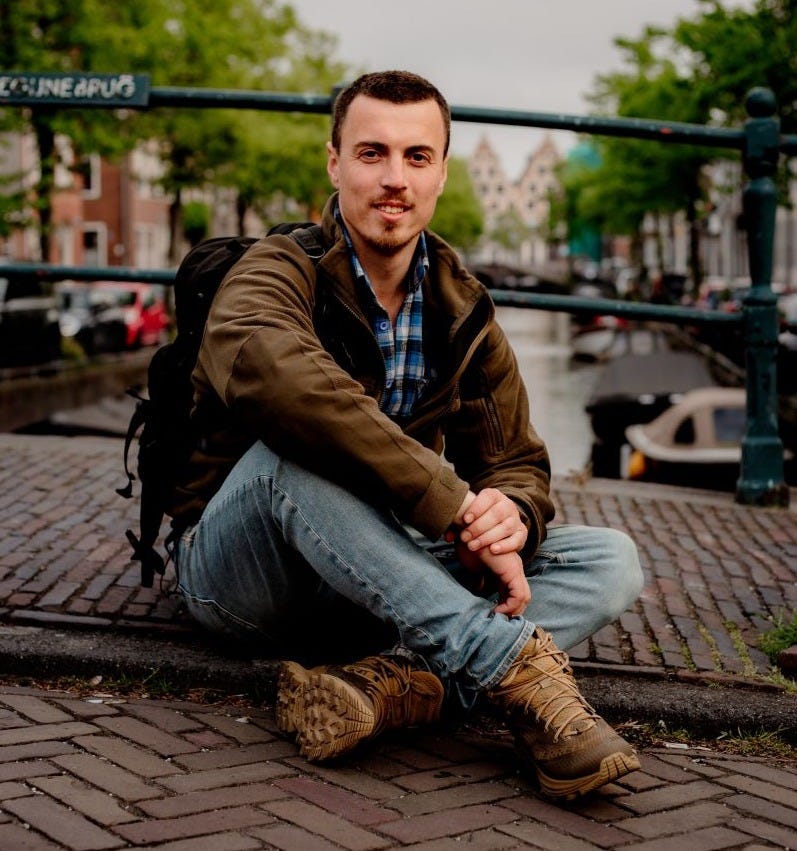
About this episodeWhat if the reason American streets keep getting built wrong isn’t that engineers are careless, but that a whole profession is missing from the room?In this episode Seth Zeren talks with Steffen Berr, a civil engineer trained in California who moved to the Netherlands to learn and practice in a human-centered transportation system. Steffen made the case in his essay “America Has No Transportation Engineers”: in the Netherlands, transportation engineers and civil engineers are educated on separate tracks and work side by side, while in the US, civil engineers inherit transportation decisions they were never trained to make, so those decisions end up hard-coded into manuals.They talk about why “double it for safety” fails on roads, how outsourcing spreads responsibility until no one owns a project, the role of professional licensure, how Steffen talked his way into a Dutch firm by learning Dutch in seven months, and why Morgan State University’s transportation engineering program is worth a look. Steffen also walks through a redesign of a crossing near Sacramento State, shares what he learned serving in Ukrainian air defense, and previews his forthcoming book on the science of movement.LinksArticles* America Has No Transportation Engineers, Steffen Berr, Next City (also republished by Strong Towns)* American-Dutch engineer calls out root problem with American DOTs, Streetsblog USA profile of SteffenBooks* Paved Paradise: How Parking Explains the World, Henry Grabar* Recoding America, Jennifer Pahlka* The High Cost of Free Parking, Donald Shoup* The Death and Life of Great American Cities, Jane Jacobs* On Movement, Steffen Berr (forthcoming working title)Organizations and programs* Arcadis, the consultancy where Steffen worked as a designer* City of Haarlem, where Steffen worked as a traffic advisor* Strong Towns, founded by Chuck Marohn* Morgan State University, Transportation & Urban Infrastructure Studies, home of an ABET-accredited B.S. in Transportation Systems Engineering* Sierra College and Sacramento State, where Steffen studied* ASCE Mid-Pacific Student Symposium, the student competition Steffen mentions* ASCE “Raise the Bar” (Policy 465), the push to require a master’s degree for licensure* HS2, the UK high-speed rail project* Not Just Bikes (YouTube)* BicycleDutch, Mark Wagenbuur* Jonathon Stalls / Pedestrian DignityBuild the Next Right Thing is a reader-supported publication. To receive new posts and support my work, consider becoming a free or paid subscriber.TranscriptSeth: Hello and welcome to the New School for City Builders. I’m your host, Seth Zeren, a recovering city planner turned neighborhood developer in Providence, Rhode Island. This is a podcast about how we can transform the education of city builders. If we want to change how our cities and towns work, we need to change the people who run them. We need a new generation of city builders: architects, engineers, planners, developers, city managers, and civic leaders. We need a new school for city builders.Today I’m joined by Steffen Berr. Steffen is a civil engineer who designs transportation infrastructure to connect communities. Steffen has a BS in civil engineering in the US, but then moved to the Netherlands to learn and work in a human-centered transportation system. Steffen, welcome to the New School for City Builders.Steffen: Thanks so much for having me. I would say I’m still a recovering American civil engineer, but I became a Dutch transportation engineer.Seth: That’s going to be really interesting to talk about, that transition. The reason I reached out to you is you wrote a piece, maybe a couple of years ago now, for Next City entitled “America Has No Transportation Engineers.” That’s a spicy take. What do you mean?Steffen: That title is something that I thought about for a very long time when I was writing this, because I was trying to come up with how I could describe the problem in just a single sentence. I wrote this article after I had worked in the Netherlands for around two years. I’d worked for the private company Arcadis, which is a Dutch company that does civil engineering work and transportation work for Dutch cities as a private consultant. And then I was also working for the City of Haarlem, I believe, at the time.Working in the profession, I worked in the US industry, I worked in the Dutch profession, and I just noticed how projects were handled differently: the phases that projects would move through, how people would work on it. It differed quite a lot from my experience in the US. There’s lots of arguing in the US, and people say, “Man, these guys are uneducated, they’re stupid, they’re out of touch,” or “They’re bought by the car lobby,” or something like this. And I thought there’s a more fundamental issue here. How do I describe it?The conclusion I came to was that there’s a completely missing profession in the whole project delivery process in the United States. In the Netherlands, you have both transportation engineers and civil engineers working on projects at the same time. Whereas in the US, it seems like you only have civil engineers, not really any transportation specialists.It’s kind of like if you’re trying to build a building and you have a structural engineer and you don’t have an architect. That’s where so many of the issues in these transportation projects come from: there’s truly not a transportation expert who works on these projects. And the reason that these transportation experts don’t work on the projects is that we are not producing them at the university level, because there’s no separate education track for them.It was never about trying to call somebody unqualified or stupid. It was just saying people are trying to do something they haven’t been properly prepared for, and how could anybody do it if they haven’t gotten the proper qualifications? So it’s not necessarily a criticism of the civil engineers. It’s just saying that you need a civil engineer and you need the transportation engineer, and the transportation engineer is missing.Seth: That’s really interesting. Civil engineering as a concept, I’ve talked with other folks about this, comes out of the division between military engineering and civil engineering. The military engineers build the forts, civil engineers build the bridges and the roads, and so civil engineering as a discipline has come up as the civil side of building stuff. And today, if you go to a civil engineering program in the United States, there are a few different “specializations,” in air quotes, that you can do, but it’s generally a very generalist education. Everyone’s expected to take structures, everyone’s expected to take geotechnical, everyone probably has to take highway engineering; there’s that one class that people will take. Walk us through the different specializations that do exist in American civil engineering and why that’s not adequate preparation for what you’re describing as an alternate role.Steffen: Civil engineering has five classical subfields, as the US system is set up: transportation, structures, environmental, water resources, and geotechnical. Geotechnical focuses on foundations, retaining walls, things like this; soil is the most complex material in the world. Transportation is anything having to do with roads and streets. Structures is anything to do with upright structures. Water resources has to do with dams, aqueducts, things like that. And environmental engineering has to do with handling environmental issues on a large scale, like how to decontaminate a construction site. For example, if you had an army base with lots of toxic chemicals, how do we engineer the environment to make it safe again for other uses? So those are the classic five.I think you actually hit on something when you said a civil engineer will take highway engineering, and that goes to show you a lot. A civil engineer is going to know a lot about how to build the structure of the road itself: where the drainage pipes go, where the culverts go, what the slope of the road is, what the cross section of the asphalt surface is, how thick certain layers need to be. But what you’re not learning about is the nature of what’s using the road, and how the road itself needs to be configured in relation to everything else.Civil engineers take introduction to highway engineering, but in this class you’re not learning where highways are supposed to go. Are highways supposed to run through cities? What impact do highways have on cities? Are highways a better solution? Why only highways? If you make everything based on highways, maybe you’ll think of all roads as highways.In a way, you kind of answered the question right there: there are all of these pre-questions that need to be figured out before you even start building your road, and you need a professional to set them up and solve them. Instead of that phase, all these assumptions get made instead, for example that traffic will always grow, more roads are always better, wider is always better, and they get written into codes. So all of this real transportation engineering ends up basically getting automated and coded, and then the civil engineer takes over. A lot of times people yell at the civil engineer, but the real issue is upstream, where all of this has been automated because we’re missing the person who’s supposed to do this work.Seth: Right. If you’re an architect or a developer designing a building, you’re going to hire a structural engineer to make sure it doesn’t fall down. But you’re giving the structural engineer direction on how big it is, mostly what it’s made out of, and what uses are going into it. You’re giving them a bunch of parameters, and those parameters come from an awareness of a bunch of other values (economic values, user values, aesthetic values) that the engineer designing the structure doesn’t really have to pay attention to. They’re just saying, “I have to build this envelop

Seth Zeren talks with Will McCollum (architect, urbanist, and founder of Citymakers Collective) and Christine Franck (architect, educator, and author; first executive director of the Institute of Classical Architecture & Art) about what it means to be a "city builder," the gaps in professional design education, and the story behind Citymakers Collective's Summer Studio — the urban-design intensive Will and Christine built together, in partnership with INTBAU USA.Build the Next Right Thing is a reader-supported publication. To receive new posts and support my work, consider becoming a free or paid subscriber.Organizations & Programs Mentioned* Citymakers Collective — citymakerscollective.org — Will’s organization; runs the two-week Summer Studio* Clever Communities Workshop — citymakerscollective.org/clever-communities-workshop — New economic-development workshop, Dallas area, September* INTBAU (International Network for Traditional Building, Architecture & Urbanism) — intbau.org — Global network; celebrated 25th anniversary in London* INTBAU USA — intbauusa.org — US chapter; co-organizes the Summer Studio with Citymakers Collective* Institute of Classical Architecture & Art (ICAA) — classicist.org — Christine’s former organization; runs its own summer program since 1992* Congress for the New Urbanism (CNU) — cnu.org — Referenced throughout as a hub for New Urbanist practice* (New) Urban Guild — urbanguild.org — Christine is a founding member* The King’s Foundation (formerly the Prince of Wales’s Institute of Architecture / The Prince’s Foundation) — kings-foundation.org — Ran the first traditional-architecture summer school in 1990* University of Colorado Denver, College of Architecture & Planning — architectureandplanning.ucdenver.edu — Christine established a research center here* Georgia Tech School of Architecture — arch.gatech.edu — Will and Christine both taught/studied here* Tulane School of Architecture — architecture.tulane.edu — Will’s graduate program (real estate development + M.Arch)* University of Notre Dame School of Architecture — architecture.nd.edu — Referenced as a model of a distinctive, non-mainstream program* Lew Oliver / Whole Town Solutions — wholetownsolutions.com — Will’s early mentor in New UrbanismBooks Recommended* How Buildings Learn: What Happens After They’re Built — Stewart Brand (Christine’s pick) — Penguin Random House* Against the Machine: On the Unmaking of Humanity — Paul Kingsnorth (Christine, currently reading) — Penguin Random House* The Image of the City — Kevin Lynch (Will’s pick) — MIT Press* The Art of Building Cities — Camillo Sitte (Will’s pick) — overview; currently in print via Martino Fine Books, among other reprint editions* Architectural Principles in the Age of Historicism — Robert Jan van Pelt & Carroll William Westfall (Christine’s pick) — Yale University Press, via GoodreadsAlso Referenced* Windsor Forum on Design Education: Toward an Ideal Curriculum to Reform Architectural Education (New Urban Press, 2004) — proceedings of an April 2002 gathering of architecture educators in Windsor, FL, including Christine’s own contribution. Christine’s write-up · CNU book review* The Boyer Report (Building Community: A New Future for Architecture Education and Practice, 1996) — mentioned in connection with the Windsor Forum as a landmark study on design educationThe New School for City Builders — Will McCollum & Christine FranckSeth: Hello and welcome to The New School for City Builders. I’m your host, Seth Zeren, a recovering city planner turned neighborhood developer in Providence, Rhode Island. This is a podcast about how we can transform the education of city builders. If we want to change how our cities and towns work, we need to change the people who run them. We need a new generation of city builders — architects, engineers, planners, developers, city managers, and civic leaders. We need a new school for city builders. Joining me today are Will McCollum and Christine Franck.Will is an architect and urbanist based in Boston and the founder and driving force behind the City Makers Collective and its summer studio, which just wrapped up its second summer a few weeks ago. We heard about the summer studio from Sarah Biga and Jack Duncan in episode two, and we’re excited to get a behind-the-scenes look at how that got created. Christine Franck is an architect, educator, and author living in Denver, Colorado, and was instrumental in helping launch the summer school. Christine has a long history as an educator and leader in classical and traditional architecture and urbanism, including serving as the first executive director of the Institute of Classical Architecture and Art, which also runs its own great summer school; as a founding member of the Urban Guild; and as a founding member and chair of the USA chapter of the International Network for Traditional Building, Architecture and Urbanism — better known as INTBAU.Will, Christine, welcome to The New School for City Builders.Christine: Thanks for having us, Seth. It’s nice to be back together with Will — we just spent two weeks in Charleston, as you know, so this feels a little like a reunion.Will: Yeah, it’s lovely to be here. Thanks.Seth: It’s a nice place to get to spend a couple weeks with friends looking at cities and buildings. So let’s start with both of you: I use the term “city builder” a lot — it’s the name of the podcast — and I’m curious what that means to each of you. Christine, why don’t we start with you?Christine: Sure. A city builder — city building, I think in a way, Seth, strikes me as distinct from placemaking. Placemaking’s good, but city building — and I’m familiar with your work and some of your ideas — I think is ultimately not merely about the mechanisms that are in place that create our cities, but that we’re actually creating the cities themselves: the civitas, the community of people who live in a place, who make a place theirs, who own their place. So it’s about the making of the city, not as a physical place, but as an entity within people’s communities. That’s what I think of as city building, and it’s what I hope I’ve always contributed to in my career as an architect and educator.Seth: I love that — the city is not just some buildings, it’s also the people who live within it.To be a city builder, I see it as — there are these city-building professions, right, that become these professional silos: architecture, planning, engineering, development. But to bring those together, and to think about them not just as building a physical place that we call the city, but also the broader community, the institutions, the business models, how you actually run this place... I feel like when I encounter students who see this larger vision, but then they go through professional education, they feel like they’re getting some partial, very thin experience. So, Christine, from your perspective, what does a young person need to learn in order to become a great city builder?Christine: I think, Seth, in many ways, one of the most important things a young person can do is actually just get involved with their community. I think we go through education, and so much of our university educations today are skills-based — it’s as if you’re going to university to get a degree in order to get a job. And I think that loses the idea of what a university education is meant to be, which is a very broad education. You might have a little bit of philosophy, a little bit of history, you might begin to think about what you want to specialize in. I really encourage students that I mentor to take a very broad career path and degree at the undergraduate level, and then, if they need to for professional certification — like becoming an architect — to specialize in a master’s program where they can make a very conscious choice.But I think this idea — and I know you’re concerned about this too — of the siloing of the professions... really getting involved with your community at whatever level that is. Will and I may share a story about one of our students on the summer program who is just recently out of high school and has created a group and is advocating for change in his city.I think the other thing I find with education is that students often come to me or to colleagues saying, “What do I need to learn? How do I do this?” And the fact of the matter is, people like myself, who got interested in these ideas thirty, forty years ago — we taught ourselves. No one is coming to rescue you. You kind of have to pick up, as Will has done with his colleagues at City Makers, as we did with INTBAU, as we once did with the Institute — you just have to pick up and do what you think needs doing. I’ll stop there.Seth: I think one of the things I’ve observed too is that in some sense people still feel like they need permission — they need the credential to work. And one of the things I’ve noticed when I’ve traveled and worked internationally is that that hasn’t been true in all places and all times. It used to be the case that many people would just do stuff, and it might be a very small scale — it might just be building something on their street: a wall, a shrine, a well, a market. It was just at this very incremental level, and it didn’t need to have imprimatur and all this history. That’s the meaning of vernacular urbanism, vernacular design and creation.So, for you, Will — what does it mean to be a great city builder, and what does a young person need to be learning if they want to walk this path?Will: I think a great city builder is active in their community. Like Christine was just saying, they take an active role in the creation of their own place. When we formed City Makers Collective, with “City Maker” similar to “City Builder,” we were really intentional with that phrase because we wanted to be inclusive of all of the people who touch the built environment. I think a lot of times in discussions about cities we’re focused on urb
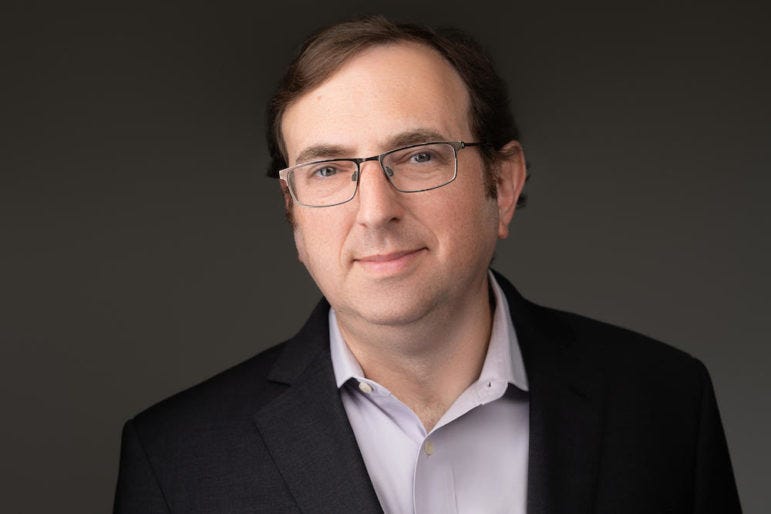
SummaryIn this episode of The New School for City Builders, host Seth Zeren talks with George Proakis, city manager of Watertown, Massachusetts, about the winding educational path that shaped his career — from a civil engineering degree at Northeastern, to a master’s in public administration at Syracuse’s Maxwell School, to a master’s in city planning at MIT. George traces his rise from associate planner in Lowell to planning director in Somerville to city manager in Watertown, reflecting along the way on what actually prepares someone to lead a planning department or run a city: budget and personnel management, patience, team-building, and — a theme he returns to again and again — the value of pairing policy training with real design education. He also talks about teaching Planning in the Built Environment at Northeastern, what he’d change about city-builder education if he could start from scratch, and the growing crop of planners-turned-city-managers reshaping local government.Referenced Organizations* Congress for the New Urbanism (CNU) — national organization mixing planners, architects, developers, and engineers* CNU New England — the regional chapter George has been involved with since it started* International City/County Management Association (ICMA) — professional association for city and county managers* MIT Department of Urban Studies and Planning (DUSP) — where George earned his master’s in city planning* Syracuse University Maxwell School of Citizenship and Public Affairs — where George earned his MPA* Northeastern University — Urban Planning and Policy, MS — the program George now teaches in, alongside Northeastern’s civil engineering program where he did his undergrad* City of Watertown, MA — where George currently serves as city manager* City of Somerville, MA — where George spent 12 years, the last three and a half running the planning and development department* City of Lowell, MA — George’s first planning job, and where he later served as chief plannerReferenced Books* Marc J. Dunkelman, Why Nothing Works: Who Killed Progress—and How to Bring It Back (PublicAffairs, 2025)* Ezra Klein and Derek Thompson, Abundance (Avid Reader Press, 2025)Full TranscriptSeth: Hello and welcome to the New School for City Builders. I’m your host, Seth Zeren, a recovering city planner turned neighborhood developer in Providence, Rhode Island. This is a podcast about how we can transform the education of city builders. If we want to change how our cities and towns work, we need to change the people who run them. We need a new generation of city builders — architects, engineers, planners, developers, city managers, and civic leaders. We need a new school for city builders.Today I am joined by my good friend George Proakis. I met George back when I was a zoning planner in the Boston area, and he was the planning director for Somerville, Massachusetts. We would get together with the zoning planner for Cambridge and commiserate at an Irish pub. George is one of the planners I respect most. He’s an expert at both the technical and political aspects of the job, and a true example of a city builder on the public side.Today, George is the city manager for Watertown, Massachusetts, where he oversees all aspects of the city’s daily operations. He also teaches planning and the built environment at Northeastern University. Today, George and I talk about his education, his career trajectory, and glean some valuable nuggets of wisdom about how to become a great city builder. George, welcome to the New School for City Builders.George Proakis: Thank you. Thanks, Seth, for having me — it’s great to be here.Seth: It’s a real pleasure. So, George, how did you become a planner in the first place? What was your educational journey?George Proakis: My educational journey meandered through a couple of steps that landed me in the spot where I probably should have known I’d end up from a very early age. But nonetheless — I first thought I wanted to be an engineer. I went to undergrad at Northeastern for civil engineering. Northeastern’s great: they have a co-op program that lets you work in the real world. I did a minor in political science alongside the engineering major, and I worked three different engineering jobs during my time in school.The one clear lesson that came out of that whole experience was that I wasn’t supposed to be an engineer. I was always more interested in the policy questions behind the work. You learn transportation engineering as an engineering discipline, but I was the one in class pushing the social science questions.Seth: What about it was a bad fit for you?George Proakis: Well — what’s the policy that determines whether or not we build more bike lanes? What’s the real reason we’re doing this highway? Is it just because somebody ran the numbers, or did someone decide beforehand that this project was more important than another? Who’s that person, and what role are they playing?Seth: I feel like there was a moment in your class where you kept using the word “should,” and the professor said, “In this class, we don’t talk about shoulds. We’re not making value judgments here, George.”George Proakis: Yes. And the interesting thing was, I concentrated on the transportation side, and if you look across the engineering disciplines, transportation engineering is unique — you’re applying a lot more value judgment, even social-science-level questions, to your decision-making. It’s also the only engineering discipline where, once you get deep into the numbers, you’re actually trying to predict human behavior rather than something purely scientific.If you specialize in structures, your focus is on how the concrete holds up — sure, there’s some judgment in how much weight it needs to bear, but it’s still concrete. When you move into transportation, it’s about how many people will take a right and cut down a side street if a light is too slow. Suddenly you’re predicting human behavior, and that’s a different world than the rest of the engineering skill set.Seth: Yeah.George Proakis: It was fascinating, though. I had great professors and a strong engineering background. My conclusion at the end of that program was simply that I didn’t want to be an engineer. So I decided to get a master’s in public administration at Syracuse — a one-year, focused program where public management and that kind of engineering work come together.I left there with a job in Syracuse, working for a research company doing alternative energy and environmental policy — really interesting stuff. I did that for about three years. By the end, we were focused on two things: bringing electric vehicle companies to upstate New York, where we were about twenty years ahead of our time since no one was really building EVs yet, and encouraging the growth of the corn ethanol industry to support upstate New York farms — a fascinating economic development challenge in its own right.But rural economic development in farm country probably wasn’t the right fit for me. At some point I moved back to Boston, because it was home and where I wanted to be. I landed in the Fenway neighborhood, which is where my community-activist streak started. I got involved in some things there, got really interested in planning, and decided I wanted a master’s in planning. I did the program at MIT — which is how I ended up with two master’s degrees, one in public administration and one in planning.Seth: Double threat — no, triple threat: engineer, public administrator, and planner. That’s a real superpower mix. So what was your first planning job, once you had the degree from MIT?George Proakis: My first planning job out of MIT was associate planner for the city of Lowell. Half of that job was long-range planning — they were doing a comprehensive plan, a zoning overhaul, and neighborhood plan work. The other half was managing the projects coming before the planning board, which to this day I’ll tell people is the best first planning job anybody can have.If you’re sitting there processing projects moving through the zoning code — site plans, special permits, variances — meeting with people who say, “I want to do this on my lot,” or “I want to tear this house down and build twenty-two units — can I do that? Do the rules allow it? Does the land allow it? Will the neighbors allow it? Will the board allow it?” — working through those problems is a genuinely challenging way to learn every aspect of planning. I’ve always said that from that job you can jump into almost any other planning role, which is exactly why it’s such a valuable first one. That’s what I did for my first two years out of MIT.Seth: That’s what I did in my first planning job too, and then I jumped to the dark side and became a developer. So it’s a wide-ranging foundation for a lot of paths in city-building.George Proakis: Right — you can do that job for a couple of years and then jump to becoming a developer. Or spend a couple of years and move into affordable housing. Or get more involved in urban design projects. Or jump to the private sector and help rewrite zoning, because you know how it works. Or, if you’ve got an MPA like me, you can get promoted fairly quickly into managing people — which is what happened to me.Seth: So how did you get yourself promoted? You were a frontline planner in Lowell, and then at some point you became the director there, right?George Proakis: Yeah. I ended up director of the planning and zoning team, and then took a deputy director role over the whole community development and planning department. So I got two promotions during my time there. The first was to run the team I’d already been a member of — I got it mainly because the people above me were promoted and a spot opened up, and I applied and had the chance to step into it. I do think one of my advantages at that moment was having both the public administration degree and the planning degree — that combination made it easier to step in

Show NotesIn this episode, Seth talks with Sheinya Joseph — architectural designer at Dover, Little Diversified Architectural Consulting and president of the Emerging New Urbanists (ENU) — about her path into architecture and urbanism, what her education did (and didn't) prepare her for, the programs ENU runs for young professionals, and what a truly interdisciplinary school for city builders might look like.* Emerging New Urbanists (ENU) — website · The ENU Exchange on Substack* Dover, Kohl & Partners — Miami-based town planning firm where Sheinya did her first internship * Little Diversified Architectural Consulting — where Sheinya now works* Congress for the New Urbanism (CNU) — the broader New Urbanist movement and conference community ENU grew out of* Incremental Development Alliance (IncDev) — website, trains small-scale developers* Citymakers Collective — website, runs an in-person Summer Studio program for aspiring architects and urbanists* Richard Rothstein, The Color of Law: A Forgotten History of How Our Government Segregated America — the book both Seth and Sheinya point to for understanding how housing policy, zoning, and lending shaped today’s cities* Chuck Marohn & Daniel Herriges, Escaping the Housing Trap: The Strong Towns Response to the Housing Crisis — discussed in ENU’s book club* M. Nolan Gray, Arbitrary Lines: How Zoning Broke the American City and How to Fix It — also an ENU book club pickEpisode TranscriptThe following transcript has been lightly edited for clarity.Seth: Hello and welcome to the New School for City Builders. I’m your host, Seth Zaran, a recovering city planner turned neighborhood developer in Providence, Rhode Island. This is a podcast about how we can transform the education of city builders. If we want to change how our cities and towns work, we need to change the people who run them — a new generation of architects, engineers, planners, developers, city managers, and civic leaders. We need a new school for city builders.Today I’m joined by Sheinya Joseph. Sheinya is a recent graduate of the University of Miami architecture program and an architectural designer with Little Diversified Architectural Consulting. She’s also the president of the Emerging New Urbanists, a nonprofit that supports young professionals in city building and those new to New Urbanism. Welcome to the New School for City Builders, Sheinya.Sheinya: Thank you so much for having me, Seth. I’m excited to be here and to talk about my journey and experiences as an emerging professional.Seth: You were on my short list of people I wanted to interview when I was putting this together, because I think it’s important to get perspectives from people at different stages of their career. The Emerging New Urbanists is a great group of people who’ve recently left school, so you can tell us the most about what school is like today — the good and the bad — and how it’s shaping careers going forward. You’re also doing a lot of tremendous educational work through ENU, so it’s great to have you on.Sheinya: Thank you.Seth: Sheinya, how did you come to be an architect?Sheinya: I became interested in architecture because I think a home is one of the most fundamental parts of our lives — shelter is one of our basic needs. But beyond that, our homes are often where we feel most comfortable and where we build memories, and for many people it’s also the largest investment they’ll ever make. So I was really drawn to the opportunity to design those kinds of spaces for people, and I saw architecture as a way to create spaces that are not just functional but also meaningful. As I continued through architecture school, that interest expanded beyond individual buildings — I started thinking more about the neighborhoods and communities those buildings exist within. That’s where I really began to discover urbanism.Seth: Did you know in high school, or before, that you wanted to do architecture?Sheinya: I did. I knew in high school.Seth: Do you have some note from when you were ten years old saying “I’m going to be an architect”?Sheinya: I actually have a screenshot of a job posting from 2013 for an “architectural manager.” I saved it to research further — though I don’t think I ever did — but I still have that screenshot today and look back on it.Seth: That’s your gateway moment. So when did you attend school, and how did that shape your career today?Sheinya: I studied architecture at the University of Miami, and one of the things that really shaped my education there was how much the program integrated urban design into architecture. We weren’t just thinking about the building as an isolated object — we were always prompted to think about the context, the public space, the streets, and how buildings contribute to the larger environment around them. That really influences the way I approach design today: I think about architecture through a broader lens, especially around questions of equity and how the spaces we create can better serve the people who use them.Miami gave me the best of both worlds — urban design and city building, alongside architecture. That experience also led me to my first internship at Dover, Kohl & Partners, which happened to be right down the street from the university. It was a great opportunity because I got to see that urban design and community-focused planning happening in practice, which further reinforced my interest beyond just individual buildings.Seth: How did you find Miami? Are you from Florida, or did you seek it out?Sheinya: I definitely sought it out. I grew up just outside of Boston, so I decided to find the farthest south I could get so it would feel like a five-year vacation — Miami was the answer.Seth: So you didn’t really know what you were getting into, other than that you wanted to go to architecture school.Sheinya: Yeah, I had no idea what I was getting into.Seth: When did you graduate from Miami?Sheinya: 2022.Seth: Looking back four years later, what was the best experience you had in school? Was there a lesson or assignment that really reshaped how you thought?Sheinya: I think the most impactful experience was studying abroad in Rome. Being immersed in a city with such a long history really changed the way I look at architecture and the relationship between buildings and the public realm — it changed the way I’ll forever look at cities. I grew up in a suburban town outside Boston, so living in Rome for those few months was a complete 180 from what I was used to. Being there let me see how plazas and neighborhoods work together over time, and how people today still interact with spaces that have existed for hundreds of years. It reinforced that it’s not just about creating a building — it’s about creating a place, or contributing to a larger place, and understanding how design impacts the way people experience their surroundings.Seth: It’s interesting — my own journey was also shaped by time I spent abroad, including visiting Rome in grad school. It was mind-opening, because American cities, even our oldest ones, are pretty young — they’re like toddlers. Then you’re in an old city that’s been continuously inhabited for two thousand-plus years, whether in Asia, Africa, or Europe, and you can see the buildup of different periods — the evolution of design, architecture, the economy, how people work in that place. It’s really eye-opening. So that was the highlight for you. If you could go back, what would you change about your program, knowing what you know now, four years into practice?Sheinya: I think architecture programs do a great job teaching design thinking and technical skills, but there’s an opportunity to expose students to more of the broader process of the built environment. Architecture is just one piece of a much larger ecosystem — understanding how projects actually work, things like development, policy, how financing can be a barrier, and how different professionals collaborate, would help students see how their work fits into the bigger picture. I think about that a lot, since I mentor students still in architecture school. A really valuable experience would have been a semester-long project that brought together students from different majors involved in city building — it would give you a taste of what it’s actually like in the real world, across all the different professions and disciplines, and how collaboration actually happens. When I left school, I didn’t know any of that — I just thought, “I’m an architectural designer, I’m going to make all the design decisions.”Seth: Right — sometimes you don’t even know what you don’t know. In my first planning job, working with the city engineer, we technically worked for the same city, but it wasn’t clear we were doing anything related to each other — we were often butting heads. It would have helped both of us if the civil engineer, the architect, the developer, and the planning student had all had to collaborate on a project together and recognize each other’s strengths, blind spots, and personality differences — and learn how to manage across that. Because once you’re out in the field, you’re not empowered to just make decisions by yourself. That’s not even true if you’re the owner — you’re still in an ecosystem with lots of different parties to navigate and balance.It’s an interesting challenge, because academic silos — even at Miami or Notre Dame, which are, I’d say, some of the better programs — are still architecture schools. You’re still doing mostly architecture. So the idea that you’d sacrifice any architecture time to bring in planning, economics, development, or engineering seems, on its face, like it would weaken the program — like you’d become a less capable architect. But is that really true?Sheinya: That’s interesting, because when I left school, I found I was doing less architecture and more coordination — talking with city officials and community members. So I don’t think it would weaken the program; I thin

Comments

Download from Google Play

Download from App Store
 United States