


 Claim Ownership
 Classical Guitar Dispatch
Classical Guitar DispatchSubscribed: 2Played: 65
Subscribe

© Classical Guitar Dispatch
Description
Classical Guitar Dispatch is dedicated to telling the story of the guitar. Host Matthew Cochran draws on his own experiences, dives deep into the guitar’s rich history, and gets insights from some of the most influential voices in the contemporary guitar scene.
classicalguitardispatch.substack.com
classicalguitardispatch.substack.com
9 Episodes
Reverse
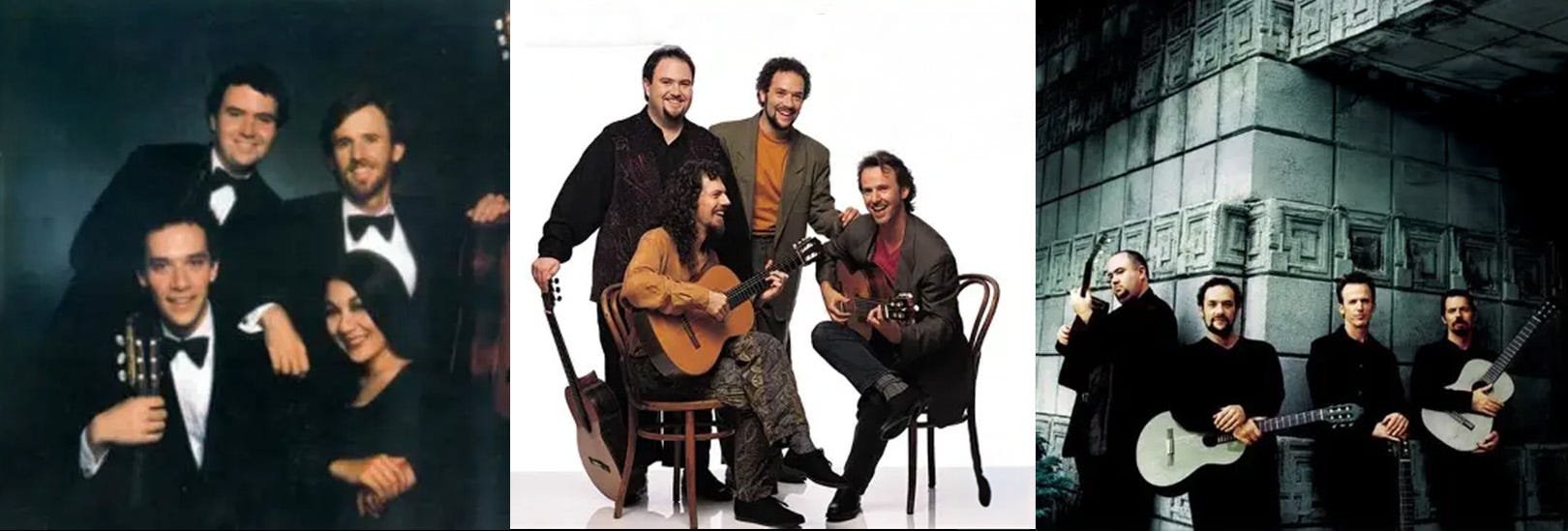
THEMEToday’s dispatch comes from Los Angeles. Well, sort of. Today’s dispatch actually comes from parts of California, Brazil, and Spain, where the current and past members of the Los Angeles Guitar Quartet reside. It took them 46 years to get to where they are, and there were a number of detours along the way, so this is the first of two non-consecutive episodes devoted to the ensemble’s storied career. Today’s show covers the quartet’s first 20 years, from their formation at USC in 1980 through their recorded output for the Orpharion, GHA, Delos, and Sony Classical labels.Like a number of guitarists in my generation, I co-founded a guitar quartet in grad school, back when the dominant creative voice in the field was LAGQ. It still is. The quartet lineup I became familiar with had a 16-year run. In masterclasses, performance series, guitar studios, and guitar societies, these guys were so ubiquitous that we just referred to them by their first names. So I might as well let them introduce themselves:Bill: “Well, I’m Bill Kanengiser, and I’m one of the two remaining founding members of the Los Angeles Guitar Quartet. We’re celebrating just about our 46th year in existence.”John: “My name is John Dearman, and I’m a founding member of the Los Angeles Guitar Quartet.”Scott: “Hi, this is Scott Tennant. I was in the LA Guitar Quartet from its inception in 1980 all the way through, let’s see, what’s this, 2026? I would guess about 2022 or 2023.”Andrew: “Hi, this is Andrew York. I’m a prior LAGQ member from 1990 until 2006, but I really started playing with them in ‘86, but that’s another story.”And we will get to that story. Bill, John, Scott, and Andy had clearly defined onstage roles. Bill was the fleet-fingered emcee, the ringleader. Scott had the monster chops, and literally wrote the book on guitar technique with his manual, Pumping Nylon. John was the laid-back, quiet one, the George Harrison of the group. And Andy was the composer, the one guy in the classical guitar world with the curious ability to knock out hits. Because those roles were so clearly defined, I have to admit I went into these conversations thinking I knew the LAGQ story.I didn’t.I also went into these conversations with just a pinch of trepidation. I mean, I look up to these guys. They were in guitar magazines. Not just the classical guitar magazines, the Jimi Hendrix guitar magazines. And they won a Grammy, for Christ’s sake. And unlike Julian Bream, the subject of the last Dispatch, they’re all still above ground, so to tell the LAGQ story, I reached out to all the members, past and present, and asked for an interview. And yes, they have a reputation for being almost cartoonishly West Coast, cool, and approachable. But since I harbor an equally cartoonish East Coast, don’t-meet-your-heroes skepticism, I worried that the whole exercise might knock them off the pedestal that I placed them on.It didn’t.Let’s get started.VARIATION 1: Moving Forward to the Fallback PositionLos Angeles Guitar Quartet’s original lineup consisted of Bill, Scott, John, and Anisa Angarola. Anisa couldn’t record an interview for the show because of a family obligation, but she sent some comments that I’ll share throughout the episode.The idea for the quartet emerged around 1979, when John, Bill, and Anisa were studying at the University of Southern California. At the time, Jim Smith chaired the classical guitar department at USC, and Pepe Romero taught as a visiting adjunct. John recalls those early days with Bill:John: “Bill and I immediately became kind of best buds, or frenemies, actually, because we were competitive with each other. I said frenemies just to be cute, but we were actually really good friends. We would practice, make dinner together, hang out, and play duos together over the next two years. That was the 78-79 school year and the 79-80 school year.”Bill picks up the story from here:Bill: “This would have been in the summer of 1980, and it was at this famous masterclass centered around the Guitar Gallery of Houston. That was a real community of Romero devotees. It was at that masterclass that I met this young kid who had already been accepted to come in as a freshman, and I was gonna be a junior.I was like, ‘Who is this kid, this Scott Tennant,’ who had already gotten the moniker by Pepe of “super kid” because Scott was this incredible prodigy. Five minutes into our meeting, we had grabbed guitars off the wall. We opened up the Rodrigo Concerto Madrigal, and we tried to sight-read through the “Girardilla” movement, the hardest movement, which of course we couldn’t play at all. I like to say that I had met Scott, and five minutes into meeting him, we were playing together.”Bill and Anisa met the “super kid,” who had just finished high school in Detroit:Scott: “I’d been going to Pepe’s classes in Houston for four years prior to that, so since 1976, when I was 14. I was getting ready to pack my Chevette and move out to California, and Pepe told me he had a few people he wanted me to form a quartet with. Here are two of the people I’d love to have in a quartet that I can coach in class.John Dearman - they told me about him, but he wasn’t there. I met him when I got to LA. In fact, he was the first person I met in LA, so that’s how I ended up knowing about it and thinking, yeah, that sounds great. It’s going to be fun.”Back on campus in the Fall of 1980, everybody was getting acquainted and starting to think about repertoire.Scott: “I got a call from John Dearman, and he said, ‘Hey man,’ very cool and laid back and chill (as he is). He said, ‘I’m going to bring some music over.’ He handed me some arrangements by Pepe, which is kind of what we had to go on at that time.”Bill: “Pepe was like, ‘Let’s put this quartet together, and you can try out some of my arrangements!’”John: “And then we would play in the master classes. We’d always get a slot in Pepe’s classes when he was up at USC, and that’s the origin story.”I’ll add a quote from Anisa, who wrote about this developmental period:“Bill, Scott, John, and I practiced hard as an ensemble for precision and homogeneous sound, which was facilitated by the fact that we were all Romero students, so we had compatible techniques.”That compatibility was getting noticed around campus. They were playing the scant catalog of classical guitar quartet standards of the day, pretty much the Los Romeros songbook. But Bill dropped a bit of info that was definitely new to me:Bill: “I also want to dispel the idea that Pepe was our day-to-day, building-our-ensemble-chops kind of guy because he only came in four times a year. It was really Jim Smith, who passed away about 12 years ago. Jim had arranged some amazing arrangements. Those were some of the first things we played in addition to some of the Romero repertoire. Jim Smith’s arrangement, for instance, of the Brandenburg Sixth Concerto, was one of the first pieces we learned together. Jim’s arrangement of ‘La Soirée dans Granade’ by Debussy. This fantastic version of the ‘Circus Polka’ by Stravinsky. Those are some of the first things we played and the first things we actually recorded on the Orpharion LP that we made in 1983.”Moving into year two and the transition from their first on-the-nose moniker, USC Guitar Quartet, to the on-the-nose one that stuck:Bill: “Even though we were just students, we were still just the USC Guitar Quartet at that point. We put energy into it, and step by step we ended up getting a local manager to get a couple of gigs. We changed our name. We couldn’t think of anything better. We thought of all these different names, and the only thing was, Okay, we can’t think of anything. Let’s call ourselves the Los Angeles Guitar Quartet. Okay, it was our fallback position, but here we are, 46 years later, three membership changes later, and still doing it!”VARIATION 2: Baptism by One Too Many Fire AnalogiesAn ensemble’s early gigs, no matter how modest, are formative. You’re young, you’re inexperienced, and you find yourself in situations you’re not quite ready to be in. If the group can survive the hijinks, those hijinks become lore. Four decades on, Scott talks about being introduced to vegetarianism and feeling a long way from Detroit; John remembers a Self-Realization Fellowship group meditation just before a gig at Brigham Young, which led to a lugubrious opening number. Anisa recalls opening for Barry Manilow, of all people, at the Hollywood Bowl, of all places. Bill summarizes the whole experience as a “baptism of fire.” Returning listeners will note that this is the third baptism the show has covered in just six episodes, though this is the first of the burning variety.I’d like to focus on one of those incendiary experiences, which Bill says helped forge the ensemble’s vibe and work ethic for the decades that followed.Bill: “The first tour we did in Mexico was a five-week, 48-appearance tour, basically playing at schools and community centers in rural Mexico. All of the really hysterical disaster stories of touring happened on that trip. I think we were either going to anneal ourselves and be really strong as a group or we could have split up.”The most disastrous of the Mexico disaster stories seems to have befallen Scott somewhere in the Yucatan, so let’s give him the mic for the rest of this story. Quick warning: it gets a little graphic. Also, Scott was recovering from the flu when we spoke, so he takes frequent pauses to avoid coughing or laughing…Scott: “We had one afternoon off before our concert, and we’re going to the beach, man. We have a concert tonight, and we have all day.Well, Mr. Gringo here, super, super bright white skin, freckles. I got in the water. The water down there is super clear. It’s like a magnifying glass, and so I’m just hanging out, trying to swim and trying to stay in the water. Somebody yelled at me, “Hey, you should put some kind of lotion on you.” Just to appease them, I did, but it washed off immediately.”At t

A big thank you to everyone who tuned into the first Classical Guitar Dispatch livestream! I loved hearing about readers’ favorite moments from Tony Palmer’s “Julian Bream: A Life on the Road” and discovering details about the process of filming Bream’s final project: “Julian Bream: My Life in Music” from Paul Balmer. You can watch the stream in this app or on my YouTube channel: I’d love to keep the conversation going, and will continue to monitor comments on all streaming platforms. For those of you watching after August 8: what are some of your favorite Julian Bream stories, recordings, or if you were lucky enough to see him perform, concerts? I also discuss upcoming episodes for summer and fall 2026, plus an exciting collaboration with Interlochen Public Radio, a charter member station of National Public Radio. Thanks for supporting the podcast with subs, likes, and comments. We’re off to a wonderful start! Get full access to Classical Guitar Dispatch at classicalguitardispatch.substack.com/subscribe

THEME Today’s dispatch comes from St. Leonard’s Churchyard in Semley, Wiltshire, a picturesque county in southwest England. St. Leonard’s is the final tour stop of Julian Bream, a name that is likely familiar to classical guitar enthusiasts, especially those of us of a certain age.Bream is one of those names you’re supposed to know. He’s the guy your guitar teacher actually respects and blathers on about ad nauseam. My own students know Bream that way—they nod politely when I speak glowingly of his accomplishments and personality, but their subtle eye-rolls betray that they suffer from the same indifference I had when I first encountered Bream at their age.I get it. My talented and driven boarding arts high school students are listening, or more likely watching, for a particular type of guitar playing presented with a particular aesthetic. They want the aspirational, competition-ready stuff: well-lit, highly coiffed, ultra-clean, rapid-fire displays of muscle and control that currently dominate their feed. They want the guitar equivalent of a Ferrari. At their age, I did too.Bream, by comparison, grunts and squeaks through guitar standards with an uneven tone, clunky and sometimes overdramatic phrasing choices, and a dynamic range that seems downright goofy by modern standards. He wears tweed and has a combover. And, along with Andrés Segovia, five will get you twenty, Julian Bream is the one guitarist who my students’ dental hygienist will be able to name after noticing their right-hand fingernails are longer than the left ones.To my young students, Julian Bream comes off as a relic, a jalopy. The preferred guitarist of adults with mortgages and lower back pain, who watch property shows like Escape to the Country or slow-moving British summertime mysteries, and still keep magazines around the house for some reason.At least, that’s how Bream appears to them from a distance. In the ten years I’ve been in my current role, I’ve watched Bream convert student after student from skeptic to believer. What first appears to them as faults looks more like quirks after a few listens. Then somehow those quirks become inspired choices. That’s about the time they discover William Walton’s Five Bagatelles and Leo Brouwer’s first Sonata, favorite selections in the contemporary competition scene, wouldn’t exist without Bream. By the time they figure out Toru Takemitsu’s All in Twilight was dedicated to Bream, and they hear him throwing down on his first recording of Benjamin Britten’s Nocturnal, well…by that point, I’m usually talking to a lifelong Bream devotee.Up close, Julian Bream is no jalopy. He’s no sports car either. Part of what makes him a hard sell is his own self-crafting. Julian Bream left Battersea, along with any traces of a working-class London accent, and cultivated an English Country Gentleman persona that didn’t always land in interviews and can come off as a bit presentational. Ironically, it’s Julian Bream’s own branding that appears inauthentic to my young students — the same students whose aesthetic is shaped by today’s guitar influencers, with all their highly edited and digitally enhanced presentational choices.Getting past exterior trappings is tough. Julian Bream is a flawed, colorful titan of the instrument. He’s a workhorse, an artist, and storyteller who left the guitar in better shape than he found it. Julian Bream, CBE, is buried in a grade-two-listed parish behind wrought-iron gates. Like the parish itself, he’s very much worthy of a second lookLet’s get started.VARIATION 1: So what makes Julian Bream so special?Bream was born in Battersea, London, in 1933. I’ll spare you the remaining Wikipedia-style bio, and, spoiler alert, he gets a guitar, gets good at it, and enjoys some early success.To fully understand Bream’s impact on the guitar world, we need to examine the scene he inherited. Post-war Britain was not exactly the center of the universe for art music. The rather sober influence of Elgar and Vaughan Williams still dominated the orchestral world, but modernists like Benjamin Britten and Michael Tippett had a toe in the door. BBC’s Third Programme was particularly friendly to high-concept broadcasts, and the BBC’s in-house Symphony had a robust repertoire. There were conservatories such as the Royal Academy of Music, the Royal College of Music, and Guildhall, all established in the 19th century.But those institutions were designed as feeders to professional orchestras, and the guitar might as well have been the kazoo for all the orchestral world was concerned. Ernest Shand, the one significant British classical guitarist-composer of the previous generation, had written a substantial catalog. But Shand trafficked almost entirely in the domestic amateur music-making world of Victorian drawing rooms, and never made a dent on the art music establishment.Like Shand, Julian Bream came up in the amateur environment of social clubs. He was particularly embraced by the Philharmonic Society of Guitarists, which was established in 1929 and played a significant role in attracting the scant number of international touring artists, such as Andrés Segovia, to perform in London.The adult Bream loved to play up the self-made-man schtick, but there’s a whole stack of stage-dad letters from Julian’s father Henry, written to everybody and anybody who would plop young Julian on the planks for a bob or two. By the way, Henry Bream was the official librarian of the Philharmonic Society of Guitarists, and the PSG’s president, Wilfrid Appleby, gifted Bream his first lute, so the kid had help.Bream attended the Royal College of Music as a Piano and Composition major at the age of 15 and remained until his National Service number was up in 1952. Bream was pretty dismissive about the RCM experience, and later in his career, he liked to tell a story about the guitar being unwelcome in the “hallowed halls” of the RCM. Like a number of Bream’s yarns, that incident was never independently verified.Bream was, after all, a showman, living in the age of Salvador Dalí and Igor Stravinsky, both of whom took a rather liberal approach to their own fact sheets. Bream’s gift for mythmaking tended to kick into high gear when applied to his own origin story, so a bit of healthy skepticism is necessary when sorting through the what-really-happened chunks of a Bream bio.Bream’s interest in early music was helped along by instrument maker Thomas Goff, who built several lutes for Bream between the 1950s and 1960s. Though the young John Williams was kicking around London at the time, Bream had nearly a decade head start and was pretty much the only game in town for guitar recitals. On lute, he was virtually peerless — especially when the BBC wanted to make its heady Shakespeare productions sound more authentically Elizabethan.Another boon for Bream was his relationship with tenor Peter Pears, who was keen on promoting Elizabethan music in what would then be considered a historically accurate way. Bream and Pears first performed at the Aldeburgh Festival in 1958, a recital attended by festival organizer and Pears’ longtime partner, Benjamin Britten. Bream and Pears would continue to record and perform together into the 1980s. Benjamin Britten arranged his 6th volume of folksongs for the duo, and the beautiful Songs from the Chinese, Op. 58.Guitar enthusiasts already know where I’m heading next. Bear with me. What’s coming is arguably the most significant dedication of Julian Bream’s career.By all accounts, Bream hounded Benjamin Britten for a solo guitar piece for several years. In 1963, Bream’s persistence was rewarded with a large-scale work titled Nocturnal after John Dowland, Op. 70. The piece references an emotionally wrought meditation on death by Elizabethan lutenist, singer, and composer John Dowland called “Come, Heavy Sleep.” The song is, indeed, heavy. Published in Dowland’s First Book of Songs in 1597, “Come, Heavy Sleep” was on brand for a composer who pretty much made a career out of melancholy.I love the very personal, connect-the-dots nature of Britten’s dedication. As I mentioned before, Britten and his partner, Peter Pears, went to great efforts to revive interest in Elizabethan music. Julian Bream was in the nascent stages of kick-starting an entire Early Music industry with a mixed ensemble called The Julian Bream Consort. These are 20th-century British musicians who are watching their nation recover from the age of austerity in real time. It’s no accident that Benjamin Britten chose this bummer of a tune from the golden age of Elizabethan Song. In the early 1960s, it was exactly that kind of national-mythmaking backward glance that was in the ether.His treatment of the original material follows a theme-and-variations form, but since this is Benjamin Britten we’re talking about, it gets weird. Britten inverts the whole structure and puts the theme at the caboose, so now it’s a variations-and-theme. Britten’s harmonic language is modernist, his formal outline is revolutionary, and his references are metatextural.Compared to the tonally conservative Spanish stuff Andrés Segovia was touring on at the time, Benjamin Britten’s Nocturnal after John Dowland was a game changer. And when Julian Bream recorded the piece alongside works by Frank Martin, Reginald Smith Brindle, and Hans Werner Henze on the 1967 RCA release titled 20th Century Guitar, it was clear to Dorothy and everybody else that we weren’t in Kansas anymore.VARIATION 2: Julian Bream, A Lifestyle Brand20th Century Guitar pulled off another trick that Julian Bream somehow repeated often throughout his long career: the album was a critical success that actually sold units. That one-two punch bought Bream precious autonomy with his record label, RCA. Careful to avoid getting pigeonholed, Bream’s recorded output strikes a balance between two impulses. On one side, projects devoted to documenting the major works in the guitar repertoire — Villa-Lobos, Sor, Giuliani
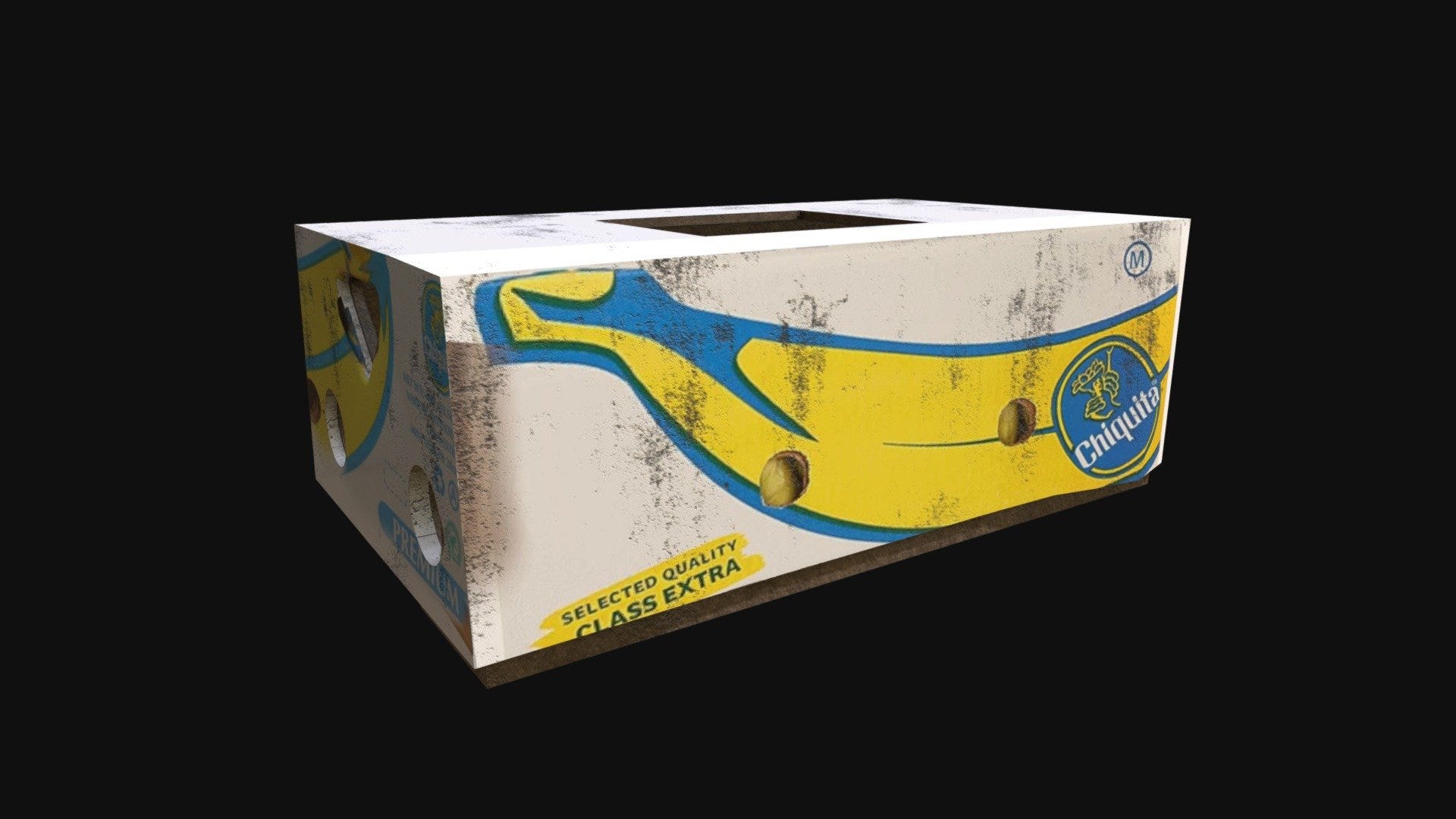
THEMEToday’s Dispatch comes from my hometown in rural Pennsylvania on Thanksgiving Day in 1988. I was twelve years old, and doing my best to avoid food-prep chores when the doorbell rang. It was Brian, a friend of my dad’s, who had recently been baptized at the Brethren in Christ Church my family attended. The Brethren are full-immersion dunkers, and had an oversized bathtub installed directly under the altar, accessible by a trap door. Pastor Rick forgot to heat the water before the morning service, so Brian’s proclamation of faith was a particularly dramatic affair. After his third dip, he gasped and shivered through pledges to remove temptations of all sorts from his life.Standing outside our family home, Brian revealed that one of his temptations was an extensive collection of vinyl records, which he decided to gift me. He passed me a hand trolley, lowered the tail gate of his pickup truck, tore off a plastic tarp that would contain a deer carcass later that season, and said, “ OK, kid, have fun.” The records were piled high in a series of cardboard boxes with the Chiquita Banana logo. Apparently, Brian and, for once, my parents found themselves unbothered by how those boxes of temptation might negatively impact my moral fiber, and to this day I remain grateful for their oversight.After green bean casserole and pumpkin pie, the fancy dishes were washed, and I was free to start in on the banana boxes. The discovery process began with the usual suspects: the Doors, the Beatles, the Stones. But at the bottom of the first box was a record cover featuring the profile of a handsome, pouty-faced man, with the title Parkening Plays Bach in bold white and orange lettering. I thought the man in the photo looked a bit like Harrison Ford, and the prospect of Han Solo playing the music of Bach piqued my curiosity, so I dropped the needle. About 45 seconds into the first track, I forgot about all the other records.VARIATION 1Parkening Plays Bach was released by Angel Records, a Capitol/EMI subsidiary, in 1972. Christopher Parkening was in his mid-20s and had already recorded three other albums for the label. His playing is confident and mature, and there’s a freshness to his interpretations that is unusual for classical guitar records of that time period. The looming, grandfatherly presence of the era’s dominant guitar figure, Andres Segovia, is barely detectable. Parkening places Bach’s melodic material squarely on the beat, and doesn’t go ham with the rolled chords and swooping portamenti that permeate Segovia’s 1969 Bach album. The influence of John Williams—six years Parkening’s senior and a fellow star pupil in the Segovia lineage—is far more apparent. The Williams influence is particularly present in Parkening’s sound, which is warm yet direct. That’s thanks in part to the 1967 cedar-top MT Ramirez guitar he plays on the record, which is currently on display to be seen but not heard at the Metropolitan Museum of Art.For me, the standout track on the album is Rick Foster’s arrangement of “Jesu, Joy of Man’s Desiring,” from Cantata BWV 147. It’s a deceptively tricky arrangement. Foster set the material in the key of C, which limits the availability of open bass strings, so producing any semblance of legato requires prolonged contact with the fretboard. That means by the first repeat of the A section, the left hand is pooped, and there are still two minutes to go in the piece. Parkening makes tidy work of Foster’s arrangement, and considering they were cutting the record onto two-inch magnetic tape controlled by massive reel-to-reels, I can’t imagine there were many edits in those sessions.Parkening Plays Bach was an immediate success, and helped establish the young American guitarist squarely alongside the likes of Segovia and John Williams at the peak of Mount Classical Guitar. But there were early indications that a conventional, public-facing career with up to 90 concerts annually was ill-suited to Parkening’s demeanor. In one bizarre incident, he cut off his nails in the middle of a tour in what he called an “act of self-sabotage.” Now, if you’re not familiar with the classical guitar, cutting off your right-hand fingernails in the middle of a tour may not seem like a big deal, but it is. Right-hand nails are the primary way we guitarists produce a sound, so Parkening’s move was basically the equivalent of a pop singer showing up to Coachella and refusing to use a microphone. I’ve devoted a not-insubstantial number of hours to imagining how concert organizers and the PR team at Columbia Artists Management began squirming as one of the most recognizable faces on their artist roster began to fray at the edges.The fraying eventually unraveled, leading to a 4-year wholesale retreat from the planks. As far as retreats go, Parkening pretty much set the industry standard. He bought a ranch in Montana, announced his retirement at the ripe old age of 30, and devoted his time to fly fishing. During this period, he attended a service at Grace Community Church, then pastored by John F. MacArthur, a forefather of the megachurch phenomenon in the U.S. MacArthur’s charisma and on-air presence helped grow the congregation, doubling its tithing intake every two years or so. “Parkening, caught up in the fervor, got religion in a big way. Though Grace Community Church is a full-immersion dunking environment, Parkening had already been baptized as a baby, so his conversion was of a dry sort. To the best of my knowledge, he did not give his record collection away to a 12-year-old kid.When it was time to once again earn a living, Parkening’s “early retirement” was amended to “hiatus.” But even that decision happened on his terms:“It became evident that the Lord wanted me to return to playing the guitar again, but this time for a different purpose—to honor and glorify my Lord and Savior Jesus Christ!”Parkening’s first offering to the lord was the 1982 LP, Simple Gifts, which features solid guitar playing and innovative arrangements. I’m partial to the charming adaptation of the title track on that album. It’s a hoot to play, and requires the performer to detune the sixth string by a whole step from D to C with the left hand, while the right hand keeps things moving with open strings just before launching into the final variation.VARIATION 2In the church community I grew up in, Parkening’s conversion was regarded as a win for the home team. I recall a counselor at church camp using Christopher Parkening’s Simple Gifts album as Exhibit A to prove that Parkening was “God’s chosen guitarist.” “And,” he added, “just imagine how cool Heaven would be if we only got to Jimi Hendrix sooner.”As the 80s turned into the 90s, I graduated from compulsory church camp to voluntary guitar camp. I was disoriented to find myself in a community that, if they regarded Parkening at all, did so with a modicum of distaste. The narrative, as I understood it, was that Parkening started out with promise but traded his artistic integrity to shill for Jesus. It must have been a convincing narrative, because I managed to finish three degrees, perform, compose, and teach for 25 years before I spared Christopher Parkening another thought. In those intervening years, Parkening managed to shoehorn some rather disparate interests into a long and impressive career, including, but not limited to, a win at the International Gold Cup Tarpon Fly Fishing Tournament, solo appearances with the London Philharmonic and the Academy of St. Martin in the Fields, a string of appearances on the Today Show (to my knowledge, the only classical guitarist ever featured on the program), and a collaboration with soprano Kathleen Battle that produced several albums, my favorite of which is Angels’ Glory, a worthy inclusion on any Christmas playlist.I never went in for the whole baptism thing, which is one of the reasons I don’t talk to my family much. Well, it’s the reason they don’t talk to me. But a while ago, I was granted a temporary reprieve and welcomed back to Pennsylvania to provide pro bono wedding music and to retrieve a few boxes my parents had discovered while selling their home. It was a rough trip, and it ended abruptly, so the boxes sat in the trunk of my car for a couple of weeks before I could muster the wherewithal to unpack them. When I eventually did, I was surprised to find the handsome, pouty-faced man once again looking up from the bottom of a Chiquita banana box and in reasonably good shape. He looks to me like a young man now. A bit warped and moldy around the edges, but after 38 years, I suppose we should all expect to take on some damage. Under the right conditions, vinyl records and banana boxes can be surprisingly resilient. They can be found, and lost, and found again. Still, it’s best to handle these things with care.CODAWell, that’s all for today’s Classical Guitar Dispatch. I’m on the road for the next two weeks for concerts and teaching, including a stop at one of my favorite guitar events on the planet, the Classical Guitar Retreat in St Andrews, Scotland, where I will perform with my duo partner Matthew McAllister, alongside our friends the Magma Guitar Duo from Iceland. Matthew will also debut a new solo work I wrote for him, titled “An Awakening,” which you can hear on Matthew’s upcoming album on Sacred Black Records.So, if you’re listening to this podcast in June of 2026, the next episode will come out July 17th and will feature conversations with current and former members of the legendary Los Angeles Guitar Quartet for a career retrospective spanning 46 years and counting.Head over to the Classical Guitar Dispatch on Substack for show details, extended interviews, full transcripts, and playlists. While you’re there, hit the subscribe button; it’s much appreciated. As always, I want to hear from you, so let me know in the comments what you think of today’s episode and what you’d like to hear on future shows.To keep up with my performances and composi

THEMEI had a wonderful education. I came into the music degree process underprepared and a bit terrified, but hungry to devour as much music and art as I could cram into my soft, still underdeveloped frontal lobe. I hit the conservatory scene at a moment when libraries were still the best place to locate hard-to-find scores and recordings. By the way, there was a time when every piece of music ever recorded wasn’t just…available.There were hi-fi systems in the listening cubicles, and headphones you could check out at the library by leaving your dorm key or student ID badge. There was a single desktop computer in the main hall of my school, and students, the maintenance team, and professors all lined up together to look something up or write an email on the old dial-up network. Seems quaint now. Handheld phones were reserved as movie props for douchebags in Porsches who always get their comeuppance in Act 3, so people standing in line actually had to interact with each other or just stand there, suffering the indignity of their own thoughts.These days, I spend a lot of time on university campuses, mostly as a visiting performer or composer-in-residence. Campuses are noticeably quieter places now than they were when I was a student. What little human interaction there is before masterclasses or lectures tends to come from two or three people commenting on the same 15-second clip that an algorithm coughed up on their tiny screens.And I know, I know, I’m coming off as a fuddy-duddy, “things-were-better-in-my-day” Gen Xer. But that’s only because a) I am a Gen Xer, and b) a lot of things were better. If you wanted to listen to music, you had to put in a bit of effort. You had to buy or borrow the music, or make a friend. CDs sounded better than the compressed MP3 garbage the streamers serve to us now. Chit-chat at the bank teller was more pleasant because people had to practice it in order to function. You could arrive at the airport at least two hours later than you do now. Dating was…not what it is. You could get in a car and actually get lost. If you left the house, nobody knew where you were most of the time. It was an inconvenient era to be alive, and it was glorious.It’s likely because of nostalgia for that time that I wholeheartedly believe in the value of higher education, mostly as a jumping-off point for a lifetime of learning and intellectual growth, and less as a direct path to gainful employment. And if you listened to the first installment of this series, you heard quite a bit from late Baby Boomers and Gen Xers like me bemoaning the cultural, demographic, and economic shifts that led to the current state of institutional education. Like me, all three guests devoted the lion’s share of their careers to institutional teaching. Also like me, they got into the field when the system was a bit easier to navigate. Not easy, but easier. Today, we’ll hear from people who are my age or younger. They had to navigate a downshifting education system, which either spat them out entirely or was so inaccessible that it propelled them to innovate. And here’s the thing: as a direct result of their difficulties, they’re all thriving. We’ll hear from Candice Mowbray, who put adjunct life in the rear view with a can of tuna fish and a bottle of diet root beer. We’ll talk to Thomas Viloteau, who, with apologies to The Boss, had a wife and kids in Baltimore, Jack. They packed up for France, and they never went back. Finally, we’ll talk to Brandon Acker, who says he’s found exactly where he’s best suited.Let’s get started.Variation I: Candice Mowbray, A Can of Tuna Fish, and a Diet Root BeerCandice Mowbray does enough different things that it takes her a minute to describe all of them:“I am a performer, a scholar, and an educator.As a performer, that’s been a huge part of my career and primarily it’s been as a classical guitarist. A large percentage of that has been as a chamber musician, which I absolutely love. I often play pops concerts with orchestras or play in the pit for musical theater.Right now I’m really focusing my teaching on adult learners and offering classical guitar lessons and classes but also music theory and performance practice, which is another word for performance anxiety, for people who are nervous about performing. Trying to create environments in which they learn a bit about their nervous system and some tools that maybe they can apply to feel a bit more comfortable performing.Scholarship was an unexpected part of my career. I have done a lot of research on the history of women in classical guitar and written, published, and lectured. Those are my big three umbrellas of work but I’ll also arrange and compose and write grants. Anything that has to do with music I’m in.”Well, almost anything. Candice started out in the adjunct circuit, teaching guitar, music history, music theory, ensembles, and pedagogy. In a typical week, she bounced between schools in Virginia, West Virginia, and Maryland. It’s a pretty drive, and she loved the students, but the gigs were tough.“Teaching in Higher Ed is in no way what I thought it would be. It’s not the teaching part that I’m talking about; it’s the being employed part. A job has to go both ways. We invest ourselves; it’s our passion; we feel duty, we feel our ethics, everything, in doing the best job that we possibly can but the circumstances of being employed in these environments for some of us is not conducive to well-being.”Yeah. Let’s do a quick review of employment status for guitar in higher education. Full-time tenure-track jobs in guitar, with benefits like health care and pensions, are rare. At top institutions, a significant number of those positions are still held by the original hires, some of whom have been occupying the same studio for three or even four decades. When (or if) those people retire, there’s no guarantee the institution will replace the outgoing guitar professor at all. If they do, the job will likely be advertised at the assistant professor level, which doesn’t pay much at most music institutions. In many cases, that job will be removed from the tenure track altogether and replaced with a short-term instructor contract. Or, the institution takes a decidedly cheap-ass option and advertises the gig as an adjunct position. That means the lucky new hire gets no benefits and a salary cap that usually peters out around 20 hours per week, but it’s often less.“It’s contract work that’s based on enrollment. You can plan for the fall semester that you anticipate having this many classes or this many private students or an ensemble. You’ve mapped that out on your life’s calendar and you even start writing syllabi and you start doing professional development and maybe you’re out doing recruitment and you’re doing the work but all of that is on you.The week that classes start, that add/drop period, it affects what you’re going to earn that semester. It affects where you’re going to drive from day to day. It affects your eating schedule. It’s every aspect of your life.”And not much effort goes into making the adjunct faculty feel welcome:“You don’t even have a key card that will open your door to teach and you’re grabbing practice rooms, and carrying a music stand because you can’t reliably get a music stand. All the things that you need to go from one or two different schools that entire day and where you’re going to sneak a can of tuna fish and a diet root beer into that as your lunch. That was my teaching lunch for years actually. It was just that.”Candice did everything right. She paid her dues. Those glossy college brochures are, after all, written for students exactly like her — the ones who work hard, earn terminal degrees, and, critically, pay tuition. So while new doctoral graduates are logging onto the Chronicle of Higher Education’s job board, eager to start paying off their student loans, the institutions that trained them have been quietly removing full-time positions from their payrolls for years.Meanwhile, the Chronicle is also publishing what those institutions pay at the top. Public university presidents saw their take-home rise an average of 56% during the 2010s. Today, the average president at a large public or private institution easily clears $500,000. At the top of the heap, presidents of big-name private universities and the leaders of state college systems pull down between $2 and $4 million a year. Often more.Now, just in case you’re going all “eat-the-rich” and cheering on those recent ham-fisted federal defunding efforts, rest assured, those efforts didn’t touch the salaries of the people at the top. Instead, the people at the top just canceled expensive offerings. You know, like music programs.Eventually, Candice had to make a choice: continue feeding the system or prioritize her health and professional growth. It was a tough call.There are some things about it, like the teaching part, that were great and I learned so much and all these great colleagues. But, there’s also the toll that it takes on your life and well-being and your finances and your household. So, over the years, what you need as a human being can evolve, and what you want for your life can evolve. That is something that is sad to me, that it didn’t really work out. It was something that I really, really wanted, was a full-time teaching position.”Variation II: Thomas Viloteau finds Le Support in Champagne CountryWe’re going to step away from Candice’s story before she gets her happy ending, because I want to sit in this “careful-what-you-wish-for” area of teaching in higher education. To do that, we’ll enlist the help of Thomas Viloteau, who, when I met him in 2019, had just been hired at Peabody Institute at the Johns Hopkins University. But, there was a catch:“I got hired as an adjunct. This was for a position that did not exist. Basically, I was supposed to just fill up the studio, and they kind of messed that up because they couldn’t get an adjunct vi

Comments

Download from Google Play

Download from App Store
 United States