


 Claim Ownership
She’s So Scripture Podcast
Subscribed: 7Played: 53
Subscribe

© Diane Ferreira, Ferreira Enterprises LLC
Description
Real faith. Real Scripture.
Hosted by Diane Ferreira of She's So Scripture on Substack and She Opens Her Bible. Diane is a Bible teacher specializing in first-century context and spiritual formation, so She’s So Scripture™ is a space for thoughtful, grounded engagement with the Bible.
Each episode explores Scripture within its historical, cultural, and theological context—bringing clarity to the text and depth to your understanding.
This is not surface-level inspiration or isolated verses.
This is Scripture studied in context, interpreted with care, and taught with precision.
Through focused teaching, you’ll learn how to read the Bible more accurately, understand it more fully, and engage it with greater confidence.
Because when Scripture is understood clearly, it can be lived faithfully.
31 Episodes
Reverse

With Thanksgiving approaching, Diane tackles a common Christian tension: forgiving someone who hurt you without automatically letting them back in. She argues Scripture treats forgiveness (releasing the debt) and reconciliation/trust as related but separate, warning that “forgive and forget” has pushed people into unsafe situations or into thinking forgiveness is impossible. Working through Matthew 18’s debt parable, Luke 17, Mark 11, and Matthew 5, she distinguishes canceling personal vengeance from repentance (teshuvah) and shows that restitution and accountability—including reporting crimes—can still be necessary. She explores Joseph’s long, deliberate path to restored relationship, contrasts it with David’s continued distance from Saul despite repeated apologies, and highlights “fruit” of repentance through Judah and Zacchaeus, alongside Paul’s caution about Alexander.00:00 Thanksgiving Trigger Question01:31 Forgive Versus Reconcile02:08 My Family Boundary Story04:51 Matthew 18 Debt Parable08:29 What Forgiveness Means09:36 Repentance And Repair13:17 Myths Forgetting Trust15:10 Joseph Tests Repentance22:09 David Spares Saul Twice25:05 Fruit Of Repentance27:24 When They Never Apologize29:15 Two Warnings And Thanksgiving32:07 Closing Thanks And Subscribe This is a public episode. If you'd like to discuss this with other subscribers or get access to bonus episodes, visit shessoscripture.com/subscribe

An Eye for an Eye: Justice, Retaliation, and What Yeshua Really SaidDiane explores the meaning of “an eye for an eye” across its four key appearances, arguing it’s commonly misunderstood as personal vengeance rather than a legal standard limiting penalties within a court system. She begins with Lamech in Genesis 4 as an example of unchecked revenge, then examines the three Torah passages (Exodus 21, Leviticus 24, Deuteronomy 19) in their judicial contexts, noting surrounding laws about compensation, consistent justice, and false witnesses. She contrasts Torah with Hammurabi’s class-based penalties and surveys later Jewish interpretation, from Josephus to the Mishnah and Talmud, showing compensation became the dominant application. Turning to Matthew 5, she explains Yeshua’s examples involve insults, lawsuits, and impositions—not bodily mutilation—and cautions against using the passage to justify enduring abuse. She closes by linking Lamech’s “seventy-seven” revenge to Yeshua’s “seventy times seven” forgiveness in Matthew 18.00:00 Welcome and Setup00:18 Why Eye for Eye01:08 Lamech and Revenge02:57 Exodus Courtroom Context06:38 Hebrew and Ancient Laws07:49 Leviticus Equal Justice09:11 Rabbinic Compensation Debates12:06 Deuteronomy False Witness13:56 Jesus Teaching in Matthew15:04 Slap Shirt Mile Explained17:32 Misuse and Abuse Warning18:13 Seventy Seven Forgiveness19:37 Closing and Subscribe This is a public episode. If you'd like to discuss this with other subscribers or get access to bonus episodes, visit shessoscripture.com/subscribe

Diane returns after recovering from COVID and pneumonia, announces the podcast will move to Tuesdays, and plans to add video episodes soon. She challenges the common “Pharisee as villain” caricature by reading key texts more closely, noting Paul still calls himself a Pharisee in Acts 23 and that Pharisees were a sizable Second Temple Jewish movement influential with ordinary people, known for affirming resurrection, angels, and traditions for applying Torah. She shows that Jesus sometimes shared convictions with Pharisees, treated disputes as internal Jewish debate, and even told crowds to observe their teaching while condemning hypocrisy. She highlights Pharisees who warn Jesus about Herod, Nicodemus’s actions, Pharisaic hospitality, Gamaliel’s counsel, and Pharisee believers in Acts 15, then explains how post-70 AD history and Christian usage turned “Pharisee” into an insult, urging listeners to let each passage define each Pharisee.00:00 Welcome to the Show00:25 Health Update and Schedule01:46 Why Pharisees Matter02:59 Paul Says I Am Pharisee05:17 Who Were Pharisees08:19 Jesus and Torah Debates12:48 Not All Were Villains15:59 Pharisees in Acts17:43 Paul and Credentials19:58 Where Cartoon Came From22:15 Read Pharisees Fairly22:56 Thanks and Subscribe This is a public episode. If you'd like to discuss this with other subscribers or get access to bonus episodes, visit shessoscripture.com/subscribe
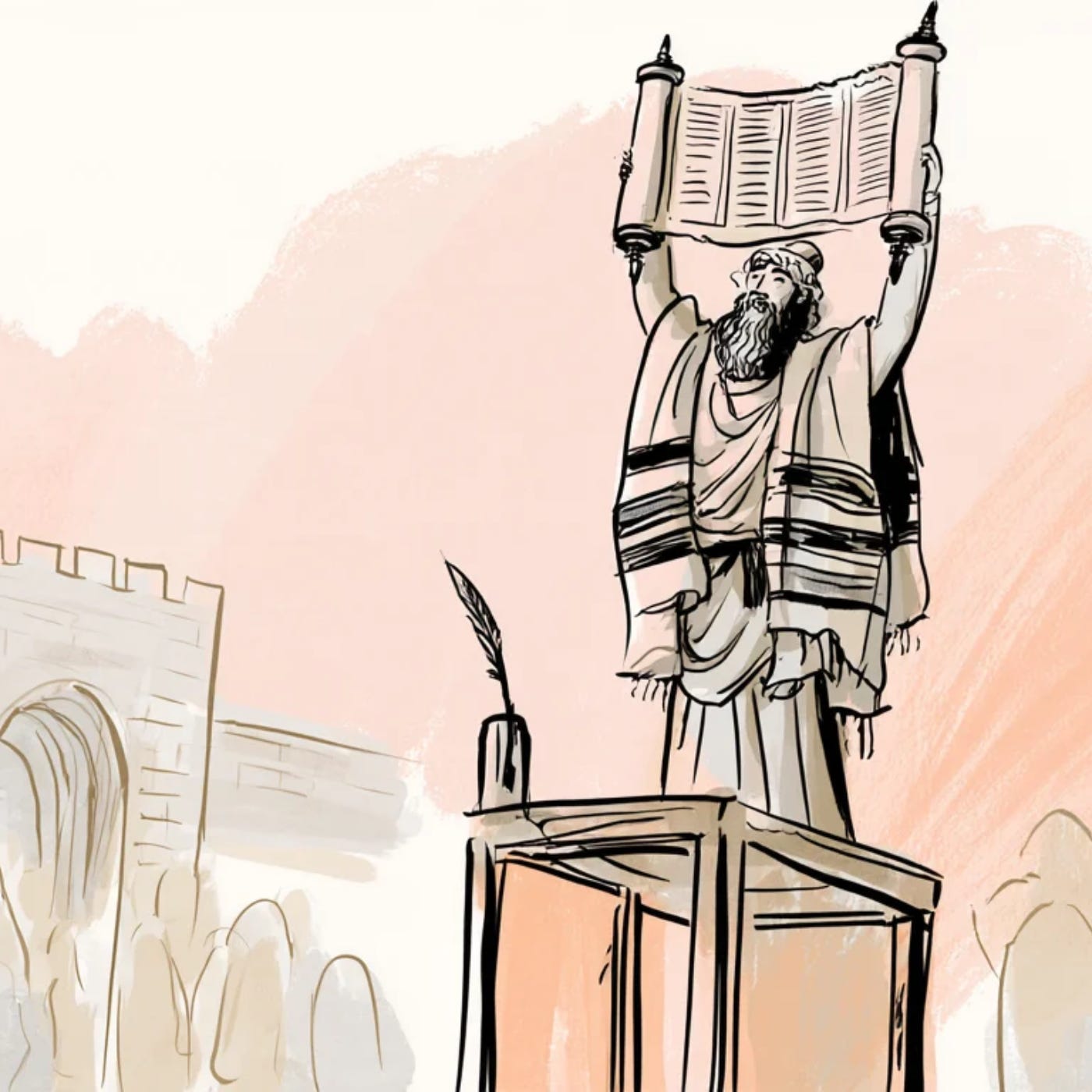
This episode introduces Ezra as a priestly descendant of Aaron and a skilled scribe who came from Babylon to Jerusalem to teach the Torah after the temple was rebuilt.It explores Ezra 7–10 and Nehemiah 8, highlighting his commitment to study, practice, and teach God’s instruction, his leadership of families on a risky journey marked by fasting and reliance on God, and his careful accountability in transporting temple offerings.It also examines Ezra’s grief and communal confession over covenant unfaithfulness, and the public reading of Torah where Levites help the people understand, leading to repentance, renewed celebration, and covenant commitment.The episode notes later Jewish traditions about Ezra, connects Torah reading to Yeshua and early synagogue practice, and challenges listeners to practice what they teach from scripture.If this episode stirred something in you, here's where you can find me:📖 She's So Scripture: shessoscripture.com📖 She Opens Her Bible: sheopensherbible.com🎥 Subscribe on YouTube: She's So Scripture💌 Want live Bible studies, weekly teachings, audio lessons, devotionals, and a community of people who want depth without pressure or performance? Join The Chavurah at shessoscripture.com/subscribeIf this episode blessed you, please subscribe, leave a review, and share it with a friend who loves to study the Word. It helps more women find this content and I appreciate it more than you know.See you in the next episode. Shalom. 💕00:00 Who Was Ezra00:45 Meet The Scribe01:05 Priestly Lineage01:35 Skilled In Torah03:09 Seek Do Teach05:15 Journey And Fasting08:08 Guarding Offerings09:53 Covenant Grief Prayer12:31 Torah Reading Revival16:07 Ezra In Tradition17:55 From Ezra To Yeshua19:26 Teaching With Integrity21:33 Closing And Next Steps This is a public episode. If you'd like to discuss this with other subscribers or get access to bonus episodes, visit shessoscripture.com/subscribe

Diane explores Simchat Torah (“the joy of the Torah”), observed with a yearly synagogue cycle that finishes Deuteronomy and immediately restarts Genesis with singing, dancing, and the scrolls carried in circuits, rooted in Shemini Atzeret rather than named in the Bible. She examines Deuteronomy 34’s “strange” ending: Moses dies on Mount Nebo seeing the promised land but not entering, connected to Numbers 20’s rock incident and Deuteronomy 3’s account, alongside traditions about Moses dying “at the mouth of the Lord” and God burying him in an unknown grave. Noting the Torah’s deliberate stop short of crossing the Jordan and its tension between Deuteronomy 18’s promised prophet and Deuteronomy 34’s claim that none like Moses arose, she connects this open ending to first-century expectations, the readings of Genesis 1 and Joshua 1, and New Testament passages including Acts 3, Hebrews 11, and Luke 9’s transfiguration.00:00 Torah’s Unfinished Ending01:21 Simchat Torah Explained03:24 Shemini Atzeret Origins04:29 Moses on Mount Nebo05:02 Why Moses Can’t Enter08:43 Death, Burial, Epitaph13:06 Open Ending and Waiting16:44 Genesis Restarts With Light17:48 Joshua Crosses the Jordan19:39 Heart, Wisdom, Perseverance22:32 Transfiguration and Exodus24:28 Living With Unfinished Work25:25 Closing Thanks and SubscribeIf this episode stirred something in you, here's where you can find me:📖 She's So Scripture: shessoscripture.com📖 She Opens Her Bible: sheopensherbible.com🎥 Subscribe on YouTube: She's So Scripture💌 Want live Bible studies, weekly teachings, audio lessons, devotionals, and a community of people who want depth without pressure or performance? Join The Chavurah at shessoscripture.com/subscribeIf this episode blessed you, please subscribe, leave a review, and share it with a friend who loves to study the Word. It helps more women find this content and I appreciate it more than you know.See you in the next episode. Shalom. 💕 This is a public episode. If you'd like to discuss this with other subscribers or get access to bonus episodes, visit shessoscripture.com/subscribe

Comments

Download from Google Play

Download from App Store
 United States