


 Claim Ownership
Wise About Golf
Subscribed: 1Played: 21
Subscribe

© Ken Wise
Description
What do Ben Hogan, Byron Nelson, Harvey Penick, Lee Trevino, Babe Zaharias, and Ben Crenshaw have in common? They’re all Texans — and their stories are only the beginning. Wise About Golf is the definitive podcast on the history of golf in Texas: the legends, the courses, the tournaments, the memorabilia, and the forgotten characters who shaped the modern game. Hogan and Nelson grew up as caddies on the same Fort Worth course. Penick quietly built the greatest teaching legacy in the sport’s history. Jimmy Demaret became the first man to win three Masters titles. The stories behind these names? Most have never been told the way they deserve. Your host is Justice Ken Wise — the scholar and storyteller behind the acclaimed Wise About Texas podcast. Deeply researched, compellingly written, and delivered with a humorous campfire storytelling style that makes you feel like you’re sitting around the 19th hole. Essential listening for golfers, golf history fans, collectors, and anyone who l
7 Episodes
Reverse
Episode 7, “Golf’s Giants Tour Texas” (35:07)
• [02:01] Two boys from Jersey. Vardon and Ray both grew up in Grouville on the Channel Island of Jersey and learned the game at what became Royal Jersey Golf Club.
• [04:21] Vardon’s career. His record six Open Championships, the “Vardon grip” (which he didn’t invent), knickers on the course, and his fight with tuberculosis.
• [08:21] Ted Ray. The longest hitter of his day, known for his pipe, his blunt advice (“hit it harder”) and his dislike of slow play.
• [12:10] The 1900 tour and the first endorsement. Spalding’s deal with Vardon came five years before Honus Wagner signed with Louisville Slugger.
• [16:12] Alex Findlay. The tour manager went from Scottish golfer to Nebraska cowboy to designer of more than 100 courses, including San Antonio Country Club. Also covered: where “par” comes from.
• [21:16] The 1913 U.S. Open. The USGA moved the Open to September so Vardon and Ray could play. Ouimet then won the playoff at Brookline.
• [24:45] A young Bobby Jones watches. An 11-year-old Jones saw Ray hit what he later called the greatest shot he’d ever seen.
• [25:32] Dallas, October 17. At Dallas Country Club, Texas Amateur champions George Rotan and Charles Dexter pushed Vardon and Ray hard. Perry Maxwell was in the crowd.
• [27:54] Houston, October 18. A 36-hole match at the original Houston Country Club, now Gus Wortham Park.
• [28:40] San Antonio, October 19. A best-ball medal match on a Findlay-designed course.
• [30:37] What came after. Ray won the 1920 U.S. Open, captained Britain in the first Ryder Cup, and Ouimet became the first American captain of the R&A.
• [32:33] The 19th Hole. Places you can visit: Gus Wortham, the Texas Golf Hall of Fame at Brackenridge Park and online at TexasGolfHOF.org, the World Golf Hall of Fame at Pinehurst, Ouimet’s boyhood home, and Royal Jersey.
Connect with the Show
• Website: wiseaboutgolf.com
• Instagram: @wiseaboutgolf
• Facebook: Wise About Golf
• X/Twitter: @WiseAboutGolfTX
• YouTube: @wiseaboutgolf
• Apple Podcasts: Wise About Golf. A five-star review helps new listeners find the show.
• Support the show on Patreon: patreon.com/wiseabouttexas
• Episode ideas: [email protected]
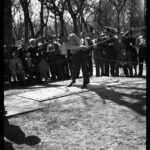
A San Antonio sportswriter did some math in 1921 and built the oldest golf tournament in Texas. From hickory clubs and rubber tees at Brackenridge Park to J.J. Spaun at TPC San Antonio, this is 104 years of Texas Open history — Hogan, Nelson, Palmer, Crenshaw, and the records that still stand.
In 1921, Jack O’Brien of the San Antonio Evening News noticed that the U.S. Open champion took home $500 while a single prize fight paid $25,000. He decided Texas golf deserved better — and the Texas Open was born.
Host Ken Wise traces 104 years and 95 playings of the tournament now known as the Valero Texas Open: the third-oldest event on the PGA Tour, and the only professional tournament held in the same city for its entire existence.
In This Episode
• Why a $25,000 boxing purse launched the oldest golf tournament in Texas
• Brackenridge Park, A.W. Tillinghast, and the rubber mats the pros teed off until the 1960s
• John Bredemus — Princeton man, Olympic-caliber athlete, and the first resident golf course architect in Texas
• Bob MacDonald, Cyril Walker, and the 1922 tournament that drew about 90 players and 6,000 spectators a day
• Gene Sarazen: “We’d play in a cow pasture for $5,000”
• The 1928 rain delay at Willow Springs when Tommy Armour drafted bylaws for a touring pros’ association
• A 17-year-old Ben Hogan’s first professional tournament — and why he went home to practice
• Byron Nelson’s 1939 playoff win, the only Texas Open he ever took
• Mike Souchak’s back-nine 27 and 72-hole 257 in 1955 — records that stood for decades
• Tony Holguin, the Pan American Golf Association, and a 1953 win on his home course
• Wesley Ellis Jr. and the last Texas Open at Brackenridge Park
• Arnold Palmer’s three straight titles — and the Pecan Valley plaque for a shot he missed
• Ben Crenshaw winning his first official start as a full PGA Tour member
• The 19th Hole: where to play San Antonio golf history yourself
Listen & Follow
New episodes of Wise About Golf, the Texas golf history podcast, are available wherever you get your podcasts. If you enjoy the show, please leave a five-star review on Apple Podcasts — it helps other golf history lovers find us — and share it with a friend who loves the game.
Links
• Website: https://wiseaboutgolf.com
• Support the show on Patreon: https://www.patreon.com/WiseAboutTexas
• Instagram: https://www.instagram.com/wiseaboutgolf
• Facebook: https://www.facebook.com/wiseaboutgolf
• X / Twitter: https://x.com/wiseaboutgolftx
• YouTube: https://www.youtube.com/c/WiseAboutTexas
• Story ideas and interviews: [email protected]
• The original Texas history podcast: https://wiseabouttexas.com
Show Notes
In this episode:
● The layers of history buried under one San Antonio park — irrigation, war, industry, and sport.
● How a parks commissioner, a herd of buffalo, and a golf course accidentally created a zoo.
● Why a city hired one of America's greatest architects to build a course anyone could play.
● A sportswriter's idea, a big purse, and the tournament that reshaped the professional game.
● The Mount Rushmore connection sitting quietly on the property.
● A refreshment stand by the 12th green and the four-star general who grew up beside it.
● The five golfers whose borrowed entry fee launched a national association.
● What a highway took away, what a restoration brought back, and how to go see it today.
Plus the 19th Hole, where we tell you how to go visit the places in this episode.
Connect With the Show
Website: wiseaboutgolf.com
Instagram: instagram.com/wiseaboutgolf
Facebook: Wise About Golf
Twitter/X: @WiseAboutGolfTX
Email your episode ideas and Texas golf connections: [email protected]
Support the Show
If you enjoy Texas golf history, the best free thing you can do is leave a five-star review on Apple Podcasts — it helps like-minded folks find the show. Telling a friend works too.
Patreon: patreon.com/WiseAboutTexas
In this episode
Topics in the order they appear. No timestamps included — add them from your final audio file.
• Why a Scotsman who barely set foot in Texas counts as Texas golf history, and a recap of Episodes 1 through 3
• Musselburgh: golf documented to 1672, certified as the oldest course in the world, and the charge that Mary, Queen of Scots played there days after her husband was found murdered
• Leith, 1744: the Gentlemen Golfers of Edinburgh, what links land actually was, and surgeon John Rattray named Captain of the Golf
• The first written rules of golf, lost until 1937 and found in the back of a club minute book — including teeing within a club length, “stones, bones or any break club,” and the invention of the free drop
• 1836: the club moves to Musselburgh and lays its holes inside a horse racing track, the same year Texas wins independence
• The Park family: Willie Park Sr. wins the first Open in 1860; his brother Mungo wins in 1874
• How a blacksmith’s hole cutter set the golf hole at four and a quarter inches
• British clubs sharing public links versus American country clubs that buy their own land
• The Park–Morris feud with St Andrews: newspaper challenges for £100 a side, a crowd so unruly the referee stopped play, and the tragedy at North Berwick in 1875
• The name Mungo: a sixth-century saint and a West African explorer
• Mungo Park Jr., born 1877, sent to run the family’s New York office in 1897, laying out courses across New York and Vermont
• Galveston, the Queen City of the South, brings him down to build its course on the beach near 53rd Street — how they found him is still an open question
• Argentina: the first Argentine Open in 1905, plus 1907 and 1912; his wife Grace becomes the first Ladies champion; he dies in Scotland in 1960
Also mentioned
Old Tom and Young Tom Morris · Allan Robertson · Willie Dunn · the featherie and gutta percha balls · Royal Musselburgh, the Royal Burgess Golfing Society, and Bruntsfield Links · Muirfield · Prestwick · the Dutchess Golf Club, Mount Anthony, St. Johnsbury Country Club, and Mohonk Mountain House · St. Andrew’s Golf Club, New York
Connect with the show
Leave a five-star review to help other golfers find the podcast. Instagram and Facebook: Wise About Golf. X/Twitter: @WiseAboutGolfTX. Send Texas golf history ideas to [email protected]. Also from Ken Wise: the Wise About Texas podcast.
Related episodes
Episode 1 — Introduction to Wise About Golf · Episode 2 — The earliest golf in Texas · Episode 3 — Galveston Country Club
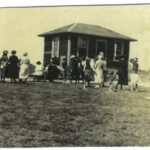
In 1898, a group of Galveston businessmen chartered Texas's first official country club and brought in a Scottish pro with genuine golf royalty bloodlines to lay out nine holes on the beach — protected from wandering cattle by brand-new barbed wire. Two years later, the deadliest natural disaster in American history wiped the course out along with much of the island. What followed is one of the great survival stories in Texas golf: a club that rebuilt, moved inland, burned down, moved back, hired Donald Ross to design a course between the Gulf and a bayou, burned down again, and relocated a third time — all while hosting Bobby Jones, Byron Nelson, Walter Hagen, and Babe Zaharias along the way.

Comments

Download from Google Play

Download from App Store
 United States