


 Claim Ownership
The Watch Floor with Sarah Adams
Subscribed: 1,765Played: 24,321
Subscribe

© Sarah Adams
Description
She hunted the world’s most dangerous terrorists. Now, former CIA Targeter Sarah Adams breaks down global news and emerging threats, helping everyday people stay informed. prepared, and ready.
96 Episodes
Reverse
What would you do if someone opened fire outside your church? Would you recognize signs of a potential threat? And if your children were in Sunday school when an emergency started, would you know how they were being protected?In this episode of The Watch Floor, former CIA Targeting Officer Sarah Adams walks through the threats facing churches and religious communities, from terrorism and targeted violence to suspicious surveillance, theft, arson, and threatening individuals.Drawing on real attacks and her experience briefing churches on security, Sarah explains what warning signs to recognize, when to report suspicious activity, and how to make decisions when a threat becomes an emergency.The episode also covers protecting children's ministries, responding to an active shooter, handling suspicious packages, medical preparedness, and the steps churches can take now to protect their congregations.This is a practical episode for churchgoers, pastors, volunteers, and security teams to save, share, and revisit.Because recognizing a threat is only the beginning. Knowing what to do next could save lives.

October 7th was not simply an intelligence failure. Israel had warning, surveillance, military power, and years of experience watching Hamas. What it lost was enough doubt about whether its own assumptions could be wrong.In this episode of The Watch Floor, I look at the lessons from October 7th that go well beyond Israel. We examine how complacency shaped intelligence assessments, how Hamas studied and attacked Israel’s dependence on technology, why warning indicators were missed, and what happened when the national response became overwhelmed and the fight turned local. I also look at the broader threat environment around Hamas, including training and relationships outside Gaza, and why intelligence services have to understand the enemy they actually have, not the enemy they remember. Most importantly, this episode is about what the United States can learn from those failures before someone tests the same weaknesses here. Complacency does not always look like laziness. Sometimes complacency looks very sophisticated.

I’m doing something a little different on The Watch Floor and sharing what is currently on my reading list.I’m reading Rooftop Korean by Tony Moon now, a firsthand account of the 1992 Los Angeles riots and what happened when communities suddenly found themselves responsible for their own safety.I also have five newer releases on my radar covering Cold War counterintelligence, warning intelligence, jihadist terrorism in Spain, practical preparedness, and protective security.These are not five books I am pretending I have already read and reviewed. They are simply books that caught my attention because they deal with many of the same issues we discuss here: recognizing threats early, understanding what can go wrong, and being better prepared before it does.Books mentioned in this episode:Rooftop Korean: A Memoir of the 1992 L.A. Riots by TonyMoon - https://a.co/d/08YLqD8OThe Defector by Richard Kerbaj - https://a.co/d/03Oj815hPredictive Intelligence for Tomorrow’s Threats edited byErik J. Dahl and David Strachan-Morris - https://a.co/d/0hKOBlKvUnderstanding Spanish Jihadist Terrorism: The Ideology Behind the Metaphors by Carlos Yebra López - https://a.co/d/04S9x9K5Common Sense Preparedness: Building Resilience for Uncertain Times by Laurie Neverman - https://a.co/d/08tIh7goThe Protector’s Edge: Leadership Through Strategy and Actionby Charles Randolph, Jonathan Wackrow, and Fred Burton - https://a.co/d/07ZSqWw9
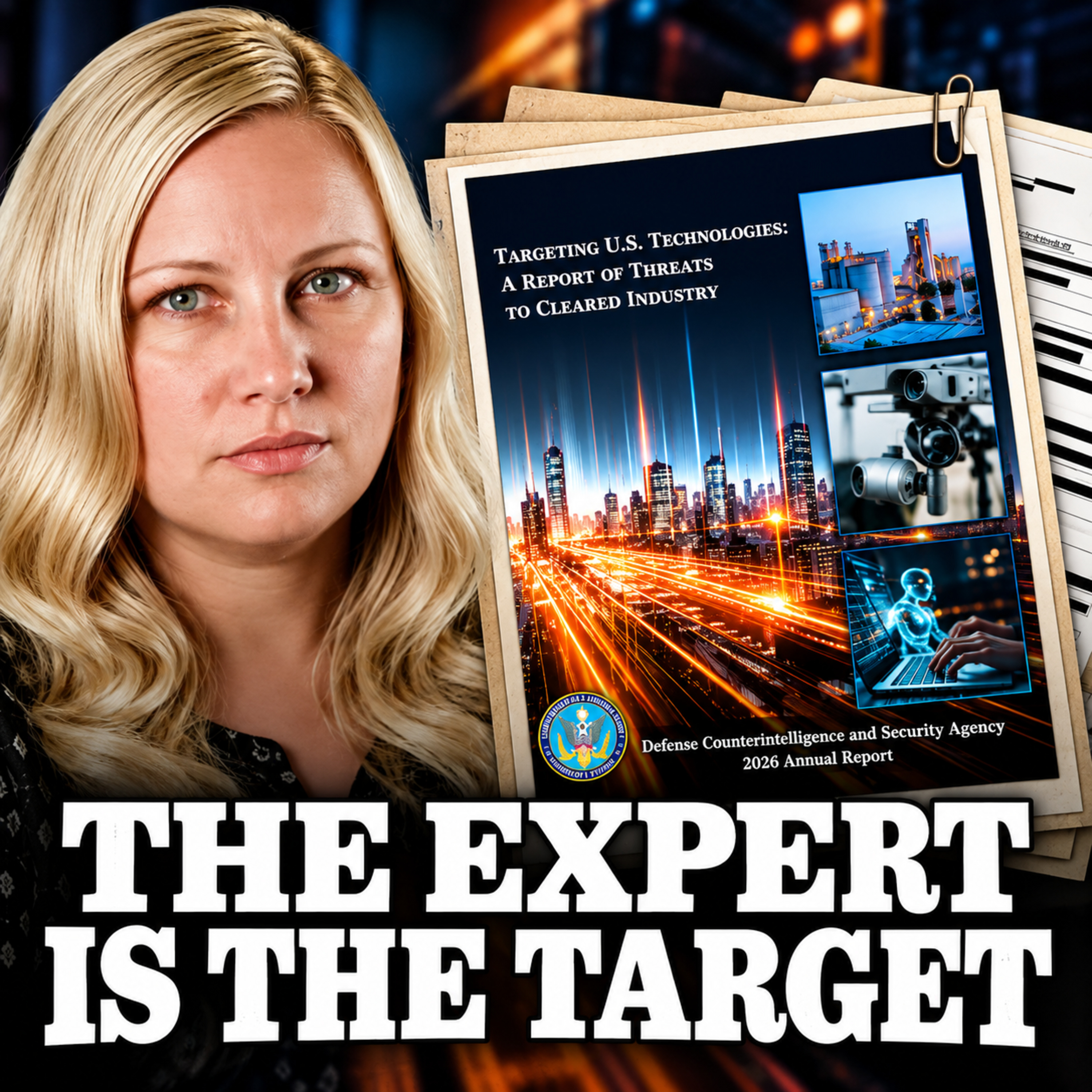
On September 17, the Defense Counterintelligence and Security Agency released its annual report on foreign efforts to acquire sensitive U.S. technology from the cleared defense industrial base. DCSA received more than 22,000 suspicious-contact reports during fiscal year 2025 and identified roughly 2,900 incidents involving foreign entities seeking U.S. information or technology. The leading method was the exploitation of experts. In this episode of The Watch Floor, I break down what that targeting can actually look like. It may begin with a consulting request, conference invitation, peer review, recruiting approach or research discussion. The interaction can look completely legitimate while giving someone access to the people who understand a technology, its limitations, its supply chain and where development is headed next. We also look at elicitation, front companies and intermediaries, why unclassified knowledge can still have intelligence value, and the warning signs experts should pay attention to when an ordinary professional relationship begins moving in another direction. The episode also covers why former government, intelligence, aerospace and defense personnel remain valuable targets long after their access or clearances are gone.Sometimes the most valuable technology is not sitting inside a secure computer system. It is sitting inside the head of the person who spent twenty years learning how that system works.

Before dawn on September 24, Ecuadorian police launched a major counter-narcotics operation against a cocaine-trafficking network. More than 320 Ecuadorian police took part, but this raid was different. About 50 personnel from U.S. Southern Command and the Drug Enforcement Administration joined the operation, with images showing U.S. personnel wearing Marine Raider insignia.In this episode of The Watch Floor, I break down why that matters, what the U.S. brought to the operation, and how the American role in Ecuador appears to be changing. We look at the raids in Samborondón and other areas, the use of drones, night vision, communications equipment and rapid exploitation of seized devices, and the broader effort to disrupt trafficking networks moving cocaine through Ecuador’s ports.The key question is whether this was a one-off operation or the start of a more direct U.S. role alongside Ecuadorian forces against transnational criminal organizations.

Comments

Download from Google Play

Download from App Store
 United States