


 Claim Ownership
The Exchange with Ed Stetzer
Subscribed: 629Played: 19,314
Subscribe

© 2026 Ed Stetzer
Description
Each week Ed Stetzer sits down with pastors, scholars, and leaders to make sense of the technology and culture reshaping the church.
516 Episodes
Reverse
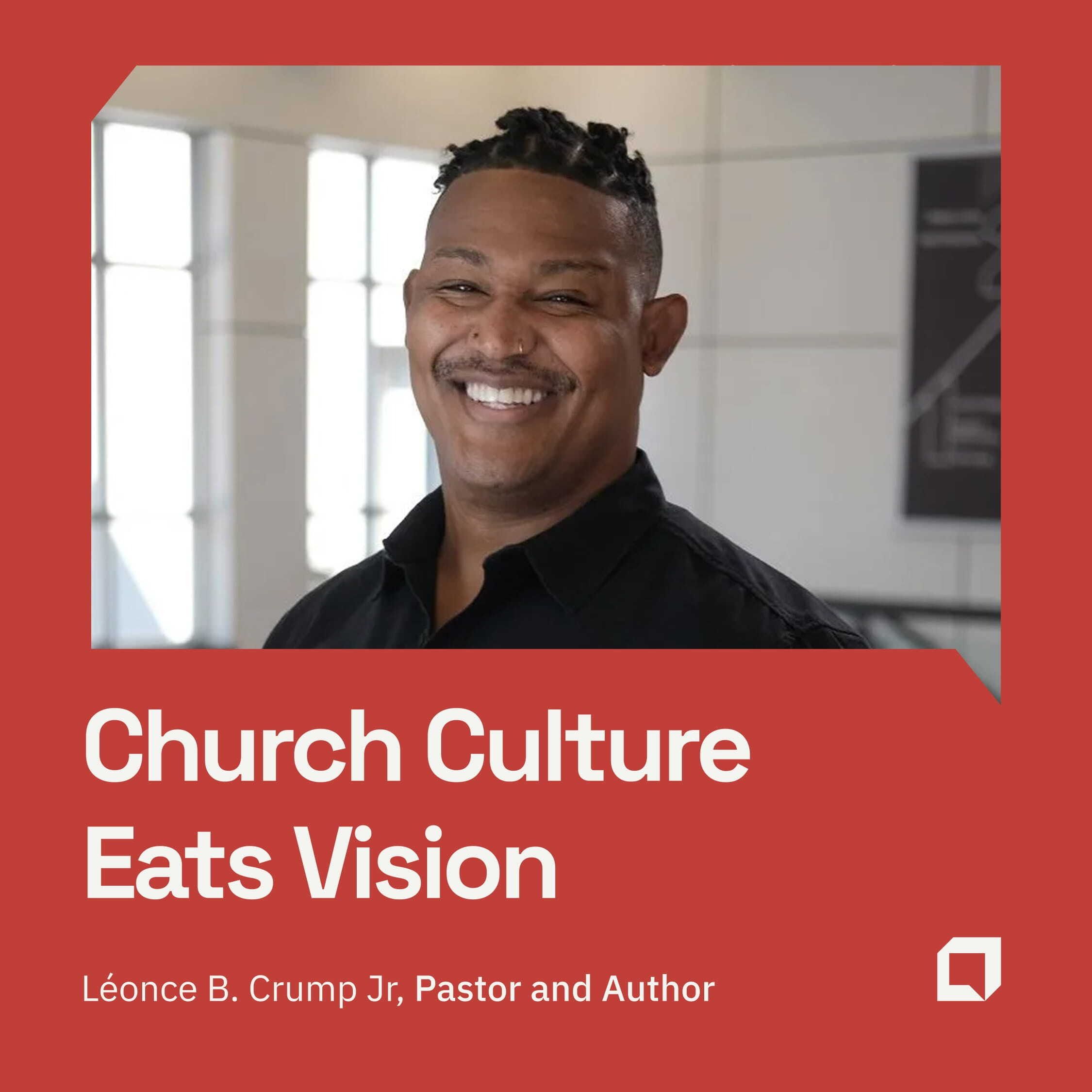
Pastors remain tired, and Léonce B. Crump Jr. agrees with Ed Stetzer that the cultural division that followed COVID has not peaked. The two discuss what a leader needs in reserve, and what a leader has to stop avoiding to stay in the work.The conversationHow do pastors build resilience that lasts?In the face of perpetual exhaustion, Crump names his reservoirs: the vision God gave him, a practiced Sabbath, a local community of pastors, and a coach, a counselor and a pastor. He argues that leaders need a place to say anything without recourse, and that the higher a leader’s profile, the smaller that place becomes. Grit, he says, comes from choosing difficulty, and the first hard thing he names for pastors is rest. How should pastors lead through a divided culture?Crump preached a series from the Book of Daniel with the tagline “Living under leadership you didn’t choose,” arguing that most people in most of history lived under rulers they did not select, and that God’s people have lived through conditions like these before. He says the church, like Western education, tends to be ahistorical, and that a leader who panics will lead a congregation in panic. From the conversation“In order for us, I believe, to function and thrive healthily, we have to have a space where we can say anything and everything without recourse.” – Léonce B. Crump Jr.“The thing that you are avoiding, the thing that you don’t want to do, is probably the doorway to your next level.” – Léonce B. Crump Jr.“We have developed a culture that is averse to suffering. And unless you have purposefully put yourself in athletics or the military or some other form of voluntary suffering, it’s very hard to develop grit in your life.” – Léonce B. Crump Jr.“If God is truly sovereign, then we can’t live in panic. And if we live in panic, then we’re going to lead our people in panic. We have to lead them with a steady hand.” – Léonce B. Crump Jr.About Léonce B. Crump Jr. is co-founder of United Church in Atlanta, which began as Renovation Church in 2008. He is the author of The Resilience Factor and Renovate: Changing Who You Are by Loving Where You Are.
Presenting sponsor: Gloo, a technology company for the faith and flourishing ecosystem. Hosted by Simplecast, an AdsWizz company. See pcm.adswizz.com for information about our collection and use of personal data for advertising.

Ed Stetzer asks JP Pokluda how a church leader tells a cultural problem from a spiritual one, and how the answer changes the way that leader prays. Pokluda says that the enemy goes after faith, and that authenticity is the best protection for a pastor and a congregation.How can a pastor take spiritual warfare seriously without obsessing over it?Stetzer raises C.S. Lewis’s two errors of ignoring the devil and obsessing over him. Pokluda adds a third: believing the enemy exists and letting that belief change nothing about how one lives. Stetzer asks whether a leader should call consumerism and performance idolatry and call for repentance, address them missiologically, or rebuke them as demonic. Pokluda says no one can know exactly where one ends and the other begins. He says the enemy runs many strategies and that the main one is distraction from God, with comparison and discontent as its ordinary means. What protects a pastor and a congregation from spiritual attack?Pokluda’s answer is straightforward: faith. He points to the shield of faith and to Jesus's prayer that Peter's faith would not fail, and he says that studying the subject left him less afraid and more faithful. The weight falls on what a pastor teaches, Pokluda argues. Leaders who train a congregation to look and sound like Christians while living differently in private, he says, are building toward disaster. From the conversation“As with all wars and all battles, there's lots of strategies, there's tributary fights, but the main current of what they're trying to do is distract us from the most high God, the creator of the heavens and the earth.” JP Pokluda“They're really looking for that inauthenticity. They're looking for double lives. They're looking for the pretenders. They have a heyday with that.” JP Pokluda“Be holy because he's holy, but not in an effort to appear holy, but to genuinely live a holy life.” JP PokludaAbout JP PokludaJonathan “JP” Pokluda is Lead Pastor of Harris Creek Baptist Church in Waco, Texas, and the author of Your Story Has a Villain, Welcome to Adulting, and Outdated. He previously led The Porch in Dallas.
Presenting sponsor: Gloo, a technology company for the faith and flourishing ecosystem. Hosted by Simplecast, an AdsWizz company. See pcm.adswizz.com for information about our collection and use of personal data for advertising.
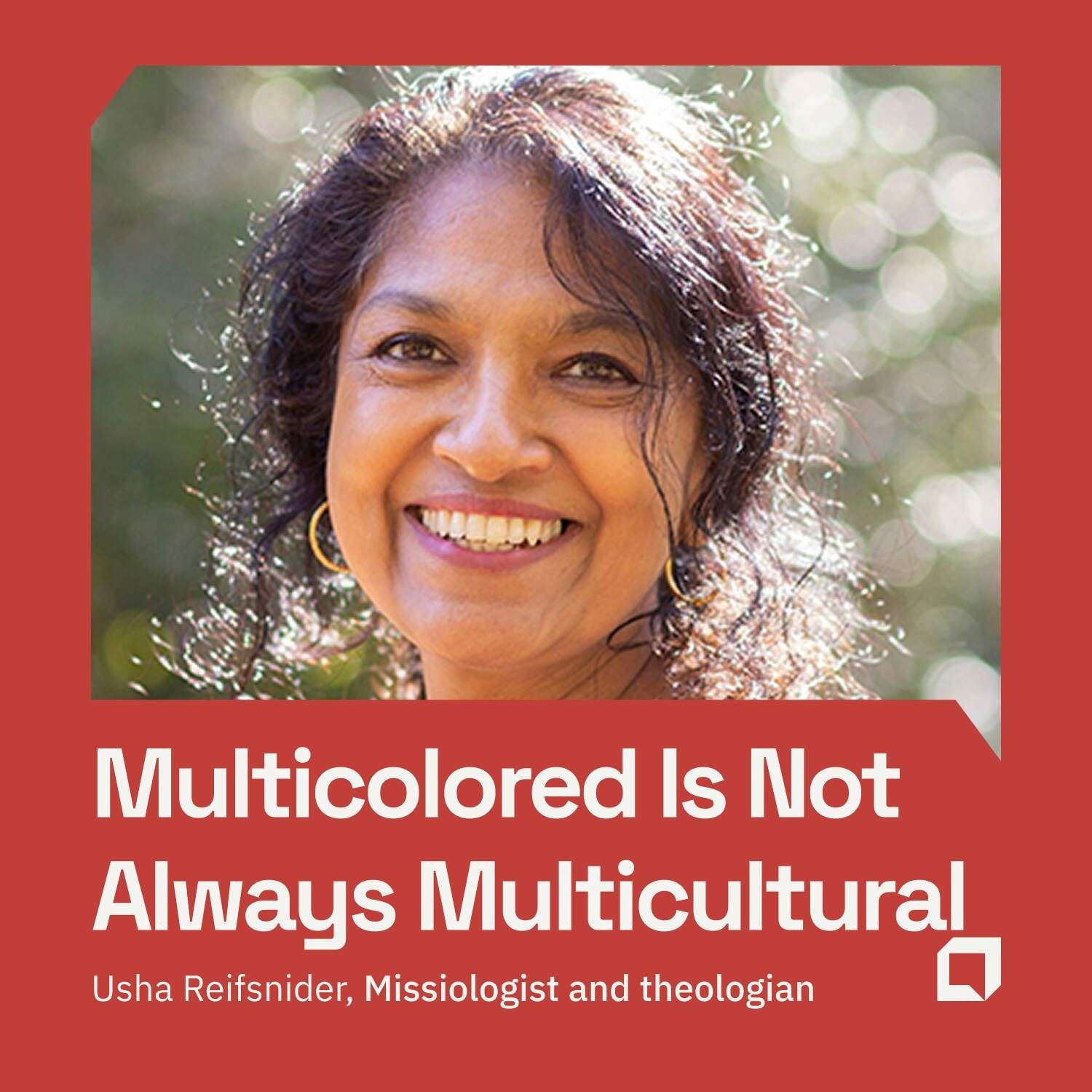
Usha Reifsnider's research among Hindu-background converts in Britain found churches that welcomed them but had not heard them. She and Ed Stetzer discuss muted group theory, language, and evangelism.The conversationWhat is muted group theory, and what does it say about the church?Reifsnider describes muted group theory, defined by Edwin and Shirley Ardener, through the workplace of the 1970s, where a woman admitted to a dominant group had to act as the men did. Ed Stetzer distinguishes the theory from critical theory and asks why the church should attend to unheard voices. She answers with her doctoral fieldwork: pastors told her their churches were united and multicultural, and she concluded that the people she needed to hear were the converts themselves. In church settings, she says, they used the words that earn recognition and left their pain and struggle unsaid.How should a church start hearing people unlike its majority?Ed Stetzer observes that people in a majority culture can feel fear when they stop being the majority, and asks how to respond. Reifsnider says it is easy to point to scripture, and that Christianity is lived through experience. She starts with relationship: coffee, a meal, friendships with Christlike people, built without the obligation to place someone who looks different in the pulpit. She argues that a multicolored church is not always a multicultural one, that words such as family carry different weight for a Western Christian and a Gujarati-speaking migrant, and that pastors should read majority-world theologians alongside their usual authors. Inclusion, she says, does not negate the voice of the majority culture in its own country. Asked by Ed Stetzer about Christian obligation, she grounds it in who Jesus was and says friction produces energy for growth. On the pace of evangelism, she says evangelical urgency produces templates that discard more than they hold. Stetzer replies that his concern is whether Christians share the gospel at all.From the conversation"The truth of the matter is that we live our Christianity through our lived experiences. And so people say all the time, 'Your identity is in Christ.' But sometimes the challenge for me is how a majority culture identifies me." - Usha Reifsnider"Build that relationship without feeling the obligation that I've just have to find somebody who looks different and plonk them in the pulpit to prove that I'm actually being as diverse as I can be." - Usha Reifsnider"I think the gospel was always meant to be one of movement. The gospel was never meant to be stuck in one place. It was never meant to be just one language or one location." - Usha ReifsniderAbout Usha ReifsniderUsha Reifsnider has served in cross-cultural mission since 1988, with a focus on migrant engagement. She holds a PhD at the intersection of cultural anthropology and practical theology and serves as a Lausanne Europe regional director and on the board of the European Evangelical Alliance. Her book is Unmuted: Speaking to Be Heard. Website: https://www.ushamattreifsnider.com
Presenting sponsor: Gloo, a technology company for the faith and flourishing ecosystem. Hosted by Simplecast, an AdsWizz company. See pcm.adswizz.com for information about our collection and use of personal data for advertising.
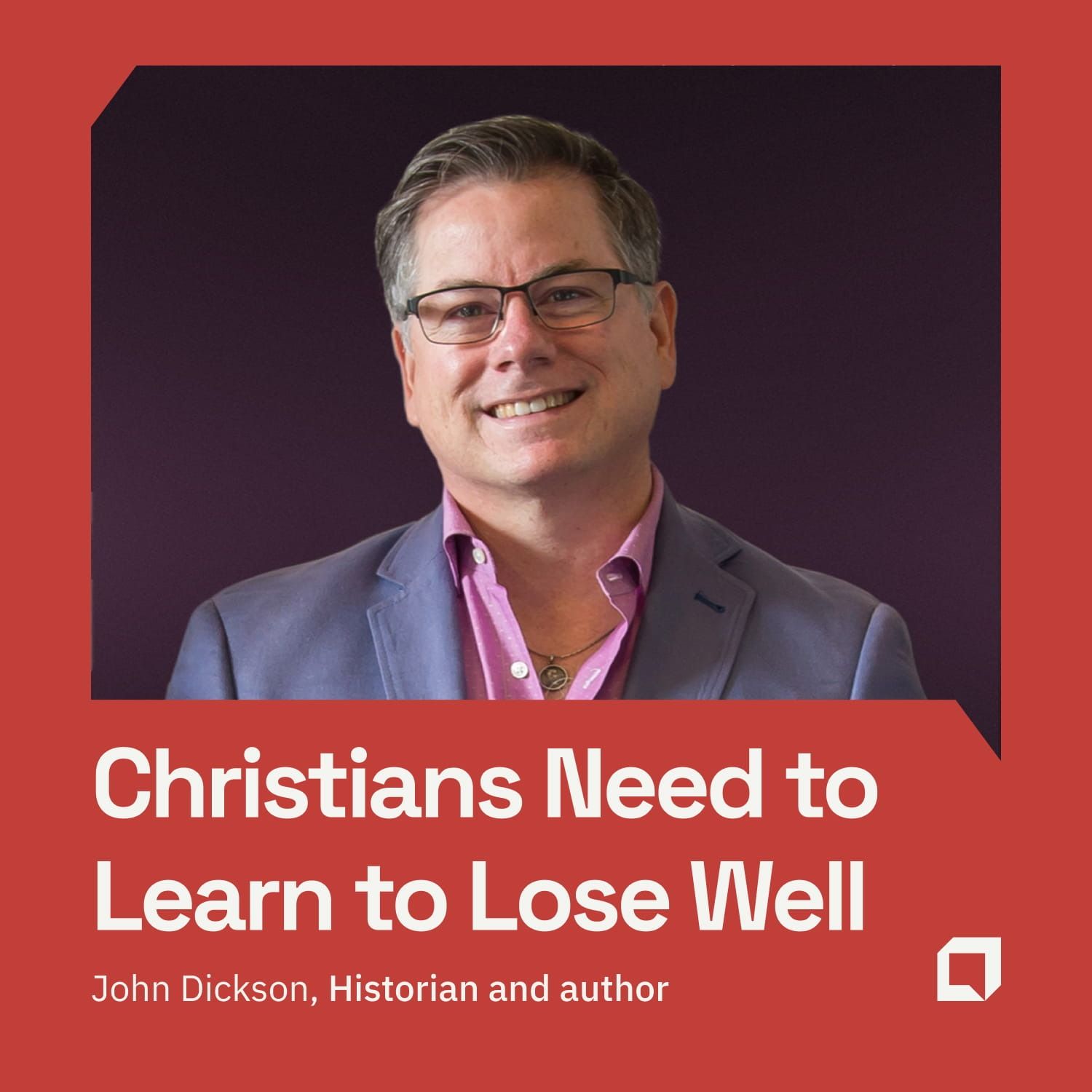
Historian John Dickson and Ed Stetzer teach an evangelism course together at Oxford and air their disagreements in front of the students. Here they take up two of those disagreements, and a question with stakes for American churches: what Christians should do with cultural power?The conversationHow did the early church spread the gospel?Dickson opens by defending his refusal of the title "apologist." Secular usage now means propagandist, he argues, and apologetics that selects only favorable evidence will fail the first skeptic who has read further. Ed, dean of a school with a large apologetics program, holds to the word and agrees about the practice. The sharper disagreement is historical. Dickson reads 1 Peter 3:15, the Great Commission, and Psalm 96 as one pattern, in which conviction that Christ holds all authority comes first and the readiness to speak follows. He calls the decline of evangelism a spiritual crisis first.Should Christians use cultural power to change laws?Ed challenges the phrase Dickson uses to unsettle audiences: Christians should learn to lose well. In America, Ed notes, that can sound like a loser's mentality, and evangelical influence can change laws for good. Dickson agrees influence should be used, through persuasion, gentleness, and respect, and warns that power makes it easy to sound like a bully. His measure comes from Bullies and Saints. Jesus set a melody of love for enemies, and the church's record shows departures from it that were often exposed by the Christians who condemned them. He closes with a test for American churches: whether skeptics would describe Christians as people who give themselves for others.From the conversation"The way the early church grew in antiquity was in more subtle ways. Yes, every Christian was on the lookout for opportunities to give an answer for the faith, but it's these other dimensions of prayer, godly life, and money." — John Dickson"It seems to me the thing that inspires evangelistic activity and zeal is a fresh vision of Christ's majesty over all things." — John Dickson"Let us allow the truth to be the offense, not the way we present it. And let us, whenever we defend the truth, sound like we're not protecting our tribe." — John DicksonAbout John DicksonJohn Dickson is a historian of early Christianity and Judaism, an ordained Anglican, and the Jean Kvamme Distinguished Professor at Wheaton College. He hosts Undeceptions and is the author of more than 20 books, including Bullies and Saints. More at johndickson.org.
Presenting sponsor: Gloo, a technology company for the faith and flourishing ecosystem. Hosted by Simplecast, an AdsWizz company. See pcm.adswizz.com for information about our collection and use of personal data for advertising.
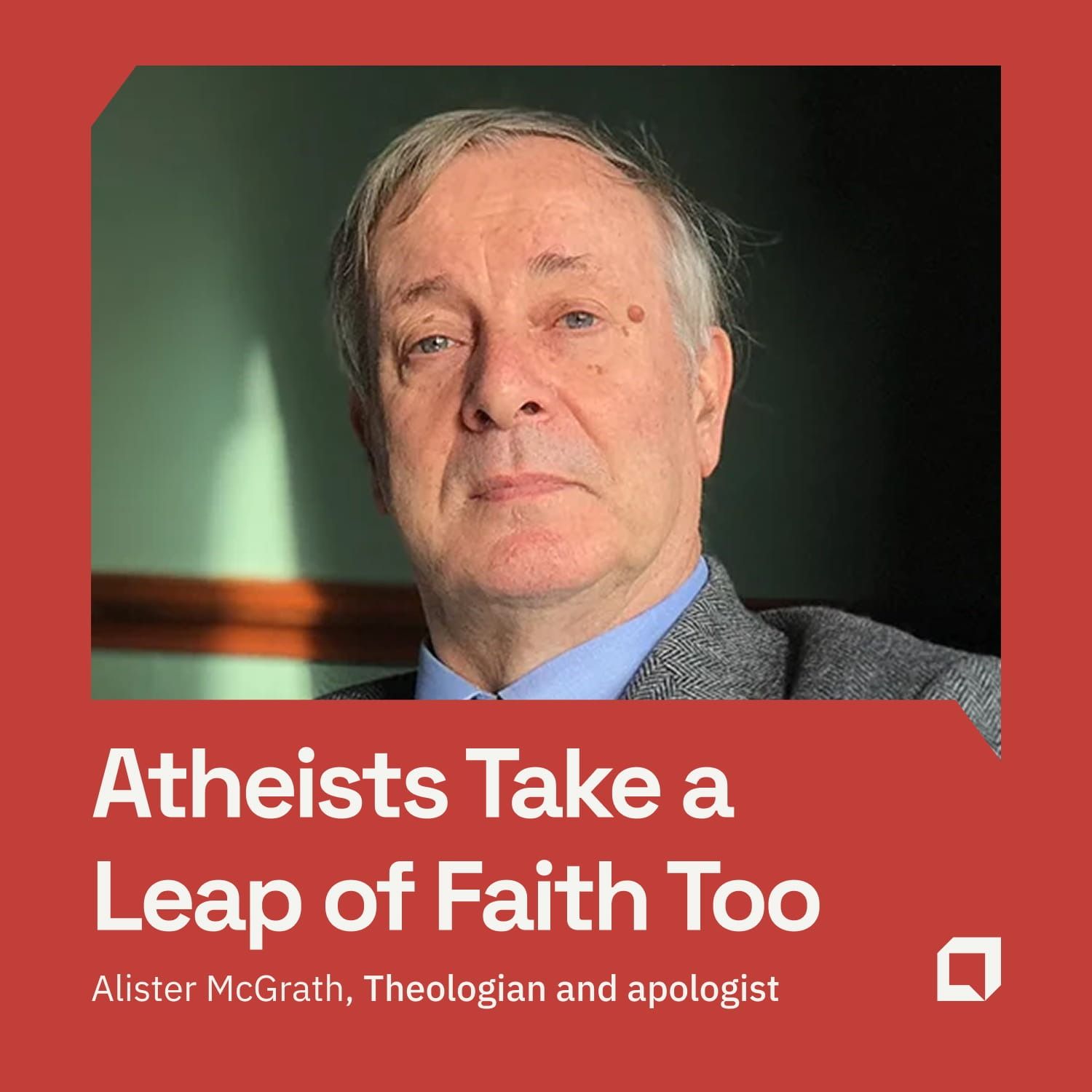
Alister McGrath says no one can prove what matters most, so atheists and Christians alike live by belief and live with doubt.The conversationCan Christians hold beliefs they cannot prove?McGrath begins from a claim about human life: meaning, moral value, and purpose cannot be established by reason or the scientific method, yet people do not flourish without them. He extends the point to atheism, recalling that when he pressed Richard Dawkins on whether atheism could be proven, Dawkins conceded it could not. Does a Christian worldview compete with science?Ed raised the objection McGrath's debate partners would make: that the Christian lens is a fantasy laid over the observable world. McGrath answers that science is a tool built for particular questions, and that using it to settle moral values is like using a thermometer to find the meaning of life. McGrath closes on what he calls Christianity's existential payload, a truth that changes a life.From the conversation"There are certain places it cannot go. It cannot talk about things like the meaning of life. It cannot talk about moral values, for example, because these both lie beyond the scope of the scientific method." Alister McGrath"I can prove really shallow truths, but not deep truths of meaning or moral value or purpose." Alister McGrath"The great big pictures of life which held sway for so long are just being junked, and there's nothing obvious that's going to replace them." Alister McGrath"Doubt is saying, 'I need to go into this deeper. My present understanding of this is not good enough.' Doubt is an invitation to explore, to go deeper." Alister McGrathAbout Alister McGrathAlister McGrath is emeritus Andreas Idreos Professor of Science and Religion at the University of Oxford and President of the Oxford Centre for Christian Apologetics. He holds doctorates in molecular biophysics, theology, and intellectual history, and his books include Dawkins' God and C.S. Lewis: A Life. His latest book is Why We Believe: Finding Meaning in Uncertain Times. Website: https://alistermcgrath.weebly.com/ Facebook: https://www.facebook.com/AlisterMcGrath Book: https://www.amazon.com/dp/086154921X
Presenting sponsor: Gloo, a technology company for the faith and flourishing ecosystem. Hosted by Simplecast, an AdsWizz company. See pcm.adswizz.com for information about our collection and use of personal data for advertising.

Comments

Download from Google Play

Download from App Store
 United States