


 Claim Ownership
 Strength Beyond Strength
Subscribed: 3Played: 23
Subscribe

© Dave Whitley
Description
25 Episodes
Reverse

Most people already know they should exercise, eat better, get enough sleep, and take better care of themselves.So why don’t they?Because knowing what to do and actually doing it are two very different things.On this episode of Strength Beyond Strength, my guest is Kate Solovieva, Precision Nutrition Master Coach, psychology expert, and experienced health and behavior-change coach.Kate brings a perspective that goes far beyond calories, workouts, and training programs. Her work explores how people think, how they make decisions, what gets in the way of progress, and what it really takes to create lasting change.This conversation explores the intersection of psychology, coaching, nutrition, and everyday life, including the realities of balancing personal goals with the responsibilities of parenting and family.Because getting stronger isn’t simply about what you can lift or what you know. It’s about who you’re becoming and what you’re willing to practice consistently.Topics explored* The difference between knowing what to do and actually doing it* Why information alone rarely creates lasting behavior change* The psychology behind habits, consistency, and personal growth* Why individualized coaching requires more than delivering a program* The importance of meeting people where they are* Why perfection can become an obstacle to progress* Building sustainable fitness and nutrition habits around real life* The challenges of maintaining personal goals while raising young children* What separates a good coach from someone who simply knows a lot* Why patience, practice, and adaptability matterAbout Kate SolovievaKate Solovieva is a Precision Nutrition Master Coach and head of community engagement at Precision Nutrition. She holds advanced qualifications in psychology and brings years of experience helping people navigate health, nutrition, and behavior change.Her background combines academic psychology, hands-on coaching, and a deep understanding of human behavior.Connect with KateInstagram: https://www.instagram.com/k_solovieva/Precision Nutrition: https://www.precisionnutrition.comSuper Coach Diaries: https://solovieva.myflodesk.com/supercoachdiariesConnect with Dave WhitleyLearn more about coaching, strength training, and building lasting physical capability at:https://coachdavewhitley.comSubscribe to Strength Beyond Strength for more conversations about strength, performance, personal development, and becoming more capable in every area of life.Dave’s Substack is a reader-supported publication. To receive new posts and support my work, consider becoming a free or paid subscriber. Get full access to Dave’s Substack at davewhitley.substack.com/subscribe
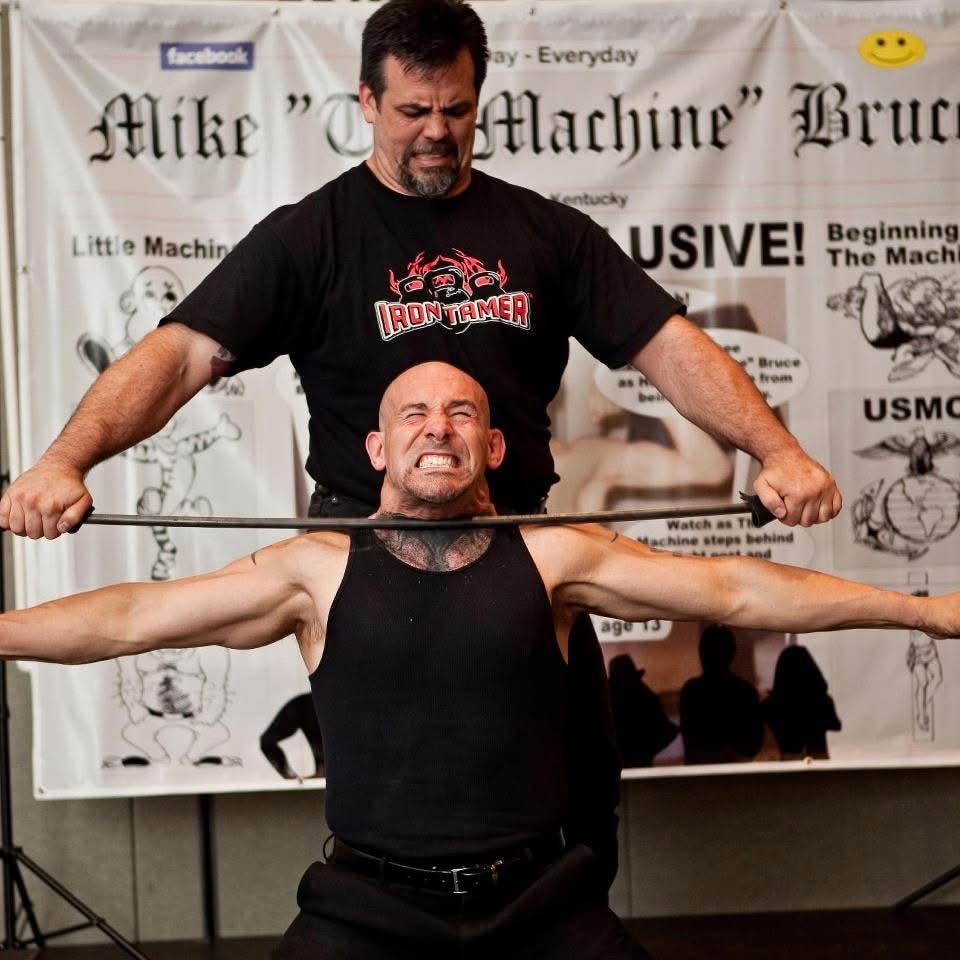
Mike “The Machine” Bruce is one of the best professional performing strongman of our time, longtime coach, former Marine and submission wrestling champion, author, speaker and most importantly: my friend for many years.I first met Mike in 2006. He has become widely known in the strength world for extraordinary demonstrations of neck strength and old-school physical culture. Among his feats are a 1,500-pound partial rack pull at approximately 202 pounds bodyweight, a 300-pound seated neck raise and having a steel bar bent across the front of his throat. In fact, he has a world record of 7 bars measuring 5/8” x48” bent across his throat in under 60 seconds. By me.photo by Mandy Whitley PhotographyBut this conversation goes well beyond records.Mike and I discuss how strength training gave him direction early in life, lessons carried forward from the Marine Corps and combat sports, training under old-time strongmen such as Grandmaster Dennis Rogers and Bud Jeffries, the forgotten value of neck training, and how a lifetime of lifting changes the way you think about strength.They also explore Mike’s philosophy that there is no magical training method. The foundation is still consistency, discipline and mastery of the basics — coupled with the patience to allow those things to work over time. Mike “The Machine” Bruce Get full access to Dave’s Substack at davewhitley.substack.com/subscribe

Ali Gilbert joins Strength Beyond Strength to talk about men’s health, strength, and what it means to take care of the whole man. We discuss how her work grew from golf fitness into men’s health coaching, why coaches and medical professionals need to work together, and what men can do when their energy, recovery, or body composition starts to change.We also get into practical training for busy men, the assumptions people make about testosterone, and how strength supports the life you want to lead outside the gym.Ali is a CSCS and the founder of Silverback Coaching and the Silverback Summit, which brings coaches and healthcare professionals together around men’s health. Ali's instagramDave’s Substack is a reader-supported publication. To receive new posts and support my work, consider becoming a free or paid subscriber. Get full access to Dave’s Substack at davewhitley.substack.com/subscribe

My guest on this episode of Strength Beyond Strength is my longtime friend and returning guest, Dr. Perry Nickelston, founder of Stop Chasing Pain.Perry has spent years teaching people to stop looking at the body as a collection of isolated parts and start paying attention to how the entire system works together.That means the place where you hurt isn’t necessarily the place where the problem began.In this conversation, we get into pain, movement, the nervous system, recovery, and why simply treating symptoms can cause you to miss the bigger picture.We also talk about the evolution of Perry’s thinking over the years and the importance of remaining curious rather than becoming married to a particular method.This conversation goes well beyond fixing aches and pains. It’s about learning to listen to the body, asking better questions, and understanding that everything is connected.Perry has built his work around a simple but powerful idea:Where you feel pain may not be where the problem is.Perry and I have known each other for many years, so this episode is very much conversation between two coaches who have spent decades studying movement, performance, recovery, and the human body.We talk about why people and practitioners often become too focused on the painful area instead of looking at what is happening throughout the entire system.In this episode, we discuss:* Why Perry created Stop Chasing Pain* Why the location of pain doesn’t always reveal its cause* Moving beyond the traditional “body part” approach* Looking at the body as an interconnected system* The relationship between movement and the nervous system* Why improving one area of the body can influence another* The importance of circulation, recovery, and the body’s internal environment* Why simply attacking symptoms can sometimes miss the real issue* How Perry’s approach has evolved over the years* Being willing to change your mind when new information appears* Why curiosity is one of the most important qualities a coach or practitioner can develop* The difference between following a system and actually understanding principles* Learning to pay attention to the signals your body is giving you* Why health, movement, performance, and recovery can’t always be separated into neat categoriesOne of the biggest themes of the conversation is something that applies to strength training as much as it does to pain:Don’t just ask what hurts. Ask why the body is responding the way it is.The better the question, the better chance you have of finding something useful.Connect with Perry and explore his work at Stop Chasing Pain.Dave’s Substack is a reader-supported publication. To receive new posts and support my work, consider becoming a free or paid subscriber. Get full access to Dave’s Substack at davewhitley.substack.com/subscribe

On this episode of Strength Beyond Strength, I’m joined by Tiffany Longcor, creator of Tiffness Fitness.Tiffany is a strength coach, kettlebell sport athlete and longtime student of unconventional strength training. Her training includes kettlebells, barbells, steel mace, Indian clubs and, of course, the bent press. She also currently holds the living women’s barbell bent press record.We talk about building strength in a way that fits your actual life, learning to enjoy the process, challenging yourself without turning every workout into punishment, and why good coaching has to start with the individual standing in front of you.In this episode we talk about:* Tiffany’s path from athlete to coach* How her relationship with strength training has evolved* Kettlebell sport and what it teaches you about patience and practice* Why Tiffany was drawn to the bent press* Training unconventional and old-time strength lifts* The difference between doing something hard and unnecessarily beating yourself up* Making fitness fit your life instead of organizing your life around fitness* Why enjoyment matters if you want training to last* Individualizing training rather than forcing everyone into the same program* Strength, confidence and resilience outside the gym* What competition can teach us even when winning isn’t the primary goal* Why there is more than one way to be strongAbout Tiffany LongcorTiffany Longcor is the coach behind Tiffness Fitness. She works with clients online and specializes in helping people build strength, skill and resilience through individualized training. Her background includes kettlebell sport, conventional and unconventional strength training, steel mace, Indian clubs and the bent press.Her philosophy is simple: fitness should support your life, not consume it.Connect with TiffanyWebsite: TiffnessFitness.comInstagram: @tiffness.fitnessDave’s Substack is a reader-supported publication. To receive new posts and support my work, consider becoming a free or paid subscriber. Get full access to Dave’s Substack at davewhitley.substack.com/subscribe

Comments

Download from Google Play

Download from App Store
 United States