DiscoverNow That’s Bass
Now That’s Bass
Claim Ownership

Now That’s Bass

Author: Pete Roythorne

Subscribed: 1Played: 59
Share

Description

Now That’s Bass is a podcast about the real world of professional bass playing.


Hosted by bassist Pete Roythorne, the show features frank conversations with working bass players — touring musicians, session players, educators and gospel players — about what it actually takes to sustain a career in music.


No fantasy. No gear flexing. Just the reality of the job.


The podcast is also part of a personal mission.


Just before Christmas Pete was made redundant. Approaching his 60th birthday, he decided it was time to stop talking about doing something serious with his bass playing and actually do it.


So he’s getting back out into the bass world.


Each episode features honest conversations with bass players who’ve built real careers — touring internationally, working in sessions, teaching thousands of students, and sustaining a life in music for decades.


Along the way Pete asks the questions many musicians want answered:
What does it actually take to make a living playing bass?
How do you build a reputation?
And how do you stay in the game long term?


If you’re serious about bass — not just the instrument but the long game of being a musician — this podcast is for you.

29 Episodes
Reverse
What does it actually take to build — and sustain — a career as a professional bass player?John Garrison has spent 18 years playing bass with James Blunt and has recorded with artists including Lewis Capaldi, Ed Sheeran, Christina Aguilera, Josh Groban, Passenger and Benson Boone. But his route into that world wasn't built around sight-reading, virtuosity or chasing the spotlight.In fact, John can't read music.Chapters for easy navigation00:17 John Garrison: 18 Years at the Top03:46 How John Accidentally Became a Bass Player06:52 The Roadie Who Helped Launch His Career11:14 From Aspiring Artist to Professional Bass Player15:38 How John Landed the James Blunt Gig19:34 What Keeps You Hired for 18 Years?22:09 Learning to Serve the Artist — Not Your Ego26:28 Why Major Producers Keep Calling John31:58 Inside Lewis Capaldi's “Forget Me”36:53 Why the Notes Are Only 30% of the Job42:25 The Extra Skills That Get Bass Players Hired45:23 What Great Players Get Wrong About Building a Career51:43 Glastonbury, Jay-Z and Life at the Top55:06 Peter Gabriel, Kylie Minogue and a Very Surreal Dinner57:06 The Bass That Ended Up on Arctic Monkeys' DebutIn this episode of Now That's Bass, John explains why being able to play is simply the starting point — and why speed, musical judgement, preparation, backing vocals, versatility and being someone other musicians actually want to spend time with can matter just as much.We get inside the session for Lewis Capaldi's “Forget Me”, including why John had to re-record the bass part on a different 1970s Precision before discovering it was about to become the first single.John also reveals how he can turn around major-label bass sessions in less than an hour, why being a songwriter changed the way he approaches bass, and why his younger self had to learn that playing 23 notes a second wasn't necessarily going to get him hired.We also talk about the unexpected “beer test” that helped him land the James Blunt gig, the challenge of moving from frontman to sideman, surviving 18 years on the road with the same artist, social-media comparison, ego, work ethic — and the question every aspiring professional musician should ask:Would the rest of the band actually want to have a coffee with you on the day off?Plus: playing Glastonbury with James Blunt, getting applauded by Jay-Z, asking Kylie Minogue to pass the HP Sauce, accidentally lending his bass to the Arctic Monkeys — and the two bass lines John believes players should spend some time with.If you're trying to turn being a good bass player into actually getting hired, there's a lot in this one.Now That's Bass — honest conversations about bass playing, careers and what it really takes to make a living in music.
Nick Owen spent ten years at London’s Bass Centre during an era when it brought together bass players from around the world. He remembers the famous names who passed through, the clinics, the unlikely encounters and, above all, the community that formed around a shop where people could try an instrument and talk to someone who knew it inside out.What did working there teach him about basses and the people who play them? And could a place like that exist again?Chapter guide00:00:00 Nick Owen’s Unusual Bass Career00:05:46 Inside the Bass Centre00:15:25 Clinics and Bass Centre Legends00:23:06 From a Dep Gig to Sway00:29:11 The Jeff Beck Audition00:41:17 Music and the London Taxi00:48:11 Basses Kept, Sold and Remembered00:59:37 What Nick Would Do DifferentlyNick’s story goes well beyond the counter. He talks about the dep that led to nearly 30 years with Sway, work with Ronan Keating, Gary Barlow, Bonnie Tyler and Dirty Vegas, a daunting Jeff Beck audition, and the complicated freedom of driving a London taxi alongside a playing career.The final part is a treat for gear lovers. Nick discusses the basses he misses, the boutique instruments that left him cold, and what years of handling vintage Fenders taught him about judging an old bass on more than its age or price.If you visited the Bass Centre, we’d love to hear your memories.
Guy Pratt has played bass with Pink Floyd, David Gilmour, Madonna, Michael Jackson, Bryan Ferry, Robert Palmer and some of the biggest names in music.But behind that extraordinary CV is a much more interesting story about confidence, instinct, relationships — and what it actually takes to survive for decades as a professional musician.In this episode of Now That's Bass, Guy talks candidly about the imposter syndrome he felt working alongside the world's elite session musicians, why Bernard Edwards asking for him still seems extraordinary, and why being good in the room may have been as important to his career as being good on the bass.Want to jump to the cool stuff?00:34 Why bell ringing got Guy more press than playing bass03:22 How Guy first found the bass07:29 Learning by ear and making music without reading09:56 When playing bass became a possible career11:32 The first jobs: making a living with no plan B20:49 Why people kept calling Guy back23:40 Does imposter syndrome ever go away?26:31 What Bernard Edwards meant to Guy32:00 From band member to session player35:13 Murder on the Dancefloor and the bass line you barely notice37:08 Guy’s process for creating a bass part40:34 Has the music business become harder for working players?43:38 What Guy would tell his younger self about a music career47:38 The relationships that disappear between tours49:32 How to handle life when a tour ends51:22 Bass lines Guy wishes he’d written54:35 The bass part Guy is proudest of56:28 The bass players who give Guy stage fright58:47 How Guy became a stand-up storyteller1:01:43 Recording with Robbie Robertson1:04:41 The time Michael Jackson hid in the studio1:07:21 One bass line every player should learnStill want to read more...We get into how Guy actually creates bass parts in the studio, why he sometimes starts with absolutely no idea what to play, the 17-minute session that produced his bass part on Murder on the Dancefloor, and why he believes a great bass player can sometimes be like a great waiter: you barely notice them, but everything gets done.Guy also reflects on an industry that has changed almost beyond recognition. He explains why the music business may look bleak while opportunities for working players aren't necessarily as bad as they appear, why personal relationships matter so much to making great music, and the huge amount of downtime that nobody sees behind a successful touring career.Plus: playing with Bernard Edwards, being wound up by David Gilmour before a Pink Floyd bass solo, recording Earth Song and Like a Prayer, working with Robbie Robertson, the bass lines he wishes he'd written — and why bell ringing has somehow generated more media attention than almost anything else he's done.Subscribe to Now That's Bass for honest conversations with professional bass players about playing, careers and what it really takes to make a life in music.#GuyPratt #BassGuitar #BassPlayer #PinkFloyd #DavidGilmour #NowThatsBass #madonna
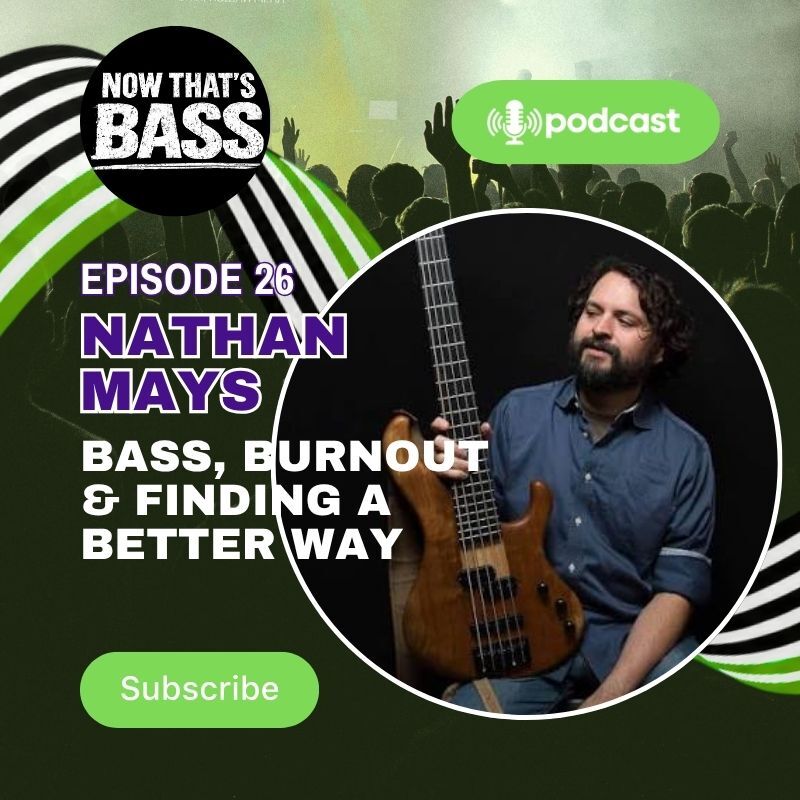
What happens when the career you spent years building starts taking away the thing you loved about music in the first place? Nathan Mays has been playing bass for more than 23 years, working across country, variety bands, musical theatre and more experimental music while also studying music composition to Master's level. But after years of gigging, Nathan found himself becoming increasingly disillusioned with the professional music scene. Music was becoming a job — and, in his words, "playing music shouldn't feel like work." So he stepped back. Today, Nathan's focus is increasingly on music education, where his experiences as a player, composer and teacher have come together in his own approach to learning bass: Feel, Form and Function. In this episode of Now That's Bass, we talk about: • Why Nathan stepped away from the professional music grind • The darker side of the music world that musicians don't always talk about • What real gigs teach you that music school can't • Why chops don't matter if you can't actually do the job • The problem with collecting information instead of actually learning • Why so many bass players practise without a target • Whether "feel" can really be taught • Why pocket changes depending on the music you're playing • Nathan's Feel, Form and Function approach to bass • Why recording yourself could transform your practice • The problem with cookie-cutter music education • Why young musicians need to learn to take criticism • And why Nathan thinks every bass player should learn "Chameleon" It's a conversation about bass, but also about something bigger: what happens when your definition of being a successful musician changes. If you enjoy honest conversations about the realities of building a life around the bass — not just gear and chops — subscribe to Now That's Bass for more interviews with working bass players, educators and musicians. #NowThatsBass #NathanMays #BassGuitar #BassPlayer #BassLessons #BassEducation #MusicEducation #BassPractice #WorkingMusician #BassPlayers
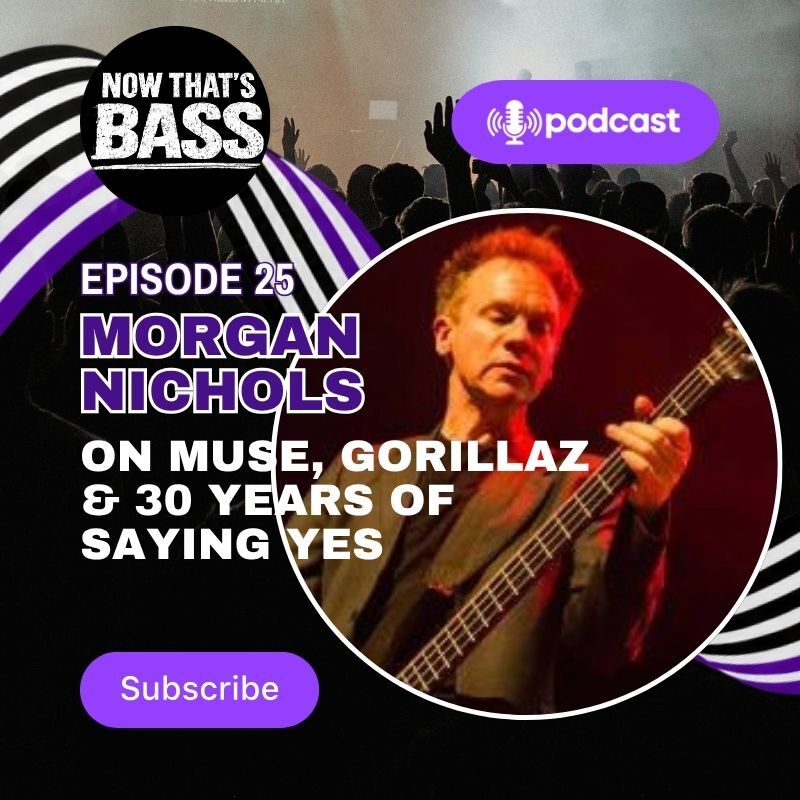
Morgan Nicholls has built the kind of music career that's almost impossible to plan. From starting out with Senseless Things to playing with The Streets, Gorillaz and ultimately spending 15 years onstage with Muse, Morgan's story is one of versatility, relationships, being in the right place at the right time — and being ready when the phone rings. In this episode of Now That's Bass, Morgan talks about being "relegated" from guitar to bass, learning his craft through relentless gigging, discovering the bi-amped bass sound that changed his playing, and the phone call that gave him just days to learn a Muse set after Chris Wolstenholme broke his wrist. We also get into his first terrifying Muse show, how a temporary bass dep turned into 15 years with the band, the chaos of early gigs with The Streets, performing with Gorillaz, and why getting on with people may be one of the most important skills a professional musician can have. Morgan also shares what he wishes he'd learned when he was younger, the bass lines that influenced him, the instrument he'll never sell — and somehow we end up with Arnold Schwarzenegger, Elton John and a packet of Old El Paso tacos. A brilliant conversation about longevity, adaptability and building a life in music without ever really having a master plan. In this episode: Being "relegated" from guitar to bass 150 gigs a year with Senseless Things Why Live at Leeds changed Morgan's approach to bass Finding his bi-amped bass sound The unexpected call from Muse Learning Chris Wolstenholme's bass parts in days What went wrong during Morgan's first Muse show How a temporary dep became 15 years with Muse Playing with Gorillaz and The Streets Why personality matters on tour The importance of treating the crew as part of the band What Morgan wishes he'd learned when he was younger Glastonbury, Arnold Schwarzenegger and tacos at Elton John's house #MorganNicholls #Muse #BassGuitar #BassPlayer #NowThatsBass #Gorillaz #TheStreets #SenselessThings #ChrisWolstenholme #BassPlayers #ProfessionalMusician #TouringMusician #SessionMusician #MusicPodcast #BassPodcast #MusicianLife #BassCommunity #BassGuitarist #BritishMusic #MusicIndustry
loading
Comments