


 Claim Ownership
New Worlder
Subscribed: 3Played: 14
Subscribe

© New Worlder
Description
The New Worlder podcast explores the world of food and travel in the Americas and beyond. Hosted by James Beard nominated writer Nicholas Gill and anthropologist Juliana Duque, each episode features a long form interview with chefs, conservationists, scientists, farmers, writers, foragers, and more.
newworlder.substack.com
newworlder.substack.com
67 Episodes
Reverse

María Álvarez and Isaac Martínez are the co-founders of the Mexican culinary book publisher Novo. We had María on a couple of years ago when they had just started out. They’ve put a few more books out and have some exciting projects in development, so we wanted to talk to her again alongside Isaac.Somehow, they are the first culinary book publisher in Mexico and they have already put out some beautiful books about that go into depth around Mexican culinary elements like mushrooms, pulque, pork, and now fish. This last one is especially intriguing as its being written by Jorge Leon, who has the restaurant Alfonsina in Oaxaca, which I have written about quite a bit. Jorge started a sustainable fish company a couple of years ago, just because he wanted to get fish from the coast of Oaxaca on his menu in Oaxaca City, but it was easier to get fish flown in from Baja at the quality he needed. So, he started working with a few local fishing families to buy whatever they caught and work with them to install practices like ikejime to make sure it gets to him in the best possible condition. It started off as something small but it is snowballing into a much bigger idea about sustainable fishing in Mexico and I’m excited to see the book, called Bitácora de Pesca Salvaje when it comes out in December.To never miss an episode and show your support for independent media, consider becoming a free or paid subscriber.Novo’s slogan has been, Sembremos una milpa, which of their way of saying lets create an ecosystem of ideas around food, sort of like a milpa is. But now they have actually planted a milpa in Huehuecalco, in the state of Mexico. They are working with a local farming family, with the help of organizations like Tamoa and Tierra de Monte, and they are going to be documenting what is happening for the next five years there. We talk to them about what exactly a publishing company starting a milpa means and what the documenting of that is going to look like.Host: Nicholas GillCo-host: Juliana DuqueProduced by Nicholas Gill & Juliana DuqueRecording & Editing by New WorlderListen to the New Worlder podcast on Apple podcasts, Spotify, and most other podcast sites. Or subscribe to our YouTube Channel to watch video clips & full episodes. This is a public episode. If you'd like to discuss this with other subscribers or get access to bonus episodes, visit newworlder.substack.com/subscribe
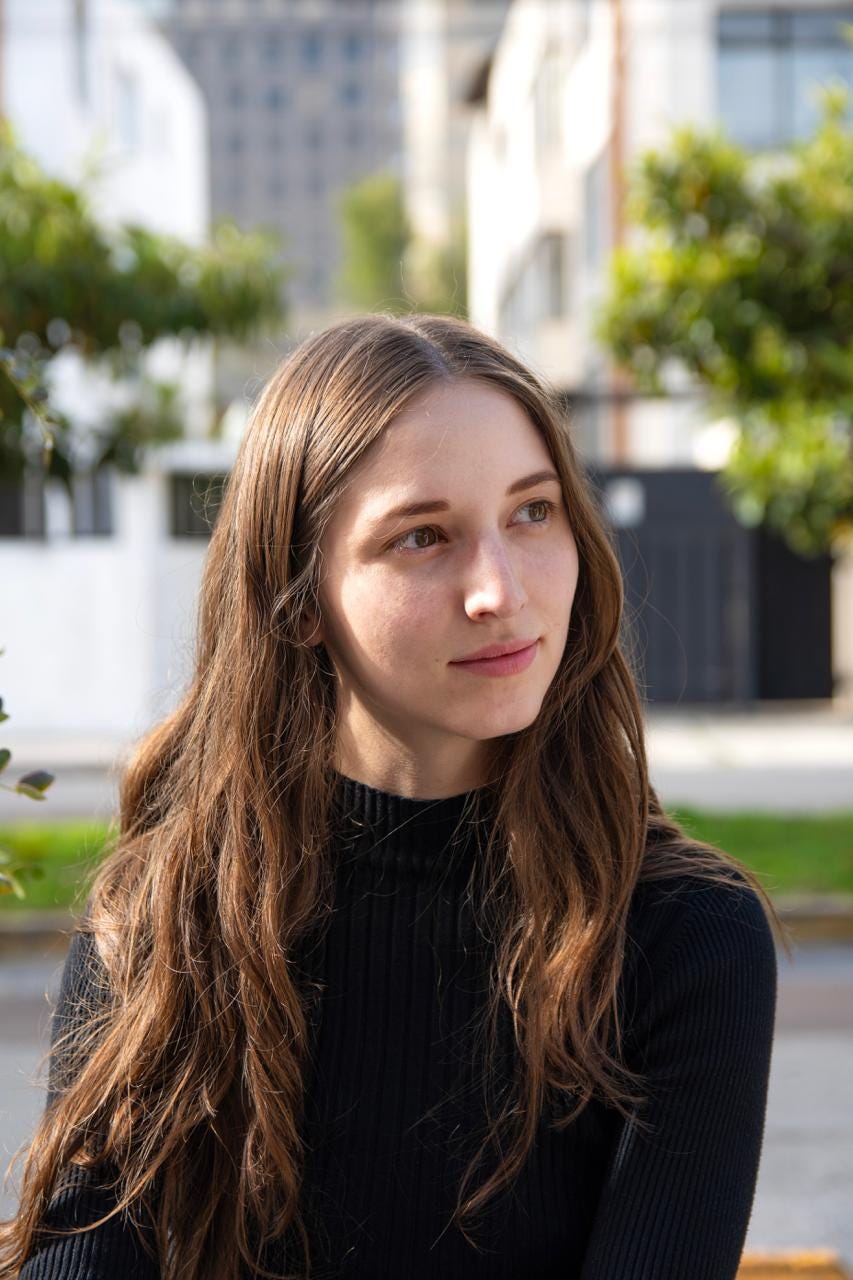
Abril Macías is the founder of the magazine Revista Chiú, a print and digital platform based in Ecuador. One of the most fascinating gastronomic destinations in the world, Ecuadorian food remains relatively unknown or misinterpreted.Abril often writes about understanding its place in the world. The country lacks an easily identifiable national dish like ceviche or tacos, however, we discuss during this conversation how its most important factor might be just that. That diversity itself is most relevant symbol of Ecuadorian food. Not the mostly widely spread industrial foods like Cavendish bananas or farm raised tilapia, or even cacao, which was first domesticated in this corner of South America more than 5,000 years ago, as we have somewhat recently learned.To never miss an episode and show your support for independent media, consider becoming a free or paid subscriber.The Ecuadorian gastronomy movement looks a lot different today than it did when I first started traveling there more than 20 years ago. There’s a much greater appreciation of regional cooking and ingredients than there ever has been. Fine cacao isn’t just being shipped off and processed in Europe, but being processed in Ecuador by artisan chocolatiers. There are companies like Canopy Bridge helping create value chains for niche Amazonian products. There’s a hospital for stingless bees called Hasa! Ecuadorian restaurants like Nuema are appearing on global lists for cooking Ecuadorian food rather than international foods. Indigenous cooks like my Shuar friend Shushui Jimbicti are teaching others about cultural foods.With all these exciting new ideas, food media is extremely important and until recently, Ecuador never really had much of it. Publications like Chiú are helping shift the discourse around the country’s foodways and provide thoughtful, critical explorations of what is going on, thinking beyond just international recognition. Chiú has printed two editions so far, one titled Líquida, about Ecuadorian drinks, where I contributed a story about chicha. The other was about Paisajes Comestibles, or edible landscapes. I highly recommend finding a copy, which can be ordered online if you aren’t visiting Ecuador anytime soon. The next issue will be out in a few months and Abril tells us all about the challenges of publishing in Latin America, but also how necessary the effort is.Host: Nicholas GillCo-host: Juliana DuqueProduced by Nicholas Gill & Juliana DuqueRecording & Editing by New WorlderListen to the New Worlder podcast on Apple podcasts, Spotify, and most other podcast sites. Or subscribe to our YouTube Channel to watch video clips & full episodes.More stories about Ecuador: This is a public episode. If you'd like to discuss this with other subscribers or get access to bonus episodes, visit newworlder.substack.com/subscribe

Sebastian Gallucci comes from an Argentine Italian family, but grew up in Toronto, Canada. He now runs two restaurants in somewhat isolated part of Costa Rica’s South Pacific coast in the town of Uvita, called Sebas and Alma.Uvita, and neighboring towns like Dominical, are less accesible than the beach towns of Nicoya and Guanacaste much further north, so they remain relatively unknown to the outside world. Marino Ballena National Park, which extends out into the Pacific in the shape of a whale’s tail, dominates the shoreline in front of Uvita, and beachfront development is limited elsewhere, so most new construction is inland, much of it up in the jungle covered hills where Sebastian’s restaurant Sebas moved, beside a waterfall, in late 2025 from the town below. I visited the area a couple of years ago and was surprised to find a nice mix of creative Costa Rican restaurants, like Marlon Acuña’s more modern Scala and his cevicheria Contramarea, living alongside regional restaurants called sodas and some weird cowboy karaoke bar.Development is happening, however. Uvita is already home to a week-long New Age festival that blends electronic music and spirituality called Envision, which brings in more than 5,000 attendees each year, putting intense pressure on the infrastructure, and glitzy homes are being carved deeper into the forest. It’s reason enough to have this conversation with Sebas, as he calls himself. He talks a lot about limiting himself to buying local producers, aside of things like Italian flour for his pizzas. It’s very easy in Costa Rica to just give in and source the cheapest industrial ingredients, because the influx of foreigners has never demanded it.His story is an odd one. Again, he’s an Argentine-Italian that was raised in Canada, who worked at his father’s restaurant, an Argentina-Italian restaurant in Toronto. When he got older, he worked in a bank for a little while, then grew tired of it and started a supper club and launched a food truck selling choripan. When the pandemic hit it, all collapsed and he and his wife and a newborn set off to Costa Rica where his wife had already bought some land and they lived off the grid, slowly building a life and farm there while creating a business that respects the land and producers around them. His pizzas have started to get international attention, but the full menu, including the things he doesn’t serve because of the seasons or sourcing, might be even more intriguing.Host: Nicholas GillCo-host: Juliana DuqueProduced by Nicholas Gill & Juliana DuqueRecording & Editing by New WorlderListen to the New Worlder podcast on Apple podcasts, Spotify, and most other podcast sites. Or subscribe to our YouTube Channel to watch video clips & full episodes. This is a public episode. If you'd like to discuss this with other subscribers or get access to bonus episodes, visit newworlder.substack.com/subscribe
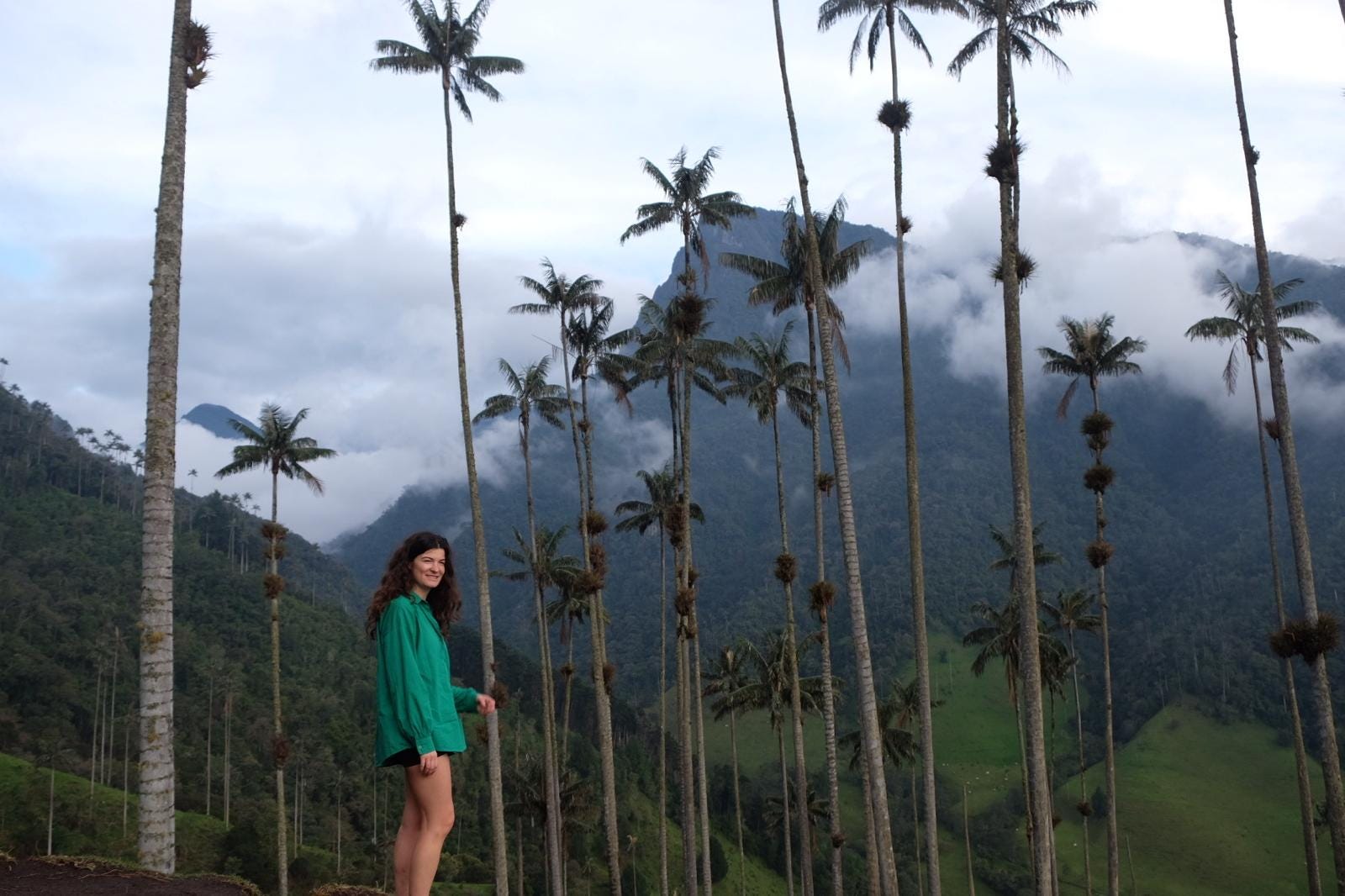
There is a lot going on in Colombia right now, for those that are paying attention. There was a major earthquake that just devastated the Eje Cafetero, Colombia's coffee zone, and a new right wing president was just elected. Then there are all the issues related to the formation of the modern country after 2016 peace agreement that are still being sorted out, like the protection of natural resources, the growing of coca, cultivos de paz, indigenous sovereignty and tourism. Bogotá based journalist Claire McQue has been on the ground, often traveling to some of the most remote areas of the country, to report on all of these issues.Born in the UK, Claire covers politics, music, art, architecture, film, food, forests, indigenous rights and social media. Her work is often found in The Economist, as well as publications like The Observer, National Geographic Traveller, Wanderlust Magazine and many others. She’s also the author of a new DK Travel guidebook to Colombia that will be published later this year.In the interview we speak of places she has traveled to, such as Guainía, in Colombia’s eastern Amazon, about Cali and Quibdó, some of the areas most affected by the earthquake; the Pacific Coast, home to the sugarcane distillate viche; Bogotá, where chefs are trying to work with supply chains in rural areas that are constantly being cut off. The conversation veers into storytelling, music, telenovelas, coffee and much moire.Host: Nicholas GillCo-host: Juliana DuqueProduced by Nicholas Gill & Juliana DuqueRecording & Editing by New WorlderListen to the New Worlder podcast on Apple podcasts, Spotify, and most other podcast sites. Or subscribe to our YouTube Channel to watch video clips & full episodes. This is a public episode. If you'd like to discuss this with other subscribers or get access to bonus episodes, visit newworlder.substack.com/subscribe

The village of Trancoso, Brazil is located not very far from where Portuguese explorer Pedro Álvares Cabral first reached the South American continent in 1500, yet it remained mostly undisturbed for centuries. It wasn’t until the the 1970s when a group of eccentric newcomers arrived by walking there for hours along the beach from Porto Seguro. The biribandos, as they were called, were hippies, free spirits from São Paulo and beyond, who fused their bohemian lifestyle with local traditions and for decades were left alone. Around the turn of the millennium, after roads and electricity had been established, the world started to catch on. Trancoso was splashed on the pages of glossy travel magazines, who called it the next Tulum, even though no one there wanted that. As the pandemic arrived, more people moved in and developers began snatching up property, and putting pressure on the fragile infrastructure. To never miss an episode and show your support of independent media, consider becoming a free or paid subscriber.Yet, those who have made a life here are fighting back. They are holding inclusive events like the Organic Festival (the next edition is September 23-27, 2026) and trying to preserve a ring of small farms and sustainable fishing that completely surrounds the village to make gastronomy a centerpiece of how the community lives and works. This on location report speaks with and interviews those that live and work in the community, taking in the sounds of the birds and waves, and listening to the music in the air, alongside my own narration of my experiences. For additional reported episodes like this one, listen to our episodes from Barranquilla, Colombia and Vestmannaeyjar, Iceland":Narrator: Nicholas GillProduced by Nicholas Gill & Juliana DuqueRecording & Editing by New Worlder—Listen to the New Worlder podcast on Apple podcasts, Spotify, and most other podcast sites. Or subscribe to our YouTube Channel to watch video clips & full episodes. This is a public episode. If you'd like to discuss this with other subscribers or get access to bonus episodes, visit newworlder.substack.com/subscribe

Comments

Download from Google Play

Download from App Store
 United States