


 Claim Ownership
The Griot | Stories Roots Legacy
Subscribed: 29Played: 1,117
Subscribe

© Copyright The Griot
Description
The Griot is a modern historical, cinematic, movie, and podcast platform inspired by the African griot, the ancient storyteller and keeper of legacy. We bring history, action, drama, fiction, documentaries, culture, and untold stories to life through powerful visual and audio storytelling. Stories. Roots. Legacy.
725 Episodes
Reverse

On October 19, 1983, Maurice Bishop, the Prime Minister of Grenada, and seven others were executed at Fort Rupert in St. George's. Six days later, the United States invaded. In 1986 a Grenadian court tried seventeen people. This episode tells the record: the events, the trial and its verdicts, the sentences and their commutation, the criticism of the trial's fairness by Amnesty International, and the question that remains, where Bishop's remains are.Sources: Global Voices, Amnesty International reporting on the trial, the U.S. State Department human rights reports, Grenadian press (NOW Grenada, The New Today), BlackPast and other histories. Where sources differ, the episode says so. Verdicts and sentences are stated by date.
On July 27, 1990, 114 members of the Jamaat al Muslimeen attacked the Parliament building and the national television station in Port of Spain, and took the Prime Minister and Cabinet hostage. The siege lasted six days. Twenty-four people died. This episode tells what the record shows: the attack, the surrender and the amnesty, the court rulings that followed, and what a 2014 Commission of Enquiry concluded about the warnings that were missed.Sources: the Report of the Commission of Enquiry (2014) as summarized, academic work by Mahabir (2013), Ragoonath (1993) and Meighoo (2003), BBC reporting, Trinidad and Tobago Newsday, and Jamaica Observer. Where accounts differ, the episode says so.
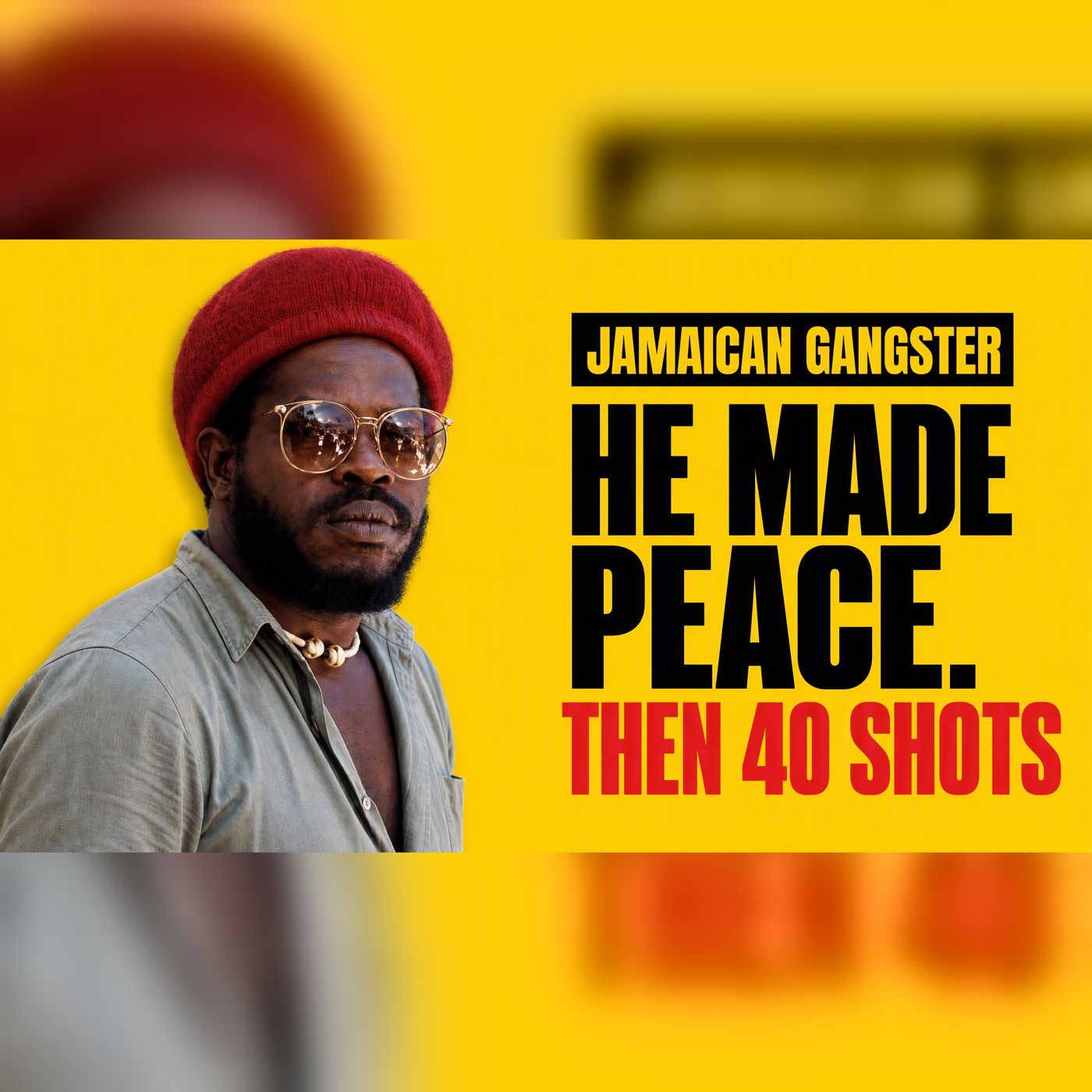
On a Sunday evening in February 1979, police stopped a taxi at the corner of Industrial Terrace and Marcus Garvey Drive in West Kingston. Three men died. One of them was Claudius "Claudie" Massop, the Tivoli Gardens strongman who, ten months earlier, had signed a peace treaty with his rival Bucky Marshall and helped bring Bob Marley home for the One Love Peace Concert.The police said he jumped out and fired first. The driver said the men had their hands up. Doctors counted forty gunshot wounds. Four policemen were charged with murder, and in 1982 a jury acquitted them all.This documentary follows the record — from Back-O-Wall and Tivoli, through the 1976 state of emergency and a shared jail cell, to the treaty, London, the concert, and the two accounts of his last minutes.Allegations against Claudie Massop were never tested in court; he was never convicted of the murders he was charged with. The police officers charged over his death were acquitted. Scenes are reconstructions made for this film, not archival footage.Chapters0:00 The roadblock1:49 Denham Town and Tivoli3:34 The record5:54 Borders and the emergency7:24 The cell and the treaty9:16 Bringing Bob Marley home11:08 One Love12:39 The cracks14:10 Two stories16:34 The funeral and the trial17:44 What came after19:03 Who was Claudie Massop?SourcesJamaica Observer (Karyl Walker 2007; Sybil Hibbert 2013; 2008; 2013; 2018); The Gleaner (2005, 2008, 2015, 2021 — Imani Tafari-Ama);Bob Marley: Legend collection (Google Arts & Culture); Caribbean Beat; Andscape.Watch next: Jamaican Don of All Dons: Jim Brown.
In 1983 an American television report alleged that the highest levels of the Bahamian government were linked to the drug trade. In 1984 Prime Minister Lynden Pindling called a commission of inquiry. This episode tells what the record shows: the allegations that started it, the hearings in Miami and Nassau, the testimony of one witness that the prime minister himself disputed, the commission's reported findings about corruption between 1978 and 1982, and what did and did not follow. Pindling was never charged with any crime.Sources: UPI coverage of the 1984 hearings, Washington Post reporting quoted by Bahamian historians, The Nassau Guardian, Bahamianology, and published histories of Bahamian independence. Where a figure comes from a single account, the episode says so.

For more than twenty years, a painted face looked out over the corner of Matthews Lane and Beeston Street in Kingston. In February 2013, police painted it over.The man on that wall was Glenford "Early Bird" Phipps — remembered in Matthews Lane for a basic school that still carries his name, remembered by Bob Marley's circle as the cook who went with them to Germany in 1980, and named in a 1991 New Jersey State Commission of Investigation report as the man who had headed the Spangler Posse's New York City operations. When he was killed in Kingston in 1990, he was working as Supervisor of Metropolitan Parks and Markets.This documentary follows the record — the report, the reporting, and a poem by Kamau Brathwaite — to show how one life held all of those places at once, and what the record still cannot tell us.The report's statements are an intelligence assessment by a state commission, not court findings. We found no record that Early Bird was ever charged in the United States. Scenes are reconstructions made for this film; they are not archival footage.Chapters0:00 The painted face2:29 Chapter 1 — Matthews Lane5:50 Chapter 2 — Bob Marley's cook8:04 Chapter 3 — The American record12:28 Chapter 4 — July 199015:11 Chapter 5 — The murals17:13 Chapter 6 — Four pictures of one manSourcesNew Jersey State Commission of Investigation, "Afro-Lineal Organized Crime" (March 1991)Jamaica Observer; The Gleaner; Ioan Grillo, "Jamaican Organized Crime After the Fall of Dudus Coke", CTC Sentinel (2014); Annie Paul, "Iconoclasm in Babylon" (2013); Kamau Brathwaite, "Trench Town Rock" (1994)Watch next: Zeeks Phipps (the brother's story).#Jamaica #TrueCrime #JamaicanHistory

Comments

Download from Google Play

Download from App Store
 United States