DiscoverThe FAKTR Podcast
The FAKTR Podcast
Claim Ownership

The FAKTR Podcast

Author: Jessica Riddle, Todd Riddle

Subscribed: 4Played: 178
Share

Description

The FAKTR Podcast

Where clinical science meets real-world practice.

The FAKTR Podcast brings together forward-thinking healthcare professionals, educators, researchers, and industry innovators to explore the ideas shaping modern rehabilitation, movement science, sports medicine, and human performance.

Through engaging conversations and practical insights, we examine evidence-informed approaches to patient care, emerging clinical research, innovative treatment strategies, professional development, and the evolving role of technology in healthcare.

Designed for chiropractors, physical therapists, athletic trainers, rehabilitation specialists, and other healthcare professionals who believe that better outcomes begin with better questions.

Because advancing healthcare requires more than learning new techniques. It requires challenging assumptions, connecting disciplines, and continually rethinking what's possible.

Stay curious. Challenge convention. Advance your practice.

FAKTR LINKS
FACEBOOK: https://www.facebook.com/FAKTRconcept
INSTAGRAM: https://www.instagram.com/FAKTREDUCATION/
LINKEDIN: https://www.linkedin.com/showcase/faktr
EEDUCATI

139 Episodes
Reverse
Why do some patients continue experiencing pain long after an injury should have healed? And why can seemingly minor movements or stimuli trigger significant discomfort, even when structural findings don't fully explain the symptoms?For healthcare providers treating persistent musculoskeletal pain, these questions can present some of the greatest challenges in clinical practice.In Part 2 of our series, FAKTR Director of Education Dr. Todd Riddle takes us deeper into the science of pain, exploring central sensitization and the complex relationship between the nervous system, pain perception, and patient recovery.Building on the biopsychosocial framework introduced in Part 1, Dr. Riddle examines how changes in nervous system processing can contribute to heightened pain sensitivity, why pain intensity doesn't always correlate directly with tissue damage, and how these mechanisms can influence a patient's response to treatment.In This Episode, You'll Learn:Understanding central sensitization: How increased sensitivity within the central nervous system can contribute to persistent or amplified pain.Pain versus tissue damage: Why the intensity of a patient's symptoms doesn't always correspond directly to the extent of structural injury.The relationship between pain and movement: How fear, protective behaviors, and changes in activity can contribute to ongoing challenges during recovery.Recognizing complex pain presentations: Why persistent symptoms may require clinicians to reconsider their initial assessment and treatment strategies.Knowing when to refer: How recognizing psychological and other contributing factors can help clinicians determine when additional professional support may be appropriate.The Clinical Takeaway→ Don't stop at identifying where it hurts. Ask why it hurts.When patients experience persistent or disproportionate pain, focusing exclusively on the site of symptoms may overlook important contributing factors.Understanding the role of nervous system sensitization can help clinicians develop more informed clinical hypotheses, communicate more effectively with patients, and recognize when an individualized or multidisciplinary approach may be beneficial.Resources Mentioned:Dr. Riddle references the work of pain science educators and researchers whose contributions have helped advance our understanding of pain processing, central sensitization, and rehabilitation.Explain Pain — David Butler and Lorimer Moseley. An educational resource exploring pain neuroscience and how understanding pain can support patient education and rehabilitation.Graded Motor Imagery Handbook— G. Lorimer Moseley, David Butler, Timothy Beames, and Thomas Giles. A resource examining graded motor imagery approaches used in selected complex and persistent pain presentations.A World of Hurt - A Guide to Classifying Pain – Annie O’Connor and Melissa C. Kolski A practical, evidence-informed guide to understanding and treating persistent pain through pain neuroscience education, graded exposure, and strategies that address the complex relationship between the nervous system, movement, and pain.🔗 SPECIAL OFFERS FROM OUR SPONSORS:Try a five-day welcome kit from our sponsor Immunotec here: https://tinyurl.com/ep137-immunotecThis episode is sponsored by Genetic Lifespan. Learn more about how to become a healthcare provider here: https://tinyurl.com/ep137-GLP🎙️ SUPPORT THE SHOW: Visit our website at faktrpodcast.com to leave a review or comment.
Stop Chasing Pain: Finding the Victim and the Villain Part 1 with Dr. Todd RiddleWhen a patient presents with pain, it's natural to focus our examination and treatment on the area that hurts. But what if that painful area is simply the victim—and the real villain is somewhere else entirely?In Part 1 of this educational series, FAKTR Director of Education,Todd Riddle, DC, CCSP, RKT, CSCS, ICSC challenges healthcare providers to look beyond the location of symptoms and take a more comprehensive approach to understanding musculoskeletal pain.Drawing on clinical examples and evidence-informed principles, we explore the difference between identifying where a patient hurts and understanding the factors contributing to their pain experience.He introduces the biopsychosocial model of pain, examining how biological, psychological, and social influences interact—and why two patients with seemingly identical complaints may require very different approaches to care.From the importance of thorough patient histories to recognizing the limitations of a strictly biomedical approach, this episode offers practical insights to help clinicians sharpen their assessment strategies, improve clinical reasoning, and develop more individualized treatment plans.In This Episode, You'll Learn:The victim-versus-villain concept: Why the site of pain isn't always the primary source of dysfunction.Biomedical vs. biopsychosocial models: Why structural findings alone may not fully explain a patient's pain experience.Why similar symptoms don't always mean similar causes: How biological, psychological, and social factors can differ between patients presenting with low back pain.Looking beyond physical findings: Why clinicians should recognize psychological and social contributors while remaining within their professional scope of practice.Understanding pain mechanisms: Why distinguishing among different contributors to musculoskeletal pain matters when developing an appropriate treatment strategy.The Clinical Takeaway→ Don't stop at identifying where it hurts. Ask why it hurts.Effective patient care requires more than treating the painful structure. It involves identifying the relevant contributors to a patient's symptoms, understanding how those factors interact, and using that information to guide individualized care.🔗 SPECIAL OFFERS FROM OUR SPONSORS:Try a five-day welcome kit from our sponsor Immunotec here: https://tinyurl.com/ep137-immunotecThis episode is sponsored by Genetic Lifespan. Learn more about how to become a healthcare provider here: https://tinyurl.com/ep137-GLP🎙️ SUPPORT THE SHOW: Visit our website at faktrpodcast.com to leave a review or comment
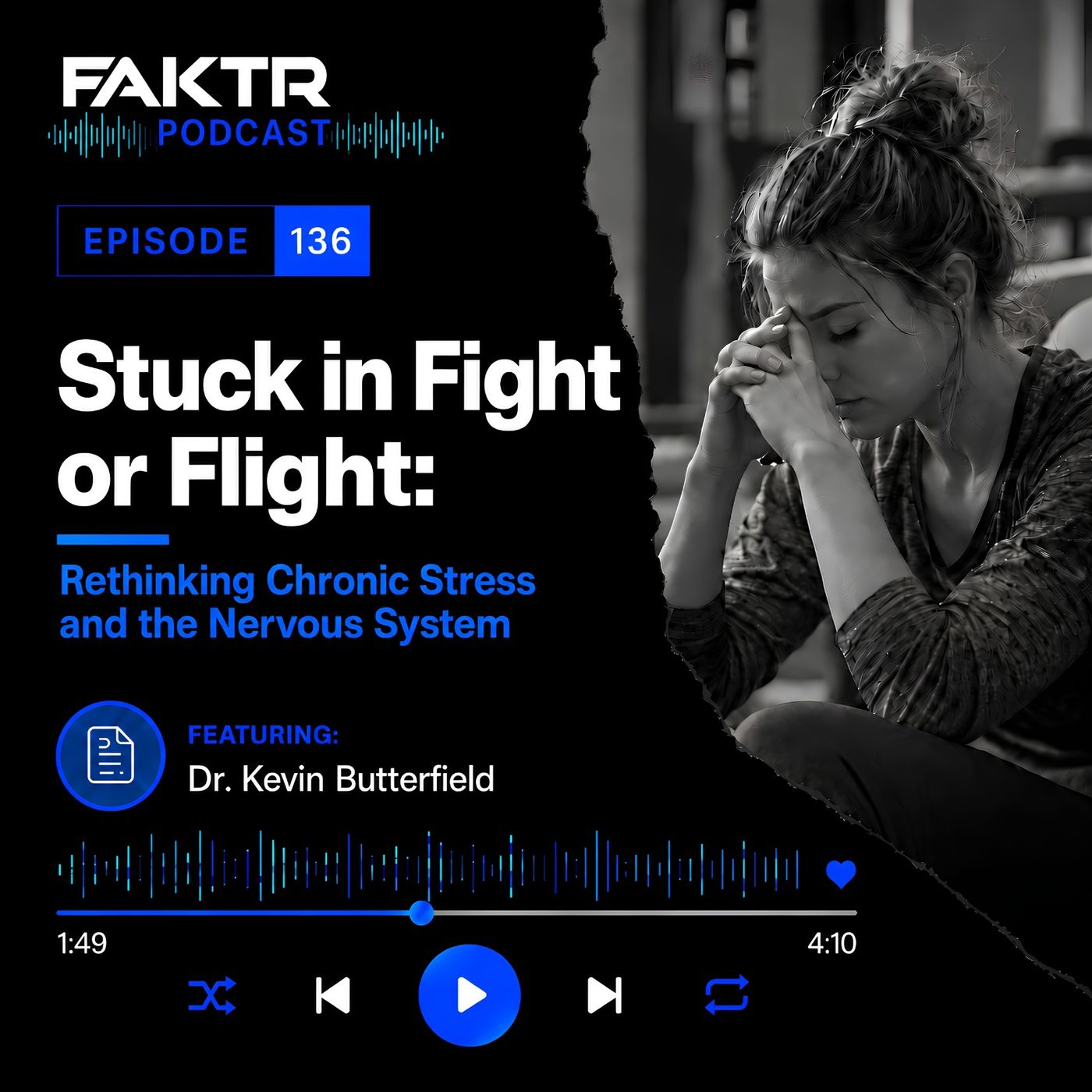
Stuck in Fight or Flight: Rethinking Chronic Stress and the Nervous System with Dr. Kevin ButterfieldChronic neck tension. Poor sleep. Heightened pain sensitivity. Fatigue. Difficulty recovering. A patient who always seems to be “on.”We often approach these as separate clinical problems—but what if they’re connected by something happening further upstream?In this episode of the FAKTR Podcast, Dr. Kevin Butterfield and Seth Kaelin of Hippocampus Labs, a member of the FAKTR Podcast Network, explore what can happen when the nervous system has difficulty shifting out of a persistent stress response and why understanding the relationship between the brain, autonomic nervous system, and body may offer clinicians another perspective on patients who seem to plateau despite appropriate care.Building on our recent conversations around brain function and neurofeedback, this episode shifts the focus away from athletic performance and toward chronic stress and nervous-system regulation.Key Themes in Today’s Episode:How persistent sympathetic activation may contribute to muscle guarding, tension, sleep disruption, and increased pain sensitivityWhy chronic stress can become a self-perpetuating brain-body feedback loopHow the alarm, resistance, and exhaustion stages of the General Adaptation Syndrome relate to chronic stressHow the HPA axis and limbic system participate in the body's response to perceived threatHow autonomic states influence our ability to move between activation, recovery, and social engagement🔗 SPECIAL OFFERS FROM OUR SPONSORS:Try a five-day welcome kit from our sponsor Immunotec here: https://tinyurl.com/ep136-immunotecDownload a white paper and access Neurofeedback research here: https://tinyurl.com/ep136-hipporeportThis episode is sponsored by Genetic Lifespan. Learn more about how to become a healthcare provider here: https://tinyurl.com/ep136-GLP🎙️ SUPPORT THE SHOW: Visit our website at faktrpodcast.com to leave a review or comment
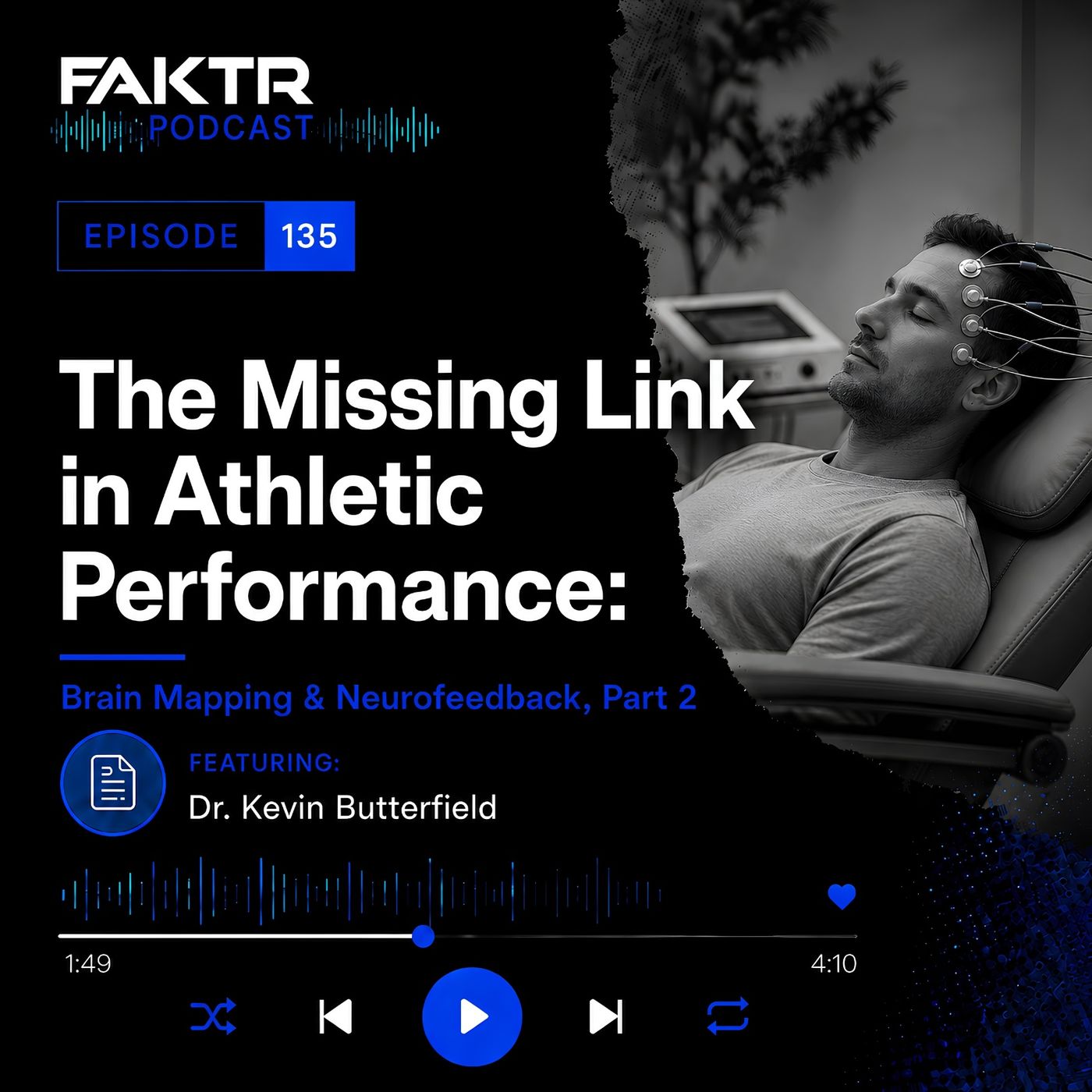
When athletic performance is measured in fractions of a second, physical preparation may only be part of the equation.In Part 2 of this special featured episode from the Better Brains, Better Futures Podcast, now part of the FAKTR Podcast Network, host Seth Kaelin continues his conversation with returning FAKTR Podcast guest Dr. Kevin Butterfield to explore how quantitative EEG (qEEG) brain mapping and neurofeedback are being applied in sports performance, recovery, and clinical practice.Moving from theory into real-world application, Seth and Dr. Butterfield discuss how objective neurological data may help clinicians and performance teams better understand cognitive readiness, focus, reaction time, emotional regulation, recovery, and the effects of concussion.They also explore examples from professional motorsports, football, golf, MMA, and youth athletics, while discussing how brain mapping and neurofeedback can be incorporated alongside existing sports medicine, rehabilitation, strength and conditioning, and performance programs.Whether you work with youth athletes, weekend warriors, collegiate competitors, or elite performers, this episode offers a closer look at how neurological performance is becoming part of the broader conversation around athlete health and human performance.Key Themes in Today’s Episode:Using qEEG brain mapping to establish neurological baselines and assess readinessHow neurofeedback may support focus, reaction time, emotional regulation, and performance under pressureReal-world applications in motorsports, football, golf, MMA, and other competitive sportsThe role of brain-based training in concussion recovery and return-to-performance conversationsNeuroplasticity, autonomic regulation, and the mechanisms behind neurofeedback trainingIntegrating brain mapping and neurofeedback into sports medicine, rehabilitation, and performance workflowsLooking beyond athletic performance to support the long-term health and resilience of the athlete🔗 SPECIAL OFFERS FROM OUR SPONSORS:Try a five-day welcome kit from Immunocal here: https://tinyurl.com/ep-134-welcomeLearn more about adding Neurofeedback in your clinic here: https://tinyurl.com/ep134-hippo🎙️SUPPORT THE SHOW: Visit our website at faktrpodcast.com to leave a review or comment.
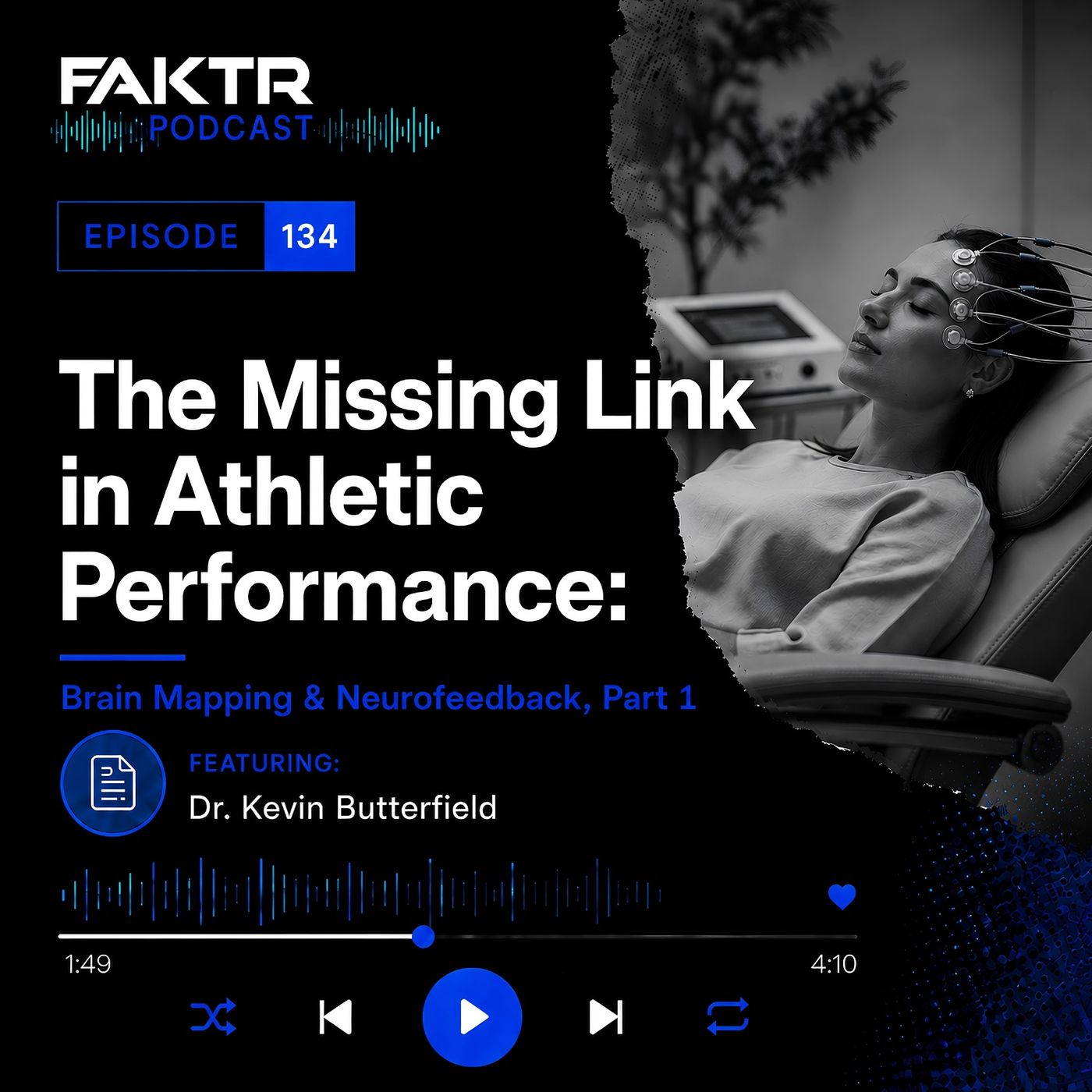
The Missing Link in Athletic Performance: Brain Mapping & Neurofeedback (Part 1) with Dr. Kevin ButterfieldAthletes spend countless hours training strength, endurance, mobility, and movement—but how often do we intentionally train the brain?In this special featured episode from the Better Brains, Better Futures Podcast, now part of the FAKTR Podcast Network, host Seth Kaelin sits down with returning FAKTR Podcast guest Dr. Kevin Butterfield to explore the growing role of quantitative EEG (qEEG) brain mapping and neurofeedback in sports performance.In this two-part training, Dr. Butterfield discusses how objective brain data may help clinicians evaluate focus, reaction time, cognitive fatigue, emotional regulation, concussion recovery, and overall athletic performance.Together, Seth and Dr. Butterfield make the case that neurological performance may be one of the greatest untapped opportunities in modern sports medicine.Whether you're a chiropractor, physical therapist, athletic trainer, sports medicine physician, or rehabilitation professional, this episode offers an engaging introduction to one of the fastest-growing areas of performance healthcare.Key Themes in Today’s Episode:The relationship between cognitive fatigue and physical performanceWhat quantitative EEG (qEEG) brain mapping measures—and what it doesn'tHow neurofeedback differs from MRI and CT imagingThe role of brain function in reaction time, focus, emotional regulation, and recovery🔗 SPECIAL OFFERS FROM OUR SPONSORS:Try a five-day welcome kit from Immunocal here: https://tinyurl.com/ep-134-welcomeLearn more about adding Neurofeedback in your clinic here: https://tinyurl.com/ep134-hippo🎙️ SUPPORT THE SHOW: Visit our website at faktrpodcast.com to leave a review or comment
loading
Comments