


 Claim Ownership
Video Works by Jeremy Parish
Subscribed: 462Played: 10,074
Subscribe

Description
A potpourri of classic video games-related video and audio projects from Game Boy World (a complete chronological history of pre-GBA handheld video games), Metroidvania.com (games that are like Metroid and Castlevania all at once), and Anatomy of Games (in-depth analyses of classic game design).
299 Episodes
Reverse
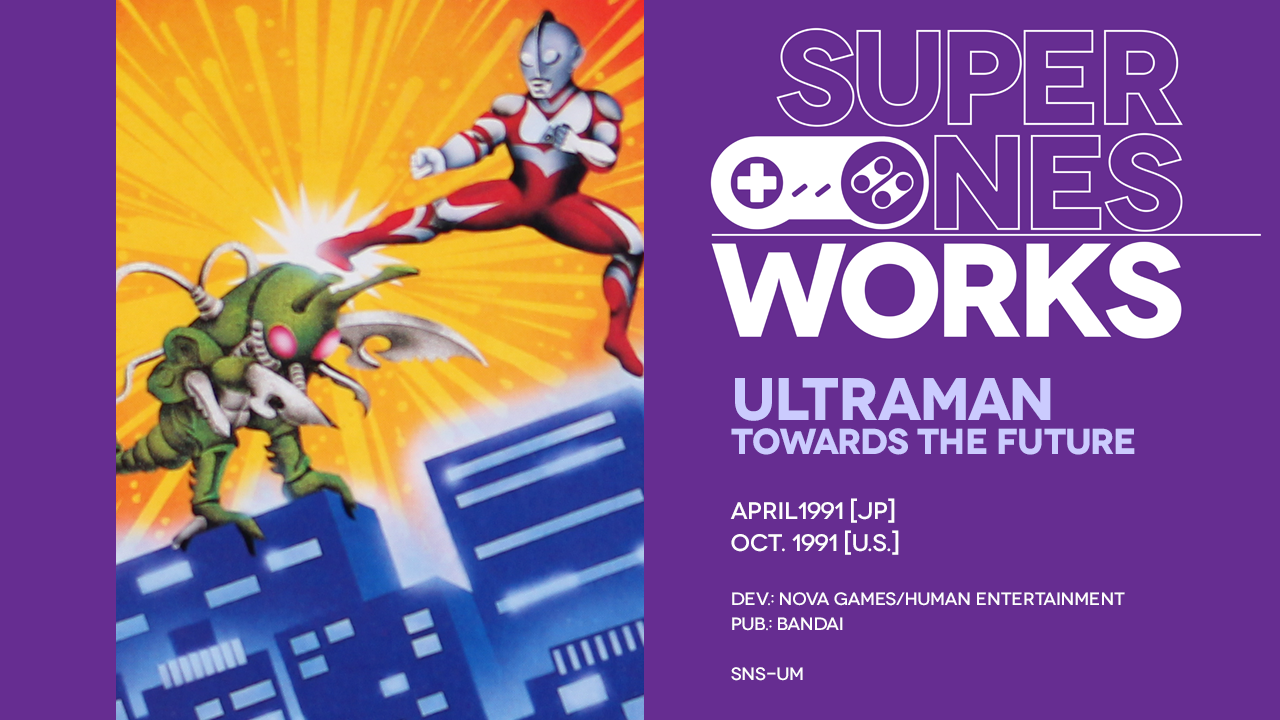
Another game licensed from a Japanese media property hits Super NES, but this one isn't quite as good as U.N. Squadron. In fact, it's really quite poor: A clumsy fighting game based on Ultraman's short-lived push into the U.S. television market. It might not be all bad if not for the unspeakably boneheaded victory condition requirement, which turns this into a jarring example of a faithful video game adaptation that suffers for its accuracy to the source material…
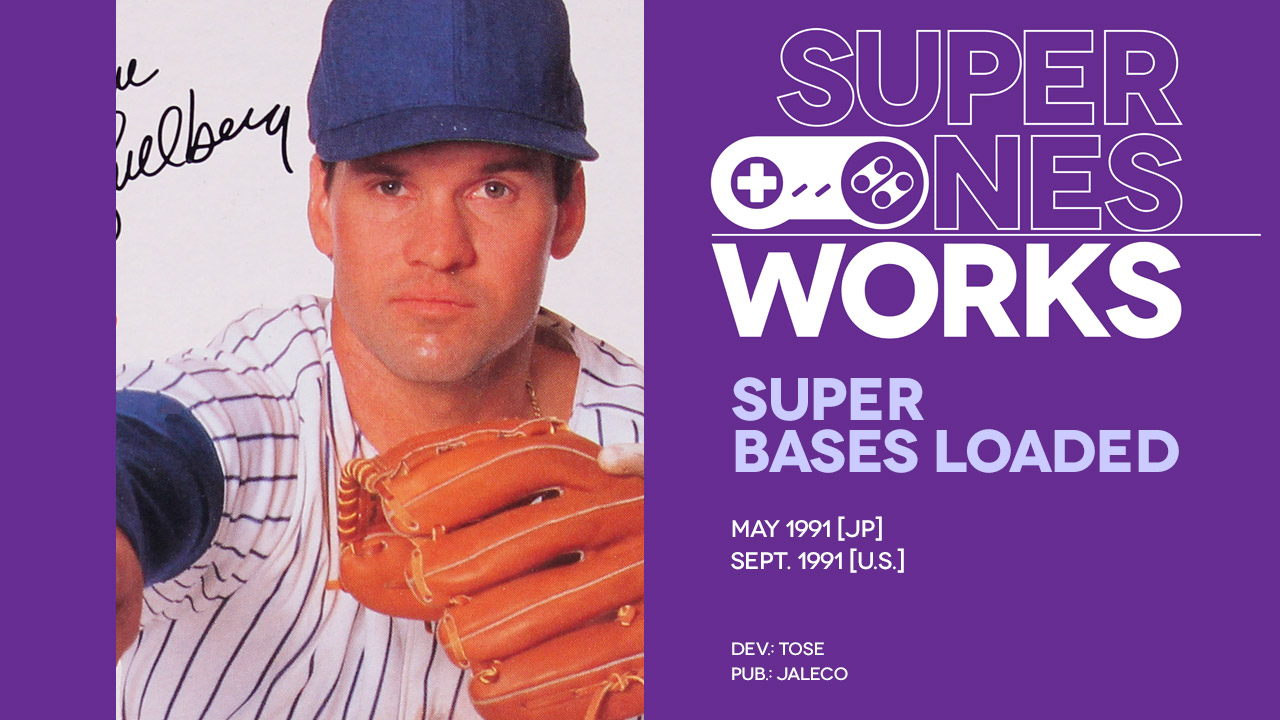
The Super NES gets its first sports game in the form of an entry in Jaleco's Bases Loaded baseball series, which doesn't offer a whole lot that you couldn't find in Jaleco's simultaneous release for NES, Bases Loaded 3. All this 16-bit iteration really offers over its 8-bit counterpart is a questionable race not for the pennant but rather for a "perfect" game, a task best left to masochists drowning in free time.
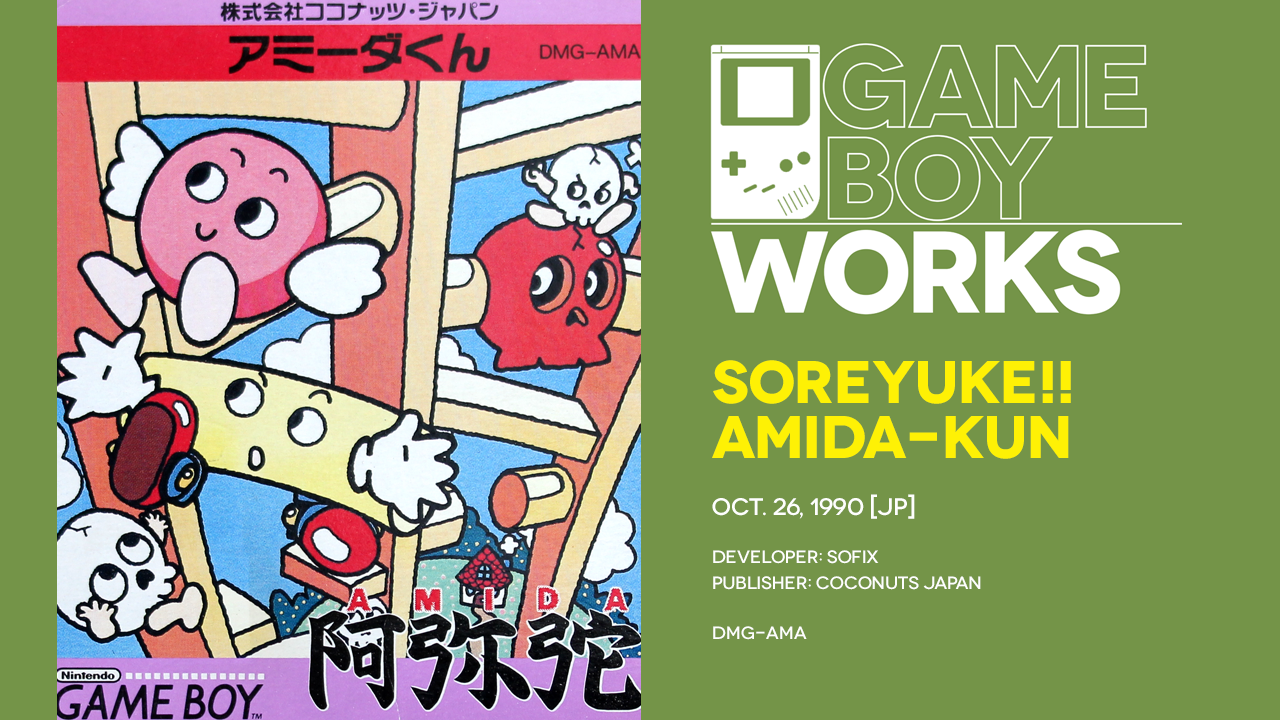
Another Game Boy puzzler? Yes, but at least this one is different. Rather than involving boxes and tiles, Amida-kun riffs on the traditional Japanese lottery game, amidakuji… the same game that inspired Konami's Amidar. It's pretty basic as games go, but the underlying principle is fun, and challenging, so this one's not so bad.
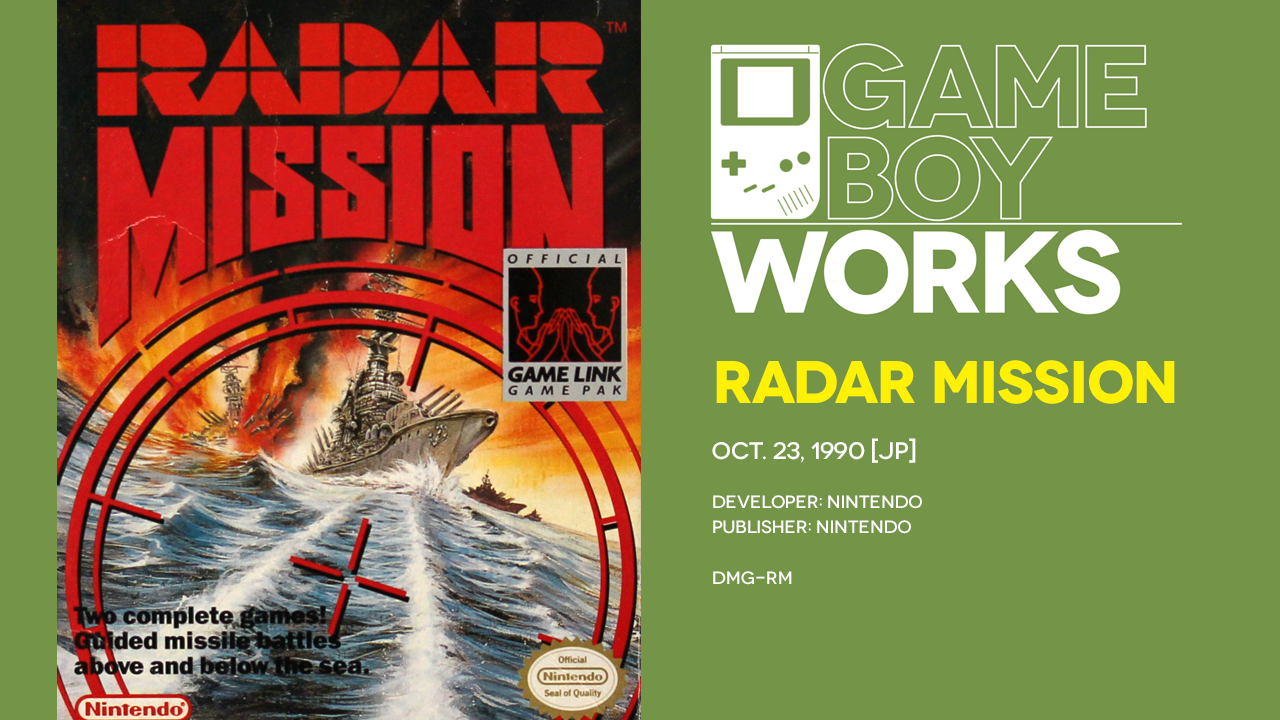
As if to prove there's no idea so good that you can't do it several times over in mostly identical ways, here is the third Battleship-like naval combat game for Game Boy. This one is from Nintendo themselves, which means that it's less offbeat than Use's Battleship/Navy Blue or NTVIC's Power Mission, but it's a lot more polished. And it includes an entirely original secondary sub combat mode, too! Just be sure to play with a friend, because the computer cheats like crazy in this one… as usual.

Who says Game Boy racing games have to be awful? Not TOSE and Tonkin House, who evidently took the likes of Monster Truck as a challenge. Roadster is everything previous Game Boy racers weren't: Fun, a joy to control, fairly balanced, thoughtfully designed. Will wonders never cease?
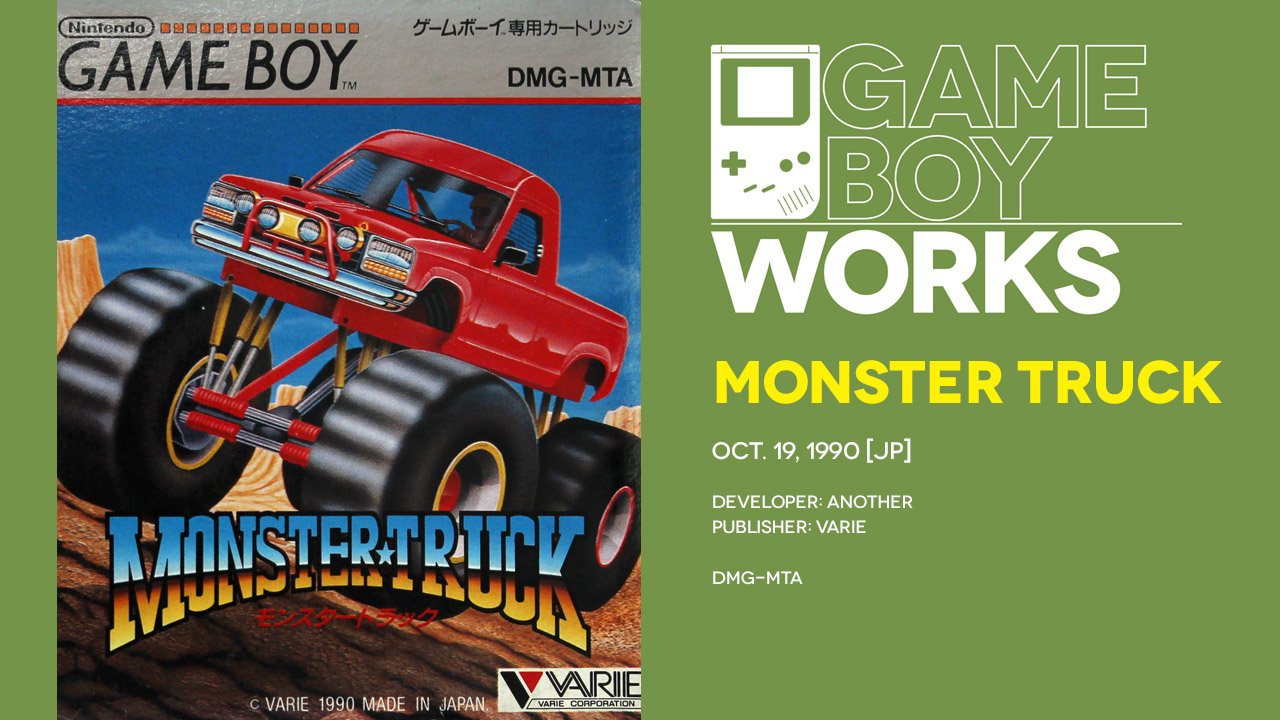
It's weird that someone in Japan made a game about the all-American pastime of monster trucks and didn't bring it to the U.S., right? Well, mystery solved: The game is a terrible Excitebike clone with inscrutable mechanics, and it would have bombed terribly here in America. It certainly didn't win many fans in its own home territory…
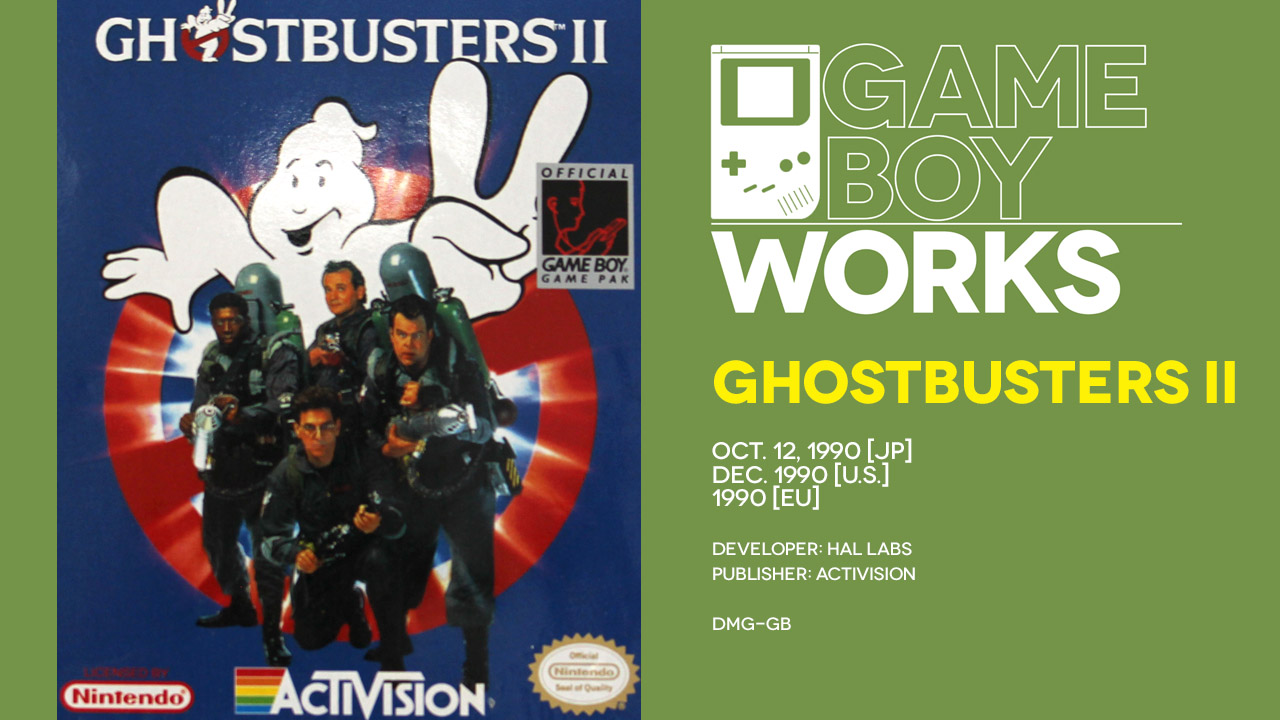
What a relief: A genuinely great game, and a licensed one to boot!? Yes, Ghostbusters II defies the odds by ditching all connections to Activision's other Ghostbusters games and going with a portable adaptation of HAL Labs' charming-as-heck Famicom game New Ghostbusters II. Sure, it has some rough patches, but it's sweet and entertaining — a nice, breezy, personality-packed rendition of the movie.

Ah, here we go: The second set of 100 Game Boy Works episodes begins with the quintessential Game Boy experience. Yes, it's a mediocre puzzle-ish game that plays better on other platforms. Not an auspicious beginning, perhaps, but at least it's a realistic one. It appears I missed a play mechanic here (clearing rows by pressing down) due to the manuals to this game only being available in German and Japanese, so I will revisit this game in some capacity in the future to make a small note. Just a small one — the added mechanic makes it a little less difficult but doesn't fix the color ambiguity issue.
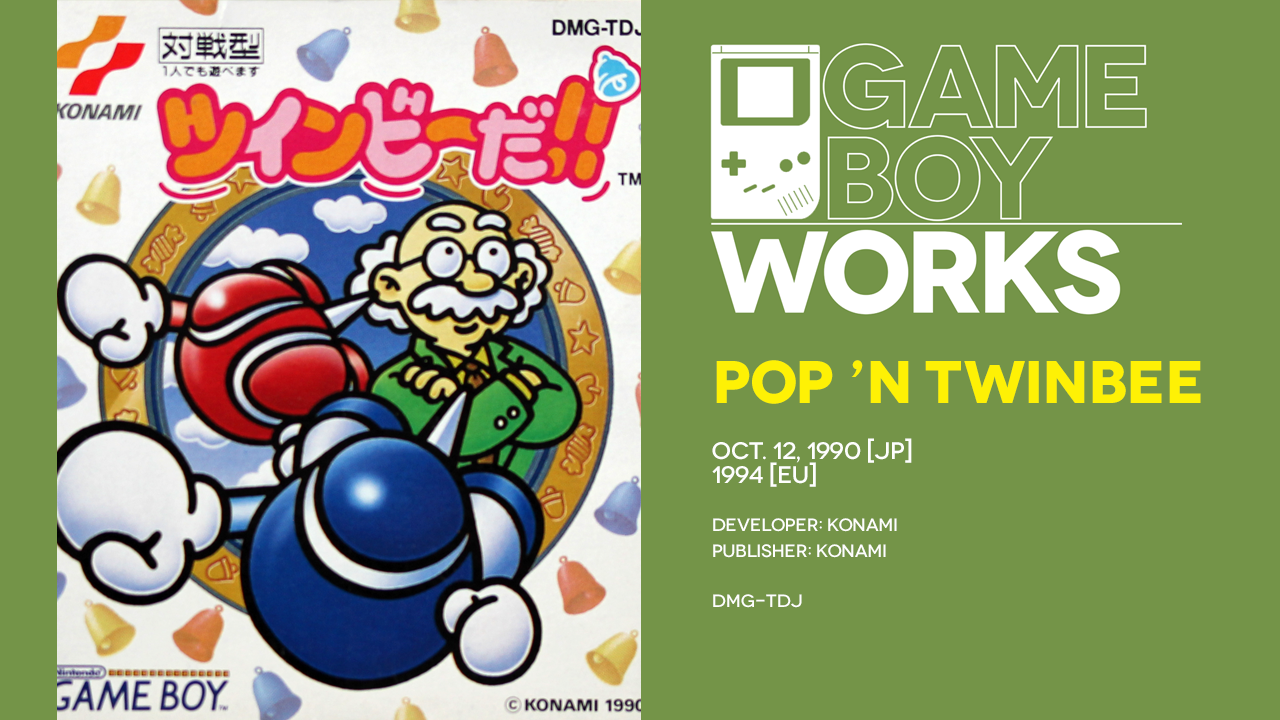
The series hits its 100th episode and to celebrate… uh, well, it's business as usual. Thankfully, this episode tackles a pretty good (if somewhat unfairly balanced) shooter by none other than Konami: Pop ’N Twinbee. This shooter originally appeared in Japan in 1990 as Twinbee Da! (pictured in the video); the European version showed up four years later and is almost impossible to find complete these days (hence the lack of European packaging photos).
When did the lie that girls don't play video games gain credence in America? I remember seeing little nerds of all genders in arcades in the early 1980s, so that fallacy must have taken hold around the time that the Master System arrived. Certainly that would explain why these two games, both of which featured playable female casts in their original incarnations as Sega Ninja/Ninja Princess and Gokuaku Doumei Dump Matsumoto, saw their sprites replaced by men here on Master System. A weird coincidence! However, it doesn't affect how either game plays, which is to say "pretty damn good." The Ninja delivers on the potential of Ninja Princess, presenting the same fundamental experience but with vastly smoother gameplay and all the arcade version's bonus stages restored. And Pro Wrestling may not be as good as the NES game by the same title that would ship a few months later, but it absolutely puts every other wrestling game on U.S. the console market in 1986 into a sleeper hold before pinning it for the count. Aw, look, I've finally picked up some wrestling lingo. I knew I could do it.
An unlikely star emerges in this week's Master System episode: The Sega Sports Pad. Required for (but not bundled with!) Great Ice Hockey, this analog-ish trackball controller ultimately didn't have much purpose in terms of deliberate tie-ins, but thanks to its alternate mode it proves surprisingly effective with a number of other titles, especially shooters. Such as... Astro Warrior, this episode's B-side, which goes from being OK-ish to OK (if a bit easy) when played with the Sports Pad.
A pair of games based on popular media works? Well, almost. Action Fighter clearly draws its inspiration from 1970s James Bond and his transforming Lotus Esprit, but unlike James Bond 007 for Multivision, it doesn't wear the actual Bond license. It's a much better game, though. Drawing heavy inspiration from the likes of Spy Hunter and (gulp) Xevious, it turns out to be an unexpected highlight of the Master System's launch period. On the other hand, Black Belt did sport a media license... in Japan. Here in the U.S., however, Sega scrubbed all of those details clean. And I do mean "scrubbed"—rather than simply redrawing the main character's sprites, the developers gave every single component of this game a visual overhaul. It's really quite an impressive effort—and yet, the underlying work still shines through. And, because it plays as a convincing Kung Fu clone, you can understand why they went to the trouble rather than just skipping over localization and publishing some other game instead. Production notes: Why watch when you can read? Check out the massive hardcover print editions of NES Works, Super NES Works, and Virtual Boy works, available now at Limited Run Games (https://limitedrungames.com/collections/books)! Look forward to SG-1000 Works: Segaiden Vol. I, due summer 2023. Video Works is funded via Patreon (http://www.patreon.com/gamespite) — support the show and get access to every episode up to two weeks in advance of its YouTube debut! Plus, exclusive podcasts, eBooks, and more! Arcade footage captured from MiSTer with thanks to MiSTerAddOns. Most Master System footage captured from U.S. carts running through an adapter on Sega Mark III hardware with FM Sound Unit and RGB bypass modification by iFixRetro. Video upscaled to 720 with xRGB Mini Framemeister.
I thought the main feature this week would be TransBot, a pretty OK shooter based on a pretty good arcade game that rectifies the failings of Orguss for SG-1000 while basically swiping the concept wholesale, but no. TransBot is fine. The main feature, however, turned out to be F-16 Fighting Falcon, a game no one would reasonably ever want to play, which does some absolutely ridiculous things with the Master System's more esoteric capabilities. Yuji Naka supposedly programmed this port, and all I can say is: What a mad man. There's also World Grand Prix, the sequel to GP World. It's a game about racing the same track over and over again because the requirements for qualifying for later tracks are human impossible to achieve. Finally, I know a video with "TransBot" in the title is bound to inspire some crass or cruel drive-by comments, so I'd like to balance things out a bit. All ad revenue generated by this video through March 15 will be donated to TransRescue.org, along with my own 4x matching donation. Production notes: Why watch when you can read? Check out the massive hardcover print editions of NES Works, Super NES Works, and Virtual Boy works, available now at Limited Run Games (https://limitedrungames.com/collections/books)! Look forward to SG-1000 Works: Segaiden Vol. I, due summer 2023. Video Works is funded via Patreon (http://www.patreon.com/gamespite) — support the show and get access to every episode up to two weeks in advance of its YouTube debut! Plus, exclusive podcasts, eBooks, and more! Arcade footage captured from MiSTer with thanks to MiSTerAddOns. Most Master System footage captured from U.S. carts running through an adapter on Sega Mark III hardware with FM Sound Unit and RGB bypass modification by iFixRetro. Video upscaled to 720 with xRGB Mini Framemeister.
Three episodes into the Master System run and already we have some familiar sights—but understandably so, since each of these games comes to Master System from arcades. So, while we may have seen Choplifter during our SG-1000 survey, we certainly didn't see this version of it; Sega based the older, Japan-only release on the Apple II game, while this U.S.- and European-exclusive upgrade draws its content and aesthetics from the company's arcade interpretation. Barely a year between the two home releases, but this one feels far more of-the-moment than the SG-1000 port did. Teddy Boy, of course, launched alongside Hang On with the Japanese Mark III hardware. The Western release is almost exactly the same as the Japanese MyCard, with one crucial (but ultimately immaterial) difference. As for My Hero, unfortunately it does no favors for the optics of the Master System and its Sega Card format. While it looks almost as good as the arcade game (except that sickly green sky), it lacks a huge amount of content—two-thirds of the coin-op's stages and enemies! To make matters worse, Sega's programmers clearly amped up the difficulty to a preposterous degree in order to pad out the lacking play time. Can you make it even halfway through the single stage of action here? If so, you are like unto a god. Production notes: Why watch when you can read? Check out the massive hardcover print editions of NES Works, Super NES Works, and Virtual Boy works, available now at Limited Run Games (https://limitedrungames.com/collections/books)! Look forward to Segaiden Vol. I: The SG-1000, due summer 2023. Video Works is funded via Patreon (http://www.patreon.com/gamespite) — support the show and get access to every episode up to two weeks in advance of its YouTube debut! Plus, exclusive episodes, eBooks, and more! Arcade footage captured from MiSTer with thanks to MiSTerAddOns. Most Master System footage captured from U.S. carts running through an adapter on Sega Mark III hardware with FM Sound Unit and RGB bypass modification (by iFixRetro). Video upscaled to 720 with xRGB Mini Framemeister.
Sega leads off its non-pack-in Master System lineup with a solid conversion of an arcade masterpiece and a respectable original title: Fantasy Zone and Ghost House. While the former suffers some compromises in the move from System 16A arcade hardware to the less powerful home console, it retails its key features, and its charming personality still shines through. As for the latter, Ghost House falls short of greatness due to its lack of content and clumsy control mechanics, but it nevertheless features a lot of fun ideas and secrets to unravel... and, like Fantasy Zone, it packs in plenty of personality, which makes it a winner. Maybe not, like, "gold medalist" winner. But at least a solid bronze. Production notes: Why watch when you can read? Check out the massive hardcover print editions of NES Works, Super NES Works, and Virtual Boy works, available now at Limited Run Games (https://limitedrungames.com/collections/books)! Look forward to Segaiden Vol. I: The SG-1000, due summer 2023. Video Works is funded via Patreon (http://www.patreon.com/gamespite) — support the show and get access to every episode up to two weeks in advance of its YouTube debut! Plus, exclusive podcasts, eBooks, and more! Light gun and arcade footage captured from MiSTer with thanks to MiSTerAddOns. Most Master System footage captured from U.S. carts running with an adapter on Sega Mark III hardware with FM Sound Unit and RGB bypass modification. Video upscaled to 720 with xRGB Mini Framemeister.
Well, here we go. I've already covered Sega's first console, the SG-1000, in comprehensive (if retrospectively inaccurate at times) details. Now, here we have the sequel: The American adaptation of the Mark III upgrade to SG-1000, the Master System. Or the Sega System, if we're being strictly accurate. Beginning with this episode, which covers the Master System hardware and its three pack-in games (or rather, two pack-in games and one built-in game), I will be focusing on the U.S. lineup until we get to the end of 1988 and Phantasy Star, bringing Sega 8-bit coverage even with NES coverage. And from there, we'll be moving in tandem into the future, juggling Nintendo and Sega retrospectives in 1989 and beyond. Please enjoy. Production notes: Why watch when you can read? Check out the massive hardcover print editions of NES Works, Super NES Works, and Virtual Boy works, available now at Limited Run Games (https://limitedrungames.com/collections/books)! Look forward to Segaiden Vol. I: The SG-1000, due summer 2023. Video Works is funded via Patreon (http://www.patreon.com/gamespite) — support the show and get access to every episode up to two weeks in advance of its YouTube debut! Plus, exclusive podcasts, eBooks, and more! Light gun and arcade footage captured from MiSTer with thanks to MiSTerAddOns. Most Master System footage captured from U.S. carts running with an adapter on Sega Mark III hardware with FM Sound Unit and RGB bypass modification. Video upscaled to 720 with xRGB Mini Framemeister.
We end NES Works 1988 here with a game that (probably) actually shipped before December 1988 in scarce quantities. Aw, it's Nintendo's very first high-demand holiday rarity! They certainly would return to that well over the years. It's hard to say where to place this release in the '88 timeline, because Nintendo originally announced Zelda II for a release early in the year but ended up kicking this particular ball down the road over and over again, and games media reporting didn't have much to offer back then. This episode deals with the whys and wherefores of its delays and the tantalizing nature of this long-promised Zelda sequel. Did Zelda II turn out to be worth the wait? Well... feelings are mixed on that one. Zelda II stands alone in the Zelda franchise for many reasons—its side-scrolling perspective, role-playing elements, limited lives, and the fact that it's the one entry in the series to demand genuine skill and dexterity—but you can't deny the influence it exerted on later entries in the series and on games as a whole. Despite some questionable design choices and a slight reliance on nebulous clues from NPCs for progression, Zelda II pretty much defined how the action-RPG would work! Of course, since its localization ended being delayed for nearly two years after its Japanese debut, American kids experienced Zelda II's best ideas through games that other companies designed in its image. Oh well. Production note: NES footage captured from @analogueinc Mini. Arcade footage captured from MiSTer FPGA cores; special thanks to @MiSTerAddons . Video upscaled to 720 with XRGB Mini Framemeister. Video Works is funded via Patreon (http://www.patreon.com/gamespite) — support the show and get access to every episode up to two weeks in advance of its YouTube debut! Certain tiers also have access to monthly exclusive episodes, PDFs of Works-related books, and even physical copies of upcoming book releases!
A lot of shenanigans happening with the NES timeline here at the end of 1988, a situation that I'll explore more next episode. For now, it's worth noting that this episode brings us: Two games that may or may not have actually debuted in the U.S. in December 1988, and Two games from the same franchise, possibly released simultaneously by different publishers. Bomberman and RoboWarrior don't share much branding in common in the West, but both hail from the same germ of inspiration. RoboWarrior, AKA Bomber King, would branch off briefly to become its own thing under the auspices of developer Aicom, who kind of Hudsoned Hudson here by creating a variant of that company's franchise and then claiming it as their own. Sort of. Except that outside of Japan it was reskinned into someone else's thing. It's complicated. Othello, however, is not complicated. This is the fourth time this channel has looked at an Othello game. You know the drill. Production note: NES footage captured from @analogueinc Mini. Arcade footage captured from MiSTer FPGA cores; special thanks to @MiSTerAddons . Video upscaled to 720 with XRGB Mini Framemeister. Video Works is funded via Patreon (http://www.patreon.com/gamespite) — support the show and get access to every episode up to two weeks in advance of its YouTube debut! Certain tiers also have access to monthly exclusive episodes, PDFs of Works-related books, and even physical copies of upcoming book releases!
It's the most wonderful time of the year: Time for a Castlevania retrospective. As NES Works 1988 winds down, Halloween 2022 seems like the perfect time for a proper look back at Castlevania II: Simon's Quest, one of the most ambitious and frustrating games of the NES era. The second of the NES's "weird sequels," Simon's Quest combines a lot of different influences and ultimately does a lot to define the series' future... even if it would take a while for the series to realize it. In the meantime, NES kids had a whole lot of Nintendo Power coverage to help them solve Dracula's so-called "riddle." P.S.: I am aware that this video rendered with a caption error that I missed. Adobe Premiere happens. Production note: NES footage captured from @analogueinc Mini. Arcade footage captured from MiSTer FPGA cores; special thanks to @MiSTerAddons . Video upscaled to 720 with XRGB Mini Framemeister. Video Works is funded via Patreon (http://www.patreon.com/gamespite) — support the show and get access to every episode up to two weeks in advance of its YouTube debut! Plus, exclusive podcasts, eBooks, and more!
Sunsoft blew our minds with Blaster Master, but the company did not suddenly become some 8-bit powerhouse after releasing that game. Here's the rocky portion of their road to greatness, a pair of NES conversions that will leave you scratching your head. In the case of Platoon, you'll be left wondering why they thought THIS license was suitable to a platform primarily advertised and sold to children. In the case of Xenophobe, you'll be confused about how meager a port such a technically adept company managed to produce. Production note: NES footage captured from @analogueinc Mini. Arcade footage captured from MiSTer FPGA cores; special thanks to @MiSTerAddons . Video upscaled to 720 with XRGB Mini Framemeister. Video Works is funded via Patreon (http://www.patreon.com/gamespite) — support the show and get access to every episode up to two weeks in advance of its YouTube debut! Plus, exclusive podcasts, eBooks, and more!

Comments

Download from Google Play

Download from App Store
 United States