


 Claim Ownership
Things That Make You Go Hmmm Book Review Podcast
Subscribed: 15Played: 231
Subscribe

© Copyright 2013 . All rights reserved.
Description
Podcast that reviews popular nonfiction books
21 Episodes
Reverse

The internationally best-selling author of Goodbye, Things shares insights and practices to help you become the best version of yourself.
Fumio Sasaki changed his life when he became a minimalist. But before minimalism could really stick, he had to make it a habit. All of us live our lives based on the habits we’ve formed, from when we get up in the morning, to what we eat and drink, to how likely we are to actually make it to the gym. In Hello, Habits, Sasaki explains how we can acquire the new habits that we want―and get rid of the ones that don’t do us any good.
Bringing together leading theories and tips from cognitive psychology, along with examples from his own life, he unravels common misperceptions about “willpower” and “talent,” and offers a step-by-step guide to success. Ultimately, Sasaki shows how ordinary people like himself can use his principles of good habit-making to improve themselves and change their lives.

Struggling to let go of negative emotions? Discover a step-by-step process to living a happier, more fulfilling life. Weighed down by negativity? Are painful emotions keeping you from doing the things you love? Author and founder of WhatIsPersonalDevelopment.org Thibaut Meurisse wants to help you take back your life.

Finally! Develop Good Habits That Stick!
Do you find yourself trying to adopt good habits only to abandon them down the road? Are you frustrated because you seem unable to develop them in the first place?
You're not alone!
Most people fail when they try to incorporate new habits into their day. It's not for lack of good intentions. Like you and I, they want to lead more rewarding lives.

In this groundbreaking analysis of personality type, bestselling author of Better Than Before and The Happiness Project, Gretchen Rubin reveals the one simple question that will transform what you do at home, at work, and in life.
During her multibook investigation into understanding human nature, Gretchen Rubin realized that by asking the seemingly dry question "How do I respond to expectations?" we gain explosive self-knowledge. She discovered that based on their answer, people fit into Four Tendencies: Upholders, Questioners, Obligers, and Rebels. Our Tendency shapes every aspect of our behavior, so using this framework allows us to make better decisions, meet deadlines, suffer less stress, and engage more effectively.
More than 600,000 people have taken her online quiz, and managers, doctors, teachers, spouses, and parents already use the framework to help people make significant, lasting change.
The Four Tendencies hold practical answers if you've ever thought...
· People can rely on me, but I can't rely on myself.
· How can I help someone to follow good advice?
· People say I ask too many questions.
· How do I work with someone who refuses to do what I ask or who keeps telling me what to do?
With sharp insight, compelling research, and hilarious examples, The Four Tendencies will help you get happier, healthier, more productive, and more creative. It's far easier to succeed when you know what works for you.

Everyone agrees that education is the key to creating a more just and equal world, and that our schools are broken and failing. Preposed reforms variously target incompetent teachers, corrupt union practices, or outdated curricula, but no one acknowledges a scientifically-proven fact that we all understand intuitively: academic potential varies between individuals, and cannot be dramatically improved. In The Cult of Smart, educator and outspoken leftist Fredrik deBoer exposes this omission as the central flaw of our entire society, which has created and perpetuated an unjust class structure based on intellectual ability.
Since cognitive talent varies from person to person, our education system can never create equal opportunity for all. Instead, it teaches our children that heirarchy and competition are natural, and that human value should be based on intelligence. These ideas are counter to everything that the left believes, but until they acknowledge the existence of individual cognitive differences, progressives remain complicit in keeping the status quo in place.
This passionate, voice-driven manifesto demands that we embrace a new goal for education: equality of outcomes. We must create a world that has a place for everyone, not just the academically talented. But we’ll never achieve this dream until the Cult of Smart is destroyed.

Every facet of American life is being overtaken by big platform monopolists like Facebook, Google, and Bayer (which has merged with the former agricultural giant Monsanto), resulting in a greater concentration of wealth and power than we've seen since the Gilded Age. They are evolving into political entities that often have more influence than the actual government, bending state and federal legislatures to their will and even creating arbitration courts that circumvent the US justice system. How can we recover our freedom from these giants? Anti-corruption scholar and activist Zephyr Teachout has the answer: Break 'Em Up.
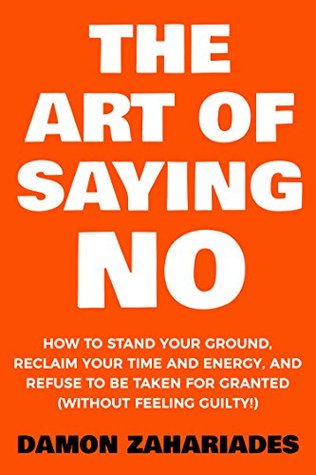
Stop Being A People Pleaser! Learn How To Set Boundaries And Say NO - Without Feeling Guilty!
Are you fed up with people taking advantage of you? Are you tired of coworkers, friends, and family members demanding your time and expecting you to give it to them?
If so, THE ART OF SAYING NO is for you.
Imagine being able to turn down requests and decline invitations with confidence and poise. Imagine saying no to people asking you for favors, and inspiring their respect in the process.

Do you want to get ahead in life?
Climb the ladder to personal success?
The secret, master networker Keith Ferrazzi claims, is in reaching out to other people. As Ferrazzi discovered early in life, what distinguishes highly successful people from everyone else is the way they use the power of relationships--so that everyone wins.
In "Never Eat Alone," Ferrazzi lays out the specific steps--and inner mindset--he uses to reach out to connect with the thousands of colleagues, friends, and associates on his Rolodex, people he has helped and who have helped him.
The son of a small-town steelworker and a cleaning lady, Ferrazzi first used his remarkable ability to connect with others to pave the way to a scholarship at Yale, a Harvard MBA, and several top executive posts. Not yet out of his thirties, he developed a network of relationships that stretched from Washington's corridors of power to Hollywood's A-list, leading to him being named one of Crain's 40 Under 40 and selected as a Global Leader for Tomorrow by the Davos World Economic Forum.

Mo Gawdat is a remarkable thinker and the Chief Business Officer at Google’s [X], an elite team of engineers that comprise Google’s futuristic “dream factory.” Applying his superior skills of logic and problem solving to the issue of happiness, he proposes an algorithm based on an understanding of how the brain takes in and processes joy and sadness. Then he solves for happy.

Ibram X. Kendi's concept of antiracism reenergizes and reshapes the conversation about racial justice in America--but even more fundamentally, points us toward liberating new ways of thinking about ourselves and each other. In How to be an Antiracist, Kendi asks us to think about what an antiracist society might look like, and how we can play an active role in building it.
In this book, Kendi weaves together an electrifying combination of ethics, history, law, and science, bringing it all together with an engaging personal narrative of his own awakening to antiracism. How to Be an Antiracist is an essential work for anyone who wants to go beyond an awareness of racism to the next step: contributing to the formation of a truly just and equitable society

What’s the New Way to Cure Perfectionism?
From an early age, kids are taught to color inside the lines, and any color that strays outside the lines is considered to be a mistake that must be avoided. Perfectionism is a naturally limiting mindset. Imperfectionism, however, frees us to live outside the lines, where possibilities are infinite, mistakes are allowed, and self-judgment is minimal.
The old way to approach perfectionism was to inspire people to “let go” of their need for perfection and hope they could do it. The new way is to show people how simple but highly strategic "mini actions” can empower them to gradually and effortlessly “let go" of perfectionism.
This book applies the science of behavior modification directly to the roots of perfectionism, resulting in a new and superior method for change. Imperfectionists aren’t so ironic as to have perfect lives: they’re just happier, healthier, and more productive at doing what matters.

If you’re relying on willpower alone to help you lose weight, improve your relationships, or achieve more at work, you’re doomed to fail. The environment around us is far too powerful, stimulating, addicting, and stressful to overcome by white knuckling. The only way to stop just surviving and learn to truly thrive in today’s world is to proactively shape your environment.
That’s the premise of Willpower Doesn’t Work by Medium.com’s most-read writer, Benjamin Hardy. Building on copious existing research, as well as his own experience of growing up in a broken family afflicted by addiction and drug use, Hardy explains how people can change their lives on every level by making small, impactful changes in their environment like:

From the author of the international mega-bestseller The Subtle Art of Not Giving A F*ck comes a counter-intuitive guide to the problems of hope.
We live in an interesting time. Materially, everything is the best it’s ever been—we are freer, healthier and wealthier than any people in human history. Yet, somehow everything seems to be irreparably and horribly f*cked—the planet is warming, governments are failing, economies are collapsing, and everyone is perpetually offended on Twitter. At this moment in history, when we have access to technology, education and communication our ancestors couldn’t even dream of, so many of us come back to an overriding feeling of hopelessness.

Most of us spend our days handling a deluge of pressing issues. We’re so accustomed to managing emergencies as they strike that we often don’t stop to think about how we could prevent crises before they happen. Why stop at treating the symptoms when you could develop a cure? How many daily headaches do we tolerate because we’ve forgotten to fix them?
Whether it’s time management, supply chain logistics, or healthcare decisions, all over the world, persistent problems cost time, money, and lives. Upstream explains how to target the source of the problem rather than just reacting to it as it happens and introduces you to the thinkers who are chipping away at everyday frustrations and deep-rooted issues. One travel company saved 25 million customer phone calls every year by adding a simple step to its booking system. An insurance business, determined to help YMCAs across the country lower their number of accidental drownings to zero, has saved an untold number of lives. The LAPD track down more accurate addresses for suspects by buying access to the delivery data from local pizza shops. The CDC realized they could anticipate flu outbreaks by tracking thermometer sales in local pharmacies.
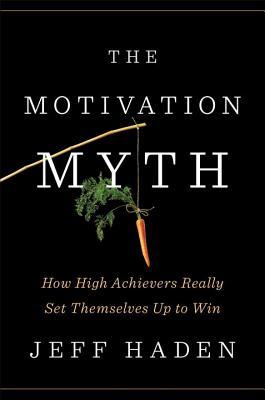
It's comforting to imagine that superstars in their fields were just born better equipped than the rest of us. When a co-worker loses 20 pounds, or a friend runs a marathon while completing a huge project at work, we assume they have more grit, more willpower, more innate talent, and above all, more motivation to see their goals through.
But that's not at actually true, as popular Inc.com columnist Jeff Haden proves. "Motivation" as we know it is a myth. Motivation isn't the special sauce that we require at the beginning of any major change. In fact, motivation is a result of process, not a cause. Understanding this will change the way you approach any obstacle or big goal.

From bestselling writer David Graeber, a powerful argument against the rise of meaningless, unfulfilling jobs, and their consequences.
Does your job make a meaningful contribution to the world? In the spring of 2013, David Graeber asked this question in a playful, provocative essay titled “On the Phenomenon of Bullshit Jobs.” It went viral. After a million online views in seventeen different languages, people all over the world are still debating the answer.
There are millions of people—HR consultants, communication coordinators, telemarketing researchers, corporate lawyers—whose jobs are useless, and, tragically, they know it. These people are caught in bullshit jobs.

Gretchen Rubin's answer: through habits. Habits are the invisible architecture of everyday life. It takes work to make a habit, but once that habit is set, we can harness the energy of habits to build happier, stronger, more productive lives.
So if habits are a key to change, then what we really need to know is: How do we change our habits?
Better than Before answers that question. It presents a practical, concrete framework to allow readers to understand their habits—and to change them for good. Infused with Rubin’s compelling voice, rigorous research, and easy humor, and packed with vivid stories of lives transformed, Better than Before explains the (sometimes counter-intuitive) core principles of habit formation.

Me and White Supremacy teaches readers how to dismantle the privilege within themselves so that they can stop (often unconsciously) inflicting damage on people of colour, and in turn, help other white people do better, too.
In So You Want to Talk About Race, Editor at Large of The Establishment Ijeoma Oluo offers a contemporary, accessible take on the racial landscape in America, addressing head-on such issues as privilege, police brutality, intersectionality, micro-aggressions, the Black Lives Matter movement, and the "N" word. Perfectly positioned to bridge the gap between people of color and white Americans struggling with race complexities, Oluo answers the questions readers don't dare ask, and explains the concepts that continue to elude everyday Americans.

Minimalism is the art of knowing how much is just enough. Digital minimalism applies this idea to our personal technology. It's the key to living a focused life in an increasingly noisy world.
In this timely and enlightening book, the bestselling author of Deep Work introduces a philosophy for technology use that has already improved countless lives.
Digital minimalists are all around us. They're the calm, happy people who can hold long conversations without furtive glances at their phones. They can get lost in a good book, a woodworking project, or a leisurely morning run. They can have fun with friends and family without the obsessive urge to document the experience. They stay informed about the news of the day, but don't feel overwhelmed by it. They don't experience "fear of missing out" because they already know which activities provide them meaning and satisfaction.

You sit down at your desk to work on an important project, but a notification on your phone interrupts your morning. Later, as you're about to get back to work, a colleague taps you on the shoulder to chat. At home, screens get in the way of quality time with your family. Another day goes by, and once again, your most important personal and professional goals are put on hold.
What would be possible if you followed through on your best intentions? What could you accomplish if you could stay focused and overcome distractions? What if you had the power to become "indistractable"?

Comments

Download from Google Play

Download from App Store
 United States