DiscoverJellybean Podcast with Doug Lynch
Jellybean Podcast with Doug Lynch
Claim Ownership

Jellybean Podcast with Doug Lynch

Author: Doug Lynch @TheTopEnd

Subscribed: 79Played: 265
Share

Description

Jellybeans with Dr Doug Lynch, poorly differentiated doctor and pathological polymath.
Emergency Medicine. Critical Care. Aeromedical Retrieval. Remote Area Medicine. Resource Poor Medicine. Disaster Medicine. Conflict Medicine. Ethics. Politics. Life. Death.
These podcasts are atypical interviews with persons of interest.
Critical conversations with Critical Carers. Carers like you.
The people that listen to this podcast are insiders, movers, shakers and, I suspect, every listener is potentially a future interviewee.
Each conversation is a story shared that has at least one hidden lesson.
This is not straight forward #FOAMed (Free Open Access Medical Education.
This is about the people behind #FOAMed, their ideals, their victories, their failures, their thoughts.
What we do in our working lives is, on the good days, the best job in the world.
What we do in our working lives is, on the bad days, one of the worst jobs in the world.
I am just a human and so are you. I need to be reminded of why I put myself through all this, why I tolerate the damage to me, my life, my health, my family. I need to be inspired and re-inspired almost everyday.
The Jellybeans exist because the people I talk to are inspiring, they are fascinating and they are funny.
The Jellybean Podcast is has been around since before the first SMACC conference. We have been at every one. We have been a lot of places. We talk with interesting people in the Critical Care Medical World or on the fringes of it. We do this everywhere and anywhere. We speak to world leaders and front liners, we speak to paramedics, nurses, academics, researchers, students, the quiet achievers and the rock stars.
Its about the quality of the conversation not the quality of the audio.
Please visit www.TheTopEnd.org
Contact via Twitter @TheTopEnd
Jellybeans are available on www.Lifeinthefastlane.com and www.IntensiveCareNetwork.com

Jellybean Jelly Bean Jellybeans Jellybeanz Beanboozled TopEnd TheTopEnd DougLynch

With a bizarre side interest in Baggage or more accurately an interest in Less Baggage.
www.LessBaggage.org
Twitter and Instagram @LessBaggage
Pinterest LessBaggage
116 Episodes
Reverse
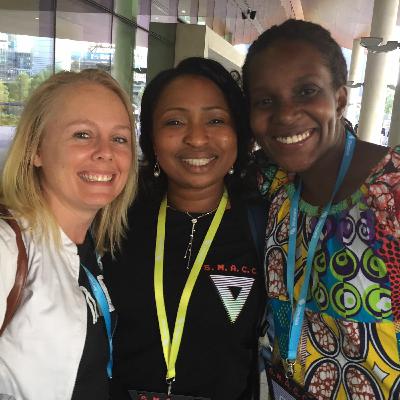
Annet Alenyo Ngabirano. (That's Annet on the right in the photo with Kat Evans on the left and Mulinda Nyirenda in the middle.) Emergency Medicine in the Uganda, the pearl of Africa. Annet presented at dasSMACC and has become a huge personality in the the developing community of emergency medicine in the continent of Africa. While we associate Annet with Uganda she is really an Adventurer, on an adventure that goes beyond the borders of any country. This is a wonderful insight into the curious journey of one special person. It stretches from Mbarara to Berlin, from South Africa to Sydney. There is much to learn and at every step there are surprises. Annet found out so much about her own system through her normal training (normal for Mbarara) but also through personal tragedies. Her journey has turned her mind to things that she hadn’t thought of, she learned new practical skills and she even learned to ride a bike. Dr Alenyo Ngabirano is interested in research but she is interested in research that asks the right questions. We all are but I cannot tell you what the right questions are for any sub-specialty and you cannot tell Annet what the right questions are for Ugandan Emergency Medicine. Uganda is a country in which emergency medicine is only emerging. What exactly do we need to build? What exactly do we have? How do we even find that out? There seems to be an increased effort by the FOAM / FOAMed community to spread the useful stuff around, spread the love, spread it beyond the big FOAMed three; USA, Australia and UK. That is not as simple as it sounds. We have to try to avoid all the mistakes that have been made in the past, this is not an opportunity to feel good about ourselves and the good thing we do. What we should do is listen to the people on the ground. Listen to the locals. Do the appropriate research. Support the people that are there and that will stay there. Figure out what we know and what we need to find out. Annet realises that even she needs to know more about the system in Uganda and she knows more about it than you ever could. CODAchange wants to step into this space. It won’t be easy. There will be many opportunities to mess things up. To start with maybe we just need to talk to our colleagues in other places. It is about relationships. Take an interest. Find out more. Maybe even go and see for yourself but go there to learn stuff rather going there with some idea that you can tell people what to do. Annet and I talk a about AFEM, the African Federation for Emergency Medicine ( aka Fedération Africaine de Médicine d’Urgence ) which is a fast growing pan-African organisation that works to ensure the development of collaborative, comprehensive, and cross-cutting emergency care systems in Africa. Check out their projects. Have look at their Handbook, available from Oxford University Press and everywhere. The second edition is out recently. The first edition had the same look as the legendary Oxford Handbook of Clinical Medicine. (I still have my first copy of that book, feeling a little bit nostalgic just considering that.) https://afem.africa/what-we-do/ https://afem.africa/project/afem-handbook-of-acute-and-emergency-care/ Their next conference, the African Conference on Emergency Medicine (AfCEM) is in Mombasa, Kenya in November 2020. Why not go there? Why not show these guys respect and contribute to the growth of their conference and federation simply by attending as a delegate? Why not go one step further and Support a Delegate at the same time? The Support a Delegate appeal at dasSMACC was very successful. But it was not a one off. There are still conferences, there are still under-funded delegates. Please do not forget this practical and ultra-tangible way of lending a helping hand.
The little audio clips at the beginning and the end are topical. The actor and singer Seu Jorge is a Brazilian legend. Having shot to international recognition in the 2002 movie "City of God/Cidade de Deus" he has become a huge figure in Samba. This track is a cover of the Bowie classic "Oh! You pretty things" as performed for the Wes Anderson masterpiece "The Life Aquatic". Both movies are recommended as is the associated album "The Life Aquatic, The studio sessions featuring Seu Jorge".
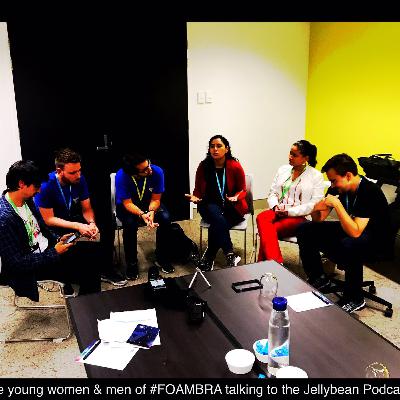
At the last SMACC event in Sydney the Brazilians turned up in force. It was impressive. They came to learn but quickly it became apparent that we should be learning from them too. I won’t pretend to be a SoMe expert but I have never come across such sophisticated use of Instagram as a #FOAMed tool. Instagram is pretty huge and it may well be the number one SoMe platform for the generation that is entering medicine now. So if you are interested in things like teaching young nurses, doctors, paramedics then you might learn something really useful from an unusual source. Instagram is not a fringe #FOAMed platform when Nursing Educators have nearly 200000 followers on Instagram. First let’s quickly talk about the weird thing that just happened to you if you listened to the podcast first. Yes the podcast is 80% Português. It starts with that annoying Irish guy and then the Português starts at 6:20 when Henrique Herpich takes over. The English starts again at 24:20, cue laughs and we are done. We immediately went out for drinks and there is a reason that the Irish and the Brazilians get on very well. (My brother in law is Brazilian. He is extremely cool. Olá Gustavo!) But why? Why would I try to alienate the listeners to this podcast by hitting them with a podcast in another language? The Lusophone Commonwealth is why. Brazil, Angola, Mozambique, Portugal, Guinea-Bissau, East Timor, Equatorial Guinea, Macau, Cape Verde and São Tomé and Príncipe. 207 million Portuguese speakers in Brazil alone. Most Portuguese speakers are in countries where medicine is either developing very fast or in need of developing very fast! So they could do with some Português FOAMed. So we need FOAM other than English; #FOAMOTE The hope is that everyone involved with #FOAM and #FOAMed will look to their language-other-than-English colleagues and see opportunities and not barriers. These people want to work together and the fact that YOU don’t speak their language does NOT mean that you cannot work together. (That and the fact that @Sandnsurf speaks Portugueś and wanted to hear more Portugueś podcasts.) 
This PodcastThese are the #FOAMedBRA people that were in the room: Ian, Henrique, Lucas, Jule, Niciole and Daniel. @breakem www.breakem.org Go there and click on “Quem seguimos” (Who we Follow). (Nearly Dr) Henrique Herpich Twitter @H_Herpich Dr Lucas Oliveira J. e Silva @Lucasojesilva12 isaem.net Dr Jule Santos emergenciarules.com Twitter; @julesantosER Instagram; Emergencia Rules and a podcast! https://podcasts.apple.com/au/podcast/emerg%C3%AAncia-rules/id1387183276 Dr Nicole Pinheiro @nicolepin Dr Daniel Schubert Twitter @ducschub So what I want all #FOAMedBRA people to do is spread this around all the nurses, doctors, paramedics in the Portugueś speaking world and get them to visit this post, listen to this podcast because this is a felicitation. This is people like me and people like you saying “HelloMyNameIsXXXX, nice to meet you, how can I help?” to the entire Lusophonic world. There is more that unites us than divides us.
 FOAMbra Links are all on LITFL.com and TheTopEnd.org
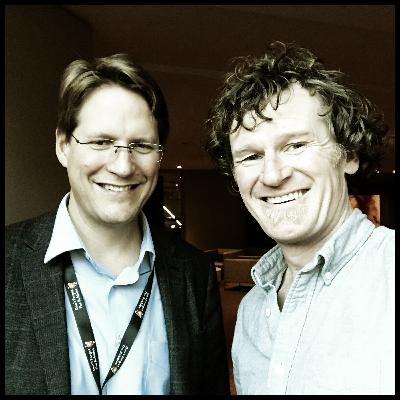
Abnormal Treatment Behaviour. The stress and trauma associated with what you do is real and it affects how you perform. Jannie Geertsema is a child and adolescent psychiatrist working at the Hospital Formerly Known as Lady Cilento Children’s Hospital. He was at the last wonderful Don’t Forget The Bubbles Conference in Melbourne. The “doctor patient relationship”. You may work in a ‘gnarly’ emergency room, or an over run ICU but the sort of damage we are talking about can be severe in almost any care-givers role. Jannie is a care giver that works with children/adolescents and their parents and regularly finds himself in the unfortunate space in between parent and child. Think about that sort of dynamic. It’s a dangerous space as Leonardo can tell you. Jannie has become increasingly interested in this and started to dive into the stress and trauma associated with his role. Increasingly he has found that many of his colleagues (psychatrists and others) have similar problems. There is one half of that relationship that we almost certainly have not given the appropriate attention. My half. The providers half, The therapists half. Your half. You! Jannie throws himself on the psychiatrists couch and blows open a rarely considered trap; The Abnormal Therapeutic relationship. This exists for all clinicians in a “therapeutic” relationships with their patients/clients/consumers. Call them “variably autonomous, mostly humanoid, largely organic carbon based therapy consuming units” if you want. (Usually referred to as VAMHLOCBTCU’s). I usually still call them patients but I am not a psychiatrist or a midwife or one of the various other disciplines that have their own good reasons not to call them patients. We talk a lot about the “Doctor-Patient Relationship” in this podcast. But we are not just talking about doctors when we talk about “Abnormal Treatment Behaviour”. There are a few reasons that the “Doctor-Patient” phrase is used; the crucial paper that Jannie refers to is written by an Australian Psychiatrist qualified in the 1960’s; Prof Bruce S Singh. (I mistakenly refer to his paper as being written in the 1960's but it was actually published in 1981.) And both Jannie and I identify as doctors. Jannie expands on this further when you listen to the linked talk from DFTB and is asked a question about it at the end. (There is a link below.) There is not a lot more written, at least not that Jannie has found. That we have only one paper written by a psychiatrist does not dismiss the other variations on this theme. In fact, each variation, be it Nurse-Patient, Psychologist-Patient, Social Worker-Patient…., would surely merit it’s own analysis. I am willing to bet that there is more written about this by experts from the other caring professions than by the physicians. If there is one thing to take away from this it is that I do not exist as an inert perfect practitioner. I do not perform in a perfect space. I am flawed. I have feelings. I barely know what my own feelings are. But if I can just keep in mind that I do have thoughts and feelings, that they do affect my interactions with others, then I am at least cogniscent of the fact that roughly half of the people in the “Doctor-Patient Relationship” are Me. Or You. Or Us. I do not need to have read, or agree with, Freud to benefit from that sort of insight. As Jannie puts it if you can keep in mind that you are anything less than perfect then you are getting somewhere. If you can get to the next DFTB then you are getting somewhere special. If you cannot then you can stream the entire conference for a small fee or for FREE if you are in a lower/middle income country. That is fantastic. Has anyone else done that? LINKS All the Links are available over on TheTopEnd.org
Vaccine hesitancy and vaccine refusal. New York is in crisis. Who is hesitant, who is refusing, what should you do? We asked Dr Margie Danchin. She knows. New York Measles Crisis. This is not a paediatric issue. This affects us all. Margie Danchin has been thinking about vaccines and the related controversy for many years. She is a paediatrician that has researched and worked clinically in this area at the highest level. She shared her knowledge with the lucky punters that came to DontForgetTheBubbles in Melbourne last year. DFTB 2018. If you can go the next DFTB, in London in June, you really should. THE BLURB New York City is in a health emergency. Mayor Di Blasio has taken the radical step of making vaccination mandatory and has threatened fines of $1000 for non-compliance. How did we get to this? What are exemptions, who asks for them, who gets them, who gives them and who makes up the rules? You might have an opinion about vaccination and anti-vaccination. You may have read a bit about it. You have not read as much or thought as much as this woman. Margie Danchin is a researcher and clinician practicing in this area. She was willing to speak to the room at DFTB2018. She was willing to come and talk to the podcast. Margie gives a fantastic insight into the Australian version of this problem and her insights are really valuable in times like this not just for Australian listeners, for us all. A crisis like this is potentially coming to your town, your city and your hospital soon. I strongly recommend you listen to this and check out the wonderful DFTB page which has a bunch of great links and her talk on stage and a great illustrated note (#doodlemed ) by @gracie_leo and more good stuff. You have to be impressed by what Drs Davis, Lawton, Goldstein and Tagg are doing over there. I am. @TessaRDavis @paedsem @henrygoldstein and @andrewjtagg Go to the conference in London. If you cannot go you should follow the DFTB Podcast and those little Educational Nuggets will literally find their own way to you. Then go to the next conference in 2020. Have you got something better to do? Margie is a compassionate doctor that reads the hardcore medical research and sits with the real world vaccine refusers and vaccine hesitant people. She spends hours of each week with real people that care for their children in her specialist clinic in Melbourne. Listen to her wonderfully balanced and open-minded words. The MumBubVax resource is here. http://www.ncirs.org.au/ncirs-seminarwebinar-series/20319-2019-influenza-program-and-mumbubvax-new-tool-support-midwife LINKS are good. @DanchinMargie http://www.ncirs.org.au/our-work/sharing-knowledge-about-immunisation https://www.skaiproject.org/about-the-projecthttps://itunes.apple.com/au/podcast/dont-forget-the-bubbles/id1281356948?mt=2 https://dontforgetthebubbles.com/margie_danchin/ The Jellybean Podcast is a funny little thing. We advocate and collaborate. In the coming months there will be a load of new interviews. A very mixed bag of different subjects and different voices from different events and different backgrounds. We kind of need people to subscribe to be able to keep going. https://thetopend.org/subscribe-to-the-podcast/
Mwiche Chiluba TITLE Emergency Medicine in Zambia At the moment there is only one public emergency department in Zambia that actually has a trained emergency physician. It only has one. That’s the boss. It’s Mwiche Chiluba. (@mwichiluba) A few years back she literally quit her old job, packed her bags and set off to South Africa to learn how they are practicing emergency medicine. Four years later she completed her training and packed her bags again. This is not a one woman show but it is pretty close. Across the world, in every continent, there are women and men like Dr Chiluba that are in the vanguard at the front line of the expansion of critical care. This is not an African thing, this is not a lower middle income countries thing, this is everywhere. Emergency medicine is still relatively new. We are still developing EM. We have more in common than many appreciate. We can help each other and learn from each other. Zambia, landlocked nation in southern part of the continent of Africa with a population of approx 17 million people. Health care parameters are improving very fast. Huge recent improvements in maternal mortality and childhood mortality are a great indication of how fast things are developing. Emergency is a new discipline. One of the nicest things about how Mwiche sees it all is that, with not one single emergency physician to help her, if you ask Mwiche what she is doing to train more doctors, she is immediately careful to emphasise that you cannot deliver a good emergency medical system with emergency physicians alone. She has solid nursing and primary health support but she wants triage systems, paramedics, specialist support. Triage is a developing art in Zambia, in Mwiche’s hospital even with her Every hospital EP A great insight into one nations emergency medicine and the huge role that nursing professionals play in healthcare delivery. Nurses carry the weight. Lest we forget. At the SMACC event in Sydney in 2019 the organising committee invited emergency medicine ambassadors from around the world. The Jellybean Podcast was lucky to be able to catch up with a number of these amazing people. Thank you to Mwiche for coming on the podcast and thank you to the SMACC people for having the foresight to see that we need to hear voices like Mwiches. We have a lot to learn. Links are good; Twitter Dr Chiluba @mwichiluba SMACCreach people @aalenyo @mgabin5 @Mulinda_EMalawi @ulovegeorge Societies etc @RECA_RWANDA @EMAT_info BADEM people @bad_EM @craigwylie @Kat__Evans African Journal of Emergency Medicine @AfJEM Developing EM @developingEM
FOAMed is just not for English speakers. We love a bit of FOAMote (FOAM other than English) At SMACC I set out to meet the international visitors to find out about their version of Critical Care. And let me tell you, the Chilean version is pretty impressive. Chile is special. The longest country in the world with the driest desert, the highest lakes, the highest volcano, a huge mountain range making it strangely isolated and then they have Patagonia. The health system is highly developed. Emergency medicine has been growing for 25 years and there are conspicuous local and imported protagonists to thank. https://developingem.com/2014/08/14/presenter-profile-billy-mallon/ If you only read one article to accompany this podcast let it be this one: https://www.sciencedirect.com/science/article/pii/S0716864017300299 These days the home grown talent is taking up the reins and I was lucky to meet 4 of them at SMACC. Chile probably has the most high functioning health system in South and Central America. Based on a solid economy and a long history of professional advocacy the discipline of Emergency Medicine is now formally recognised by the Ministry of Health and by the rest of the world. Chile could become a power house of critical and emergency care in the Spanish speaking world. Do not underestimate these people. Cesar, Loreto, Manuela and Josefina came to SMACC in Sydney where I was waiting to meet them. Have a listen to what this group have to say. Challenges do, of course, remain. Chile has long since made the “epidemiological transition” to 1st world pathologies. The delivery of care still varies depending on location. Santiago is very well served but the regional and rural areas less so. They have robust public health and vaccination programs, but there is a resurgence of some infectious diseases in part related to population movement. Their economy is strong and their government has been increasingly willing to take on the responsibilities that go with being a regional power. Their borders are long and they have had a huge increase in asylums seekers, refugees and other immigration in recent years. Not insignificant numbers of French Creole speakers have come from Haiti, perhaps related to the presence of Chilean peace keepers. Mass immigration is new. The challenges it brings are huge. It’s a steep learning curve. But, let’s face it, we like steep learning curves! Some links, links are good; The App Josefina Larraín spoke about is Reanimapp ( @reanimapp ) The city with the large indigenous population is Temuco. The indigenous language spoken in the hospital is Mapudungun. “Do not underestimate the South American countries.” So said a wise woman from Santiago. Chilean Spanish Language #FOAMed resources; Mueve www.mue.cl Twitter @MUE_14 Sociedad de Chilena Medicina Urgencias www.socihmu.cl Twitter @Sochimu MonKeyEM www.MonkeyEM.com Twitter @MonKey__EM MCU Universidad de Chile www.mdu.cl Twitter @UChileEM Conferences Sochimu has its first Congreso Medicina de urgency 21-22 Nov. 2019 https://www.sochimu.cl/noticias/1%C2%BA-congreso-medicina-de-urgencia The conceptos conference is in 11-14 September 2019 http://www.urgencia.uc.cl/conceptos/ These are not small events; Chris Nickson, Cliff Reid, Amal Mattu and Vic Brazil have spoken there. They know a bit about this sort of thing. Chile is amazing. But don’t take my word for it.
Butchery and Ethics. @mededgene is a flight paramedic from Vancouver with a soft spot for that soft spot on the front of your neck. You know the one. It has the cricothyroid membrane behind it. Once upon a time there was a nice man called Gene. I didn’t call him Gene though. I called him a Butcher. The rest is history. Gene Benoit @mededgene is a flight paramedic rom Vancouver. He does have a bit of the Val Kilmer about him and despite the nick-name of Iceman, he is not very icy. Gene and colleagues have been trying to create an affordable, realistic, cruelty free surgical airway training device. I’m all up for most things that are “affordable, realistic and cruelty free” . Gene tells the story of his interaction with the drama that surrounds the surgical airway. It really does seem to get people a little bit wound up. It got him wound up. So he set about unwinding that. And the next thing you know he is making 3D trainers that replicate human tissue without requiring the sale of your own human tissue (kidneys etc) to be able to buy one! I claim no credit at all for inspiring this but I will suggest that one should never under-estimate the power of what you say. Gene can teach me how to wield a scalpel and get past a troublesome voice-box but I shall have to teach myself how to control myown troublesome voice. Have a listen and hear about fear & loathing on the airway education trail, how an ethicist might conceivably arrive by helicopter to save your life and where Peter Singer fits into critical care education. Links: Twitteriness; @mededgene https://advancedparamedicine.ca/about/ http://3dcrictrainer.com/ The Jellybean with Prof Julian Savulescu is, in fact, number 49. https://soundcloud.com/thetopend/jellybean-49-oxford-professor-of-practical-ethics-julian-savulescu
Welcome to SMACC. This is Dr Pendo George. This is the possibly the best thing about SMACC this year. The SMACC organising committee have run an excellent program this year bringing leaders from countries around the world. These people are creating entirely new specialties in their home countries. These people are heros. Their task is HUGE. Have a listen and learn about. Check this out; http://emat.or.tz And maybe go to TACEM this in October of this year. www.tacem.or.tz Have you been to Tanzania? Think about it.
CICMxJellybean 8 (Jellybean 100) Recorded at CICM ASM 2018 Hobart Peta Alexander is a Queenslander. A Queenslander mixing it up with the best in the world at the Boston Children’s Hospital. She is a cardiologist and paediatric intensivist working with some of the worlds best surgeons and caring for some of the sickest kids on the planet. We caught up with Peta towards the end of the ASM in Hobart and despite her efforts she was still up for a chat. We get stuck into the odd subjects of changing cultures and cultural change. Peta trained in Australia before heading off to the states and has a very interesting perspective on the ways of the critical care world. You can find Peta’s talks from the ASM on IntensiveCareNetwork.com; https://intensivecarenetwork.com/congenital-heart-disease-repair-or-palliate/ https://intensivecarenetwork.com/principles-of-management-of-acute-heart-failure/ https://intensivecarenetwork.com/debate-who-should-care-for-guch/ And she was generous enough to talk before the conference at the Trainee Symposium. Legend! https://intensivecarenetwork.com/paediatric-icu-for-the-adult-intensivist-by-dr-peta-alexander/
The 100th Jellybean. I'm proud to introduce to you Miss Claire Kerr. Paediatric Intensive Care Nurse at the Royal Children's Hospital in Melbourne. This one is about a change of heart. Claire is from Adelaide and had to go to Melbourne to achieve what she wanted/needed. And thus a short clip from the legendary Adelaide band "The Master's Apprentices" seemed appropriate for the shared story and that is before you get to the lyrics in the chorus which you can hear at the end of the interview.
CICMxJellybean 7 Recorded at ASM 2018 Hobart Professor Michael Pinsky, Researcher extraordinaire and on the editorial board of almost every journal in critical care. Michael Pinsky needs no introduction. Literally none. Michael is a giant of North American and International Intensive Care research and practice. It is difficult to understate his achievements to date; hundreds of articles, hundreds of chapters and hundreds of lectures delivered at international conferences. The best person to tell you about Michael Pinsky is Michael Pinsky. Sit back and behold. Here are Michaels talks from CICM ASM in Hobart available at Intensive Care Network; http://intensivecarenetwork.com/can-we-be-intensive-and-non-invasive-by-professor-michael-pinsky/ http://intensivecarenetwork.com/pathophysiology-of-acute-heart-failure-in-icu/ The CICM ASM 2018 (CICMxJellybean) Podcasts are part of the larger series known as the Jellybean podcast recorded at conferences and meetings all over the world by fast-talking Irish doctor Doug Lynch. Doug was not paid to record, edit and distribute the podcasts. The Jellybean podcast is available through iTunes, Stitcher Radio, Soundcloud and via www.TheTopEnd.org The CICM ASM organisers requested that we interview the main international speakers but that doesn’t stop us doing what we usually do…. interview anyone with a good story. There will be 5 or 6 “normal” Jellybeans coming from the Hobart ASM. Photographs were taken and used with the permission of the interviewee. The Intro and Outro music clips used in this series of Podcasts are courtesy of Swedish artist Ikson. Ikson’s work can be found on Soundcloud; https://soundcloud.com/ikson
CICMxJellybean 6 Recorded at ASM 2018 Hobart The GUCH Jellybean with Intensivist and Cardiologist Susanna Price Dr Susanna Price,Clinical Lead in Critical Care, Royal Brompton Hospital, President Elect of the European Society of Cardiology, published everywhere and part of so many guidelines related to cardiology. Fresh off the flight from London Susanna stepped up and talked sense to the biggest crowd ever to attend a CICM ASM. The cardiology focussed meeting was a bit of a silo smasher. Perhaps no group of patients bridge across the divide between paediatric and adult intensive care more than the “Grown Up Congenital Heart Disease” (GUCH) patient. These are amazing people with amazing medical histories and they are around in greater and greater numbers. They may have started in a hyper-specialised surgical centres but they might end up in any emergency department anywhere. The catch is that these people will not always know all the details of their past interventions. They were, after all, children at the time. Even if you understand what their original pathology was you may not know what type of surgery was done, where, why, when, who and do we still do that? Don’t be afraid, be informed. Susanna Price opens a GUCH treasure chest to show us what is in there. The organisers of the CICM ASM in Hobart worked hard to shine a light on the areas of critical care cardiology that cross the borders between specialities and the borders between paediatric, adolescent and adult intensive care. Dr Price clinical practice crosses borders and she is a Dual Trained UK Cardiologist and Intensivist, which is a rather rare combination in Britain. (It would be good to have a Different Strokes picture but it seems that all available images are under copyright. There are some great Different Gooch clips here though: http://heliotricity.com/diffrentstrokes.html) https://www.dailymotion.com/video/x548zhx Sometimes doing one specialty is not enough. For some it's an intellectual journey, for others it might be a migration. For a few it is a way to make things happen. Important things. Like getting your patient to the cath lab or into theatre. So not satisfied with just being a good intensivist, Susanna Price also became a cardiologist. That helps when you are working at the Royal Brompton Hospital, the largest specialist heart and lung centre in the UK [http://www.rbht.nhs.uk/#]. Add to the mix that Susanna worked with Adult Congenital Heart Disease pioneer, Dr Jane Somerville [YouTube URL - https://youtu.be/QmrUOK2dhO0]. It turns out that adult intensivists still need to know about paediatric congenital heart diseases and their management, because having survived their childhood, with or without surgery, they turn up as adults in any hospital. This matters. It affects assessment, monitoring and therapies. They may not even know they have or “had” a congenital heart disease. But there is help. Susanna and her European Society of Cardiology [https://www.escardio.org/] colleagues have decided that this is so important, they built an educational platform and give access away for free: ESC Grown Up Congenital Heart Disease (GUCH) E-Learning - https://www.escardio.org/Education/E-Learning/Clinical-cases/grown-up-congenital-heart-disease-guch Here is Susanna's talk on ICN; https://intensivecarenetwork.com/guch-a-growing-problem/
CICMxJellybean 5 Recorded at ASM 2018 Hobart Professor Jean-Louis Teboul Professor of Therapeutics and Critical Care Medicine at the University of Paris-South and Editor-in-Chief of Annals of Intensive Care. Jean-Louis is a huge presence in French, European and International Intensive Care research and practice. It is difficult to understate his achievements to date; hundreds of articles, hundreds of chapters and hundreds of lectures delivered at international conferences. Yet when we started talking it becomes clear that the first thing Jean-Louis wants to drive home is not some of his rarified research but some of the most sensible and universally applicable advice for not only the critical care physician but perhaps all clinicians. Individualise Care, conduct a Risk Benefit Ratio Assessment of every intervention and constant Reassessment. Not only does he push us to focus on the individual in medicine but he has a surprising take on Randomised Control Trials (RCT’s), an enduring respect for the appropriate use of the PA Catheter and a refreshing enthusiasm for one of the safest and cheapest investigations; passive leg raising. Of course he delivers all this in English. Dealing with the accents of the Kiwi and Australian clinicians is one thing but to make matters worse his interviewer is a fast talking irishman. To illustrate how hard that must be I decided to introduce him in French.
Jellybean 96; Big Data with Nik Kumar Big data. It's very big. There's a lot of it. It’s Jellybean time. Matt McPartlin strikes gold in Wollongong. Moment to moment information on heart rate, respiratory rate, how much urine has come out, how much fluid has gone in, the sodium, the glucose, the pH and what was had for breakfast. And that's just one hour, from one patient in one of sixteen beds, in one ICU, in one hospital, in one city, from one state. That's a lot of data. It takes machines and algorithm to process. Intelligence of the artificial type. Automated processing. So who manages the machines? Who decides what patterns to watch for? What can be learned from it. Big data is a term that has become increasingly tossed around at research meetings and medical conferences. The multi-centre RCT is under attack. It's expensive, restrictive and only ever seems to beget more RCTs. Is Big Data here to replace RCTs or to refine it? Big data may be more reflective of real world practice and variance. Like a mega-collection of annecdotal evidence - a Megadote, or maybe a Metadote. Nik Kumar is an ICU registrar who trundled along to the ANZICS Datathon in April to see what all the fuss was about and whether he could use it for some of the projects he had in mind. He went with few expectations. He came back with a whole new perspective on not just data collection and analysis but on collaborative research and future directions for determining trends in practice. He also likes pizza. Big thanks to Matt for recording another Jellybean. Thanks to Dr Nik Kumar for explaining some high end health focused data science. It is not a main stream thing. (Yet.) It is one of those interesting things that hang around at the edges of our working lives. Here at the Jellybean podcast, we love the fringes. We love to learn a little more about the stuff that isn’t in the books, that’s not on any syllabus but is relevant. It might seem small but as we should all know; from little things big things grow. Thanks to Big Data for making the music. We couldn’t resist using one of their tunes. The intro and outro music is from Big Data's track Dangerous You can find that here; https://itunes.apple.com/us/artist/big-data/614730110 You kind find more info on this big Big Data thing here; ANZICS Datathon - http://datathon.anzics.com.au/ “SIH research engineer wins ANZICS Datathon” - https://informatics.sydney.edu.au/news/anzics/ Big data analysis - The Basics - Data Science vs. Big Data vs. Data Analytics - https://au.simplilearn.com/data-science-vs-big-data-vs-data-analytics-article (A non-medical overview) - Medical big data: promise and challenges. Choong Ho Lee and Hyung-Jin Yoon. Kidney Res Clin Pract. 2017 Mar; 36(1): 3ñ11. https://www.ncbi.nlm.nih.gov/pmc/articles/PMC5331970/ (Full text) - Big Data And New Knowledge In Medicine: The Thinking, Training, And Tools Needed For A Learning Health System. Harlan M. Krumholz. PMID: 25006142. https://www.ncbi.nlm.nih.gov/pmc/articles/PMC5459394/ (Full text) Machine learning - The Basics - What is Machine Learning? Andrew Ng. Coursera. https://www.coursera.org/lecture/machine-learning/what-is-machine-learning-Ujm7v - Machine Learning in Medicine. Rahul C. Deo. Circulation. 2015 Nov 17; 132(20): 1920ñ1930. Circulation. 2015 Nov 17; 132(20): 1920ñ1930. (Full text) Udacity - https://www.udacity.com/
Teaching teachers about teaching; lets get super-meta. The Teaching Course. It’s in Alcatraz, Brisbane and Copenhagen. It’s in Melbourne, Manchester and Manila. I’d be exhausted just thinking about it if it didn’t sound like so much fun. Salim Rezaie is a softly spoken, erudite, talented attention avoider. He want’s to credit someone else, he wants you to be happy, he wants to perfect the next slide for his next talk. He doesn’t want to give his next talk quite as much as make the slides but we, the consumers of his inimitable style, are not complaining. Instead we are signed up subscribers, following and forwarding his work because it’s good, very good. Salim is a bit of a pro. He started out on ALIEM. He started RebelEM as a blog and then he got a podcast up and running. He got into this whole education thing, the #FOAMed thing, and from his involvement he became increasingly interested in the processes of the whole teaching/training/learning/simulating/feedback thing. So much so that he realised that there was an appetite, a need, for a resource that helps teachers get better at teaching. So we are educators, we are motivated, we know some stuff, but we are often isolated within our various institutions as the education woman or man. We don’t have our own little cadre of education enthusiasts close by to ask for help, to compare notes, to share techniques. So Salim set one up. He formed a team. He is the leader but he is an incredibly modern type of super-collaborative empathic leader. He is soaking up ideas from all sources. He has gathered a group of super-impressive women and men that help him out. Let’s think for a second about the Teaching Course Faculty. To shed light on this lets bring in my resident philosophical conundrum machine; Cormac. My son Cormac asks me some very important questions. Last week he asked me a good zombie apocolypse question; “Come the Zombie Apocolypse which of your friends would you bring along to help you survive?” That is an interesting question, it is a thought experiment in utilitarian ethics. I’d suggest there are a few candidates in the Teaching Course faculty; Photos Of course one would have to get into the whole #MetaMoments thing that The Teaching Course is embracing, that means feedback, lots of feedback. The imagined “Flipping MedEd Zombie Apocalypse Survival Team” would be giving and receiving lots of feedback. There would be lots of eye contact and hugs. Hopefully not too much to distract them from the zombies which would give the wrong sort of feed back altogether. “Whats that noise? Feedback! I hate feedback. No, wait, hang on, I love feedback.” Neil Young. It is a love hate thing for many of us, but then have you ever been taught how to take feedback? Give it, maybe, but take it? We can tease ourselves for being a bit meta about all this stuff but there is a reason we are talking about it. If we are mentoring young nurses and doctors, if we are running simulation sessions, (and we are), then we do need to think about all this and more. The Teaching Course is a constantly evolving set of distinct and imaginative units. There’s a presenting skills, simulations skills, there’s mindfulness stuff, there’s an awful lot in there. If you are an educator then this course is definitely worth a look. It is so good you may wish to go more than once. I would. I’d go just to get more down-to-earth wisdom from probably my favourite Texan. (Apologies to Cordell Walker.) Accidental old fashioned sage and reluctant FOAMed star, it’s Salim Rezaie @srrezaie Check out these Jellybean Podcasts with other Teaching Course Faculty; Victoria Brazil Natalie May Simon Carley Jesse Spur Chris Nixon Liz Crowe Ashley Liebig Chris Hicks Kat Evans Andy Tagg Mads Astvad Sandra Viggers Paul Grinzi Ross Fisher Julie Derrenger Salim Rezaie It’s like a Jellybean Playlist. I might go and build that Playlist on SoundCloud.
Scary little people. Hazel Talbot loves her job. She really does. She works 80% neonatal retrieval around one of the most beautiful parts of the world and does so in a fashion that must light up the lives of everyone that comes in contact with her. I say this because I had the pleasure of spending a little time with her in Berlin and, in short, if you didn’t think Hazel was fabulous and hilarious I would be consigning you to the “Dubious Judgement” basket. I am proud to say I have met a few men and women over the years that, without even trying, form a litmus test for other humans. How could anyone not love Hazel Talbot? Seriously? Hazel works with the littlest sick people. She is good at it. She is so good at it that she may make it look easy but as we all know that is the consequence of hard work and talent. The good news is that she wants to pass on the tricks, the secrets, the knowledge to you and I. She does as much of that for free as possible. ( The main Course she teaches at is called NLS and there will be a version of this near you I hope.) She has spoken at SMACC and more training events than you can imagine about how to get over the biggest hurdle in neonatal critical care; you and your fear. Heres Hazel giving a SMACC talk in Dublin. https://www.smacc.net.au/2017/03/small-packages-big-lessons-neonatal-paediatric-retrieval/ There’s another one from Berlin in the pipeline. Hazel and I chit chat our way through this scary subject with much giggling, once again showing how laughter can help in the scariest moment. We deal with some of important concepts, for example 100% of people are born. So child birth is pretty common. Almost as common as death. We talk about death a lot in the critical care world but we don’t talk about birth enough. 10% of births are premature. Those little humans need a little help and the good news is that you can deliver it. (Their mothers delivered them and we can deliver the care they both need.) So if you find this sort thing, a sub 1000 gram sick person, frightening then this one is for you. My personal experience of this is that once you get over the fear this is one of the most beautiful things you could ever be a part of. Full story on www.TheTopEnd.org
The CICM ASM is happening next month. It is in Hobart. That’s in Tasmania. In 2017 the ASM was in Sydney and it was conspicuous for its efforts to bring more young trainees to the forum. Lewis Macken and company did a great job. Bringing youth and energy to the Sydney International Convention Centre. There were podcasts like this one, there were talks recorded and shared on IntensiveCareNetwork.com, there was humour, there was Fast Transit and there was a deliberate effort to get a better gender balance. One of that team was Naomi Diel.; ebullient, brilliant, and brave. Naomi shook it up a bit with help from her friends, who she constantly gives credit to. And it turns out that the ASM is as much about making friends as anything else. Have a listen to her insights into running one of these things and then ask yourself: could you do that? I suspect you probably could, I also suspect that the College would like you to think about it. Get involved, consider putting your hand up for your regional committee. The ICU Update is already booked out but there are still places for the ASM itself and the trainee symposium ($330). Sara Yong is in the thick of the Trainee Symposium again. There are a bunch of excellent educators in there; Celia Bradford, David Pilcher, Priya Nair, David (Neo) Anderson, Peter Kruger, Ray Raper, Peta Alexander, Sara Allen and more. Sonia Langlais talks about rural ICU and there is a very interesting session on Fellowships years from people that know. Personally I think we should be making the Trainee Symposium be cheaper, perhaps entirely free. We need a big sponsor that understands the big picture. The sort of trainee that turns up at this sort of thing will be the director of an ICU near you sometime soon. It would surely be a good value item to sponsor in an unobtrusive fashion. Thanks to Naomi for talking to us. Thanks to Low and The Dirty Three for two tiny grabs from their utterly brilliant "In The Fishtank 7" EP recorded in 1999 and produced by Zlaya Hadzic for the "In The Fishtank" series on Konkcurrent Records. Excerpt from full article on www.TheTopEnd.org
Let’s talk about Cambodia. Let's talk to a young man born in Australia as a result of war. Let’s appreciate what just one asylum seeking family can achieve. Sometimes curiosity can take you on an expected journey. Sometimes a mixture of fortune and fate (if such things truly exist) throw opportunities at your feet, though you may not know it at the time. A journey of self discovery. An offer of help to a group of strangers. An appreciation of one’s own good fortune alongside the humility to be the ladder for others when needed. Sethy Ung is the first Cambodian to have been born in Australia. And he counts himself lucky as a result. We met and worked together as emergency medicine trainee registrars in Liverpool Hospital in the south west suburbs of Sydney. While the rest of us took annual leave to go surfing or head off to exotic locations, Sethy quietly flew over to Cambodia to help a paediatric critical care facility with their staffing and training. Over time a few of the ED staff followed him over for a week or two. But what happens when you leave? What benefit then has your presence been outside of the duration of you physically being there? How much can one person really achieve when there is so much to be fixed? Quietly, Sethy found a way. Relax. Listen. And then think about that idea that has been tapping away in the corner of your mind and ask yourself “What is stopping me?” It starts with a decision. For more on the origin story of the Angkor Hospital for Children visit the Friends Without A Border site - https://fwab.org/ahc/ Thank you to Sethy for sharing his story and thank you to Matt McPartlin for another thought provoking jellybean. Thank you also to Kong Bun Choeun who wrote the 1968 Khmer classic Mloup Snae Derm Sraulav ( ម្លប់ស្នេហ៍ដើមស្រឡៅ ) (Lovely Shadows) sung here by Sinn Sisamouth and Ros Serey Sothea. I rudely cut the duet in half but you can find this tune and many more at the Soundcloud page of Cambodian Vintage Music where they kindly allow free downloads. (How about that!) https://soundcloud.com/cambodianvintagemusic
In Berlin, in the footlights, with heart in throat. In London, in the headlights, with heart in hands. In her heart, in Kashmir, always in Kashmir. A young woman that rather took the stage by storm at dasSMACC shares a little bit of her own heart and a lot more of someone else’s heart. Sanaah demands attention. She demands attention because attention is required. Not for herself. Attention is demanded on behalf of the disputed territory of Kashmir. On behalf of more than 8000 missing young men attention is demanded. This is the young Medical Student and Poet Sanaah Sultan. Activist. Future pre-hospitalist. SMACC continued to dream up new and imaginative things, new and imaginative ways to get a message across. It might be doctors that can act, paramedics that can defy gravity, film-makers that can do more using one button than you or I could ever do. In Berlin they had a poet. I heard Sanaah speak to a packed room at the SMACCforce pre-conference event. I saw her do it again in front of 3000 odd people in the Tempodrom. There is a kind of bravery required for that sort of thing. She brings that performance to the Jellybean Podcast. It is not my voice that you need to hear, it isn’t even Sanaahs. The voice we need to hear is any one of the disappeared. We need to hear those voices. We demand to hear those voices. It was my pleasure to meet Sanaah. Meeting people like her makes all this podcast business worthwhile. Thank you to Sanaah. @Sanaa_Sultan Thank you also to Mohammad Muneem and his Pune-based Kashmiri band “Alif” for their track Jhelemus from their debut 2017 album “Sufayed”.
loading
Comments 
loading
