


 Claim Ownership
A Functional Approach with Dr. Jim Chialtas
Subscribed: 4Played: 57
Subscribe

© Jim Chialtas, DACM, L.Ac.
Description
In this Podcast we will discuss topics relating to Functional Medicine, Self Improvement, & Wellness.
Dr. Jim Chialtas has been in private practice in San Diego, CA since 2003 with a focus in Acupuncture & Functional Medicine. www.functionalmedicine-sandiego.com He designs and teaches continuing education courses on Functional Blood Chemistry for the online education company, Acupuncture Insights. He also designed and currently teaches a course on Functional Blood Chemistry for the Doctorate of Traditional Chinese Medicine (DTCM) program at Five Branches University.
Dr. Jim Chialtas has been in private practice in San Diego, CA since 2003 with a focus in Acupuncture & Functional Medicine. www.functionalmedicine-sandiego.com He designs and teaches continuing education courses on Functional Blood Chemistry for the online education company, Acupuncture Insights. He also designed and currently teaches a course on Functional Blood Chemistry for the Doctorate of Traditional Chinese Medicine (DTCM) program at Five Branches University.
143 Episodes
Reverse
In this 143rd episode I unpack some thoughts about fear. I was inspired about this topic from a recent conversation I heard on the Duncan Trussell Family Hour Podcast between Duncan and Ram Dev. There were many topic discussed but fear came up and it just struck a chord. And so I sat down and wrote out some thoughts...If you are interested to hear the conversation you can check it out here:Duncan Trussell Family Hour #724 - Ram Devhttps://open.spotify.com/episode/5vYIE7nU2zCW6Y8LucFtrx?si=2jnDC_UHTl2vIWVUyykxoQ
In this 142nd episode, we delve into the often-overlooked process of how industrial seed oils are made and why their widespread use may be harmful to our health. From the collection of seeds to the final product, the manufacturing process involves several steps, including high-temperature heating and the use of harmful solvents that raise serious health concerns. We'll uncover the six critical reasons you should be cautious about consuming these oils, touching on issues like their impact on our omega-6 to omega-3 ratios and the potential risks linked to genetically modified ingredients.Additionally, we'll introduce healthier alternatives for cooking oils that can support your well-being without the negative effects associated with industrial seed oils. Join us for an enlightening discussion that could change how you think about the oils you use daily. Don't miss this chance to learn about making better dietary choices for a healthier lifestyle!Literature Citations:Changes in consumption of omega-3 and omega-6 fatty acids in the United States during the 20th centuryhttps://pubmed.ncbi.nlm.nih.gov/21367944/Heated vegetable oils and cardiovascular disease riskfactorshttps://pubmed.ncbi.nlm.nih.gov/24632108/Evaluation of the deleterious health effects of consumptionof repeatedly heated vegetable oilhttps://pmc.ncbi.nlm.nih.gov/articles/PMC5616019/n-3 Polyunsaturated Fatty Acids and Cardiovascular Disease:Principles, Practices, Pitfalls, and Promises – A Contemporary Reviewhttps://pmc.ncbi.nlm.nih.gov/articles/PMC5848472/Dietary lipids and risk of autoimmune diseasehttps://pubmed.ncbi.nlm.nih.gov/8050192/Omega-6 to omega-3 polyunsaturated fatty acid ratio andsubsequent mood disorders in young people with at-risk mental states: a 7-yearlongitudinal studyhttps://www.nature.com/articles/tp2017190Trans Fat Consumption and Aggressionhttps://journals.plos.org/plosone/article?id=10.1371/journal.pone.0032175Dietary linoleic acid elevates endogenous 2-AG andanandamide and induces obesityhttps://pubmed.ncbi.nlm.nih.gov/22334255/Soybean Oil Is More Obesogenic and Diabetogenic than CoconutOil and Fructose in Mouse: Potential Role for the Liverhttps://pubmed.ncbi.nlm.nih.gov/26200659/Omega-6 vegetable oils as a driver of coronary heartdisease: the oxidized linoleic acid hypothesishttps://openheart.bmj.com/content/5/2/e000898A host-microbiome interaction mediates the opposing effectsof omega-6 and omega-3 fatty acids on metabolic endotoxemiahttps://pubmed.ncbi.nlm.nih.gov/26062993/Marked elevations in pro-inflammatory polyunsaturated fattyacid metabolites in females with irritable bowel syndromehttps://pmc.ncbi.nlm.nih.gov/articles/PMC2853445/Home use of vegetable oils, markers of systemicinflammation, and endothelial dysfunction among womenhttps://pubmed.ncbi.nlm.nih.gov/18842776/Relationship of omega-3 and omega-6 fatty acids with semencharacteristics, and anti-oxidant status of seminal plasma: A comparisonbetween fertile and infertile menhttps://www.sciencedirect.com/science/article/abs/pii/S0261561409001587Dietary fat and risk for advanced age-related maculardegenerationhttps://pubmed.ncbi.nlm.nih.gov/11483088/Past Podcast Episode on "Evolutionary Mismatch"Evolutionary Mismatch – A nod to our friends in the Amazonthe Tsimane people in all their wisdomhttps://open.spotify.com/episode/3xTi2oKVXUhpZxWGCl99vn?si=PQdecXMiRbOcQaBmh5b7XQ
In this 141st episode I sit down with Dr. Eric Schulte. Eric is a doctor of physical therapy and runs a private practice called Movement Academy here in San Diego, CA. I got to know Eric recently and have had a few conversations that let me know he was someone I wanted to have on the podcast. You see, there is PT, and then there is that next level PT. I feel that Dr. Eric embodies the latter. In this episode we discuss topics like physical therapy training/education, insurance-based models vs. out-of-pocket approaches to care, how there is often a link between physical injury and deeper underlying concepts around emotions and mental health, how a knee condition might actually be an ankle condition in disguise, the difference between movement and exercise, how improving movement contributes to higher levels of wellness and longevity, and and much more. If you are interested in learning more about what Dr. Eric has to offer you can find him here:Website: mymovementacademy.com IG: movementacademy__Email: dreric@mymovementacademy.com
In this 140th episode I discuss some important concepts around testosterone replacement therapy in men. This topic came up as a result of a conversation I had recently with a colleague where I talked about some of the more radical concepts I have seen as a result of higher levels of testosterone therapy. There is of course a time and a place for just about anything... And testosterone or any other hormone replacement therapy is not something that I feel is wrong by any means. But I do believe that it is a 'can of worms' in a lot of ways. It can be hard to get it right. As I discussed in a previous episode, hormone levels do not necessarily equal "hormone effect." There is much more to the equation. In this episode I will discuss some of the basic physiology of how testosterone is produced and managed naturally. Knowing this helps us understand how and why hormone replacement may or may not be ideal, and how problems can occur.I discuss my time spent shadowing an HRT doctor (MD) during my Doctorate program, and where I saw first hand some of the unfortunate side effects of high testosterone. And yes... It involves the testicles! If you haven't listened to my past episode on Hormones, check it out here... In this episode I discuss how hormone levels do not equal hormone effect. Meaning, there is much more to the story. So chasing a particular effect like larger muscles, less hot flashes, more vitality, etc. and getting hormone levels higher and higher could lead to unfortunate effects on your health. This episode explores such concepts:https://open.spotify.com/episode/0UysAMJ8G5w8dtLgaa8s7q?si=uvXhtyjqScSusg4FGyA1dA
In this 139th episode I sit down with Chase Zittrauer, Rep for Cyrex Labs, to discuss a new test called the BiomeBurden Complete. This ground breaking lab panel looks at the gut microbiome (bacterial) and mycobiome (yeast/fungus) as seen through the lens of the immune system. By that I mean, given the status of those little microorganisms living in your gut, this lab test looks at how your immune system observes the situation. If for example there is a Candida overgrowth, your immune system may or may not be reacting to the situation the same as the next person. But for many, antibody production against Candida, for example, can lead to immune reactions elsewhere in the body! So gut does not really mean just the gut.... It can mean any other part of your body! And if you are in the autoimmune population, this can be a very important detail to your health and wellness. Consider the person who has been to a ton of doctors, had a bunch of tests run, and still has persistent and "strange" symptoms. Well, there could be a lurking immune cross-reactivity concern at play between organisms in your gut and self-tissues elsewhere int he body. The BiomeBurden Complete can be a great way to start to peel back the layers of the onion so to speak and get to those kinds of immune-driving mechanisms. Chase and I discuss this concept in detail, and more... Much much more. I really enjoyed this conversation and I hope you will as well! You can check out everything that Cyrex Labs has to offer here:https://www.cyrexlabs.com/CyrexTestsArrays/tabid/136/Default.aspxAnd by all means, if anything here calls to you, please reach out. I love this stuff and am happy to help!
In this 138th episode I record from home with my wife Debbie to discuss how it is living with a gluten free member of the family. We discuss the transition from a normal diet to providing the family with a 100% gluten free diet after I discovered my significant gluten sensitivity condition. There were some struggles, there were some discoveries, there was even benefits for the entire family. Debbie and I talk about how it was to make these changes, and even discuss some really yummy meals/dishes that we picked up along the way and that we enjoy as a family today! I hope you enjoy this heart-to-heart discussion with my wife & life partner Debbie who has supported me through so many things, not just my transition into a gluten free life. May our discussion help you and your family if a gluten sensitivity or Celiac Disease diagnosis comes your way. I think that you will get from our chat that it isn't all that bad. In fact, life is still full of yummy things!And as promised, here is a link to my website where I have posted some really awesome gluten free yummies!!! (Not blood sugar friendly however. But the waffles... Oh my goodness, the waffles...)https://functionalmedicine-sandiego.com/search?q=gluten%20free&f_collectionId=5796659c2994ca1f5d9e72daFind Me Gluten Free Website and App:findmeglutenfree.com
In this 137th episode I pop in quickly to share a recent medical experience I had with dermatology. In keeping with my interest in not only detailing what I consider cool and important medical information, riffing and philosophizing on the human experience, and offering some creative writing... I feel obligated to share my personal medical experiences. Because chances are that you have had or will have some similar experiences of your own! This time around I had a few experiences in dermatology. I had a suspicious mole removed and then a follow up procedure to get the rest. Happy to say it wasn't skin cancer, but it was close. Listen in for what happened, and how I feel about the situation. Long story short, I'm happy I submitted to such a procedure. But holy hell... It felt like I was shanked an a freaking alley!!
In this 136th episode we’re taking a another look at the widely accepted belief that saturated fat and cholesterol are the primary causes of heart disease. Despite the well-known risks and the skyrocketing use of statins—prescription rates have increased significantly over the past decade—heart disease remains the leading cause of death in the United States. Every 40 seconds, someone in the U.S. experiences a heart attack, and over 900,000 Americans die from cardiovascular issues each year. In this episode, we’ll explore the complex and often overlooked mechanisms that contribute to coronary artery disease. Beyond cholesterol, factors such as chronic inflammation, autoimmune responses, hormonal imbalances, toxin exposure, genetics, and infections play vital roles. We’ll focus on certain infections—like H. pylori, cytomegalovirus, and COVID-19—that can silently influence vascular health by causing inflammation, autoimmunity, and tissue damage, often without obvious symptoms.Why do infections matter? Because they can initiate or sustain vascular inflammation, damage arterial walls, and contribute to plaque buildup over time. Understanding these hidden contributors opens the door to more personalized and effective prevention strategies. We’ll discuss how to identify infections through testing, and explore various treatment options—from targeted antibiotics and herbal support to lifestyle changes such as exercise, diet, and stress reduction—that can help address these underlying issues.Join us as we challenge the conventional view and uncover what truly drives heart disease. If you or someone you care about is dealing with cardiovascular concerns, this episode offers new insights that could transform how you view prevention and treatment—because heart health is about much more than just cholesterol.Citations:Statins utilization trends and expenditures in the U.S. before and after theimplementation of the 2013 ACC/AHA guidelineshttps://www.sciencedirect.com/science/article/pii/S1319016423000841?via%3DihubHelicobacter pylori and cardiovascular complications: a mechanism based review onrole of Helicobacter pylori in cardiovascular diseaseshttps://pmc.ncbi.nlm.nih.gov/articles/PMC5390428/Cytomegalovirus Localization in Atherosclerotic Plaques is Associated with AcuteCoronary Syndromes: Report of 105 Patientshttps://pmc.ncbi.nlm.nih.gov/articles/PMC3405798/COVID-19 in the Initiation and Progression of Atherosclerosis: Pathophysiology Duringand Beyond the Acute Phasehttps://www.jacc.org/doi/10.1016/j.jacadv.2024.101107Potential antigenic cross-reactivity between SARS-CoV-2 and human tissue with apossible link to an increase in autoimmune diseaseshttps://pubmed.ncbi.nlm.nih.gov/32461193/
In this 135th episode I address my thoughts on turning 50 years old. Hint hint... It is good. ;-)
In this 134th episode I detail what it too for me to earn the highest levels of certification in the Functional Medicine arena. I am officially certified as an Advanced Functional Medicine Clinician (AFMC) through the prestigious Kharrazian Institute. I will detail the curriculum, time spent studying, how this has helped shape my career and life, and how I want to put into use going forward. Hint... The next phase of my practice may end up looking a lot different! The concepts I discuss about my future practice are just that... Concepts that I am throwing around and something I was riffing on out loud in this episode. It is a work in progress. But I am excited about the future and how I may be able to help people heal and grow physically, emotionally, and spiritually.
In this 133rd episode, I sit down again with my friend and colleague Kit Yoon. Several months ago we were chatting and got onto the topic of happiness. A big topic to say the least, and we realized there was a lot to unpack so we put a pin in it for a later time. Well, this is that later time! Our discussion was not pre-planned, or designed in any way. It was as organic and natural as it gets. The best way, in my opinion. So everything that came up here was from the heart. It was our truth. And we happily shared it with you all. Kit offers some concepts taken from the author Arthur C. Brooks regarding the "Macro and Micro Nutrients of Happiness." (Links below) And I share a writing piece that I did from a few years ago while I was exploring the concept of happiness. My writing piece does not reflect my own personal story, but rather the story of many people. It was a channel of sorts into the psyche of humanity at large. (At least from the male perspective which was used as an example in the piece.) I hope that you enjoy this philosophical discussion on one of the more fundamental concepts we humans tend to struggle with throughout our lives. Happiness.... If you want to check out more of what Kit offers you can click on these links:https://kityoon.com/https://kityoon.substack.com/https://www.instagram.com/kit_yoon/?hl=enAnd if you would like to check out Arthur C. Brooks:Here's the book: https://www.arthurbrooks.com/books/from-strength-to-strengthHere's a Youtube video: https://www.youtube.com/watch?v=dU6ck388Xv4
In this 132nd episode I finish out my reporting of some cardiovascular findings and approaches to care that I have been doing for myself over the past few years. I discuss my initial and follow-up findings, discuss the potential shortcomings of and the realities of imaging and potential human error, and open up about my thoughts about my cardiovascular situation. In going through this experience I have realized that even "bad news" or when things just don't go as you would have liked for them to go, can also launch you into a much healthier place. So the notions of fear, and acceptance both interplay in our medical experiences. The trick is allowing for the information gathered in our various lab tests or imaging studies to help us make positive changes. This will likely be the last post that I do on my personal cardiovascular case study... Unless something else pops up of course! I hope you enjoyed and found some useful information along the way! It was an interesting journey, and one that I will continue in my own way.
In this 131rd episode, I discuss a topic not often considered in both mainstream and alternative medicine alike. As a functional medicine practitioner and acupuncturist I can tell you that complaints of the digestive system are all too common. SIBO, bloating, constipation, you name it, are a common chief complaint. And direct treatment for these individual concepts are most commonly employed. But in many of these cases there lurks a hidden culprit which drives these gut symptoms. The brain has more to do with your digestive system than you think and any insult to the brain has the potential to completely change how the digestive system works. It is possible that the fall off of the monkey bars you took back in elementary school, or the bike accident you had in college, is driving your leaky gut. Listen in and learn more about this connection. It could just make the difference in your chronic gut situation. Citations:1) J Trauma . 2010 May;68(5):1059-64. doi:10.1097/TA.0b013e3181d87373.Stimulating the central nervous system to prevent intestinaldysfunction after traumatic brain injuryhttps://pubmed.ncbi.nlm.nih.gov/20453760/ 2) Altern Ther Health Med. 2015 Aug:21 Suppl3:28-32.Traumatic Brain Injury and the Effect on the Brain-Gut Axishttps://pubmed.ncbi.nlm.nih.gov/26348611/ 3) Altern Ther Health Med. 2015 Aug:21 Suppl3:28-32.Traumatic Brain Injury and the Effect onthe Brain-Gut Axis https://pubmed.ncbi.nlm.nih.gov/19344293/
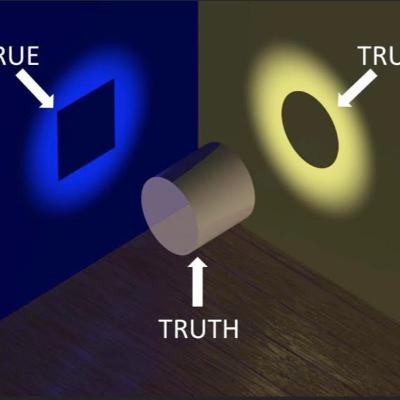
In this 130th episode I dip back into the unseen areas of our existence to probe at the deeper layers of my one fundamental question: "What is wellness anyway?" Today I discuss how humans are trapped into experiencing only a small fraction of that the universe is presenting to us. We miss things which, unbeknownst to us, shape us nevertheless. So what are you missing? And how might those missing influences be shaping our perception of ourselves, or our perception of the world and those in our lives? Listen in, if you are interested in taking a slightly deeper look at yourself. And ask yourself the question: "Who are you really?"
In this 129th episode, we delve into the complex world of immune sensitivities—exploring how they differ from allergies and intolerances, and understanding the immune system's role in these reactions. Sensitivities can be debilitating, affecting various tissues such as the gut, brain, joints, and thyroid, often leading to symptoms like inflammation, brain fog, headaches, and fatigue. We discuss common triggers like dairy, gluten, perfumes, and environmental chemicals, and explain how immune responses, particularly involving IgG, IgA, and IgM antibodies, can lead to cross-reactivity and even autoimmunity over time. Plus, we cover practical approaches to testing, gentle detox strategies, and how to support immune balance safely—especially for those with autoimmune conditions. Whether you’re seeking to identify your sensitivities or improve your overall health, this episode offers valuable insights into personalized, mindful detox and immune management.Cyrex Labs link to test Arrays... In this episode we discuss Array 11.https://www.cyrexlabs.com/CyrexTestsArrays/tabid/136/Default.aspx
In this 128th episode I take a moment to remind myself not to take everything so seriously. And by that I do not mean that we should all let caution fly to the wind. Rather, it is important to remember that life is a dance. It is an illusion. When we focus on the multitudes of drama that surround us, or the concern about how things will turn out in the future, or the comparison of how you measure up to that person over there... We miss the point entirely. To enjoy that deeper level of wellness that life has to offer, it is important to stay connected to what matters most. It is important to understand that we are all just spiritual beings inhabiting humanity. When we can connect with our true spirits we find that the connections we have to those things we think matter tend to melt away. It is a practice, but one worth appreciating.
In this 127th episode I have the pleasure of sitting with my patient Aubrey to discuss her journey with chronic illness. During our conversation we discuss many aspects of her case history, current status, experiences with the medical establishment, diet, motivation to push through the hard times, and more! It is such a wonderful thing when someone opens up about their experiences, because even though we don't all have the same medical situation, we do all share similar struggles in one way or another. Hearing people's stories, hearing how they navigate the situation they find themselves in, hearing about what works for them and what does not, and even hearing how they process things emotionally... It all makes a difference for the rest of us. I want to offer my deep gratitude to Aubrey for sharing her story. I hope that it speaks to you, like it speaks to me.
In this 126th episode, I dip my toes back into the waters of mal-information. Mal-Information was a term defined by our own government meaning any information that goes against the paradigm, yet happens to be true. Pointing out any potential dangers or shortcomings, or even offering another perspective of how to treat a Covid-19 infection is listed as Mal-information. The fear being that it would lead to vaccine hesitancy. And so in this episode I offer you some immunology regarding the mechanisms of how humans acquire mucosal immunity and protect ourselves against the spread of an airborne illness like Covid-19, flu, etc. Hint... It doesn't happen with a shot in the arm. I will be discussing the difference between mucosal immunity (immune responses which occur in the lungs, airways, etc.) and systemic immunity (immune responses which occur in the bloodstream). This is a big concept when approaching something like Covid-19, and airborne virus which infects the respiratory tract. And certainly not one that was discussed when all of those shots were going around. I close with some related and equally troubling concepts about the mRNA platform itself (not the Spike protein mRNA itself). Things that people should know about for proper informed consent... Informed consent, sadly, appears to be a thing of the past. As you listen to this episode, appreciate that nothing I am saying here comes with a shred of politics. This is immunology, plain and simple. So as you listen, I encourage you to approach it in the same mindset. Let your conditioning go, and just listen with an open mind.Let's all try and do our best to keep politics out of the science. Sadly, the two have become so interwoven, that faith in a particular political party's paradigm, rather than free thought, has become the norm. That is not a Functional Approach. My hope here is that what I have to share offers at least some food for thought. It is in no way intended to change your mind. My only interest is to offer some well grounded information that, so far, has not been forthcoming.Citations:Flu Vaccine—Too Much of a Good Thing? Journal of Infectious Disease 2017https://pmc.ncbi.nlm.nih.gov/articles/PMC5853256/IgG4 Antibodies Induced by Repeated Vaccination May Generate Immune Tolerance to the SARS-CoV-2 Spike Protein - Vaccines 2023https://pmc.ncbi.nlm.nih.gov/articles/PMC10222767/Correction: At 2 minutes 41 seconds into the episode I mistakenly call ACE2 Receptors "ACE2 Inhibitors." This was just a slip of speech and I use the term correctly for the rest of the episode. An ACE2 Inhibitor is a pharmaceutical drug class used to treat hypertension and heart failure. I was discussing the ACE2 Receptors in lung tissue.
In this 125th episode I discuss the very important topic of migraine headaches. What makes a migraine an migraine? And what is happening that makes they so unique among other headache types?I will discuss the specific qualities of a migraine, migraine triggers, reference a few studies/statistics, discuss the pathophysiology, and offer some advice about what can be done to help reduce migraine severity, and frequency.
In this 124th episode I discuss a recent article that was published in the medical literature describing the observed benefits of the active psychedelic compound in magic mushrooms, psilocybin. Believe it or not, psilocybin has now been shown to not only extend the life of human cells in a dish, but also the lifespans and healthspans of mice in the lab. The research on compounds like this is coming at us more and more every day, and overwhelmingly the benefits are positive. I personally find that fascinating. Perhaps it is time for a change in public opinion on topics like this so that important compounds like these can finally be taken off of the Federal prohibition of a Schedule 1 drugs. Drugs, which according to the federal government, have zero medical benefit and come with a high risk of addiction. The literature is painting a very different picture. Citations:Psilocybin treatment extends cellular lifespan and improves survival of aged micehttps://pubmed.ncbi.nlm.nih.gov/40628762/And here is another link to a podcast episode I published a while back on LSD, migraines, and chronic pain:https://open.spotify.com/episode/45AjS5DjMkKkBiidHhXjtG?si=1j34huh9QTOpIhc-euv4Xw

Comments

Download from Google Play

Download from App Store
 United States