



 Claim Ownership
AI for Lifelong Learners Podcasts
Subscribed: 1Played: 16
Subscribe

© Tom Parish
Description
Beyond the AI hype and the 'work-faster' mindset, let's consider how AI might affect our enjoyment of life and our pursuit of curiosity. It might be just the tool you need to help you along as a lifelong learner. Between the extremes there is always a middle ground. Seek that and feed the good wolf along the way for the better good.
aiforlifelonglearners.substack.com
aiforlifelonglearners.substack.com
20 Episodes
Reverse
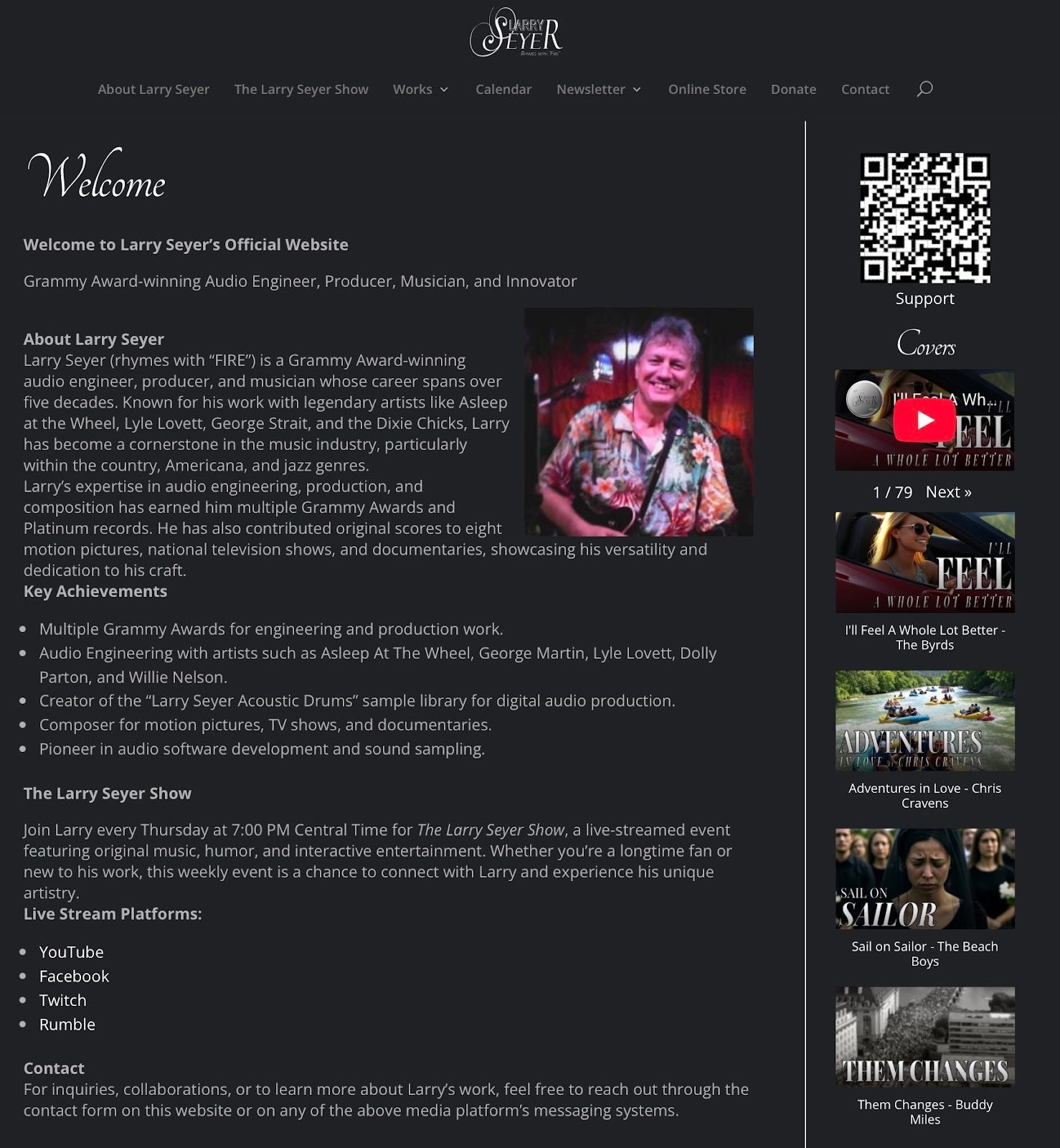
Show Notes: AI for Lifelong Learners - Larry Seyer InterviewWelcome back, everyone. You’re listening to AI for Lifelong Learners! Today, I’m joined by my friend and mentor, Larry Seyer. Larry is a Grammy-winning engineer, producer, and musician, as well as the creator and host of The Larry Seyer Show.We’re going to talk about where performance meets engineering and audience interaction.We discuss Larry’s creative instincts, his live format, and how his home-built tools come together, and what AI actually does in his pipeline. Larry brings a reality to building your own tools with your own creative flow.Larry WELCOME to the show …What You Will Learn in This Show* How to integrate AI tools into live music performance without losing authenticity and spontaneity* Practical applications of Claude Code for building custom broadcasting tools* Which AI platforms excel at specific creative tasks (coding vs. lyrics vs. current events)* How to automate production elements while maintaining focus on musical performance* Strategies for building interactive audience experiences using AI-generated content* The importance of maintaining “feel” as the primary driver when choosing between human and automated elementsWho This Episode Helps* Solo performers looking to enhance their live shows with automated production elements* Musicians and content creators interested in leveraging AI without sacrificing their unique creative voice* Live streamers wanting to broadcast simultaneously across multiple platforms* Audio engineers and producers curious about integrating AI into their workflow* Anyone interested in practical, real-world applications of AI in creative fieldsKey Points and TakeawaysLive Performance Energy* Live audience interaction creates a feedback loop that elevates performance energy beyond what’s possible in studio settings* Larry broadcasts simultaneously to YouTube, Facebook, LinkedIn, X (Twitter), and Rumble using Restream* Interactive elements like live chat keep performances dynamic and engagingShow Switcher Innovation* Custom-built module for Bitfocus Companion that automates camera switching during live performances* Randomly selects camera angles at varied intervals, allowing the performer to focus on playing* Available free on GitHub for other performers to use* Solves the challenge of being a solo performer who can’t manually switch cameras while playingAI Tool Recommendations by Purpose* Claude Code (CLI): Best for programming and custom software development* ChatGPT: Excellent for lyrics, text content, and creative writing* Grok: Best for current events and less biased news information* Gemini: Fast but unreliable in Larry’s experience* Zencoder: Good for coding within CLion IDE but had reliability issuesCreative AI Integration* AI helps generate weekly show themes based on current events or seasons* Movie trivia and quotes generated by AI for audience engagement* Jukebox Hero feature lets audience vote on song selections* Automated scrolling quotes related to show themesOTTO Project (Organic Trigger Timing Orchestrator)* AI-assisted drummer software in development* Creates dynamic drum patterns that adjust to song sections (verse, chorus, bridge)* Incorporates human-like timing variations (slightly ahead on chorus, behind on verse)* Part of Grimm for Reaper projectMaintaining Authenticity* “Feel is always number one” - choose whatever serves the emotion of the music* Use loopers to maintain spontaneity within structured performances* Create flexible song arrangements that allow for extended solos or reordered sections* Prepare playlists to avoid dead air while maintaining creative freedomPractical Tips for Musicians* Start small: Use AI to help refine lyrics without replacing your creative voice* Maintain the human element: AI should enhance, not replace, performance energy* Test reliability: Some AI tools have bugs that can disrupt live performance* Layer automation gradually: Add one automated element at a timeResources* Show Switcher: Available free on Larry’s GitHub profile* Bitfocus Companion: Control software for video switchers* Quantiloop Pro: iPad looper app for flexible song arrangements* Restream: Multi-platform streaming service* Larry’s Sample Libraries: Free on PianoBook* Claude Code: Command-line interface for AI coding assistance* ATEM Mini Switchers: Hardware video switchers for productionConnect* Website: LarrySeyer.com* Live Show: The Larry Seyer Show - Thursdays at 7:00 PM Central Time* Platforms: YouTube, Facebook, LinkedIn, X (Twitter), Rumble* GitHub: https://github.com/larryseyer Larry’s profile for free tools and software Past Episodes: Available on YouTube for replayLarry Seyer brings over 60 years of experience as a Grammy-winning engineer, producer, and musician to his innovative approach to AI-assisted live performance. His Thursday night shows demonstrate how technology can enhance rather than replace the human element in music. See and hear him at http://larryseyer.com Get full access to AI for Lifelong Learners at aiforlifelonglearners.substack.com/subscribe

Episode OverviewIn this insightful episode of AI for Lifelong Learners, host Tom Parish sits down with Preston McCauley, author, educator, and software developer who wrote "Generative AI for Everyone: A Practical Guidebook." Preston brings his unique perspective, gained from teaching, curriculum development, and hands-on AI system building, to share practical insights about mastering artificial intelligence. He reveals how he built an AI system to teach himself AI and discusses his approach to staying ahead of technology trends by "living five years in the future." The conversation covers essential topics for anyone looking to effectively utilize AI tools, including Preston's CLEAR methodology for prompting, the current state of various AI models such as ChatGPT-5 and Claude, understanding AI agents, and the growing importance of open-source models. Preston demystifies complex AI concepts and provides practical frameworks that help transform AI from a simple chat tool into a true collaborative partner, making this episode essential listening for both beginners and experienced AI users.Book SnapshotGenerative AI for Everyone by Preston McCauley is the ultimate guide to understanding and harnessing the potential of artificial intelligence. Whether you're new to AI or an experienced professional, this book equips you with the tools to revolutionize your work, learn, and create in an AI-driven world.This guide's core is prompt engineering, a critical skill for effectively communicating with AI systems like ChatGPT and other advanced models. Learn how to:• Craft effective prompts by mastering key elements like context, clarity, constraints, and adaptation. • Refine your prompts iteratively to achieve precise, high-quality outputs. • Use proven frameworks such as CLEAR AI (focusing on 15 essential elements) and FOCUS AI (creating reusable templates for various applications).With practical examples, including a creative take on Goldilocks and the Three Bears, you'll gain hands-on experience in constructing and perfecting prompts.What You'll Learn in This Episode[00:33] - Preston's "Living Five Years in the Future" Philosophy • Preston's work mantra of staying ahead of mainstream technology adoption • Building his first AI system specifically designed to teach him about AI • The importance of immersing yourself in new technology, like learning a new language • How this approach helped him anticipate the evolution of GPT and early AI systems[03:10] - Reverse Engineering the Learning Process • Creating an AI-powered curriculum and syllabus for learning AI • Breaking down complex concepts into teachable structures • Learning faster through AI assistance than traditional methods • The importance of understanding things in a way you can teach them[05:12] - Writing "Generative AI for Everyone" • The book's intentionally timeless design and methodology • Using AI assistants as a team to edit and review the book • Applying the Goldilocks principle ("getting it just right") to AI interactions • Creating content that flows conversationally rather than lecturing at readers[07:41] - Who Benefits from AI Training • Designing content for diverse demographics beyond tech professionals (gardeners, story writers, etc.) • Breaking through the "AI is just chat" mindset • Moving from using AI as a tool to collaborating with it as a partner • The visible "gasp" moment when people grasp AI's collaborative potential[10:41] - Common Barriers to AI Adoption • Trust and privacy concerns are holding people back • Fear of "breaking" something when experimenting with AI • The challenge of sycophantic AI responses that always agree • Understanding AI inference (like Wheel of Fortune) vs. factual truth[14:19] - Comparing Current AI Models • Claude 4.1 excels at deep written thought • ChatGPT-5 offers a good balance but requires proper prompting structure • Perplexity combines search engine functionality with AI • Gemini 2.5 for text generation • The reality that businesses don't need "supercomputer" level AI for most tasks[18:48] - ChatGPT-5 Deep Dive • Managing expectations vs. reality for the new model • The thinking mode and when to use it vs. faster responses • Cost and energy challenges of training advanced models • Why technical users may be disappointed while everyday users find it sufficient[21:57] - Cross-Platform Prompting Strategy • Running the same prompt across multiple LLMs for comparison • Understanding that different models provide different perspectives • All LLMs use similar training datasets but produce varied outputs • The encyclopedia analogy - different sources tell stories differently[24:18] - Identifying AI-Generated Content • The telltale word "unlock" frequently appears in AI content • Common patterns across different AI models • Techniques for getting deeper, less generic responses • The importance of reflection and going beyond first-level results[27:16] - The CLEAR Methodology Framework • Clarity: Setting the AI on the right path (GPS route entry) • Limits: Defining boundaries and constraints (routes along the way) • Examples: Showing what good looks like, not just telling • Adaptation: Adjusting when obstacles arise (like construction on I-635) • Reflection: Both AI and human reviewing the output • Why this framework is more important than ever with GPT-5's thinking model[31:28] - Practical Prompting Tips • Adding confidence rankings (1-5 scale) to AI responses • Using "Does this make sense?" as a quick reflection check • Asking AI for clarification questions before proceeding • Building nested inference and establishing references • Not going more than 3-5 requests deep to maintain context[35:44] - Understanding AI Agents • Agents as specialized team members with specific roles (like a marketing team) • The difference between task-based agents and truly agentic systems • The importance of providing GPS-like structure to prevent wandering • Achieving 50% workflow automation with human review • CrewAI as an example of truly agentic systems[40:36] - Open Source and Local Models • LM Studio, Ollama, and GPT4ALL for running models locally • Hardware requirements: 13 billion parameters or less for responsive performance on Mac M1 Pro • Privacy benefits of running models locally • ChatGPT OS 20B is the current best open-source model size• Memory optimization advances allowing larger models on consumer hardware[49:02] - Beyond Fine-Tuning • Why fine-tuning isn't always necessary anymore • Alternative techniques like advanced RAG (Retrieval-Augmented Generation) • Cost-effective approaches to domain-specific knowledge • Building medical AI models with minimal training using Unsloth[53:07] - Preston's Future Projects • New intelligent AI website with six AI personalities • MELD framework (Model Engagement Language Directive) - open-sourced ver 1 • Upcoming book: "Generative AI for Everyone: Images" • New frameworks for complex image and brand structuresResources* Book: "Generative AI for Everyone: A Practical Guidebook" by Preston McCauley* Reference: The Goldilocks principle applied to AI interactions* Newsletter: The White Box by Ignacio (Nacho)* Organizations: OpenAI, Anthropic, Google, Hugging Face* Tools Mentioned: ChatGPT-5, Claude 4.1, Perplexity, Grok, Gemini, LM Studio, Ollama, GPT4ALL, CrewAI, Keras, Unsloth, Google ColabConnect* LinkedIn: Preston McCauley* Website: clearsightdesigns.com* Book (physical copy): books.by/clearai* Amazon: "Generative AI for Everyone: A Practical Guidebook"Enjoyed the episode? Share these notes and help more learners discover AI insights! Get full access to AI for Lifelong Learners at aiforlifelonglearners.substack.com/subscribe

Who this episode helps* Builders graduating from no-code prototypes to production.* Leaders evaluating whether to bet on n8n, Node-RED, or an AI-assisted code stack.* Curious newcomers who want a momentum-first approach to learning modern tools.Fraser Gorrie — developer, consultant, and systems problem-solver who thrives on constraint-heavy projects and collaborative iteration. Contact: FraserGorrie.comEpisode theme: Why our builds stall, how to get momentum back, and when to move from vibe-coding prototypes to production-ready software.Introduction If you’ve ever opened a promising tool and lost your momentum three minutes later, permissions, APIs, mystery checkboxes—this conversation is your map out of the maze. Veteran developer and systems thinker Fraser Gorrie joins host Tom Parish to share hard-earned advice from decades of coding, consulting, and experimenting with no-code, low-code, and today’s “vibe-coding” AI tools. We dig into: keeping momentum when everything changes weekly, choosing tools without getting trapped by them, documenting flows so you don’t drown in your own success, and a counter-intuitive practice that speeds everything up: tinker first, then restart with structure.key points and takeawaysLearning & momentum* Momentum is the hidden cost center. When a tool throws friction (auth, IDs vs files, function naming dilemmas, opaque UI), the loss of momentum can erase prior gains unless you have a recovery plan.* Care about the project. Passion provides the energy to push through the inevitable stalls.* Use intuition as a signal. If something “doesn’t feel right,” pause and reassess rather than muscling through.Choosing and testing tools* Run a quick “worth-time” checklist before committing: does it have all of the UI control you need? Does it have API access, server calls, payments, etc? Find convincing examples that use the same tech, not just marketing hype.* Know your personality limits. Comprehensive types go too wide with alternatives and make slow progress; intuitive types go deep on one option that may be the wrong one. Adjust your approach so you don’t burn cycles installing four payment processors “just to compare.”* Pair up and trade up. You become the average of the five tools and LLMs you use most. Periodically rotate your LLM tools, or at least ask for two different LLM solutions to avoid single-tool bias, and to avoid flattering, uncritical and ultimately time-wasting solutions.No-code, low-code, vibe-coding* No-code’s promise is speed: provide something visible for client feedback quickly; its trap is that last 20% of what you need might be unreachable, especially when you need precision or need to scale.* Low-code buys wiggle room with custom scripts inside nodes. But you are still restricted by what the flow of nodes can do. The trees (nodes) can look good, but the forest may not be buildable.* Vibe-coding (LLM-driven development) lets you describe the “above-water” intent while the model fills the iceberg beneath, but prototypes often need a complete restart, with architecture for scale, internationalization, and performance.Process over product: the two-pass learning cycle* Pass 1 - Tinker on intuition. Get the messy version working, learn the terrain.* Pass 2 - Restart with structure. Break the problem into steps, organize your files, name variables, factor modules, and add versioning. Be willing to do Pass 3 or 4 if new design insights keep arriving.Documenting and not getting lost* Keep a paper journal. Muscle memory helps; jot failures and speed bumps as you hop between and even within tools.* Treat flows like code. Use naming conventions, modular “snippets,” comments, and visual labels. If you copy a node, label the copy with why and a date so future-you can safely delete it.* Screenshots are cheap insurance. When a dynamic form finally works, capture it.Node-RED vs n8n (server-side automation)* Node-RED passes a single msg object from node to node. It’s great for industrial/home automation and server workflows; the pattern is consistent and easy to reason about. * n8n lets any node reach back to any earlier node’s data. It is both powerful and popular (including self-hosting to escape per-execution pricing). n8n is also well wired for AI use cases. However, n8n is changing, almost weekly. And execution paths (the big picture of what you want to do) can feel opaque without careful discipline.* Migration caution: Visual similarity between these 2 tools does not mean conceptual equivalence; don’t transfer mental models 1:1 between them.Performance, scale, and production reality* Prototypes ≠ products. A no-code build that’s “good enough” may fail on performance (for users, sub-second page loads matter). Many times the only answer is recoding with the right architecture.* Security and updates are non-negotiable. Today’s cadence demands staying current, especially with server-facing tools.AI Prompts and context* AI Prompts are context-bound. Save good prompts, but expect to regenerate and refactor because conditions differ. The LLM’s are changing too fast for a single prompt to work effectively continually.* Avoid over-specifying. Over-constraining can force confident nonsense. Use guardrails sparingly and prefer iterative clarification.* Ask for alternatives. Request two approaches to see the option space and to test whether you’ve provided enough context.Versioning and visualization* Adopt Git/GitHub once a prototype stabilizes. Commit early, commit often, and write helpful commit messages. AI will help with all of that.* Let your AI dev environment help. Modern tools can diff changes and even generate sequence/flow diagrams from code so your docs stay in sync. It’s a great feeling to know, in a nutshell, what you just changed after a long AI coding session.Human help compounds* Find a buddy or mentor. Bring them in after you’ve tinkered. Be sure you know what you want and how difficult it was to get it. You provide context and direction; they provide pattern recognition and “early course-corrections.” The relationship benefits both sides.Interfaces and ergonomics* Interfaces will always bug you. Accept some friction. Learn only what you need to ship. Chasing perfect ergonomics can destroy momentum faster than the quirks themselves. Find the good-enough point and get your project out into the world.Mindset for the long game* Expect to rebuild. With LLMs collapsing build time, rebuilding with better insight is often faster than patching a shaky base.* Passion + discipline beats tool-churn: care about the outcome, journal the path, refactor the plan, and keep momentum sacred. Get full access to AI for Lifelong Learners at aiforlifelonglearners.substack.com/subscribe

Episode OverviewFormer NSA intelligence officer Dr. Leslie Gruis joins host Tom Parish to unpack her book The Privacy Pirates: How Your Privacy Is Being Stolen and What You Can Do About It. Gruis traces the roots of American privacy from Magna Carta ideals to smartphone-era dilemmas, explains why federal protections lag behind Europe’s GDPR, and offers concrete steps listeners can take to guard their data. The conversation also dives into AI’s impact on education, her experiences as a STEM teacher, the hidden risks of school-issued laptops, and why device convenience often masks deeper trade-offs.Book SnapshotThe Privacy Pirates uses the story of 14-year-old Alice to illustrate how companies and governments mine personal data. Gruis blends humor and clear language to explain:* The historical link between privacy and American freedom* How corporate surveillance eclipses government intrusion* Practical tactics for “defeating the Privacy Pirates”What You’ll Learn in This EpisodeWhat You’ll Learn in This Episode:* Origins of Privacy: How First and Fourth Amendment principles underpin today’s privacy expectations.2. Tech’s Double-Edged Sword: The internet promised a knowledge utopia but evolved into what Gruis calls “a sewer full of inappropriate content.”3. AI in Classrooms: School-issued laptops boost administrative efficiency yet narrow student curiosity and throttle deep reading.4. GDPR vs. U.S. Patchwork: Europe’s high watermark forces companies to comply globally, while U.S. states fill the federal gap with a mosaic of privacy laws.5. Subscription Myth: Paying for a service does not guarantee data protection; the real currency is attention and personal profiling.6. Quick-Win Defenses: Always-on VPNs, reputable ad blockers, privacy-focused browsers, and a strict “LinkedIn only” social policy.7. Smart Home Red Flags: Internet-connected thermostats, TVs, and doorbells harvest more information than most users realize.8. Privacy Literacy for All Ages: From simple phone “diary” analogies for teens to due-diligence tips on kids’ games like Roblox for grandparents.9. Historical Milestones: Telegraph wiretaps, the 1934 Communications Act, FOIA (1967), and how each technological leap reshaped “search and seizure.”10. 2030 Vision: Success looks like a comprehensive U.S. privacy law, ethical AI audit standards, and public fluency in “good-touch / bad-touch” data practices.Resources* Book: The Privacy Pirates (Amazon) * Reference: Lawrence Lessig’s Code and Other Laws of Cyberspace* Organizations: Electronic Frontier Foundation (EFF)* Tools Mentioned: VPNs, privacy-centric browsersConnect* Leslie Gruis: LinkedIn* Tom Parish & AI for Lifelong Learners: SubstackEnjoyed the episode? Share these notes and help more learners outsmart the Privacy Pirates. Get full access to AI for Lifelong Learners at aiforlifelonglearners.substack.com/subscribe

Welcome to another AI for Lifelong Learners podcast. Your companion in exploring the ever-evolving landscape of artificial intelligence and its real-world impact on our continuous journey of growth and understanding of ourselves, life, and others.In this featured episode, we step aside from my usual format to bring you an insightful conversation led by yours truly, Tom Parish. My wife, Donna, and I share a candid and relatable journey into the world of fitness and health as older adults. We recount our experiences navigating a sea of online opinions and advice, the challenges of finding what truly works, and our eventual success through personalized human coaching. The episode culminates in an interview with our coach, Dr. Justin Traxler, a physical therapist who specializes in strength training for adults.You may be wondering, how does a deep dive into exercise for seniors and physical therapy connect with "AI for Lifelong Learners"?This show is powerfully relevant. Dr. Traxler provides a fascinating, on-the-ground perspective on how AI is (and isn't) currently used in his practice. He discusses the potential of AI for generating workout programs but underscores its significant limitations in accounting for crucial individual factors: age, previous injuries, fear, specific health conditions, and the nuanced goals of a patient. His insights perfectly encapsulate a core theme of this newsletter: discerning where AI offers genuine utility versus where personalized, human expertise and connection remain irreplaceable.Dr. Traxler's professional viewpoint on AI in healthcare and fitness provides a critical lens on the technology's current capabilities and ethical considerations, reminding us that while AI can be a powerful tool for information and efficiency but it's not yet a substitute for tailored, empathetic, and context-aware human guidance in complex, personal domains.Join us for this important discussion that illuminates the practical realities of AI and the enduring value of human-centered learning and support.What you will learn in this show:Limited current use of AI in practice (for now)His practice uses AI primarily for administrative tasks like generating social media hashtags and captions, not for patient encounters or creating exercise programs, mainly due to liability, HIPAA (patient information privacy), and the current limitations of AI.AI for personalized workout programs – a cautious viewWhile acknowledging people and some trainers use AI (like ChatGPT) to create workout programs, he sees a significant con: AI cannot yet account for the multitude of crucial factors essential for safe and effective programming. These include age, previous injuries, specific goals (e.g., an Olympian's needs vs. a beginner's), fear of movement, and other individual nuances.Human expertise is key for nuanceHe believes AI, in its current state, lacks the ability to handle the complexity and personalization required for effective and safe exercise prescription, especially when dealing with individual limitations or medical histories.On functional strength training, especially for older adults:Definition of "older adult"Generally considered this 65+, but emphasizes it's more about an individual's activity history; active individuals are "older adults" much later in life.Importance of functional trainingThis type of training mimics daily life tasks (e.g., lifting a child, carrying groceries, handling luggage) and builds capacity to perform them without injury, as opposed to purely aesthetic training like bodybuilding."Use it or lose it"Stressed that as people age, they lose muscle mass faster. Strength training is crucial to combat this, maintain bone density, and limit comorbidities. It's never too late to start.Power is crucial for preventing fallsHighlighted that "power" (the ability to stimulate the nervous system quickly, e.g., to catch oneself during a stumble) is more critical for older adults than just strength alone, and walking doesn't sufficiently build this.Mindset shift & empowermentA big part of his work is educating older adults, empowering them to understand they can lift things, that it improves bone density and muscle mass, and that it's not "too late."Addressing misconceptionsMany older adults fear getting "bulky" or think it's too late. He clarifies that getting bulky requires intense, specific effort, and the benefits of strength training far outweigh not doing it.Osteoarthritis and movementEmphasized "motion is lotion." Movement and exercise increase blood flow and synovial fluid, often reducing pain associated with osteoarthritis, rather than exacerbating it. Lifting helps build muscle around joints to protect them.On training principles and coaching:Proper form and warm-ups are crucialWarm-ups (5–10 minutes) increase body temperature and lubricate joints. Proper form is essential to prevent injury.Start with bodyweightMaster bodyweight movements (e.g., air squats, push-ups, proper hinging) before adding external load to ensure safety and effectiveness.Minimum recommended exerciseThe general guideline is 150 minutes of moderate-intensity exercise or 75 minutes of vigorous-intensity exercise per week, though many don't achieve this. He advises starting small (1–2 times a week) and building up.The "marginal decade"Referenced Peter Attia's concept – the last decade of life, where physical and cognitive decline can accelerate. The goal is to "train for your marginal decade" to maintain a high quality of life for as long as possible ("live long, die fast").Remote coaching benefitsEffective for accountability and progressing individuals safely once they have good movement fundamentals. Apps like TrueCoach allow for feedback, video analysis, and program tracking. In-person is ideal initially.Realistic expectations & dialing it inFor older adults, starting strength training will, at a minimum, maintain current muscle mass and bone density, but usually leads to gains. The focus isn't on competitive lifting but on functional improvement.Balancing pushing limits and safetyStart with an "underdose" to build tolerance and confidence. Introduce "deload weeks" (intentionally reducing intensity for a week after 3–6 weeks of harder training) to allow recovery and prevent joint stress. Listen for "dull, deep, achy, throbby" joint pain as a warning.Individualized programmingTraining programs must account for individual limitations, medical history (cardiac conditions, osteoporosis, previous surgeries), and goals. Progress is gradual, especially if conditions like osteopenia are present.Final key advice:Just start movingIf doing nothing, begin with a simple walking program.Strength training is safe and crucialIt's incredibly important and safe when done with supervision, especially initially.It's never too lateAge should not be a barrier to starting strength training.Strength training isn't about competition (for most)It's about improving functional ability, health, and quality of life, not necessarily lifting maximal weights.Thank you for your contribution of time and attention as a reader. I’ve received many lovely notes and thoughtful insights. A special thank you to those who have so generously contributed financially to AI for Lifelong Learners. What you do makes a difference and keeps me inspired.Have a question? Remember to post a Substack note or drop a comment → here anonymously. Your thoughts are my inspirations. Get full access to AI for Lifelong Learners at aiforlifelonglearners.substack.com/subscribe

Welcome to the next lifelong learners Podcast! Today's episode explores territory rarely covered in tech discussions - the relationship between our stress physiology and our ability to thrive alongside artificial intelligence. My guest Bethlyn Gerard brings decades of experience in systems thinking and team performance, offering a fresh perspective on what it truly means to be human in an age where machines are handling more of our thinking.To wet your appetite, here are some quotes from the interview that I think help set the stage and resonated with me:* "K plus E equals W, which is, it takes knowledge plus experience to mature into wisdom." Shared by Bethlyn Gerard* "We need to hone larger, intuitive, sensing, right-brain skills, because the machine's gonna do the rest of it." Bethlyn Gerard* "The level of human physiology dysregulation and the need for skills that take coherent regulation [are in] an inverse relationship." Bethlyn Gerard* "There's no excuse for less safe work to save a human job... There's no excuse to compromise the quality of care because we don't want AI to do it better for us." Bethlyn Gerard* "One of the principles of AI for lifelong learning is that you need to be what the machines can't be." Podcast HostAbout this episode:In this thought-provoking conversation, Bethlyn shares insights from her recent experience in Vietnam, where she leveraged AI tools to rapidly develop and cross-reference 38 lesson plans in just hours. Work that would have traditionally taken days. However, this episode goes far beyond efficiency gains to explore a critical question: as AI increasingly handles analytical and computational tasks, how must humans evolve their uniquely human capabilities?Why this matters for Lifelong Learners:This discussion connects directly to the core principle of AI for Lifelong Learning and you’ve heard me say this often, “what’s on offer now in life is for you to be more human”. We’re discovering that our lived experiences make us uniquely human—something machines can never replicate. Bethlyn makes a compelling case that as AI handles more routine cognitive tasks, our focus must shift toward strengthening our physiological foundations for expanded intuition, sensing, and right-brain skills. She explains why understanding stress regulation is as fundamental as learning photosynthesis, especially when our dysregulated physiology directly conflicts with the coherent regulation needed for the enhanced critical thinking our AI-assisted world demands.Join me now in this inspiring and enlightening conversation with Bethlyn Gerad.About Bethlyn Gerard:Bethlyn Gerard is the Founder and Principal of Generativity Solutions, where she has spent over two decades strengthening organizations across various growth stages from startups to large health systems. As an innovative strategist and proven leader in healthcare models, Bethlyn specializes in outcomes assessment, protocol design, and turning complex data into high-value insights. Her expertise lies at the intersection of systems thinking, stress physiology, and team wellness, making her uniquely qualified to discuss how our rapidly changing technological landscape impacts human performance.Bethlyn Gerad can be reached at https://www.generativity.solutions or on Linkedin. Get full access to AI for Lifelong Learners at aiforlifelonglearners.substack.com/subscribe
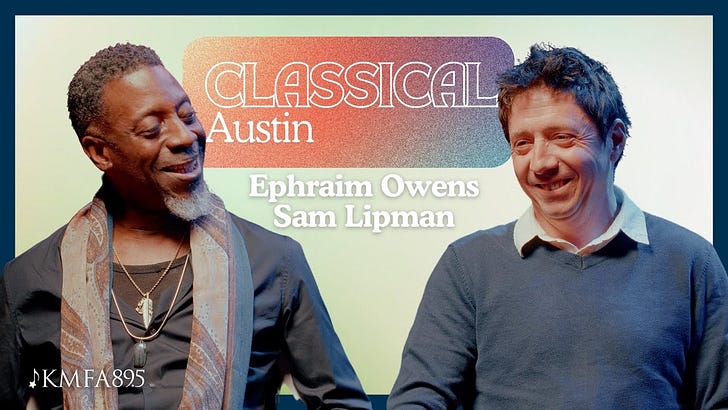
Welcome to AI for Lifelong Learners. Today we explore how artificial intelligence is transforming our creative and professional lives. I'm your host, Tom.In the studio with me is Sam Lipman, a highly innovative composer and educator at the University of Texas who recently made waves with his concerto for trumpet and orchestra performed by the Austin Symphony, featuring the brilliant Ephraim Owens and the amazing Gifton Jelen from New York City.What caught my attention during the pre-concert lecture questions were not just about Sam's innovative composition, the audience had many questions about the impact of AI – that is something I'd never witnessed at a classical music event. It speaks volumes about how AI has permeated every creative field, even those steeped in tradition. Sam brings a unique perspective as both a composer and a professor at the Department of Arts and Entertainment Technologies at UT, where he recently pioneered a groundbreaking course on AI in music production. In Austin's forward-thinking culture that is known for embracing innovation, Sam is helping shape how the next generation of artists will engage with AI technologies.Today, we'll explore Sam's experiences teaching this experimental course, the ethical questions his students grappled with, and how he envisions AI transforming music creation and production.Interview summary* Developed for UT Austin's AET department for students not fitting traditional career tracks* Rebranded traditional music theory as "AI in music" to appeal to the administration* The curriculum covers AI foundations, history, copyright issues, and applications* Balances theoretical discussions with hands-on music creationEthics and legal aspects* Strong emphasis on copyright issues through mock trials* Students argued whether AI companies should use copyrighted training material* Highlighted disparity: traditional media pays for music while AI companies use it freely* Prediction: AI companies will eventually pay for copyrighted training materialsAI music tools and applications* Students presented various AI music tools to classmates* Covered composition tools, production tools (GAWs), and post-production tools* Used free tools to avoid additional student costs* Revealed limitations in AI music generation (predominantly 4/4 time with predictable progressions)AI's creative limitations* AI cannot predict music trends or create truly innovative music* Inherent "lag" in relevance due to training in older music* Cannot replicate the "ridiculous accidents" driving musical innovation* Students discovered gaps between creative vision and AI capabilitiesPersonal AI usage* Primarily used for administrative tasks rather than creative work* Helpful for structuring plans, writing professional emails, reviewing contracts* Generated background music for client project using Suno* Used for marketing campaigns and promotional materials* Compensates for personal skill gaps in administration and planningAs background:Composer Sam Lipman and trumpeter Ephraim Owens sit down with Dianne Donovan on KMFA to talk about the Austin jazz scene, where classical and jazz blend, and Sam and Ephraim's upcoming performance with the Austin Symphony Orchestra. February 2025. Get full access to AI for Lifelong Learners at aiforlifelonglearners.substack.com/subscribe

In the audio version in this post and add some commentary. Picture this: It's the 1980s, and giants like Digital Equipment Corporation (DEC) and Wang Laboratories rule the computing world with their massive, expensive machines. These companies couldn't imagine a future where small, personal computers would matter. Their machines cost hundreds of thousands of dollars, and surely, these toy-like PCs could never compete.They were wrong. Catastrophically wrong.One by one, these titans fell. DEC, once a colossus of computing, was sold to Compaq. In 1992, Wang Laboratories went bankrupt. Prime Computer stopped selling new computers that same year. Data General was swallowed by EMC in 1999. Even IBM, who helped create the PC revolution, stumbled badly as they underestimated how quickly things would change.Today, in 2025, we're watching this same story unfold in artificial intelligence. The disruption has a name: DeepSeek.The DeepSeek earthquake Last week, a Chinese company called DeepSeek released something that has Silicon Valley in a panic. They demonstrated an AI model that matches or exceeds the capabilities of OpenAI's latest technology - but at a fraction of the cost. We're not talking about small savings here. DeepSeek claims they built their system for $5.6 million, compared to the half-billion dollars or more that U.S. companies spend on similar systems.Just like the PC makers of the 1980s who figured out how to build powerful computers cheaply, DeepSeek reimagined how AI systems could work. They use clever mathematical tricks to do more with less - like using 8-bit numbers instead of 32-bit numbers, which dramatically reduces the computing power needed.The results are stunning. Users around the world are downloading DeepSeek's models and running them on personal computers. Some are processing hundreds of thousands of AI queries for mere pennies. It's like watching the personal computer revolution happen all over again, but at AI speed.Market tremors and the NVIDIA questionWhen markets opened after DeepSeek's announcement, NVIDIA - the company that makes the expensive chips used for AI - lost nearly a trillion dollars in market value. Some people ask: "Why does this matter? It's just stock prices going up and down."But this misses the bigger picture. The trillion-dollar drop reflects a fundamental shift in how we think about AI's future. Just as the PC revolution showed we didn't need million-dollar mainframes to do powerful computing, DeepSeek is showing we might not need massive arrays of expensive chips to do powerful AI.This isn't just about NVIDIA. The entire AI industry has been building on the assumption that more expensive hardware equals better AI. DeepSeek just proved that assumption wrong.The pattern of creative destructionHere's where we see a deeper pattern emerge. Every major technological revolution follows this path: First, something is expensive and exclusive. Then, someone figures out how to make it cheaper and more accessible. The established players panic, claiming the cheaper version can't possibly be as good. But if it is good enough, it changes everything.We saw it with mainframes giving way to PCs. We saw it with expensive software being replaced by apps. Now we're seeing it with AI.But here's the twist that many are missing: When technology gets cheaper, we don't use less of it - we use more. Economists call this Jevons Paradox. When personal computers got cheap, we didn't buy fewer computers - suddenly everyone needed one. When cloud storage got cheap, we didn't store less data - we started storing everything.Tomorrow's AI landscapeThis brings us to what happens next. Just as the PC revolution didn't kill computing - it exploded it into something far bigger - DeepSeek's breakthrough won't kill AI. Instead, it will likely transform AI from something that only big tech companies can afford into something that becomes part of everyday life.Microsoft's CEO Satya Nadella captured this perfectly when he tweeted about Jevons Paradox in response to DeepSeek. As AI becomes more efficient and accessible, its use will skyrocket. The pie isn't shrinking - it's growing dramatically.This could be an opportunity for the tech giants who can adapt. Amazon's cloud services could offer cheaper AI to millions of customers. Apple's devices could run powerful AI locally. Meta could embed AI throughout its services at a fraction of the current cost.But for those who can't adapt - who cling to the old, expensive way of doing things - well, just ask the executives of DEC how that worked out in the 1990s.The lesson is clear: in technology, the future belongs not to those who build the most expensive systems, but to those who figure out how to make powerful technology accessible to everyone. Deep Seek just showed us that future is coming faster than anyone expected.And just like the PC revolution before it, this will create both winners and losers. The winners will be those who embrace the change and figure out how to use cheaper, more accessible AI to solve real problems. The losers will be those who refuse to believe the world is changing until it's too late.History doesn't repeat, but it rhymes. And right now, it's rhyming pretty loudly.It's like when a new student joins your class who's really good at something. They might seem like competition at first, but often they end up raising everyone's game and making the whole class better. That's how progress often works - through challenge and response, push and pull, each side making the other stronger.What fascinates me most about this story is how it shows that big breakthroughs often come not from doing things bigger and more expensively, but from finding clever new ways to balance different approaches. It's kind of like finding out you don't need an expensive gym membership to get fit - sometimes a creative approach with simpler tools can work just as well or better.The Relational Paradigm: challenges and opportunitiesThe DeepSeek breakthrough isn't just a story of disruption—it's a perfect example of how major changes create both challenges AND opportunities. Those who focus solely on the potential downfall of established players like NVIDIA or the threat to American tech dominance are missing half the picture. This is where the relational paradigm comes into play, teaching us that we need to examine both sides and how they interact to truly grasp the situation.Think back to high school once again. You had the popular kids and the quiet kids. Neither group was inherently "better"—they balanced each other out, each contributing to the school community in their unique ways. The same principle applies here with American and Chinese AI developments. They're not locked in a zero-sum game, but rather pushing each other to improve in different ways.This story is particularly fascinating because it highlights how quick people are to jump to extremes. Some cry, "This changes everything!" while others lament, "This ruins everything!" The reality, as is often the case, lies somewhere in the middle. It involves both positive and negative aspects that need to be understood in relation to each other.Yes, DeepSeek's breakthrough might disrupt the current AI industry giants. But it also opens up new possibilities for AI integration in everyday life, potentially spurring innovation we can't yet imagine. It might challenge American tech dominance, but it could also lead to more robust international collaboration and competition, ultimately benefiting global AI development.The key is to resist the urge to see this development in black and white terms. Instead, we need to embrace the complexity, understanding that the true impact of Deep Seek's innovation will be a tapestry of interrelated effects, some challenging, some opportune, all part of the ever-evolving landscape of technological progress.As we move forward, the winners in this new AI paradigm won't just be those who can build the cheapest or most powerful systems. They'll be the ones who can navigate this complex relational landscape, understanding how different factors interact and finding opportunities in the balance between disruption and continuity, challenge and opportunity, East and West.tpAddendum: An understandable perspective on what is DeepSeek and what it means and doesn’t mean - well, so far … Get full access to AI for Lifelong Learners at aiforlifelonglearners.substack.com/subscribe

Pixabay.comRegardless of what side of the political spectrum you align with, I can't help but wonder if we're all feeling like Dorothy in L. Frank Baum's Land of Oz – thrust into a world that's both wondrous and unsettling. The current AI revolution swirls around me, appearing to want to transform every aspect of my life. Just this morning, a chatbot scheduled my doctor's appointment with eerie efficiency, while an algorithm curated the very news stories I was reading. It was as if I'd stepped into a realm where technology and magic were one and the same.AI for Lifelong Learners is a reader-supported publication. To receive new posts and support my work, you may become a free or paid subscriber. Your engagement as a reader inspires me to write more.I'll admit, part of me is thrilled by the possibilities. The idea that AI could solve problems we've grappled with for centuries is exhilarating. It's what we all dreamed about in the earlier days of AI research. And to be fair, I know there are people who carry the same passion. But there's also this nagging worry in the pit of my stomach, like the homesickness Dorothy felt in Oz. I ask myself, are we losing something essential in this rush towards a hyper-efficient, AI-driven future? What about the quirky, imperfect, beautifully-human parts of our world?As I grapple with these conflicting emotions, I'm reminded of an old parable about two mirror makers. Their story, much like the contrasting characters in Oz, speaks to this push and pull between embracing change and holding onto what's constant. In a world where AI sometimes feels like an all-powerful Wizard behind the curtain, this tale offers a perspective that feels particularly relevant.So grab a cup of coffee (or tea, if that's your thing) and join me on this moment of reflection. I think you'll see why this story has been on my mind lately, and maybe it'll give us both a new way to navigate the emerald cities and dark forests of our AI-filled present.Form and Flow in the Art of TruthIn a quiet village, nestled between rolling hills, lived two craftsmen who made mirrors. Each had inherited a piece of ancient, polished silver from their ancestors, and each claimed that their mirror revealed the truest reflection.The first craftsman, Serra, framed her mirror in straight, dark wood. It stood on a rigid stand that never wavered. "This is how we see what truly is," Serra explained to visitors. "The frame keeps everything aligned, and the stand ensures nothing shifts." Those who gazed into Serra's mirror often noticed how serious and solemn they appeared, as though every line on their face had been etched by time's unyielding hand.The second craftsman, Rivera, crafted a mirror unlike any other. Its frame spiraled and curved like a river, and its stand swayed gently, as if breathing. "This is how we see what could be," Rivera would say. "The frame reminds us that everything flows, and the stand shows us that all things move in harmony." Visitors who looked into Rivera's mirror saw their reflections ripple and shift—sometimes smiling, sometimes laughing, sometimes wearing expressions they didn't know they had.For many years, the villagers debated which mirror showed the truth. Was it Serra's, with its steadfast clarity? Or Rivera's, with its shifting possibilities? They argued endlessly, but neither side could convince the other.One day, a young mathematician named Ada arrived in the village. She had spent years studying the patterns of constancy and change, the delicate balance between what remains and what transforms. Curious about the two mirrors, she decided to visit both craftsmen.First, she went to Serra's workshop and gazed into the unyielding mirror. Her reflection was crisp and sharp, every detail perfectly in place. "Your mirror shows the world as it appears," Ada remarked. Serra nodded, pleased.Then, Ada visited Rivera's workshop and peered into his flowing mirror. Her reflection shimmered and morphed, her features blending and shifting as though caught in a current. "Your mirror shows the world as it could be," Ada said. Rivera smiled.But Ada wasn't satisfied. She had a hunch that the full truth lay somewhere between the two. So she asked Serra and Rivera to bring their mirrors to the village square.She positioned the mirrors so they faced each other, with a space in between. When the villagers gathered around, something extraordinary happened. The infinite reflections that appeared between the mirrors weren't simple repetitions. Instead, they seemed alive. A frown in one reflection melted into a smile in the next, which grew into a laugh in another, only to become a tear moments later. Every possible expression unfolded in the endless cascade of reflections, as if the mirrors were revealing not just how things were or how they could be, but everything in between."Ada said, 'You see,' as she turned to the astonished craftsmen. 'Neither mirror tells the whole story on its own. Serra's mirror shows us form—what seems to stay constant. Rivera's mirror shows us process—how things change and flow. But the truth is bigger than either one. It's found in the relationship between them. Every reflection is shaped by both what remains and what transforms.'"The craftsmen were silent, thinking deeply. Finally, Serra asked, "But which mirror is right?"Ada smiled. "You're asking the wrong question. The truth isn't about choosing one over the other. It's about understanding how they work together. Just as a river needs both its steady banks and its flowing water to exist, truth needs both constancy and change. Your mirrors don't oppose each other—they complete each other."Inspired, Serra and Rivera decided to work together. They built a special room where their mirrors could be placed side by side, facing inward. Visitors who stood between two mirrors would see themselves from every angle—not just as they were, but as they might become.The villagers quickly came to love the room of mirrors. Some who entered came seeking affirmation and left with clarity. Others came with questions and left with unexpected insights. Those who sought to confirm what they already believed found comfort in Serra's mirror, while those open to possibility found wonder in Rivera's. But those who stood in the middle, open to the infinite reflections between the two, discovered something even greater: that their lives were not fixed or fluid, but a symphony of both.Over time, the village came to understand that wisdom wasn't about choosing between what stays the same and what changes. Wisdom was seeing how the two intertwined. And in that dance, they discovered the very nature of reality itself.tpAI for Lifelong Learners is a reader-supported publication. To receive new posts and support my work, you may become a free or paid subscriber. Your engagement as a reader inspires me to write more. Get full access to AI for Lifelong Learners at aiforlifelonglearners.substack.com/subscribe

I recorded this podcast last year, not realizing just how relevant it would become today with the rise of AI being used for personal conversations. My first encounter with AI "chatterboxes," as we used to call them, was through a system developed at the MIT Artificial Intelligence Laboratory by Joseph Weizenbaum. It was called ELIZA. Interestingly, ELIZA was originally designed to show how shallow human-to-computer communication was at the time. But when it became available on personal computers, something unexpected happened—people found it surprisingly engaging.And now, here we are, some 60 years later, with computers and AI systems that are far more powerful and eerily human-like.I’ll admit, I’ve always had mixed feelings about engaging in personal conversations with AI. Is it really worth it? There’s so much to unpack here, which is why I’m sharing this conversation I had with Patricia Belleno, a licensed therapist who specializes in loneliness. She and I touched on some fascinating ideas when we first recorded this, and I’m already planning a follow-up conversation with her to dive deeper into the growing adoption of AI confidants.Many of you have reached out to me about this topic recently, and it’s one I find both timely and deeply intriguing. With so many people feeling isolated or hesitant to connect with others, we’re seeing a rise in relationships being formed with AI companions. Is this a step forward? Or is it something we should be cautious about?That’s exactly what I want to explore further, and I hope this conversation is just the start of this learning journey.Today I am talking with Patricia Belleno Licensed Professional Counselor Supervisor (LPC-S) and a Master Certified Integrative Life Coach.Do you feel like you basically LIVE ONLINE?We’re going to explore the rising issue of loneliness and though the initial part of the conversation focuses on Gen Z, I have a feeling every generation past and present is dealing with this issue. This all seems so ironic when you think of how hyper-connected we are, yet, something is amiss.In Psychology Today by Ryan Jenkins CSP he discusses how isolated and lonely The Gen Z generation feels. As I said, I have a hunch that regardless of what generation you’re from and despite our ability to be instantly socially connected 24/7 – many of us feel – lonely.Ryan’s article focuses on record high levels of loneliness in the Gen Z generation and he these three key points.Seventy-three percent of Gen Z report they feel alone either sometimes or always.Seventy-two percent of Gen Z workers say they want to communicate with managers in person, while most managers think they prefer instant messages.Reversing the loneliness trend in Gen Z requires addressing contributors such as overstimulation which leaves less time to connect.Additionally:In another article “Conversations with Five Gen Zs” REX WOODBURY in The DigitalNation Substack newsletter Rex writes:“I was chatting recently with an entrepreneur building for Gen Z, and she said something interesting: “Gen Z’s brains are browsers with a million tabs open.” Her point was that Gen Zs are exposed to information overload, constantly flooded with peer pressure and comparison, and FOMO. Overflowing filing cabinets. “Escapism,” the entrepreneur continued, “This isn’t just for fun—it’s for survival.”Listen to this relaxed engaging conversation from a therapist’s point of view on loneliness and how we can be our own first responder to find our happiness and a belief in ourselves.You can reach Patrica at Patricia Belleno, MS, LPC-S Key points0:00 - Opening discussion about constant pressures for attention in modern life2:02 - Statistics about Gen Z loneliness:- 73% feel alone sometimes or always- 72% want in-person communication with managers- Need to address overstimulation that reduces connection time13:18 - Discussion of different types of change:- Changes we choose vs changes forced upon us- Impact of pandemic on career/lifestyle changes- Healthcare workers, teachers dealing with sudden transitions17:33 - Growing loneliness despite technological connectivity:- Social media creating surface-level connections- Missing deeper authentic human connections- Comparison and assumptions about others' lives21:08 - Distinction between being alone vs feeling lonely:- Being alone can be fulfilling- Loneliness is lack of meaningful connection even in crowds- Described as "deep hunger" for connection23:14 - Role of self-relationship:- Becoming your own "first responder"- Importance of self-regulation and emotional management- Building loving connection with oneself28:55 - Closing thoughts on therapy:- Not just about complaints/past analysis- Focus on helping people find fulfillment- Providing practical tools for desired changes Get full access to AI for Lifelong Learners at aiforlifelonglearners.substack.com/subscribe

AI today feels a bit like air conditioning—quietly humming in the background, making life easier for those who use it, while others ignore it or resist turning it on. But like any great innovation, it casts its shadow far ahead, hinting at profound changes to come. The question is not whether AI will transform us, but how—and whether we’re ready for what it asks of us and what it might quietly take away.What excites me, though, is not the spectacle of AI’s potential, but the quieter, more profound questions it forces us to ask about ourselves. At its core, AI doesn’t create new knowledge—it identifies patterns in text, images, and data, patterns that we humans wrote and shaped. It reflects us back to ourselves, for better or worse. And that’s where the real question lies: Which patterns do we want to perpetuate, and which should we let go? What should be handed off to machines, and what should remain uniquely human? It reminds me of the Cherokee tale of the boy who dreamed of two wolves battling in his dreams. One wolf was angry, vengeful, and destructive, while the other was kind, generous, and peaceful. Troubled, the boy asked his grandfather which wolf would win the fight. The old man replied simply: The one you feed.In many ways, this is where we stand with AI today. It reflects back to us not only the best of what humanity has written, but also its biases, flaws, and darker impulses. The question, then, is not just whether AI will change us, but which parts of ourselves we choose to feed as we teach and shape it. What will these transformations demand from us, and what might they quietly take away? Let’s consider five key areas where these shifts—both exciting and unsettling—are poised to redefine how we work, live, and interact. 1. The rise of voice: can we talk?There’s something primal about the act of speaking. Voice is our first technology, the original interface. In a way, AI bringing us back to our voices—after decades of typing, tapping, and swiping—feels like a homecoming. Already, tools like ChatGPT, Gemini, and the endlessly awkward Siri have started turning voice into a viable interface. I’ve found myself asking these systems for everything from driving directions to restaurant recommendations, and though I still sometimes feel silly talking to a machine, the utility of it is undeniable. The thing about voice, though, is its intimacy. When you ask an AI assistant for help, it doesn’t feel like inputting a command—it feels like conversation. I imagine this could be transformative in certain situations. Teachers could create lesson plans aloud, while elderly individuals might dictate memoirs to an AI that organizes their thoughts. Travelers could point their phones at murals and have AI narrate their histories in real time, in the language of their companions. But voice is also personal, revealing more than just words. It carries tone, emotion, and context—things we may not always want to share with a machine. And yet, as voice AI improves, it may begin to feel like a natural extension of ourselves. Erika Hall, Conversation Design specialist wrote “Conversational design is truly human-centered design, every step of the way. There is no next big thing, only the next step in an unfolding story of how people use technology to be more themselves.” Thank you Lily Chambers, my co-editor for this addition.Prediction: By the end of 2025, voice AI will become second nature for most of us—just another way to engage with the digital world. It will be mundane, yes, but also intimate, and therein lies its charm and its complication. Look around and you’ll see young teens using AI as companions. Where does this lead? It’s a question I’m asking myself almost daily.2. Natural language coding: the end of gatekeeping?I have a confession: I’ve always admired coders, though not without a hint of resentment. The mystique of their craft—the way they summon something out of nothing—has always felt inaccessible to me, like a modern kind of alchemy. But AI is dissolving that mystique, and I’m not sure how I feel about it. Tools like GitHub Copilot and Anthropic’s coding assistants already allow developers to write and debug code at lightning speed. But the real game-changer is this: AI is bringing coding to the non-coders. Imagine telling an AI, “Build me a website where users can share recipes and rate them,” and watching it materialize. This democratization of technology is thrilling, even if it feels like we’re outsourcing creativity to an efficient but impersonal partner. And yet, I wonder: Will the elimination of technical barriers lead to an explosion of creativity, or simply an abundance of mediocrity? There’s something to be said for the friction of learning a skill, for the patience it requires. When tools are too easy, do we lose some of the art? Prediction: By 2025, natural language coding tools will empower teachers, designers, and entrepreneurs to build digital experiences without needing technical expertise. Coding, as a skill, will no longer be the gatekeeper it once was. Whether that leads to greater innovation—or a glut of half-baked projects—remains to be seen. 3. AI-generated video: the meme renaissanceVideo feels like the final frontier for AI. Text can inform, images can provoke, but video demands something deeper—a narrative, a rhythm, a mood. In 2024, AI video tools like Runway, Veo, and OpenAI’s Sora turned this medium into a playground for creators, and the results were both dazzling and unsettling. The possibilities are intoxicating: marketers creating entire ad campaigns in minutes, teachers producing engaging tutorials, even everyday users generating videos that rival Hollywood effects. But the reality might be more prosaic. Most of us will use these tools to make memes and influencer content. I can’t help but feel both excitement and exhaustion at the thought of an internet flooded with AI-generated videos. On the one hand, this democratization of creativity is thrilling. On the other, I wonder if the sheer volume of content will dull our senses. Will we still marvel at a beautifully crafted video when we know it was created in seconds by an algorithm? Prediction: By 2025, AI video tools will saturate every corner of the internet. From TikTok to advertising, video content will be easier to create than ever—and, paradoxically, harder to impress with. But coupled with AI voice, will people begin creating their own imaginary worlds to live in? I wonder.4. Small models, big impactNot all AI needs to be a towering genius. Sometimes, the simplest tools are the most transformative. Small Language Models (SLMs)—the lightweight cousins of large models like ChatGPT—are already proving their worth in everything from text prediction to smart home devices. What’s remarkable about SLMs is their specificity. Unlike massive, general-purpose AIs, these models can be trained on a company’s proprietary data or optimized for niche tasks. They’re faster, more private, and far less resource-intensive. In short, they’re practical—a word not often associated with AI hype. Prediction: By the end of 2025, SLMs will be everywhere—powering tools you didn’t even know were AI-driven. They will be the steady, reliable workhorses of the AI world, and we’ll wonder how we ever lived without them. Running AI tools locally brings back a feeling of privacy and security and I’m all for that.5. The year of the AI agentHere’s the thing about AI agents: They’re both exhilarating and slightly unnerving. These are systems designed not just to answer questions or generate content, but to act autonomously on our behalf. This is where people always promise some kind of magic agent to manage your calendar and book your travel. I’d let that idea go for now.A better way to think about these as little semi-autonomous programs that do things for you and bring back a result. Like download the latest proposed state or federal legislation and analyze it from the perspective of my needs and tell me if I should write my representative or senator. That’s what I want.Prediction: By 2025, businesses will integrate AI agents into their operations, using them to automate workflows and experiment with new processes. But for consumers, these agents will remain just beyond reach—too fragile, too untrustworthy, too unsettling for most people to welcome into their personal lives. Closing reflections: progress and Its shadows As we feed the good wolf—the patterns we want AI to reflect—another truth emerges: AI forces us to confront our ambivalence about progress. We crave efficiency, yet mourn the loss of effort. We embrace convenience, even as it erodes our patience. In 2025, AI will quietly insert itself into our lives, becoming both indispensable and invisible. And maybe that’s the best outcome: a technology that doesn’t dazzle or terrify, but simply works. Progress, after all, doesn’t always arrive with fanfare. Sometimes, it just hums quietly in the background, like a shadow cast by something still taking shape. So when suddenly you realize you have some extra time, why not just sit quietly and let yourself be in the moment. Get full access to AI for Lifelong Learners at aiforlifelonglearners.substack.com/subscribe

I've been thinking a lot about time lately - how we spend it, save it, and often fool ourselves about both. This reflection started after realizing how many "time-saving" technologies fill my life, yet somehow I never seem to have enough hours in the day. What follows is my attempt to make sense of this paradox and perhaps find a way forward that feels more authentically human. Written during a moment of clarity between notifications, calendar alerts, and AI-powered reminders.Here I am, perched on the threshold of 2025, thinking about Time - yes, capital T Time - and all those glossy promises we've been fed over the decades. Remember those TV commercials from the '60s and '70s? The ones with the impossibly cheerful housewives demonstrating their shiny new microwaves, as if these humming boxes would revolutionize our very existence? "Think of all the time you'll save!" they chirped, while zapping a potato into submission in three minutes flat. Maybe you're not a Boomer who watched those particular promises unfold in real-time – maybe you're a Millennial whose time-saving revelation came packaged in an iPhone, or a Gen X-er who was promised liberation through the magic of dial-up internet (insert modem screeching here). But here's the thing: no matter which generation's version of the future you were sold, we've all been promised some version of the same temporal utopia, where technology would finally free us from the tyranny of mundane tasks and gift us endless leisure time. Spoiler alert: still waiting on that one.And it just kept coming, didn't it? Each decade bringing its own miraculous time-saving devices: dishwashers that would free us from pruney fingers forever, frozen dinners that would turn meal prep into a three-step waltz, early computers that would supposedly organize our lives into neat little digital boxes. By the '90s, we had email promising to make snail mail obsolete (though somehow I still get plenty of both, including credit card offers addressed to "Resident Time-Saver" or "Current Occupant Who Needs More Hours In Their Day").Then the '2000s rolled in with mobile phones that would let us "communicate from anywhere!" (which mostly meant we could now take our work stress to previously stress-free zones like beaches and bathroom stalls). The 2010s gave us smartphones, social media, and cloud computing - because apparently what we really needed was the ability to check work emails while standing in line for our cloud-enabled, app-ordered, time-saving coffee.And here we are now as we crest into 2025, surrounded by AI assistants eager to schedule our meetings and order our toilet paper, smart appliances that text us about the status of our laundry (as if we couldn't hear the buzz from the next room), and subscription services for everything from razor blades to meal kits - all promising to rescue those precious minutes from the clutches of mundane tasks.Funny thing is, the more time I "save," the more I find myself drawn to these old-school activities, like actually reading books. Real ones! With pages and everything! Currently bouncing between Cory Doctorow's "Little Brother" (which, if you want to feel simultaneously enlightened and paranoid about technology's creep into our lives, is your ticket) and this fascinating number called "Tech Agnostic" by Greg Epstein (coming at me through my earbuds, because irony is alive and well). Two books that, despite their different approaches, keep circling back to the same unsettling question: what exactly are we trading away for all this supposed convenience?Both books are doing this dance around the same unsettling reality: we've somehow wound up worshipping at the altar of Technology, complete with its own priests, prophets, and ceremonial sacrifices (usually involving our privacy and attention spans). Epstein's particularly good at pointing out how we've gotten so caught up in the "can we?" that we've forgotten to ask "should we?"Then there's Yuval Noah Harari's "Nexus," where he explores something that might keep you up at night: those social media algorithms we've created aren't just passive tools anymore - they're more like invisible puppet masters with their own agendas. Not in a Terminator way, but in that subtle, "hey, let's keep them scrolling until their eyeballs fall out" kind of way. It's as if we've created digital entities that have figured out how to hack our human operating systems, using our own desire for connection against us.Speaking of time and its peculiar ways of folding back on itself, I've been working on this project that feels important: taking my grandmother's voice - her stories about life in the '50s and '60s - and laying them over old Super 8 footage I've dragged into the digital age. It's like building a time machine for my kids, that runs on memory and love.And because apparently I can't help myself, I'm also editing a podcast about strength training myths (and oh boy, are there many) for us seasoned citizens (that's a polite way of saying I'm north of 70). I managed to corner Dr. Traxler, this wonderfully straight-shooting remote coach, who's helping people like me defy the usual "take it easy" mythology of aging. He's got this way of explaining how we can keep our bodies from staging a full-scale rebellion as we age.So here's my modest proposal: What if we took all this "saved" time and actually saved it? What if we turned off the notifications (yes, ALL of them), unsubscribed from the digital equivalent of junk mail, and just... existed? Not as optimal users or engagement metrics, but as messy, complicated humans?Because that's what we are, when you strip away all the apps and algorithms - just humans, trying our best to make sense of this weird, beautiful world we've created. And maybe that's enough.(Side note: Has anyone else noticed how "unsubscribe" has become a radical act of self-care? Just saying.)Wishing you and your family a joyful holiday season and a prosperous New Year. Thank you for your support and collaboration this year. - tp Get full access to AI for Lifelong Learners at aiforlifelonglearners.substack.com/subscribe

AI image generated with Fluently XL with Venice.aiSummaryToday, I’m thrilled to welcome Steve Crossland, a veteran of the real estate trenches with over 33 years of experience buying and selling homes - all of it in Austin Texas. If there’s anyone who knows the pulse of this industry here —through booms, busts, and tech waves—it’s Steve.In this episode, we will peel back the glossy veneer of AI-powered real estate revolutions and get to the core of what actually sells a home in 2024. Has technology really rewritten the rules of the game, or are we just dressing up age-old truths in new digital clothes? From virtual tours to Zillow, and now the promises of AI, Steve brings a rare, grounded perspective: the view from someone who’s been there, through every innovation and every market shift.But this isn’t just a technology conversation. It’s a look at the human side of real estate—the relationships, instincts, and trust that no algorithm can replace. Along the way, we’ll tackle big questions: Are AI tools a genuine game-changer or just the latest buzzword? What’s the one thing sellers always overlook? And what should buyers really focus on in an age of information overload?So whether you’re a seasoned pro, a curious buyer, or just someone intrigued by how technology shapes our everyday lives, you won’t want to miss this one. And for those folks who are considering moving to Austin, listen up.Key Points:* The fundamental process of selling homes hasn't changed - buyers still need to physically view properties and emotionally connect with them* Home sales typically require about 15 showings before getting an offer (based on NAR research)* AI and technology serve as tools but haven't disrupted core real estate processes* AI is good at macro-level analysis but can't accurately predict individual home values due to unique property characteristics and buyer emotions* Current automated valuation models are limited in accuracy, especially in non-homogeneous neighborhoods* The human element remains crucial - understanding neighborhood nuances, buyer psychology, and market trends requires experience* AI tools are being used for practical tasks like newsletter creation and data analysis, but not for core decision-making* Austin market specifics: expecting a leveling out in 2024, with slight improvements in 2025* Real estate is fundamentally a matching operation - matching buyers with homes and clients with appropriate agents* The industry is resistant to rapid change, moving slowly compared to tech companies* Current market challenges include high unsold listing rates (over 40%) and seller reluctance to reduce prices* Real estate agent quality varies significantly despite low barriers to entry - be careful who you pick* Consumer access to realtor performance data is limited, making it difficult to choose the right agent Get full access to AI for Lifelong Learners at aiforlifelonglearners.substack.com/subscribe

Creating content for the AI for Lifelong Learners podcast is more than just a task—it’s a personal mission. I’m driven to uncover and share stories where AI leads someone to think differently, to view life from a completely new perspective because of this technology. Amidst the often gloomy discourse surrounding AI, it’s important to remember that at its core, AI is just software running on a machine. The real question we should be asking is: how can AI empower us to live more expansive, enriched lives?Today’s episode is a perfect example of why I dedicate myself to writing and producing shows for AI for Lifelong Learners. Get ready for an extraordinary journey where ambient music converges with cutting-edge technology. We are joined by Stephen Hill, the legendary creator of Hearts of Space—a program that has been the soundtrack to our dreams and a source of tranquility for over four decades.But this isn’t just another interview about music. If you’re not familiar with Hearts of Space, set aside any preconceived notions you might have about ambient space music. This is a story of innovation, resilience, and the surprising ways AI is transforming art, pushing the boundaries of creativity, and helping us transcend human limitations.Here's why this episode is a must-listen:* A Voice Reborn: Discover how AI voice cloning is allowing Stephen to continue his iconic narration despite health challenges, opening up new possibilities for artists and creators facing similar issues.* Behind the Curtain: Get an exclusive peek into the meticulous curation process that makes each Hearts of Space episode a unique journey through sound.* AI in Art: Explore the potential impact of AI on music creation and curation, including insights from renowned ambient musician Robert Rich.* The Human Touch: Learn why, in an age of algorithms, Stephen believes human taste remains irreplaceable in creating truly meaningful musical experiences.* Lifelong Innovation: Be inspired by Stephen's 40+ year journey of continuous adaptation, from radio to streaming, showcasing the power of lifelong learning.Whether you're a long-time "Space Fan" or new to the world of ambient music, this episode offers an engaging look at the intersection of art, technology, and human creativity. Join us for a conversation that will change the way you think about music, AI, and the future of human expression.Tune in and discover why, in Stephen's words, Hearts of Space offers "slow music for fast times."As background for the curious:This episode has been months in the making. It began with a simple letter I wrote to Stephen Hill, inquiring about the possibility of an interview. I had no idea where this would lead. My motivation was pure admiration for his dedication in producing Hearts of Space for over four decades. The Hearts of Space streaming website stands out for its lack of intrusive advertising, and each hour-long program is free from sponsor interruptions. Since 2001, the show has been supported almost entirely by subscriptions. Every episode is a unique, hand-crafted, and beautifully produced experience. And of course, each show is graced by Stephen Hill's distinctively soothing and velvety cool introductions and conclusions.More information on Heats of Space - HOS.comFor those interested in delving deeper into the world of ambient music and Hearts of Space, I recommend two resources. First, a recent article by Daniel Bromfield in the Marin Independent Journal titled "Hearts of Space offers 'slow music for fast times." This piece provides insight into the show's enduring appeal. Additionally, for a broader perspective on the genre's evolution and its cultural context, Victor Szabo's book "Turn On, Tune In, Drift Off: Ambient Music's Psychedelic Past" explores the fascinating intersection of ambient music, counterculture attitudes, and the shifting landscape of musical experience. These resources offer valuable context for understanding the significance of Hearts of Space and its place in the ambient music ecosystem.Transcript of Interview with Stephen HillIntroductionTom Parish: To the listeners of this show, I'm going to take a moment and explain a few things. I have the unique pleasure of welcoming Stephen Hill, host of the Hearts of Space show to AI for Lifelong Learners.For those who may not be familiar, Hearts of Space is a long-time public radio program and streaming website featuring ambient space and contemplative music. Now, this isn't the kind of ambient music you might be thinking of, if you're not familiar with Hearts of Space.For those who know Stephen, and there are many of us around the world, there's something magical about the way Stephen curates each weekly show. Each one is very, very unique, which could be described as a soundtrack for dreams or a source of calm during stressful times. In short, mind-expanding.The soothing atmosphere Stephen creates with his knowledgeable delivery style is what we all look forward to each week along with his signature closing sign-off. I admire his creativity and have been eager to connect with him on a more personal level, to gain a deeper understanding of the passion and inspiration behind Hearts of Space.But it wasn't so easy. It turned out, this is the first time I've interviewed a man I've never met or ever talked to. So with that, let's begin.Stephen, thank you for being on the show today with me.Stephen Hill: Thank you, Tom. I'm grateful for your praise of Hearts of Space and my work over the last five decades to provide a platform for ambient space and contemplative music. It's been a genuine labor of love, and I've been fortunate to be able to follow my musical interests and, with the help of my original co-producer, Anna Turner, my wife Leyla, who handles all our administration, business affairs and customer service, and my associate producer, Steve Davis, to create first a radio program and now an online streaming service to deliver the music to sympathetic listeners like you.Q&ATom Parish: Stephen, the Hearts of Space show is 41 years old with over 1,370 weekly programs. Time has passed and I understand you have some challenges facing you. And in fact, this is what brought us together. Given my interest in seeing how AI technology is making a difference in people's lives, I proposed doing this show with you thinking you might be using some AI tool for your audio production. To my great surprise, you expressed interest, but you had reservations about talking nonstop for an hour-long interview. That would be too challenging, especially for your voice. I was a bit perplexed about that, but then we had a discussion and the idea of producing this show came to light, doing it a bit differently using some unique technology. Stephen, take it from here. Explain more what we decided to do.Stephen Hill: What Tom is referring to is a problem I've been having with the quality and stamina of my voice, which has been deteriorating slowly for over 10 years. Originally, I ascribed it to age, but in 2016 I was diagnosed with Parkinson's, and progressive voice weakness is one of the common symptoms.In 2023, I started hearing about what's called “text-to-speech” software built on AI and a company that was pushing the state-of-the-art called ElevenLabs. That's what I'm using to speak to you now. I type my answer, input the text online, and the AI uses a high-quality clone trained on my voice in its prime to generate the audio.So here's the story of how Tom and I decided to use AI audio software to produce my side of this show.[Stephen continues to explain the history of Hearts of Space and his personal health challenges]Tom Parish: Well, thank you, Stephen. That's so very kind of you. This project has just been a joy. Starting back with KPFA, and then into a national syndication for Hearts of Space. What was your initial inspiration for doing this show? Was it difficult at first, or easy, or some kind of unique challenge? I'm very curious.Stephen Hill: In retrospect, even though I had a natural attraction to contemplative sound experiences, it's clear that marijuana, mescaline, LSD, and other psychoactive, perception-enhancing drugs drove the musicians, the audience, my original co-producer, Anna Turner, and me in this direction. When the show was established in 1973, psychedelics were peaking and massively influential.[Stephen continues to explain the origins and evolution of the show]Tom Parish: How did the contemplative sound experience evolve? This is something that I assume occurred over a number of years.Stephen Hill: Contemplative music is an extremely old genre. I think it goes back to before history, to primitive instruments in resonant caves. Today, it has traditions, relationships, and financial structures that are more like a religious, charitable, or nonprofit organization.[Stephen elaborates on the evolution and current state of contemplative music]Tom Parish: Stephen, would you be willing to share your process of how you select artists and themes for each show? Is it a team effort? I want to add here as background, what is most noteworthy about the weekly program is the calm, thoughtfully created, and context specific introductions you provide. I look forward to those every week. The way you tailor each introduction to contemplate the show's theme and evoke specific emotions, each one is uniquely different, yet carefully crafted to fit the nature of the weekly program title and the songs assembled for the program. Talk more about this.Stephen Hill: Sure. When we launched the syndicated show in 1983, we made the decision to organize the shows around themes. This led us to create focused sub-genres, which today have become 30 categories on our streaming service.[Stephen explains the process of creating each show with his team]Tom Parish: Something I want to mention here is that Hearts of Space does not offer any algorithmic prediction or personalization running in the background. I don't have a proble

Do any of these resonate with you? 1. Difficulty discerning fact from fiction - undermines confidence in the media you read. 2. Echo chambers and filter bubbles - reinforcing existing beliefs and filtering out opposing views can be exhausting.4. Confusion over AI's role - a lack of transparency and literacy around AI's growing role in the information ecosystem. Who’s really in control of the content?5. Overwhelm and fatigue - the mental effort required to critically evaluate it all can be exhausting and lead to tuning out or just accepting things at face value.I decided to ask someone who has been thinking about these issues and applying her insights to her use of media in your work and personal life - Lily Chambers.Podcast summary In this episode of AI for Lifelong Learners, I welcome Lily Chambers, a conversational AI designer, to discuss the crucial topic of media literacy in an age of rapidly advancing artificial intelligence. As AI-powered tools like language models and image generators become more ubiquitous, Lily emphasizes the importance of understanding how these technologies work and using them ethically.Drawing from her background in conversation design and humanities, Lily explains that while excitement about AI's potential is justified, it's essential that people develop the skills to evaluate the information these tools generate and share critically. She argues for having personal standards for interacting with AI-created content.The conversation also delves into the role of algorithms in shaping the media we consume, often in subtle ways that confirm our biases. Lily and Tom discuss strategies for improving media literacy, such as seeking balanced news sources and being open to challenging one's views.While acknowledging that propaganda and misinformation are not new problems, Lily notes that the sheer volume of content we interact with today makes strong media literacy skills more vital than ever. She leaves listeners with the promise of an upcoming article featuring concrete tips for sharpening these abilities.Join me and Lily Chambers for an insightful exploration of what it means to be a savvy consumer of information in an AI-driven world.Here are the key points from the conversation, with timestamps:1. [00:00:25] Lily's background includes being a conversational AI designer, studying how people understand information through digital media in grad school, and growing up in an AI-loving household.2. [00:02:34] Media literacy requires skills in locating/using information and critical thinking. It involves knowing digital tools and using them communicatively through social engagement.3. [00:04:08] The excitement over AI tools like ChatGPT has outpaced literacy of them. People know what they are but not totally how they work. It's important to have media literacy skills to parse how information from AI was created.4. [00:06:40] Most current technology is a "black box" that can't be easily taken apart and understood, unlike older technologies like radios. Different generations have varying levels of literacy with digital information.5. [00:08:30] The ubiquity of AI raises concerns about fake information that looks very convincing, like deepfake videos. Critical thinking is needed to interrogate what seems true.6. [00:11:26] Algorithms serving content raise issues for media literacy. People don't fully realize how deeply algorithms are trained to learn a user's preferences.7. [00:14:00] Focusing on transient "tells" of AI-generated content is less useful than having one's own values for interacting with AI-created media.8. [00:16:42] Tips include: not sharing personal writing with language models, reading well-rounded news sources, and supporting human artists over AI art.9. [00:18:58] While propaganda isn't new, the high volume of media people now consume makes media literacy skills more important than ever. Looking at information in a balanced way is key.10. [00:21:11] Yellow journalism in the late 1800s emphasized sensationalism over facts, showing these issues aren't fundamentally new, just more pervasive now.You can read more about media literacy and subscribe to Lily’s newsletter here. Get full access to AI for Lifelong Learners at aiforlifelonglearners.substack.com/subscribe

"Between the idea and the realBetween the motion and the actFalls the Shadow."T.S. Eliot's poem "The Hollow Men."Today on AI for Lifelong Learners, I steer us into learning more about ourselves. I used AI to collaborate on this show idea, organize the content, and summarize the recording. Then, this final version went through half a dozen rewrites by people - human people! The show itself is about being more human, which includes delving into ourselves to gain a better understanding and insight into what holds us back. What does AI think about being human?So of course, I asked one of the Large Language Models (LLMs) to share its “thoughts” on the subject. The AI's response was intriguing and thought-provoking, offering a unique lens through which to view our own humanity. While it's important to remember that these are the “opinions” of an artificial intelligence and not a definitive guide, the ideas presented can serve as a catalyst for self-reflection and personal growth. Here are some of the insights that resonated with me:- Dream and discover new ideas- Think and rationalize, yet be self-reflective- Be more discerning of what's true for me in my thoughts, feelings, and actions- Communicate thoughtfully with others through spoken, written, and nonverbal means- Find inspiration for more curiosity to generate new ideas and innovate- Be flexible and willing to change plans- Problem-solve and nurture the ability to think critically and come up with solutions to complex problems- Stay strong in my morals and ethics: distinguish between right and wrong and make careful judgments- Form mental images, concepts, and ideas of things that do not currently exist or are not present in the immediate environment- Indulge my sense of humor- Practice abstract reasoning, the ability to think about complex and abstract concepts- Regulate my emotions- Time travel mentally to remember the past and imagine the future, yet live in the present- Take in new perspectives to understand and consider different viewpointsBut what gets in our way?In this interview, we talk about our “shadows” and the process of talking with our shadows in hopes of learning more about the power we hold in our authentic selves. Why? Because we must choose to highlight the value of our human skills, especially those that machines lack in this new era of hyper-automation. That's where our uniquely human strengths shine. That's what makes us more employable and authentically powerful.All too often, we spend our whole lives running from our shadows, trying to present this polished, Instagram-worthy version of ourselves to the world. But the truth is, we're all just stumbling around in the dark, hoping that nobody notices the cracks in our carefully crafted facades.In today's podcast, I have a heartfelt conversation with two senior life coaches who have been helping others with their shadows for decades - Daniel Maldonado, an executive performance coach with InterVentionEM, and Donna Lipman, a Master Life Coach, author, and presentation skills trainer.Podcast key points - Personal Journeys with Shadow Work (10:01-15:00) - Donna shares her experience of repeatedly choosing abusive relationships and how shadow work helped her recognize and address childhood trauma. - Daniel speaks about his choice to lean into extroversion to avoid victimhood and how his work has helped him and others confront their shadows for personal growth.- Integrating Shadow Aspects (15:01-20:00) - Donna discusses the light side of the shadow and how we often suppress our positive qualities, which could bring more good to the world if integrated. - Daniel reflects on the denial of personal power and how people argue for their limitations. He stresses the importance of recognizing our shared humanity and striving together rather than competing.- Humbling Lessons from Coaching (20:01-25:00) - Donna was surprised to learn that we suppress not only our dark sides but also our light sides. She emphasizes the importance of embracing both to be responsible and impactful. - Daniel shares a humbling moment from his leadership experience and the realization that our emotions are universal, despite unique experiences.- Being More Human in a Hyperautomated World (25:01-30:00) - Donna suggests nurturing creativity and curiosity in children, allowing them to be who they are, and fostering their innate talents. - Daniel talks about Sat - Chit - Ananda: Sansrkit, the importance of finding bliss, and the need to integrate head, heart, and gut for a fulfilling life.Thank you, Tom Get full access to AI for Lifelong Learners at aiforlifelonglearners.substack.com/subscribe

Today, I'm intrigued by a thought-provoking question from our guest, Carlos Perez: "Can we lay the map for concepts that are beyond human comprehension?" It's a question that perfectly encapsulates our journey into the world of AI and learning.Thanks for reading AI for Lifelong Learners! Subscribe for free to receive new posts and support my work.Joining us on today's podcast is author Carlos Perez, known for his insightful works like The Deep Learning Playbook, and Artificial Intuition, Fluency & Empathy. But today, we're zooming in on his book that's particularly close to my heart, "Design Patterns for Generative AI."Carlos's book has been a constant source of fascination for me. Think of it as a Rosetta Stone for crafting better prompts to derive more meaningful results from a Large Language Model (LLM); not just using an LLM to boost productivity. Carlos delves deeper, exploring how it can expand our creativity and deepen our understanding of complex topics. This approach resonates with me, as I believe enhancing our creative and intellectual horizons is far more significant than mere productivity gains.The concepts in his book have empowered me to confidently explore new topics which has enhanced my learning and writing. By understanding the patterns underlying broad subjects, I can approach them in a more creative and organized way. It's not just about learning faster; it's about attaining a richer, more profound understanding.Thanks to Carlos, I now feel emboldened to craft my prompts instead of relying on standard, pre-made ones that often fall short of expectations.Let's dive into a conversation with Carlos to uncover the motivations behind writing this book and gain insights into his process of designing patterns for Generative AI.Let's get started:Carlos, I'm curious, what inspired you to take this pattern language approach for designing better prompts for LLMs? What was your journey like?Podcast Summary with Carlos Perez:Carlos explains how asking GPT-4 to reveal its patterns led to the genesis of his book on prompt engineering. He differentiates prompting for thinking versus automation, provides advice for beginners on asking good questions, envisions combinatorial prompt patterns as composable languages, notes GPT’s counterintuitive ability to infer causes from effects, speculates smaller AI firms have secret sauce training methods, and looks ahead to future interactive versions of his book that are more self-generative.Key points for this podcast:1. Carlos originally tried to create a pattern language for deep learning 5 years ago, but it was too complex and evolving, so he gave up on that project.2. The idea for his current book on GPT prompt patterns came after playing with GPT-4 and asking it to reveal some of its own patterns, which expanded to 70 different patterns.3. Carlos distinguishes prompt engineering for automation from prompting to get the most out of using GPT-4 as a thinking tool. Beginners need guidance on how to ask good questions.4. Combinatorial use of prompt patterns allows fusing concepts together, like languages that become composable into new vocabularies.5. GPT's ability to determine a cause from a given effect seems counterintuitive and backward but is related to abductive reasoning.6. Smaller AI firms may have secret sauce training methods that let their models outperform much bigger models from giants like Google.7. Carlos envisions his book becoming more self-generating with GPT's larger context windows, where you can query the book interactively about prompt patterns.---- To understand more see The History of Pattern Languages by Christopher Alexander who developed the idea of Pattern Languages in their 1977 book by the same name. Recommended!---To find out more about A Pattern Language for Generative AI: A Self-Generating GPT-4 Blueprint visit here:https://intuitionmachine.gumroad.com/l/gpt4 Get full access to AI for Lifelong Learners at aiforlifelonglearners.substack.com/subscribe

Show summaryOn today's 35-minute episode of AI for Lifelong Learners, host Tom Parish sits down with Mike O'Krent, a seasoned professional dedicated to the art of capturing and preserving personal histories. Mike's career took a transformative turn when he volunteered to interview Holocaust survivors for Steven Spielberg's foundation, an experience that deeply influenced his approach to storytelling and listening. Throughout the conversation, O'Krent shares his insights on the importance of storytelling, the ethical considerations when dealing with sensitive material, and how technology, including AI, has revolutionized the way we document and share family legacies.What you will learnListeners will learn about the meticulous pre-interview process, the significance of asking questions that evoke vivid memories, and the delicate handling of emotional moments during interviews. O'Krent emphasizes the value of listening over speaking, creating a safe space for interviewees, and the profound lessons he has learned from the stories he's captured, including the realization that the most important things in life are rarely material.AI for Lifelong Learners is a reader-supported publication. To receive new posts and support my work, consider becoming a free or paid subscriber.SubscribedAs O'Krent delves into the practicalities of using modern technology to document life stories, he also touches on the challenges of ensuring that future generations understand the context and significance of these personal narratives. His book, "A Conversation You'll Never Forget," is mentioned as a resource that offers key tips for those looking to embark on the journey of recording their family histories.Key points1. Importance of Stories (00:00-02:00): Mike emphasizes that the truth of a story may vary depending on the storyteller, but that doesn't make the story untrue, just different. He believes in the importance of capturing life stories so they are not forgotten, as they are a part of who we are and who we can become.2. Pre-interview Process (02:01-05:00): Mike discusses his thorough pre-interview process, which includes a 41-page document to gather facts about a person's life. He also uses AI and ancestry tools to find additional information that can enrich the story.3. Interviewing Holocaust Survivors (05:01-10:00): Mike shares how his experience interviewing Holocaust survivors for Steven Spielberg's foundation profoundly impacted him and taught him the importance of listening to bring out stories that haven't been told in decades.4. Capturing Emotion (10:01-15:00): When discussing how to handle emotional moments during interviews, Mike advises letting the person express their emotions without interruption, not invading the interviewee's personal space, and never saying "I understand," as each person's experience is unique.5. Technology's Role (15:01-20:00): Mike notes that technology has simplified the process of capturing life stories, making it accessible to anyone with a smartphone. He encourages people to document stories and identify photos to preserve memories for future generations.6. Ethical Considerations (20:01-25:00): Mike addresses the ethical considerations of documenting sensitive or controversial aspects of someone's life, emphasizing the importance of consent and the option to exclude certain parts from the final story.7. Most Important Thing in Life (25:01-30:00): Towards the end of the interview, Mike reflects on the most important lessons he has learned from his work, particularly from interviewing Holocaust survivors and successful individuals. He finds that the most important things in life are never material but are often about relationships and experiences.Special Note from Mike:I’d like to offer to your listeners a freebie, The #1 Thing Keeping You from Communicating Effectively with Your Family and 5 Tips to Stop Doing It. https://app.searchie.io/hub/vmjMGXYVABP.S. It’s a great list of tips to keep you from interrupting during a conversation.Mike Okrent's websiteemail linkBook: A Conversation You'll Never Forget Get full access to AI for Lifelong Learners at aiforlifelonglearners.substack.com/subscribe

Ever wonder about the stars at night and the infinite cosmos that surround us? I’m constantly fascinated with the mystery.How about the recent American successes in returning to the moon or the awe-inspiring images of the cosmos from the James Webb Space Telescope. There is much to learn from understanding the stars and how they impact our lives on Earth.In this podcast, we discover the captivating intersection of artificial intelligence and science communication featuring the visionary minds behind the renowned radio programs Stardate and Earth and Sky.Join Deborah Byrd and Joel Block as they delve into their inspiring journey, from their collaboration to the evolution of their groundbreaking shows.They explore the challenges and triumphs of making science accessible and engaging, the transformative role of AI in disseminating knowledge, and the pressing need for environmental consciousness.Deborah Byrd explains the ever-changing landscape of media, connecting with curious audiences and her desire to fuel a passion for the cosmos and our planet.I hope you find this interview as fun and interesting as it was for me.TomKey points in the transcript include:1. Deborah Byrd and Joel Block's Collaboration - They created not just a radio program but a "portal to the universe," focusing on education and enlightenment.2. Origins of Star Date - Deborah was inspired to start Star Date during a college astronomy class, despite being an English major. Joel Block's voice was chosen for the program because of its perfect fit.3. Transition to Earth and Sky - The program evolved from focusing solely on astronomy to including Earth sciences, partly due to Deborah's growing interest in global warming.4. Syndication and Audience Engagement - Star Date was syndicated on over 1,000 stations, and Earth and Sky also became widely distributed. They received positive feedback about the calming presence of the programs.5. Challenges of Science Communication - Deborah mentions the difficulty of securing funding and the need to innovate to keep receiving grants constantly.6. Impact on The Production Block - The success of their radio shows provided a significant boost to Joel’s business and Deborah’s path to creating EarthSky.org7. Trends in Media and Use of AI - Deborah discusses the current trends in media, including the rise of AI and the phenomenon of news avoidance. She also explains how EarthSky.org uses AI for content creation, such as video production and article summarization.8. Future of Science Communication - Deborah is excited about the potential of AI in media and the ability to learn about anything instantly. She emphasizes the importance of lifelong learning.9. Message to the Audience - Deborah's message is one of positivity, emphasizing the beauty of the universe and our place in it. Joel adds a note on the reality of climate change, referencing the visible retreat of Mendenhall Glacier as evidence.How to ContactBe sure you visit Deborah Byrd’s EarthSky.org. Their morning newsletter is something I look forward to with my first cup of coffee.Though Deborah and Joel no longer host Star Date the show continues with a wonderful host - Billy Henry.Earth & Sky was a daily radio series that presented information about science and nature. It began broadcasting in 1991 and ceased operations in 2013.A very special thanks to Joel Block for his help in creating this piece and the use of his amazing recording studio. Joel continues to provide exemplary recording services at The Block House contact - joel@productionblock.com, (512)472-8975 (studio). Get full access to AI for Lifelong Learners at aiforlifelonglearners.substack.com/subscribe

Recently I connected with innovation expert Dave Birss and we have a lot in common. Though he lives an ocean away in England, Birss and I share a fascination with AI and its potential for lifelong learning.Dave is one of the most popular AI instructors on the Internet with over 275,0000 students and many rave reviews.Birss has a gift for making the complex understandable and even fun. He speaks about AI in plain language, with humor and infectious enthusiasm. Beyond demystifying algorithms for students worldwide, Birss also advises major companies on practical AI implementation. His broad perspective encompasses both blueprints for tomorrow and nuts and bolts for today.Birss has launched an initiative called the Sensible AI Manifesto, which offers clear guidance on how organizations can smartly incorporate AI as a tool rather than a threat. The manifesto's principles aim to ease concerns many workers feel about the rise of generative AI. I think his ideas are important and helpful for companies in 2024 wondering how to pull together an AI strategy.Key Points:1. Introduction to Dave Birss and the focus on AI's potential for lifelong learning (00:00-01:30).2. Dave Birss's background and how he became involved with AI and teaching (02:00-04:30).3. The importance of clear communication when creating prompts for AI (05:00-06:30).4. The release of Birss's AI course on LinkedIn Learning and its popularity (07:00-08:30).5. The Sensible AI Manifesto and its principles for smart AI incorporation in businesses (09:00-10:30).6. The emotional and educational support needed for employees in the face of AI integration (11:00-12:30).7. The role of an AI leader within an organization and the necessity of an AI strategy (13:00-14:30).8. The management skills required for effectively using AI and the concept of AI as an intern (15:00-16:30).You can reach Dave Birss at:https://davebirss.comYouTube https://www.youtube.com/@DaveBirss/videosDownload - Sensible AI Manifesto Get full access to AI for Lifelong Learners at aiforlifelonglearners.substack.com/subscribe
Comments

Download from Google Play

Download from App Store
 United States