


 Claim Ownership
ASecuritySite Podcast
Subscribed: 11Played: 168
Subscribe

© 2023
Description
A security podcast is hosted by Professor William (Bill) Buchanan OBE, a world-renowned Information security professional and educator. Join Bill as he interviews and discusses the state-of-the-art with esteemed guests from all corners of the security industry. From cryptologists to technologists, each guest shares a wealth of experience and knowledge.
164 Episodes
Reverse
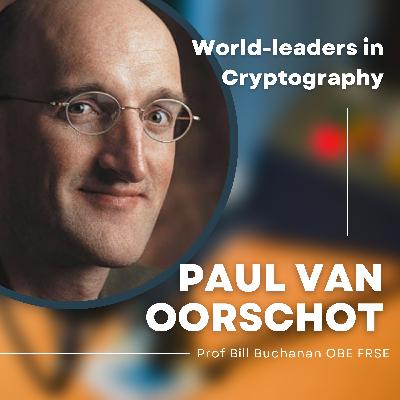
Paul is a cryptographer and computer security researcher, and is currently a professor of computer science at Carleton University in Ottawa, Ontario. He previously held a Canada Research Chair in authentication and computer security and is a Fellow of the Royal Society of Canada (FRSC). Along with Alfred Menezes and Scott Vanstone, Paul was a co-author of the Handbook of Applied Cryptography, and the author of Computer Security and the Internet. In 2000, he was awarded The J.W. Graham Medal in Computing Innovation, and a Fellow of the Association for Computing Machinery in 2016 for his "contributions to applied cryptography, authentication and computer security.
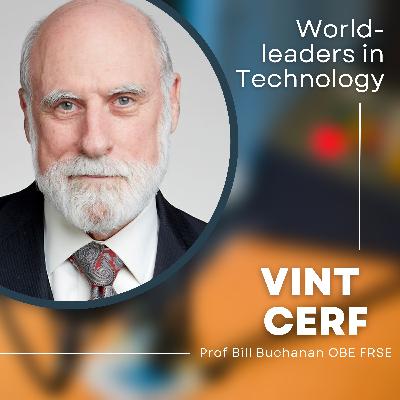
Vint is seen as one of the founding fathers of the Internet, and along with Robert Kahn, was award the ACM AM Turing Prize - the Nobel Prize of Computer Science - in 2004. Vint contributed to many areas in the creation of the Internet, including writing many RFCs (Requests For Comment) drafts, and in 1974 published the classic paper of "A Protocol for Packet Network Intercommunication" in the IEEE Transactions on Communications. This paper basically defined the IP and TCP protocols that would eventually be used to build the Internet. Along with the A.M. Turing Award, he received the National Medal of Technology from President Clinton in 1997, the Presidential Medal of Freedom from President George W Bush, and the Marconi Prize. Vint has Honorary Doctorates from over 27 universities, including ETHZ in Zurich, Yale University and the University of St Andrews. In 2012, he was induced into the Internet Hall of Fame, and, in 2023, he received the IEEE Medal of Honor for co-creating the Internet, and in sustained leadership in the creation of the Internet as critical infrastructure.
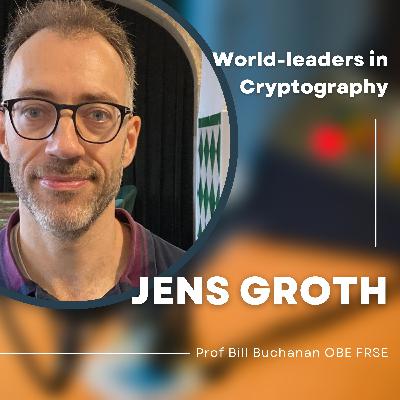
Jens is a Chief Scientist at Nexus, and works in many areas of cryptography including in pairing-based cryptography and Zero-knowledge Proofs (ZKPs). He was previously a Professor of Cryptology at University College, London, and as the Director of Research at DFINITY. In 2016, he published a classic paper of "On the size of pairing-based non-interactive arguments", and which defines a Zero Knowledge Proof based on pairing-based cryptography. This is now known as Groth16, and is used in many applications, including with Zcash and Tornado Cash. In 2021, he won an IACR Test of Time award for the "Simulation-sound NIZK proofs for a practical language and constant size group signature". Then, in 2023, he won the IACR Test of Time Award with Amit Sahai for the 2018 paper on "Efficient Non-Interactive Proof Systems for Bilinear Groups". The YouTube version is here: https://www.youtube.com/watch?v=ooOYmDzoQj Medium article: https://billatnapier.medium.com/groth16-and-proving-your-know-the-answer-to-x%C2%B2-2x-15-029f6db184d0

Panel Discussion: The Quantum clock countdown to Y2Q Peter Ferry, CEO Scottish Centre of Excellence in Digital Trust and DLT Amit Gupta, Founder and CEO ACubed.IT Mark Tehrani, Founder CyberSeQ Jan Willemson , Senior Researcher Cybernetica Estonia
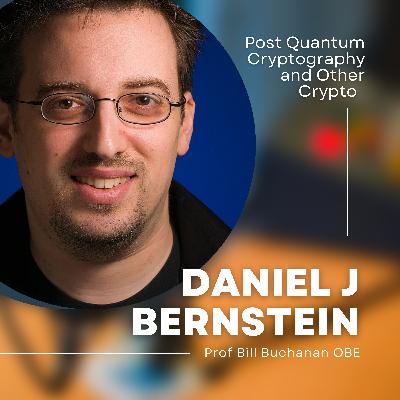
A chat in the International Conference on PQC and AI. Daniel is a world-renowned computer scientist, one of the most influential figures in modern cryptography and a pioneer in post-quantum security.https://luma.com/9lxiupu6https://luma.com/9lxiupu6https://luma.com/9lxiupu6
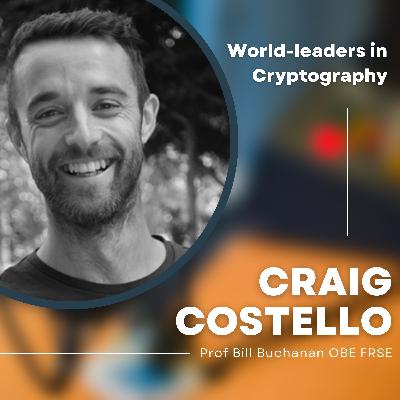
Craig is a Professor of Computer Science at Queensland University of Technology (QUT), who has a special focus on post-quantum cryptography and Zero Knowledge Proofs. He was previously a Principal Researcher at Microsoft Research at Redmond. Craig did his PhD at QUT from 2008 to 2012, and received a Fulbright Scholarship with UC Irvine from 2010 and 2011. In 2015, Craig published details of the FourQ elliptic curve, and which is one of the fastest curves around.
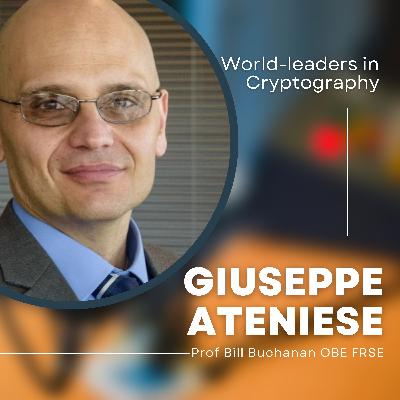
Giuseppe is a Professor, Eminent Scholar in the Cybersecurity and CCI Faculty Fellow in the Department of Computer Science and the Department of Cyber Security Engineering at George Mason University. He has advanced many areas of research, including proxy re-encryption, anonymous communication, two-party computation, secure storage, and provable data possession. His current work includes privacy-preserving machine learning and decentralised secure computing based on blockchain technology. He received the NSF CAREER Award for his research on privacy and security, and the Google Faculty Research Award, the IBM Faculty Award, and the IEEE CISTC Technical Recognition Award for his research on cloud security. Giuseppe was a researcher at IBM Zurich Research lab (Switzerland) and a scientist at the Information Sciences Institute of the University of Southern California (USA), and worked briefly as a visiting professor at Microsoft in Redmond (USA). He was the Farber Endowed Chair in Computer Science and Department Chair at Stevens Institute of Technology. He previously worked with Sapienza University of Rome (Italy) and was an Associate Professor at Johns Hopkins University (USA). Giuseppe is also one of the JHU Information Security Institute's founders.
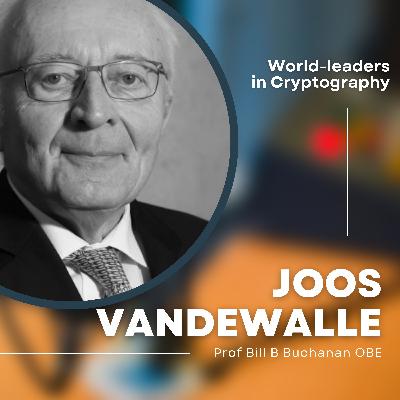
Joos is a Professor Emeritus with the Department of Electrical Engineering at the Catholic University of Leuven, Belgium. He is one of the most impactful researchers in Computer Science in the World, including in areas of cryptography, secure data communications, data mining and complex systems. His work has led to many areas of impact, including supervising the creators of the Advanced Encryption Standard. He has also worked to simplify the computational complexity of support vector machines, and which involved using a least-squares approach for learning-based classifiers. He has also enhanced the theory behind singular-value decomposition by extending it to multilinear dimensions, which has addressed complex data-mining challenges. Joos is also an IEEE Life Fellow and served as the President of the Royal Flemish Academy of Belgium KVAB. He also co-wrote the book defining "The Invisible Power of Mathematics".
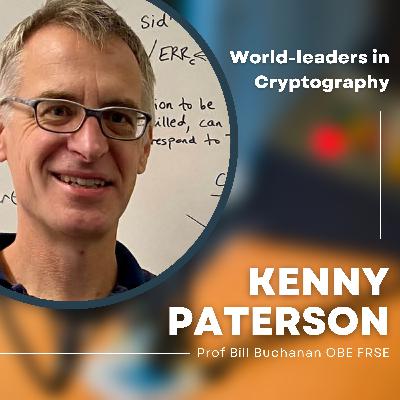
Kenny is a professor in the Department of Computer Science at ETH Zurich, where he leads the Applied Cryptography Group. He was previously a professor in the Information Security Group at Royal Holloway, University of London. He served as co-chair of the IRTF's research group on Cryptography, CFRG, from 2014 to 2019 and as the Editor-in-Chief for the Journal of Cryptography 2017 to 2020. He was elected as an IACR Fellow in 2017 and was the IACR Distinguished Lecturer in 2025. He obtained his PhD from Royal Holloway in 1993, and his Doctoral Supervisor was Fred Piper. Kenny has been awarded a number of awards for his research work, including the Applied Networking Research Prize from the IRTF in 2013 and the Award for Outstanding Research in Privacy Enhancing Technologies, for work with Mihir Bellare and Phil Rogaway on the Security of symmetric encryption against mass surveillance, a paper published at CRYPTO 2014.
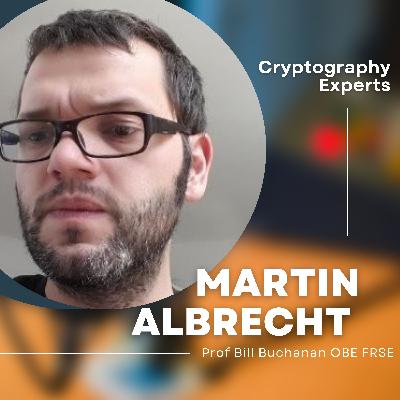
Martin Albrecht is a Professor of Cryptography at King's College London and a Principal Research Scientist at SandboxAQ. He works broadly across the field of cryptography. His work focuses on the analysis of deployed or soon-to-be deployed cryptographic solutions and he has responsibly disclosed severe vulnerabilities to various public and private stakeholders such as OpenSSH, Amazon EC2, Apple, Telegram, Jitsi and Matrix. He further works on designing advanced cryptographic solutions. He is well known for analysing the security of lattice-based cryptography against classical and quantum computers.
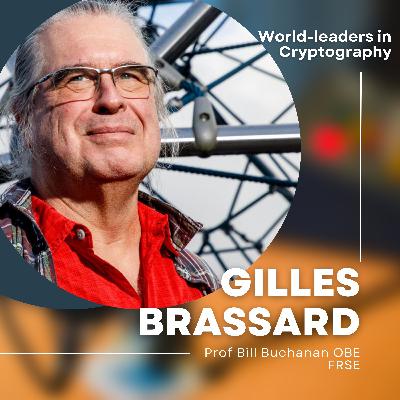
Gilles has been a full Professor at the Université de Montréal for more than 45 years. He laid the foundations of quantum cryptography at a time when no one could have predicted that the quantum information revolution would usher in a multi-billion-dollar industry, much less that the United Nations would proclaim 2025 to be the International Year of Quantum Science and Technology. He is also among the inventors of quantum teleportation, which is one of the most fundamental pillars of the theory of quantum information. In addition to this, his research focuses on areas of classical cryptography, privacy amplification, quantum entanglement distillation, quantum pseudo-telepathy, the classical simulation of quantum entanglement, amplitude amplification and he discovered the first lower bound on the power of quantum computers. Currently, his main interest lies in the foundations of quantum theory. In 1996, he was elected to the Royal Society of Canada. In 2000, he won the Prix Marie-Victorin - the highest scientific award of the government of Quebec - and in 2006, he was elected as a Fellow of the International Association for Cryptologic Research. In 2009, Gille was awarded the Gerhard Herzberg Canada Gold Medal for Science and Engineering, and in 2011 the Killam Prize in Natural Sciences, which are Canada's highest scientific honours. In 2013, Gilles was elected as a Fellow of the Royal Society of London. He was named as an Officer in the Order of Canada in 2013 and in the Ordre national du Québec in 2017. In 2018, he became the first Canadian to receive the Wolf Prize in Physics, which is considered second only to the Nobel Prize for Physics. In 2019, he received the Micius Quantum Prize and the BBVA Foundation Frontiers of Knowledge Award in Basic Sciences. In 2023, he was awarded the Breakthrough Prize in Fundamental Physics - the world's largest science prize. Furthermore, he has been granted honorary doctorates including from ETH Zürich, and the University of Ottawa.
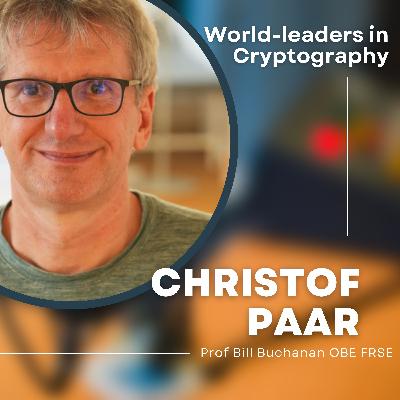
Christof is a director at the Max Planck Institute for Security and Privacy in Bochum, Germany. He is also, a member of the German National Academy of Sciences Leopoldina and a Fellow of the IACR and IEEE. His research includes areas of light-weight cryptography, efficient cryptographic implementations, cryptographic Trojans and physical layer security. Christof is one of the co-creators of the PRESENT light-weight cipher and of the PRINCE block cipher, In 2003, he founded Escrypt GmbH together with Willi Mann-heims, and which was one of the first companies to focus on industrial data security. Since 2012, Escrypt has been part of Bosch.
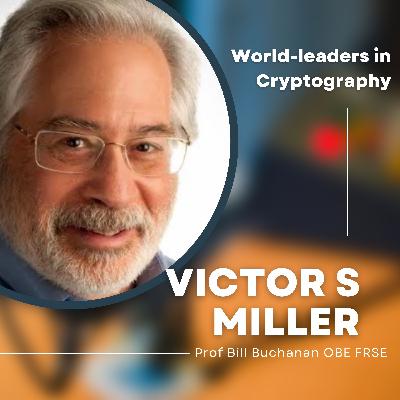
Victor is a Senior Research Scientist at Nexus Laboratories. He received his PhD in Mathematics from Harvard University in 1975, and was an assistant professor at the University of Massachusetts Boston from 1973 to 1978. Victor has since worked for the IBM Research Center, The Institute for Defence Analyses in Princeton, Meta Platforms and SRI International. For his research, Victor has focused on areas of computational number theory, data compression and cryptography. Along with Neal Koblitz, he was the co-creator of Elliptic Curve Cryptography, the inventor of Miller's algorithm and was a co-inventor of the LZW data compression method. For the LZW invention, he was awarded the IEEE Millennium medal, and for his work on elliptic curve cryptography, he received the RSA Award for Excellence in Mathematics the Levchin Prize, and the Eduard Rhein Foundation Technology Award, along with being a member of the Information Systems Security Association Hall of Fame.
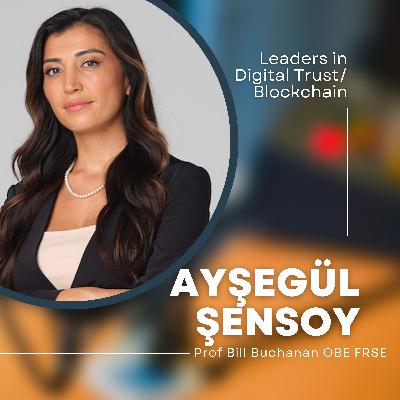
Aysegul Sensoy has over 20 years of management experience with blockchain, emerging technologies, fintech, business development, marketing and sales. She is currently the chair of the Istanbul Blockchain Women Association and CIS Regional Manager of Fuze Finance. She received her bachelor's degree in economics from Istanbul University and her master's degree in marketing communications management from Galatasaray University, as well as getting an executive MBA. She entered the tech sector after working in national and multinational companies as a marketing director, country manager, and many other roles. Aysegul is CIS (Commonwealth of Independent States) regional manager of Fuze Finance, an Abu Dhabi-based licensed fintech providing embedded digital asset capabilities for financial institutions. She was the Chief Strategy and Marketing Officer at XYZ Teknoloji, a blockchain-focused FinTech company based in Istanbul. Aysegul is a chairwoman and founding member of Istanbul Blockchain Woman, a non-profit association dedicated to empowering women in the blockchain ecosystem. The community's purpose is to organise social responsibility projects that will provide women with positive discrimination in terms of technology and blockchain. She is also a co-founder of the SOS Chain initiative, partners with needsmap.coop, which is a blockchain infrastructure fund for disasters and rapid humanitarian crises worldwide. Aysegul is leading the Euthenia community in Turkey, which is a Madrid-based organization aiming to increase C-level gender equity both in the Mediterranean and the MENA countries. She is also the co-founder of FairShare which aims to serve a transparent dApp, allows Muslim faithful to make their Zakat contributions crypto assets. More details on IBW: https://istanbulblockchainwomen.org/homepage/ If you are interested in the Trust4Futures Deep Skills Development course, you can find out more information here: https://trust4futures.com
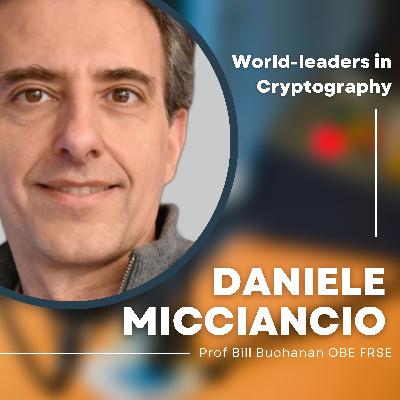
Daniele is a professor in the Computer Science and Engineering department at the University of California, San Diego and, in 2019, he was elected as a Fellow of the IACR. His main focus is on the foundations of lattice-based cryptography and its advanced applications, including fully homomorphic encryption. Overall, he has published many classic papers that relate to lattice methods, including working with Chris Peikert on "Trapdoors for lattices", and with Oded Regev on the "Worst-case to average-case reductions based on Gaussian methods". Daniele has also contributed greatly to the advancement of bootstrapping methods, including defining the DM/FHEW method - along with Leo Ducas. He published a book on the "Complexity of Lattice Problems - A cryptographic perspective" with Shafi Goldwasser, and his paper on "Generalized Compact Knapsacks, Cyclic Lattices, and Efficient One-Way Functions" was given a FOCS 20 years test of time award in 2022. This paper led to the theoretical foundation of efficient lattice based cryptography. His paper with Regev also received the FOCS ToT award in 2024.
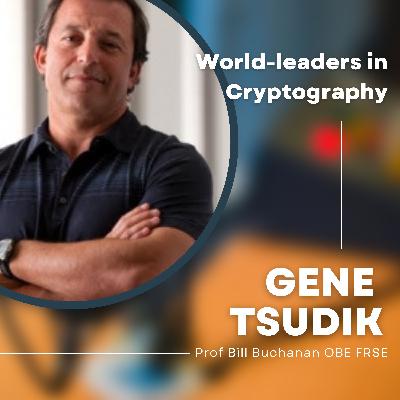
Gene is a Distinguished and ICS Alumni Professor of Computer Science at the University of California, Irvine (UCI) where he has been since 2000. His research covers areas of security, privacy, and cryptography. From 1991 to 1996, he was a researcher at the IBM Zurich Research Laboratory and then at the Information Science Institute until 2000. He is a Fulbright scholar and a Fellow of the ACM, IEEE, AAAS, and IFIP. From 2009 to 2015, he was the editor-in-chief of the ACM Transactions on Privacy and Security (TOPS). Over the years, Gene has received a number of awards, including the ACM SIGSAC Outstanding Contribution Award, the 2020 IFIP Jean-Claude Laprie Award, the 2023 ACM SIGSAC Outstanding Innovation Award, and a 2025 Guggenheim Fellowship. Google Scholar: https://scholar.google.co.uk/citations?user=WLvuu74AAAAJ&hl=en&oi=ao
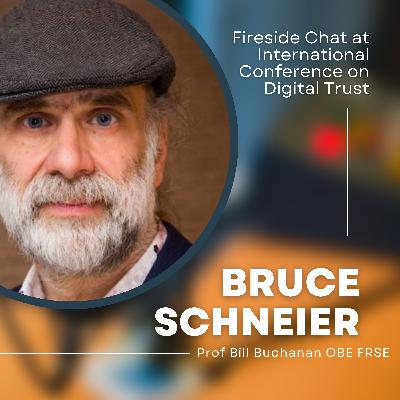
A fireside chat from the International Conference on Digital Trust, AI and the Future. Bruce has created a wide range of cryptographic methods including Skein (hash function), Helix (stream cipher), Fortuna (random number generator), and Blowfish/Twofish/Threefish (block ciphers). Bruce has published 14 books, including best-sellers such as Data and Goliath: The Hidden Battles to Collect Your Data and Control Your World. He has also published hundreds of articles, essays, and academic papers. Currently, Bruce is a fellow at the Berkman Center for Internet and Society at Harvard University.
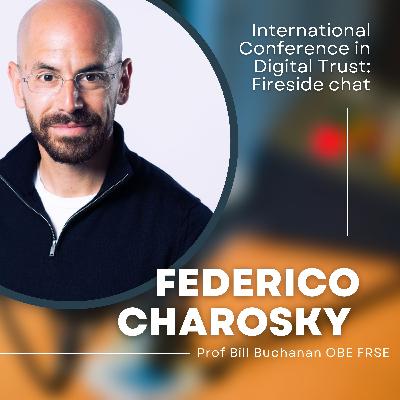
Federico Charosky, CEO Quroum CyberFederico is a seasoned cybersecurity executive with over 25 years of distinguished experience across the Americas, Europe, and the Middle East. He specialises in cyber risk management, security operations, and incident response, Federico has dedicated his career to safeguarding organisations against the ever-evolving landscape of digital threats. In 2016, he founded Quorum Cyber, a premier cybersecurity firm backed by private equity, headquartered in Edinburgh with offices across the UK, North America, and the UAE. At Quorum Cyber, our mission is to help good people win. With over 400 cybersecurity professionals and a global presence, our expert team of security engineers, incident responders, forensic specialists, and threat hunters leverages the best Microsoft Security technologies to defend organisations worldwide against cybersecurity breaches and attacks.


Comments

Download from Google Play

Download from App Store
 United States