


 Claim Ownership
Adapting Together
Subscribed: 0Played: 0
Subscribe

© Carmen Loke, Gan Xin Yi and Kevin Neoh
Description
Adapting Together is a Malaysian podcast dedicated to raising awareness about autism and supporting families on this journey. It’s designed for parents, caregivers, educators, and the broader community to access reliable, local, and compassionate information about autism.
24 Episodes
Reverse
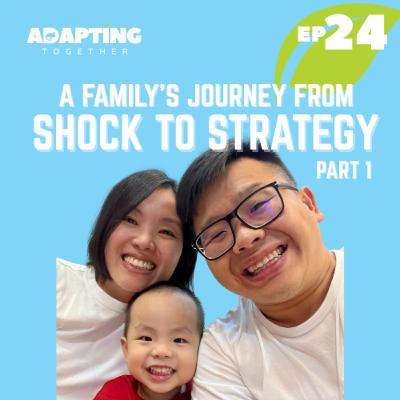
Can We Afford This? The Real Cost of Autism Therapy After DiagnosisAfter an autism diagnosis, many parents are focused on understanding their child’s needs. But soon, another difficult question often follows, "Can we afford this?"In this episode of Adapting Together, we have a conversation with Kevin to explore the emotional and financial realities that families may face in the early stages after diagnosis. From initial speech and occupational therapy sessions to considering more intensive intervention programmes, therapy costs can quickly become a major concern. This episode touches on:The moment financial worry beginsThe pressure to “do the best” for a childThe sustainability of ongoing therapyAvoiding rushed decisions during stressful periodsTaking gradual, thoughtful steps instead of reacting out of fearWe hope this angle offers an honest reflection on balancing urgency with practicality and reassurance for parents transitioning through similar uncertainties.If you are in the early phase after diagnosis and feeling overwhelmed by both emotion and finances, may this conversation remind you that you are not alone, and it is okay to move forward one step at a time.Have any feedback or suggestions? Send us an email here: adaptingtogetherpodcast@gmail.com
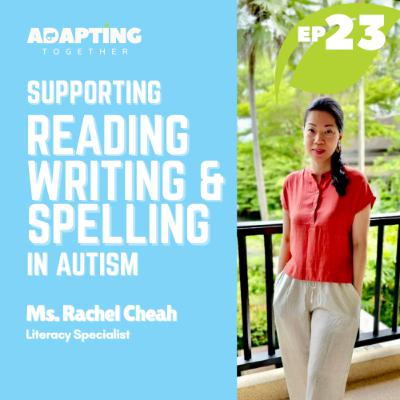
Reading can be one of the most confusing and emotionally charged challenges for parents, especially when a child is navigating both autism and dyslexia. Many parents find themselves asking: Is my child struggling because of autism? Dyslexia? Or something else entirely? And how do I know what kind of help actually works?In this episode of Adapting Together, we sit down with Rachel, a Literacy Specialist who works closely with children with dyslexia and children on the autism spectrum. Drawing from her real-world experience, Rachel helps unpack what dyslexia really is, how it can look different in autistic children, and why early, accurate understanding matters so much.We explore how professionals assess children who may be facing overlapping challenges, what key patterns parents can look out for, and how reading difficulties related to dyslexia differ from autism-related learning differences. Rachel also shares practical, evidence-informed intervention approaches—along with a meaningful success story that shows what progress can look like when the right support is in place.Beyond therapy rooms, this conversation also looks at everyday life. We discuss how teachers can better support children in school, what parents can realistically do at home, and gentle strategies for encouraging children who feel frustrated, avoid reading, or have lost confidence.Most importantly, this episode is a reminder that reading struggles are not a reflection of a child’s intelligence or effort—and that parents are not alone in this journey. With the right understanding, support, and encouragement, progress ispossible.If you’re a parent feeling unsure about where to start, overwhelmed by conflicting advice, or simply looking for clarity and reassurance, this episode is for you.
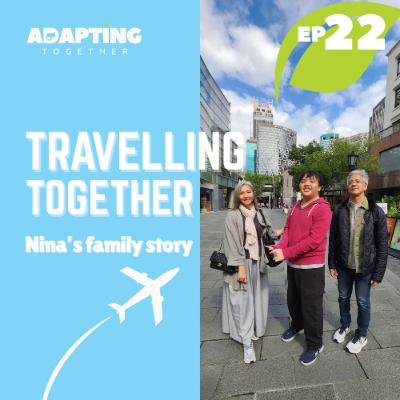
Travelling as a family can be joyful, but for families with children on the spectrum, it often comes with extra layers of preparation, uncertainty, and emotional baggage.In this episode of Adapting Together, we speak with Nina, a mother of twins. Her son Martin, now 18 years old, is non-verbal and on the autism spectrum, while his twin sister is neurotypical.Despite the challenges, travelling has become something Martin genuinely enjoys , and also something his family recognises through his smile, his calmness, and the way he responds to new environments.In this heartfelt and grounded episode, Nina shares with usHow their family prepares before, during, and after tripsWhy preparation matters even more when travelling with an autistic family memberTheir experience using the Butterfly Effect service at Malaysian airportsA difficult and distressing travel incident that led to police involvement - and how it was eventually resolved with understanding and empathy How their family practices “me-time” during trips by taking turns caring for MartinWhy travelling doesn’t have to mean doing everything together, all the timeMost importantly, Nina offers encouragement to parents who may feel discouraged or afraid to travel, reminding us that while every family is different, meaningful experiences are still possible when we put our mind to it.This episode is a candid conversation about realism, flexibility, resilience, and finding ways to keep living life together as a family.🎧 Listen in if you’re a parent or caregiver wondering whether travel is still possible — and what “travelling together” can truly look like.
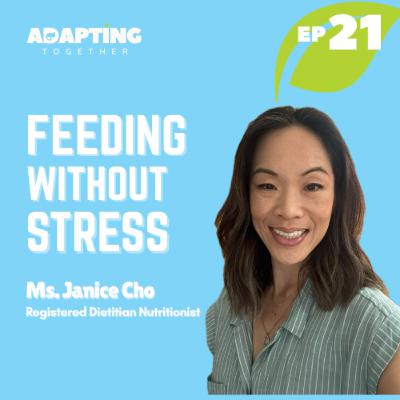
Feeding your child shouldn’t feel like a daily battle — but for many parents of neurodivergent children, it often does.In this episode of Adapting Together, we have an honest and compassionate conversation with Janice, a registered dietitian and co-founder of Fed to Flourish, about feeding, nutrition, and the emotional weight parents carry around mealtimes.Together, we explore:- Why “picky eating” is often just the tip of the iceberg- How sensory needs, stress, trauma, and routines can deeply affect eating- When picky eating is typical — and when it’s a signal to look deeper- What actually happens during a dietitian’s first consultation- How to assess whether a limited diet is still nutritionally adequate- Supporting children who overeat, food jag, or struggle with fullness cues- How to create calmer, more connected mealtimes — without pressure, force, or shame- Why feeding challenges are not a parenting failure and not a “bad child” problem- This episode is a reminder that all behaviour is communication, and that feeding challenges deserve curiosity, patience, and support — not guilt.🎙️ If eating feels stressful in your home, this conversation is for you.
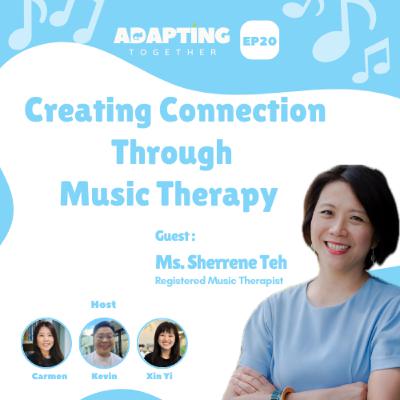
“You don’t need to be a singer or musician to do music with your kids.” — Sherrene TehJoin us for a heartfelt conversation with Sherrene, one of Malaysia’s pioneers in music therapy, as she shares her unexpected journey into a career that brings so much joy and meaning. From supporting children with autism and developmental needs to creating moments of pure connection, Sherrene shows how music becomes a bridge for communication, emotional regulation, and social growth.In a special moment, she even brings out instruments and sings together with us, showing how music can instantly light up a room and create unforgettable connections.If you’re looking for a credible music therapist in Malaysia, you can reach out to the Malaysian Music Therapy Association here: https://www.mmta.org.my/contactEpisode Highlights:-00:00 – Welcome & podcast disclaimer02:10 – Meet Sherrene: One of Malaysia’s pioneer music therapists06:45 – From corporate career to music therapy: finding her calling12:30 – What is music therapy? (Nasi lemak analogy 🍽️)18:40 – Music therapy vs traditional music lessons24:10 – Using music to build communication (real client example)32:20 – Emotional regulation through music & songwriting38:50 – Social skills, turn-taking & listening through musical play46:30 – Working with non-verbal children: powerful real-life story54:40 – Quality of life & research insights on music therapy58:20 – How parents can use music at home (no singing skills needed!)01:03:10 – Finding a music therapist in Malaysia01:05:30 – Final message for parents & caregivers ❤️
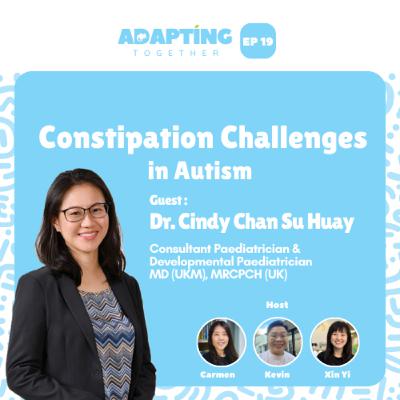
Dr. Cindy is back on Adapting Together — and yes, we’re talking about something every parent deals with but no one likes to mention… constipation.Why does it happen so often in autistic children? What red flags should parents actually pay attention to? And how do you know when tummy troubles are more than “just a phase”?We dig into all of it — from how Dr. Cindy evaluates these concerns in her clinic to the real, practical things parents can try at home: diet tweaks, hydration hacks, sensory-friendly routines, and balancing medical treatment with everyday habits.We also bust a few common myths, talk about how therapists and educators can team up with parents, and wrap up with the one piece of advice Dr. Cindy wants every family to hear.A super real, super helpful conversation — and trust us, you’ll walk away with tips you can use right away.
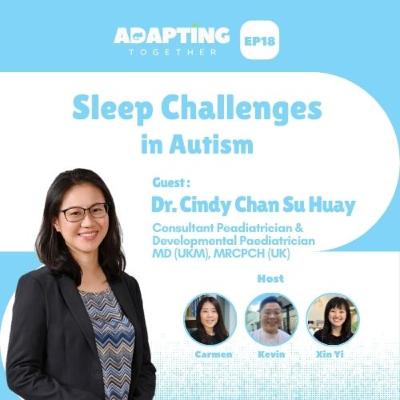
In this episode of Adapting Together, hosts Xin Yi, Kevin, and Carmen sit down with Dr. Cindy, a developmental pediatrician from Sunway Medical Centre, to explore the often-overlooked challenges of sleep among neurodivergent children, particularly autistic children. Sleep can be one of the biggest challenges for children on the autism spectrum and it affects the whole family. In this episode, we explore why autistic children may strugglewith falling asleep, staying asleep, or waking up at odd hours. Dr. Cindy shares expert insights on common causes such as anxiety, sensory sensitivities, routines, and habits, and offers practical strategies to improve sleep, including structured bedtime routines, gradual adjustments, outdoor activity,and mindful use of melatonin. Whether you’re a parent or caregiver, this episode provides guidance and encouragement to help your child and your family in getting the rest you all need.
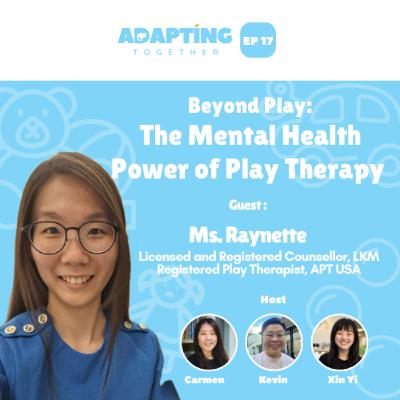
Play is a child's first language, and for neurodivergent individuals, it is a powerful tool for expressing emotions and navigating their world.In this insightful episode, hosts Carmen, Kevin, and Xin Yi welcome dedicated therapist Ms Raynette Soon (Ray) to explore the transformative power of Play Therapy.What You'll Learn:Play as Communication: Discover how a play therapist uses toys and play as a focused language to help children communicate and process their feelings.The Power of Self-Acceptance: Understand the critical link between a child's mental health, self-acceptance, and their motivation and ability to function well.Support for the Whole Family: Learn how Play Therapy can be a useful and supportive tool for your child, and how it can eventually support your own mental health and well-being as a parent.Tune in to open your eyes to the meaningful impact Play Therapy can have on a child's life and the entire family.Resources:Raynette's LinkedInAssociation of Play Therapy (APT), USA Play Therapy International (PTI)/PTUK, UK Australasia Pacific Play Therapy Association (APPTA), Australia – Asia Pacific Region Association of Play Therapy-Singapore (APT-S)
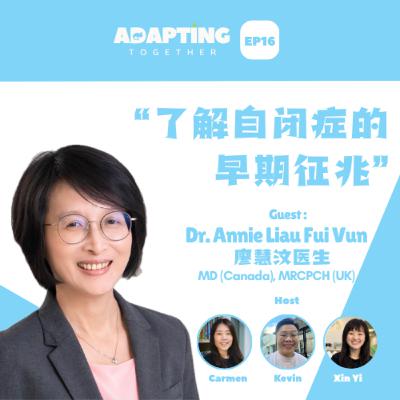
In this special episode (in Mandarin) of the Adapting Together podcast, hosts Xin Yi,, Carmen and Kevin engage with Dr. Annie Liau Fui Vun, a children's specialist, to discuss autism spectrum disorder (ASD). In this episode, Dr. Annie explains in a clear and practical way:What autism is and its common symptomsEarly red flags parents can observe in their child’s developmentThe different levels of autism (Level 1, 2, and 3) and the types of support needed for eachCommon misconceptions about the causes of autism and what science tells usThe importance of early interventionThe conversation also highlights behavioral patterns associated with autism and provides guidance for parents on what to observe in their children. Overall, the episode aims to raise awareness and understanding of autism, offering valuable insights for parents and caregivers.这是第一次我们以话语来谈谈自闭症,在这集节目主持人Xin Yi, Carmen 与Kevin 邀请了儿科专科医生——廖慧汶医生(Dr. Annie Liau Fui Vun),一起探讨关于自闭症谱系障碍(Autism Spectrum Disorder, ASD)的话题。节目中,廖医生以浅显易懂的方式说明:什么是自闭症及其常见症状家长可以从哪些早期迹象(red flags)观察孩子的发育状况自闭症不同等级(level 1、2、3)的区别及所需的支持常见关于自闭症成因的误解与科学上的澄清早期介入(early intervention)的重要性此外,Dr. Annie Liau 也分享了家长如何从孩子的行为中察觉异常信号,并鼓励家长以理解与接纳的心态陪伴孩子成长。整集节目旨在提升大众对自闭症的认知与理解,为家长和照顾者提供有价值的资讯与指引,让更多家庭能在适时获得帮助与支持。Resources:Dr. Annie Liau's BlogDr. Annie Liau's LinkedIn下载:自闭症“9不”简单筛查法 (Dr. Annie Liau 著)Chapters03:19 Understanding Autism Spectrum Disorder06:16 Levels of Autism and Support Needs09:16 The Role of Genetics and Environment12:19 Common Misconceptions About Autism15:16 Identifying Red Flags in Early Development18:12 The Importance of Early Intervention30:32 Understanding Social Boundaries in Children34:07 Developmental Regression37:07 Recognizing Behavioral Patterns in Autism40:46 Repetitive and Rigid Behaviors44:00 Fixated Interests and Uneven Development48:36 Sensory Processing Issues50:35 Seeking Help: Where to Start57:29 Trusting Parental Intuition01:01:17 Resources for Parents and Early Intervention章节00:00 开场与节目介绍03:19 认识自闭症谱系障碍(ASD)06:16 自闭症的分级与不同支持需求09:16 基因与环境的影响因素12:19 关于自闭症的常见迷思15:16 早期发展阶段的警讯与观察重点30:32 了解孩子的社交界限与行为反应34:07 发展退步37:07 识别自闭症常见的行为模式40:46 重复性与固执行为的特征44:00 特定兴趣与发展不均衡现象48:36 感官处理的挑战与敏感反应50:35 家长该如何开始寻求协助57:29 信任家长的直觉与观察01:01:17 给家长的资源与早期干预的重要性
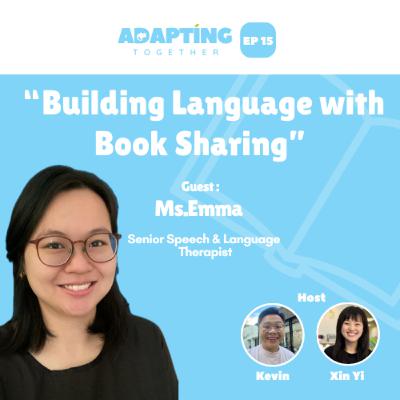
Books, they are not just books. They are tools that are very instrumental in supporting children to learn and develop language, more so for visual learners like children on the spectrum. In this episode of Adapting Together, hosts Xin Yi and Kevin, along with speech therapist Emma Lee, explore the importance of book sharing in language development for neurodivergent children. They discuss strategies for engaging children in reading, the types of books that work best, and how to create a positive reading environment. Emma shares insights on using shared reading to enhance communication skills, the significance of matching books to a child's interests and language level, and the role of AAC in supporting language development. This conversation provides a good foundation for parents and caregivers to create the joy of reading and building meaningful connections with children.Resources:Emma Lee's LinkedInDevelopmental Milestones ReferencesDirectory for Qualified Professional Speech TherapistsChapters:00:00 Introduction02:24 The Power of Books in Language Development05:30 Understanding Shared Reading vs. Reading09:13 Choosing the Right Books for Children12:20 Matching Books to Language Levels18:15 Engaging Children with Short Attention Spans23:01 Digital Books vs. Physical Books31:53 Overcoming Barriers in Language Support46:16 Encouraging Reluctant Readers50:24 Using AAC in Book Sharing
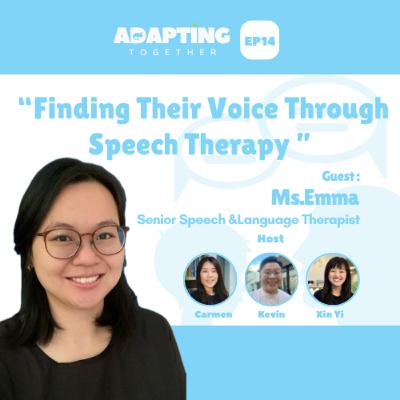
Communicating is one of the very essential foundations of life. For children who are on the spectrum, learning to communicate means letting us understand their world better. In this episode of Adapting Together, co-hosts Carmen, Xin Yi, and Kevin engage with Speech and Language Pathologist Emma Lee Yi Fang to discuss the critical role of speech therapists in supporting children with speech developmental delays, particularly those on the autism spectrum. The conversation delves into the emotional journey of parenthood, the significance of early intervention, and the delicate balance between parental expectations and children's capabilities. Emma also shared practical tips and strategies parents and caregivers can adopt, making it possible to support and encourage children in developing their speech and language capabilities even from home.Resources:Emma Lee's LinkedInDevelopmental Milestones ReferencesDirectory for Qualified Professional Speech Therapists
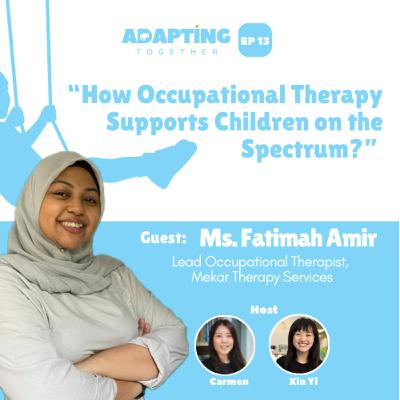
In this episode of Adapting Together, hosts Xin Yi and Carmen sit down with Ms. Fatimah Amir, an experienced occupational therapist, to explore how OT helps children on the autism spectrum build independence and meaningful life skills.This conversation dives into what occupational therapy really is, how it differs from physiotherapy and other interventions, and why OT goes beyond skills to focus on participation in everyday roles from home, to school, and in the community.Fatimah shares a rich of real-life examples from her 11 years of practice, coupled with practical strategies and suggestions parents can implement at home, and insights on how schools can better support children with autism. The discussion also highlights the importance of emotional regulation in the child's learning and development journey; the role of parents in therapy, and how creating safe, predictable environments fosters growth.Her message to parents: "Don’t blame yourself. You did the best you could with what you knew at the time."Resources:Follow Fatimah on IG for more OT updates and storiesConnect with Fatimah Amir on LinkedInMore on PEO modelChapters:00:00:00 Intro00:01:46 Occupational Therapy for Children on the Spectrum00:03:59 Differences between Occupational Therapy and Physical Exercise00:06:45 Real-Life Example of the Impact of Occupational Therapy on Chilren on the Spectrum00:09:11 OT and Emotional Regulation00:10:14 Focus of First OT Session00:15:01 How Home Environment and Routine Support Children on the Spectrum00:19:11 Parent Participation in OT 00:23:19 Tools and Techniques in Occupational Therapy00:26:39 Role of Occupational Therapy in School Settings00:35:07 The Evolution and Future of Occupational Therapy in Malaysia00:37:50 Openness and Responsibility in Supporting Children on the Spectrum
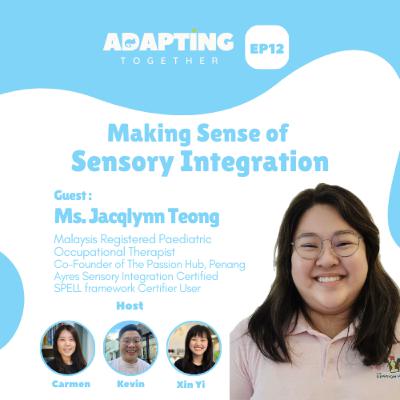
In this episode of Adapting Together, hosts Xin Yi, Carmen, and Kevin engage with Jacqlynn Teong, a pediatric occupational therapist, to explore the critical topic of sensory integration. This episode discussed the importance of understanding sensory processing differences, the key components of sensory integration, and how these affect children, particularly those on the autism spectrum. As a Malaysian Registered Pediatric Occupational Therapist, Jacqlynn has rich experience working with children. She shares insights on identifying red flags, the assessment process, and effective interventions. This conversation also addresses common misconceptions about sensory processing and emphasizes the need for self-compassion among parents and caregivers.Resources:Connect with Jacqlynn on LinkedInThe Passion Hub, PenangThe Collaborative for Leadership in Ayres Sensory Integration (CLASI) 6 Modules Certification ProgramAbout EASI (Evaluation of Ayres Sensory Integration)Chapters00:00 Introduction04:00 Key Components of Sensory Processing17:03 Identifying Red Flags in Sensory Processing21:20 Setting Priorities in Sensory Integration Therapy26:41 Understanding Sensory Integration Assessments31:07 Exploring Sensory Integration Interventions35:53 Practical Sensory Strategies for Home and School39:55 Training and Certification in Sensory Integration47:30 Common Misconceptions About Sensory Processing52:01 The Importance of Self-Compassion for Caregivers
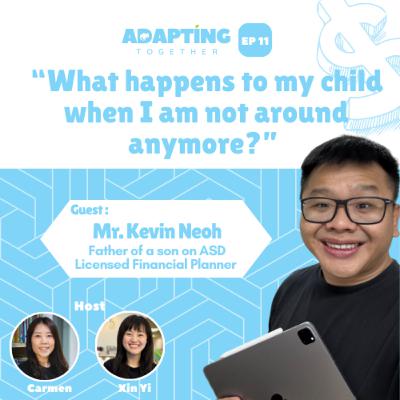
In this special episode of Adapting Together, our usual co-host Kevin takes the guest seat to share his personal journey and professional insights as a Licensed Financial Planner and father to a neurodivergent child. Together with co-hosts Xin Yi and Carmen, we explore the emotional and practical steps families can take to plan for a future where parents may no longer be around.Intended as an eposide to offer some awareness of what parents can do to secure the wellbeing and future of their children; from writing a will to setting up trusts and choosing guardians, this episode is packed with compassionate advice and actionable tools to help families protect what matters most. 💬 “Planning ahead is not just about responsibility, it’s love in action.”Resources:About Kevin NeohWhy Do I Need A Will?Wills in MalaysiaSmartFinance.myBudgeting Tools / App: YNAB (You Need A Budget)MoneyLoverBank Negara MyTabungPodcast:Kevin's Podcast on Financial Health InsightsChapters:00:00 Introduction to Financial Planning09:18 Starting Simple18:22 Securing Our Children's Future27:38 Protecting Assets for Reserved for Special Needs Children36:36 Taking Action: Steps for Parents to Secure Their Children's Future
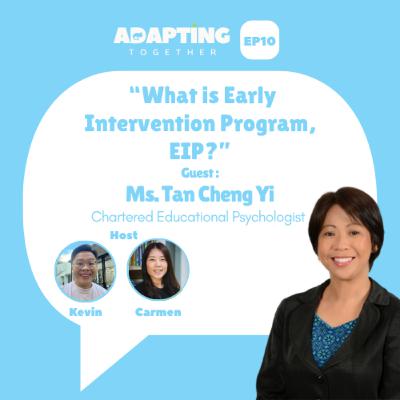
Ever wondered when and how to start Early Intervention for your child? In this episode, we sit down with a Chartered Educational Psychologist, Ms Tan Cheng Yi, to break it all down — from who’s involved in EIP, what options exist in Malaysia, to how YOU as a parent can play a powerful role. ✨ Whether you're just beginning your journey or looking to understand the system better, this one’s for you.🎙️ Tune in now and let's make sense of Early Intervention Programme—together.
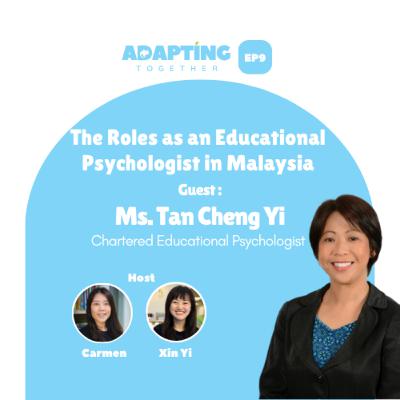
In this enlightening episode, we sit down with Ms. Tan Cheng Yi, a Chartered Educational Psychologist, to explore what her role entails, how educational psychologists differ from other mental health professionals, and what kind of support they provide for children with autism and learning differences.Whether you’re a parent wondering if your child is ready for school, or a teacher navigating behavioral concerns in the classroom, this episode offers practical insights, real-life examples, and professional guidance.Resource:Ms. Tan Cheng Yi's Profile & Appointment PageChapters:00:00 - Introduction01:00 - What is an Educational Psychologist?05:00 - Educational Psychologist, Clinical Psychologist, Psychiatrist09:45 - When Should Parents Consider Seeing an Educational Psychologist?13:45 - What Does an Assessment Look Like?17:30 – School Readiness: What Does It Really Mean?19:55 – Choosing the Right School: Mainstream, PPKI, SPK, Homeschool?23:22 – Growth of Inclusion in Malaysia’s Education System25:20 - Understanding & Managing Behavior in School Settings29:20 - Supporting Children Through Transitions & Growing Academic Demands33:00 - Where to find an Educational Psychologist in Malaysia37:00 - Advice for Parents & Teachers40:47 - Signs of Anxiety and Depression in Children42:40 - Wrap up

In this episode, Kevin and Xin Yi sit down with Alexa Goh, Learning and Development Manager at SEED Autism Service; Board Certified Behavior Analyst (BCBA®) and President of the Malaysia Association of Behaviour Analysis, to demystify Applied Behaviour Analysis (ABA), a therapy often called the “gold standard” for early autism intervention.Together, they explore:What ABA really means in practiceHow it differs from other therapiesCommon concerns like masking and ethicsWhy it’s often 1:1 and how that impacts costWhat families can expect from assessments and ongoing supportWhether you’re a parent, caregiver, or professional, this episode offers grounded insights to help you make informed decisions.Resources:Behavior Analyst Certification Board (BACB)Qualified Applied Behavior Analysis Credentialing Board (QABA)Malaysia Association of Behaviour Analysis(MABA)Chapters:00:40 Introduction & Why ABA Matters07:30 What Is ABA?13:48 Real-Life Examples of ABA20:05 Is ABA Right for Every Child?26:40 The ABA Process: From Assessment to Planning34:22 Home-Based vs Centre-Based ABA40:15 Why Is ABA So Expensive?46:12 Ethics, Masking & Common Misconceptions51:33 How to Find a Qualified ABA Professional56:50 Stories of Progress & Family Impact01:00:10 Final Reflections & Advice
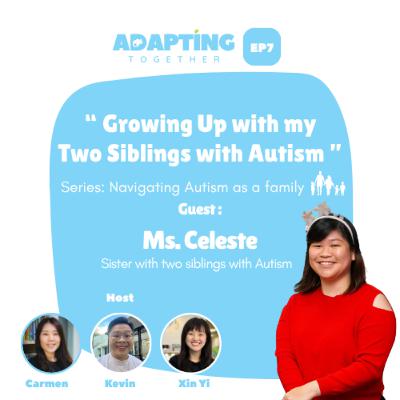
In this heartfelt interview, we sit down with a young lady who grew up alongside her two brothers with autism. She shares what happiness looks like in her family, the challenges she faced as a sister, and the curiosity she felt as a child trying to understand her brothers' condition.With moments of laughter and tears, this raw and touching conversation offers a rare glimpse into sibling life in a neurodiverse family — full of love, growth, and unforgettable memories.
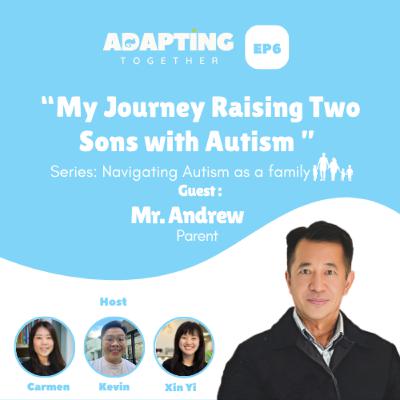
In this special Father's Day episode, we speak with Andrew—a devoted dad of two autistic sons—who opens up about the family's journey from diagnosis to young adulthood. With honesty and warmth, Andrew shares the challenges, joys, and life lessons of raising his boys, and how their presence has shaped his perspective on life.Though the episode centers on a father’s voice, Andrew often reflects on the deep partnership he shares with his wife—a source of strength and unity throughout their parenting journey. Together, they’ve built a loving, supportive home grounded in teamwork and resilience.A moving, down-to-earth conversation about fatherhood, family, and the beauty of embracing the unexpected.
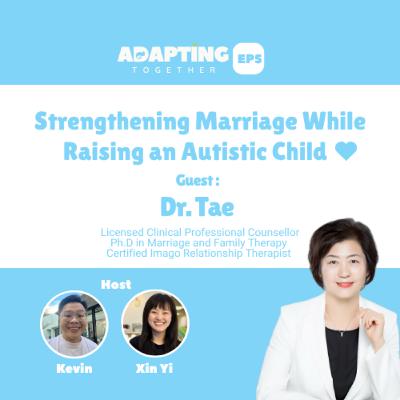
Overview:When autism enters a family, it can quietly strain the relationship between spouses, emotionally, practically, and relationally. In this heartfelt episode, Dr. Tae shares how couples can stay connected during the most overwhelming seasons, and how they can navigate stress, role imbalance, and emotional disconnect without losing each other in the process.Drawing from over a decade of experience working with couples and families, Dr. Tae offers gentle insight, practical tools, and powerful reminders that you and your partner are not alone.You’ll learn:Why spouses cope differently — and how to understand each otherHow to talk about stress, burnout, and invisible labourWhat it means to move from crisis mode to shared partnership💬 Memorable Quotes:“You can’t climb the mountain if all you do is stare at the peak. Focus on the next step, and enjoy the view along the way.”📩 Want to connect with Dr. Tae?If you’d like to reach out to Dr. Tae for support or counselling, you can reach out to her via her company website here, or send her an email by clicking here. She’s here to support couples, families, and individuals navigating life’s challenges, so that you don’t have to do it alone.Chapters00:00 Introduction 03:08 Emotional Responses to Autism Diagnosis05:59 Coping Mechanisms and Conflict in Marriage08:51 Communication Strategies for Couples12:12 Balancing Responsibilities in Parenting14:59 Navigating Career Sacrifices and Resentment17:55 Healthy Communication and Emotional Safety20:47 The Importance of Intimacy in Relationships23:59 Conflict Resolution and Fighting Fair26:56 Forgiveness and Compassion in Relationships29:59 Building a Team Mentality in Parenting33:04 Long-term Relationship Mindset and Goals36:13 Encouragement for Couples

Comments

Download from Google Play

Download from App Store
 United States