


 Claim Ownership
Addiction Audio
Subscribed: 1Played: 52
Subscribe

© The Society for the Study of Addiction
Description
Welcome to the podcast from the journal Addiction. The podcast includes interviews with Addiction authors about their work, details about publishing in the journal, and other topics of interest to the field of addiction. This podcast is for researchers, clinicians, students, people with lived experience, and anyone with an interest in the topic. For Season 3, our interviewers are: Dr Elle Wadsworth, Dr Tsen Vei Lim, Dr Chloe Burke, and Dr Zoe Swithenbank.
Hosted on Acast. See acast.com/privacy for more information.
113 Episodes
Reverse
In this episode, Dr Tsen Vei Lim speaks to Professor Amandine Luquiens, a psychiatrist and addiction specialist at the University of Montpellier and the Addiction Department of Nîmes University Hospital, France. The interview covers Amandine’s research article on psilocybin in alcohol use disorder and comorbid depressive symptoms: Results from a feasibility randomized clinical trial.Psilocybin and its recent popularity in clinical trials [01:22]The concerns of using psilocybin to treat psychiatric disorders [03:05]The use of psychotherapy alongside psilocybin in treatment [05:16]The key findings from the study [07:01]The contribution of the findings to policy and practice [10:13]The public’s current opinion for using psilocybin for psychiatric disorders [12:07]About Tsen Vei Lim: Tsen Vei is an academic fellow supported by the Society for the Study of Addiction, currently based at the Department of Psychiatry at the University of Cambridge. His research integrates computational modelling, experimental psychology, and neuroimaging to understand the neuropsychological basis of addictive behaviours. He holds a PhD in Psychiatry from the University of Cambridge (UK) and a BSc in Psychology from the University of Bath (UK).About Amandine Luquiens: Amandine Luquiens is a psychiatrist and addiction specialist, Full Professor at the University of Montpellier and the Addiction Department of Nîmes University Hospital. Her research focuses on patient-reported outcomes and psychotherapy-based interventions in addiction, with a particular interest in mindfulness and psychedelic-assisted psychotherapy; she conducted the first clinical trial in France on psychedelics. Her work also addresses alcohol use disorder and gambling disorder, including the use of account-based gambling data to inform evidence-based guidance for policymakers. She is a member of the Centre de recherche en Epidémiologie et Santé des Populations (CESP) Inserm U1018 team Primary Care, Prevention and Women’s Health, and aims to advance patient-centered addiction care.Original article: Psilocybin in alcohol use disorder and comorbid depressive symptoms: Results from a feasibility randomized clinical trial https://doi.org/10.1111/add.70152Author's declaration of interest: AL has no conflict of interest in the field of psychedelics. She was the recipient of a grant regulated by a public organism “French observatory of addictive behaviors- OFDT” and constraining all French monopolistic gambling service providers to redistribute 0.002% of stakes on their platforms to academic research. The gambling service provider implied in that grant was the “Paris Mutuel Urbain” (PMU). Independency of the research with no constraint on the protocol, the analysis and the publication were guaranteed by a strict convention between universities, hospitals and the PMU. AL signed a data sharing agreement for the “OSE” study, through an academic-private convention with the FDJ: Independency of the research with no constraint on the protocol, the analysis and the publication were guaranteed by a strict convention between the hospital and the FDJ, and no funding was part of the convention.The opinions expressed in this podcast reflect the views of the host and interviewees and do not necessarily represent the opinions or official positions of the SSA or Addiction journal.The SSA does not endorse or guarantee the accuracy of the information in external sources or links and accepts no responsibility or liability for any consequences arising from the use of such information. Hosted on Acast. See acast.com/privacy for more information.
In this episode, Dr Tsen Vei Lim speaks to Dr Elisa Wegmann and Annica Kessling, a post-doctoral research fellow and a PhD student at the University of Duisburg-Essen, Germany. The interview covers Annica and Elisa’s research article on the effects of acute psychosocial stress on cue-reactivity, attentional bias and implicit associations in women with problematic social network use: An experimental studyWhat is problematic social network use? [01:36]The controversy of social network use as an addiction [02:50]What we already know about cognition in people with problematic social network use [03:37]What Annica and Elisa mean by implicit cognition in this context [05:21]Why it is important to study stress and social network use [06:09]The recruitment and experiments of the study [07:55]Examples of the paradigms used [09:42]The key findings of the study [11:53]Annica and Elisa’s thoughts on their paradoxical findings [12:45] Do the findings change how we view problematic social network use? [14:22]What do the findings add to the debate of social network use as an addiction behaviour [16:37]About Tsen Vei Lim: Tsen Vei is an academic fellow supported by the Society for the Study of Addiction, currently based at the Department of Psychiatry at the University of Cambridge. His research integrates computational modelling, experimental psychology, and neuroimaging to understand the neuropsychological basis of addictive behaviours. He holds a PhD in Psychiatry from the University of Cambridge (UK) and a BSc in Psychology from the University of Bath (UK). About Annica Kessling: Annica is a PhD student at the Chair of General Psychology: Cognition at the University of Duisburg-Essen and a member of the research group FOR2974 “Affective and Cognitive Mechanisms of Specific Internet-Use Disorders,” within which she is completing her doctoral research. Her work focuses on problematic social media use, examining affective and implicit cognitive mechanisms as well as the impact of stress and predisposing variables on usage behaviour. A central component of her research involves experimental designs that integrate both objective and subjective measures to capture the complex interplay underlying maladaptive social network use.About Elisa Wegmann: Elisa is a post-doctoral research fellow at the University of Duisburg-Essen, Department of General Psychology: Cognition. Her research focuses on the problematic use of social media and a better understanding of this potential disorder based on theoretical considerations and the identification of similarities and differences to other addictive behaviours. This is addressed by investigating the interplay of predisposing variables with affective and cognitive mechanisms resulting in significant impairments in daily life due to social media through a variety of methods such as clinical diagnostics, physiological markers, and the implementation and development of experimental paradigms and questionnaires.The authors have no conflicts of interest to declare.Original article: Effects of acute psychosocial stress on cue-reactivity, attentional bias and implicit associations in women with problematic social network use: An experimental study https://doi.org/10.1111/add.70099The opinions expressed in this podcast reflect the views of the host and interviewees and do not necessarily represent the opinions or official positions of the SSA or Addiction journal.The SSA does not endorse or guarantee the accuracy of the information in external sources or links and accepts no responsibility or liability for any consequences arising from the use of such information. Hosted on Acast. See acast.com/privacy for more information.
In this episode, Dr Tsen Vei Lim speaks to Dr Justin Mahlberg, a Research Fellow at Monash University, Australia. The interview covers Justin’s research article on social cognition and decision-making in people with methamphetamine use disorder.Why studying cognition in methamphetamine use disorder is important [01:26]Antisocial behaviour among those with methamphetamine use disorder [02:24]How Justin investigated social cognition within the study [02:55]Basic social cognition processes that Justin looked at in this study [04:29]The key findings from the study [05:41] How Justin examined pro-social decision making through computer games [09:31]How Justin examined anti-social decision making through simulations [12:09]How the findings effect how we understand methamphetamine use disorder [14:14]The implications of the findings for treatment outcomes [15:33]The contribution of the findings to policy and practice [18:17]About Tsen Vei Lim: Tsen Vei is an academic fellow supported by the Society for the Study of Addiction, currently based at the Department of Psychiatry at the University of Cambridge. His research integrates computational modelling, experimental psychology, and neuroimaging to understand the neuropsychological basis of addictive behaviours. He holds a PhD in Psychiatry from the University of Cambridge (UK) and a BSc in Psychology from the University of Bath (UK). About Justin Mahlberg: Justin holds a PhD in Psychology and is currently a Research Fellow in the Addiction & Impulsivity Research Lab within the School of Psychological Sciences and the Turner Institute for Brain and Mental Health at Monash University. Justin’s research is interested in uncovering how cognitive and decision-making processes shape human behaviour to help build better individualised, neuroscience-informed approaches to behavioural change. Justin is currently the clinical lead for an umbrella intervention trial focusing on developing brain-informed methods for personalising brain stimulation as a treatment for Alcohol Use Disorder.Original article: Social cognition and decision-making in people with methamphetamine use disorder https://doi.org/10.1111/add.70108The opinions expressed in this podcast reflect the views of the host and interviewees and do not necessarily represent the opinions or official positions of the SSA or Addiction journal.The SSA does not endorse or guarantee the accuracy of the information in external sources or links and accepts no responsibility or liability for any consequences arising from the use of such information. Hosted on Acast. See acast.com/privacy for more information.
In this episode, Dr Elle Wadsworth talks to Dr Emmert Roberts, Senior Clinical Lecturer at the National Addiction Centre, King’s College London and a Consultant Addiction Psychiatrist at the South London and the Maudsley NHS Foundation Trust. The interview covers Emmert’s short report examining the characteristics of drug-related deaths among individuals identified as LGBTQ+ in the United Kingdom, 1997–2024.LGBTQ+ stands for Lesbian, Gay, Bisexual, Trans, Queer and others. The importance of examining drug-related deaths among those in the LGBTQ+ community [01:31]The use of the National Program on Substance Use Mortality database [04:00]The main findings of the study [05:05] The types of drugs used in sexualised and non-sexualised drug use [08:31]The limitations of the reporting of sexual orientation or trans status in coroner data [10:18]Improving the reporting of sexual orientation and trans status in coroner data [13:02]The implications of the findings for policy and practice [16:04]A sneak preview of findings from Emmert’s other paper in Addiction on methamphetamine-related deaths [17:07]The findings that were surprising to Emmert [18:59]About Elle Wadsworth: Elle is an academic fellow with the Society for the Study of Addiction. She is based at the University of Bath with the Addiction and Mental Health Group and her research interests include drug policy, cannabis legalisation, and public health. About Emmert Roberts: Emmert is a Senior Clinical Lecturer at the National Addiction Centre, King’s College London and a Consultant Addiction Psychiatrist at the South London and the Maudsley NHS Foundation Trust. He is a National Institute of Health and Care Research (NIHR) Advanced Fellow, a Senior Harkness Fellow at the Commonwealth Fund and the Clinical Lead of the National Program on Substance Use Mortality (NPSUM).Authors have no conflicts of interest to declare.Original article: Characteristics of drug-related deaths among individuals identified as LGBTQ+ in the United Kingdom, 1997–2024 https://doi.org/10.1111/add.70198 The opinions expressed in this podcast reflect the views of the host and interviewees and do not necessarily represent the opinions or official positions of the SSA or Addiction journal.The SSA does not endorse or guarantee the accuracy of the information in external sources or links and accepts no responsibility or liability for any consequences arising from the use of such information. Hosted on Acast. See acast.com/privacy for more information.
In this episode, Dr Elle Wadsworth talks to Dr Myfanwy Graham, a Postgraduate Scholar at Monash University funded by the Australian Government's National Health and Medical Research Council. The interview covers Myfanwy’s data insight paper examining differences in the measurement of medical cannabis use. Why definitions and contexts matter with regards to medical cannabis use [01:05]Four measures of medical cannabis use that Myfanwy explored in the study [02:05]The medical cannabis policy contexts of the US, Australia, and Canada [03:30]The importance of using standardised questions across different countries [05:18]The main findings of the data insight [05:48]Interpretations of medical cannabis use [07:49]The implications of the findings for policy and practice [08:23]Myfanwy’s preferred measure of medical cannabis use [09:30]Self perceptions of being a medical cannabis consumer [10:34]The take-home messages of the study [11:56]About Elle Wadsworth: Elle is an academic fellow with the Society for the Study of Addiction. She is based at the University of Bath with the Addiction and Mental Health Group and her research interests include drug policy, cannabis legalisation, and public health.About Myfanwy Graham: Myfanwy is a Postgraduate Scholar funded by the Australian Government's National Health and Medical Research Council and a Monash Research Excellence Scholar at the Monash Addiction Research Centre, Monash University. Her research examines the intersection between drug policy and health outcomes with psychoactive medicines (e.g. medical cannabis, psychedelics). She is also a current Fellow at the Schaeffer Center for Health Policy and Economics at the University of Southern California and is a Fulbright Scholar Alumna in public health policy. Myfanwy has completed consultancy work for the Australian Government Department of Health, Disability and Ageing, World Health Organization, the United Nations Office on Drugs and Crime and the National Academies of Sciences, Engineering, and Medicine. She is also a registered pharmacist.Authors have no conflicts of interest to declare.Original article: Understanding medical cannabis use internationally: Why definitions and context matter https://doi.org/10.1111/add.70117The opinions expressed in this podcast reflect the views of the host and interviewees and do not necessarily represent the opinions or official positions of the SSA or Addiction journal.The SSA does not endorse or guarantee the accuracy of the information in external sources or links and accepts no responsibility or liability for any consequences arising from the use of such information. Hosted on Acast. See acast.com/privacy for more information.
In this episode, Dr Elle Wadsworth talks to Dr Tim Mackey and Dr Doug Roehler. Tim is a professor in the Global Health Program at UC San Diego and the CEO and co-founder of S-3 Research, and Doug is the Cannabis Research Unit lead in the Department of Policy and Research for California’s Department of Cannabis Control. The interview covers Tim and Doug’s research article exploring the health benefit claims of cannabis products on online marketplaces in the United States. Why exploring health benefit claims on cannabis products was an important topic to investigate [01:20]What are cannabis-derived products? [03:07]What are the online marketplaces ‘Leafly’ and ‘Weedmaps’? [03:35]Examples of health benefit claims [05:00]The main findings of the study [07:33]The cannabis regulatory environment in the US [10:20]The differences in health claims between different types of cannabis products [12:20]The methodology used in the study that brought together data scientists and public health researchers [14:11]The health claims that surprised Tim and Doug [18:31]About Elle Wadsworth: Elle is an academic fellow with the Society for the Study of Addiction. She is based at the University of Bath with the Addiction and Mental Health Group and her research interests include drug policy, cannabis legalisation, and public health. She has a BSc in Chemistry, an MSc in Addiction Studies, and a PhD in Public Health. About Tim Ken Mackey: Tim is a Professor in the Global Health Program at UC San Diego and the CEO and co-founder of S-3 Research, a public health data science company originally created from a Challenge.gov award. He is also the Director of the Global Health Policy and Data Institute and the Editor-in-Chief of JMIR Infodemiology. He has co-authored over 270 manuscripts on topics including global health, technology, data science, substance use disorder, and health policy. Dr Mackey is an entrepreneur and scientist working on technology innovation to address public health challenges. About Douglas Roehler: Doug leads the Cannabis Research Unit in the Department of Policy and Research for California’s Department of Cannabis Control. Previously, he was a health scientist and epidemiologist in the Division of Overdose Prevention at the CDC, where he primarily served in the CDC’s Cannabis Strategy Unit. He has published extensively on cannabis topics in peer-reviewed journals and governmental reports, appeared on national podcasts, and represented the CDC in the national media. He has published widely on several other topics, including injury prevention, drug overdose and substance use, youth prevention, syndromic surveillance, traffic crashes, and youth violence. Declarations of Interest: Tim Mackey is the CEO and co-founder of the company S-3 Research and holds equity/ownership in the company. S-3 Research is a small business that has received funding through government contracts and grants for professional and technology services including on topics related to substance use disorder.Original article: Exploratory analysis of United States-based cannabis product health benefit claims on online marketplaces https://doi.org/10.1111/add.70177The opinions expressed in this podcast reflect the views of the host and interviewees and do not necessarily represent the opinions or official positions of the SSA or Addiction journal.The SSA does not endorse or guarantee the accuracy of the information in external sources or links and accepts no responsibility or liability for any consequences arising from the use of such information. Hosted on Acast. See acast.com/privacy for more information.
In this episode, Dr Tsen Vei Lim speaks to Dr Joshua Garfield, a research fellow at Monash University and Turning Point, Australia. The interview covers Joshua’s research article on the efficacy of a personalised alcohol ‘approach bias modification’ smartphone app in people accessing outpatient treatment for alcohol use disorders.What is ‘approach bias modification’ [01:51]The smartphone app and how it works [04:30]The recruitment process of the randomised controlled trial [07:20]The key findings of the study [09:20]How did the participants of the study feel about using the app? [10:37]The implications of the study for practice [12:33]The next steps for this app and using the app in different populations [13:54]About Tsen Vei Lim: Tsen Vei is an academic fellow supported by the Society for the Study of Addiction, currently based at the Department of Psychiatry at the University of Cambridge. His research integrates computational modelling, experimental psychology, and neuroimaging to understand the neuropsychological basis of addictive behaviours. He holds a PhD in Psychiatry from the University of Cambridge (UK) and a BSc in Psychology from the University of Bath (UK).About Joshua Garfield: Joshua completed a Bachelor of Science with Honours in Psychology at the University of Tasmania in 2002, and then a PhD in Behavioural Neuroscience at the University of New South Wales in 2008, where he studied animal learning theory. Following a brief post-PhD role in depression research, he moved to Melbourne to work for Monash University at Turning Point, an addiction treatment, research, and workforce training institute. Since 2015, he has managed Turning Point’s cognitive bias modification research program, led by Professor Victoria Manning.Original article: Efficacy of a personalised alcohol approach bias modification smartphone app in people accessing outpatient alcohol use disorder treatment: A randomised controlled trial https://doi.org/10.1111/add.70184The opinions expressed in this podcast reflect the views of the host and interviewees and do not necessarily represent the opinions or official positions of the SSA or Addiction journal.The SSA does not endorse or guarantee the accuracy of the information in external sources or links and accepts no responsibility or liability for any consequences arising from the use of such information. Hosted on Acast. See acast.com/privacy for more information.
In this episode, Dr Elle Wadsworth talks to Dr Phong Thai, an Associate Professor at Queensland Alliance for Environmental Health Sciences, Australia. The interview covers Phong’s research article on a wastewater study measuring illegal drug use in Hanoi, Vietnam, to determine the feasibility of conducting wastewater analysis in a low-income country.Note: The acronym ‘UNODC’ used in this episode stands for the ‘United Nations Office on Drugs and Crime’. Why looking at illegal drug use in Vietnam is important [01:07]Wastewater analysis and its utility in a low-income country [02:00]The biomarkers of focus [03:55]Why the authors chose Hanoi, Vietnam, to pilot wastewater analysis in South East Asia [05:38]Vietnam’s location and relation to drug trafficking in South East Asia [07:12]The Golden Triangle [08:22]The main findings of the study [08:48]Ketamine’s rise in popularity in Vietnam [10:16]The impact of COVID-19 on the consumption of drugs in Vietnam [11:18]Why are synthetic drugs becoming more popular? [12:30]The feasibility of conducting wastewater analysis in a low-income country [13:33]The take-home messages of the study [15:34]About Elle Wadsworth: Elle is an academic fellow with the Society for the Study of Addiction. She is based at the University of Bath with the Addiction and Mental Health Group and her research interests include drug policy, cannabis legalisation, and public health.About Phong Thai: Phong is an ARC Mid-Career Industry Fellow and Associate Professor at Queensland Alliance for Environmental Health Sciences (QAEHS). His research focus involves the expansion of wastewater-based epidemiological approach to estimate community consumption and exposure to a range of legal and illegal substances (including tobacco and alcohol) and pharmaceuticals, as well as the monitoring of community infection to COVID-19 during the last pandemic. He is a member of the team who manage the National Wastewater Drug Monitoring Program in Australia and has helped pioneering wastewater drug monitoring in several countries.Original article: Significant changes in preference of illicit drug use in a population of Hanoi, Vietnam – A 6-year wastewater study (2018–2023) https://doi.org/10.1111/add.70147The opinions expressed in this podcast reflect the views of the host and interviewees and do not necessarily represent the opinions or official positions of the SSA or Addiction journal.The SSA does not endorse or guarantee the accuracy of the information in external sources or links and accepts no responsibility or liability for any consequences arising from the use of such information. Hosted on Acast. See acast.com/privacy for more information.
In this episode, Dr Tsen Vei Lim talks to Zachary Bryant, a PhD candidate at the Matilda Centre for Research in Mental Health and Substance Use, University of Sydney, Australia. The interview covers Zachary’s research report on the relationship between MDMA (or ecstasy) use in youth adulthood and anxiety or depressive disorders in later adult life. The effects of MDMA [1:20]The prevalence of MDMA use and reasons why people take it [02:00]The relevance of MDMA for depression and anxiety [03:05]The use of the Victorian Adolescent Health Cohort Study to answer Zachary’s research question [04:17]The key findings of the study [06:50]Some reasons to explain the relationship found between MDMA use and anxiety but not depression [07:43]The self-medication hypothesis [10:04]The implication of the findings for clinical practice [11:02]The importance of replicating the findings in different cohorts and with more recent data [14:03] About Tsen Vei Lim: Tsen Vei is an academic fellow supported by the Society for the Study of Addiction, currently based at the Department of Psychiatry at the University of Cambridge. His research integrates computational modelling, experimental psychology, and neuroimaging to understand the neuropsychological basis of addictive behaviours. He holds a PhD in Psychiatry from the University of Cambridge (UK) and a BSc in Psychology from the University of Bath (UK). About Zachary Bryant: Zachary is a PhD candidate and research officer at the University of Sydney’s Matilda Centre for Research in Mental Health and Substance Use. His doctoral research examines the relationship between MDMA (ecstasy) use and mood, with a focus on implications for therapeutic applications. More broadly, his work explores the epidemiology of psychedelic use and applies advanced causal approaches to substance use research. He is particularly interested in emerging data collection and analysis methods, including intensive longitudinal designs such as Ecological Momentary Assessment (EMA).The authors have no conflicts of interest to disclose. Original article: The relationship between 3,4-methylenedioxymethamphetamine (MDMA) use in young adulthood and anxiety or depressive disorders in the mid-30s: Findings from the Victorian Adolescent Health Cohort Study - https://doi.org/10.1111/add.70173The opinions expressed in this podcast reflect the views of the host and interviewees and do not necessarily represent the opinions or official positions of the SSA or Addiction journal.The SSA does not endorse or guarantee the accuracy of the information in external sources or links and accepts no responsibility or liability for any consequences arising from the use of such information. Hosted on Acast. See acast.com/privacy for more information.
In this episode, Dr Elle Wadsworth talks to Dr Albert Burgess-Hull, the Scientific Director of SUDx and Head Data Scientist at MATClinics, US. The interview covers a short report examining treatment retention in opioid use disorder comparing subcutaneous injectable versus sublingual buprenorphine. · What is buprenorphine and what it is used for? [01:00]· The benefits and drawbacks of sublingual versus subcutaneous injectable buprenorphine [01:38]· An overview of the study [04:41]· Statistically matching sublingual buprenorphine patients with subcutaneous injectable buprenorphine patients [06:05]· The main findings of the study [08:34]· The contrast of Albert’s findings with findings in previous literature [10:03]· The implications of the findings for clinicians [12:28]· The take home messages of the study [14:03]About Elle Wadsworth: Elle is an academic fellow with the Society for the Study of Addiction. She is based at the University of Bath with the Addiction and Mental Health Group and her research interests include drug policy, cannabis legalisation, and public health. Elle is also a senior analyst at RAND Europe, working on projects focusing on national and international drug policies. About Albert Burgess-Hull: Albert is an addiction scientist and machine-learning researcher, and is currently the Scientific Director of SUDx and Head Data Scientist at MATClinics. His research focuses on the development and deployment of digital health frameworks to improve medical decision-making, operational efficiency, and the delivery of substance use disorder treatments. Dr Burgess-Hull received his PhD from the University of Wisconsin-Madison and completed postdoctoral fellowship training at the National Institute on Drug Abuse IRP at the National Institutes of Health. Declarations of interest: Dr Burgess-Hull is employed by MATClinics Services LLC. MATClinics are clinics serving outpatient treatment for opioid, alcohol and stimulant use. Original article: A comparative study of treatment retention in opioid use disorder: Subcutaneous injectable versus sublingual buprenorphine https://doi.org/10.1111/add.70105 The opinions expressed in this podcast reflect the views of the host and interviewees and do not necessarily represent the opinions or official positions of the SSA or Addiction journal.The SSA does not endorse or guarantee the accuracy of the information in external sources or links and accepts no responsibility or liability for any consequences arising from the use of such information. Hosted on Acast. See acast.com/privacy for more information.
In this episode, Dr Chloe Burke talks to Dr Monika Halicka, a Senior Research Associate at the Bristol Medical School, University of Bristol, UK. The interview covers a systematic review and meta-analysis on the effectiveness and safety of psychosocial interventions for cannabis use disorder. · An overview of Monika’s paper [1:00]· The different types of psychosocial interventions found in the review [02:55]· What ‘inactive controls’ and ‘non-specific controls’ are with regards to psychosocial interventions [04:30]· Deciding on the outcomes of focus for the study [06:00]· The results of the meta-analysis in which psychosocial interventions had clinically meaningful improvements in abstinence [07:31]· The potential adverse events occurring from psychosocial interventions [09:31]· Recommendations for clinical practice and the hesitancy in making these recommendations [10:41]· The take home message of the study [12:24]About Chloe Burke: Chloe is a Senior Research Associate in Evidence Synthesis based in the Bristol Medical School, University of Bristol. Her current role applies evidence synthesis methodologies (e.g. network meta-analysis) to health-related topics, including addiction. She has a background in psychiatric epidemiology with a focus on applying causal inference methods (e.g. Mendelian randomization) to the topic of substance use and mental health. She holds a PhD in Psychology from the University of Bath, which investigated the co-use of cannabis and tobacco and depression risk. She is currently co-chair of the Society for Research on Nicotine and Tobacco Genetics and Omics Network.About Monika Halicka: Monika is a member of the National Institute for Health and Care Research Bristol Evidence Synthesis Group and works as a senior research associate in evidence synthesis at Bristol Medical School (University of Bristol, UK). With a background in psychology and neuroscience, her previous research focused on applying experimental psychology and statistical modelling approaches to health-related problems, largely in the context of chronic pain. Having transitioned to evidence synthesis, she is interested in robust statistical synthesis methods.The authors have no conflicts of interest to disclose. Original article: Effectiveness and safety of psychosocial interventions for the treatment of cannabis use disorder: A systematic review and meta-analysis https://doi.org/10.1111/add.70084 The opinions expressed in this podcast reflect the views of the host and interviewees and do not necessarily represent the opinions or official positions of the SSA or Addiction journal.The SSA does not endorse or guarantee the accuracy of the information in external sources or links and accepts no responsibility or liability for any consequences arising from the use of such information. Hosted on Acast. See acast.com/privacy for more information.
In this episode, Dr Tsen Vei Lim speaks to Dr Wei Deng, an assistant professor from McMaster University and St Joseph’s Healthcare Hamilton, Canada. The interview covers the research article Wei led examining externalising as a common genetic influence for a broad spectrum of substance use and behavioural conditions using a large UK longitudinal dataset.‘Externalising’ is a type of outward-directed behavioural expression, such as risky substance use, aggression, and hyperactivity. ‘Polygenic risk scores’ are numbers that estimate a person’s inherited risk for a disease, trait, or condition (in this case, addiction) based on the presence of many genetic variants. · Why studying genetics is important for addiction [01:12]· How we study the genetics of addiction [01:57]· Polygenic risk scores and their importance in addiction [3:49]· The origin of Wei’s research questions [05:32]· The headline findings of the paper [08:06]· How the findings affect the way we currently think about addiction [09:22]· Common genetic components shared between behavioral and substances addictions [11:11]· The importance of the environment in the genetic risks of addiction [13:15]· How the findings can contribute to clinical practice [13:37]· How big data and artificial intelligence (AI) can help us understand addiction [14:42]· The exploration of whether genetic factors are the root cause of addiction [18:06]About Tsen Vei Lim: Dr Lim is an academic fellow supported by the Society for the Study of Addiction, currently based at the Department of Psychiatry at the University of Cambridge. His research integrates computational modelling, experimental psychology, and neuroimaging to understand the neuropsychological basis of addictive behaviours. He holds a PhD in Psychiatry from the University of Cambridge (UK) and a BSc in Psychology from the University of Bath (UK).About Wei Q Deng: Dr Deng is a statistical scientist who investigates how genes, brain function, and environment shape long-term health risks. Her research focuses on delay discounting and related self-regulation processes that influence decisions about health, substance use, and long-term planning. She studies how these traits contribute to addiction and chronic conditions like diabetes and heart disease. Using large-scale data and molecular tools, she uncovers why some people are more vulnerable and how those risks can be reduced. Based at McMaster University and St Joseph’s Healthcare Hamilton, she leads interdisciplinary projects bridging genomics, behavior, and public health.Original article: Externalizing as a common genetic influence for a broad spectrum of substance use and behavioural conditions: a development perspective from the Avon Longitudinal Study of Parents and Children. https://doi.org/10.1111/add.70163The opinions expressed in this podcast reflect the views of the host and interviewees and do not necessarily represent the opinions or official positions of the SSA or Addiction journal.The SSA does not endorse or guarantee the accuracy of the information in external sources or links and accepts no responsibility or liability for any consequences arising from the use of such information. Hosted on Acast. See acast.com/privacy for more information.
In this episode, Dr Elle Wadsworth speaks to Professor Owen Bowden-Jones from Central North-West London NHS Foundation and Mr Arun Sahai from Guy’s and St Thomas’ Hospitals NHS Trust, both in the UK. The interview covers an editorial they wrote with Professor Paul Dargan on responses to non-medical and medical ketamine use, including concerns about the increasing harms from illicit ketamine and excitement about the potential therapeutic value of ketamine. We apologise for the sound quality at points during this episode, but we promise its worth the listen! · Ketamine and its uses [01:15]· Why ketamine is listed as an essential medicine by the World Health Organisation [01:59]· The differing uses of ketamine: an essential medicine, a novel therapeutic drug, and a recreational drug [3:00]· Ketamine’s damage to the urinary tract and the liver [04:30]· Available treatments for the physical harms of ketamine [07:45]· Whether substance use treatment services in the UK are fit-for-purpose when it comes to ketamine [11:06] · Some of the reasons why is ketamine a popular drug now [15:38]· The potential therapeutic value of ketamine for many disorders [17:29]· The importance of communicating information to people who use ketamine [19:19]About Arun Sahai: Mr Arun Sahai, PhD, FRCS (Urol), BSc (Hons.), is a Consultant Urological Surgeon in Functional urology (bladder dysfunction, incontinence, uro-neurology and urinary tract reconstruction) at Guy’s and St Thomas’ Hospitals NHS Trust and an Honorary Reader within King’s College London. He is the current chair of the section of functional and reconstructive urology at the British Association of Urological Surgeons (BAUS). He is the lead for undergraduate education in surgery for King's College London. His research interests include various aspects of benign bladder dysfunction and prostate cancer survivorship. He is active in both commercial and non-commercial clinical trials and has published more than 100 peer reviewed international papers and more than 15 book chapters. About Owen Bowden-Jones: Professor Owen Bowden-Jones CBE is a Consultant in Addiction Psychiatry at the CNWL Club Drug Clinic, London and an Honorary Professor at University College London. In 2010, Owen founded the CNWL Club Drug Clinic, an innovative service offering treatment for emerging drug problems, including novel psychoactive substances and club drugs. National roles include President of the Society for the Study of Addiction, Chair of the Advisory Council on the Misuse of Drugs, Policy Fellow at the University of Cambridge, trustee at the charity Student Minds and Registrar at the Royal College of Psychiatrists. Owen is the past-Chair of the Faculty of Addictions at the Royal College of Psychiatrists and was previously a national clinical adviser to Public Health England. Original editorial: Responding to medicinal and non-medicinal ketamine use https://doi.org/10.1111/add.70075The opinions expressed in this podcast reflect the views of the host and interviewees and do not necessarily represent the opinions or official positions of the SSA or Addiction journal. The SSA does not endorse or guarantee the accuracy of the information in external sources or links and accepts no responsibility or liability for any consequences arising from the use of such information. Hosted on Acast. See acast.com/privacy for more information.
In this episode, Dr Tsen Vei Lim talks to Dr Katie East, an Associate Professor in Public Health within the Department of Primary Care and Public Health at Brighton and Sussex Medical School in the UK. The interview covers her and her co-authors research report on a randomised online experiment evaluating the impact of vaping fact films on vaping harm perceptions among UK young adults, as well as discussing the broader misconceptions around vaping and the importance of expert-led health messaging. · How vapes differ from conventional tobacco smoking [1:31]· Some misconceptions around vaping [02:07]· What do people know about nicotine? [03:20]· The vaping fact films and addressing the common myths around vaping [04:20]· The key findings of the study [06:06]· The importance of expert messaging in correcting perceptions on vaping [07:27]· Where can we find the vaping fact films? [08:22]· How can we combat misconceptions in vaping? [09:30]· Whether governments have a role in addressing vaping misconceptions [10:52]· The strategies to help people quit smoking that include vapes [12:13]· The evidence on these strategies [13:10]· How the collaborators found the experience in creating the videos [14:14]About Tsen Vei Lim: Tsen Vei is an academic fellow supported by the Society for the Study of Addiction, currently based at the Department of Psychiatry at the University of Cambridge. His research integrates computational modelling, experimental psychology, and neuroimaging to understand the neuropsychological basis of addictive behaviours. He holds a PhD in Psychiatry from the University of Cambridge (UK) and a BSc in Psychology from the University of Bath (UK). About Katie East: Katie is an Associate Professor in Public Health within the Department of Primary Care and Public Health at Brighton and Sussex Medical School. She also has a visiting appointment at King's College London (KCL), where she recently completed her SSA Fellowship on the topic of vaping harm perceptions. In 2024, she was awarded the SSA's Fred Yates Prize for significant contributions to work in the field of addiction. Her research focuses on nicotine and tobacco product use, perceptions, and policies.The authors have no conflicts of interest to disclose. Original article: Evaluating the impact of vaping facts films on vaping harm perceptions among young adults in the UK: A randomized on-line experiment - https://doi.org/10.1111/add.70119 The opinions expressed in this podcast reflect the views of the host and interviewees and do not necessarily represent the opinions or official positions of the SSA or Addiction journal.The SSA does not endorse or guarantee the accuracy of the information in external sources or links and accepts no responsibility or liability for any consequences arising from the use of such information. Hosted on Acast. See acast.com/privacy for more information.
In this episode, Dr Zoe Swithenbank speaks to Dr June Leung, a senior researcher at the SHORE and Whariki Research Centre at Massey University in New Zealand. The interview covers June’s systematic review and meta-analysis on the association of parental or caregiver alcohol use with child maltreatment.· An overview of the review and the definition and forms of child maltreatment [01:00]· Why it is important to look at all forms of child maltreatment [03:48]· Quantifying the harms of alcohol and identifying preventable risk factors [05:00]· The take home messages of the study [06:23]· What June’s findings do and do not suggest for the wider alcohol literature [07:28]· What the implications of the findings are for policy and practice [08:29]· The challenges in conducting the review [11:02]· The limitations of the study [13:08]· The surprising aspects of conducting this review [15:12]About June Leung: Dr Leung is Senior Research Officer at SHORE & Whariki Research Centre, Massey University, based in Auckland, New Zealand. Her research focuses on global alcohol policy, alcohol industry influence, and the epidemiology of chronic diseases. She is also a public health physician by training and a fellow of the New Zealand College of Public Health Medicine and the Hong Kong College of Community Medicine. She completed her undergraduate medical degree (MBBS), Master of Public Health (MPH) and Doctor of Medicine (MD) at The University of Hong Kong. Dr Leung has no conflicts of interest to declare.About Zoe Swithenbank: Dr Zoe Swithenbank is a senior research associate at Lancaster University, currently working on a National Institute for Health and Care Research (NIHR) funded research project exploring treatment pathways for co-occurring alcohol and mental health problems. She recently completed her SSA funded PhD at Liverpool John Moores University on behavioural interventions for smoking cessation in substance use treatment services. Prior to starting her academic career, Zoe worked in health services including substance use, mental health, and homeless services, and these experiences shaped her research interests, as well as her commitment to the inclusion of people with lived experience in research.Original review: The association of parental or caregiver alcohol use with child maltreatment: A systematic review and meta-analysis of longitudinal studies https://doi.org/10.1111/add.70055The opinions expressed in this podcast reflect the views of the host and interviewees and do not necessarily represent the opinions or official positions of the SSA or Addiction journal.The SSA does not endorse or guarantee the accuracy of the information in external sources or links and accepts no responsibility or liability for any consequences arising from the use of such information. Hosted on Acast. See acast.com/privacy for more information.
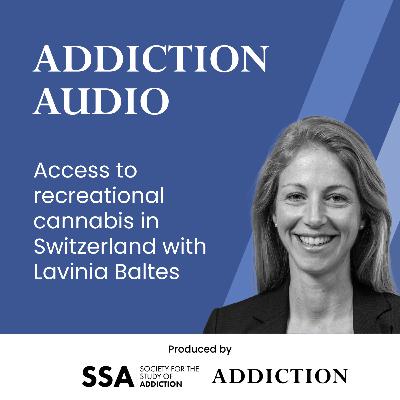
In this episode, Dr Tsen Vei Lim talks to Dr Lavinia Baltes, Head of Research at the Clinic for Psychiatry and Psychotherapy, Psychiatric Services Aargau, Switzerland. The interview covers her research report on a randomised control trial of public health-oriented recreational cannabis access compared to illegal market access in Basel-Stadt, Switzerland. · The current legal landscape in Switzerland with respect to cannabis [01:12]· The difference between cannabis obtained legally and illegally [02:30]· The potential benefits of legal cannabis compared to illegal cannabis [03:25]· The key findings of the study [04:20]· Speculations about why the people who used drugs other than cannabis were more likely to reduce their cannabis use [05:31]· The findings that surprised the author [06:52]· How the findings contribute to policy or practice [07:37]· Could access to legal cannabis increase initiation among those who have never used cannabis? [08:32]· The importance of harm reduction strategies for cannabis [10:50]· The difficulties in conducting a randomised control trial [11:35]About Tsen Vei Lim: Tsen Vei is an academic fellow supported by the Society for the Study of Addiction, currently based at the Department of Psychiatry at the University of Cambridge. His research integrates computational modelling, experimental psychology, and neuroimaging to understand the neuropsychological basis of addictive behaviours. He holds a PhD in Psychiatry from the University of Cambridge (UK) and a BSc in Psychology from the University of Bath (UK). About Lavinia Baltes: Dr Baltes studied psychology at the University of Basel, Switzerland, and completed her PhD in health psychology at the University of Basel and at the Max Planck Institute in Berlin in 2015. She then worked at the University of Mannheim and later as deputy head of the Addiction Department of the Canton Basel-Stadt, contributing significantly to the ‘Weed Care’ study on regulated cannabis sales in Basel. Since 2022, she has been Head of Research at the Clinic for Psychiatry and Psychotherapy, Psychiatric Services Aargau, and continues as deputy study head of ‘Weed Care’.The authors have no conflicts of interest to disclose. Original article: Effects of legal access versus illegal market cannabis on use and mental health: A randomized controlled trial - https://doi.org/10.1111/add.70080The opinions expressed in this podcast reflect the views of the host and interviewees and do not necessarily represent the opinions or official positions of the SSA or Addiction journal.The SSA does not endorse or guarantee the accuracy of the information in external sources or links and accepts no responsibility or liability for any consequences arising from the use of such information. Hosted on Acast. See acast.com/privacy for more information.
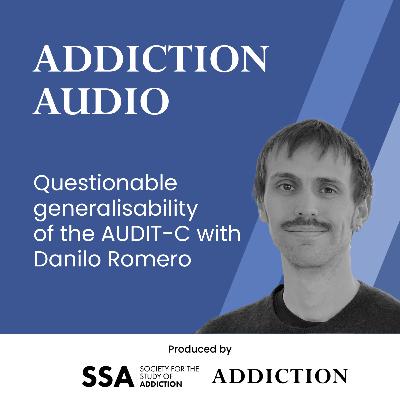
In this episode, Dr Tsen Vei Lim talks to Dr Danilo Romero, a licensed clinical psychologist at the Stockholm Centre for Dependency Disorders in Sweden. The interview covers his research report on the questionable generalisability of the Alcohol Use Disorders Identification Test – Consumption (AUDIT-C) when used as an outcome measure in clinical trials than as a primary care screening tool, highlighting the need for researchers and clinicians to reconsider their application of the AUDIT-C. · What is the AUDIT-C and why it is widely used in primary care and research? [01:13]· What made the authors question the generalisability of the AUDIT-C in clinical trials? [02:02]· The risks of using the AUDIT-C in clinical settings [03:03]· The reason for the ‘ceiling effect’ of the AUDIT-C [04:21]· How the authors tested whether the AUDIT-C is useful in measuring treatment progress [05:15]· The key findings of the study [06:06]· What ‘collider bias’ is and how it could manifest in studies that use the AUDIT-C [06:59]· What the findings mean for studies that have used AUDIT-C in the past [09:23]· How the findings contribute to policy or practice [10:30]· Whether the authors, as clinical psychologists, personally use the AUDIT-C [11:28]· Birds eye view of psychiatric screening measures [12:40]About Tsen Vei Lim: Tsen Vei is an academic fellow supported by the Society for the Study of Addiction, currently based at the Department of Psychiatry at the University of Cambridge. His research integrates computational modelling, experimental psychology, and neuroimaging to understand the neuropsychological basis of addictive behaviours. He holds a PhD in Psychiatry from the University of Cambridge (UK) and a BSc in Psychology from the University of Bath (UK). About Danilo Romero: Dr Romero, PhD, is a licensed clinical psychologist at the Stockholm Centre for Dependency Disorders in Sweden. He recently completed his doctorate at Karolinska Institutet, conducting a multimethod project to improve treatment engagement for substance use disorders after acute-care episodes. More broadly, his research covers digital psychiatry, mental health informatics, psychometrics, and novel psychological interventions for substance use disorders.The authors have no conflicts of interest to disclose. Original article: Questionable generalizability of Alcohol Use Disorders Identification Test-Consumption scoring warrants caution when used for outcome monitoring: Evidence from simulated and real-world trial data - https://doi.org/10.1111/add.70074The opinions expressed in this podcast reflect the views of the host and interviewees and do not necessarily represent the opinions or official positions of the SSA or Addiction journal.The SSA does not endorse or guarantee the accuracy of the information in external sources or links and accepts no responsibility or liability for any consequences arising from the use of such information. Hosted on Acast. See acast.com/privacy for more information.
In this episode, Dr Tsen Vei Lim talks to: Dr Marilyn Piccirillo from the Department of Psychiatry at Rutgers University-New Brunswick and Drs Katherine Walukevich-Dienst and Elizabeth Lehinger from the Department of Psychiatry and Behavioral Sciences at the University of Washington School of Medicine. The interview covers their research report on the longer-term efficacy of brief, alcohol-focused personalised feedback interventions among young adults in two universities on the West coast of the US. Note for listeners: The acronym PFI is used throughout this episode, which stands for ‘personalised feedback intervention’.· What is an alcohol-focused personalised feedback intervention? [01:48]· An example of how one of these interventions would work in practice [03:03]· The importance of considering distress [03:46]· The key findings of the study [07:24]· Why ‘less is more’ when it comes to alcohol interventions [12:19]· How the findings contribute to policy or practice [14:46]· The pioneers of personalised feedback interventions [17:41]About Marilyn Piccirillo: Dr Piccirillo is a licensed psychologist and an Assistant Professor in the Department of Psychiatry at Rutgers University-New Brunswick. She is also a Core Faculty member of the Rutgers Brain Health Institute and a member of the Rutgers Addiction Research Center. Dr Piccirillo uses person-centered frameworks to study motivating and maintenance factors for substance use problems, particularly for those experiencing co-occurring anxiety, trauma, and stress. She also examines how digital tools can be used to support treatment and recovery and optimise the design and delivery of treatments for substance use problems and addiction. About Katherine Walukevich-Dienst: Dr Walukevich-Dienst is a clinical psychologist and Assistant Professor in the Department of Psychiatry and Behavioral Sciences at the University of Washington. Her research focuses on developing and testing digital interventions to reduce substance use and improve mental health among young adults. She uses methods such as ecological momentary assessment to examine real-time behavior and intervention engagement. Dr Walukevich-Dienst has authored over 50 peer-reviewed publications and leads National Institutes of Health (NIH)-funded projects aimed at improving outcomes for cannabis and alcohol use through scalable, evidence-based approaches. About Elizabeth Lehinger: Dr Lehinger is an Acting Assistant Professor in the Department of Psychiatry and Behavioral Sciences at the University of Washington School of Medicine. She has two primary areas of research: 1) college student alcohol prevention, and 2) trauma recovery for individuals with co-occurring substance use disorders. Her research focuses on reward processes underlying these research areas. The authors have no conflicts of interest to disclose. Original article: Examining the longer-term efficacy of brief, alcohol-focused personalized feedback interventions for individuals with internalizing distress: Secondary analysis of a randomized controlled trial. https://doi.org/10.1111/add.70044 The opinions expressed in this podcast reflect the views of the host and interviewees and do not necessarily represent the opinions or official positions of the SSA or Addiction journal. The SSA does not endorse or guarantee the accuracy of the information in external sources or links and accepts no responsibility or liability for any consequences arising from the use of such information. Hosted on Acast. See acast.com/privacy for more information.
In this episode, Dr Tsen Vei Lim speaks to Dr Emma Beard, a lecturer in statistics and quantitative methods at University College London. The interview covers Emma’s research report titled, ‘How much does the absence of the ‘hidden population’ from United Kingdom household surveys underestimate smoking prevalence?’· How we normally estimate the smoking prevalence reported in official statistics [01:28]· Why it is important to consider the hidden population [01:55]· The consequences of not taking into account the hidden population when estimating smoking prevalence [02:35]· The ‘workbook method’: how we estimate the hidden population [02:55]· The key findings and implications of these findings [03:30]· The size of the hidden population in the UK [04:42]· The huge undertaking of this research project to find these data [05:25]· The consideration of adolescent populations within smoking prevalence statistics [06:44]· What can be done within research to be more inclusive of hidden populations [07:52]· How Emma’s research can contribute to policy and practice [08:44]· The argument for more and better data to include hidden populations [10:00]In Emma’s paper, the hidden population for household surveys was defined as people from or living in communal establishments (e.g. care homes, student residence, prison), immigration detention centres, Gypsy, Roma and Travelling Communities, short-term accommodation, and those experiencing homelessness, including sofa surfing. About Emma Beard: Dr Beard is a Lecturer in Statistics and Quantitative Methods at University College London. She has over 130 publications on a variety of topics, with a key focus on tobacco harm reduction, high-risk alcohol consumption, and statistical methodology. Her research focuses on evaluating smoking cessation interventions and policies. She is a Deputy Methodological and Statistical Editor for the journal Addiction.About Tsen Vei Lim: Dr Tsen Vei Lim is an academic fellow supported by the Society for the Study of Addiction, currently based at the Department of Psychiatry at the University of Cambridge. His research integrates computational modelling, experimental psychology, and neuroimaging to understand the neuropsychological basis of addictive behaviours. He holds a PhD in Psychiatry from the University of Cambridge (UK) and a BSc in Psychology from the University of Bath (UK).Original editorial: How much does the absence of the ‘hidden population’ from United Kingdom household surveys underestimate smoking prevalence? https://doi.org/10.1111/add.70071 The opinions expressed in this podcast reflect the views of the host and interviewees and do not necessarily represent the opinions or official positions of the SSA or Addiction journal.The SSA does not endorse or guarantee the accuracy of the information in external sources or links and accepts no responsibility or liability for any consequences arising from the use of such information. Hosted on Acast. See acast.com/privacy for more information.
In this episode, Dr Elle Wadsworth speaks to Professor Joanne Neale from the Addictions Department at King’s College London and Professor Brian Kelly from the Department of Sociology at Indiana University. The interview covers their editorial titled, ‘Over a decade later and Addiction journal is still committed to publishing qualitative research’. · The origins of the editorial and why it is needed [01:01]· The goal of the changes Addiction is implementing for qualitative submissions [01:44]· The importance of increasing the word limit to 6,000 words [02:49]· Whether similar journals in the addiction field struggle with low numbers of qualitative submissions [04:19]· The increase in qualitative editors at the Addiction journal since 2013 [05:52]· Finding consensus among a diversity of disciplines on the editorial board [07:21]· Semi-quantification over quantification in qualitative research [08:30]· What the authors hope to achieve with this editorial [09:36]· The take-home messages for qualitative researchers [11:04]About Professor Joanne Neale: Jo is Professor of Addictions Qualitative Research based within the National Addiction Centre at the Institute of Psychiatry, Psychology and Neuroscience, King’s College London, UK. She is also Conjoint Professor in the Centre for Social Research in Health at UNSW Sydney, Australia. Joanne trained in social work and is the Patient and Public Involvement and Engagement Lead for the UK NIHR Addictions Policy Research Unit. Her current research focuses largely on patient perceptions of treatments and interventions for alcohol and other drug use. In the last three years, Joanne Neale has received, through her university, research funding from Mundipharma Research Ltd and Camurus AB and honoraria from Camurus AB and Indivior for presentations.About Professor Brian Kelly: Brian is a Professor of Sociology at Indiana University and also Senior Research Program Leader at the Irsay Institute. His research examines social contextual influences on health, mainly focusing on substance use. His current research projects include the influence of policy contexts on youth substance use trajectories, sibling socialisation processes of adolescent substance use, and the impact of disasters on community drug-related outcomes.Original editorial: Over a decade later and Addiction journal is still committed to publishing qualitative research https://doi.org/10.1111/add.70047 Qualitative guidelines for Addiction: (1) https://doi.org/10.1111/add.12408 and (2) https://doi.org/10.1111/add.12857The opinions expressed in this podcast reflect the views of the host and interviewees and do not necessarily represent the opinions or official positions of the SSA or Addiction journal.The SSA does not endorse or guarantee the accuracy of the information in external sources or links and accepts no responsibility or liability for any consequences arising from the use of such information. Hosted on Acast. See acast.com/privacy for more information.

Comments

Download from Google Play

Download from App Store
 United States