


 Claim Ownership
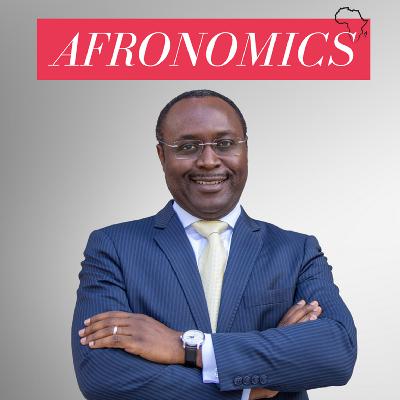
Afronomics
Subscribed: 35Played: 191
Subscribe

© Copyright 2025 World Bank Group
Description
This occasional podcast series brings together development experts, academics and thought leaders, as well as public and private sector partners, to discuss trends that are impacting growth and development in Africa. Afronomics was started in 2017 and is now hosted by Andrew Dabalen, the World Bank Chief Economist for Africa. The series spans a wide range of topics from health and education to jobs, infrastructure, debt, and economic challenges and opportunities in Africa.
25 Episodes
Reverse

Mission 300 is working to connect 300 million people in sub-Saharan Africa to electricity by 2030, focusing on both access and reliability. In this episode, Andrew Dabalen, the World Bank’s Chief Economist for Africa, talks with Regional Practice Directors Franz Drees-Gross and Erik Fernstrom to share fresh insights into Mission 300, the flagship initiative to connect 300 million people in Africa to electricity by 2030. Covering sector reforms, financial challenges, and how energy access supports economic growth, job creation, and opportunity for both households and businesses, this episode illuminates why Mission 300 is critical to Africa's future.
In this episode of Afronomics, host Andrew Dabalen speaks with Dr. Ken Opalo, a leading scholar on African political economy and governance. Opalo, an associate professor at Georgetown University and author of Legislative Development in Africa. Dr. Opalo shares sharp insights on the rise of public protests, the limits of electoral democracy, and the urgent need for African governments to rebuild trust through better service delivery and inclusive growth. The conversation explores bold ideas for reform, including stronger political institutions, elite consensus, and homegrown development strategies. For more on the topic of service delivery in Africa, you can turn to our recent report: CPIA Africa: Better Policies for Service Delivery.
In this episode, Andrew Dabalen, the World Bank’s Chief Economist for Africa, engages in a riveting debate on the current strategy for electrification in Africa with Moussa P. Blimpo, Assistant Professor of Economic Inequality and Societies at the University of Toronto’s Munk School of Global Affairs & Public Policy and co-author of the report “Electricity Access in Sub-Saharan Africa: Uptake, Reliability, and Complementary Factors for Economic Impact” in the Africa Development Forum series, a joint book series by the World Bank and Agence française de développement (AFD). So, which should come first: household electrification, including for hard-to-reach rural families, or electricity for businesses that create jobs? The answer may have far-reaching implications.
Report authors Estelle Koussoube, Senior Economist at the World Bank, and Kehinde Ajayi, Senior Fellow at the Center for Global Development (CGD), make the case for investing in adolescent girls’ economic success to transform Africa. The full report, published in 2024, can be accessed here: Pathways to Prosperity for Adolescent Girls in Africa.
Today we are tackling an issue that is on the minds of every African policy maker, and one that has captured international discussions for several years: African Debt. Debt can be an incredibly useful tool for governments when managed transparently and correctly, and when it is used to fund investments that pay off in the long term. It can fill important funding gaps that development assistance and domestic resource mobilization cannot. But several countries have found themselves in a vicious cycle of debt, effectively mortgaging their people’s futures by agreeing to riskier and less transparent terms that hold their fiscal space hostage. Civil society groups in many places have rightly become increasingly vocal in opposition to borrowing for large projects, advocating for more prudent spending and greater transparency. Host Albert Zeufack, Chief Economist for Africa at the World Bank, discusses this and more with Carmen Reinhart, the World Bank Group’s Chief Economist and an expert on global debt.
Economic growth in Sub-Saharan Africa is estimated to have contracted by 2.0% in 2020, closer to the lower bound of the forecast in April 2020, and prospects for recovery are strengthening amid actions to contain new waves of the pandemic and speed up vaccine rollouts, according to the World Bank’s biannual economic analysis for the region.
As we close out 2020 and look into 2021, one thing is abundantly clear: the world has changed. There is much to be concerned about against the backdrop of COVID-19, but so much to be proud of and hopeful for across Africa. This episode of Afronomics looks back over the last five decades of crises, successes, and development in Africa to see what lessons can be applied now, as the economic recovery gets underway across Africa. Host Albert Zeufack, Chief Economist for Africa at the World Bank, discusses this and more with Dr. K.Y. Amoako, Founder and President of the African Center for Economic Transformation and former Executive Secretary of the Economic Commission for Africa. Dr. Amoako started his career in 1974 at the World Bank and has dedicated his life to solving the development challenges of the world’s poorest countries, especially those in Africa. He has recently published the book, Know the Beginning Well: An Inside Journey Through Five Decades of African Development.
The COVID19 pandemic is taking hold in Africa, and countries are dealing with the health and economic impacts that are becoming clearer as the weeks go by. For many export-led economies, there has been a sharp decline in exports and consequently export revenues. The economic effects of the pandemic are projected to be huge. The private sector, especially small businesses, in Africa will be hard hit by this pandemic. Host Albert Zeufack, Chief Economist for the Africa Region at the World Bank, invites Dr. Arkebe Oqubay, the Senior Minister and Special Advisor to the Prime Minister of the Federal Republic of Ethiopia, to help us understand the impact of this pandemic on the private sector in Africa, and share what Ethiopia is doing to protect people, support businesses, and save jobs.
Timely and relevant knowledge and information sharing can help individuals change behavior, can inform countries’ responses, and can help prevent missteps from being repeated across the world. For African countries that has meant taking what we know from East Asian and European countries that faced COVID-19 a bit earlier and helping figure out what may, or may not, work in places where informality is high, or where lockdowns are not feasible. Host Albert Zeufack, Chief Economist for the Africa Region at the World Bank, is honored to welcome Mari Pangestu to Afronomics. Mari Pangestu is the Managing Director for Development Policy and Partnerships at the World Bank and oversees the World Bank’s knowledge work.
The COVID-19 pandemic is having severe public health, economic and social impacts around the world, and Dr. John Nkengasong, Director of Africa Centres for Disease Control and Prevention (CDC) has called this public health emergency a “looming disaster” for the African continent. The Africa CDC has been at the forefront of limiting the health impact of the pandemic, coordinating efforts of member states, sourcing medical equipment globally and locally for countries on the continent, and providing guidelines on how countries can implement social distancing measures among other efforts. Delivering this mandate within the varying contexts of African countries is not without its challenges. Host Albert Zeufack, Chief Economist for the Africa Region at the World Bank, invites Dr. Nkengasong to tell us about the measures they are taking to fight the pandemic under these circumstances.
The COVID-19 pandemic is only just beginning to take hold in Sub-Saharan Africa, but it is already having a huge impact. The World Bank’s recent Africa’s Pulse report found that COVID-19 is likely to drive Sub-Saharan Africa into its first recession in 25 years, with growth potentially falling as low as negative 5.1% in 2020. The crisis is likely to push millions of households into poverty. Food security is at risk because of trade disruptions, lower agricultural production and fewer food imports. And with 90 percent of people working in informal jobs, it is harder to reach workers with the support they need. African countries need resources today to help contain and combat this pandemic, and to safeguard lives and livelihoods. The big question is: what can be done? Host Albert Zeufack, Chief Economist for the Africa Region at the World Bank, invites Acha Leke, the Chairman of McKinsey’s Africa Region, to discuss what individuals, governments, and companies can do to help African countries and African people pull through.
Ten years ago, the world was fighting its way out of a global financial crisis, but prospects were strong for Sub-Saharan Africa to quickly recover. The World Bank started publishing Africa’s Pulse at that time, as a vehicle to help us track these trends and put the economic and development outlook squarely on the agenda for our discussions with African leaders and our partners.Over the last decade, we have been riding the wave of the “Africa Rising” narrative through the economic ups and downs in the region, including a regional crisis that stopped progress in its tracks in the middle of the decade, from which many countries are still recovering. We published the 20th edition of Africa’s Pulse in October, and as we close the decade, host Albert Zeufack, Chief Economist for the Africa Region at the World Bank, invites colleagues Shanta Devarajan, Punam Chuhan-Pole, and Cesar Calderon, who have led this important work over the last ten years.
Despite the incredible progress that so many African countries have made, poverty remains a defining part of the narrative around Africa. While the share of people living in extreme poverty has come down in the last decades, the number of people has gone up, due to rapid population growth during the same period, to reach nearly 416 million people. If left unchecked, extreme poverty in the world will become almost exclusively an African issue by 2030, in just ten years. In this episode of Afronomics, Albert Zeufack welcomes Kathleen Beegle and Luc Christiaensen, the main authors of a new World Bank study on Accelerating Poverty Reduction in Africa, to discuss what needs to be done differently to fight poverty in Sub-Saharan Africa.For more information, access the full study here: openknowledge.worldbank.org/handle/10986/32354
The 2019 World Development Report focused on the Future of Work on a global scale, highlighting the real tension between job losses in “old” manufacturing sectors that are susceptible to automation, and potential job gains driven by innovation in “new” sectors. Our Africa-focused companion report, released in July 2019, finds that Africa has a chance to take a different path – if governments and businesses can take advantage of digital technologies, and if the right policies and investments are in place.Part two of this two-part podcast examines the role of social protection in helping workers, especially the most vulnerable, transition into the jobs and technologies of the future. Host Albert Zeufack welcomes Zainab Usman, Social Scientist in the Office of the Chief Economist for Africa at the World Bank, and co-author of the World Bank’s recent Future of Work in Africa report.
The 2019 World Development Report focused on the Future of Work on a global scale, highlighting the real tension between job losses in “old” manufacturing sectors that are susceptible to automation, and potential job gains driven by innovation in “new” sectors. Our Africa-focused companion report, released in July 2019, finds that Africa has a chance to take a different path – if governments and businesses can take advantage of digital technologies, and if the right policies and investments are in place.Part one of this two-part podcast looks at what’s different about the future of work in Africa compared to the rest of the world, and digs in to the potential of digital technologies to improve livelihoods and create jobs for all kinds of workers. Host Albert Zeufack welcomes Mark Dutz, Lead Economist in the Office of the Chief Economist for Africa at the World Bank, and co-author of the World Bank’s recent Future of Work in Africa report.
Discussions on Sub-Saharan Africa often center on extreme poverty: the subcontinent is home to half of the world’s extreme poor, and the number of people living in extreme poverty in Sub-Saharan Africa keeps going up even though the rates of extreme poverty have declined. At the same time, on a continent as economically diverse as Sub-Saharan Africa, the issue of inequality cannot be ignored. Eight of the ten most unequal countries in the world, when looking at the Gini coefficient, are in Sub-Saharan Africa, and gaps persist when digging deeper into wage inequality, inequality of opportunity, and other areas where the playing field is far from level. There are no easy answers to reducing inequality, but several countries have taken positive steps to make their societies and economies more equitable.In this episode of Afronomics, Albert welcomes Haroon Bhorat, Professor of Economics and Director of the Development Policy Research Unit at the University of Cape Town in South Africa, and a Non-resident Senior Fellow at the Brookings Institution in the Global Economy and Development Program and the Africa Growth Initiative. His research focuses on labor economics, poverty, and income distribution, and this episode of Afronomics takes a closer look at his recent work on wage inequality in South Africa as part of the broader discussion on inequality in Africa.
Sub-Saharan Africa is the only region where the share of adults with a mobile money account now exceeds 10 percent. That mobile revolution began in Kenya. In this episode of Afronomics, World Bank Chief Economist for Africa, Albert Zeufack, speaks with Professor Njuguna Ndung’u who is currently the Executive Director of the African Economic Research Consortium and was the Governor of the Central Bank of Kenya from 2007 to 2015.During Prof. Ndung’u’s tenure as Central Bank governor, Kenya stepped up as a global leader in financial inclusion. This was driven by the path-breaking M-Pesa program, which made mobile payments and mobile banking the norm for Kenyans everywhere.
In 2017, nearly third of the 38 African countries that receive the IDA concessional window, strengthened their policy and institutional quality compared to 2016.This is one of the findings of the World Bank’s Country Policy and Institutional Assessment. The CPIA, as it is called, is an annual assessment by the World Bank of the quality and institutional framework of African countries and their ability to support sustainable growth and poverty reduction. CPIA scores are composed of development indicators in four areas: economic management; structural policies; social inclusion and equity and public-sector management and institutions.Scores are used to determine the allocation of zero finance grants from IDA, so a better score indicator has an implication for more funding under better terms the countries can use for development.In this Afronomics, Chief Economist of the World Bank’s Africa Region, Albert Zeufack, speaks with report author, Punam Chuhan-Pole about policy improvements; policy declines and the African countries that are global examples of effective policy reform that enables positive growth and development.
Today, there are about 120 million people living along the coast of West Africa who are threatened by coastal erosion and flooding on a daily basis. Large areas of coast line have disappeared, and with them houses, factories and roads. The economic losses are staggering. About 42% of West Africa’s GDP is generated along these same coastal areas. Preserving and protecting these fragile habitats makes dollars… and sense.To learn more, please visit: www.worldbank.org/waca
Part Two of our discussion on Africa’s Pulse focusses on how African countries can improve access to electricity to accelerate progress in development outcomes, jobs and prosperity. We’re speaking with special topic author, Mike Toman, and a member of the core team of economists who crafted the report, Moussa Blimpo.
Technical innovations, especially in solar power, provide the possibility for faster progress in electricity provision by complementing grid expansion with mini-grids and home-scale systems. However, in sorting through various possibilities for accelerated electrification, it is important to keep in mind that national electrification strategies generally seek to address several development objectives. These include facilitating accelerated income growth and job creation, and improving lives and livelihoods in more remote areas, as well as limiting environmental and health damages from providing electricity.
On the one hand, to accomplish this range of objectives, given the changes in generation technology and the expectation of rapid future growth in electricity demand, the evolution of electricity systems in Sub-Saharan Africa will need to involve more than one national grid. The path to universal electrification also will incorporate interconnected or stand-alone “mini-grids” and “micro-grids” serving small concentrations of electricity users, and off-grid home-scale systems. On the other hand, as rural populations continue to migrate to rapidly growing urban areas in Sub-Saharan Africa, economies of scale and density will lower the costs of grid-supplied power in urban and peri-urban areas.

Comments

Download from Google Play

Download from App Store
 United States