


 Claim Ownership
Alan Turing
Subscribed: 1Played: 0
Subscribe

© Copyright Podra Network
Description
The father of the computer age — the brilliant mind, the codebreaking and the tragic life of Alan Turing.
13 Episodes
Reverse
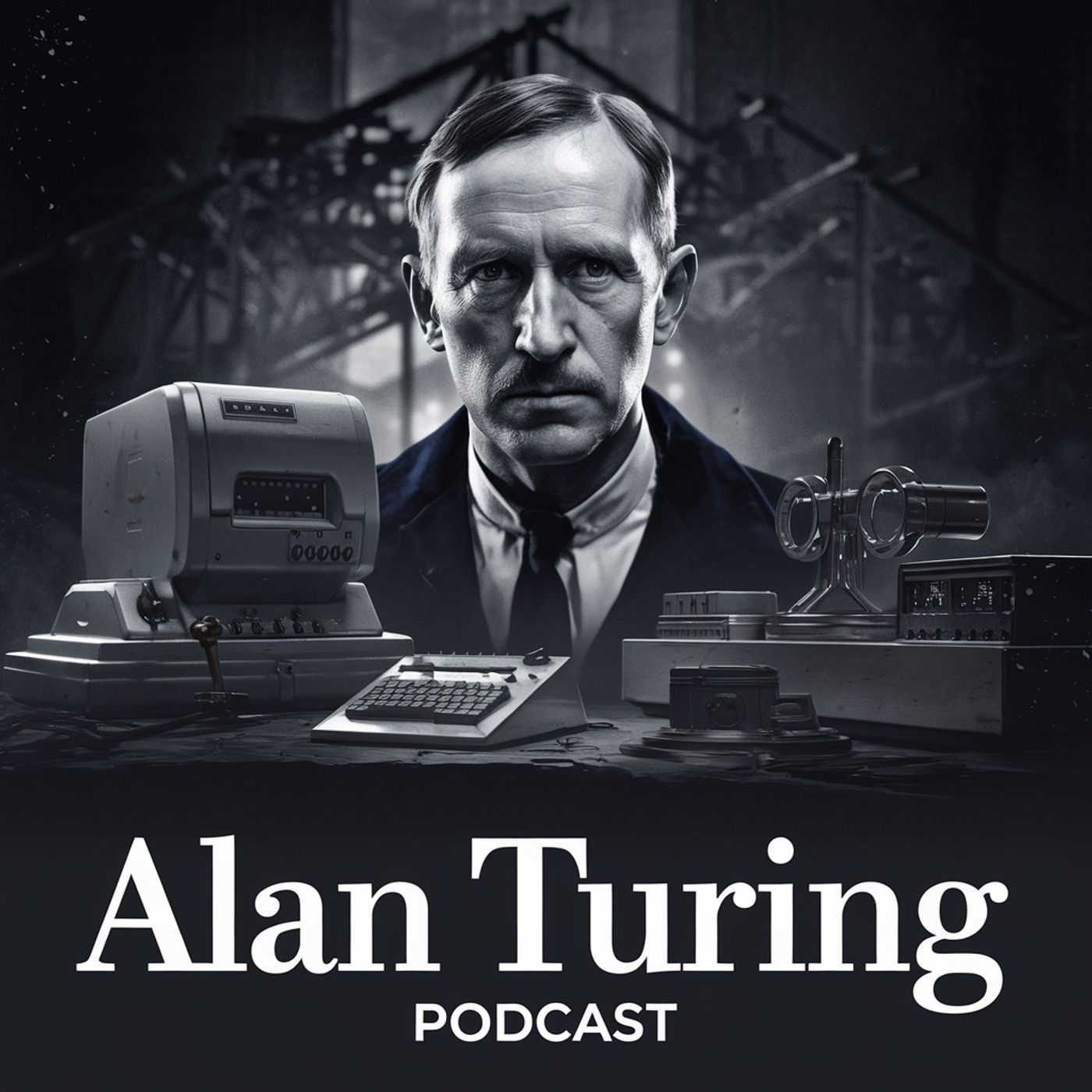
In this compelling episode of Alan Turing, Dr Sarah Quinn explores how Alan Turing's revolutionary ideas from the 1940s and 1950s continue to shape our digital world today. From the Turing Test to modern AI assistants, discover how Turing's theoretical work laid the foundation for facial recognition, recommendation algorithms, GPS navigation, and secure online communications. Learn about Turing's prescient insights into machine intelligence, his groundbreaking work at Bletchley Park during World War II, and how his philosophical questions about thinking machines remain remarkably relevant to contemporary AI ethics discussions. Dr Quinn examines Turing's influence on pattern recognition, computational problem-solving, and natural language processing, connecting his wartime codebreaking achievements to today's fraud detection systems and medical diagnosis tools. This episode reveals how Turing anticipated not just the technical capabilities of artificial intelligence, but also the social and philosophical challenges we face as AI becomes increasingly sophisticated. Perfect for technology enthusiasts, computer science students, and anyone curious about the historical roots of our connected world. Discover why Turing's legacy extends far beyond computing into fundamental questions about intelligence, consciousness, and the future of human-machine interaction in our digital age.
In this episode of Alan Turing, Dr Sarah Quinn explores the posthumous recognition of one of Britain's greatest scientific minds. Following his 1952 conviction under anti-gay legislation and death in 1954, Alan Turing's reputation underwent a remarkable transformation. We examine the campaign that led to his 2013 royal pardon and the subsequent 2017 Turing Law that extended pardons to thousands of other men convicted under similar discriminatory legislation. The episode traces the journey from Turing's disgrace to his current status as a celebrated national hero, featured on the £50 note and honored through institutions worldwide. We discuss the broader implications of these posthumous pardons and what they represent in terms of societal progress and acknowledgment of historical injustices. Through careful analysis of this complex topic, we explore how Turing's story became a catalyst for broader recognition of past wrongs and the ongoing fight for equality. The episode examines the significance of the decriminalization of homosexuality in 1967, the petition campaigns of the 2000s, and the legislative changes that followed. Join Dr Quinn as she unpacks this important chapter in both Turing's legacy and Britain's social history, demonstrating how scientific genius and human rights advocacy became intertwined in the story of Alan Turing's rehabilitation.
In this deeply moving episode of Alan Turing, Dr Sarah Quinn explores the tragic final years and death of one of history's greatest minds. We examine how Alan Turing's 1952 prosecution for homosexuality led to his chemical castration treatment and ultimate death in 1954 at just 41 years old. Despite facing persecution that would end his government security clearance and severely impact his health, Turing continued his groundbreaking research in morphogenesis and artificial intelligence until his death from cyanide poisoning. This episode provides historical context about 1950s Britain's laws against homosexuality, the devastating effects of Turing's court-ordered hormone treatment, and how his personal tragedy reflected broader societal prejudices. We also discuss Turing's lasting legacy, including his posthumous royal pardon in 2013 and continued influence on computer science and AI development. Dr Quinn presents a balanced examination of the circumstances surrounding Turing's death while celebrating his extraordinary contributions to mathematics, codebreaking, and computing. Perfect for listeners interested in history of science, LGBTQ+ history, World War 2 codebreaking, computer science pioneers, and stories of triumph over adversity. Keywords: Alan Turing, computer science history, Enigma code, artificial intelligence, LGBTQ history, 1950s Britain, scientific biography, persecution, legacy.
This episode of Alan Turing explores the darkest chapter in the mathematician's life - his 1952 prosecution for homosexuality and subsequent chemical treatment. Dr Sarah Quinn examines how a routine burglary report led to Turing's trial under Britain's harsh laws criminalising homosexual relationships. The episode details his choice between imprisonment and hormonal treatment, the devastating effects of synthetic oestrogen injections, and the broader context of systematic persecution faced by thousands under discriminatory legislation. Despite losing his security clearance and enduring physical and psychological trauma, Turing continued groundbreaking work in mathematical biology and artificial intelligence. The episode contextualises his personal tragedy within the wider social attitudes of 1950s Britain, exploring themes of justice, persecution, and intolerance. We examine how Turing's immense wartime contributions - still classified and unknown to the public - contrasted starkly with his treatment by the legal system. The programme also covers the long path to official recognition, including Gordon Brown's 2009 apology and the 2013 royal pardon. This sensitive exploration reveals how societies can fail their most brilliant citizens and highlights Turing's enduring legacy as both scientific genius and symbol of the fight for equality and human dignity.
In this deeply personal episode, Dr Sarah Quinn explores the hidden struggles of Alan Turing's private life in mid-20th century Britain. While celebrated today as the father of computer science and a World War Two hero, Turing lived under the constant threat of persecution due to his homosexuality, which was criminalized in Britain until 1967. This episode examines how Turing navigated love, relationships, and identity while contributing to some of the most classified work of his era. From his first love Christopher Morcom at Sherborne School to his tragic prosecution in 1952, we trace the profound impact of institutional prejudice on one of history's greatest minds. The discussion covers Turing's early romantic relationships, the culture of secrecy that defined gay life in his era, the contradiction between his vital war work and his criminalized identity, and the devastating consequences of his 1952 trial for gross indecency. Dr Quinn also addresses Turing's final years under chemical castration, his death in 1954, and his posthumous recognition as a symbol of injustice. This episode provides essential context for understanding how personal struggles shaped scientific genius and highlights the human cost of institutional discrimination. Keywords: Alan Turing biography, LGBTQ history, World War Two codebreaking, computer science history, British legal history, Christopher Morcom, Bletchley Park, Enigma code, gay rights history.

Comments

Download from Google Play

Download from App Store
 United States