


 Claim Ownership
All Things Policy
Subscribed: 1,086Played: 91,676
Subscribe

© Takshashila Institution
Description
Ever wondered how automation will change the world? Maybe you puzzle over what India could do to ease traffic congestion, or how China's aircraft carriers will transform Indian Ocean geopolitics? All Things Policy, a daily podcast brought to you by the Takshashila Institution, brings you all the answers. Every weekday, our researchers break down complex economic and geopolitical ideas through the lens of current events. For everyone from the busy executive to the curious student, All Things Policy is all you'll need to understand the world (and appreciate your breakfast) better.
1765 Episodes
Reverse
In this episode of the All Things Policy podcast, Abhishek Kadiyala is in conversation with Kashish Parpiani to explore how countries are navigating the intensifying U.S.–China technology rivalry without being forced into rigid geopolitical camps. The conversation examines the shift from choosing sides to adopting adaptive tech strategies, including selective regulatory alignment, quiet non-compliance, innovation partnerships, and domestic capacity building. The episode also reflects on how the transition from the Biden to the Trump administration could shape future technology and industrial policy, and what initiatives like Pax Silica mean for global supply chains, technological resilience, and the evolving balance of power in the international tech ecosystem.Read more:Adaptive Tech Strategies and the US-China Tech Rivalry by Kashish ParpianiContinuity in Competition: US-China Tech Rivalry under Trump and Biden Kashish ParpianiIndia's Exclusion From US' Pax Silica Club Isn't A Snub by Syed Akbaruddin
Join Swati Joshi and Arindam Goswami in this episode of All Things Policy where we discuss some uncomfortable truths about India's innovation ecosystem.Here's a number that should make every Indian policymaker lose sleep: In 1993, India and China spent the exact same amount on research and development as a share of their economies - 0.6% of GDP. Fast forward to today. China is at 2.6%. India? Still stuck at 0.6%.Here's another one: Nvidia, a single company ranked 26th globally in R&D spending, invests nearly as much in research as ALL of the Indian industry combined. Today, we're asking the hard questions: Why has India's innovation system remained frozen for 80 years while our economy liberalised? What stops our profitable, world-class companies from investing in R&D? Are we measuring innovation completely wrong? And most importantly - what would bold reform actually look like?And to help us in understanding all of this data, we have the "Handbook on Technology and Innovation in India" brought out by the Centre for Technology, Innovation and Economic Research - it is a treasure trove of data that reveals some uncomfortable truths about India's innovation ecosystem.And to discuss all of this, we have today with us, Swati Joshi, who is a Senior Research Associate at CTIER. She has worked on this report, and has deep knowledge and insights about the innovation and R&D ecosystem in India.The CTIER Handbook can be found here: CTIERHandbook-2025
AI in warfare is not about robots taking over the battlefield. It is about decision advantage, geospatial intelligence, and operational readiness. In this episode, Lt Gen Karanbir Singh Brar (Retd.) explains how India is deploying AI across borders, space, and logistics -- why humans must remain in the loop, how ethics shape military AI, and what Atma Nirbharta means for the full defence AI stack. The conversation also highlights the critical role of startups and young scientists in building an India-centric approach to modern warfare.
Leah Govias speaks with Malathi Renati to examine India’s demographic transition and what it means for senior citizens. The discussion explores elder welfare laws, healthcare access, the expanding silver economy, and the erosion of traditional family support systems. Framed through the Samaaj–Sarkaar–Bazaar lens, this conversation asks a critical question: how do we ensure that longer lives also mean lives lived with dignity?

In this episode of All Things Policy, Astha Rastogi talks to forensic science researcher and trainer Devina Sikdar about what really happens at crime scenes in India—and why it matters more than most people realise. With a new national mandate demanding better forensic response, the two discuss the gaps, the urgency, and the solutions that could reshape how India investigates crime.All Things Policy is a daily podcast on public policy brought to you by the Takshashila Institution, Bengaluru.Find out more on our research and other work here: https://takshashila.org.in/research-areasCheck out our public policy courses here: https://school.takshashila.org.in
Non-communicable diseases (or NCDs) account for nearly two-thirds of the world’s total mortality and morbidity, led by ischaemic heart disease, stroke and diabetes, according to the latest Global Burden of Disease (GBD) report. Globally in 2021, 18 million people died from an NCD before age 70 years. From the period 2021-23, NCDs were responsible for about 56.7 percent of all deaths in India. To help unpack some of the economic impacts of NCDs, particularly the high out-of-pocket expenditures it incurs, Kripa Koshy (Staff Programme Manager, Takshashila) is joined by Merlyn Paul, a PGP graduate and co-founder of Samaagrith, a consulting organisation that aims to make the social impact journey easier.All Things Policy is a daily podcast on public policy brought to you by the Takshashila Institution, Bengaluru.Find out more on our research and other work here: https://takshashila.org.in/research-areasCheck out our public policy courses here: https://school.takshashila.org.in

China recently released its 2035 NDC targets and the Recommendations of the Central Committee of the Communist Party of China for Formulating the 15th Five-Year Plan. These documents are key to understanding the future direction of renewable energy deployment in China. In this episode of All Things Policy, Bhumika Sevkani, Research Analyst at the Takshashila Institution, is joined by Belinda Schäpe, China Policy Analyst at the Centre for Research on Energy and Clean Air (CREA). Drawing from China’s policy announcements, the conversation explores which clean energy technologies are likely to see accelerated deployment, while also examining the role of renewable energy trade in China’s economic development and climate diplomacy.All Things Policy is a daily podcast on public policy brought to you by the Takshashila Institution, Bengaluru.Find out more on our research and other work here: https://takshashila.org.in/research-areasCheck out our public policy courses here: https://school.takshashila.org.in

In this episode of All Things Policy, host Aishwaria Sonavane explores Balochistan, Pakistan’s largest province, where history, insurgency, and great-power politics intersect. Joined by Prashant Singh, the conversation traces Baloch grievances from the accession of Kalat to the present-day insurgency, examines the impact of CPEC and external strategic interests, and assesses how regional geopolitics and porous borders are reshaping the conflict. All Things Policy is a daily podcast on public policy brought to you by the Takshashila Institution, Bengaluru.Find out more on our research and other work here: https://takshashila.org.in/research-areasCheck out our public policy courses here: https://school.takshashila.org.in
In this episode of All Things Policy, Sowmya Prabhakar and Anisree Suresh sit down to unpack the new Labour Codes. In this conversation, they explore the new provisions, the challenges and reforms with the implementation of the new labour codes. All Things Policy is a daily podcast on public policy brought to you by the Takshashila Institution, Bengaluru.Find out more on our research and other work here: https://takshashila.org.in/research-areasCheck out our public policy courses here: https://school.takshashila.org.in
Pakistan is making a big bet on Crypto - announcing its plans to hold it as a strategic reserve and potentially make it legal tender. Shobhankita Reddy and Anupam Manur sit down to discuss what the implications of this move may be for India. They conclude that this is a net negative for Pakistan's economy and India's national security if implemented beyond mere announcements and experiments. Read their research document in full here. All Things Policy is a daily podcast on public policy brought to you by the Takshashila Institution, Bengaluru.Find out more on our research and other work here: https://takshashila.org.in/research-areasCheck out our public policy courses here: https://school.takshashila.org.in

India has had a chaotic two-week telecom cybersecurity sprint with DoT's now-retracted Sanchar Saathi app mandate, SIM binding rules forcing platforms like WhatsApp and Telegram to verify active SIMs, and telcos pushing for always-on phone geolocation tracking. In this episode of All Things Policy, Anwesha Sen and Anushka Saxena discuss regulatory overreach of such moves, privacy implications, and broader impacts on the market. But most importantly, they delve into whether such regulations would be able to solve cyber fraud, or are there better solutions to be considered.All Things Policy is a daily podcast on public policy brought to you by the Takshashila Institution, Bengaluru.Find out more on our research and other work here: https://takshashila.org.in/research-areasCheck out our public policy courses here: https://school.takshashila.org.in
Accountability strengthens governance. Citizen feedback helps build accountability mechanisms. In this episode of All Things Policy, Sarthak Pradhan talks to A Krishna Prasanth, who explains how CIVIC's (Citizens' Voluntary Initiative for the City) annual citizen report cards serve as a tool to build data-driven political accountability. They also discuss the report card's findings on the performance of the Karnataka government.All Things Policy is a daily podcast on public policy brought to you by the Takshashila Institution, Bengaluru.Find out more on our research and other work here: https://takshashila.org.in/research-areasCheck out our public policy courses here: https://school.takshashila.org.in
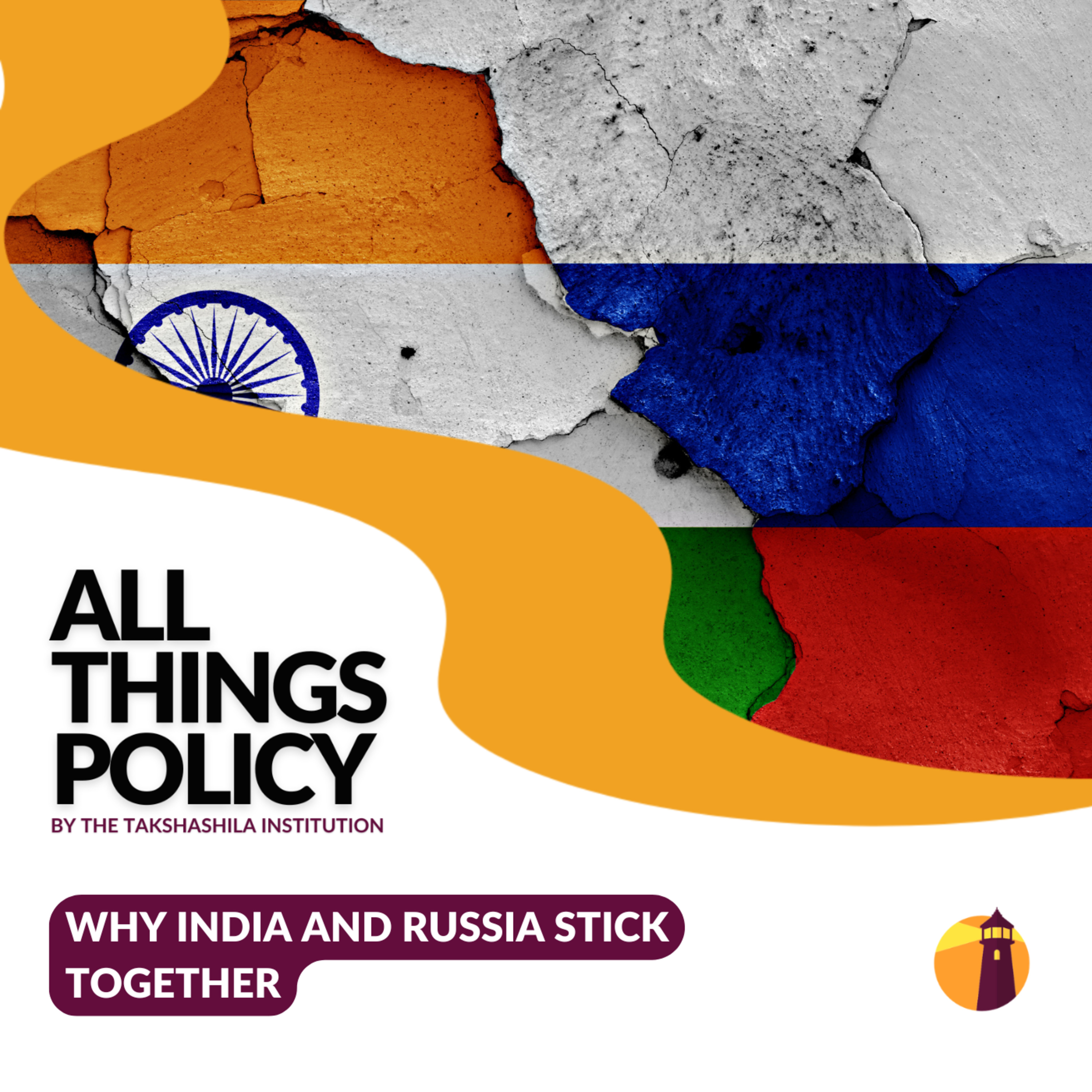
Why do India and Russia stay close despite opposing global pressure? Join Amit Kumar and Ashwin Prasad as they chat about the strategic utility of this partnership in this episode of All Things Policy. They also look ahead, asking the question: What must Moscow change to sustain this relationship amidst the complications of the war in Ukraine?Link to Amit Kumar's Op-ed on the topic. All Things Policy is a daily podcast on public policy brought to you by the Takshashila Institution, Bengaluru.Find out more on our research and other work here: https://takshashila.org.in/research-areasCheck out our public policy courses here: https://school.takshashila.org.in
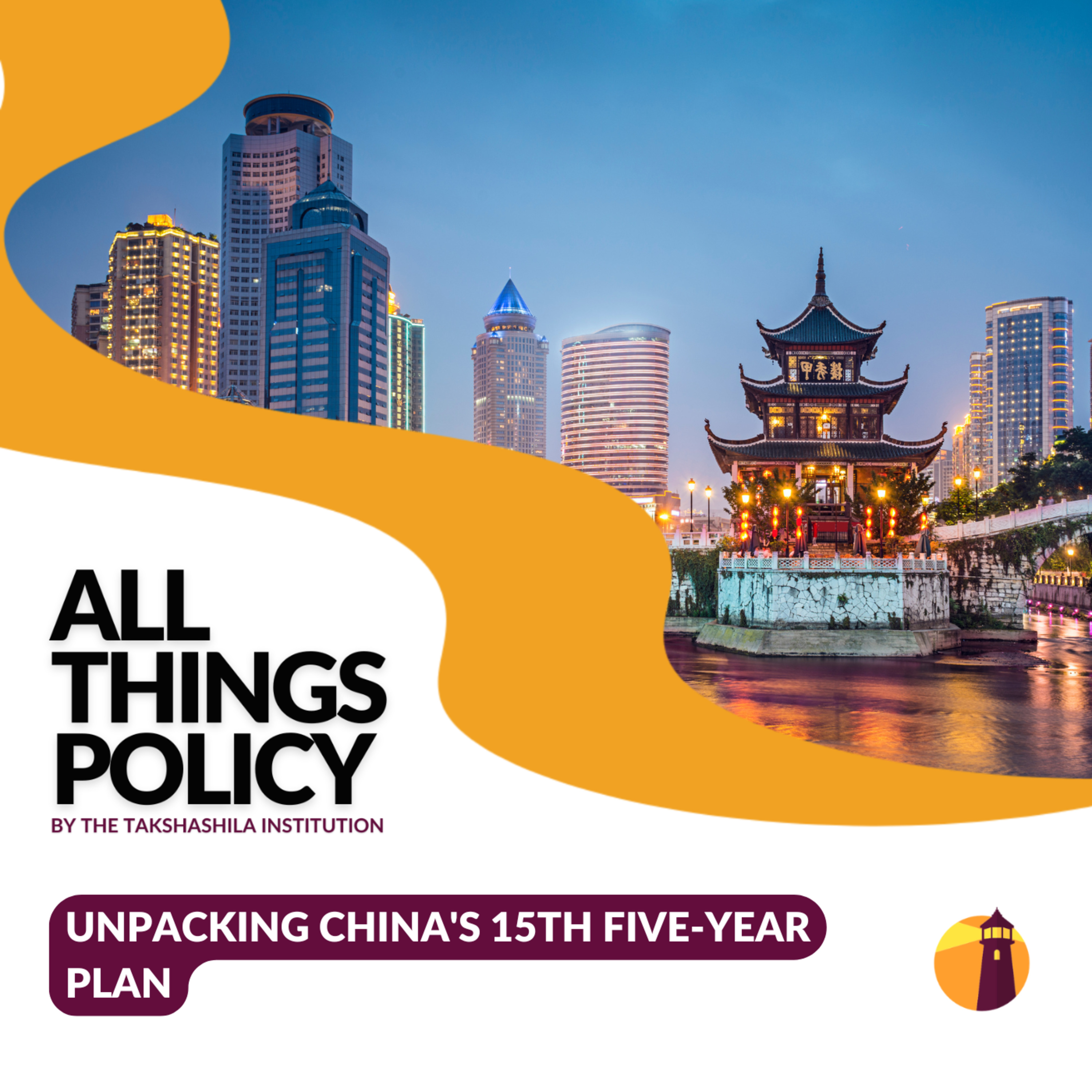
In this episode of All Things Policy, Shobhankita Reddy sits down with Amit Kumar, Staff Research Analyst with Takshashila's Indo-Pacific Studies Programme, to discuss China's 15th Five-Year Plan - why it is important, its salient features, and what the document reveals about Chinese thinking on major domestic priorities and international challenges.All Things Policy is a daily podcast on public policy brought to you by the Takshashila Institution, Bengaluru.Find out more on our research and other work here: https://takshashila.org.in/research-areasCheck out our public policy courses here: https://school.takshashila.org.in
In this episode of All Things Policy, Dr. Chaitanya Sridhar & Malathi Renati dive into what it really takes to handle human–wildlife encounters with sensitivity, empathy, and real-world understanding. They chat about policies, mindful wildlife tourism, and how each of us can be responsible citizens who care for the animals and forests that are our constitutional duty to protect. A thoughtful dialogue on coexistence, governance, and the future of conservation.All Things Policy is a daily podcast on public policy brought to you by the Takshashila Institution, Bengaluru.Find out more on our research and other work here: https://takshashila.org.in/research-areasCheck out our public policy courses here: https://school.takshashila.org.in

In this episode of All Things Policy, Anisree Suresh and Bhumika Sevkani decode India’s Quality Control Orders (QCO) against the backdrop of the government’s recent decision to revoke several QCOs. They critically examine the objectives behind these regulations, unpack their unintended consequences, and discuss how QCOs are reshaping Indian industries and the country’s trade prospects.All Things Policy is a daily podcast on public policy brought to you by the Takshashila Institution, Bengaluru.Find out more on our research and other work here: https://takshashila.org.in/research-areasCheck out our public policy courses here: https://school.takshashila.org.in

The geopolitical climate has become increasingly volatile. New Delhi confronts mounting tensions with the US while managing border disputes and economic challenges from Beijing. As deglobalisation accelerates after decades of integration, India must recalibrate its strategic approach. What priorities should guide India's response?In this episode of All Things Policy, Wini Fred Gurung, Communications Manager at the Takshashila Institution, discusses this with Ambassador Shivshankar Menon, Former National Security Advisor to the Prime Minister of India.All Things Policy is a daily podcast on public policy brought to you by the Takshashila Institution, Bengaluru.Find out more on our research and other work here: https://takshashila.org.in/research-areasCheck out our public policy courses here: https://school.takshashila.org.in

As 2025 draws to a close, India finds itself in a difficult geopolitical position. The political polarisation in the US, the Russia-Ukraine war in Europe and structural issues with China are forcing India to look at plurilateral arrangements with a renewed emphasis. It is in this context that the recently announced Australia-Canada-India Technology and Innovation partnership assumes significance. To discuss the various contours of this partnership and what it means for India, Lokendra Sharma sits down with Anwesha Sen and William Pitts, a tech policy researcher and an Indo-Pacific intern with Takshashila, respectively, in this episode of All Things Policy.All Things Policy is a daily podcast on public policy brought to you by the Takshashila Institution, Bengaluru.Find out more on our research and other work here: https://takshashila.org.in/research-areasCheck out our public policy courses here: https://school.takshashila.org.in
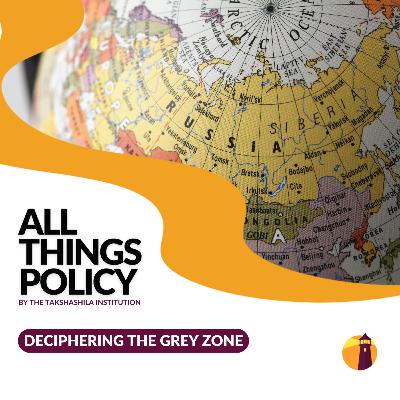
Join Colonel Vikrant Shinde and Arindam Goswami in this episode of All Things Policy, where we explore the shadowy space between peace and war - the Grey Zone. It's where nations fight without fighting, coerce without conquering, and win without anyone noticing they've lost. From Chinese border villages in the Himalayas to Pakistan's proxy networks, from cyber operations to cartographic aggression - these are the invisible battles reshaping global security. Our guest today, Colonel Vikrant Shinde, a Research Fellow at Takshashila, has mapped this murky terrain with a groundbreaking framework that helps us understand how India faces simultaneous Grey Zone campaigns on two fronts. Let's decipher the invisible war.Colonel Vikrant's paper can be read here: takshashila.org.in/content/publications/20251014-Deciphering-the-Grey-Zone.htmlAll Things Policy is a daily podcast on public policy brought to you by the Takshashila Institution, Bengaluru.Find out more on our research and other work here: https://takshashila.org.in/research-areasCheck out our public policy courses here: https://school.takshashila.org.in

Following the Gig Workers Act, Karnataka’s proposed Domestic Workers Social Security and Welfare Bill aims to extend similar protections to domestic workers. While the need for safeguards is unquestionable, can laws designed for one sector be simply transplanted to another? What makes domestic work uniquely different — and how might this bill reshape our daily lives?In this episode, Anoop Gannerkote and Kartik Singh, from our current PGP cohort, join Suman Joshi to unpack the bill’s key provisions, explore potential unintended consequences, and discuss what smarter policy could look like. Tune in for a clear-eyed public policy analysis of a sector millions rely on but rarely discuss.All Things Policy is a daily podcast on public policy brought to you by the Takshashila Institution, Bengaluru.Find out more on our research and other work here: https://takshashila.org.in/research-areasCheck out our public policy courses here: https://school.takshashila.org.in


Download from Google Play

Download from App Store
 United States
great podcasts, gives us the firsthand and expert information from the respective fields affecting the Indian Affairs. highly recommended.
A good blend of economics and philosophy.
Very Well Analysed.
hey I learnt a lot from the sinauli episode. Can u kindly do one episode on keezhadi excavation also?
ms.ahluwalia needs a better mic.
Good discussion Aniruddh and Rajat. I have read the book and wasn't sure if I should still spend the time listening to the podcast but I am glad I did. I liked the parts on historical aspects of Indian trucking, the difference that you saw between trucking in the north and the south, the structure of the industry and of course the characters and their stories. Rajat - Congratulations again on the book and looking forward to the next edition. There's a point in the discussion where you talk about book recommendations on the Battle of Kohima. I'd highly recommend reading "Road of Bones" by Fergal Keane (Aniruddh - you might disagree less with Subhash Chandra Bose after reading about the conduct of the Japanese soldiers and officers, at least before they started to run out of food)
Felt as if podcast was sponsored by Uber and Ola
It's not about the privacy issue it's about fair trade which China doesn't allow other countries app. So cut this crap of not being like another China. We shd fight it on all fronts
We all understand that these are unusual times with unusual challenges. But there is no point in coming up with a podcast episode if listeners can't listen.
RBI hinting depositors would ha have caused a run on the bank earlier.
Why two laymen are talking? I thought the idea is to have an expert. And what is Capital Adequacy again?
hello guys, can you please induct Q&A from your listen and allot 5 mins of each podcast in answering those queries. thank you Anand Sharma
Eye opening..good job
It's Kyasanoor not Kainasoor. It's a place near Jog Falls, Malnad region.
very comprehensive conversation :)
Interesting, Impressive and Inspiring 👍👍👍
great podcast! I didn't know about the green revolution causing air pollution
I am glad you mentioned the temporality of the process in the discussion. good discussion. thank you
certainly one of the best podcasts I have listed to
Very nerdy, very informative and very cool. One of the best professional podcasts from the Indian policy world - I'd highly recommend!