


 Claim Ownership
Alt Investing Made Easy
Subscribed: 3Played: 3
Subscribe

© AltInvestingMadeEasy LLC
Description
Join attorneys Sarah Florer and Roland Roland Wiederaenders as they navigate through the maze of market jargon and reveal the secrets of diversifying your portfolio. Whether you're a seasoned investor or taking your first step toward financial freedom, we empower you with the knowledge and insights you need to thrive in the dynamic landscape of alternative assets. Get ready to transform how you invest, inspiring a new way of thinking about your finances, and discover how to make your money work harder. Dive in with us, and let's make investing in alternative assets easy, giving you the confidence to navigate the financial landscape, one episode at a time.
64 Episodes
Reverse

#AlternativeInvestments continue to reshape how capital is built, allocated, and preserved. In this year-end recap, the hosts of #AltInvestingMadeEasy reflect on key trends in #PrivateMarketInvesting, lessons from expert guests, and the growing importance of education, access, and disciplined deal evaluation. From venture capital and #PrivateSecurities to #506c offerings and investor advocacy, this episode demystifies complex ideas and equips #AccreditedInvestors with clearer frameworks for navigating #PrivateMarkets with confidence and intention.Top TakeawaysPrivate markets are where significant wealth creation is increasingly happening:Fewer companies are going public, shifting more growth, and opportunity, into private securities.Education is the gateway to smarter alternative investing:Understanding deal structure, term sheets, and regulatory frameworks matters more than chasing returns.Access to alternative investments is expanding, but unevenly:Regulatory constraints still favor the wealthy, but momentum is building toward broader, knowledge-based access.Women-led funds and allocators are outperforming expectations:Data and real-world experience show disciplined, long-term approaches can drive consistent results.506(c) offerings are changing how private deals are marketed:Legal advertising of private securities is still relatively new and increasingly important for transparency and scale.Notable Quotes“A lot of wealth has been created in private securities markets—and access matters.”“Education is what turns curiosity into confident capital allocation.”“Women-backed venture funds are not just ethical—they’re outperforming.”“506(c) changed the rules, but we’re still learning how to use them responsibly.”“Alternative investing isn’t about hype—it’s about structure, discipline, and time.”Chapters00:00 – Welcome & Purpose of the Annual Recap01:10 – Building a Sustainable Investor Education Platform02:30 – How the Podcast Created Real-World Opportunities04:50 – Private Markets and the Democratization of Capital07:30 – Highlight Guests & Specialized Expertise10:00 – Women, Capital Allocation, and Performance Data13:10 – The Shift Away From Public Markets16:00 – Advocacy, Accredited Investors, and What Comes Next17:45 – Looking Ahead to 202619:30 – Closing ThoughtsCreditsSponsored by Real Advisers Capital, Austin, TexasIf you are interested in being a guest, please email us.Podcast Production by Red Sun Creative, Austin, TexasDisclaimers“This production is for educational purposes only and is not intended as investment or legal advice.”“The hosts of this podcast practice law with the law firm, Ferguson Braswell Fraser Kubasta PC; however, the views expressed on this podcast are solely those of the hosts and their guests, and not those of Ferguson Braswell Fraser Kubasta PC.”© 2025 AltInvestingMadeEasy.com LLC All rights reserved

#PlannedGiving isn’t just about generosity, it’s a way for #HighNetWorth investors to align #CapitalAllocation, #TaxStrategy, #WealthPlanning, and #LegacyInvesting. In this episode of #AltInvesting Made Easy, attorney and entrepreneur Barry Resnick demystifies how charitable strategies, donor-advised funds, and #EstatePlanning tools help mid-stage investors deploy wealth with intention. Through real-world stories and practical frameworks, this #InvestorEducation conversation empowers listeners to make confident, values-driven decisions that go beyond accumulation and toward impact.About Our Guest: Barry Resnick, Attorney at FBFK LawBarry Resnick has been practicing law for 50 years and has been Peer Review Rated as AV Preeminent®, the highest performance rating in Martindale-Hubbell® Peer Review Ratings™ system. He focuses primarily on business, estate, and tax planning, business transactions, and tax controversies. Barry has represented clients before judicial, administrative, and regulatory bodies at the local, state, and federal levels.Barry is a member of Society of Trust and Estate Planning Professionals (STEP) and serves as Chairman of the Board of LEInternational, a network of worldwide law firms. He is also a former board member of the Coast Community College District, which includes Orange Coast College, Goldenwest College, Coastline Community College, and Channel 50 Public Television. Additionally, he has served as a former board member of the Lundquist Institute of Biomedical Research. Barry has shared his expertise by teaching at numerous graduate school programs at Southern California universities, as well as teaching CFP programs at the University of California, Irvine, and courses for the American Institute of Certified Public Accountants.Connect with Barry Resnick: https://www.fbfk.law/team/barnet-resnick Top TakeawaysPlanned giving is a strategic capital allocation tool, not just philanthropy—helping investors reduce taxes while directing wealth with purpose.Donor-advised funds (DAFs) offer flexibility and simplicity, allowing deductions now and thoughtful distribution over time.Entrepreneurs can apply deal-making skills to charitable impact, creating outsized outcomes through smart structures and governance.Tax advantages can be substantial, including deductions of up to 60% of AGI, multi-year carryforwards, and estate tax relief.Effective legacy planning addresses family dynamics, not just balance sheets—protecting relationships, values, and long-term outcomes.Notable Quotes“Planned giving is a win-win—spiritually, morally, and financially.”“How many pairs of pants can you wear at one time?”“You can either pay the IRS—or give the money away intentionally.”“Donor-advised funds let you give now and decide later.”“Where there’s a will, there are relatives.”Chapters00:00 – Welcome to Alt Investing Made Easy02:05 – What Is Planned Giving?06:30 – Tax Benefits of Charitable Giving09:45 – Estate Planning and Giving Through Trusts11:00 – Donor-Advised Funds Explained14:10 – Starting a Charity or Foundation16:45 – Case Study: Free Wheelchair Mission19:40 – Lori Scholars and Education as Legacy22:30 – Wealth, Values, and “How Many Pairs of Pants?”28:40 – Estate Planning Realities & Family Dynamics33:20 – Final Advice for InvestorsKeyword-Optimized Tagsplanned giving, planned giving strategies, charitable giving strategies, estate planning for investors, tax efficient investing, donor advised funds, investor tax strategies, legacy planning, wealth transfer strategies, charitable trusts, alternative investing, high net worth investing, Alt Investing Made Easy, alternative investments podcast, investor education, wealth planning podcast, financial literacyCreditsSponsored by Real Advisers Capital, Austin, TexasIf you are interested in being a guest, please email us.Podcast Production by Red Sun Creative, Austin, Texas: https://redsuncreative.studioDisclaimers“This production is for educational purposes only and is not intended as investment or legal advice.”“The hosts of this podcast practice law with the law firm, Ferguson Braswell Fraser Kubasta PC; however, the views expressed on this podcast are solely those of the hosts and their guests, and not those of Ferguson Braswell Fraser Kubasta PC.”© 2025 AltInvestingMadeEasy.com LLC All rights reserved
Sports is no longer just entertainment; it’s an economic engine. In this episode, we explore how NIL deals, athlete branding, and “Athlete Family Offices” are reshaping wealth creation in the sports world. Elizabeth Quanaim of Robin Glenn joins us to explain the financial realities behind the headlines, from seven-figure college deals to managing short, high-earning careers. If you’re a mid-stage investor seeking differentiated insight into alternative investing strategies and emerging asset ecosystems, this episode offers a practical perspective into how the business of sports now intersects with serious wealth planning. This is not about betting on games; it’s about investing in the business of sports.About Our Guest: Elizabeth Quanaim, Partner at Robin Glen Elizabeth Quanaim is a Partner at Robin Glen, where she specializes in tailored life insurance solutions that safeguard businesses, families, and legacies across generations. With a background in psychology and clinical social work from the University of Texas and experience as a collegiate volleyball player and coach, she brings both strategic insight and a collaborative spirit to her work. Elizabeth partners with entrepreneurs, attorneys, and advisors to design innovative strategies for succession planning, executive benefits, and charitable giving. Her approach blends technical expertise with a passion for helping clients build enduring wealth and security.Connect with Elizabeth Quanaim on LinkedIn: https://www.linkedin.com/in/elizabeth-quanaim/ Top TakeawaysNIL has created a new capital ecosystemCollege and even high-school athletes now earn meaningful income—unlocking new financial planning and investment spillover opportunities.Athlete wealth is fragile, fast, and finiteInjury risk, short careers, and sudden income spikes demand specialized strategies—and create demand for niche advisory services.Sports investing is not betting—it’s businessThe real opportunity lies in branding, advising, financial products, and athlete-driven enterprises—not scoreboards.Women’s sports are a growth market, not a charity caseViewership, NIL activity, and sponsorships in women’s sports increasingly signal commercial viability, not novelty.Financial literacy is now a competitive advantageYoung earners who understand taxes, contracts, and anchors for long-term wealth will outperform peers with similar talent.Notable Quotes“If your body is your asset, you’d better protect it during its earning years.”“The money starts young now—and when money starts young, mistakes get expensive.”“Sports investing isn’t about games. It’s about ecosystems.”“Not everyone goes pro…but access to opportunity lasts longer than any career.”Chapters00:00 – Welcome to Alt Investing Made Easy01:05 – What Robin Glenn actually does (and doesn’t)02:28 – The rise of Athlete Family Offices03:28 – Life as a D1 athlete at Texas05:00 – NIL money changes everything06:36 – How UT manages NIL responsibly08:40 – How much money can athletes make?10:58 – The transfer portal becomes a marketplace13:00 – Financial literacy for young earners15:42 – Athlete income = tax complexity18:59 – Injury risk & wealth preservation21:39 – Women’s sports as an emerging asset class25:30 – Early specialization & junior sports economics31:47 – Sports as an alternative career channel35:34 – Elizabeth’s “why”CreditsSponsored by Real Advisers Capital, Austin, TexasIf you are interested in being a guest, please email us.Podcast Production by Red Sun Creative, Austin, Texas : https://redsuncreative.studioDisclaimers“This production is for educational purposes only and is not intended as investment or legal advice.”“The hosts of this podcast practice law with the law firm, Ferguson Braswell Fraser Kubasta PC; however, the views expressed on this podcast are solely those of the hosts and their guests, and not those of Ferguson Braswell Fraser Kubasta PC.”© 2025 AltInvestingMadeEasy.com LLC All rights reserved

Discover how Middle Market M&A really works and what founders must do to maximize exit value in the $5M–$40M lower middle market. In this episode, M&A advisor Tim Mueller of IT ExchangeNet breaks down how private equity, search funds, and strategic buyers evaluate companies and negotiate deals. You’ll learn how to prepare for a sale, avoid earn-out pitfalls, and build a business that attracts top-tier buyers. We also explore the psychology of selling a founder-led company and the overlooked strategies that create generational wealth. Perfect for investors, founders, and anyone studying private equity deal flow.About Our Guest: Tim Mueller, President and Co-Founder at IT ExchangeNet Tim Mueller is President and Co-Founder of IT ExchangeNet, driving the firm's strategic growth. Previously, he served as CEO of Phylogy, a Silicon Valley startup that achieved a spot on the Inc. 500 list and was acquired by Actelis Networks in 2011. Earlier, Tim co-founded Vantage One Communications, pioneering internet-based communications, earning Entrepreneur of the Year honors, and eventually selling the company in 1999. Between these ventures, he was Deputy Mayor and Chief Development Officer for Cleveland, Ohio, overseeing over $1 billion in regional development. A lifelong musician, Tim has served on the boards of the Rock & Roll Hall of Fame (as Technology Committee Chair), DigitalC, and Union Home Mortgage. He holds a Bachelor's degree from the University of Dayton.Connect with Tim Mueller on LinkedIn: https://www.linkedin.com/in/timothysmueller/Top TakeawaysThe Lower Mid-Market Is Ripe for Opportunity: Most U.S. businesses fall between $5M–$40M in value, yet they remain underserved by traditional investment banks—creating inefficiencies and opportunities for investors, search funds, and strategic buyers.Professional Buyers Always Have the Advantage: Unless You Level the Playing Field: Private equity, family offices, and search funds negotiate deals every day. Founders rarely do. A disciplined sell-side process helps sellers increase valuation, avoid traps, and negotiate from a position of strength.Selling a Business Is Highly Emotional: And Emotion Kills Deals: A third-party advisor protects sellers from: Overvaluing the business; Getting manipulated by seasoned buyers; Making emotional decisions' Damaging relationships needed post-closingEarn-Outs Are the #1 Source of Post-Closing Litigation: Only a transaction-specialist attorney (not a general business lawyer) can draft earn-out language that prevents ambiguity—and lawsuits.Buyer Type Determines the Seller’s Future Role: Matching the founder’s goals to the correct buyer type is critical.Private Equity: May bolt on or expand the company, often bringing in new leadership.Search Funds: Buyers want to run the business themselves.Strategics: Look for synergies and integration potential.Transparency Prevents Deal Failure: Tim’s rule: “Expectations unarticulated is disappointment guaranteed.” This applies to valuation, roles, earn-outs, and long-term plans.Entrepreneurs and Musicians Share DNA: Creativity, improvisation, resilience are themes in Tim’s unique journey (tech exits + Rock & Roll Hall of Fame board) highlights the parallel between entrepreneurship and artistry.Notable Quotes“Ninety percent of U.S. businesses fall in the lower mid-market. They’re underserved—and full of opportunity.”“A DIY business sale is where founders get their clock cleaned. Professional buyers negotiate for a living.”“Selling a company is emotional—it’s like selling a family member. A third-party adds the neutrality you need.”“Earn-outs are fraught with peril. Ambiguity leads straight to litigation.”“Expectations unarticulated is disappointment guaranteed.”“Our job is to unlock the value owners spent decades building—and help them exhale for the first time in years.”“There are direct parallels between musicians and entrepreneurs. Both spend their lives riffing.”Chapters00:00 — Welcome to Alt Investing Made Easy00:40 — Meet Tim Mueller: 26 Years in Lower Mid-Market M&A01:07 — What IT ExchangeNet Does & Who They Serve01:35 — Why the $5M–$40M Market Is Underserved04:06 — The Emotional Side of Selling Your Company07:01 — Why DIY M&A Fails & Third-Party Advisors Raise Valuations08:26 — Filtering Qualified Buyers & Avoiding Tire Kickers10:41 — Deal Drama: Cold Feet, Aspirational Valuations & Late-Stage Surprises11:39 — Earn-Out Risks & Why Transaction Attorneys Matter16:28 — Private Equity vs Search Funds: Which Buyer Fits You?19:03 — Expectations & Deal Transparency: The Critical Rule21:11 — Tim’s Entrepreneurial Journey & Tech Exits23:36 — Rock & Roll Hall of Fame Board Experience25:56 — Why Knowledge Sharing Matters (and Why AIM Easy Exists)CreditsSponsored by Real Advisers Capital, Austin, TexasIf you are interested in being a guest, please email us.Podcast Production by Red Sun Creative, Austin, Texas: Disclaimers“This production is for educational purposes only and is not intended as investment or legal advice.”“The hosts of this podcast practice law with the law firm, Ferguson Braswell Fraser Kubasta PC; however, the views expressed on this podcast are solely those of the hosts and their guests, and not those of Ferguson Braswell Fraser Kubasta PC.”© 2025 AltInvestingMadeEasy.com LLC All rights reserved

Private credit doesn’t have to be mysterious—or risky. In this episode of Alt Investing Made Easy, hosts Sarah Florer and Roland Wiederaenders sit down with Mike Barker and Rick Parmiter of Ballard Global to uncover how private credit delivers consistent returns without the volatility of public markets. Learn how Ballard’s values-driven model, diversified sectors—from real estate and agribusiness to AI technology and consumer lending—and personal approach to investor relations have built a 24-year record of zero capital losses.About Our Guest: Rick Parmiter, Managing Director at Ballard GlobalRick Parmiter is a seasoned technology executive and business strategist with deep expertise in enterprise software, cloud solutions, and digital transformation. Over the course of his career, he has held leadership roles driving growth, innovation, and operational excellence across global organizations, blending technical acumen with a sharp focus on customer success. Parmiter is recognized for building high-performing teams, scaling complex initiatives, and aligning technology investments with measurable business outcomes. His work reflects a passion for leveraging emerging technologies to create sustainable value and competitive advantage.Connect with Rick Parmiter on LinkedIn: https://www.linkedin.com/in/rickparmiter/ About Our Guest: Mike Barker, Vice President of Investor Relations at Ballard GlobalMike Barker is Vice President of Investor Relations at Ballard Global, where he helps accredited investors build tax-efficient wealth, generate passive income, and protect capital through private market diversification. With over two decades of experience spanning investor relations, enterprise sales, and leadership roles, he has developed a reputation for guiding clients toward strategies that maximize growth while mitigating risk. Previously, Barker held senior account executive positions in technology and communications, as well as serving in pastoral leadership, giving him a unique blend of financial acumen and people-centered insight. Based in Miami, he combines strategic rigor with a passion for educating investors through thought leadership and practical frameworksConnect with Mike Barker on LinkedIn: https://www.linkedin.com/in/mikejamesbarker/ Top TakeawaysPrivate Credit = Predictable Yield: Learn how Ballard Global delivers fixed-rate returns between 9.5–13% through secured private lending.24 Years, Zero Capital Losses: A record that proves the power of disciplined, values-based investing.Diversified by Design: Exposure across real estate, agribusiness, lending, and AI to balance risk and reward.The Flex Fund Advantage: Investors choose term lengths (1–7 years) and payout frequency for personalized yield strategies.Trust as a Financial Asset: Why transparency and communication are the real differentiators in private markets.Values-Based Operations: “Do what you say you’re going to do” isn’t a slogan—it’s Ballard’s core operating principle.The Rise of Private Credit: How regulatory changes could open 401(k) and institutional capital to this growing sector.Notable Quotes“Do what you say you’re going to do — that’s our prime directive.” – Rick Parmiter“Private credit lets investors earn fixed returns while helping real companies grow.” – Mike Barker“Twenty-four years, zero capital losses — that consistency builds trust.” – Sarah Florer“We’re not chasing the next deal; we’re deepening relationships in four proven sectors.” – Rick Parmiter“Integrity is the best investment strategy.” – Roland WiederaendersChapters00:00 – Intro: Welcome and guest introductions01:00 – Origins of Ballard Global: Jeff Ballard’s path from real estate to diversified private markets04:00 – Building the Four Sectors: Real estate, ranching, lending, and AI innovation06:00 – Private Credit Philosophy: Moving from equity to debt for capital preservation08:00 – Flex Fund Deep Dive: 27 investment sleeves, 1–7-year terms, and 9.5–13 % returns11:00 – Defining Private Credit: Why senior-secured lending matters15:00 – Transparency & Trust: How Ballard maintains long-term investor confidence20:00 – Values-Based Operations: Doing what you say you’ll do22:00 – Personal Stories: From ministry and tech to mission-driven finance30:00 – Community Approach: Investor meetings and personal relationships33:00 – Closing Thoughts: Purpose, integrity, and access to private marketsCreditsSponsored by Real Advisers Capital, Austin, TexasIf you are interested in being a guest, please email us.Podcast production by Red Sun Creative, Austin, Texas: https://redsuncreative.studioDisclaimers“This production is for educational purposes only and is not intended as investment or legal advice.”“The hosts of this podcast practice law with the law firm, Ferguson Braswell Fraser Kubasta PC; however, the views expressed on this podcast are solely those of the hosts and their guests, and not those of Ferguson Braswell Fraser Kubasta PC.”© 2025 AltInvestingMadeEasy.com LLC All rights reserved

For Investors Exploring Cross-Border Opportunities: How Raising Capital in the UAE Really Works Dubai is often seen as a place of limitless wealth and easy capital—but the reality of raising money in the United Arab Emirates is far more structured and relationship-driven than most realize. In this episode, international attorney Sarah Florer sits down with Roland Wiederaenders to share her firsthand experience practicing law in Dubai, working inside government-linked private equity, and managing cross-border deals from the Middle East, Africa, India, and the U.S. We break down how DIFC and ADGM financial free zones operate, why Islamic finance and family offices play a major role in regional investment flows, and what founders, fund managers, and investors need to understand before approaching capital sources in the Gulf region.This conversation is essential listening for anyone exploring global dealmaking, private investments, U.S. real estate syndications, sovereign wealth dynamics, or raising international capital.Top TakeawaysDubai does have capital, but access is based on relationships, credibility, and regulatory compliance, not cold outreach.The UAE operates under multiple regulatory jurisdictions: federal law + DIFC, ADGM, DMCC, and VARA (crypto).Public solicitation, events, and roadshows often trigger regulatory licensing requirements.One-to-one meetings and private introductions are the norm for early investor conversations.Many deals in the UAE use English law to manage cross-border disputes and reduce litigation risk.Family offices, government wealth, and private enterprise often overlap, influencing decision-making and access.Deal sizes can be very large—even for relatively young professionals—due to rapid development and backing from sovereign wealth funds.Notable Quotes“Dubai has capital—access runs through relationships, regulation, and fit.”“A ‘yes’ can mean ‘maybe.’ You have to validate interest before you count on it.”“Public roadshows usually require licensing. Quiet coffees often don’t—but get legal advice.”“Family offices, government, and enterprise often intersect in the UAE. Understanding who controls a deal is key.”“In global transactions, English law is used because litigation risk makes parties avoid U.S. law when they can.”Chapters00:00 – Intro & why Dubai fascinates global investors01:29 – Sarah’s path to the Middle East and cross-cultural background04:27 – Working at Al-Tamimi: banking, Islamic finance, private wealth06:44 – “Dubai Inc.” and transitioning into government-linked private equity11:46 – Billion-dollar deal experience in a 12-million-person country15:41 – How marketing shaped Dubai’s global investment identity19:15 – Raising capital in the UAE: perception vs. practice21:52 – DIFC, ADGM, federal law & free-zone regulatory differences24:14 – When you must be licensed vs. when relationship outreach works27:21 – How foreign lawyers actually practice in the UAE34:53 – Global legal networks: maritime, energy & arbitration36:45 – Closing thoughts CreditsSponsored by Real Advisers Capital, Austin, TexasIf you are interested in being a guest, please email us.Disclaimers“This production is for educational purposes only and is not intended as investment or legal advice.”“The hosts of this podcast practice law with the law firm, Ferguson Braswell Fraser Kubasta PC; however, the views expressed on this podcast are solely those of the hosts and their guests, and not those of Ferguson Braswell Fraser Kubasta PC.”© 2025 AltInvestingMadeEasy.com LLC All rights reserved
Discover how fund managers go from overlooked to investor-ready in this episode of Alt Investing Made Easy. Guest expert Laura Oslick, founder of Stella Polare Advisors, reveals proven fundraising strategies, investor relations best practices, and the operational playbook every manager needs to attract sophisticated capital. Whether you’re raising for alternative investments, launching a non-traded REIT, or preparing for operational due diligence, this conversation shows exactly how to professionalize your processes, strengthen reporting, and tell a story investors trust. Mid-stage investors and fund managers will learn how to scale from boutique to institutional, improve communication, and position their funds for sustainable growth in today’s evolving private-market landscape.About Our Guest: Laura Oslick, Founder & President at Stella Polare AdvisorsLaura Oslick, CAIA, is a seasoned finance professional and community leader with deep expertise in alternative investments, real estate, and advisory services. As a Principal at Stella Polare Advisors, she brings more than a decade of experience guiding clients through complex financial landscapes, leveraging her background in investment banking, real estate, and capital markets. A graduate of the UNC Kenan-Flagler Business School, Laura has been recognized as a Dean’s Fellow, Forte Fellow, and Trammell Crow Residential/Leonard Wood Fellow. Beyond her professional work, she is an active voice in industry and community leadership, serving on the Advisory Board for UNC’s Leonard W. Wood Center for Real Estate Studies, the Urban Land Institute, and the Junior League of Dallas. Her career reflects a rare blend of technical expertise, strategic insight, and a passion for empowering both clients and communities.Connect with Laura Oslickon LinkedIn: https://www.linkedin.com/in/lauraoslick/ Top TakeawaysProfessionalize before you fundraise. ODD can block great strategies; fix ops, reporting, and governance early.IR is compounding. Clear, consistent communication during good and bad periods drives re-ups and referrals.Your deck is your 10-minute audition. Story, differentiation, and error-free numbers beat flashy design.Retail does not equal easy. Non-traded REITs unlock distribution but require monthly marks, SEC-grade reporting, and liquidity planning.Match structure to clients. Income-hungry clients favor REIT/BDC; long-horizon clients can hold illiquid closed-end funds.Process enables scale. Moving from $400M to $750M+ requires automation, tighter reporting, and documented controls.Roadshow readiness matters. Logistics + pitch coaching = better meetings, fewer errors, stronger outcomes.Notable Quotes“The best time to be fundraising is when you’re not fundraising.” “You might have the best strategy in the world, but if you can’t pass operational due diligence, you won’t get dollars.” “You only get about ten minutes; your materials must earn the second meeting.“Retail channels aren’t ‘easier,’ they have their own obligations and nuances.” “It’s not just pretty design; clarity, differentiation, and accurate numbers win.” “Redemption features aren’t guarantees; set expectations and communicate.” “Solve puzzles, make things better, that’s what drives me.” Chapters00:00 – Introduction02:00 – Investor Relations: Your Hidden Growth Engine06:30 – Scaling from $400M to $750M+ Funds10:45 – Pitch Books that Win Second Meetings15:45 – Non-Traded REITs: Opportunity or Overload?21:30 – Managing Liquidity and Redemption Expectations27:55 – Matching Product to Advisor Client Profiles31:30 – Roadshows & Travel Management for Fundraising33:45 – Motivation & MissionCreditsSponsored by Real Advisers Capital, Austin, TexasIf you are interested in being a guest, please email us.Podcast Production by Red Sun Creative, Austin, Texashttps://redsuncreative.studioDisclaimers“This production is for educational purposes only and is not intended as investment or legal advice.”“The hosts of this podcast practice law with the law firm, Ferguson Braswell Fraser Kubasta PC; however, the views expressed on this podcast are solely those of the hosts and their guests, and not those of Ferguson Braswell Fraser Kubasta PC.”© 2025 AltInvestingMadeEasy.com LLC All rights reserved

In this episode, hosts Sarah Florer and Roland Wiederaenders unveil Real Advisers Capital—a new platform designed to simplify private capital raising. Together with marketing strategist Anthony Carrano and videographer Mark Caddell, they merge legal expertise, compliance, and digital marketing to help issuers attract and retain investors under Rule 506(c).Discover how Real Advisers Capital supports deal structuring, investor outreach, and transparency to ensure every good idea gets funded, and every investor stays informed.Start your next capital raise with Real Advisers Capital → [Book a Consultation].Top TakeawaysCapital Raising Made Easy: Real Advisers Capital combines legal, marketing, and compliance expertise to streamline fundraising for private issuers.Bridging Law and Marketing: The team integrates securities law knowledge with digital marketing to create compliant, investor-ready campaigns.Investor Network Building: From friends-and-family rounds to institutional investors—learn how to grow your investor base strategically.Compliance Is Critical: Proper disclosure and ongoing transparency protect issuers from legal and financial risk.Investor Relations = Trust: Open, proactive communication keeps investors engaged and reduces liability.Democratization of Capital: “No good deal should fail for lack of funding”—everyone deserves a seat at the investing table.Featured Success Stories: Ryan Sheehan Racing, CornBoard Manufacturing, Sound Curves, and Oil & Gas ventures exemplify diverse alt-investment opportunities.Notable Quotes“No good deal should fail for lack of funding.” – Roland Wiederaenders“Everybody has a seat at this table. What you need is knowledge.” – Sarah Florer“When you use other people’s money, you’re answerable to them. Transparency is protection.” – Roland Wiederaenders“Raising capital helps power small-business growth, new technologies, and job creation.” – Sarah FlorerChapters with Timestamps00:00 – Introduction: Launching Real Advisers Capital01:00 – Why Real Advisers Was Founded03:00 – Making Capital Raising Easy05:00 – How Legal + Marketing Expertise Merge07:00 – The Importance of Compliance09:00 – Building Your Investor Network10:00 – Investor Relations Done Right12:00 – Featured Deals: Racing, CornBoard, and More16:00 – The Mission: Democratizing Capital Access19:00 – Closing Thoughts & Call to ActionCreditsSponsored by Real Advisers Capital, Austin, TexasIf you are interested in being a guest, please email us.Disclaimers“This production is for educational purposes only and is not intended as investment or legal advice.”“The hosts of this podcast practice law with the law firm, Ferguson Braswell Fraser Kubasta PC; however, the views expressed on this podcast are solely those of the hosts and their guests, and not those of Ferguson Braswell Fraser Kubasta PC.”© 2025 AltInvestingMadeEasy.com LLC All rights reserved

Discover simple, strategic steps to protect your wealth, secure your legacy, and prevent family conflict through smart estate planning with expert insights from attorney Eric Bean.Estate Planning Made Easy: Protect Your Legacy and Family Peace of Mind Most people think estate planning is only for the ultra-wealthy. In this episode, Eric Bean, attorney at FBFK Law, breaks down how families under the $15M exemption can protect their assets, avoid conflict, and plan for both death and incapacity. From handwritten wills to guardianship nightmares, this conversation makes estate planning simple, relatable, and essential. If you care about your loved ones and want peace of mind, this is the episode to listen to.About Our Guest: Eric Bean, Attorney at FBFK LawAfter graduating from South Texas College of Law Houston, Eric Bean served for 2 years as a briefing attorney at the Fourteenth Court of Appeals in Houston, Texas. After his clerkship, Eric joined a boutique estate planning and probate litigation firm, eventually becoming a partner. Eric focuses his practice on estate planning and probate law with an emphasis on trust and estate administration, guardianship administration, and trust, estate, and fiduciary litigation. He represents fiduciaries, family members, and beneficiaries in will contests and all manner of disputes and controversies involving estates and trusts. Eric is certified and eligible for court appointments, serving as an attorney for guardianship applicants or as a court-appointed attorney in guardianship proceedings, including as an attorney ad litem. Eric has also served as a court-appointed attorney ad litem in heirship cases and as a court-appointed administrator, helping clients navigate complex legal matters with clarity and confidence.Outside of his legal practice, Eric is passionate about sharing his knowledge. He writes about emerging legal issues and developments in estate planning and probate law, providing practical guidance to both clients and colleagues. Known for his attention to detail and dedication to his clients, he is a trusted advisor in navigating the intricacies of estate and probate law.Connect with Eric Bean on LinkedIn: https://www.linkedin.com/in/eric-bean-57136130/ Top Takeaways-You already have a plan—just not your own.-The state decides who gets your assets if you don’t.-“Leave it to Beaver” planning keeps things simple.-For non-taxable estates under $15M, structure your plan around fairness, clarity, and family harmony.-Avoid the big three litigation triggers:-Handwritten wills, last-minute changes, and naming one sibling as trustee.-Plan for incapacity, not just death.-Include powers of attorney, HIPAA releases, and directives to physicians to avoid costly guardianships.-Guardianship is the legal removal of rights.-Avoid it through proactive documentation and family transparency.-Peace of mind comes from preparation.-Once your plan is in place, you—and your family—sleep better.-Don’t be penny-wise and pound-foolish.-Spending on estate planning today prevents family turmoil tomorrow.Chapters with Timestamps00:00 – Welcome & guest introduction01:00 – What estate planning attorneys actually do03:00 – The handwritten “napkin will” and other real-world disputes05:00 – Understanding the $15M exemption and non-taxable estates07:00 – “Leave it to Beaver” estate planning explained10:00 – Why everyone needs a will—even if you “don’t have much”12:00 – What happens when you don’t plan14:00 – Guardianship for minors and adults20:00 – Planning for incapacity: powers of attorney & directives25:00 – Avoiding guardianships through smart documents29:00 – Real-life examples and court experiences34:00 – The emotional side of planning and family conflict37:00 – Why helping people plan is deeply rewarding39:00 – Closing thoughts: death, taxes, and peace of mindCreditsSponsored by Real Advisers Capital, Austin, TexasIf you are interested in being a guest, please email us.Video and Podcast Production by Red Sun Creative, Austin, Texashttps://redsuncreative.studioDisclaimers“This production is for educational purposes only and is not intended as investment or legal advice.”“The hosts of this podcast practice law with the law firm, Ferguson Braswell Fraser Kubasta PC; however, the views expressed on this podcast are solely those of the hosts and their guests, and not those of Ferguson Braswell Fraser Kubasta PC.”© 2025 AltInvestingMadeEasy.com LLC All rights reserved
Legal Due Diligence: Protecting Returns in Alternative Investing Legal due diligence isn’t just paperwork — it’s profit protection. In this episode, attorney Javier Aranda of FBFK Law joins hosts Sarah Florer and Roland Wiederaenders to explain how early legal strategy can prevent costly mistakes, protect investor capital, and strengthen deal structures. From NDAs to IP rights and procurement contracts, Javier shares how to think like a business-minded lawyer — so every investor can make smarter, safer decisions in the alternative investing world.About Our Guest: Javier Aranda, Technology and IP Transactions Attorney at FBFK LawAn experienced transactional and technology attorney, Javier Aranda’s practice centers on deep knowledge and immersion in the technology industry, handling software and technology licensing agreements, intellectual property, data privacy, and other transactional matters. He’s served in senior corporate counsel positions for several major tech companies, and as a transactional attorney for video gaming companies, financial institutions, and a restaurant corporate headquarters – from USAA and Frost Bank to Whataburger.Javier is particularly adept at negotiating complex commercial transactions, including SaaS, Software Licensing, Intellectual Property, Game Development, Marketing, Ad-Tech, e-Commerce, Non-Disclosure Agreements, Consulting Services, IT Services, and Privacy Matters.Connect with Javier Aranda on LinkedIn: https://www.linkedin.com/in/javier-aranda-aa6a3973/ Top TakeawaysLegal is a profit lever. Good counsel reduces hidden costs, protects assets, and strengthens investor confidence.Contracts carry capital risk. Auto-renewals, vague T&Cs, and unreviewed clauses can quietly drain investor returns.IP ownership matters. Ensure employees and contractors assign intellectual property rights to the company — or risk losing core value.Due diligence drives deal success. Investors must review assignability, licensing, and online terms before capital deployment.NDAs aren’t optional. Even two-page documents protect ideas, data, and technology during early partnership discussions.Fractional counsel = full-time insight. Outsourced legal experts deliver in-house thinking without the overhead.AI assists, not replaces, judgment. Automated tools flag risk fast — but human legal context still determines deal quality.Notable Quotes“Good legal work isn’t just about compliance — it’s about protecting profits and preventing risk before it costs you.”“The same redlines that apply to one deal may not apply to the next. You only know the difference if you understand the business.”“You might think you negotiated a great deal, but if the online terms supersede your contract, you’ve already lost leverage.”“If you’re trying to raise money, someone will do due diligence on you. Make sure your contracts say what you think they say.”“I tell my clients: focus, achieve, success — but also get over yourself. Stay humble, stay teachable, and keep solving problems.”Chapters with Timestamps00:00 – Welcome & Guest Introduction: Sarah and Roland introduce attorney Javier Aranda, highlighting his background at EA, Zynga, and FBFK Law.01:20 – From In-House to Outside Counsel: Javier shares his transition from corporate counsel to serving as a fractional general counsel for tech-driven companies.04:30 – The Hidden Risks in Procurement: How everyday contracts, renewals, and vendor terms can quietly erode margins and investor returns.07:00 – The Business Partner Mindset: Why great attorneys think like operators — collaborating early to protect both growth and compliance.11:30 – Hub-and-Spoke Legal Strategy: Coordinating contracts across departments to uncover leverage, reduce redundancy, and save money.13:40 – Real-World Legal Traps: The overlooked clauses that can kill a deal — from hidden T&Cs to unenforceable indemnities.22:00 – NDAs & Confidentiality Essentials: When and how to use non-disclosure agreements to safeguard intellectual property and deal flow.27:30 – IP Ownership & Assignability: Protecting proprietary technology and ensuring contracts support fundraising and exits.32:00 – Legal Due Diligence for Investors: Why proactive document management and clear contract terms directly impact valuation and liquidity.37:20 – Personal Mission & Mindset: Javier’s personal mottos — “Focus, Achieve, Success” and “Get over yourself” — and how humility drives leadership and discipline.39:20 – Closing Thoughts: Hosts reflect on how legal due diligence shapes stronger, smarter alternative investing decisions.CreditsSponsored by Real Advisers Capital, Austin, TexasIf you are interested in being a guest, please email us.Podcast Production by Red Sun Creative, Austin, Texas: https://redsuncreative.studio/Disclaimers“This production is for educational purposes only and is not intended as investment or legal advice.”“The hosts of this podcast practice law with the law firm, Ferguson Braswell Fraser Kubasta PC; however, the views expressed on this podcast are solely those of the hosts and their guests, and not those of Ferguson Braswell Fraser Kubasta PC.”© 2025 AltInvestingMadeEasy.com LLC All rights reserved

How Qualified Small Business Stock Creates Tax-Free Business ExitsDiscover how Qualified Small Business Stock (QSBS) can unlock tax-free exits for founders and investors. In this episode, attorney Dan Baucum of FBFK Law breaks down the tax rules, timelines, and strategies behind Section 1202. Learn how to structure your investments, maximize capital gains exclusions, and avoid costly mistakes when selling your business or stock. Whether you’re planning an exit or building a growth-focused portfolio, this episode simplifies complex tax concepts into actionable insights to help you make smarter, more confident decisions.About Our Guest: Dan Baucum, Attorney, FBFK LawDan Baucum advises clients on federal tax matters impacting business transactions such as acquisitions, mergers, sales, divisions, conversions, and terminations. He has deep experience navigating complex tax issues and is recognized for his work with LLCs, LPs, and S corporations and high-net-worth estate planning. Dan also represents clients in IRS controversies, including administrative matters before the IRS Chief Counsel’s Office in Washington, D.C. His expertise on federal tax issues has been sought in both advisory and expert witness roles, underscoring his command of the field.Earlier in his career, Dan served as Special Assistant to the IRS Assistant Chief Counsel (Passthroughs & Special Industries). In that role, he reviewed key IRS tax guidance related to partnerships, S corporations, trusts, and estates. Notably, he contributed to developing the built-in gain and disguised sale of property regulations and helped shape the IRS’s “safe harbor” policy for partnership profits interests. He reviewed and drafted numerous proposed regulations, revenue rulings, and private letter rulings issued by the Passthroughs division. After his tenure in government, Dan joined the National Tax Office of an international accounting firm as director, advising on partnership tax issues and IRS procedure. He also taught for four years as an adjunct professor at Georgetown University Law Center’s Graduate Tax Law Program.Since returning to Dallas, Dan has remained active in legal practice and bar leadership. He chaired the State Bar of Texas Tax Section and previously led the Dallas Bar Association’s Tax Section. His dedication to legal education includes almost 17 years of teaching as an Adjunct Professor at SMU Dedman School of Law and Baylor Law School. Recognizing his professional contributions, he is a Fellow of the American College of Tax Counsel.Connect with Dan Baucum on LinkedIn: https://www.linkedin.com/in/dbaucum/ Top TakeawaysQSBS Power: Exclude up to $15M or 10x your investment in capital gains taxes with proper planning.LLC vs. C-Corp: Why switching to a C-Corp can benefit growth-focused businesses reinvesting profits.5-Year Holding Rule: Hold QSBS for five years to qualify for a 100% capital gains tax exclusion.Stock vs. Asset Sales: Only stock sales qualify for QSBS — asset sales miss out on tax benefits.Family Wealth Transfer: QSBS exclusions can be stacked by gifting stock to family members.Eligibility: Tech and manufacturing usually qualify; service businesses typically do not.Exit Strategy Clarity: Tax planning early can save millions and prevent last-minute deal roadblocks.Notable Quotes“Ask yourself: What are you going to do with the profits? That answer determines how you should be taxed.” – Dan Baucum“Qualified Small Business Stock can be a game changer — it’s one of the most overlooked tax planning tools for growth companies.” – Dan Baucum“Nine times out of ten, an LLC may be the right answer, but don’t let habit dictate your choice — do the math.” – Dan BaucumChapters with Timestamps00:00 – IntroductionWelcome and overview of tax-focused investing strategies.01:00 – Meet Dan BaucumDan’s background and expertise in tax law and partnership structures.04:00 – LLC vs. C-Corp ExplainedKey differences and why entity choice matters for investors and founders.10:50 – Deciding How to Use ProfitsHow reinvesting vs. distributing profits influences tax decisions.13:56 – QSBS OverviewWhat Qualified Small Business Stock is and why it matters.17:28 – Who Qualifies for QSBSEligible industries and common exclusions under Section 1202.21:43 – Switching from LLC to C-CorpHow and when to make the transition to qualify for QSBS.24:40 – Gross Asset Rules & GrowthUnderstanding the $75M asset threshold and scaling considerations.26:35 – The 5-Year Rule & Partial ExclusionsTimelines to hit 50%, 75%, and 100% capital gains exclusions.29:01 – Equity Compensation BenefitsWhy C-Corps simplify stock options and employee incentives.34:24 – Estate & Gift Tax PlanningHow entrepreneurs and investors can integrate QSBS into wealth transfer strategies.37:26 – Final Thoughts & Action StepsKey takeaways and why early tax planning is essential.CreditsSponsored by Real Advisers Capital, Austin, TexasIf you are interested in being a guest, please email us.Disclaimers“This production is for educational purposes only and is not intended as investment or legal advice.”“The hosts of this podcast practice law with the law firm, Ferguson Braswell Fraser Kubasta PC; however, the views expressed on this podcast are solely those of the hosts and their guests, and not those of Ferguson Braswell Fraser Kubasta PC.”© 2025 AltInvestingMadeEasy.com LLC All rights reserved
SummaryHow True Wealth Ventures empowers women-led companies to transform health and sustainability through venture capital.In this episode of Alt Investing Made Easy, Dr. Sara T. Brand, co-founder of True Wealth Ventures, shares how her fund invests exclusively in women-led companies improving environmental and human health. Discover why these startups statistically outperform, how overlooked markets like women's health and Silver Tech create massive opportunities, and why diversifying the venture capital ecosystem matters. Whether you're an investor, entrepreneur, or advocate for innovation, you'll gain powerful insights into how capital allocation can drive both profit and positive change.About Our Guest: Sara Brand, Ph.D.Sara has a unique combination of capabilities as a strategic thinker integrated with a proven success record for delivering results. Over the course of her career, she has been fortunate to work with and contribute to some of the top teams in the technology industry and has cultivated a diverse portfolio of leadership experiences:Worked directly for 3 Fortune Global 500 CEOs in both strategic and operational capacitiesLed $300M+ acquisition through integration into $5B+ company to leading the new business unit Led integration program management of a $5B+ acquisition to realize $400M+ in cost synergiesManaged $150M leading Silicon Valley venture capital fund with four other investment professionals Resolved client issues across the semiconductor value chain with McKinsey & Co.Founded the largest draught only, self-distributing microbrewery in the U.S.Sara’s technical roots along with my broad and unique business experiences, including general management, M&A, business development, strategic management consulting, venture capital and entrepreneurship, have allowed her to deliver big impact results for Fortune 500 technology companies and her own startup. Connect with Dr. Sara Brand on LinkedIn: https://www.linkedin.com/in/saratbrand/ Top TakeawaysWomen-led companies are outperforming yet receive just 2% of VC dollars, presenting a massive untapped opportunity.Women make 85% of consumer purchase decisions and 80% of healthcare decisions, driving significant market opportunities that are often overlooked.True Wealth Ventures raised $55M across two funds with 80% female investors, breaking barriers in VC.A risk-reduced seed-stage strategy focuses on proven science and acquisition pathways, not just IPOs.Personal experience often drives a stronger product market fit, leading to passionate and resilient founders.Examples like Unaliwear (a smartwatch for seniors) and Refiberd (an AI-powered textile recycling solution) highlight a powerful real-world impact.Education is key: most of their women investors were first-time venture investors.Notable Quotes"When women lead, companies thrive — yet they receive only 2% of venture capital funding." – Dr. Sara Brand"If we don't invest in women innovators now, we risk stalling our innovation economy." – Dr. Sara Brand"Saying no to distractions is really saying yes to your true priorities." – Dr. Sara Brand"Silver Tech is about empowering caregivers and unlocking overlooked markets for aging populations." – Dr. Sara BrandChapters with Timestamps00:30 – Introduction to Dr. Sara Brand and True Wealth Ventures02:24 – Sara's STEM background and path to venture capital06:47 – Eye-opening moment at AMD that sparked True Wealth's mission09:27 – Partnering with Carrie Rupp to launch Fund One11:24 – Why women-led companies are high-return, low-risk investments13:25 – Overlooked markets: Silver Tech and women's health16:09 – Results from Fund One: 12 companies, 0% loss ratio18:44 – Investment strategy: proven science + acquisition pathway21:27 – Success stories: Unaliware and Re-Fibred26:11 – 80% women investors and educating first-time venture LPs32:14 – Why diverse perspectives matter in venture capital35:37 – Sara's personal leadership motto37:28 – Closing thoughts and next steps for investorsCreditsSponsored by Real Advisers Capital, Austin, TexasIf you are interested in being a guest, please email us.Podcast Production by Red Sun Creative, Austin, TexasDisclaimers“This production is for educational purposes only and is not intended as investment or legal advice.”“The hosts of this podcast practice law with the law firm, Ferguson Braswell Fraser Kubasta PC; however, the views expressed on this podcast are solely those of the hosts and their guests, and not those of Ferguson Braswell Fraser Kubasta PC.”© 2025 AltInvestingMadeEasy.com LLC All rights reserved

Diversify smarter: stable, passive income through commercial real estate funds.Commercial real estate doesn’t have to be complicated. In this episode, Zane Schartz of Freedom Commercial Real Estate breaks down how diversified net-lease funds can generate stable monthly cash flow while minimizing risk. Whether you’re reallocating capital or expanding your portfolio, you’ll learn a proven, values-driven approach to commercial real estate investing designed to create predictable returns and long-term wealth.About Our Guest: Zane Schartz, President at Freedom Commercial Real EstateZane Schartz is a real estate entrepreneur, investor, and former professional athlete dedicated to creating 100% passive, cash-flowing opportunities for investors while sharing his faith in Jesus Christ. He is the President of Freedom Commercial Real Estate, a private equity firm specializing in institutional-quality assets, and the Founder of Real World Equity, where he leverages tokenization and blockchain technology to revolutionize the real estate investment process.With a career spanning private equity, commercial acquisitions, and sports ownership, Zane also serves as Partner/Owner of the Allen Americans Professional Hockey Club. Previously, he was Chief Investment Officer at a private equity real estate firm and played professional hockey in the ECHL.A graduate of Liberty University with a degree in Business, Zane combines his competitive drive from athletics with a disciplined investment philosophy focused on long-term value and reliable returns. His mission is to build a Christ-centered real estate investment firm that empowers investors to achieve financial freedom through passive income.Connect with Zane Schartz on LinkedIn: https://www.linkedin.com/in/zaneschartz/ Takeaways-Why diversification matters: Spread risk across 10–20 properties, tenants, and locations.-Investment-grade tenants: Learn why tenants like Starbucks, Verizon, and -----Dollar General provide stability and predictable returns.-Passive income model: How net-lease structures deliver consistent monthly distributions for investors.-Deal evaluation secrets: Zane screens 200+ deals weekly—discover his top criteria for selecting low-risk assets.-3–5-year exit horizon: Understand timelines, market dynamics, and how fixed-rate debt supports cash flow through market cycles.-Values-driven investing: Integrity and faith as cornerstones of long-term investor relationships and trust.-Real-world results: With a 50% reinvestment rate, Freedom’s track record keeps investors coming back.Chapters00:00 – Welcome and introductions00:47 – Zane’s mission: financial freedom through passive cash flow and values-driven investing03:55 – From private equity to entrepreneurship: Zane’s journey into commercial real estate06:07 – Introducing the Freedom CRE Fund: structure, diversification, and target tenants08:30 – How 200+ deals are evaluated weekly for stability and repurposability12:18 – Why the Sunbelt market and institutional tenants’ matter for portfolio growth13:58 – Blind pool funds explained: how they work and what investors should know17:08 – The 3–5 year investment horizon and timing exits based on market conditions19:51 – Zane’s personal story: from pro hockey to managing hundreds of millions in CRE assets27:27 – Long-term vision: using real estate to create lasting global impact31:54 – Minimums, logistics, and how to get started with the Freedom CRE Fund34:20 – Closing thoughts and next steps for potential investorsCreditsSponsored by Real Advisers Capital, Austin, Texas (https://realadviserscapital.com)If you are interested in being a guest, please email us at info@AltInvestingMadeEasy.comVideo and Audio Podcast Production by Red Sun Creative, Austin, Texas (https://redsuncreative.net)Disclaimers“This production is for educational purposes only and is not intended as investment or legal advice.”“The hosts of this podcast practice law with the law firm, Ferguson Braswell Fraser Kubasta PC; however, the views expressed on this podcast are solely those of the hosts and their guests, and not those of Ferguson Braswell Fraser Kubasta PC.”© 2025 AltInvestingMadeEasy.com LLC All rights reserved

Discover how Opportunity Zones can help you defer taxes, boost returns, and diversify your portfolio while fueling community growth. In this episode of Alt Investing Made Easy, attorney and Opportunity Zone expert Gerry Reihsen breaks down complex tax rules into practical, actionable strategies. Whether you’re planning a major exit in 2026 or exploring Opportunity Zone funds for real estate and operating businesses, you’ll gain the insights needed to confidently allocate capital for long-term, tax-free growth as OZ 2.0 rules arrive in 2027.About Our Guest:Gerald J. (Gerry) Reihsen III is a dynamic legal strategist and entrepreneurial advisor based in Dallas, Texas, with more than two decades of experience in corporate law and capital markets. As the founder of Coasis Coalition and principal of Reihsen & Associates, Gerry blends deep legal expertise with entrepreneurial insight to empower transformative ventures. Nationally recognized for his leadership in Opportunity Zone investments and innovative business structuring, he is also a prominent leader in blockchain law and a passionate advocate for Texas business policy. Through strategic counsel, advisory leadership, and public speaking, Gerry continues to shape the future of enterprise, earning distinction as one of the nation’s Top 25 Opportunity Zone Attorneys by Opportunity Zone Magazine.Connect with Gerry on LinkedIn: https://www.linkedin.com/in/gerry-reihsen/ Takeaways10-Year Tax-Free Growth: Why the biggest OZ benefit isn’t the deferral—it’s the unlimited tax-free upside after a 10-year hold.OZ 1.0 vs. OZ 2.0: Understand the key changes coming in January 2027, including rolling deferrals and rural incentives.Structuring QOFs: How self-directed Qualified Opportunity Funds can help you control and scale your tax-advantaged investments.Real Estate & Beyond: Why 95% of OZ investments are multifamily projects—and why crypto mining, bourbon barrels, and data centers are emerging opportunities.Timing Strategies: How to use K-1 reporting windows and failed 1031 exchanges to capture more OZ benefits.Rural Playbook: How rural Opportunity Zones unlock up to 30% capital gains reductions and new growth markets.Common Advisor Oversights: Why many accountants and lawyers miss OZ opportunities—and how to avoid leaving money on the table.Chapters00:00 – Welcome & Introductions 02:00 – Origins of Opportunity Zones: A Bipartisan Vision 04:30 – The #1 OZ Benefit Most Investors Overlook 08:15 – OZ 1.0 vs. OZ 2.0: Key Rule Changes Coming in 2027 13:30 – How Qualified Opportunity Funds (QOFs) Work 18:00 – Real Estate vs. Operating Business Investments 25:00 – Timing Strategies: K-1 Windows & Failed 1031 Exchanges 32:30 – Creative OZ Investment Ideas: Bourbon, Crypto, Rentals 38:45 – Rural Opportunity Zones: Unlocking 30% Capital Gain Reductions 50:00 – Closing Thoughts & ResourcesReady to explore how Opportunity Zones can work for your portfolio?Book a strategy call to see how your capital gains can be allocated for maximum impact.CreditsSponsored by Real Advisers Capital, Austin, TexasIf you are interested in being a guest, please email us.Disclaimers“This production is for educational purposes only and is not intended as investment or legal advice.”“The hosts of this podcast practice law with the law firm, Ferguson Braswell Fraser Kubasta PC; however, the views expressed on this podcast are solely those of the hosts and their guests, and not those of Ferguson Braswell Fraser Kubasta PC.”© 2025 AltInvestingMadeEasy.com LLC All rights reserved

In this episode of Alt Investing Made Easy, hosts Sarah Florer and Roland Wiederaenders engage with Carlos Lowenberg, founder of Masterpiece Capital. The conversation explores the importance of transformational relationships in wealth management, the significance of alternative investments, and the democratization of capital. Carlos shares insights on generational wealth, the role of independent advisors, and the unique opportunities present in mid-market private equity. The discussion emphasizes the need for intentional planning and the value of intellectual capital in achieving financial success.About Our Guest:Carlos Lowenberg is the founder of Masterpiece Capital, an investment advisory firm based in Austin, Texas. With a focus on entrepreneurs and business owners, Carlos specializes in optimizing financial strategies to enhance business value and manage wealth effectively. His approach is rooted in transformational relationships, aiming to achieve significant financial goals for his clients through fiduciary advice and strategic planning. Carlos's expertise spans investment advice, tax strategies, and asset positioning, making him a trusted partner in the journey of wealth creation and preservation. Carlos and his team are dedicated to helping good and great company owners get the most out of what they have, acting as investors and partners in their success. Connect with Carlos on LinkedIn: https://www.linkedin.com/in/carloslowenberg/.TakeawaysTransformational relationships are essential in wealth management.Alternative investments can provide significant opportunities for growth.Private markets are often overlooked but hold great potential.Democratization of capital is allowing more people to invest in private assets.Generational wealth requires careful planning and education.Independent advisors can offer tailored solutions for clients.Intellectual capital is as important as financial capital.Wealth management should focus on long-term transformation.Clients often miss opportunities due to lack of awareness.Partnerships in wealth management can lead to better outcomes.Chapters00:00 Introduction to Masterpiece Capital02:37 Transformational Relationships in Wealth Management05:24 Understanding Alternative Investments08:01 The Importance of Private Markets10:44 Democratization of Capital13:36 Generational Wealth and Transformation16:17 The Journey to Wealth Management19:03 The Role of Independent Advisors21:31 The Value of Partnership in Wealth Management24:30 Mid-Market Private Equity Opportunities27:06 The Importance of Intellectual Capital30:07 Conclusion and Personal MotivationSponsored by:Real Advisers, Austin, TexasVideo and Podcast Production by:Red Sun Creative, Austin, Texas: https://redsuncreative.studioFor more information: AltInvestingMadeEasy.comPlease contact us: info@AltIvestingMadeEasy.comRoland Wiederanders: rolandw@fbfk.law Sarah Florer: sflorer@fbfk.law Disclaimers: “This production is for educational purposes only and is not intended as investment or legal advice.”“The hosts of this podcast practice law with the law firm, Ferguson Braswell Fraser Kubasta PC; however, the views expressed on this podcast are solely those of the hosts and their guests, and not those of Ferguson Braswell Fraser Kubasta PC.”© 2025 AltInvestingMade Easy.com LLC All rights reserved

In this episode of Alt Investing Made Easy, Charles Heinzelman discusses premium finance, its benefits for high net worth individuals, and the importance of tax planning. He shares insights on networking, compliance in finance, and lessons learned from the financial crisis. Charles emphasizes the significance of personal philosophy in professional growth and reflects on his journey from attorney to finance professional, highlighting the value of helping others in the industry.About Our Guest: Charles Heinzelman, CEO & Founder, C4 Financial PartnersCharles Heinzelman is a tax planning and premium finance specialist serving high net worth individuals. With 16+ years as CEO of C4 Financial Partners, he helps clients grow assets through tax-advantaged strategies.Background:Former compliance officer at Transamerica/InterSecuritiesLicensed attorney (Ohio and Arizona bars)Multiple securities licenses for supervision and advisory servicesSpecializes in premium finance for clients with $250k+ income and $5M+ net worthAbout Premium Finance:Uses bank financing with participating whole life insuranceCreates tax-deductible interest payments while building tax-deferred assetsAvailable to qualified high net worth individuals for estate and tax planningNetwork in Action Austin:Founder and leader of Austin's technology-based networking organizationCombines traditional networking with mastermind componentsFocus on B2B relationship building and revenue generationPhilosophy: "If you want to go fast, go alone. If you want to go far, go with others."Contact: LinkedIn: linkedin.com/in/benefitingyouTakeaways- Premium finance is a method for high net worth individuals to finance their retirement using bank loans.- Tax planning is crucial for maximizing financial efficiency and leveraging available structures.- Networking is essential for building relationships and driving revenue in business.- Compliance is critical in finance to ensure legal adherence and protect clients.- Documentation is key to avoiding legal issues and maintaining accountability.- Learning from past financial crises can inform better decision-making in the future.- Personal philosophy plays a significant role in professional success and growth.- Transitioning from law to finance can provide unique insights and advantages.- Helping others is a core value that drives success in the finance industry.- Building wealth requires understanding and utilizing various financial strategies.Chapters00:00 Introduction to Premium Finance02:36 Understanding Premium Finance and Its Benefits05:25 The Importance of Tax Planning08:00 Networking in Action: Building Connections11:16 The Role of Compliance in Finance13:52 Lessons from the Financial Crisis16:41 Personal Philosophy and Professional Growth19:31 The Journey of an Attorney to Finance22:10 Conclusion and Final ThoughtsSponsored by:Real Advisers, Austin, TexasVideo and Podcast Production by:Red Sun Creative, Austin, Texas: https://redsuncreative.studioFor more information: AltInvestingMadeEasy.comPlease contact us: info@AltIvestingMadeEasy.comRoland Wiederanders: rolandw@fbfk.law Sarah Florer: sflorer@fbfk.law Disclaimers: “This production is for educational purposes only and is not intended as investment or legal advice.”“The hosts of this podcast practice law with the law firm, Ferguson Braswell Fraser Kubasta PC; however, the views expressed on this podcast are solely those of the hosts and their guests, and not those of Ferguson Braswell Fraser Kubasta PC.”© 2025 AltInvestingMade Easy.com LLC All rights reserved
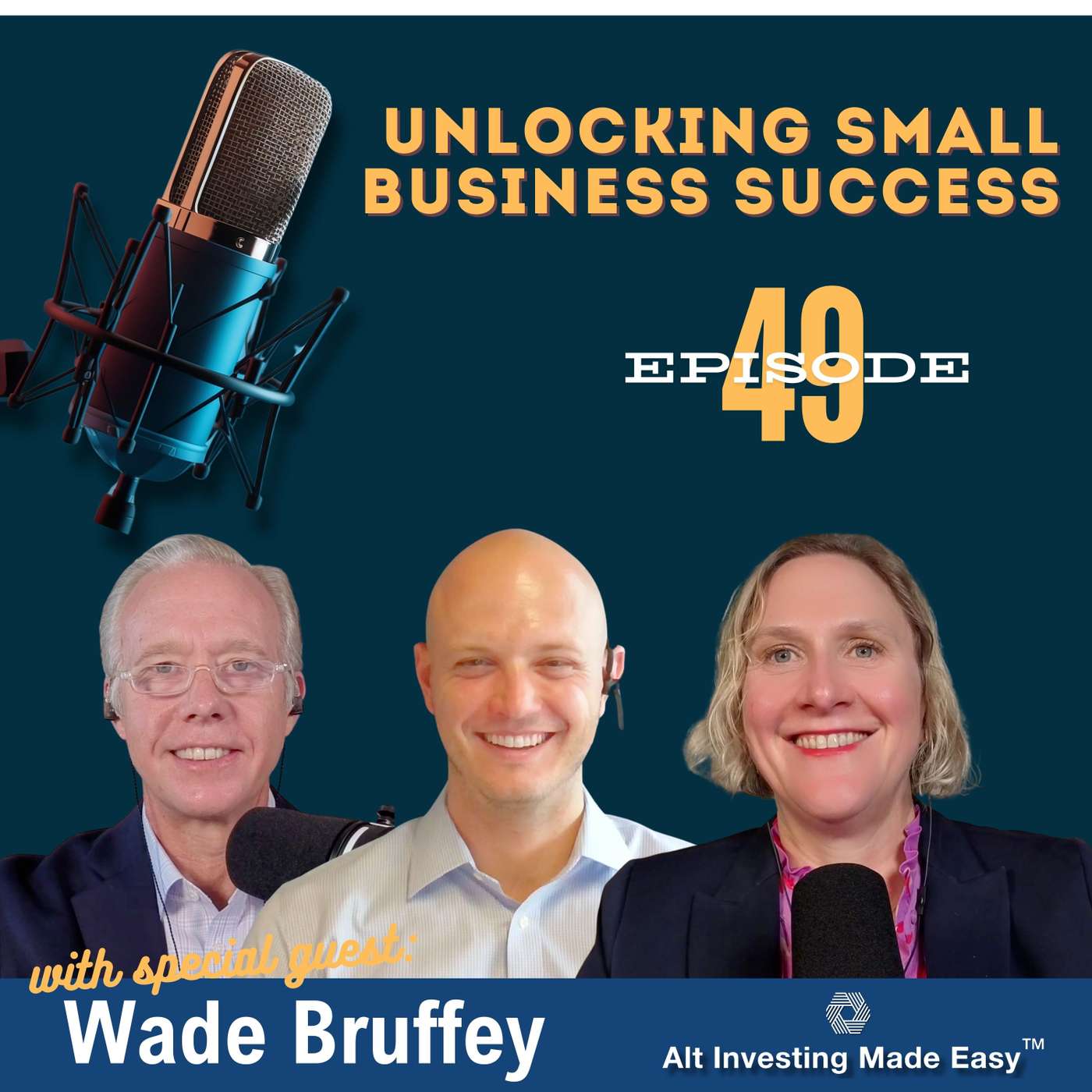
In this episode, Wade Bruffey from Main Street Securities discusses the growing asset class of small business acquisitions, emphasizing the importance of owner-operators and the financing landscape. He shares insights from his personal journey in the industry and highlights the role of his company in supporting entrepreneurs in their acquisition endeavors. The conversation underscores the significance of community impact and the opportunities available in the small business sector.About our Guest: Wade Bruffey - Main Street SecuritiesWade Bruffey is a registered representative with Main Street Securities LLC, a FINRA member broker-dealer based in Austin, Texas, specializing in helping acquisition entrepreneurs raise equity capital for small and medium-sized business acquisitions. He focuses on deals typically ranging from $500,000 to $15 million in cash flow in the lower middle market.Wade began his career in private equity at Salt Creek Capital, gaining extensive experience in small business acquisitions. He later served as Senior Manager of Strategic Partnerships at Eko, a healthcare technology company, where he led global technology integrations and deployed over 3,000 endpoints including at the US Department of Veterans Affairs.As an entrepreneur, Wade co-founded and led GoMobi.work (2022-2024), helping organizations improve employee coaching and internal communication, and operated Wade Bruffey Performance Strategy, providing business strategy consulting to professionals and entrepreneurs.Wade joined Main Street Securities in July 2024 after serving as Lead Acquisition Advisor at Mainshares. He is passionate about professionalizing the small business acquisition space and helping owner-operators access capital to grow businesses in their communities.Contact InformationCompany: Main Street Securities LLCLinkedIn: linkedin.com/in/wadebruffeyWebsite: MainStreetSecurities.netLocation: Austin, TexasTakeaways-Main Street Securities focuses on helping clients raise equity for small business acquisitions.-Owner-operators play a crucial role in the success of small businesses.-The SBA 7A loan program is a valuable resource for financing acquisitions.-Community involvement is a key factor in successful business transitions.-Wade's background includes experience in private equity and small business acquisitions.-The importance of compliance and professional standards in the investment space.-Small businesses are vital to their communities and the economy.-Wade emphasizes the emotional journey of closing a business deal.-Main Street Securities provides ongoing support post-acquisition.-The conversation highlights the accessibility of alternative investments for aspiring entrepreneurs.Chapters00:00 Introduction to Main Street Securities and SMB Land02:30 Understanding Small and Medium-Sized Businesses05:23 The Role of Owner-Operators in Business Acquisitions08:28 Navigating Financing for Small Business Acquisitions10:53 The Importance of Community and Commitment in Business13:46 Characteristics of Successful Clients and Operators19:21 Transformative Success Stories in Business Acquisitions23:04 Wade's Journey into Finance and Acquisitions28:00 Main Street's Role in Post-Acquisition Support34:01 The Community and Resources for Business Acquirers34:55 Final Thoughts on Alternative Investments and OpportunitiesSponsored by:Real Advisers, Austin, TexasVideo and Podcast Production by:Red Sun Creative, Austin, Texas: https://redsuncreative.studioFor more information: AltInvestingMadeEasy.comPlease contact us: info@AltIvestingMadeEasy.comRoland Wiederanders: rolandw@fbfk.law Sarah Florer: sflorer@fbfk.law Disclaimers: “This production is for educational purposes only and is not intended as investment or legal advice.”“The hosts of this podcast practice law with the law firm, Ferguson Braswell Fraser Kubasta PC; however, the views expressed on this podcast are solely those of the hosts and their guests, and not those of Ferguson Braswell Fraser Kubasta PC.”© 2025 AltInvestingMade Easy.com LLC All rights reserved

In this episode of Alt Investing Made Easy, Sarah Florer and Roland Wiederaenders engage in a comprehensive discussion with Hunter Albright from Salt Lending about the nuances of secured and unsecured lending, particularly in the context of cryptocurrency. They explore the importance of financial literacy in wealth building, the role of digital assets in modern finance, and the regulatory landscape surrounding crypto lending. Hunter shares insights on how Salt Lending operates, the benefits of borrowing against digital assets, and the critical aspects of custody and security in the crypto space. The conversation concludes with personal reflections on the future of digital assets and the evolving financial landscape.About Our Guest: Hunter AlbrightHunter Albright is a strategic leader driving revenue acceleration and disruptive growth at the intersection of traditional finance and emerging digital assets. Hunter works with companies and corporate leaders on vision, revenue acceleration, and business strategy by applying principles of experimentation to high-tech companies across SaaS, fintech, IoT, cleantech, and sportstech sectors.As Chief Revenue Officer at SALT Lending since April 2023, Hunter helps individuals and businesses securely hold and borrow against their cryptoassets without credit checks, offering flexible loan terms with multiple digital assets as collateral.Expertise & BackgroundHunter's proven experimentation methodology has helped companies realize up to 2X and 3X growth, plus patents, industry awards, and peer recognition. He holds a PhD in Systems Engineering with AI research focus from University of Virginia and serves as Adjunct Professor at University of Colorado, where he created the first Bitcoin and blockchain course.Hunter's global financial services background includes leadership roles at Barclays Bank, MasterCard, Visa, and Beyond Analysis. He is a patent holder (No. 11244374) and active thought leader in cryptocurrency-backed lending, business experimentation, and blockchain technology.PhilosophyHunter believes in helping executives make substantive leaps forward by leveraging structured experimentation to rethink approaches to disruptive growth, overcome obstacles, and differentiate through backcasting from ideal future scenarios.Contact Hunter:Book a discovery call: https://calendly.com/hunteralbright/intro-callX: @AdHunterAlbrightLinkedin: https://www.linkedin.com/in/hunteralbright/Takeaways-Salt Lending provides collateral-backed loans against digital assets.-Financial literacy is essential for understanding wealth-building strategies.-Borrowing against assets allows for financial flexibility.-The distinction between secured and unsecured lending is crucial.-Digital assets challenge traditional notions of value and money.-Custody and security are vital considerations in crypto lending.-Regulatory clarity is improving in the crypto lending space.-Trust in lending institutions is paramount for consumers.-The future of digital assets remains uncertain but promising.-Education on risks and opportunities in crypto is necessary for investors.Chapters00:00 Introduction to Alternative Assets and Crypto Lending01:58 Understanding Salt Lending and Its Services06:14 The Impact of Financial Literacy on Wealth Building11:31 Secured vs. Unsecured Lending Explained17:12 Utilizing Digital Assets for Financial Flexibility22:16 Custody and Security in Crypto Lending27:37 Regulatory Landscape and Trust in Crypto Lending32:32 Personal Insights and Future of Digital AssetsSponsored by:Real Advisers, Austin, TexasVideo and Podcast Production by:Red Sun Creative, Austin, Texas: https://redsuncreative.studioFor more information: AltInvestingMadeEasy.comPlease contact us: info@AltIvestingMadeEasy.comRoland Wiederanders: rolandw@fbfk.law Sarah Florer: sflorer@fbfk.law Disclaimers: “This production is for educational purposes only and is not intended as investment or legal advice.”“The hosts of this podcast practice law with the law firm, Ferguson Braswell Fraser Kubasta PC; however, the views expressed on this podcast are solely those of the hosts and their guests, and not those of Ferguson Braswell Fraser Kubasta PC.”© 2025 AltInvestingMade Easy.com LLC All rights reserved

SummaryIn this episode of 'Alt Investing Made Easy', hosts Sarah Florer and Roland Wiederaenders interview Dan Bitting, an attorney and shareholder at FBFK Law, discussing the intricacies of fiduciary duties in law, particularly in the context of alternative investing. The conversation explores various aspects of fiduciary responsibilities, the importance of disclosure, and the dynamics of litigation. Dan shares insights from his extensive experience in legal practice, emphasizing the need for trust in legal relationships and the creative problem-solving required in law. The episode also touches on the judicial system's effectiveness and the global perspectives on litigation.About our Guest: Dan BittingDan Bitting is a shareholder attorney at FBFK Law specializing in complex business litigation with particular emphasis on fiduciary duty claims, securities violations, and professional malpractice defense. With over three decades of trial and appellate experience in both state and federal courts, Dan has built a reputation for strategic litigation management and successful dispute resolution.Connect with Dan on LinkedIn at: https://www.linkedin.com/in/dan-bitting-civil-trial-lawyer or email at: dbitting@fbfk.lawTakeawaysFiduciary duties are essential in maintaining trust in legal relationships.Disclosure is crucial; when in doubt, disclose.Corporate officers owe fiduciary duties to the company, not directly to shareholders.Juries often seek to right perceived wrongs in litigation.Legal practice requires creativity and problem-solving skills.Experience in law is gained through both successes and failures.Most lawsuits settle before reaching trial, highlighting the importance of negotiation.Trustees and beneficiaries must maintain a transparent relationship.The judicial system provides a necessary avenue for dispute resolution.Understanding fiduciary duties can prevent legal issues in business. Chapters00:00 Introduction to Alternative Investing and Legal Practice02:26 Understanding Fiduciary Duties in Law05:06 Fiduciary Duties in Corporate and Trust Contexts07:42 Case Study: Camp Mystic and Fiduciary Responsibilities10:20 The Importance of Disclosure in Legal Matters12:37 Creative Problem Solving in Law15:22 Personal Insights and Hobbies of Dan Bitting19:10 Navigating Disclosure in Legal Contexts21:23 Fiduciary Duties and Trust Building24:15 Litigation: A Necessary Evil27:52 The American Legal Landscape31:15 Closing Thoughts and ReflectionsSponsored by:Real Advisers, Austin, TexasVideo and Podcast Production by:Red Sun Creative, Austin, Texas: https://redsuncreative.studioFor more information: AltInvestingMadeEasy.comPlease contact us: info@AltIvestingMadeEasy.comRoland Wiederanders: rolandw@fbfk.law Sarah Florer: sflorer@fbfk.law Disclaimers: “This production is for educational purposes only and is not intended as investment or legal advice.”“The hosts of this podcast practice law with the law firm, Ferguson Braswell Fraser Kubasta PC; however, the views expressed on this podcast are solely those of the hosts and their guests, and not those of Ferguson Braswell Fraser Kubasta PC.”© 2025 AltInvestingMade Easy.com LLC All rights reserved
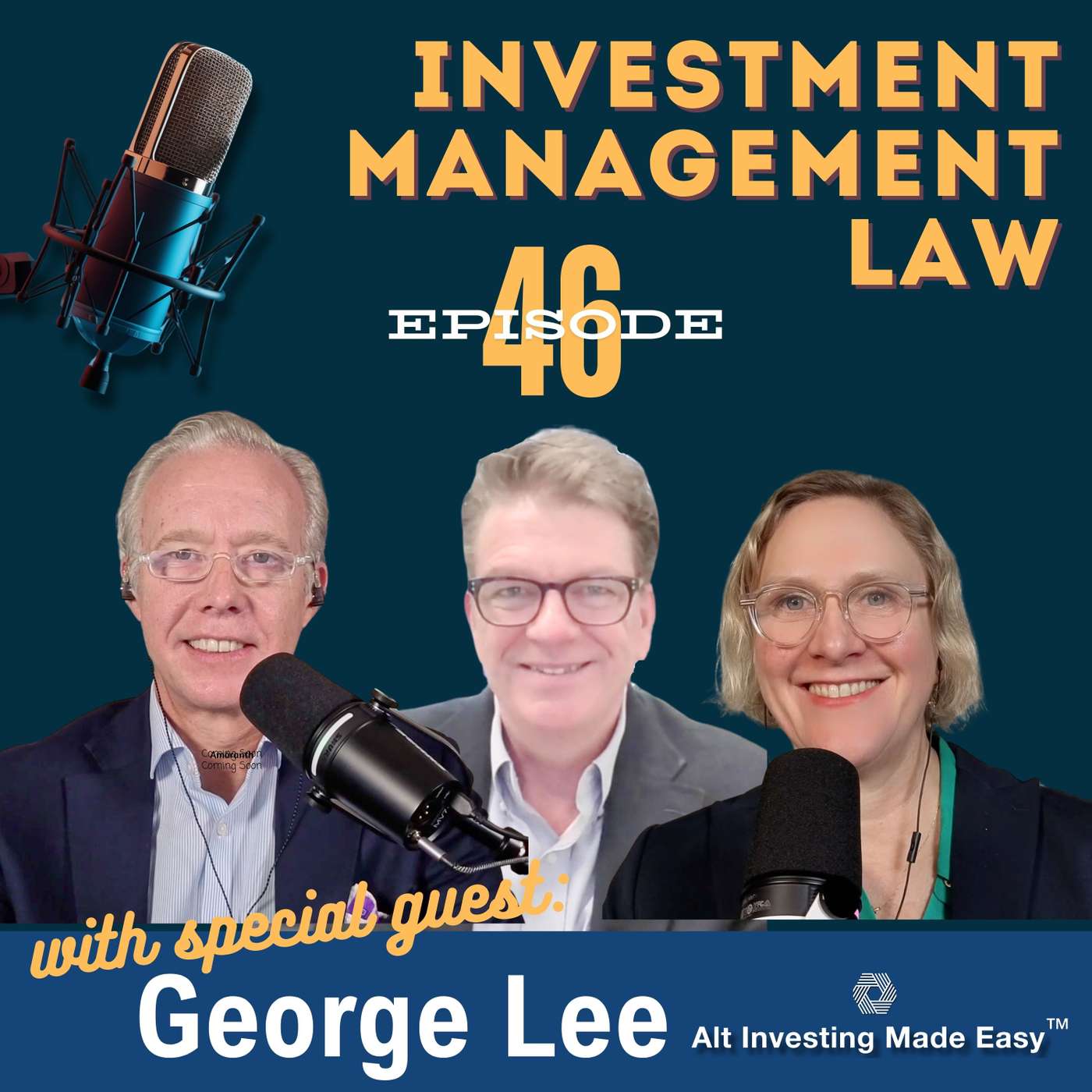
SummaryIn this episode of Alt Investing Made Easy, hosts Sarah Florer and Roland Wiederaenders interview George T Lee, a seasoned attorney specializing in investment management and family offices. The conversation covers George's background as a third-generation attorney, the evolution and institutionalization of family offices, the complexities of SEC regulations, and the importance of investment advisors in protecting investors. They also discuss the challenges of navigating private securities and the potential future regulations surrounding the investment landscape.About Our GuestGeorge T. Lee is a highly respected corporate and securities attorney with decades of experience advising small businesses, private equity funds, hedge funds, registered investment advisers, and family offices. Known for his deep legal knowledge and practical, business-minded counsel, George has served as both inside and outside general counsel to his clients, giving him a unique perspective on what truly matters to investment managers.Throughout his career, George has worked with firms of all sizes—from emerging fund managers to well-established financial institutions—helping them navigate complex ownership structures, regulatory landscapes, fund formations, investment management agreements, prime brokerage relationships, and mergers and acquisitions. He has extensive experience with SEC, CFTC, and Texas Securities Board registrations and examinations and is a recognized authority on the family office exception to investment adviser regulation.Connect with George on LinkedIn: https://www.linkedin.com/in/georgelegalTakeaways-George T Lee is a third-generation attorney specializing in investment management.- Family offices have become more institutionalized in recent years.- The SEC faces challenges in enforcement due to limited staff.- Regulations are designed to protect investors from past financial crises.- The U.S. has the most efficient and respected markets globally.- Investment advisors have a fiduciary duty to their clients.- Qualified clients are required to invest in private equity.- The investment landscape is complex and often likened to the Wild West.- Future regulations may impact how finders operate in the investment space.- Understanding the role of family offices is crucial in wealth management.TitlesNavigating the Complex World of Family OfficesThe Evolution of Investment ManagementChapters00:00 Introduction to George T Lee and His Practice02:36 George's Background and Career Path05:11 Understanding Family Offices07:43 The Role of Family Offices in Wealth Management10:32 Investment Advisor Regulations and Family Offices13:20 Navigating the Wild West of Private Securities15:49 The Importance of SEC Regulations18:28 Democratization of Capital and Investor Protection21:15 The Role of Investment Advisors23:46 Personal Insights and Interests of George T Lee26:27 Future Regulations and the Finder RuleSponsored by:Real Advisers, Austin, TexasVideo and Podcast Production by:Red Sun Creative, Austin, Texas: https://redsuncreative.studioFor more information: AltInvestingMadeEasy.comPlease contact us: info@AltIvestingMadeEasy.comRoland Wiederanders: rolandw@fbfk.law Sarah Florer: sflorer@fbfk.law Disclaimers: “This production is for educational purposes only and is not intended as investment or legal advice.”“The hosts of this podcast practice law with the law firm, Ferguson Braswell Fraser Kubasta PC; however, the views expressed on this podcast are solely those of the hosts and their guests, and not those of Ferguson Braswell Fraser Kubasta PC.”© 2025 AltInvestingMade Easy.com LLC All rights reserved

Comments

Download from Google Play

Download from App Store
 United States