DiscoverAnti-Racism and the Disciplines
Anti-Racism and the Disciplines
Claim Ownership

Anti-Racism and the Disciplines

Author: Tulane University School of Liberal Arts

Subscribed: 5Played: 26
Share

Description

Where do college majors come from? Where are they headed?

Anti-Racism and the Disciplines is a podcast miniseries that answers these questions by exploring the social, political, and cultural forces that helped shape the liberal arts as we know them today, and by advancing ideas for more equitable and welcoming practices in higher education.

Host Brian Edwards, Dean of the School of Liberal Arts at Tulane University, interviews leading Black scholars to examine the complex histories of the disciplines in the liberal arts and to reimagine the kind of anti-racist scholarship and teaching that the next generation might do.

This podcast features a broad scope of the liberal arts, ranging from older disciplines like philosophy (Lionel K. McPherson), classics (Dan-el Padilla Peralta), and literature (Hortense Spillers), to key disciplines in the social sciences—sociology (Mary Pattillo), economics (Gary Hoover), and political science (Alvin Tillery, Jr.)—to the more contemporary areas of communication (Sarah J. Jackson) and the digital humanities (Kim Gallon).

Subscribe now to get our upcoming bonus content!
10 Episodes
Reverse
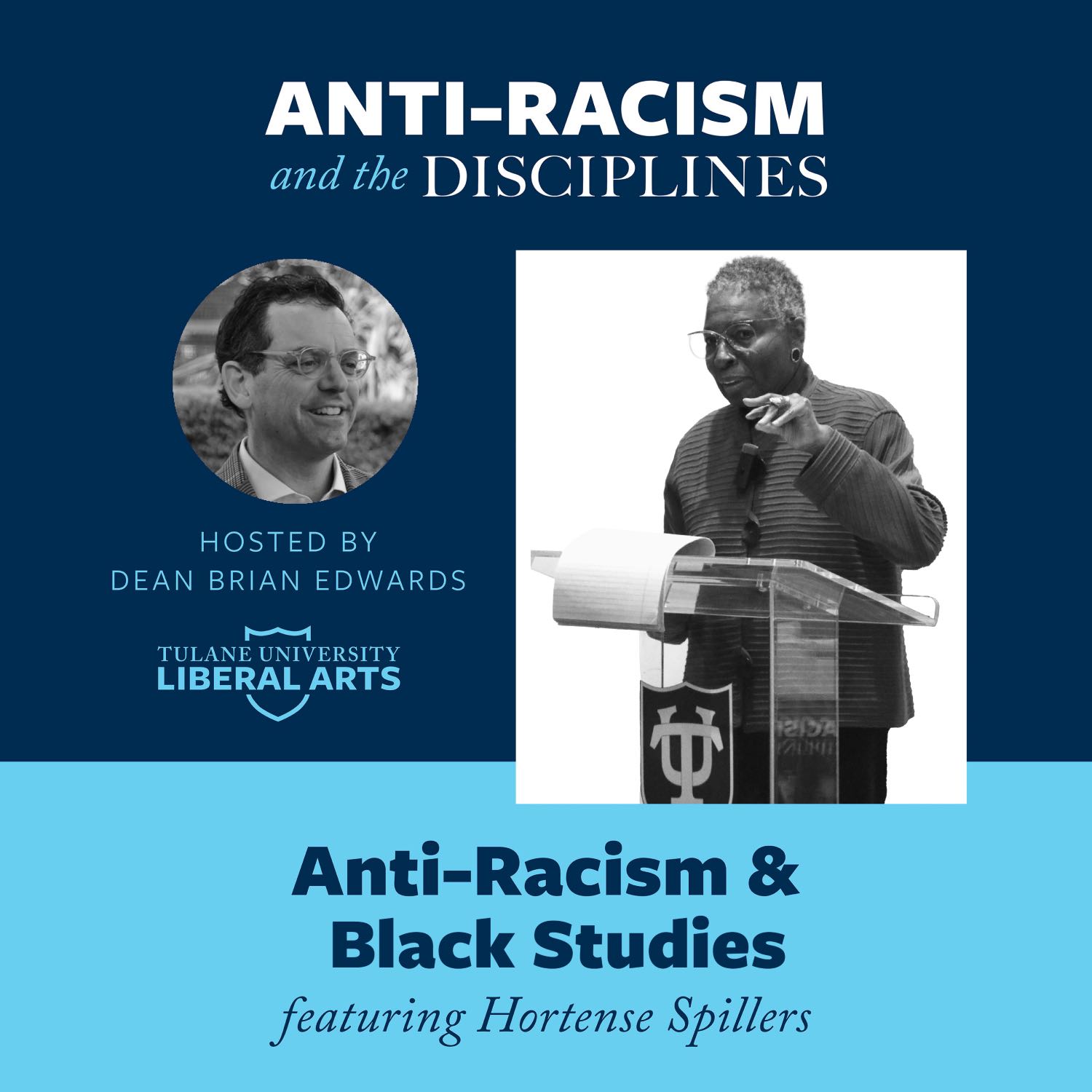
How did Black Studies emerge? How is it related to other disciplines in the liberal arts?On March 31st, 2023, we celebrated nearly three years of work on the Anti-Racism and the Disciplines initiative with a final symposium that brought together the scholars who taught us so much throughout the series. On that day, Dr. Hortense Spillers delivered a truly remarkable keynote address. This bonus episode features the remarkable keynote address she delivered that day.In her talk titled "Black Studies and the Human Sciences: A Handful of Observations," Hortense Spillers weaves together personal narrative with intellectual history to tell the story of how Black Studies came to be. Emerging in the 1960s, Black Studies is not only a culmination of anti-racist efforts but also what she calls “the practice of anti-racism, at least in theory.” It was a moment when, as she puts it, a “street movement transformed into a curricular object.”Host: Brian EdwardsProducers: Gabriela Garcia Mayes and Billy SaasMusic: Cory Diane
What is the relationship between literacy and the current political polarization in the United States? How has the English major changed since the early 1970s? And how can we be less pessimistic about the future? Join host Dean Brian Edwards and Hortense J. Spillers, Gertrude Conaway Vanderbilt Professor of English and Distinguished Research Professor Emerita at Vanderbilt University, as they discuss these questions and more in this episode of Anti-Racism and the Disciplines.Timestamps:[01:22 - 06:06] How is literacy the central problem in the United States today?[06:06 - 16:05] What are the problems with what college students are learning today?[16:05 - 19:55] What do literary studies teach students that other majors don't?[19:55 - 26:32] What is the history of the English major and departments?[26:32 - 31:09] What is the status of the English major and departments today? What are some of the challenges they face?[31:09 - 36:26] How can we move beyond Afro-pessimism and open up the future?Host: Brian T. EdwardsExecutive Producer: Gabriela Garcia MayesMusic: Cory DianeProduction Assistant: Maggie Green
What do people study in political science? Why is it called a “science”? And how was an African American central to the most important work in political science in the pre-Civil Rights era? Join host Dean Brian Edwards and Alvin B. Tillery, Jr., Professor of Political Science and Director of the Center for the Study of Diversity and Democracy at Northwestern University, as they discuss these questions and more in this episode of Anti-Racism and the Disciplines.Timestamps:[00:55 - 03:46] What is political science?[03:46 - 06:43] Why is political science called a "science"?[06:43 - 12:00] What is the relationship between political science, race, and racism?[12:00 - 13:26] How do race and racism structure political science?[13:26 - 15:50] Who were Ralph Bunche and Gunnar Myrdal? How are they important to political science?[15:50 - 21:31] What does re-examining the racist history of political science look like?[21:31 - 25:13] What does anti-racism mean in political science?[25:13 - 28:00] What makes a political science approach to Twitter and Black Lives Matter different from a communication studies approach?[28:00 - 31:59] What is Tillery's view of the Black Lives Matter social movement?Host: Brian T. EdwardsExecutive Producer: Gabriela Garcia MayesMusic: Cory DianeProduction Assistant: Maggie Green
What is “classics”—is it a place, a period of time, or a value judgment? How can texts from over 2,000 years ago be related to racism today? And what can we do about it? Join host Dean Brian Edwards and Dan-el Padilla Peralta, Associate Professor of Classics at Princeton University, as they discuss these questions and more in this episode of Anti-Racism and the Disciplines.Timestamps:[01:11 - 03:40] What is "classics" or "classical studies"?[03:40 - 05:52] Is classics a place, a period of time, or a value judgment?[05:55 - 14:36] How is classics a part of the history of the American university itself?[14:39 - 17:14] What is the difference between "classics" and "classicism"?[17:14 - 22:48] How do race and racism become a part of the conversation in classics?[22:48 - 28:04] What are people's anxieties about classics today?[28:02 - 31:07] How can classics be anti-racist?Host: Brian T. EdwardsExecutive Producer: Gabriela Garcia MayesMusic: Cory DianeProduction Assistant: Maggie GreenSpecial Thanks: Billy Saas
What are the digital humanities? How are they different from computer science? And how can racism impact the digital world? Join host Dean Brian Edwards and Kim Gallon, Associate Professor of Africana Studies at Brown University, as they discuss these questions and more in this episode of Anti-Racism and the Disciplines.Timestamps:[00:52 - 03:03] What are the digital humanities?[03:03 - 04:59] How are the digital humanities impacted by racism?[04:59 - 08:01] What are the different ways of practicing the digital humanities?[08:01 - 09:38] What does "technological Jim Crow" mean?[09:38 - 11:28] What is the relationship between digital technologies, their study, and racism?[11:28 - 13:27] What are the "computational humanities"?[13:27 - 15:46] How has the Covid-19 pandemic foregrounded the digital humanities?[15:46 - 17:56] How did Gallon's COVID Black project emerge?[17:56 - 22:10] Description of the COVID Black website and project[22:10 - 25:37] What have been the ramifications of the 2020 protests in the wake of George Floyd’s murder in the field of the digital humanities?[25:37 - 27:49] What does anti-racism mean in the digital humanities?Host: Brian T. EdwardsExecutive Producer: Gabriela Garcia MayesMusic: Cory DianeProduction Assistant: Maggie GreenSpecial Thanks: Billy Saas
What is sociology and when does it become a thing? How is it related to racism? And what’s the problem with most studies in sociology today? Join host Dean Brian Edwards and Mary Pattillo, Harold Washington Professor of Sociology and Chair of the Department of African American Studies at Northwestern University, as they discuss these questions and more in this episode of Anti-Racism and the Disciplines.Timestamps:[00:53 - 02:36] What is sociology?[02:36 - 04:52] When does sociology emerge? How is it related to industrialization and other social changes?[04:52 - 09:44] What is the relationship between W. E. B. DuBois and sociology?[09:44 - 13:11] What is the connection between sociology, race, and racism?[13:11 - 16:10] What does anti-racism mean in sociology?[16:10 - 23:21] What is the "deficits perspective" in sociology? What are some of the problems with it?[23:21 - 24:29] What works have been central to thinking about African Americans as disadvantaged?[24:29 - 27:36] How did Pattillo come to see the downsides to highlighting disadvantages in Black communities?[27:36 - 30:35] What, if any, is the emancipatory potential in what Pattillo calls "Black Advantage Vision"?Host: Brian T. EdwardsExecutive Producer: Gabriela Garcia MayesMusic: Cory DianeProduction Assistant: Maggie Green
How is philosophy behind how we think about race today? Why should we stop talking about race altogether? And what’s the difference between “Black” and “black”? Join host Dean Brian Edwards and Lionel K. McPherson, Associate Professor of Philosophy at Tufts University, as they discuss these questions and more in this episode of Anti-Racism and the Disciplines.Timestamps:[01:37 - 04:24] What's the relationship between philosophy and race?[04:24 - 07:45] What are some of the problems with the terms "race," "racism," and "anti-racism"?[07:45 - 11:39] How is questioning philosophy itself a way of doing philosophy?[11:39 - 14:18] What do we miss by focusing on debates about "race"?[14:18 - 16:54] What is McPherson's concept of "geoancestry"?[16:54 - 21:01] What's the difference between "Black" and "black"?[21:01 - 22:29] What, if any, have been the ramifications of the 2020 protests in the wake of George Floyd’s murder on philosophy?[22:29 - 27:44] How can philosophy address racism in the discipline?Host: Brian T. EdwardsExecutive Producer: Gabriela Garcia MayesMusic: Cory DianeProduction Assistant: Maggie Green
What is communication studies? How is it different from practicing journalism? What do they have to do with race and racism? And how is social media changing the social justice struggle? Join host Dean Brian Edwards and Sarah J. Jackson, Presidential Associate Professor in Communication and Co-Director of the Media, Inequality and Change Center at the University of Pennsylvania, as they discuss these questions and more in this episode of Anti-Racism and the Disciplines.Timestamps:[00:58 - 04:04] What is "communication studies"?[04:04 - 11:14] What is the relationship between race, racism, and communication studies?[11:14 - 15:21] What is the connection between journalism and communication studies?[15:21 - 19:15] How have newer technologies affected communication and its study?[19:15 - 21:54] How can communication studies help us understand Black Lives Matter?[21:54 - 25:08] How has social media changed the landscape of the racial justice struggle?[25:08 - 27:48] What, if any, have been the ramifications of the 2020 protests in the wake of George Floyd’s murder on communication studies?[27:48 - 30:23] What does anti-racism mean in communication studies?Host: Brian T. EdwardsExecutive Producer: Gabriela Garcia MayesMusic: Cory DianeProduction Assistant: Maggie GreenSpecial Thanks: Billy Saas
What do people study when they study economics? How has studying economics changed in the last 200 years? Why aren’t students learning about this history? And how is the women’s liberation movement related to racial justice in economics? Join host Dean Brian Edwards and Gary Hoover, Professor of Economics and Executive Director of the Murphy Institute at Tulane University, as they discuss these questions and more in this episode of Anti-Racism and the Disciplines.Timestamps:[00:52 - 03:47] What is economics? When does it emerge as a field?[03:47 - 05:24] How important is the history of economics to economists?[05:24 - 06:46] Why do we consider economics a social science?[06:46 - 08:43] Does it matter to economics that it emerged at the same time as colonialism?[08:43 - 11:30] What's the problem with how economics has developed as a field?[11:30 - 15:21] How does the emphasis on math in economics impact the discipline?[15:21 - 17:50] What's the problem with economic models in the 20th century?[17:50 - 20:18] How does race begin to get addressed in economics in the 70s and 80s?[20:18 - 22:14] When do we start seeing "mainstream" economics address issues of race?[22:14 - 23:26] What are the costs of racism to economics?[23:26 - 26:24] How can increase the presence and improve the experience of racial and ethnic minorities in economics?[26:24 - 29:46] What does anti-racism mean in economics?[29:46 - 32:45] What, if any, have been the ramifications of the 2020 protests in the wake of George Floyd’s murder on economics as a discipline?Host: Brian T. EdwardsExecutive Producer: Gabriela Garcia MayesMusic: Cory DianeProduction Assistant: Maggie GreenSpecial Thanks: Billy Saas
Where do college majors come from? Where are they headed?Anti-Racism and the Disciplines is a podcast miniseries that answers these questions by exploring the social, political, and cultural forces that helped shape the liberal arts as we know them today, and by advancing ideas for more equitable and welcoming practices in higher education.Host Brian Edwards, Dean of the School of Liberal Arts at Tulane University, interviews leading Black scholars to examine the complex histories of the disciplines in the liberal arts and to reimagine the kind of anti-racist scholarship and teaching that the next generation might do.This podcast features a broad scope of the liberal arts, ranging from older disciplines like philosophy, classics, and literature, to key disciplines in the social sciences—sociology, economics, and political science—to the more contemporary areas of communication and the digital humanities.Subscribe now to get all eight episodes when they are released on Tuesday, March 21, 2023, in observance of the International Day for the Elimination of Racial Discrimination.
Comments