


 Claim Ownership
Architecture & Beyond: The Tech Transformation Podcast
Subscribed: 9Played: 60
Subscribe

© Roshan Gavandi 2024
Description
Navigate the transformation of technology with insights on cloud adoption, microservices, DevOps, and beyond. Perfect for software architects and tech enthusiasts aiming to stay ahead in the digital era.
For architects, developers, and tech leaders looking to stay ahead in the world of software architecture, cloud solutions, and enterprise IT, Architecture & Beyond is your insider’s guide. Each week, join us as we unpack real-world case studies, explore emerging trends, and share insights from experts at the forefront of technology. Whether you're scaling a cloud-native application, implementing microservices, or tackling regulatory compliance, this podcast provides the guidance and knowledge you need to drive success.
16 Episodes
Reverse

"Quantum Empowerment" is a self-help book that explains manifestation using principles from quantum physics. It argues that thoughts, emotions, and intentions influence reality, emphasizing the importance of aligning one's energy with desired outcomes. The book provides practical steps for goal setting, overcoming negative patterns, and elevating one's energy to attract abundance. It is intended for a broad audience interested in personal growth, the Law of Attraction, or quantum physics, promising to empower readers to create their desired reality. Ultimately, the book aims to bridge scientific concepts with practical techniques for achieving personal goals.https://www.amazon.in/dp/B0DP7QTPHNhttps://www.amazon.com/dp/B0DP7QTPHN
In this episode, we explore foundational algorithms and data structures that every developer and computer science enthusiast should know. Covering everything from Binary Search Trees (BSTs) to advanced concepts like Dynamic Programming and Greedy Algorithms, this episode is packed with insights on how these tools work and where they can be applied in solving complex problems.Key topics include:Binary Search Trees (BSTs): An introduction to BSTs, a hierarchical data structure that supports efficient search, insertion, and deletion, making it ideal for various applications.Graphs and Graph Algorithms: Exploring the structure of graphs to represent networks, and discussing essential graph algorithms, including traversal and pathfinding.Sorting Algorithms: A breakdown of popular sorting algorithms—selection sort, insertion sort, merge sort, and quick sort—explaining their theoretical foundations, efficiency, and practical applications.Dynamic Programming (DP): An overview of dynamic programming, a technique that optimizes problems with overlapping subproblems and optimal substructure, commonly used in fields like operations research and AI.Greedy Algorithms: How greedy algorithms work by making locally optimal choices to find approximate or sometimes optimal solutions, and where they are best applied.Join us as we take a deep dive into these critical algorithms, shedding light on their mechanisms, use cases, and how they contribute to efficient problem-solving. This episode is perfect for those looking to strengthen their understanding of computer science fundamentals.
In this episode, we explore the essential financial metrics every Enterprise Architect should understand to make informed, business-aligned decisions. Architectural choices can have a profound impact on profitability, and understanding financial concepts helps architects communicate the value of their work in terms stakeholders understand.Key topics include:Essential Financial Metrics: An introduction to key financial metrics like gross margin, EBITDA, and net margin, and how they relate to architectural decisions.Architecture and Profitability: How architectural choices can directly affect profitability, from cost management to improving operational efficiency.Prioritizing High-ROI Projects: Using financial insights to identify and prioritize projects that offer the greatest return on investment (ROI).Communicating in Financial Terms: Tips for architects to effectively communicate the value of architectural work to stakeholders by speaking in financial terms, bridging the gap between technical and business goals.Join us as we dive into how understanding financial metrics can empower Enterprise Architects to align technical solutions with business objectives, prioritize high-value projects, and convey the strategic importance of architecture in driving profitability.
In this episode, we take an in-depth look at two popular API architectures: REST and gRPC. From Google’s strategic shift to gRPC for its performance advantages to practical tips on error handling with .NET, we explore the key differences and use cases that define each approach.Key topics include:gRPC Features and Usage: A guide to getting started with gRPC, covering supported languages, platforms, and development tips for maximizing its potential.Error Handling in gRPC with .NET: How to effectively use status codes and structured error messages to ensure reliable gRPC applications.Google’s Move from REST to gRPC: A look into Google’s decision to adopt gRPC over REST, emphasizing the performance and flexibility gains.Protobuf vs. JSON: A comparison of Protobuf’s efficiency in data serialization over JSON, explaining why it’s central to gRPC’s speed.Comprehensive REST and gRPC Comparison: Exploring protocols, data exchange formats, latency, browser support, and code generation, helping you choose the right fit for your next project.Join us as we break down these architectural styles, highlighting the strengths and trade-offs to help you make an informed choice for your API strategy.
 1
1In this episode, we explore The Cannot Syndrome and the Art of the Possible, a framework designed to help organizations transition to Agile-DevOps practices. The framework sheds light on common psychological and organizational barriers that often hinder Agile-DevOps adoption, collectively referred to as the "Cannot Syndrome." Through incremental change and fostering a growth mindset, this approach empowers teams to embrace the art of the possible.Key topics include:Understanding 'Cannot Syndrome': An examination of the typical mental and organizational roadblocks that prevent effective Agile-DevOps adoption.Strategies for Overcoming Barriers: How organizations can use incremental change and experimentation to break through resistance and make small, impactful strides toward transformation.Leadership and Empowerment: The critical role of committed leadership, team empowerment, and open communication in fostering a supportive environment for Agile-DevOps practices.Real-World Insights: Practical examples and insights from successful transformations, illustrating how companies have effectively moved past the "Cannot Syndrome" and embraced Agile-DevOps.Join us as we unpack this framework and discuss actionable strategies for overcoming the challenges of adopting Agile-DevOps practices. This episode is ideal for leaders, team members, and organizations looking to navigate the complexities of Agile-DevOps transformation successfully.
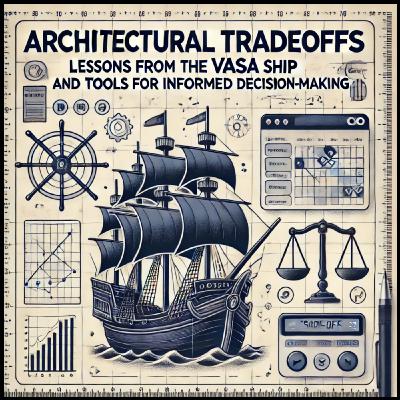
In this episode, we discuss the critical skill of navigating tradeoffs in software architecture. Using the story of the Vasa ship—a 17th-century warship that sank due to an overloaded designwe explore how attempting to meet all requirements without prioritizing can lead to failure. This lesson serves as a reminder of the importance of carefully balancing features and understanding the impact of architectural choices.Key topics include:The Vasa Ship Analogy: How the story of the Vasa ship demonstrates the consequences of failing to manage tradeoffs effectively.Understanding Tradeoffs in Architecture: Why architects must assess and balance different elements, such as performance, scalability, and maintainability, rather than aiming to maximize them all at once.Tools for Decision-Making: An introduction to tools like the Architecture Tradeoff Analysis Method (ATAM) and Cost-Benefit Analysis Method (CBAM), which help architects evaluate and prioritize architectural decisions.Balancing Competing Priorities: Strategies for communicating tradeoffs to stakeholders and making informed choices that support long-term architectural goals.Join us as we explore these valuable insights for architects, offering tools and examples to help navigate complex decisions and create resilient, sustainable architectures.
In this episode, we dive into Roshan Gavandi's transformative Medium article, which explores how eight powerful books shaped his journey from software developer to software architect. Roshan shares how each book helped him cultivate an architect's mindset, moving beyond coding to embrace the strategic, big-picture thinking essential for architectural roles.We’ll break down the key takeaways from each book, discussing how they can influence not only software developers but anyone looking to level up their career. These lessons encourage listeners to go beyond their comfort zone, focus on results, adopt a growth mindset, and build habits that drive long-term success.Episode Highlights:Focusing on Results Over ProcessDiscover why results-oriented thinking is vital for architects and leaders.Learn to prioritize impact and outcomes over rigid processes, making decisions that move projects forward effectively.Embracing a Growth MindsetRoshan emphasizes the importance of a growth mindset, inspired by Mindset by Carol Dweck.We discuss how being open to learning, taking feedback constructively, and viewing challenges as opportunities can fuel career advancement.Recognizing Opportunities and Seizing ThemInspired by Outliers by Malcolm Gladwell, this section explores how seizing the right opportunities can accelerate professional growth.Listeners will gain insights on how to be proactive in recognizing and leveraging career-defining moments.Setting Clear Goals and Building a RoadmapArchitects need a roadmap to guide projects and personal growth.Drawing from Atomic Habits by James Clear, Roshan discusses setting clear, actionable goals and creating habits that support long-term success.Building Effective, Sustainable HabitsExplore how small, consistent actions lead to big results, based on lessons from Atomic Habits.We’ll discuss how software architects can cultivate habits that improve efficiency, focus, and decision-making skills.Improving Communication SkillsEffective communication is key for any architect or leader.Taking cues from How to Talk to Anyone by Leil Lowndes, Roshan highlights strategies for improving communication and building rapport with colleagues, stakeholders, and clients.Understanding the Power of Shared Beliefs within TeamsLearn how a strong, unified team culture amplifies success, inspired by Start with Why by Simon Sinek.We discuss how fostering shared beliefs and a common vision can align teams and drive project success.Applying These Lessons Beyond Software ArchitectureWhile tailored for aspiring software architects, Roshan’s insights apply to anyone aiming to grow in their career.We encourage listeners to adopt these principles for their own professional development, regardless of industry or role.https://roshancloudarchitect.me/the-architects-mindset-lessons-from-eight-influential-books-for-career-growth-b4e149871426
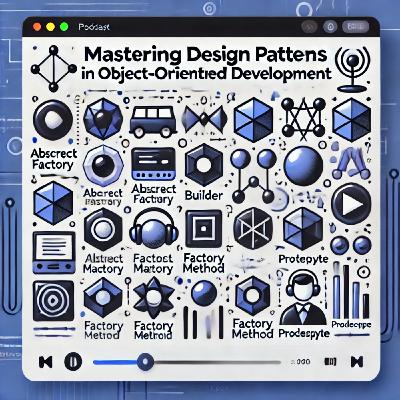
In this episode, we delve into the world of design patterns in object-oriented software development, essential tools for crafting flexible and reusable code. We explore several foundational patterns, discussing their purpose, structure, and role in solving recurring design challenges.Key topics include:Core Design Patterns: A breakdown of popular patterns such as Abstract Factory, Builder, Factory Method, and Prototype, explaining how each pattern addresses specific design issues.Pattern Structure and Roles: Insights into the participants, collaborations, and structural details that define each pattern, making it easier to understand their application in real-world scenarios.Object Composition: The power of object composition and its importance in building adaptable software, focusing on how it promotes flexibility over inheritance.Pattern Relationships: How different patterns complement each other and can be combined to create robust, maintainable object-oriented systems.Implementation Considerations: Practical tips and potential challenges when implementing these patterns in object-oriented languages.Whether you’re new to design patterns or looking to refine your knowledge, this episode provides a thorough understanding of how to use these patterns effectively to build adaptable, future-proof software. Perfect for developers and software architects aiming to deepen their design expertise.
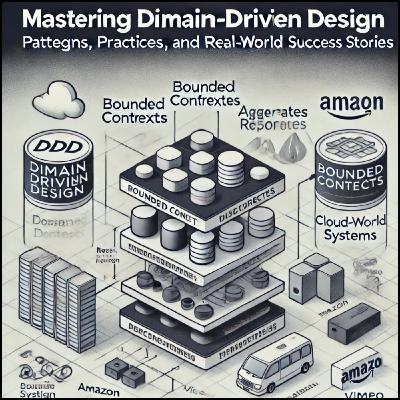
In this episode, we dive into the principles of Domain-Driven Design (DDD) and explore how it aligns software architecture with business needs. Domain-Driven Design offers techniques for managing complexity and improving communication within software projects, making it an invaluable approach for building systems that truly reflect business goals.Key topics include:Core Principles of DDD: An introduction to essential concepts like bounded contexts and ubiquitous language, which help bridge the gap between technical and business teams.DDD Patterns: A closer look at key DDD patterns, including aggregates, repositories, and value objects, and how they contribute to creating robust and organized code.Strategic Design and Prioritizing Core Capabilities: How focusing on core business capabilities over generic ones ensures that software directly supports business objectives.Real-World Applications of DDD: Success stories from companies like Vimeo and Amazon, showcasing the impact of DDD in scaling and organizing their microservices architectures.Context Mapping for Complexity Management: The role of context mapping in visualizing interactions between bounded contexts, simplifying the management of complex domains.DDD in Cloud-Native and Microservices: The future of DDD as a guiding framework for managing complexity in distributed, cloud-native environments, making it more relevant than ever for modern architectures.Whether you're a developer, architect, or business analyst, this episode offers insights into using DDD for building adaptable, business-aligned software systems. Join us as we discuss how DDD principles and patterns can transform the way you design and develop software.
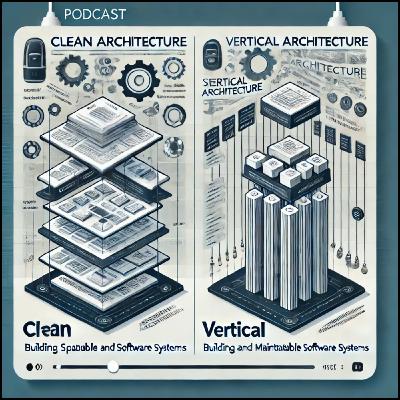
In this episode, we explore two foundational architectural patterns, Clean Architecture and Vertical Architecture, and how they can be combined to create resilient, scalable software systems. Both approaches focus on organizing code around business functionalities, making software more maintainable, testable, and adaptable.Key topics include:Clean Architecture Fundamentals: How Clean Architecture enables a separation of concerns, making it easier to change and extend code without impacting core functionalities.Vertical Architecture Approach: Organizing code by feature or vertical slice, which allows for quicker deployment, better modularity, and increased team autonomy.Supporting Design Principles: A look at complementary principles like Domain-Driven Design (DDD), Command Query Responsibility Segregation (CQRS), and Event-Driven Architecture, which add flexibility and scalability.Building for Complexity and Change: Strategies for designing systems that handle growing complexity while remaining adaptable as requirements evolve.Whether you’re an architect or developer, this episode offers actionable insights into structuring software systems that stand the test of time. Join us as we unpack the benefits of Clean and Vertical Architectures, along with advanced design principles, to help you build robust, scalable, and future-proof applications.
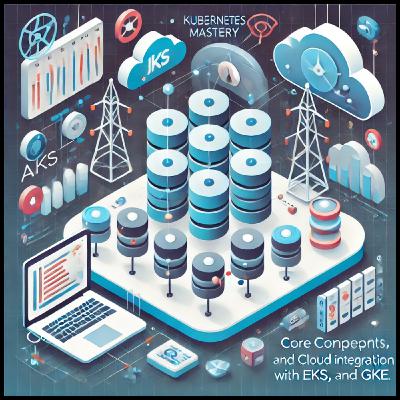
In this episode, we break down the essentials of Kubernetes, a powerful tool for managing containerized workloads and services. Drawing from a comprehensive guide, we explore Kubernetes from the ground up, covering its core concepts, critical components, and deployment across both on-premise and cloud environments.Key topics include:Kubernetes Fundamentals: An introduction to the essential concepts that make Kubernetes a leader in container orchestration, including networking, persistent storage, scaling, and workload management.Kubernetes Architecture: A deep dive into the architecture and components of Kubernetes, from nodes and pods to clusters and namespaces.Security and Scaling: Learn how to secure your Kubernetes environment and manage workloads efficiently as they scale.Managed Kubernetes Services: A comparison of managed Kubernetes services from major cloud providers, including Azure Kubernetes Service (AKS), Amazon Elastic Kubernetes Service (EKS), and Google Kubernetes Engine (GKE), and how they simplify deployment and management.Tune in to discover how you can master Kubernetes and leverage its full potential, whether deploying on-premise or in the cloud. This episode is ideal for DevOps engineers, cloud architects, and anyone looking to enhance their skills in Kubernetes management.
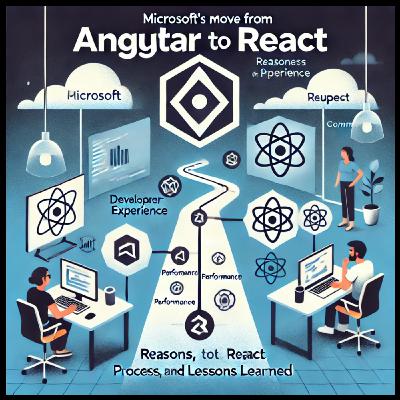
In this episode, we delve into Microsoft’s strategic decision to migrate from Angular to React for its applications. This shift represents more than just a change in frameworks; it’s a move aimed at improving performance, developer experience, and tapping into a broader ecosystem.Key topics include:Why the Change? Exploring the reasons behind Microsoft’s decision to transition to React, including better performance, flexibility, and developer experience.The Migration Process: An overview of the hybrid approach Microsoft used to gradually transition from Angular to React, minimizing disruption and maintaining application stability.Angular vs. React: A detailed comparison between the two frameworks, covering key aspects such as learning curve, performance, community support, flexibility, and speed of development.Tune in as we break down the technical and strategic insights from this migration, discuss the strengths and weaknesses of Angular and React, and uncover valuable lessons for organizations considering similar transitions. This episode is perfect for developers, tech leads, and architects looking to understand the real-world implications of framework shifts in large-scale applications.
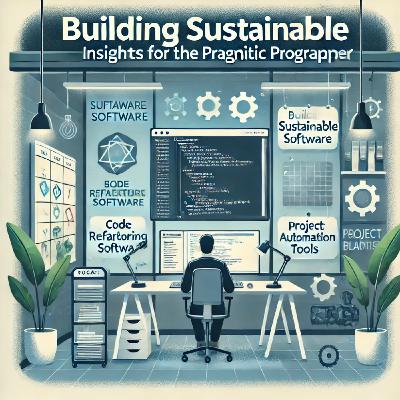
In this episode, we explore timeless principles for creating sustainable software systems, inspired by insights from The Pragmatic Programmer. The authors, Andrew Hunt and David Thomas, offer a wealth of practical advice for developers aiming to build systems that remain robust, efficient, and adaptable over time.Key takeaways include:Continuous Learning: Why staying current with new skills and technologies is essential for long-term success.Eliminating Redundancy: The benefits of avoiding repetitive code and processes, which helps reduce errors and technical debt.Component Independence: How designing loosely coupled components promotes scalability and flexibility in software systems.Proactive Problem-Solving: Addressing small issues early to prevent the buildup of technical debt and maintain code quality.Refactoring and Prototyping: The role of iterative improvements and rapid feedback through prototypes in enhancing system quality.Automation: Automating repetitive tasks to improve productivity and reduce the likelihood of human error.Team Communication and Collaboration: Fostering clear and open communication within teams to ensure that everyone is aligned and informed.Join us as we unpack these pragmatic principles and discuss how embracing them can lead to sustainable, adaptable software that stands the test of time. Whether you're a seasoned developer or new to the field, this episode provides actionable insights for building software that truly lasts.
In this episode, we dive deep into The Architect's Dilemma: Holding On or Letting Go, a fundamental challenge faced by architects and technical leaders. Inspired by the insights from Building Evolutionary Architectures by Neal Ford, Rebecca Parsons, and Patrick Kua, we explore how architects can balance the need for architectural consistency with the freedom to innovate.We cover essential concepts such as:Fitness Functions: Discover how automated guardrails help maintain core architecture qualities, allowing architects to focus on high-level goals while granting teams autonomy.Incremental Change and Experimentation: Why small, controlled experiments reduce risk and support continuous improvement, giving teams the freedom to adapt.Guardrails vs. Guidelines: Understand the power of guardrails in enabling flexible, sustainable architectures while protecting key system requirements.Collaboration and Contextual Decision-Making: How close collaboration between architects and development teams helps align decisions with a shared architectural vision.Aligning Architecture with Business Goals: Shifting focus from purely technical control to business capabilities, ensuring architecture evolves with both technological and market demands.Join us as we uncover practical strategies to navigate this dilemma, drawing from real-world examples and proven approaches. Whether you’re a software architect, team lead, or developer, this episode offers valuable insights into creating adaptive architectures that balance stability with flexibility.
Episode Summary:In this insightful episode, we dive into the innovative concepts of Selective Service-Oriented Architecture (SSOA) and Selective Frontend Architecture (SFA). Discover how these tailored approaches to software and frontend architecture are reshaping the way modern applications are designed, deployed, and scaled. We'll explore SSOA's core principles, which prioritize flexibility, modularity, and optimized service selection for complex systems, and how it enhances the development of scalable, robust applications.Episode Highlights:Understanding SSOA and SFA: Learn the foundational principles of Selective Service-Oriented Architecture and Selective Frontend Architecture, including why they matter in today’s fast-evolving tech landscape.Key Advantages: Discover the benefits of SSOA and SFA, such as improved modularity, maintainability, and flexibility, helping businesses achieve faster deployment cycles and better system resilience.Real-World Applications: See how these architectures apply to cloud-native, hybrid, and microservices environments, along with use cases across industries that demonstrate their effectiveness.Tools and Frameworks: Get a brief overview of tools like Azure ARM, Bicep, Terraform, and frontend frameworks like Blazor, Angular, and React, showcasing how they support SSOA and SFA implementations.Whether you're a software architect, developer, or tech enthusiast, this episode provides a practical understanding of SSOA and SFA, equipping you with knowledge to implement these architectures for modern software systems.Tune in to discover how Selective Service-Oriented Architecture and Selective Frontend Architecture can transform your approach to software development and elevate your projects to the next level.
Microsoft Azure Deep Dive: Understanding Cloud Services, Storage, and SecurityIn this Azure Deep Dive episode, we explore the extensive range of Microsoft Azure services, including Azure Fundamentals, Virtual Machines, and Databases. We'll guide you through key concepts like Infrastructure as a Service (IaaS), Platform as a Service (PaaS), and Software as a Service (SaaS) using relatable analogies. Discover Azure's various storage solutions such as Blob, File, Table, and Queue Storage, and learn about critical aspects of data redundancy and security. We delve into Azure Virtual Machines, Virtual Networks, and their applications, emphasizing flexibility, scalability, and cost management. Additionally, this episode covers Azure's powerful management tools like the Azure Portal, Azure PowerShell, and Azure CLI, providing a comprehensive understanding of how businesses leverage Azure for development, testing, hybrid cloud setups, modernization, and more.
Comments


Download from Google Play

Download from App Store
 United States