


 Claim Ownership
Asia Business Podcast
Subscribed: 9Played: 48
Subscribe

© Art Dicker
Description
We interview some of the leading entrepreneurs and industry experts on cross-border business in the region and globally.
86 Episodes
Reverse
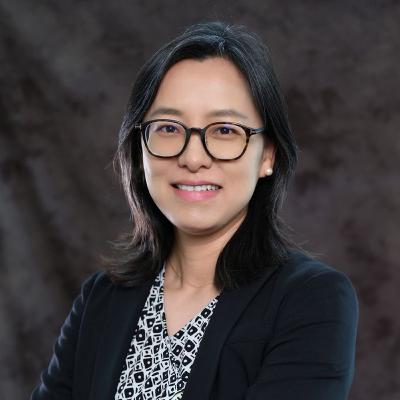
Chinese biotech companies have increasingly emerged as global innovators, licensing drugs and technologies to U.S. companies and attracting international capital. Could Chinese medtech be next?In this episode of the Asia Business Podcast, Art Dicker and Chris DeAngelis speak with Tiffany Xu, founder and CEO of Seasalt Partners and host of the MedTech Circle Podcast, about Chinese medical device companies and their prospects in the U.S. market.Tiffany explains why Chinese medtech companies have historically been stronger as manufacturers and fast followers than as global innovators—and why medical devices face very different challenges from pharmaceuticals when expanding internationally.The conversation explores the high cost of U.S. market entry, FDA and clinical requirements, the importance of physician KOLs and distribution channels, and why even a technically strong product can struggle to gain traction in the United States.They also discuss where the next opportunities may emerge, including lower-risk Class II devices, partnerships between Chinese innovators and U.S. commercialization teams, and Chinese CDMOs providing cost-effective engineering, design, prototyping and small-batch manufacturing for U.S. medtech startups.Finally, Tiffany considers whether medtech could eventually develop its own version of the cross-border “NewCo” model that has become increasingly important in biotech—and what would need to happen for that market to develop.
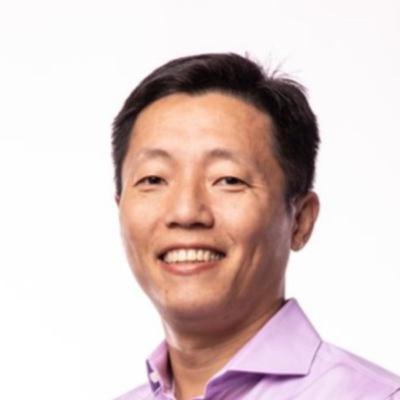
China has rapidly emerged as one of the most important sources of biotech innovation in the world. But what is driving that growth—and what does it mean for U.S. biotech companies, pharmaceutical companies and investors?In this episode of the Asia Business Podcast, Art Dicker speaks with David Cao, founder of Target2Drug BioAdvisory and a strategic advisor to VCs, biotech startups and biopharma companies. David has spent his career across both the U.S. and Chinese life sciences ecosystems and helps companies navigate opportunities between the two markets.David explains why China’s biotech rise is the result of decades of investment in scientific talent, research infrastructure and drug-development capabilities—not an overnight phenomenon. They discuss China’s particular strengths in drug discovery and early-stage clinical development, including why trials can often move faster and at lower cost in China.The conversation also explores the surge in China-to-U.S. biotech licensing, the growing importance of Chinese-developed ADCs and bispecific antibodies, and the rise of the “NewCo” model, in which U.S. investors build new biotech companies around assets sourced from China. David explains why Chinese biotech companies increasingly want more than a traditional licensing payment—they may also want equity, board participation and the opportunity to learn how global drug development works.Art and David also examine an underappreciated opportunity for Western biotech companies: conducting clinical development in China, particularly for rare diseases where the concentration of patients at major Chinese hospitals can dramatically accelerate recruitment.Finally, they tackle the larger question hanging over the industry: Is the growth of Chinese biotech a threat to the U.S. industry, or can the two ecosystems complement each other? David argues that drug development is fundamentally global—and that combining American strengths in breakthrough science, capital and global clinical development with Chinese strengths in drug discovery, speed and early clinical development could ultimately produce better medicines faster and at lower cost.The episode offers a practical look at how the U.S.–China biotech relationship is evolving from simple licensing transactions toward a much deeper and more interconnected model of collaboration.Connect with David:https://www.linkedin.com/in/songsong-david-cao/https://www.t2dbioadvisory.com/

In this episode of the Asia Business Podcast, former AmCham Shanghai chairman Ker Gibbs discusses his new book, The Fragile Dragon, blending his family history, decades of experience in China, and insights from leading one of the most important American business organizations in the country. Gibbs explains that the book grew out of two experiences: discovering his own family’s deep ties to modern Chinese history and realizing how little many Americans understand about China beyond the headlines. His Chinese grandfather was a prominent lawyer, his American father was a Chinese-speaking military intelligence officer, and his own career took him to China in 1985, where he witnessed the country’s transformation firsthand. The central theme of the book is that China is both powerful and vulnerable. Gibbs argues that many Americans view China as an unstoppable global force, while overlooking the country’s internal weaknesses, difficult geography, and deep sense of historical insecurity. He believes understanding these vulnerabilities is essential to understanding China’s actions, particularly regarding Taiwan, the South China Sea, and relations with the United States. The conversation also explores how Americans and Chinese view history differently. While Americans often move on from past conflicts, Chinese leaders and citizens continue to draw lessons from historical experiences such as the Korean War and the “Century of Humiliation.” Gibbs argues that these historical memories still shape China’s worldview today. Finally, Gibbs discusses lessons from doing business in China, including why companies such as eBay struggled while local competitors succeeded. He emphasizes the importance of humility, local decision-making, and understanding China on its own terms.This episode offers a thoughtful and nuanced perspective on China, helping listeners move beyond simplistic narratives and better understand one of the world’s most important and complicated relationships.You can purchase The Fragile Dragon on Amazon here: https://a.co/d/05xH8Rwh

In this episode of the Asia Business Podcast, we're joined by Tommy Shiekman, Senior Vice President at Intralink. Tommy discusses his journey from studying Chinese language to his current role at Intralink, an advisory firm assisting technology companies with cross-border expansion in Asia. He shares insights into working in China, the importance of having boots on the ground, and managing misconceptions about intellectual property. We delve into the challenges and strategies for U.S. tech companies entering Asian markets, emphasizing patience and the need for anchor clients. Tommy also highlights the impacts of geopolitical tensions and identifies sectors with significant opportunities, such as clean tech, healthcare, and mobility.
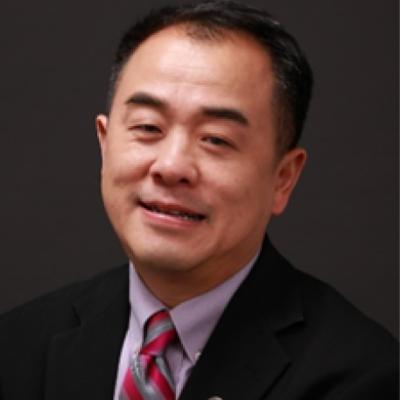
In this episode of the Asia Business Podcast, we're joined by John Ling, Managing Director at LinVest Consulting, to discuss the ongoing dynamics of US-China trade and investment. John highlights the immense interest Chinese companies still have in the US market, despite political challenges and high tariffs. He shares his experiences of navigating the competitive Chinese market, emphasizing the importance of relationships in China. Additionally, John explores the innovative strides in Chinese manufacturing, particularly in robotics and automation, and the potential impacts of a rumored $1 trillion investment deal between the US and China. This discussion sheds light on the complexities and opportunities in the bilateral trade relationship.

Comments

Download from Google Play

Download from App Store
 United States