


 Claim Ownership
Asia Tech Podcast
Subscribed: 11Played: 125
Subscribe

© Michael Waitze Media
Description
All Things Asia, All Things Tech
417 Episodes
Reverse

Across Asia, climate risk appears to be rising faster than the systems designed to manage it. Floods, fires, extreme heat, and storms are seemingly more frequent and more destructive, while large parts of society remain underinsured or completely unprotected. In this episode of ATP featuring Bernhard Kotanko, Senior Partner at McKinsey & Company, Hong Kong, and Shwetank Verma, Co-Founder and Managing Partner at Leo Capital, discuss how climate risk is no longer a distant or technical problem for insurance in Asia. It is a daily, lived reality that is exposing deep structural weaknesses in how insurance protection is designed and delivered.Some of the topics that Bernhard and Shwetank covered in detail include:The insurance protection gap in Asia is real and it is getting larger, not smaller.GDP is becoming intangible, meaning that natural catastrophe losses can look less dramatic relative to GDP even while the physical economy absorbs bigger shocks.A lot of climate loss ultimately lands on public balance sheets and pretending this is “private” is fantasy.Loss prevention is cheaper to than reapir, but funding prevention is harder to finance.Insurance can be an “apex predator” that forces better building behavior through building codes and construction standards.

Insurance is undergoing a subtle but profound transformation, one that will ultimately redefine trust, customer experience, and the very nature of protection. It is entering a pivotal shift from slow, reactive processes to experiences that feel immediate, intuitive, and nearly invisible.In this episode of ATP, Julien Condamines, co-Founder and Chief Revenue Officer at NOVOai, explains, trust is the core challenge. While Shwetank Verma, o-founder & Managing Partner, Leo Capital, highlights how Asia’s digital infrastructure is accelerating this transformation, from nationwide identity systems to frictionless payment rails.Some of the topics that Julien and Shwetank covered in more detail include:Claims continue to be the moment of truth when a policy holder is most vulnerableIn this context, claims at scale, still generally run on outdated systems and processesAI has reached a point where it is finally good enough to make sense of messy, real-world claimsThe claim form itself is becoming obsolete as true digital transformation takes shapeAs always, the biggest barrier to change isn’t technology, it is organizational fear

The value of the internet is being restructured, again. This time it is not just about information or communication. It is about ownership, identity, value, and agency. A big question we tried to answer was how Asia may be building the foundation of a new economic operating system for the world.The next era of the internet will not be defined by faster applications or richer interfaces, but by a fundamental shift in who owns the digital world. In ATP's conversation with Yat Siu, Co-Founder and Executive Chairman of Animoca Brands, and Kenneth Shek, Project Lead at Moca Network, a clear theme emerges: digital property rights, portable identity, and programmable value will form the new economic foundation of the internet.Some of the topics that Yat and Kenneth covered in detail include:How the early web democratized information but failed to democratize ownership, allowing platforms to capture nearly all of the economic upside.The internet's first revolution was the dissemination of information. The next phase will be driven by full digital property rights.Yat asserts that blockchain returns ownership to individuals in the same way that property rights created modern capitalism.Yat's belief that open source software created an arbitrage for those who knew how to code.The mistake that "digital identity" simply means a digital passport. Digital identity is the totality of your data, behavior, and reputation, and the value others assign to it.The assertion that tokenization will create the greatest financial literacy boom in human history.

Asia’s economic landscape is shifting in ways that no longer follow a clean, upward trajectory. Growth, opportunity, and digital adoption are accelerating for some, yet financial vulnerability is deepening for others.This episode of ATP with with Lito Villanueva (RCBC), Weili Dong (PayJoy), and Ramesh Jairam (OneConnect Financial Technology) brought clarity to what a K-shaped recovery looks like on the ground—and what it will take to build a path toward a more inclusive future.Some of the topics that Lito, Weili, and Ramesh discussed in detail included:Financial vulnerability is increasing even as digital connectivity deepens. This massive increase in connectivity has not been matched with improvements in wages or formal credit access.There are large economic differences between large urban centers and geographically isolated rural areas.Last-mile financial infrastructure can fundamentally transform previously under or unserved communities.Credit access is becoming the defining gap in k-shaped economies. The real economic divide is those with credit access and those without.Smartphones are no longer simply for communication and sharing. Smartphones are now the strategic engines of financial infrastructure.Alternative data is continuing to rewrite the rules and frameworks of credit analysis and underwriting.

Financial institutions are entering a new phase in which automation is no longer the goal, autonomy is. Instead of tools that simply expedite tasks, agentic AI is beginning to observe, reason, and take action across operational workflows. This shift can fundamentally change how work gets done.In this episode of ATP, Julien Condamines, co-Founder and Chief Revenue Officer at NOVO.ai and Chee Beh, SVP and GM of APAC at Yuno explain that agentic AI is beginning to handle not just tasks, but entire operational outcomes, freeing humans from repetitive workflows and pushing them toward higher-order judgment, empathy, and strategic thinking.Some of the topics that Julien and Chee discussed in detail include:Automation improves efficiency, but agentic autonomy changes the fundamental design of work.Expertise matters more than ever in an AI-Driven world and the quality of AI output depends on the quality of human input.Human intuition does not go away, it becomes much more valuable.Every transformative tech cycle predicts massive job losses; yet that has historically been wrong. As new tools increase productivity, organizations generate new problems for humans to solve.Removing tedious work suddenly frees teams to pursue ideas for which they never had time. Projects that had been stuck in “dream” mode now have the opportunity to flourish.

Asia’s financial landscape is evolving along uneven but deeply revealing lines. Southeast Asia is shaped by speed, experimentation, and the need for financial inclusion at scale, while Japan is defined by stability, institutional trust, and a deliberate approach to modernization.In this episode of ATP, Samantha Ghiotti, a co-Founder and CEO of Habitto and Shwetank Verma, a co-Founder and Managing Partner at Leo Capital, discuss how these differences illuminate why digital public infrastructure, identity systems, interoperable payment rails, and secure data-sharing frameworks, will be central to the region’s next phase of fintech growth.Some of the topics that Samantha and Shwetank discussed in detail included:Digital public infrastructure will be the primary catalyst of innovationIndia’s public digital infrastructure is more advanced than much of the rest of the worldSoutheast Asian startups still cannot scale like founders imagined back in 2012Data sovereignty is the next big battle and the markets where data portability becomes a norm will see faster innovationThe next decade of Asian FinTech will be defined by convergence, building infrastructure that prioritizes stability, trust, and long-term consumer protection

Artificial intelligence is rapidly becoming one of the most influential forces inside modern enterprises, and insurance is no exception. Its potential to automate underwriting, accelerate claims, and deliver unprecedented predictive insight is immense.While AI is starting to reshape insurance with speed and scale, it also exposes a hard paradox: the industry that prices uncertainty is hesitant to insure AI-driven uncertainty. In this episode of ATP, Bernhard Kotanko, Senior Partner at McKinsey and Asia-Pacific Insurance Practice Leader, and Julien Condamines, co-Founder & Chief Revenue Officer at Novo AI, argue that AI creates two intertwined risk fronts—enterprises deploying AI and insurers using it themselves. Some of the topics that Bernhard and Julien discussed in detail include:Although insurers may be stepping back from covering AI liabilities today, the industry’s history proves it eventually develop frameworks for new and unprecedented threats.Insurance contracts will be forced to change as AI inserts new third parties into every process and liability becomes fragmented.Both reject the idea that AI should autonomously make underwriting or claims decisions. Humans should remain in the loop.Artificial intelligence enables massive underwriting productivity, but only with good data.Insurance remains an emotional business. AI may be able to process documents, detect patterns, and generate proposals, but only humans can reassure someone in crisis.

Scam operations have transformed into highly organized, cross-border networks that function less like lone criminals and more like global enterprises. These groups build physical infrastructure, create vast fleets of fake or stolen accounts, and use AI to generate convincing messages, voices, and identities.As David Agranovich, Director, Global Threat Disruption at Meta, explains on this episode of ATP, today’s fraud ecosystem spans physical compounds in Southeast Asia, cross-platform digital infrastructure, and AI-accelerated content generation.Some of the topics that David covered in detail included:Scam networks now operate like multinational corporations. The are armed with hundreds of devices, routers, and workers...industrializing fraud.COVID did not just reshape work culture, it supercharged online crime.A scam is not a message, it is a carefully crafted lifecycle. Scams have a structured attack chain, similar to cyber-warfare kill chains.Modern, scaled scams are inherently cross-platform so combatting fraud requires coalitions, not silos.Fraud detection and defenses require tech companies to collaborate in this space, not compete.

The convergence of blockchain technology with real-world commodities is beginning to challenge long-held assumptions about who can access and trade strategically important assets. Uranium, once limited to large utilities and specialized traders because of regulatory and logistical barriers, is now being reimagined as a digitally native, globally accessible commodity.In this episode of ATP, Arthur Breitman, co-founder of Tezos and the visionary behind Uranium.io, reveals how tokenizing uranium is less about crypto experimentation and more about solving a long-standing market inefficiency. Uranium, one of the world’s most strategically important commodities, has historically been inaccessible to all but large industrial players.Some of the topics that Arthur covered in detail include:Tokenizing uranium is not about crypto. It is a structural improvement to an inefficient market.Arthur believes that tokenizing uranium is about building a new, global market, with custody, global accessibility, interoperability, and 24/7 rails and that there is simply no better infrastructure layer than a public blockchain to accomplish this.When we spoke about blockchains in general, Arthur posited that transparency was never a feature; it was a constraint of early design.Most tokenized asset projects fail because they underestimate the legal fabric required to bind the digital and physical worlds.Interest in uranium is driven by three large macro factors, 1) an aging memory of past nuclear disasters, 2) climate pressures, 3) AI-driven energy demand.

Compliance is often viewed as a necessary burden, something designed to prevent mistakes rather than enable progress. Yet the ideas explored here challenge that assumption by reframing compliance as a potential catalyst for trust, speed, and intelligent growth.In this episode of ATP, Martin Markiewicz, CEO at Silent Eight and Boon-Hiong Chan, Industry Applied Innovation Lead at Deutsche Bank discuss the increasing complexity of today’s regulatory landscape. Diverging rules across markets, strict data-localization requirements, and growing expectations for explainability demand a more thoughtful approach to automation.Some of the topics that Martin and Boon-Hiong covered in detail included:High-velocity organizations treat compliance as part of product design and competitive strategy.Intelligent automation in compliance can flip unit economics, expanding total addressable market and funding growth.Treat compliance AI as an operational risk instrument you continuously tune against policy, appetite, and outcomes.Data localization is a constraint. Architect for local data, global signal: keep sensitive data in-place while exchanging derivatives of truth.Elevate talent from doing the work to governing the work, with tools that surface reasoning, variance, and drift.

Treasury is undergoing a fundamental shift as global businesses operate across more markets, more banks, and more currencies than ever before. The old model, built on spreadsheets, manual reconciliation, and after-the-fact reporting, cannot keep pace with real-time payments, 24/7 liquidity demands, and increasingly complex cross-border flows. In this episode of ATP recorded at SFF 2025, David Hanna (Finmo), Kriti Jain (Deutsche Bank), and Jessie Toh (Coda) paint a picture of Treasury as an ecosystem role, data-driven, modular, compliant, and deeply strategic, where Treasurers become designers of liquidity and key partners in how global businesses grow.Some of the topics that David, Kriti and Jessie covered in detail included:Treasury is moving from hindsight to foresight. The CFO, controller and treasurer are no longer just reporters of what happened; they are becoming strategic enablers.Fragmented data is the silent enemy of modern treasury. Centralizing data is the prerequisite for every other kind of sophistication.Connected financial intelligence is a better language than “treasury systems”, “Connected Financial Intelligence and Control” for the modern CFO.AI isn’t a buzzword for Finmo. It’s woven into how modern treasury actually gets done, designed to give finance leaders what David calls “financial second sight.”Cross-border liquidity is now a 24/7 discipline, not a monthly exercise.

Artificial intelligence is reshaping how information is created, processed, and acted upon, but it is also eroding the foundations of trust that business systems have relied on for decades. In the past, documents, signatures, and deterministic software offered predictable and auditable outputs.In this episode of ATP recorded at SFF 2025, Ben Stein, the CEO of Staple.ai, explains, this shift from predictable, rules-based systems to probabilistic, black-box models has created a widening “trust gap”, one that becomes especially dangerous in domains like finance, insurance, or government, where proof matters more than almost anything.Some of the topics that Ben discussed in detail:Artificial intelligence execution is abundant, but trust remains scarce. The isn’t about what AI can technically do, it’s about what we can confidently rely on when the stakes are high.In many cases, artificial intelligence is not merely hallucinating, it’s industrializing fraud.Systematic trust cannot be bolted on later. It has to start at the data layer.Meta-structured data, a cryptographic marker embedded directly into a file, is the source for embedded data trust.Trust will become a competitive advantage.

Cross-border commerce is entering its fastest, most chaotic growth phase in history. The world’s smallest sellers now have global reach, but they are trying to scale on top of payment infrastructure that was never designed for them.In this episode of ATP recorded at SFF 2025, Nicholas Liao, the Founder and CEO of Whalet explains that today’s MSME sellers are not just exporting products, they are building global brands across DTC sites, marketplaces, and social platforms. But while demand is global, payment systems remain deeply local.Some of the topics that Nicholas covered in detail included:MSMEs are not just exporting anymore; they are going global as brands and Whalet is helping facilitate this.Cross-border eCommerce is exploding, but the payment rails are still missing.One of the most powerful threads in the conversation: payment localization is not a “nice to have.” It’s existential.APAC is home to a staggering 71 million MSMEs, but persistent barriers keep them from selling cross-border.The Belt and Road is no longer just railways and ports. It’s increasingly about digital trade corridors.

The idea of programmable money represents a fundamental shift in how value moves through the digital economy. Instead of money acting only as a static store of value or medium of exchange, it becomes a dynamic instrument capable of carrying rules, conditions, and logic.In this episode of ATP recorded at SFF 2025, Effie Dimitropoulos, the CEO of AUDD Stablecoin, notes that programmable money is not a sudden disruption but the next step in a long evolution of how value moves in the digital world.Some of the topics that Effie covered in detail:Programmable money can attach rules and logic as to where, how and when money can be used.Our comfort with digital money did not just appear. It was earned over time, largely through the rise of the smartphone and everyday digital behaviors.Australia’s economic ties to Asia are deep and complex. Yet the money behind those flows is often routed through a slow, expensive, opaque infrastructure.Tokenization and stablecoins are two sides of the same digital coin.No conversation about stablecoins is complete without talking about regulation. Regulation is not a drag; it’s the precondition for trust at scale.
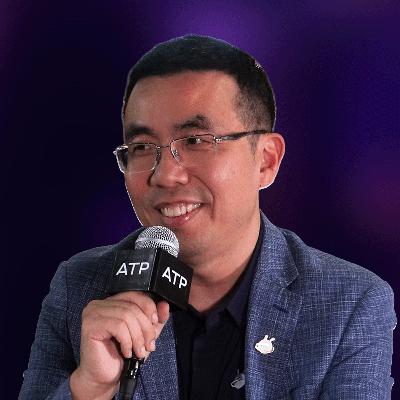
Artificial intelligence is reshaping the way money moves, turning payments from isolated actions into intelligent, context-aware interactions. Instead of searching, tapping, or navigating apps, users will increasingly rely on AI agents that understand their routines, anticipate their needs, and act proactively, often before they make a request.In this episode of ATP recorded at SFF 2025, Jiangming Yang, Chief Innovation Officer at Ant International, explains how AI-powered agents can understand a user’s context, anticipate needs, and act in advance.Some of the topics that Jiangming covered in detail included:Payments are becoming intelligent experiences, not transactions. Jiangming emphasized that AI changes the nature of interaction itself.Agentic AI Is redefining how consumers discover products, decide and make payments.A I will become the operating partner for global business expansion. Instead of consulting multiple advisors for growth, a business could ask a single AI agent for all of the help it needs.Collaboration among agents could fundamentally reshape global commerce.Every innovation pipeline should be gated and supported by security, permission controls and verification layers.

Payments are becoming both more complex and more interconnected, especially across a region as diverse and fast-moving as Asia. The landscape is defined by massive scale, deep fragmentation, and rapid innovation, all of which demand infrastructure that is global at the core but deeply local in execution.In this episode of ATP filmed at SFF 2025, Jeff Parker, CEO of Paymentology, explains how a single global platform can navigate successfully with different markets, cultures, and payment networks.Some of the topics that Jeff covered in detail included:Asia is huge but fragmented. This forces serious players to think beyond generic “global solutions” and build infrastructure that can flex, localize, and still stay coherent.Paymentology's deep configuration that lets each client shape products for their own needs and local nuances. Localization is a blend of platform design and human presence.Culture is not a side-issue, it drives how payment ecosystems actually work and thrive.One rovocative observation: the issuing market is about ten years behind the acquiring market.Embedded finance is really about orchestrating ecosystems.

Asia’s accelerating digital transformation has created an environment of unprecedented interconnection, and unprecedented vulnerability. Threats now move quickly across borders, clouds, and supply chains, exposing both large enterprises and SMEs to risks that often stem from the simplest gaps: weak authentication, exposed remote access, and misconfigured systems.In this episode of ATP, Paul Jackson, CEO of THEOS Cyber, argues defenders can keep pace when fundamentals are properly applied and Gene Yu, CEO of Blackpanda, frames resilience as the speed and effectiveness of ‘Readiness, Response, and Recovery’.Some of the topics that Paul and Gene covered in detail include:Resilience in the cyber space starts with “properly applied” basics, yet most organizations simply have not applied the fundamentals.Cyber insurance is essential, cyber preparedness should not be outsourced to a policy.Resilience is a rehearsed behavior...full stop.Business interconnectivity drives value, but third party risk is now first-order risk.Regulation matters, but enforcement of that regulation is the real lever.

Financial innovation in Asia is accelerating, but not in a uniform way. Markets across the region move at very different speeds, shaped by culture, regulation, and consumer behavior. At the same time, major technological shifts are underway.In this episode of ATP, Chee Beh, SVP & GM APAC at Yuno, explains how the center of gravity is shifting from Generative to Agentic AI, where autonomous agents do not just make recommendations but execute end-to-end actions.Some of the topics that Chee discussed in detail included:Last year’s frontier was GenAI. This year’s is agentic AI: autonomous, goal-oriented agents that don’t just suggest, but do. Autonomous commerce agents are only half the story. Payments agents will choose among your payment methods to optimize for your payment objectives.Payment or frankly any technological optimization is getting more and more personalized and multi-dimensional.For agentic commerce to complete the loop, merchant agents and consumer agents must communicate seamlessly, with payment orchestrators acting as the connective tissue.Southeast Asia markets behave like startups: price-sensitive, experiment-friendly, and hungry for growth. Japan behaves more like an enterprise: precision, trust in institutions, and measured adoption.

Artificial intelligence is forcing humanity to confront what truly makes us valuable. As machines become more capable of performing tasks once reserved for human intelligence, the definition of talent is shifting away from knowledge and efficiency toward qualities like judgment, empathy, creativity, and ethical decision-making.In this episode of ATP, Jeevika Makani, Francis Pẽna, and Kristen Lim posit that while AI levels access to information, it ultimately widens the gap between people who use it to deepen thinking and those who accept generic outputs.Some of the topics they covered in detail included:There is no room for nostalgia about grunt work. Offloading drudgery is progress if we use the time to think, decide, and connect.AI Tools do not replace creativity; they raise the bar for originality.The new premium skills are stubbornly human. Empathy, ethics, and relationship-building do not compress to an AI prompt.Mainstream exposure to AI is barely two years old. As a community, we will build collective intuition for what AI is good at and where it fails.AI is democratizing product creation for SMEs and other small companies.

Across Southeast Asia, small and medium-sized enterprises are the driving force of economic growth, yet many still face obstacles when accessing financing, managing payments, and expanding beyond their home markets. Fintech innovation is reshaping this reality by bridging gaps through digital payment infrastructures, data-driven lending, and localized financial tools.In this episode of ATP, Chen Yu (Nicholas) Liao, CEO of Whalet, and Vikas Jain, Country Head (Thailand) at Funding Societies, argue that the region’s fragmentation, multiple currencies, regulations, and languages, makes regional trade complex and that the path forward is “global vision, local rails”.Some of the topics that Nicholas and Vikas covered in detail include:Cross-border revenue is the most resilient, highest-quality revenue an SME can earn. The difference between aspiration and execution is whether you meet customers where they already areIn fragmented markets like Southeast Asia, trust is the conversion rate. Every mismatch between what a customer expects and what your business actually offers is silent churn.Payments data is the new collateral. Alternative data collapses the time it takes to earn credit trust. The faster an SME can turn “sales” into “creditworthiness,” the faster it can inventory up, hire, and expand.Lending and payments are two sides of the same coin. If a payment platform can provide verifiable, permissioned sales data to a lending platform, you can unlock pre-approved, one-click offers at the moment of need.AI could now be the SME’s unfair advantage if they know how to use it well. AI narrows the talent gap and turns lean teams into leverage.

Comments

Download from Google Play

Download from App Store
 United States