



 Claim Ownership
Autonocast
Subscribed: 34Played: 909
Subscribe

Description
Zero BS conversations w/Alex Roy, Kirsten Korosec, and Ed Niedermeyer about autonomy, electrification, and the future of transportation.
381 Episodes
Reverse
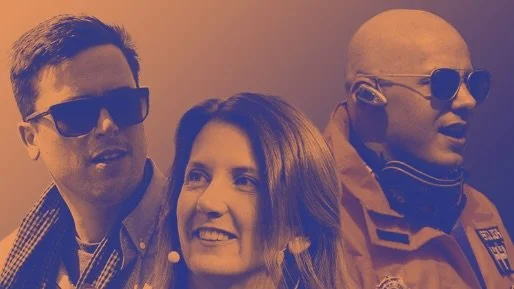
Ed’s in Venice, so Alex and Kirsten discuss the FUKT.Purist Satirical Hypercar Reveal, fake engine sounds and smells, privacy, surveillance, Angeles Death Highway, Waymo in San Diego, Dumb Headlines, the Rivian R2, CyberCab challenges for 1st Responders, and Alex makes a prediction.EPISODE TIMESTAMPS00:00 — Welcome to The AutonocastAlex and Kirsten open an Ed-free episode and discuss Ed Niedermeyer’s trip to Europe for the premiere of Alex Gibney’s Elon Musk documentary.04:27 — FUKT Global and the Ultimate Car-Culture SatireAlex introduces FUKT Global and Angela’s Death Highway, unpacking a viral AI-powered parody of modern enthusiast cars, EVs, synthetic driving experiences, and automotive marketing.08:39 — Fake Engine Sounds, Fake Manuals & Fake Gasoline SmellsWhy FUKT’s fictional electric “Purist” brilliantly skewers synthetic transmissions, artificial engine sounds, simulated shifting, and the auto industry’s attempts to recreate analog driving.12:02 — Surveillance, Flock Cameras & the Future of Driver PrivacyThe parody gets more serious: 14 interior cameras, connected vehicles, driver monitoring, and the provocative idea that “safety should follow the driver, not the car.”13:26 — Is This the Nightmare Future of Human Driving?Alex explains how mass-market vehicles could become increasingly automated, monitored, and restricted while true analog driving becomes a luxury available primarily to wealthy enthusiasts.15:00 — Can Technology Preserve Driving Freedom?A vision for future EVs that could reproduce the performance, sound, feel, and dynamics of classic Mustangs, Porsche 911s, and other enthusiast cars while balancing safety, privacy, freedom, and agency.17:03 — What Would an Autonomous-Vehicle Satire Look Like?The hosts imagine applying FUKT’s approach to the AV industry: billion-dollar fundraising, robotaxi promises, surveillance, shifting timelines, and technology pivots.19:00 — Tesla Cybercab and the Power of “Narrative Command”Kirsten examines the optics surrounding Tesla’s Cybercab event and how a relatively small deployment can appear enormous through social media, influencers, and Tesla’s ability to control the autonomy narrative.21:01 — Tesla vs. Waymo: Perception vs. DeploymentAlex argues that Waymo may have thousands of vehicles operating while Tesla has far fewer Cybercabs, yet public perception increasingly treats the companies as peers in the robotaxi race.22:35 — Robotaxis Without Steering Wheels or PedalsZoox and Tesla Cybercab introduce a new safety challenge: what happens when a driverless vehicle without conventional controls becomes disabled or stuck?23:51 — First Responders and the Driverless-Car ProblemKirsten discusses emerging California rules addressing how autonomous vehicles interact with police, firefighters, emergency personnel, teleoperators, and roadside incidents.26:09 — Riding Waymo in San DiegoFresh from Waymo’s newly launched San Diego service, Kirsten describes pricing, pickup locations, routing, passenger experience, and how the service compares with Uber.28:04 — Would You Put Your Child in a Waymo Alone?The discussion turns from abstract AV safety to a much more personal threshold: what would parents need to know before allowing a child to travel alone in an autonomous vehicle?29:06 — Robotaxis, Uber & Personal SafetyKirsten explores the tradeoff between a driverless vehicle that may require passengers to walk several blocks and a human-driven Uber offering true door-to-door service.32:42 — Why Autonomous Cars May Not Kill Car OwnershipAlex argues that parents and existing car owners may prefer personally owned autonomous vehicles that are always available rather than relying exclusively on shared robotaxi fleets.33:39 — The Cybercab First-Responder QuestionThe hosts return to Tesla Cybercab and debate how vehicles without manual controls can be moved when software, connectivity, or autonomy fails.35:23 — Tesla Cybercab, FMVSS & NHTSAKirsten explains the federal self-certification process, Tesla’s Cybercab approach, vehicles without traditional controls, and NHTSA’s inquiry into whether alternative systems satisfy federal safety requirements.37:47 — Is the NHTSA Inquiry a “Something Burger”?Alex and Kirsten debate how significant the federal scrutiny really is—and whether Tesla will simply continue deploying until regulators establish a boundary it must address.39:01 — Can You Drive a Cybercab With a Controller?A discussion of service modes, remote assistance, emergency controls, and reports and images suggesting unconventional ways Cybercabs might be maneuvered without a steering wheel.39:23 — The Waymo Headline Where Nothing HappenedThe hosts dissect a San Francisco Chronicle story about a toddler, a crosswalk, and an approaching Waymo—and debate clickbait versus meaningful AV safety journalism.42:26 — Why One AV Incident Can Affect the Entire IndustryAlex and Kirsten discuss how autonomous vehicles are often treated as a single technological category, meaning a serious incident involving one company could damage public confidence in every AV developer.44:28 — Has the Consumer AV Safety Debate Already Been Won?Alex clarifies his argument that, whatever unresolved regulatory and technical issues remain, autonomous vehicles are increasingly becoming normalized in the minds of ordinary consumers.45:14 — Kirsten’s First Drive of the Rivian R2Kirsten previews her extended Rivian R2 test, discussing its driving experience, interior materials, ergonomics, improvements over the R1, and some surprisingly important design details.47:44 — Could the Rivian R2 Replace Alex’s Tesla Model S?Alex explains why Tesla FSD—or an equivalent point-to-point driver-assistance system—has become a requirement for his next new vehicle, while Kirsten prepares to test Rivian’s latest ADAS capabilities.48:15 — The Future of Driving & The Autonocast PartyThe episode closes with thoughts on how long human driving will remain practical and an early preview of the tenth annual Autonocast party.Topics: Tesla Cybercab, Waymo, autonomous vehicles, robotaxis, Tesla FSD, NHTSA, FMVSS, Zoox, Rivian R2, Uber, AV safety, autonomous vehicle regulation, first responders, driverless cars, automotive surveillance, Flock cameras, EVs, human driving, car culture, AI, ADAS, privacy, mobility, and the future of transportation.
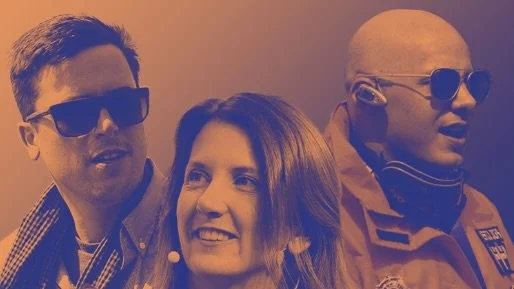
In this episode of The Autonocast, Alex Roy, Ed Niedermeyer, and Kirsten Korosec debate the latest wave of autonomous vehicle optimism, sparked by Uber President and COO Andrew Macdonald’s prediction that his young children may never need driver’s licenses. The crew compares today’s robotaxi boom with the AV hype cycle of 2015–2016—and examines what has genuinely changed now that companies like Waymo are operating commercial driverless services at meaningful scale.Alex also puts Waymo’s expanding Phoenix service to a very practical test: could a robotaxi eventually handle the chaos of the school drop-off line? The discussion explores the surprisingly difficult edge cases involved in transporting children autonomously, from human hand gestures and school personnel to pickup placards, freeway access, unaccompanied minors, and the limitations of both Waymo and Tesla FSD.Then the conversation turns to the increasingly important relationship between Uber and Waymo. Does Waymo really need Uber’s enormous ride-hailing marketplace? Or does Uber need Waymo more, at least until partners including AVride, Zoox, Wayve, Pony.ai, Lucid, and Nuro can deliver truly driverless service at scale? The hosts explore whether Uber could ultimately become the Expedia of autonomous transportation, aggregating competing robotaxi brands based on price, ETA, vehicle type, and availability.Finally, the crew tackles the future of human driving and car culture. From Monterey Car Week and Ferrari to manual transmissions, Porsche 928s, and the rise of AI, the hosts ask whether driving will eventually become a niche hobby—or whether the desire for control, agency, and physical experiences will ensure human-driven cars survive well into the autonomous age.
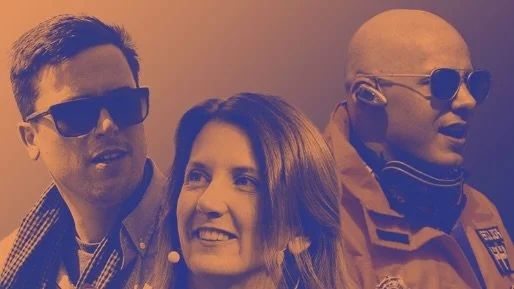
Uber is going all-in on autonomous vehicles, committing roughly $10 billion across more than 30 AV partnerships. But how many of those bets will actually produce commercially viable robotaxis—and does Uber ultimately become the Expedia of autonomous transportation?In this episode of The Autonocast, Alex Roy, Ed Niedermeyer, and Kirsten Korosec break down Uber’s sprawling autonomy strategy and debate which partners have the best chance of reaching meaningful scale. The discussion covers Waymo’s relationship with Uber, Wayve’s prospects in London, the Lucid-Nuro robotaxi program, Rivian’s autonomy ambitions, and whether consumers will ultimately book directly with robotaxi brands or through aggregators like Uber.The crew also examines Lucid’s operational reset, including major cost reductions, leadership changes, its delayed midsize EV, Saudi manufacturing plans, and why the Uber-Nuro robotaxi partnership could become critical to Lucid’s future.Then it’s on to Ford’s proposed $30,000 electric pickup, what it could mean for affordable EV adoption, and whether Ford’s scale and manufacturing experience threaten EV startup Slate. The hosts debate Ford’s opportunity to finally build a profitable mass-market EV platform, the importance of quality and reliability, and whether consumers really want the stripped-down, analog experience Slate is promising.Plus: Joby vs. Archer in the eVTOL race, the Porsche Cayenne EV, Tesla FSD and ADAS as a purchasing decision, Alex’s increasingly eccentric car collection—and what he should buy next.Topics include: Uber robotaxis, autonomous vehicles, Waymo, Wayve, Nuro, Lucid Motors, Rivian, Tesla FSD, Ford EVs, Slate Auto, affordable electric vehicles, Joby Aviation, Archer Aviation, eVTOL, robotaxi economics, AV regulation, self-driving cars, EV manufacturing, ADAS, and the future of mobility.

Alex Roy, Ed and Kirsten discuss Mobileye founder Amnon Shashua’s transition from CEO, Tesla’s expanding robotaxi ambitions, Waymo’s latest safety research, and the growing regulatory battle shaping autonomous vehicles. Also, Kirsten presses Alex on his uncharacteristic reticence.

Alex, Ed, and Kirsten sit down with George Kalligeros, CEO and co-founder of Aseon Labs, to explore the overlooked infrastructure required to scale autonomous vehicles and robotaxis. The discussion covers robotic vehicle servicing, decentralized charging, autonomous fleet maintenance, Waymo and Tesla operations, fleet economics, deadheading, EV charging networks, and the future of robotaxi deployment. George explains how Aseon’s mobile robotic service pods could dramatically improve fleet utilization while reducing operating costs, paving the way for scalable autonomous transportation.

Comments

Download from Google Play

Download from App Store
 United States