



 Claim Ownership
BBC News
Subscribed: 2,484Played: 187,080
Subscribe

Description
Breaking news, live updates and in-depth analysis from BBC News journalists around the world.
For the latest news download the BBC News app or visit BBC.com/news
For the latest news download the BBC News app or visit BBC.com/news
5000 Episodes
Reverse

The US-Israel war with Iran has expanded across the Middle East. The Tehran-backed militant group, Hezbollah, which controls parts of Lebanon, has launched rockets into Israel, prompting Israeli forces to carry out air strikes on the capital, Beirut and southern parts of the country. Dozens of people have been killed and thousands have been displaced.
We speak to the BBC's correspondent in Beirut, Lina Sinjab, about the impact of this conflict on the Lebanese people and their feelings towards Hezbollah.
New episodes of the Global News Podcast are published twice a day. You can listen here: https://link.mgln.ai/GNP-YT
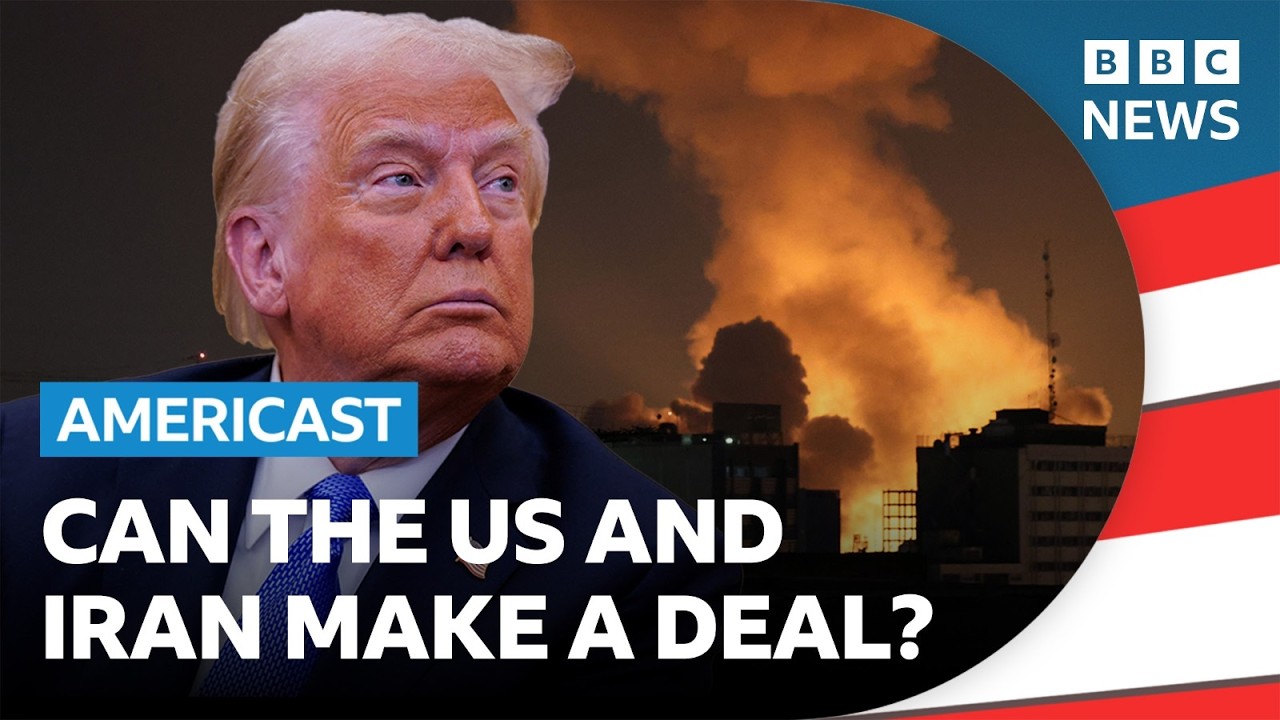
A key negotiator of the 2015 Iran nuclear deal discusses the likelihood of a deal between US and Iran.
Subscribe here: http://bit.ly/1rbfUog
Robert Malley is one of the architects of the Iran nuclear deal during Barack Obama’s presidency in 2015 and a former US special envoy for Iran under Joe Biden. He joins the podcast to discuss what's next after one week of the US-Israel war on Iran.
A key US linchpin on Iran policy, Malley was also a special assistant to Bill Clinton for Arab-Israeli affairs. The team ask him what it was like to be in the room with Iranian negotiators during the Obama and Clinton administrations. Plus, he reveals his view on which US president was best placed to achieve the strongest deal with Iran.
00:00 Introduction
00:58 Is there a deal to be done with Iran?
02:22 Inside view on negotiating with the Iranians?
03:47 Was the 2015 nuclear deal with Iran a good deal?
06:18 Does Trump have an advantage over previous presidents?
07:50 Trump's nuclear weapon claim: fact or fiction?
09:05 Does Iran have enough weapons to fight a war?
11:01 How is the US perceived in Iran?
13:12 Will Iran and the US end up back at the negotiating table soon?
For more news, analysis and features visit: www.bbc.com/news
#BBCNews

President Trump has said there will be "no deal" with Iran except "unconditional surrender" as the US-Israel war with Iran entered its seventh day.
Israel's military says it has launched a new wave of strikes in Iran and destroyed a military command bunker in Tehran using 50 fighter jets.
And Tehran residents tell BBC Persian "last night was the worst night" so far and describe strikes "every few hours".
BBC Persian is the Persian language service of BBC News, used by 24 million people around the world - the majority in Iran - despite being blocked and routinely jammed by Iranian authorities.
Subscribe here: http://bit.ly/1rbfUog
For more news, analysis and features visit: www.bbc.com/news
#US #Iran #BBCNews

The Security Brief speaks exclusively to a Ukrainian Special Forces Drone Commander on how the US and its allies in the Middle East can defend themselves against the Iranian Shahed drone – the same type of one-way attack vehicle used by the Russians to cause death and destruction across Ukraine.
As the US-Israel war with Iran continues, we take a closer look at what both sides have been targeting and look under the bonnet of Iran’s kamikaze drone. What can the region do to counter the Shahed-136 and will America’s current defence mechanisms be enough?
This is The Security Brief with the BBC’s Christian Fraser and former Senior British Military Officer, Mikey Kay.
Subscribe here: http://bit.ly/1rbfUog
For more news, analysis and features visit: www.bbc.com/news
#BBCNews

For Israel’s Prime Minister, Benjamin Netanyahu, the war with Iran is the culmination of a long-standing political ambition.
On Sunday, Netanyahu said he was finally doing what he had “hoped to achieve for 40 years – to crush the regime of terror completely”. Polling suggests the war is popular in Israel too.
But it’s a lot more complicated for Donald Trump. He was elected on a promise to end foreign wars, and current polling suggests the war is not supported by most Americans.
We talk to the BBC’s international editor Jeremy Bowen about whether this war, which Netanyahu says is an opportunity, complements or collides with Donald Trump’s own interests.
And we ask if Benjamin Netanyahu has everything to gain from this war, and Donald Trump a lot more to lose?
New episodes of The Global Story are released daily. If you’re in the UK, listen on BBC Sounds. If you live outside the UK, listen on BBC.com or wherever you get your podcasts.
LINK: https://app.magellan.ai/listen_links/the-global-story-ytl
Subscribe here: http://bit.ly/1rbfUog
For more news, analysis and features visit: www.bbc.com/news
#Israel #Iran #BBCNews
Chapters:
00:00 How has more to lose from the war with Iran?
01:21 What is Netanyahu's main motivation?
03:30 A long time coming for Netanyahu
05:25 How close have we been to war in the recent past?
08:00 Would this be happening with Donald Trump?
10:00 The so-called 12 day war against Iran
13:30 Who made the decision to start the war?
16:30 Why is Iran a difficult country militarily?
21:00 Will Trump or Netanyahu be happier so far?
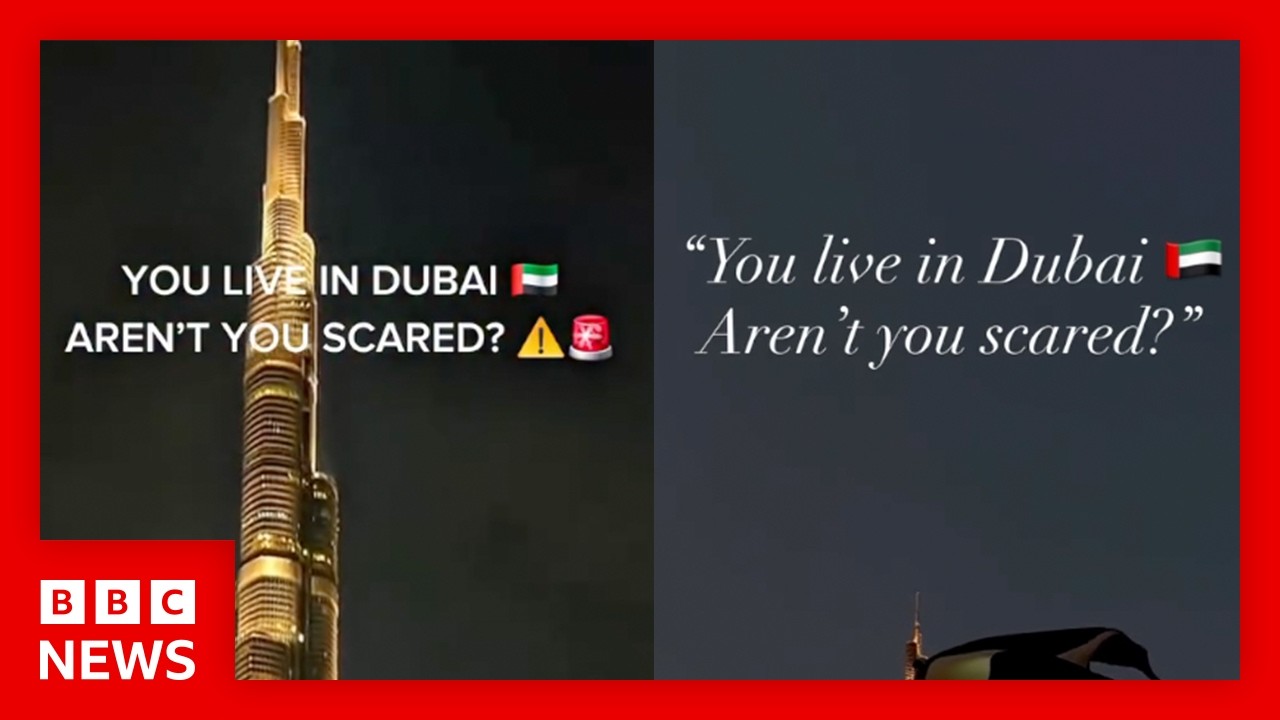
The United Arab Emirates has been pulled into the growing confrontation between the US, Israel and Iran. Usually an influencer hotspot, places like Palm Jumeirah have been caught in the cross fire.
But some have noticed influencers in the region seem to be posting identical messages across social media.
BBC News analysed 129 posts from content creators based in Dubai during the first days of the conflict, to look for any unusual patterns.
Subscribe here: http://bit.ly/1rbfUog
For more news, analysis and features visit: www.bbc.com/news
#Dubai #UAE #BBCNews

We answer your questions about the US-Israel war with Iran.
Adam and Chris are joined in the studio by Panorama film maker Jane Corbin and Chief International Correspondent Lyse Doucet to answer Newscasters questions.
Have the US underestimated Iran? Will Keir Starmer’s approach work? What role could the Iranian army play?
00:00 - Introductions
01:33 - Has Trump underestimated Iran's response to the war?
10:00 - How has Keir Starmer responded to the war?
20:30 - What is the status of the regular Iranian army, not the IRGC?
Subscribe here: http://bit.ly/1rbfUog
For more news, analysis and features visit: www.bbc.com/news
#BBCNews

The United Arab Emirates has been pulled into the growing confrontation between the US, Israel and Iran. Usually an influencer hotspot, places like Palm Jumeirah have been caught in the cross fire.
But some have noticed influencers in the region seem to be posting identical messages across social media.
BBC News analysed 129 posts from content creators based in Dubai during the first days of the conflict, to look for any unusual patterns.
Subscribe here: http://bit.ly/1rbfUog
For more news, analysis and features visit: www.bbc.com/news
#Dubai #UEA #BBCNews

US President Donald Trump says he’s giving the Iranian people a chance to overthrow the country's regime - but is that actually going to happen
BBC Chief International Correspondent Lyse Doucet looks at what’s next for Iran and what the Iranian people may want.
00:00 - 00:30 What’s next for Iran?
00:30 - 02:35 What does President Trump want for Iran?
02:35 - 04:59 Is this the end of the Islamic Republic?
04:59 - 06:00 Can the Iranian regime be overthrown?
06:00 - 08:07 What do the Iranian people want?
Subscribe here: http://bit.ly/1rbfUog
For more news, analysis and features visit: www.bbc.com/news
#US #Iran #Israel #bbcnews

Prime Minister Keir Starmer has defended his decision not to permit the use of UK bases for the initial US-Israel strikes on Iran after US President Donald Trump criticised the UK's stance, saying the PM was “no Winston Churchill”.
Conservative leader Kemi Badenoch has urged Starmer to go further, saying the UK has "became part of this, whether we liked it or not”.
“Why are we being dragged into a war without a plan?” A Question Time audience member asked the panel.
Labour’s Stephen Doughty MP, Conservative James Cleverly, columnist Annabel Denham, writer George Monbiot, and defence editor Shashank Joshi discuss the events in the Middle East.
Catch up with the whole of the debate with BBC Question Time on iPlayer and Sounds now.
Subscribe here: http://bit.ly/1rbfUog
For more news, analysis and features visit: www.bbc.com/news
#Iran #US #BBCNews
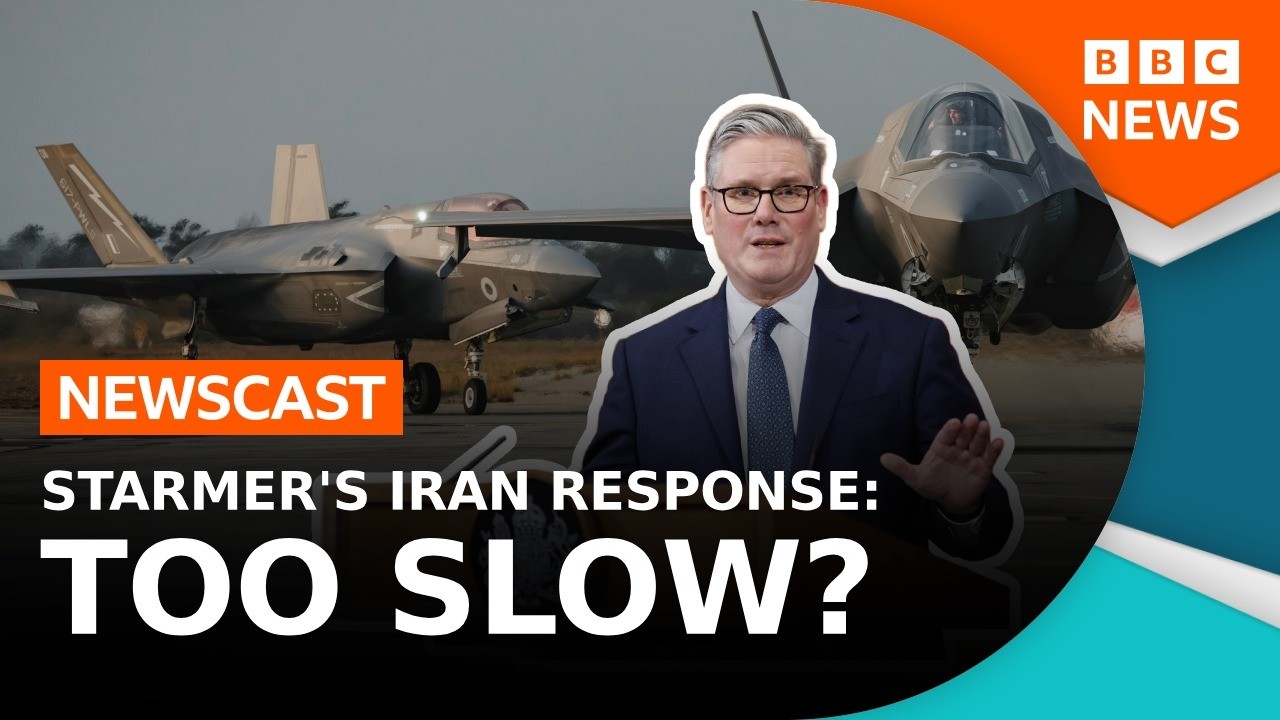
UK Prime Minister Keir Starmer has defended his response to the Iran war and announced he will send four additional fighter jets to Qatar.
Adam is joined by Jane Corbin, Panorama film maker; Lucy Fisher, Whitehall editor for the Financial Times, and Mikey Kay, military analyst for the Security Brief, to discuss Starmer’s press conference, and to take a deeper look at the weaponry being used by both sides in this conflict.
00:00 Introduction
00:56 Why did Starmer give a press conference?
08:17 What weapons does the UK have?
11:50 How is Iran retaliating?
15:00 The cost of weapons
19:58 Iran's missile capability
22:50 What is it like to witness a drone attack?
26:15 How did Israeli and US intelligence networks inform the initial attack on Iran?
You can now listen to Newscast on a smart speaker. If you want to listen, just say "Ask BBC Sounds to play Newscast”. It works on most smart speakers.
You can join our Newscast online community here: https://bbc.in/newscastdiscord
Get in touch with Newscast by emailing newscast@bbc.co.uk or send us a WhatsApp on +44 0330 123 9480.
New episodes released every day. If you're in the UK, for more News and Current Affairs podcasts from the BBC, listen on BBC Sounds: https://bbc.in/4guXgXd
For more news, analysis and features visit: www.bbc.com/news
#BBCNews #BBCNewscast #keirstarmer #iranwar #iranisraelwar #iranisraelwar

Donald Trump has called on Iran to surrender, claiming it no longer has the ability to defend itself against US and Israeli attacks.
The US President said that Iran’s air force and navy were “gone”. He claimed: "We’re destroying more of Iran’s missile and drone capability every single hour, knocking them out... Iran have no air force, they have no air defence. All of their airplanes are gone, their communications are gone.... Their navy is gone”.
Trump also said he must “be involved in the appointment” of Iran’s next leader and dismissed as “unacceptable" the idea of Ayatollah Ali Khamenei’s son, Mojtaba Khamenei, succeeding his father as the country's Supreme Leader.
Meanwhile Israel has continued its assault on Lebanon. It has begun striking what it describes as Hezbollah infrastructure in the Dahiya neighbourhood, a densely populated commercial and residential area in the southern suburbs of Beirut.
The IDF had earlier issued forced evacuation orders for the whole population of Beirut’s southern suburbs – home to 500,000 people – leading to widespread panic and huge queues of traffic as people tried to flee.
Reeta Chakrabarti presents BBC News at Ten reporting by Tom Bateman, Lyse Doucet, James Waterhouse, Nick Beake, Hugo Bachega, Chris Mason, Jessica Parker, Wyre Davies and Paul Adams.
Subscribe here: http://bit.ly/1rbfUog
For more news, analysis and features visit: www.bbc.com/news
#BBCNews

As the US-Israeli war with Iran continues, US President Donald Trump has said the Americans have a "virtually unlimited supply" of weapons.
But some Washington insiders have expressed concern that munitions stockpiles could be strained, as the US arms not only its own military, but those of Israel, and its Gulf allies.
Iran's drones are cheaper and faster to produce than US Tomahawk missiles and other high-tech weaponry. But how long can Tehran's supplies last?
We speak to the BBC's defence correspondent Jonathan Beale about the types of weapons being used in this war, and how they are shaping each side's strategy.
New episodes of the Global News Podcast are published twice a day. You can listen here: https://link.mgln.ai/GNP-YT
And you can find more of our Youtube episodes here: https://bbc.in/GlobalNewsPodcastSubscribe here: http://bit.ly/1rbfUog
For more news, analysis and features visit: www.bbc.com/news
#BBCNews

The United Arab Emirates has been pulled into the growing confrontation between the US, Israel and Iran. Usually an influencer hotspot, places like Palm Jumeirah have been caught in the cross fire.
But some have noticed influencers in the region seem to be posting identical messages across social media.
BBC News analysed 129 posts from content creators based in Dubai during the first days of the conflict, to look for any unusual patterns.
Subscribe here: http://bit.ly/1rbfUog
For more news, analysis and features visit: www.bbc.com/news
#Dubai #UEA #BBCNews

On day six of the US-Israel war with Iran, Iranian drone and missile attacks have spread across the region, with the UAE and Azerbaijan reporting new incidents. Inside Iran, people tell the BBC they feel "trapped" as US‑Israel strikes continue, while evacuations unfold in southern Lebanon.
The UK has also announced new military deployments and stranded travellers have described chaotic journeys home.
For the latest updates, go to bbc.com/news
00:00: Developments on day six
01:23: UK announces plans to send jets to Qatar
03:03: The scale of Iranian drone attacks
06:09: The impact of the war on the global economy
08:08: Repatriation flights arrive in the UK
09:25: Voices from Inside Iran
11:33: BBC News Chief International Correspondent Lyse Doucet
Subscribe here: http://bit.ly/1rbfUog

The UK will send four fighter jets to Qatar to strengthen UK defensive operations as US-Israel strikes on Iran continue, Prime Minister Keir Starmer has said.
He confirmed that the first UK flight to bring citizens home has taken off and that 4,000 have already returned.
Earlier, a passenger on board the plane told the BBC it had been a "shambles" after the flight was delayed due to a technical issue.
Starmer also defended his decision not to join the initial strikes on Iran, after he declined a request to allow US planes to use British bases.
Subscribe here: http://bit.ly/1rbfUog
For more news, analysis and features visit: www.bbc.com/news
#UK #Iran #BBCNews
Israel has carried out new attacks on Lebanon and Iran, with explosions seen across Tehran.
Iranian attacks were reported in Israel, with air raid sirens in Tel Aviv and Jerusalem and explosions seen in the sky as strikes were intercepted.
Across the region, explosions were reported in Qatar and Bahrain while six people were injured by falling debris in Abu Dhabi; Azerbaijan said it was attacked by two Iranian drones; and a tanker was damaged in the northern Gulf - Iran said it hit a US ship.
Subscribe here: http://bit.ly/1rbfUog
For more news, analysis and features visit: www.bbc.com/news
#Iran #Israel #MiddleEast #BBCNews
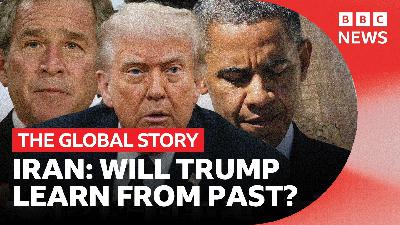
Six days on since the first US–Israeli strikes on Iran and the death of supreme leader Ayatollah Khamenei, comparisons to past US interventions in the region are proliferating.
Many Americans are asking whether this latest military operation will become another ‘forever war’, as the US invasions of Iraq and Afghanistan came to be called.
We talk to Gordon Correra, security analyst for the BBC, about America’s complicated history of intervention in the Middle East and surrounding region, and ask what these past conflicts might tell us about possible outcomes for the war in Iran.
New episodes of The Global Story are released daily. If you’re in the UK, listen on BBC Sounds. If you live outside the UK, listen on BBC.com or wherever you get your podcasts.
LINK: https://app.magellan.ai/listen_links/the-global-story-ytl
Subscribe here: http://bit.ly/1rbfUog
For more news, analysis and features visit: www.bbc.com/news
#BBCNews #iran #middleeast #donaldtrump #israel
Chapters:
00:00 What can Trump learn from the past?
02:00 Lessons from the Iraq War
05:44 Does the US have a plan for Iran?
09:08 What is public opinion for the war in Iran?
11:58 Lessons from the Afghanistan war
17:00 Lessons from Libya and Gaddafi
20:50 Has there ever been a successful US intervention in the Middle East?
24:06 Could the conflict in Iran become the new 'forever war'?

UK and US stock markets rose but Asian indexes tumbled on Wednesday as oil and gas prices remained volatile over fears the US-Israel war with Iran may drag on.
The FTSE 100 index of the largest firms listed in London as well the big US and European indexes all rose on Wednesday following two days of sliding share prices, while several Asian indexes plummeted for a third day.
Oil and gas prices dipped on Wednesday but were still much higher than when the conflict started, after shipping traffic was virtually halted from travelling through a vital waterway near Iran.
Experts have warned that if oil and gas prices remain elevated it could make goods and services more expensive.
Subscribe here: http://bit.ly/1rbfUog
For more news, analysis and features visit: www.bbc.com/news
#Iran #Oil #BBCNews

Today, US Defense Secretary Pete Hegseth said the US will strike deeper into Iran, but how has Iran responded to US-Israeli strikes so far?
Adam is joined by Jane Corbin, Panorama Film Maker, and Siavash Ardalan, Senior Reporter for BBC World and BBC Persian, to discuss the Pentagon releasing a video of the sinking of an Iranian warship plus the challenges in reporting what’s going on inside Iran.
You can now listen to Newscast on a smart speaker. If you want to listen, just say "Ask BBC Sounds to play Newscast”. It works on most smart speakers.
Subscribe here: http://bit.ly/1rbfUog
For more news, analysis and features visit: www.bbc.com/news
#BBCNews


Download from Google Play

Download from App Store
 United States
f to la on mmm le monde and and the pour le moment and est 8
Afraid
🤔
Hats off to BBC correspondents Yogita and Jeremy.
trump tries and deep state rebels. biden does it and nothing