


 Claim Ownership
BRAINLAND
Subscribed: 2Played: 10
Subscribe

© Ken Barrett
Description
Brainland the podcast navigates the boundary between neuroscience, the arts and humanities with the occasional wander off piste. It began as a neuro-historical exploration of the background to the Brainland the opera but quickly spread its wings. A Brainland Collective production.
Hosted on Acast. See acast.com/privacy for more information.
70 Episodes
Reverse
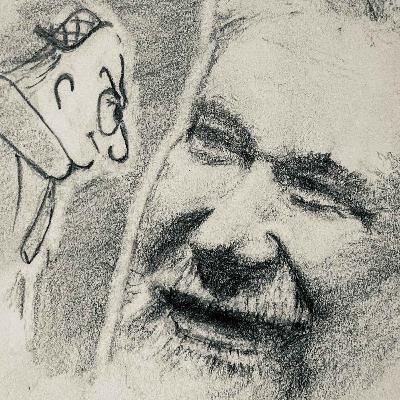
Frank Burke is a leading film scholar with a long interest in Italian director Federico Fellini (1920-1993). Few artists were more obsessed with their dreams than Fellini. In this conversation we talk about his early interest in puppets and circus, and his jobs, before moving into film, as an illustrator and caracaturist. Drawing was always an important part of his preparation for movies but he also kept a graphic, drawn dream diary in the '60s and '70s, at the suggestion of Jungian analyst Ernst Bernhard. We discuss his interest in the work of another analyst, James Hillman who leaned more to the mystical and symbolic, and explore the recurring themes in those diaries (published postumously). Films in which dreams feature large are also discussed - we mention several but we focus on four including the feted 'Eight and a half'( 1963) and the vilified 'City of Women' (1980). To close Frank suggests movies that listeners new to Fellini may watch as an as a way into his work (depending on their interests and state of intoxication).Participants:Frank Burke, Independent film scholar and Professor Emeritus, Department of Film and Media, Queen’s University, Ontario, Canada. https://www.queensu.ca/filmandmedia/people-search/frank-burkeKen Barrett, visual artist, writer and retired neuropsychiatrist: http://www.kenbarrettstudio.co.ukMore on Federico Fellini: https://en.wikipedia.org/wiki/Federico_FelliniSome films discussed:Eight and a Half: https://www.imdb.com/title/tt0056801/Juliet of the spirits: https://www.imdb.com/title/tt0059229/?ref_=nv_sr_srsg_0_tt_6_nm_2_in_0_q_%2520%2520Juliet%2520of%2520the%2520spiritsCity of Women: https://www.imdb.com/title/tt0080539/More on James Hillman: https://en.wikipedia.org/wiki/James_HillmanParticipant:More on Carlos Castaneda: https://en.wikipedia.org/wiki/Carlos_Castaneda'CAPOLAVORO! Masterworks of Italian Cinema' podcast: https://shows.acast.com/capolavoro-masterworks-of-italian-cinema/episodes/68c9445da8e1b0e4bfd2ee12Opening music: Prelude to the opera Brainland, composed by Stephen Brown. Brainland the opera website: www.brainlandtheopera.co.ukSketch by KB. Hosted on Acast. See acast.com/privacy for more information.
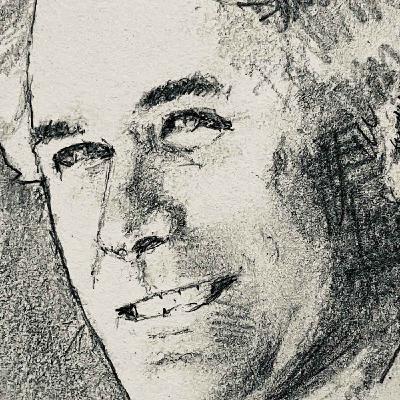
In this wide ranging conversation Mark Solms talks about his seminal research in the '80s on the effect of brain lesions on patient reports of dreaming. After a brief visit to Charcot and Wilbrand in the late 19th century, we discuss the research of Dement and colleagues in the 1950s, when it was discoverd that every 90 minutes or so during sleep our EEG is more like the awake state, with asociated rapid eye movments (REM). We discuss Jouvet's work in the '60s in which the origin of REM sleep was found to be in the brain stem the belief at the time that REM and dreaming were part of the same process, later disproved by the work of Mark and others who found it to be cortical. There's an interesting diversion into culture wars in the science community (where, in his early days, studying something as subjective as dreams was 'unthinkable') before moving on to somnambulism, the implications of all this for Freudian theory and concluding thoughts about current dream research including a quite incredible recent Japanese study. Great conversation with an enthusiastic communicator.Participants: Mark Solms, Professor, Department of Neuropsychology, University of Capetown, SA. https://neuroscience.uct.ac.za/contacts/mark-solmsKen Barrett, visual artist, writer and retired neuropsychiatrist: http://www.kenbarrettstudio.co.ukMark's books 'The Hidden Spring': https://profilebooks.com/work/the-hidden-spring/'The Neuropsychology of dreams: https://www.karnacbooks.com/product/the-neuropsychology-of-dreams-a-clinico-anatomical-study/94585/?Opening and closing music: Prelude to the opera Brainland, composed by Stephen Brown. Brainland the opera website: www.brainlandtheopera.co.ukSketch by KB. Hosted on Acast. See acast.com/privacy for more information.
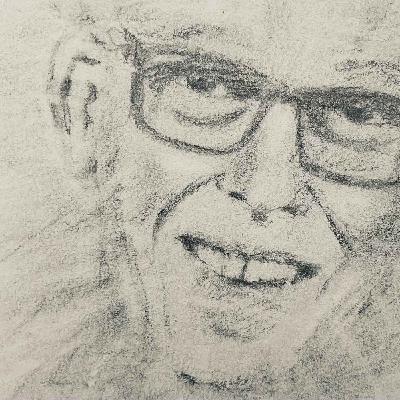
In this podcast we discuss the music called plainchant or plainsong - what it is, how did it arise and what effect does it have? We discuss the modal nature of the music, possible links to earlier Jewish intoning and the importance of resonance in recording. Bernard describes his research project in which subjects record their responses, relating to memory, emotion and transcendence. Three short extracts of the recordings he used are included in the podcast and fuller versions can be accessed through the links below. Some results are included before a diversion into philosopher Vladimir Jankélévitch and and quantum time. To conclude, Bernard talks about ways in which his research could be developed, not least the involvement of brain investigation. For a readable thesis on an under researched subject check out the link below .Participants: Bernard Salter, retired Anglican priest, organist and post-doctoral scholar.Ken Barrett, visual artist, writer and retired neuropsychiatrist: http://www.kenbarrettstudio.co.ukBernard's dissertation is here: https://etheses.dur.ac.uk/15491/Vladimir Jankélévitch: https://en.wikipedia.org/wiki/Vladimir_Jank%C3%A9l%C3%A9vitchA full version of plainchant sample A: https://www.youtube.com/watch?v=OvfjgSvq6KAThe full album 'Chant' by monks of Sana Domingo di Silo: https://www.youtube.com/watch?v=B3T8V-IM4XkA full version of plainchant sample C: https://www.youtube.com/watch?v=gZFaZWi2uSIIf you prefer female voices try this: https://www.youtube.com/watch?v=gn6gXCW_qucOpening music: Prelude to the opera Brainland, composed by Stephen Brown. Closing music: Introit for Christmas Day, from the album 'Chant' by monks of Sana Domingo di Silo, Spain.Brainland the opera website: www.brainlandtheopera.co.ukSketch by KB. Hosted on Acast. See acast.com/privacy for more information.
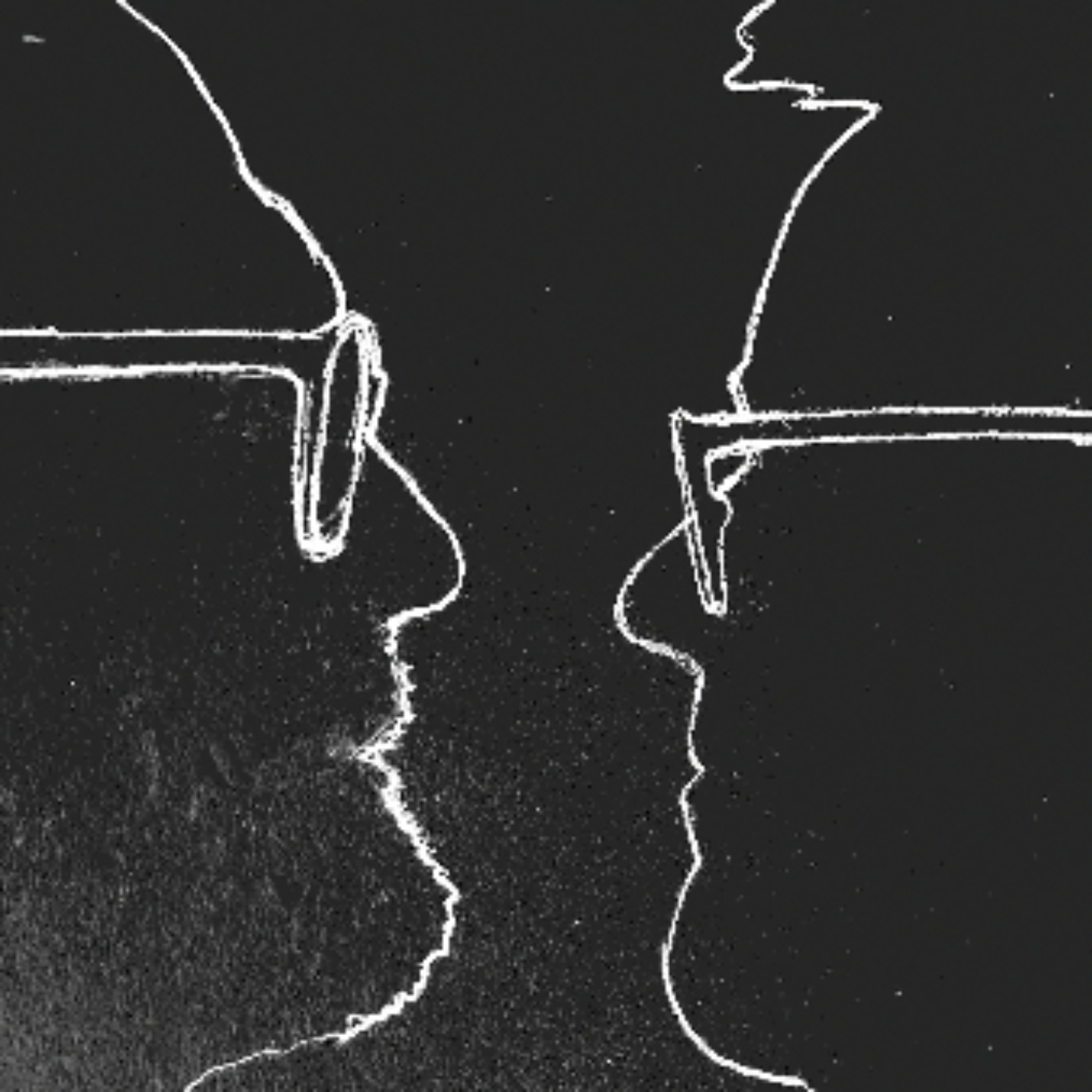
Joseph Beuys was a radical post-war German artist who worked in unusual media and in the 1970s developed the notion of ‘social sculpture’ based on the concept that everything is art and every aspect of life could be approached creatively. For episode 17 this season Hugh Rickards, a younger neuropsychiatric colleague from the English Midlands, read and discussed his essay 'The lost tribes of neuropsychiatry'. At the end of that Hugh asked if he could ask me about my experience of creating a neuropsychiatry service in the ‘80s and ‘early ‘90s, with the help of a lot of colleagues, in a National Health Service that didn’t know it needed one. When I left clinical practice I took a deep dive into contemporary art, discovered Joseph Beuys and realised that creative clinical work can also be viewed as a kind of art practice, a social sculpture'. We'd recorded that conversation and it is definitiely niche but, hey, this is Brainland...welcome to ‘neuropsychiatry after dark...'Participants: Hugh Rickards, Consultant and Honorary Professor of Neuropsychiatry, National Centre for Mental Health, Birmingham, UK. http//:www.birmingham.ac.uk/staff/profiles/clinical-sciences/Rickards-Hugh.aspxKen Barrett, visual artist, writer and retired neuropsychiatrist: http://www.kenbarrettstudio.co.ukMore about Joseph Beuys and 'social sculpture': https://www.tate.org.uk/art/art-terms/s/social-sculptureOpening and closing music: Prelude to the opera Brainland, composed by Stephen Brown. Brainland the opera website: www.brainlandtheopera.co.ukSketch by KB. Hosted on Acast. See acast.com/privacy for more information.

In this podcast Kimberly Campanello, a poet, novelist and academic, talks frankly about her early onset Parkinson's disease and how this lead her to pursue her Italian roots in Puglia. On a visit there, to her great grandmother's village, she literally discovered Dante's 'Comedia', which she is currently 'reversioning' - a method that involves processing the original Italian, a range of translations and commentaries, plus her life experience, coloured by her condition. She discussed making creative use of the effects of Parkinson's and the beneficial effects of her writing on her motor function, similar to the benefits of walking on irregular surfaces. We discuss the recent remarkable finding that, not only does PD influence movement, but also use of language, and especially verbs (see the link to the paper below). Along the way Kimberly reads one of her poems based on a canto from Dante and extracts from her published and recently finished novel. We end with a reading from her current poetry collection. This is 'Brainland'! Grreat conversation.Participants:Kimberly Campanello, Poet, novelist and Professor of Poetry, University of Leeds. https://www.kimberlycampanello.com/Ken Barrett, artist, writer and retired neuropsychiatrist. http://www.kenbarrettstudio.co.uk/Kimberly’s published canti from her Dante versioning:https://www.stillpointldn.com/articles/kimberly-campanello-two-cantos-from-this-knot/https://www.pamenarpress.com/post/kimberly-campanellohttps://blackboxmanifold.sites.sheffield.ac.uk/https://www.poetryireland.ie/publications/poetry-ireland-review/back-issues/issue-144The books discussed [Use the Words You Have (novel) & An Interesting Detail (poetry collection)]:https://somesuch.co/shop/use-the-words-you-have-by-kimberly-campanello https://www.bloomsbury.com/uk/interesting-detail-9781526690616/Kimberly's recent and really interesting Parkinson's disease inspired poem 'Moving Nowhere Here' is here: https://www.youtube.com/watch?v=SzRJTZ2lHgURead Paradoxical Kinesia (short prose): https://checkout.somesuch.co/products/somesuch-stories-7 A paper on Parkinson's disease and use of language: file:///Users/kenbarrett/Downloads/Words_in_motion_Motor-language_coupling_in_Parkins-1.pdOpening and closing music: Prelude to 'Brainland', the opera by Stephen Brown.Brainland the opera website: www.brainlandtheopera.co.ukFollow us us on Instagram:#brainlandcollective #brainlandthepodcastPortraitsketch by KB. Hosted on Acast. See acast.com/privacy for more information.

The Burden Neurological Institute (and Hospital) opened its' doors in 1939 and closed in 2000. In this wide ranging conversation, Jonathan Bird and Ken Barrett, neuropsychiatric alumni, chew the fat about the history of 'The Burden', the research home of Grey Walter who featured in the last Brainland episode. We discuss the unusual origin, Frederick Golla, the first director, the impact of the war, a wide range of characters who worked there and the work they did. A bit niche? Absolutely, but hey, that's Brainland!Participants:Jonathan Bird, Retired Consultant Neuropsychiatrist, Bristol.Ken Barrett, artist, writer and retired neuropsychiatrist. .http://www.kenbarrettstudio.co.uk/Opening and closing music: Prelude to 'Brainland', the opera by Stephen Brown.Brainland the opera website: www.brainlandtheopera.co.ukFollow us us on Instagram:#brainlandcollective #brainlandthepodcastPortrait sketch by KB. Hosted on Acast. See acast.com/privacy for more information.
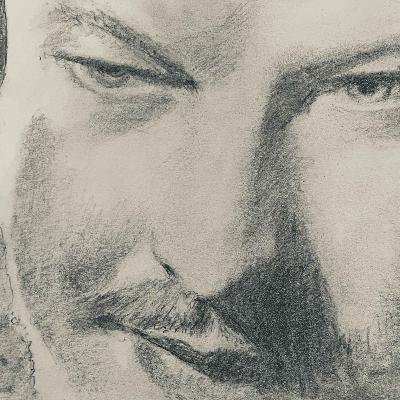
Grey Walter was an important figure in mid-20th century neurophysiology and cybernetics and this episode brings together professors of history of science and AI to discuss his life and work. We talk about his early personal and academic life, moving on to his work as a pioneer of the clinical applications of the EEG, particularly at the Burden Neurological Institute in Bristol. After setting the scene, we discuss his creation of the earliest EEG frequency analyser and brain mapper (the toposcope) before moving onto his influential book 'The Living Brain' and, in Cornelius's phrase, the 'vital abstraction' paradigm . We discuss his creation of a simple robot, in the late 1940s, the reason why he is revered in cybernetics circles, and later his experiments on brain computer interfacing. We touch on his controvertial personal life, a possible reason why he was never invited to become a Royal Society member, before talking about his legacy. A great conversation about an important figure form 20th century brain science.Participants:Cornelius Borck, Professor and Director of the Institute for History of Medicine and Science Studies, Lübeck University, Germany. https://www.imgwf.uni-luebeck.de/Phil Husbands, Emeritus Professor of Artificial Intelligence at the University of Sussex ( https://profiles.sussex.ac.uk/p1334-phil-husbands/about)Ken Barrett, artist, writer and retired neuropsychiatrist. .http://www.kenbarrettstudio.co.uk/More on William Grey Walter: https://collection.sciencemuseumgroup.org.uk/people/ap28659/walter-william-greyhttps://en.wikipedia.org/wiki/William_Grey_WalterHis robotic tortoises: https://www.youtube.com/watch?v=lLULRlmXkKo His book 'The Living Brain': https://wwnorton.com/books/The-Living-Brain/Grey Walter's novel 'Further Outlook' (published as 'The curve of the snowflake' in the US): https://openlibrary.org/books/OL6200854M/The_curve_of_the_snowflake.Ken's recent paper on the first forensic use of the EEG: https://www.cambridge.org/core/journals/bjpsych-bulletin/article/first-appearance-of-eeg-evidence-in-a-uk-court-of-law-a-cautionary-tale/9D97D5564586762599DBA680D61C994DMusic: Stephen Brown’s prologue to the opera 'Brainland'Sketch by KB.Brainland the opera website: www.brainlandtheopera.co.uk Hosted on Acast. See acast.com/privacy for more information.
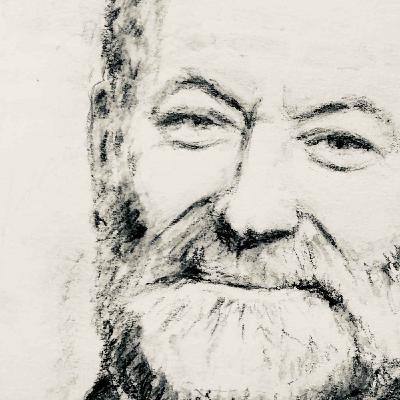
In this conversation philospher Raymond Tallis talks about his new book 'Circling Around Explicitness: The heart of human being'. Ray's book opens with a quote from German philosopher Friedrich Schelling ‘Uniquely within us nature opens her eyes and sees that she exists.’ What follows is an exploration of the meaning of 'thatness', his attempt to, in his words, 'eff the uneffed'. Our circling alights on a number of thinkers who he believes oversimplify misrepresent being, how 'the blob and the brain' become 'the bloke' . Donald Hoffman, Phillip K. Dick and Martin Buber get a mention, not all favourable, as does the 'autocidal tendency in contemproary philosophy', as we work through the four section of his book. To close he reads the closing paragraphs and gives us a peek at what is coming next. Great conversation.Participants: Raymond Tallis, philosopher and former professor of geriatric medicine, http://www.raymondtallis.co.uk/pages/home.htmlKen Barrett, visual artist, writer and retired neuropsychiatrist: http://www.kenbarrettstudio.co.ukRay's books: Circling around explicitness:https://cup.columbia.edu/book/circling-round-explicitness/9781788217903/Black mirror: https://www.waterstones.com/book/the-black-mirror/raymond-tallis/9781848871298Also discussed: Martin Buber: https://en.wikipedia.org/wiki/I_and_ThouOpening and closing music: Prelude to the opera Brainland, composed by Stephen Brown. Brainland the opera website: www.brainlandtheopera.co.ukSketch by KB. Hosted on Acast. See acast.com/privacy for more information.
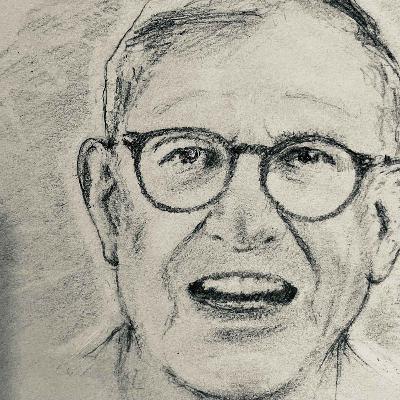
Earlier this season we recorded an episode on poetry and neuroscience in which Eugen Wassiliwitzki pointed out that in German the grammar produces many more internal rhymes and rhythms. This is perhaps even more true of Italian. The leading Italian poet of the last century is probably Nobel Prize winner Eugenio Montale. Jonathan Galassi has been reading, researching and translating Montale for decades. In this podcast he talks about Montale's background, influences, politics, religion and love-life. Jonathan reads one of his most famous poems in Italian and in his translation and one of his own from his collection 'North Street'. We touch on his antipathy for fellow poet and film director Pasolini before concluding with a brief discussion of Italian poetry after Montale.Participants: Jonathan Galassi, poet, novelist, translator and publisher. https://en.wikipedia.org/wiki/Jonathan_GalassiKen Barrett, visual artist, writer and retired neuropsychiatrist: http://www.kenbarrettstudio.co.ukJonathan's translations of Montale: http://www.everymanslibrary.co.uk/pocket-poets-author.aspx?letter=m&search=&firstname=Eugenio&surname=MontaleThe poem Jonathan reads, 'In limine' read in Italian by Montale: https://www.youtube.com/watch?v=e6-JXcllsIwA sung version of the Montale poem 'Meriggiare pallido e assorto':https://open.spotify.com/artist/61zXi10WbO8ZCyCy9CyW0n?si=Upq_coi3TVq1TdOwR1sT-AExamples of Jonathan's own poetry: https://www.poetryfoundation.org/poets/jonathan-galassiOpening and closing music: Prelude to the opera Brainland, composed by Stephen Brown. Brainland the opera website: www.brainlandtheopera.co.ukSketch by KB. Hosted on Acast. See acast.com/privacy for more information.
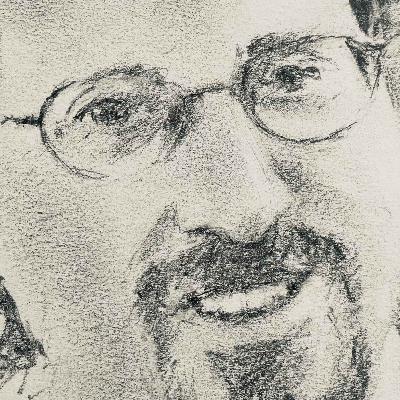
How can current thinking in psychology and neuroscience, about how we make decisions, inform our understanding of moral questions and make for a better society? That question is central to David Redish's book 'Changing How We Choose'. In this podcast David defines neuroeconomics and explains why applying science and engineering models to moral questions is useful, 'engineering' relating to applying what is learned from science to the real world situations. He talks through 'deliberative', 'procedura'l and 'instinctual' decision making systems, underpinned by different neural structures. He explains two key games that help inform his discipline, the 'prisoner's dilemma' and the 'assurance game' with real world examples. David also explains 'asabiya', an Arabic term that denotes an important concept relating to collaboration. We conclude with a discussion of how the optimistic tone of his book, and this approach, stands up to the world as it has evolved since his book was released in 2022.Participants: A David Redish, Distinguished McKnight University Professor, Department of Neuroscience, University of Minnesota. https://med.umn.edu/bio/david-redishKen Barrett, visual artist, writer and retired neuropsychiatrist: http://www.kenbarrettstudio.co.ukDavid's book, 'Changing How We Choose: The new science of morality': https://mitpress.mit.edu/9780262047364/changing-how-we-choose/An episode of 'Golden Balls', a game show discussed: https://www.youtube.com/results?search_query=golden+balls+split+or+steal+100+000'The prisoner's dilemma' briefly explained: https://www.youtube.com/watch?v=NdITTDl5coEOpening and closing music: Prelude to the opera Brainland, composed by Stephen Brown. Brainland the opera website: www.brainlandtheopera.co.ukSketch by KB. Hosted on Acast. See acast.com/privacy for more information.
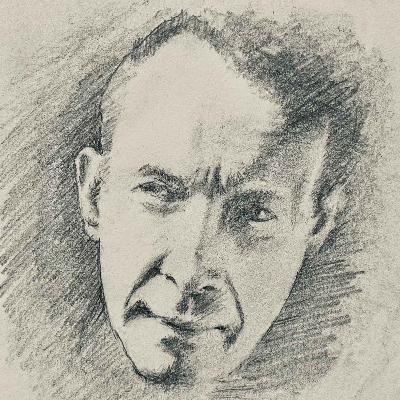
In this specially extended episode of the podcast we speak with Jonathan Dove, one of the most performed contemporary opera/classical composers working today. He talks about his first steps in music, making up tunes on the piano well before taking formal lessons, his organ playing in church, often improvising, and the great contribution of London schools' music provision to his education. Jonathan tells us of his years he worked as an accompanist and arranger, particularly for operas, before focussing on composing in his late '20s. He shares aspects of his composition practice, including creating a mood or affective tone before adding tunes. There are diversions into Karl Marx's chaotic home life (the subject of a comic opera), Covid and the climate crisis, the latter a subject that has helped fuel several compositions, including his most recent community opera, 'Uprising'. We conclude by talking about the works currently on Jonathan's desk desk. An extraordinary look into a successful composer's mind and creative practice.Participants: Jonathan Dove, composer, https://www.jonathandove.com/Ken Barrett, visual artist, writer and retired neuropsychiatrist: http://www.kenbarrettstudio.co.ukAndy Platman, writer, musicophile, retired physician.Some of the pieces discussed:Uprising:https://www.jonathandove.com/news/new-community-opera-uprisingPinocchio:https://www.jonathandove.com/the-adventures-of-pinocchio.htmlTobias and the angel:https://www.jonathandove.com/tobias-and-the-angel.htmlMarx in London:https://www.jonathandove.com/marx-in-london.htmlGaia Theory:https://www.wisemusicclassical.com/work/68312/Gaia-Theory--Jonathan-Dove/'On the streets and iin the sky' string quartet: https://open.spotify.com/album/0yXaKLDTOx5BWvy6NbpKb3?si=O0Wgu3epScG0xVDMwTWx9AOpening and closing music: Prelude to the opera Brainland, composed by Stephen Brown. Brainland the opera website: www.brainlandtheopera.co.ukSketch by KB based on an image from Marshall Light Studio. Hosted on Acast. See acast.com/privacy for more information.
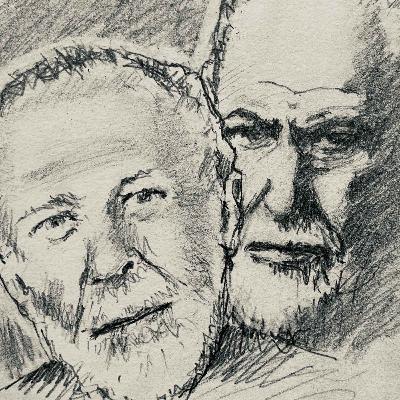
In this podcast we talk about the way Freud has been depicted in the movies, particularly the 1962 John Houston film 'Freud: The Secret Passion'. Ian discusses Houston's complicated relationship with the star, Montgomery Clift, Sartre's early involvement with the script, the film's 'film noir' feel, Jerry Goldsmith's music, with a detour into avant garde composers work on horror films. Ian characteries the film as a big game movie about the unconscious and we go on to discuss the 2011 David Cronenberg film 'A Dangerous Method' about Freud's rift with Jung, and the struggle of Jung's patient and subsequent lover to forger her own career in psychoanalysis. This leads to the 2023 film Freud's last session that includes Freud's daughter Anna and is based on an imagined conversation with CS Lewis, which lead to a conversation about Atenborough's film about Lewis, 'Shadowlands. To conclude, we discuss three movies inspired by ideas from psychoanalysis, 'Secrets of the Soul' (Pabst, 1926), Spellbound (1945) and particularly 'Under Capricorm' (1948), the latter two from Hitchcock. Ian discusses Freud's unwillingness to advise on movies, before concluding with a consideration of Fellini's use of his dreams as a source of movies. Great conversation.Participants:Ian Christie, Professor of Film and Media History, Birckbeck, University of London. www.ianchristie.orgKen Barrett, visual artist, writer and retired neuropsychiatrist: http://www.kenbarrettstudio.co.ukThe movies:Freud: The Secret Passion(1962): https://www.imdb.com/title/tt0055998/A Dangerous Method(2011):https://www.imdb.com/title/tt1571222/Freud's Last Session (2023): https://www.imdb.com/title/tt20420628/?ref_=fn_all_ttl_1Under Capricorn (1948): https://www.imdb.com/title/tt0042004/?ref_=fn_all_ttl_1The Dali designed Spellbound dream sequence from 'Spelbound': https://www.youtube.com/watch?v=8ITPLLIcPSMGW Pabst's 'Secrets of the Soul' (1926): https://www.youtube.com/watch?v=aYoXy3bYD1kThe Italian movie podcast mentioned: 'Capolavoro!: https://open.acast.com/networks/6452b6516dd22500113dc7d2/shows/67ab6f20c6f97f89d80e2d26/episodes/681cbfbe5acb8b715f1b5b17Brainland the podcast website: https://shows.acast.com/brainlandOpening and closing music: Prelude to the opera Brainland, composed by Stephen Brown. Brainland the opera website: www.brainlandtheopera.co.ukSketch by KB. Hosted on Acast. See acast.com/privacy for more information.
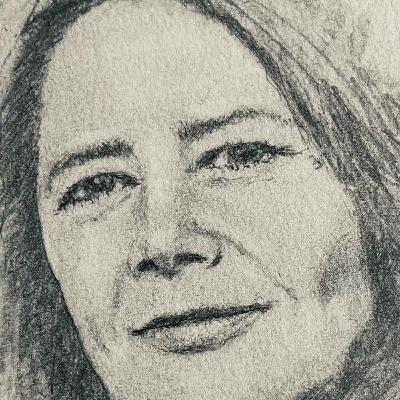
Finnish film director Pia Tikka began studying the psychology and later the neuroscience of film making 25 years ago and is currently studying the experience and process of cinematographers and film editors.she talks about how writings of Soviet film maker and theorist Sergei Eisenstein has been particularly influential, particularly following his later interactions with neuropsychologist Luria, Gestalt psychologists and developmental psychologist Vigotsky. Pia talks about her concept of 'enactive cinema' and describes her current five year project studying cinematographers and film editors using microphenomenological and other methods. We also talk about the importance of narrative and the way stories work on us. After the main podcast I asked pia to talk about a contemporary multimedia art project invovling multi screen projection modified by psychophysical readings taken from the viewer, followed by a little more discussion of Eisenstein so stay listening for that...Participants: Pia Tikka, Research Professor, CINEMATIC MINDS, Baltic Film, Media, Arts and Communication School (BFM) Centre of Excellence in Media Innovation and Digital Culture (MEDIT) Tallinn University, Estonia.Ken Barrett, visual artist, writer and retired neuropsychiatrist: http://www.kenbarrettstudio.co.ukTo learn more about microphenomenolgy: https://www.microphenomenology.com/homeOpening and closing music: Prelude to the opera Brainland, composed by Stephen Brown. Brainland the opera website: www.brainlandtheopera.co.ukSketch by KB. Hosted on Acast. See acast.com/privacy for more information.
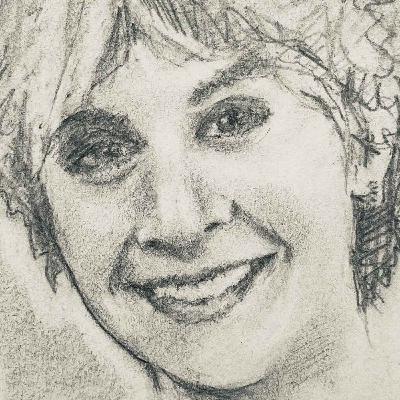
In this podcast, Emily talks about how she came to write 'While the music lasts', her very personal account of her response to the death of her father, one of the key inspirations for her career choice. Her book documents how for several months after his death she avoided music as it made her angry and how eventually her musicologist training helped her navigate that period. This included an in depth look at the musical Boulanger sisters, the younger of whom died at 24. Emily talks about her father and their relationship and how going through his overloaded music stand (he was a guitarist) and creating the Spotify playlist that accompanies the book, was another way to adjust to his absence and bring him to mind. We briefly detour into grief dogs and the male bias over centuries of classical music and music academia before talking about Emily's trip to Cadiz, a journey her father suggested making with her, a week before he died. She made the trip alone and stayed a friend who was also grieving - a postive conclusion to her story..Participants: Emily MacGregor, musicologist and cultural historian, broadcaster; Research Fellow in Music, King's College London; Classical music Editor-at-large, Faber andd Faber. https://emilymacgregor.co.uk/Ken Barrett, visual artist, writer and retired neuropsychiatrist: http://www.kenbarrettstudio.co.ukEmily's book: https://www.welbooks.co.uk/shop/p/while-the-music-lasts-a-memoir-of-music-grief-and-joy-by-emily-macgregorEmily's playlist: https://open.spotify.com/playlist/3FV5NJxh2jgQ9JcgYt4pqG?si=4c710734a5e14446Opening and closing music: Prelude to the opera Brainland, composed by Stephen Brown. Brainland the opera website: www.brainlandtheopera.co.ukSketch by KB. Hosted on Acast. See acast.com/privacy for more information.
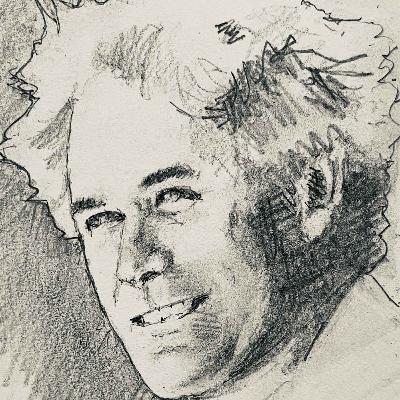
Mark Solms is a clinical neuropsychologist, neuroscientist and psychoanalyst. In this wide-ranging conversation Marks talks about his career path and the influence of a brain injury in family member when Mark was a child. Mark talks about Freud's pre-psychoanalytic work as a neuroscientist and neurologist and his own ongoing retranslation of Freud's neuroscientific writing. We discuss Mark's discovery of the brain lesions that supress dreams (not those relating to REM sleep) and how this lead to his interest in the affective rather than cognitive nature of consciousness. We discuss the work of Panksepp and Damasio and Mark outlines the computational neuroscience model and the way Karl Friston is applying this before mapping all this on Freud's original model of mind.Participants: Mark Solms, Professor, Department of Neuropsychology, University of Capetown, SA. https://neuroscience.uct.ac.za/contacts/mark-solmsKen Barrett, visual artist, writer and retired neuropsychiatrist: http://www.kenbarrettstudio.co.ukMark's book 'The Hidden Spring': https://profilebooks.com/work/the-hidden-spring/Opening and closing music: Prelude to the opera Brainland, composed by Stephen Brown. Brainland the opera website: www.brainlandtheopera.co.ukSketch by KB. Hosted on Acast. See acast.com/privacy for more information.
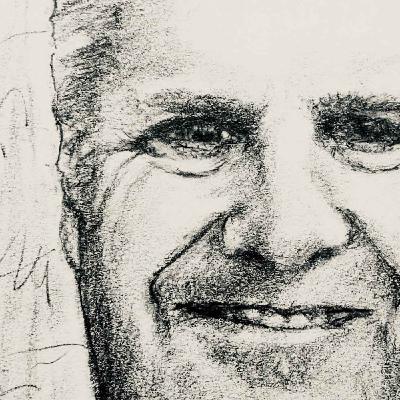
In this podcast Hugh Rickards reads his unpublished essay, 'The Lost Tribes of Neuropsychiatry', raising a number of interesting issues relating to neuropsychiatric services in the UK, and their lack. We chew over some of the issues raised including causes for the abandonment of poeple with chronic mental disorders arising directly from brain disease or damage, and whether the still small discipline of neuropsychiatry has facilitated this. Hugh talks about the historic shift away from the brain in psychiatric nurse training and how some centres are revertng to joint RMN/RN courses. Ken talks about the origins of the still thriving comprehensive neuropsychiatry service in North Staffordshire and Hugh also sketch some solutions. An interesting format this, so if anyone else has an essay that might be in our wheelhouse do get in touch.Participants: Hugh Rickards, Consultant and Honorary Professor of Neuropsychiatry, National Centre for Mental Health, Birmingham, UK. http//:www.birmingham.ac.uk/staff/profiles/clinical-sciences/Rickards-Hugh.aspxKen Barrett, visual artist, writer and retired neuropsychiatrist: http://www.kenbarrettstudio.co.ukOpening and closing music: Prelude to the opera Brainland, composed by Stephen Brown. Brainland the opera website: www.brainlandtheopera.co.ukSketch by KB. Hosted on Acast. See acast.com/privacy for more information.
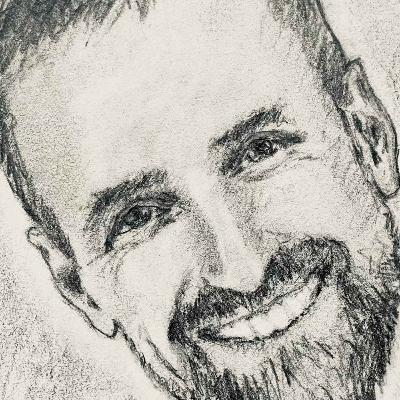
In this conversation we survey the field of contemporary visual neuroaesthetics. After defining terms, Ed talks through a current project by way of illustration before discussing the so-called 'aesthetic triad', dopamine and opioids, prediction models and computational neuroscience. We talk about neuro-investigation including recent techniques for processing an applications of EEG, a much more portable tool than fMRI and other scans.Participants:Ed Vessel, Eugene Surovitz Assistant Professor, Deprtment of Psychology, City College of New York, part of CUNY. https://www.edvessel.comKen Barrett, visual artist, writer and former psychophysiologist.http://www.kenbarrettstudio.co.uk/Opening and closing music: Opening and closing music: Prelude to 'Brainland', the opera by Stephen Brown.Brainland the opera website: www.brainlandtheopera.co.ukFollow us us on Instagram:#brainlandcollective #brainlandthepodcastPortrait sketch by KB Hosted on Acast. See acast.com/privacy for more information.
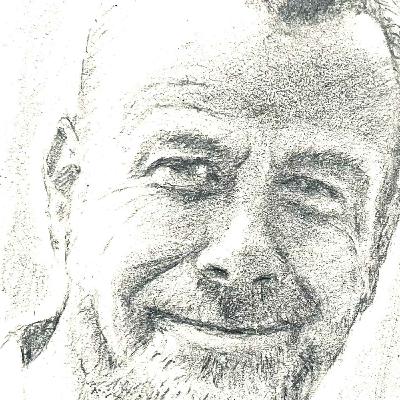
In this wide ranging conversation Michael Asbury discusses the history of Brazil and the way contemporary art has interrogated the legacies of colonialism, slavery, treatment of indigenous peoples and management of natural resources, and, more recently, demonisation by right wing political figures. We also take a deep dive into the concept of 'anthropophagia' and the multi media 'Tropicalia' movement. Artists discussed including Meirelis, Oticica, Obá, Bispo do Rosario and the influence of art produced in psychiatric institutions on Brazilian contemporary art. Like Michael's book, a terrific introduction to contemporary art, done the Brazilian way.Participants:Michael Asbury, Professor of Modern and Contemporary Art from Brazil, Chelsea College of the Arts and Deputy Director of a Research Centre for Transnational Art, Identity and Nation, University of the Arts London. https://www.arts.ac.uk/research/research-centres/trainKen Barrett, visual artist, writer and former neuropsychiatrist.http://www.kenbarrettstudio.co.uk/Michael's book:https://reaktionbooks.co.uk/work/today-is-always-yesterdaySome artists/works discussed:Cildo Mierelis 'Missions (how to build a cathedral)':https://uk.images.search.yahoo.com/yhs/Artur Bispo do Rosario:https://uk.images.search.yahoo.com/yhs/search;_ylt=AwrFDe6TXW1oIqQQO22e3olQ;_ylu=c2VjA3NlYXJjaARzbGsDYnV0dG9u;_ylc=X1MDMTM1MTIxMjcwMgRfcgMyBGZyA3locy10cnAtMDIwBGZyMgNwOnMsdjppLG06c2ItdG9wBGdwcmlkA2wzU2JKWmtFUzZXY3luXy5tMjUyZkEEbl9yc2x0AzAEbl9zdWdnAzIEb3JpAntonio Obá: https://en.wikipedia.org/wiki/Antonio_Ob%C3%A1Opening and closing music: Opening and closing music: Prelude to 'Brainland', the opera by Stephen Brown.Brainland the opera website: www.brainlandtheopera.co.ukFollow us us on Instagram:#brainlandcollective #brainlandthepodcastPortrait sketch by KB Hosted on Acast. See acast.com/privacy for more information.
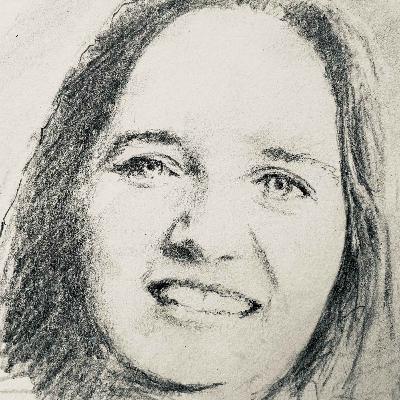
In this wide ranging conversation Erika discusses the evidence for psychedelic use over millennia and world-wide. We talk about her investigation into and opportunity to speak with Humphry Osmond, the British psychiatrists who coined the term 'psychedelic', and introduced Aldous Huxley to mescaline. We roam from Canada to India, West Africa, Cold War Czechoslovakia and Sartre's bad trip before moving on to South America, the CIA and the influence of psychedelics on 60s and 70s music and art, ending with a look to the future. Really fascinating conversation.Participants:Erika Dyck, Professor, Canada Research Chair in the History of Medicine, Department of History, University of Saskatchewan, Canada. https://artsandscience.usask.ca/profile/EDyckKen Barrett, visual artist, writer and former neuropsychiatrist.http://www.kenbarrettstudio.co.uk/'Expanding Mindscapes': https://direct.mit.edu/books/oa-edited-volume/5697/Expanding-MindscapesA-Global-History-ofOpening and closing music: Opening and closing music: Prelude to 'Brainland', the opera by Stephen Brown.Brainland the opera website: www.brainlandtheopera.co.ukFollow us us on Instagram:#brainlandcollective #brainlandthepodcastPortrait sketch by KB Hosted on Acast. See acast.com/privacy for more information.

David Escobebo has been involved in improv theatre for over 25 years, beginning in California and more recently in Chester, UK where he has recenty compelted his PhD thesis on the subject. We talk about the social and educational roots of improv is 1930s Chicago and it's evolution into performance/theatre leading to 'Second City, contrasted with the UK where it was a 'revolutionary act against theatre'. We talk about some of the leaders in the field and their views before David talk about how he arrived at his own 'six principles of improv' (and you heard them here first). We talk about the application of improv training, and particularly active listening, to other groups (healthcare, tech companies, etc.) and include a brief example of a warm up as an afterword to the podcast. Great chat.Participants:David Escobebo Improv performer and educator www.ImprovBoost.com LinkTree https://www.facebook.com/photo/?fbid=738465012079167&set=a.178659034726437Ken Barrett, visual artist, writer and former neuropsychiatrist.http://www.kenbarrettstudio.co.uk/Opening and closing music: 'Improv' a blues improvised and played by Stephen AsmaBrainland the opera website: www.brainlandtheopera.co.ukFollow us us on Instagram:#brainlandcollective #brainlandthepodcastPortrait sketch by KB illustration Hosted on Acast. See acast.com/privacy for more information.

Comments

Download from Google Play

Download from App Store
 United States