


 Claim Ownership
BackTable Urology
Subscribed: 69Played: 2,952
Subscribe

© All rights reserved.
Description
The BackTable Urology Podcast is a resource for practicing urologists to learn tips, techniques, and practical advice from their peers in the field. Listen here or on the streaming platform of your choice.
333 Episodes
Reverse

What is the difference between mentorship, sponsorship, and coaching in a physician’s career, and how can coaching influence your professional development? On this episode of BackTable Urology, Dr. Helen Bernie interviews Dr. Emilie Johnson and Dr. Angie Smith about the transformative impact of career coaching for urologists. They break down how coaching differs from mentorship and sponsorship, who stands to benefit most, and the real value of having a conversation focused entirely on your goals and growth.
---
Get the BackTable apphttps://www.backtable.com/app
---
This podcast was developed in collaboration withSociety of Women in Urologyhttps://swiu.org/home.aspx
---
Timestamps
00:00 - Introduction03:21 - Mentorship, Sponsorship, and Coaching06:23 - Paths Into Physician Coaching11:39 - Who Should Seek a Coach15:56 - What a Coach Does Differently22:57 - Anatomy of a Coaching Session28:21 - Coaching Frameworks and Tools35:14 - Uncovering Unrecognized Goals42:12 - Coaching Beyond the Workplace47:16 - Advice for the Undecided Urologist52:08 - Closing Remarks
---
More about this episode
The discussion explores what a coaching session looks like, from low-stakes one-offs to multi-month programs, and the frameworks and tools that stick, like strengths-based assessments, DiSC, and the career portfolio exercise. Dr. Smith shares insights from her credentialed coaching program, while Dr. Johnson explains how coaching changes everything from listening at home to decision-making in the OR. The episode closes with advice on finding the right coach, recognizing when you are ready, and why coaching is about unlocking what you already know.
---
Resources
Society of Women in Urology (SWIU)https://www.swiu.org/ Effect of a Professional Coaching Intervention on the Well-being and Distress of Physicians: A Pilot Randomized Clinical Trial (Dyrbye et al., JAMA Internal Medicine, 2019)https://doi.org/10.1001/jamainternmed.2019.2425 International Coaching Federation, credentialing and coach education requirements (ACC, PCC, MCC)https://coachingfederation.org/credentialing/prepare-for-icf-credential-application/education-training-requirements/ UNC School of Medicine coaching programs, Office of Faculty Affairs and Leadership Developmenthttps://www.med.unc.edu/facultyaffairs/coaching-culture/ VIA Character Strengths Survey, the free strengths assessment Dr. Smith recommendshttps://www.viacharacter.org/ CliftonStrengths (Gallup)https://www.gallup.com/cliftonstrengths/en/home.aspx
---
BackTable Urology is the go-to podcast for urologists, urologic oncologists, and urogynecologists.
Download the free BackTable app to get early access to new episodes, cases, and courses curated by physicians in your specialty.
► https://www.backtable.com/app

Adrenal lesions now turn up on four to ten percent of cross-sectional scans, and every urologist needs a reliable way to sort out the harmless ones from the dangerous ones. On this episode of BackTable Urology, co-hosts Dr. Gina Badalato and Dr. Chris Anderson speak with Dr. Ben Ristau to share a practical, case-based framework for evaluating adrenal lesions. They walk through imaging criteria, the essential hormonal workup, size thresholds for surgery, the rare but crucial role of biopsy, and the operative planning that separates a smooth adrenalectomy from a crisis.
---
Get the BackTable apphttps://www.backtable.com/app
---
This podcast was developed in collaboration with
Society of Academic Urologistshttps://sauweb.org/
---
Timestamps
00:00 - Introduction03:42 - Imaging Criteria for Adrenal Adenoma08:15 - Framework for Hormonal Workup12:48 - Mild Autonomous Cortisol Secretion16:20 - Adrenal Venous Sampling21:12 - Genetic Syndromes and Pheochromocytoma25:40 - Suspected Pheochromocytoma Case31:19 - Alpha Blockade Before Surgery35:36 - Intraoperative Hemodynamic Swings40:50 - Adrenocortical Carcinoma Case45:00 - Managing Adrenal Vein Avulsion48:00 - Closing Remarks
---
More about this episode
The discussion opens with a 3.4 centimeter lipid-rich adenoma and the two questions that drive every evaluation, whether the lesion is malignant and whether it is functional. Dr. Ristau walks through the overnight 1 mg dexamethasone suppression test, the aldosterone to renin ratio, plasma free metanephrines and adrenal venous sampling, then explains why mild autonomous cortisol secretion is the most commonly missed diagnosis. Later cases cover preoperative alpha blockade for pheochromocytoma, the blood pressure swing that follows adrenal vein ligation, and open resection for suspected adrenocortical carcinoma. They close with pearls on surgical judgment, resident teaching, and the importance of systematic protocols in adrenal mass evaluation.
---
Resources
CUA guideline: Diagnosis, management, and follow-up of the incidentally discovered adrenal mass (endorsed by the AUA, Rowe et al., CUAJ 2023)https://cuaj.ca/index.php/journal/article/view/8248 European Society of Endocrinology clinical practice guidelines on the management of adrenal incidentalomas, with ENSAT (Fassnacht et al., Eur J Endocrinol 2023)https://doi.org/10.1093/ejendo/lvad066 AACE / AAES Medical Guidelines for the Management of Adrenal Incidentalomashttps://pro.aace.com/disease-state-resources/pituitary-and-neuroendocrine/clinical-practice-guidelines/american Discrepancies in the Recommended Management of Adrenal Incidentalomas by Various Guidelines (Journal of Urology)https://www.auajournals.org/doi/10.1097/JU.0000000000001342 Society of Academic Urologistshttps://sauweb.org/
---
BackTable Urology is the go-to podcast for urologists, urologic oncologists, and urogynecologists.
Download the free BackTable app to get early access to new episodes, cases, and courses curated by physicians in your specialty.
► https://www.backtable.com/app

What does a urologist actually need to know to confidently manage advanced prostate cancer in the clinic? On this episode of BackTable Urology, host Dr. Ruchika Talwar interviews Dr. Kristen Scarpato, director of the advanced prostate cancer clinic at Vanderbilt University Medical Center, and Dr. Jason Hafron, chief medical officer of the Michigan Institute of Urology. They break down how the landscape has shifted, why more patients stay in urology for treatment, and how to select and monitor therapy based on disease state, comorbidities, and patient goals.
---
Get the BackTable apphttps://www.backtable.com/app
---
This podcast is supported by
Bayer
https://www.bayer.com
---
Timestamps
00:00 - Introduction02:41 - Shift to Urology-Led Advanced Prostate Management07:07 - Sorting Therapies by Disease State10:33 - Treatment Intensification and Doublet Therapy17:54 - ARPI Selection and the Four Ps Framework25:46 - Managing Financial Toxicity29:30 - Monitoring, Labs, and Imaging34:11 - Red Flags and Comanagement36:49 - When to Refer to Medical Oncology41:11 - Future Directions and Practice Economics46:33 - Closing Remarks
---
More about this episode
The discussion covers sorting therapies by disease state rather than drug class, doublet and triplet intensification, the nuances of choosing between abiraterone, enzalutamide, apalutamide, and darolutamide, and Dr. Hafron’s “four Ps” framework for drug selection. Dr. Scarpato addresses financial toxicity, surveillance protocols, and red flag symptoms. Both guests share their referral triggers for medical oncology, approaches for oligometastatic disease and metastasis-directed therapy, and practical tips for running an advanced prostate cancer clinic.
---
Resources
Advanced Prostate Cancer: AUA/SUO Guidelinehttps://www.auanet.org/guidelines-and-quality/guidelines/advanced-prostate-cancer Trial Design and Objectives for Patients With Prostate Cancer: Recommendations From the Prostate Cancer Working Group 4 (JCO)https://ascopubs.org/doi/10.1200/JCO-25-02834 ARACOG (AFT-47): Darolutamide vs Enzalutamide and Cognitive Function, ClinicalTrials.gov NCT04335682https://clinicaltrials.gov/study/NCT04335682 ARASENS: Darolutamide and Survival in Metastatic, Hormone-Sensitive Prostate Cancer (NEJM)https://www.nejm.org/doi/full/10.1056/NEJMoa2119115 PSMAddition: 177Lu-PSMA-617 Plus Standard of Care in mHSPC, ClinicalTrials.gov NCT04720157https://clinicaltrials.gov/study/NCT04720157 Medicare Plan Finder, referenced on air for comparing Part D out-of-pocket drug costshttps://www.medicare.gov/plan-compare/
---
BackTable Urology is the go-to podcast for urologists, urologic oncologists, and urogynecologists.
Download the free BackTable app to get early access to new episodes, cases, and courses curated by physicians in your specialty.
► https://www.backtable.com/app

How can private practice and academic residency programs work together to shape the next generation of urologists? On this episode of BackTable Urology, Dr. Jose Silva interviews Dr. Javier Castillo about launching an academic residency within a busy private urology group in Puerto Rico. They highlight the business, training, and research challenges involved, as well as the innovations that make real collaboration possible. Dr. Castillo also reflects on why building character in trainees is just as important as teaching surgical skill.
---
Get the BackTable apphttps://www.backtable.com/app
---
Timestamps
00:00 - Introduction04:04 - Launching a Residency and Building the Practice08:13 - Teaching in the OR and Progressive Responsibility13:58 - Clinic, Administration, and Resident Training16:38 - Expanding BPH Treatment Options25:21 - Creating a Research Culture and AI Projects32:42 - AI Uroflow Project and Follow Up40:21 - BPH Case Workup and Shared Decision-Making47:11 - Patient Goals and Procedure Selection55:43 - Sacral Neuromodulation and New Technologies01:00:19 - Teaching Character and Mentorship01:03:07 - Closing Remarks
---
More about this episode
The conversation explores how to teach residents in the OR while maintaining efficiency, build a research culture, and leverage advanced technologies like AI-driven home uroflowmetry. Dr. Castillo and Dr. Silva discuss individualized BPH treatment, expanding procedural options, and aligning care with patient goals. The episode closes with practical lessons on mentorship, character, and the strategies that make a residency program thrive for both trainees and patients.
---
BackTable Urology is the go-to podcast for urologists, urologic oncologists, and urogynecologists.
Download the free BackTable app to get early access to new episodes, cases, and courses curated by physicians in your specialty.
► https://www.backtable.com/app
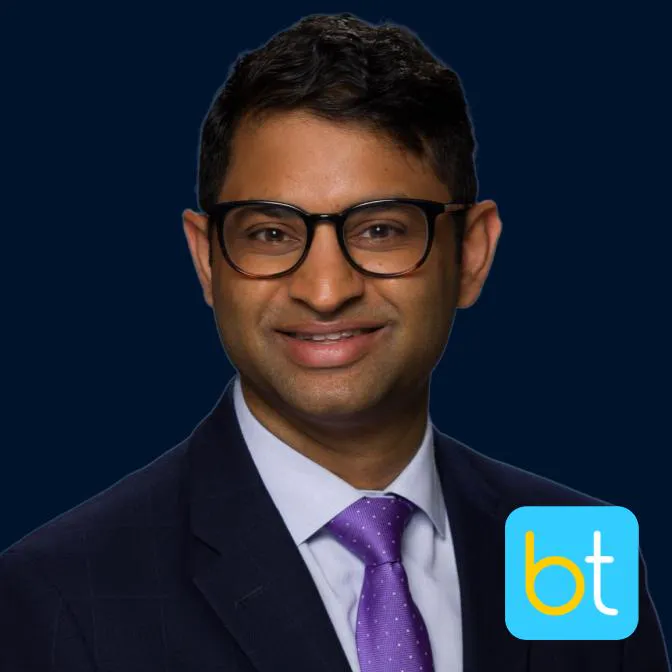
How can reconstructive urologists improve quality of life for cancer survivors beyond the initial cure? On this episode of BackTable Urology, Dr. George Koch interviews Dr. Hiren Patel about building a comprehensive survivorship practice that addresses the long-term needs of patients following genitourinary cancer treatment. They discuss moving beyond post-prostatectomy ED and incontinence to include management of radiation sequelae, immunotherapy effects, and urethral strictures, as well as the role of patient-centered communication, care coordination, and technology.
---
Get the BackTable apphttps://www.backtable.com/app
---
Timestamps
00:00 - Introduction04:26 - Redefining Survivorship11:29 - Why Survivorship Practices Matter17:53 - Workup and Aligning Care21:05 - Managing Active Cancer Scenarios27:20 - Building a Survivorship Program30:12 - Growing Referrals and Optimizing Workflow39:24 - System Support and Research Gaps44:04 - Tech Advances in Reconstruction48:50 - Single-Port Retroperitoneal Case59:55 - Tips, Tricks, and Wrap-Up
---
More about this episode
The conversation covers patient expectation setting, logistics of establishing a survivorship clinic, aligning care with patient goals, and multidisciplinary collaboration with oncology and primary care. Dr. Patel highlights strategies to reduce ER visits and system burden, the importance of continuity, and advances such as single-port robotic retroperitoneal ureteral reconstruction. The episode concludes with practical tips on trust-building, workflow optimization, and advocating for survivorship programs within larger health systems.
---
BackTable Urology is the go-to podcast for urologists, urologic oncologists, and urogynecologists.
Download the free BackTable app to get early access to new episodes, cases, and courses curated by physicians in your specialty.
► https://www.backtable.com/app

Comments

Download from Google Play

Download from App Store
 United States