


 Claim Ownership
Behind the Facts
Subscribed: 0Played: 0
Subscribe

© Copyright 2025 Africa Check
Description
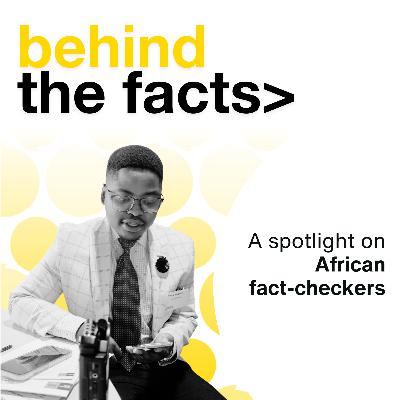
“Behind the Facts” shines a light on the people working behind the scenes to reduce the spread of false and misleading information and promote a culture of accuracy.
14 Episodes
Reverse
As 2025 comes to a close, Behind the Facts looks back on a year defined by one urgent question: how do we protect truth in an increasingly hostile information environment?In this special wrap-up episode, host Thipe Maelane revisits six powerful conversations with fact-checkers, researchers and journalists working on the frontlines of information integrity across Africa and beyond.From battling ever-shifting social media algorithms, reaching offline communities and verifying claims in information deserts to embedding fact-checking inside newsrooms and exposing foreign information manipulation – these voices reveal what it really takes to stop lies from travelling faster than facts.This episode is a celebration of resilience, innovation and courage. It is a reminder that while misinformation continues to evolve, so do the people committed to challenging it.As we head into 2026, one message is clear: truth doesn’t defend itself – we do.DisclaimerThe views and opinions expressed in this episode are those of the individuals and do not necessarily reflect the views or opinions of Africa Check, Behind the Facts, its staff or affiliated groups.ResourcesSign up for our podcast alert to find out when the latest episode is released. Join the Africa Check Whatsapp line or channels in South Africa, Nigeria, Kenya and Senegal to help us fight misinformation.Special thanks toThis episode was produced by the Africa Check team: Khumo Motaung, Tshiamo Mononyane, and Laura Kapelari. Your show host for this episode is Thipe Maelane, also from Africa Check. Africa Check, the continent’s leading organisation promoting information integrity, helps you separate fact from fiction.
What if the biggest story about climate change in Africa is the one we’re not telling?In this episode of “Behind the Facts”, we explore how African fact-checkers are shaping the climate conversation — separating myths from facts and highlighting what global narratives often miss.Our guest, Lanre Olagunju, Editor-in-Chief of CheckClimate Africa, joins us to unpack how misinformation affects public understanding, how Africa’s climate story is framed, and why accurate, locally grounded reporting matters more than ever.From viral climate myths to overlooked realities, we dive into how the stories we tell — and the ones we don’t — influence the continent’s response to the climate crisis.DisclaimerThe views and opinions expressed in this episode are those of the individuals and do not necessarily reflect the views or opinions of Africa Check, Behind the Facts, its staff or affiliated groups.ResourcesSign up for our podcast alert to find out when the latest episode is released. Join the Africa Check Whatsapp line or channels in South Africa, Nigeria, Kenya and Senegal to help us fight misinformation.Special thanks toThis episode was produced by the Africa Check team: Khumo Motaung, Tshiamo Mononyane, and Laura Kapelari. Your show host for this episode is Thipe Maelane, also from Africa Check. Africa Check, the continent’s leading organisation promoting information integrity, helps you separate fact from fiction.
Foreign influence isn’t just political - it’s informational. In this episode of Behind the Facts, host Thipe Maelane speaks with Samba Dialimpa Badji, a research fellow and PhD candidate, about foreign information manipulation and interference (FIMI) and its growing impact in Africa.From Russia and China to local governments, discover how disinformation is being used to sway public opinion, fuel tensions and influence policy - with real-life examples from West and Southern Africa.DisclaimerThe views and opinions expressed in this episode are those of the individuals and do not necessarily reflect the views or opinions of Africa Check, Behind the Facts, its staff or affiliated groups.ResourcesSign up for our podcast alert to find out when the latest episode is released. Join the Africa Check Whatsapp line or channels in South Africa, Nigeria, Kenya and Senegal to help us fight misinformation.Special thanks toThis episode was produced by the Africa Check team: Khumo Motaung, Tshiamo Mononyane, and Laura Kapelari. Your show host for this episode is Thipe Maelane, also from Africa Check. Africa Check, the continent’s first independent fact-checking organisation, helps you separate fact from fiction.
What’s the difference between reporting the news and verifying it? In this episode of Behind the Facts, we dive into the increasingly blurred lines between traditional journalism and fact-checking. As misinformation spreads faster than ever, fact-checkers and journalists are finding new ways to work together—rather than compete. We explore why more newsrooms are launching dedicated verification desks, how fact-checking strengthens public trust, and what this shift means for the future of credible reporting.DisclaimerThe views and opinions expressed in this episode are those of the individuals and do not necessarily reflect the views or opinions of Africa Check, Behind the Facts, its staff or affiliated groups.ResourcesSign up for our podcast alert to find out when the latest episode is released. Join the Africa Check Whatsapp line or channels in South Africa, Nigeria, Kenya and Senegal to help us fight misinformation.Special thanks toThis episode was produced by the Africa Check team: Khumo Motaung, Tshiamo Mononyane, and Laura Kapelari. Your show host for this episode is Thipe Maelane, also from Africa Check. Africa Check, the continent’s first independent fact-checking organisation, helps you separate fact from fiction.
What do you do as you’re a fact-checker when the data you need simply isn’t there?In this episode of Behind the Facts, we speak to Elias in Ethiopia and Remaz in Sudan about the daily realities of working in places where public information is restricted, unreliable—or completely cut off.From Sudan’s war-fuelled information vacuum to Ethiopia’s shrinking civic space, they reveal how the absence of trusted data makes fact-checking nearly impossible—and allows misinformation to thrive.🎧 Tune in for a powerful conversation about censorship, conflict and what it means to fight for the truth when the facts are hidden.DisclaimerThe views and opinions expressed in this episode are those of the individuals and do not necessarily reflect the views or opinions of Africa Check, Behind the Facts, its staff or affiliated groups.ResourcesSign up for our podcast alert to find out when the latest episode is released. Join the Africa Check Whatsapp line or channels in South Africa, Nigeria, Kenya and Senegal to help us fight misinformation.Special thanks toThis episode was produced by the Africa Check team: Khumo Motaung, Tshiamo Mononyane, and Laura Kapelari. Your show host for this episode is Thipe Maelane, also from Africa Check. Africa Check, the continent’s first independent fact-checking organisation, helps you separate fact from fiction.
While the fight against misinformation often focuses on digital platforms, the power of face-to-face interactions, community engagement, and traditional media is often overlooked. In this episode of Behind the Facts, we explore how offline strategies—such as radio, in-person training, and town hall discussions—help bridge the gap for those without internet access. Our guests, Catherine Adeniyi from Africa Check’s Lagos office and Cris Chinaka from ZimFact in Zimbabwe, share their experiences tackling misinformation where it spreads most: in everyday conversations.Sign up to our podcast alert to find out when the latest episode is released. DisclaimerThe views and opinions expressed in this episode are those of the individuals and do not necessarily reflect the views or opinions of Africa Check, Behind the Facts, its employees, or affiliated groups.Resources🔹 Africa Check’s guide to identifying misinformation🔹 ZimFact’s fact-checking workJoin the Africa Check Whatsapp line or channels in South Africa, Nigeria, Kenya and Senegal to help us fight misinformation.Special thanks toThis episode was produced by the Africa Check team: Khumo Motaung, Tshiamo Mononyane, and Laura Kapelari. Your show host for this episode is Thipe Maelane, also from Africa Check. Africa Check, the continent’s first independent fact-checking organisation, helps you separate fact from fiction.
Fact-checking partnerships with social media platforms aim to stop misinformation at its source - by flagging false content, reducing its reach, and providing users with verified information. But how effective are they? In this episode, we examine the impact of these collaborations in Africa, and the challenges fact-checkers face. Are these partnerships making a difference, or is more needed to tackle misinformation at scale? And what would this be? Tune in as we explore the successes, limitations, and the future of fact-checking in the digital space.Sign up to our alert to find out when the latest episode is released.Featured guestsSaja Mortada, manager at the Arab Fact-Checkers NetworkResourcesAn open letter to Mark Zuckerberg from the world’s fact-checkers, nine years later. The letter follows Meta’s move to end the fact-checking programme in the US.Join the Africa Check Whatsapp line or channels in South Africa, Nigeria, Kenya and Senegal to help us fight misinformation.Special thanks toThis episode was produced by the Africa Check team: Khumo Motaung, Tshiamo Mononyane, and Laura Kapelari. Your show host for this episode is Thipe Maelane, also from Africa Check. Africa Check, the continent’s first independent fact-checking organisation, helps you separate fact from fiction.DisclaimerThe views and opinions expressed in this episode are those of the individuals and do not necessarily reflect the views or opinions of Africa Check, Behind the Facts, its employees, or affiliated groups.
As 2024 draws to a close, we take you on a journey through the year’s highlights. From celebrating International Fact-Checking Day to unpacking the critical role of fact-checking during major elections, we reflect on the moments that defined the fight against misinformation. Gain behind-the-scenes insights into the South African election coalition and hear how fact-checkers collaborated ahead of the Namibia and Ghana elections.We also tackle essential online security tips to protect yourself from cyber threats and explore the dual-edged potential of AI in combating false information. Plus, we recap the groundbreaking discussions from the Africa Facts Summit, celebrating milestones and lessons learned.Thank you for being part of our journey! We look forward to bringing you more expert insights, fact-checking tools, and engaging conversations in 2025. Join us as we look back—and ahead—on what’s next in the world of fact-checking.Sign up to our newsletter to find out when the latest episode is released.ResourcesUnited against misinformation: Coalition efforts in the South African electionsReal411 is a platform that provides a way for people to combat digital disinformation by reporting it, safe from intimidation and harassment.Africa Check has been involved in a number of coalitions to combat election misinformation this year, such as in Ghana, Namibia, Rwanda, and South Africa. The broad-based coalition aims to help voters critically engage with information and make informed decisions in the voting booth.First Draft News also has a nifty guide to prebunking, which will help inoculate people against misinformation.Securing the Truth: Online Safety for Fact-CheckersIf you would like to test your password strength, you can use Bitwarden. To check if your email address has been in a data breach, use the website Have I Been Pwned.Virtual Private Network (VPN) optionsNord VPNProton VPNTwo-factor authentication optionsGoogle Authenticatora...
In this episode of Behind the Facts, we sit down with Catherine Adeniyi, a researcher at Africa Check, to discuss the rise of artificial intelligence (AI). We look at how AI is playing out in fact-checking organisations and newsrooms, and how it can work to the advantage of fact-checkers and journalists. From machine learning tools to deep fakes, Catherine shares key information on how AI influences the spread of misinformation online and gives helpful tips on how to spot AI-generated content. If you are a journalist, a fact-checker or just a curious media consumer, this insightful episode is for you. Sign up to our newsletter to find out when the latest episode is released: https://africacheck.info/behind-the-facts Featured guestCatherine Adeniyi, Researcher, Africa CheckResourcesFor content cross-checking and scanning: Full FactSpecial thanks toThis episode was produced by the Africa Check team: Khumo Motaung, Tshiamo Mononyane, and Laura Kapelari. Your show host for this episode is Thipe Maelane, also from Africa Check. Africa Check, the continent’s first independent fact-checking organisation, helps you separate fact from fiction.
In this episode of Behind the Facts, we sit down with Carina van Wyk, Head of Training at Africa Check, to unpack the essentials of online and digital security. From securing your email to using VPNs and password managers, Carina shares crucial tips for staying safe online—especially in the high-stakes world of fact-checking. We also hear from fact checkers across Africa, including Nigeria, Ethiopia, and Namibia, about the skills they've gained through digital security training. Whether you're a fact-checker or just curious about online safety, this episode has something for you.Sign up to our newsletter to find out when the latest episode is released: https://africacheck.info/behind-the-facts Featured guestsCarina van Wyk, Head of Training, Africa CheckLanre Olagunju, OSINT expert, NigeriaAbel Wabella, Executive director, Inform AfricaFrederico Links, Project coordinator, Namibia Fact CheckResourcesFor testing your password strength: https://bitwarden.com/password-strength/For checking whether your email address has been in a data breach: https://haveibeenpwned.com/Virtual Private Network (VPN) options:https://nordvpn.com/?srsltid=AfmBOoqlhm7BAdUS61iHkMZW7vTQomMEMcnu0JTW9cEz_AHzeKnDLUFyhttps://protonvpn.com/?srsltid=AfmBOop7xicRae77V5Sw6-qkE2WZvZ1cQHuk-g2fREESLGpoBKuo-daRTwo-factor authentication options:https://play.google.com/store/apps/details?id=com.google.android.apps.authenticator2&hl=en_ZA&pli=1https://play.google.com/store/apps/details?id=com.azure.authenticator&hl=en_ZAhttps://play.google.com/store/apps/details?id=com.beemdevelopment.aegisSpecial thanks toThis episode was produced by the Africa Check team: Khumo Motaung, Tshiamo Mononyane, and Laura Kapelari. Your show host for this episode is Thipe Maelane, also from Africa Check. Africa Check, the continent’s first independent fact-checking organisation, helps you separate fact from fiction.
Get ready for an inside look at the fight against misinformation during the 2024 South African elections! In this episode, we explore the full-spectrum approach needed to tackle false narratives, from media literacy and quality journalism to collaborating with institutions to ensure people have access to accurate information. Join us as we dive into a powerful discussion held in Johannesburg, where coalition partners and stakeholders, supported by the Google News Initiative and led by Africa Check, reveal how misinformation spread during the election and its impact on public opinion and political outcomes.Sign up to our newsletter to find out when the newest episode is released: https://africacheck.info/behind-the-facts Featured guestsCayley Clifford, deputy chief editor, Africa CheckNomshado Lubisi-Nkosinkulu, communications manager, Media Monitoring AfricaJean le Roux, senior investigator, GraphikaSarah Lubala-Smit, Info Finder & media literacy editor, Africa CheckResourcesInfo Finder helpdeskWe help journalists in South Africa, Kenya and Nigeria to find reliable data. Explore tips and tools for journalists or ask our team a question.SANEF 2024 Elections PortalThe SANEF 2024 Elections Portal provides useful resources for journalists covering elections.South Africa Election Information HubSouth Africa is preparing for crucial national elections at the end of May 2024, thirty years since it became a constitutional democracy. To help cut through the noise, Africa Check has brought together all its election resources in one place. Special thanks toThis episode was produced by the Africa Check team: Khumo Motaung, Tshiamo Mononyane, and Laura Kapelari. Your show host for this episode is Thipe Maelane, also from Africa Check. Africa Check, the continent’s first independent fact-checking organisation, helps you separate fact from fiction.
Join us as Alphonce Shiundu, Africa Check’s Kenya editor, reflects on the challenges of fighting misinformation during elections. Discover the strategies used to verify political claims, the importance of transparent fact-checking and how to build public resilience to false narratives through pre-bunking. Drawing on his experience of the 2017 and 2022 elections, Alphonce offers invaluable advice on navigating the information overload and recognising the telltale signs of disinformation. Whether you're a voter, journalist, or simply a concerned citizen, this episode is a must-listen for staying informed and skeptical in the face of election misinformation.Sign up to our newsletter to find out when the newest episode is released: https://africacheck.info/behind-the-facts Featured guestsAlphonce Shiundu, Kenya editor, Africa CheckResourcesSouth Africa Election Information HubSouth Africa is preparing for crucial national elections at the end of May 2024, thirty years since it became a constitutional democracy. To help cut through the noise, Africa Check has brought together all its election resources in one place. A guide to prebunking: a promising way to inoculate against misinformationDebunks don’t reach as many people as misinformation, and they don’t spread nearly as quickly. If they do reach us, they generally struggle to erase the misinformation from our debates or our brains. Even when we’ve been told that the misinformation is false, research suggests it continues to influence our thinking.So it helps to take a page from medicine: Prevention, not cure, may be a more effective way to combat misinformation. Understanding how prebunks work (and how they don’t) is essential for reporters, fact-checkers, policy makers and platforms.Special thanks toThis episode was produced by the Africa Check team: Khumo Motaung, Tshiamo Mononyane, and Laura Kapelari. Your show host for this episode is Thipe Maelane, also from Africa Check. Africa Check, the continent’s first independent fact-checking organisation, helps you separate fact from fiction.
In an election year, when hot-button issues such as migration and religious conflict can be politicised and weaponised, insisting on verified information and holding those who spread false information to account has come under the spotlight. In this episode, we talk to Africa Check’s chief editors Lee Mwiti (English) and Valdez Onanina (French) about their experiences fact-checking during elections, including the types of misinformation you’re likely to encounter, and how to tackle them, as well as proven strategies for amplifying verified information through coalitions with media and civil society, and training for those who consume and disseminate information. This episode also includes a special feature on the Nigeria Fact-checkers’ Coalition, an alliance of 12 fact-checking news and research organisations that verify statements made by politicians and false narratives shared online.Featured guestsLee Mwiti, Africa Check chief editorValdez Onanina, Africa Check chief editor in SenegalOpeyemi Kehinde, FactCheckHub editorResourcesSouth Africa Election Information HubSouth Africa is preparing for crucial national elections at the end of May 2024, thirty years since it became a constitutional democracy. To help cut through the noise, Africa Check has brought together all its election resources in one place. Senegal election information hubThe February 2024 presidential election in Senegal was considered one of the most important in the country's democratic history. Africa Check and its partners, united in the Fact-Checking Alliance #SaytuSEN2024, fact-checked the public interest claims made by candidates running for office. Nigeria Fact-checkers’ Coalition (NFC)The Nigeria Fact-checkers’ Coalition, an alliance of 12 fact-checking news and research organisations, including CDD Fact-check, Dubawa, FactCheckHub, Cable Check, RoundCheck, Africa Check and others, verified statements made by politicians and the false narratives shared online.Special thanks toThis episode was produced by the Africa Check team: Khumo Motaung, Tshiamo Mononyane, and Laura Kapelari. Your show host for this episode is Thipe Maelane, also from Africa Check. Africa Check, the continent’s first independent fact-checking organisation, helps you separate fact from fiction.
In the very first episode of “Behind the Facts”, we take a look at how fact-checkers in Africa are marking International Fact-Checking Day on 2 April. Plus, because it’s our first episode, we’re taking a bit of time to discover the origin stories of our featured fact-checkers. This episode also offers some insight into how fact-checkers are using artificial intelligence to make their work easier and faster. And, make sure to listen all the way to the end for some tips on sorting fact from fiction straight from our fact-checkers.Featured guestsWith special thanks to our guests this week, Silas Jonathan, a researcher from Nigerian fact-checking outfit, Dubawa (@dubawa on Facebook and @dubawa_official on Instagram), Rukia Nabbanja, the content lead at Debunk Media Initiative from Uganda (@thedebunkshow), and deputy chief editor at Africa Check, Cayley Clifford (@AfricaCheck). ResourcesFor more about International Fact-Checking Day on 2 April (yes, that’s the day after April Fool’s for a reason), visit the Poynter website and follow #FactCheckingDay and #FactsMatter. The Debunk Media Initiative will be hosting an X Space where the organisation will be discussing fact checking for accountability. Africa Check will be hosting a free to the public fact-checking webinar on the day to celebrate. Sign up to learn some things!Special thanks toThis episode was produced by the team at Africa Check: Khumo Motaung, Tshiamo Mononyane, and Laura Kapelari. Your show host for this episode is Thipe Maelane, also of Africa Check. Africa Check, the continent’s first, independent fact-checking organisation, helping you sort fact from fiction.
Comments


Download from Google Play

Download from App Store
 United States