


 Claim Ownership
 Better Sex
Subscribed: 1,159Played: 25,401
Subscribe

© Jessa Zimmerman
Description
Better Sex is focused on helping all couples create and enjoy their best possible sex life. Better Sex is hosted by Jessa Zimmerman who is a couples’ counselor and nationally certified sex therapist. Each episode will dive into one topic related to sex. Some will be devoted to addressing sexual concerns like sexual dysfunction, differences in sexual desire, and intimacy problems. Some will help you develop realistic and helpful expectations. And some will offer information and approaches that can just make your sex life better.The information and discussion on the podcast should not be taken as medical advice or as therapy. Please seek out qualified professionals for medical and therapeutic advice.
jessazimmerman.substack.com
437 Episodes
Reverse
Host Jessa Zimmerman explains why her advice often begins with the higher-desire partner when addressing desire discrepancies, responding to comments on her Instagram reels about fairness and responsibility. She notes that while higher-desire partners may feel they’ve tried everything, many common strategies (like chore-trading, calendaring sex, or negotiating frequency) can unintentionally increase pressure and worsen the dynamic. Jessa emphasizes that lower-desire partners in otherwise loving relationships often feel guilt, shame, inadequacy, and fear of disappointing their partner, which can lead to defensiveness and emotional walls that prevent meaningful change. By shifting their approach, the higher-desire partner can reduce pressure, invite empathy-based conversation, and create safety for the lower-desire partner to open up—making it possible for both partners to work together as a team. Jessa adds that opting out is valid, but change is possible if the couple wants it.00:00 Show Intro00:44 Soapbox Topic Setup02:06 Why Higher Desire Gets Focus02:49 Common Mistakes That Add Pressure03:48 Lower Desire Partner Pain05:29 How Change Opens Dialogue06:25 Inviting The Turning Point Talk07:12 Choosing To Keep Trying07:41 Outro And CreditsIntimacy with Ease is a reader-supported publication. To receive new posts and support my work, consider becoming a free or paid subscriber. This is a public episode. If you'd like to discuss this with other subscribers or get access to bonus episodes, visit jessazimmerman.substack.com/subscribe
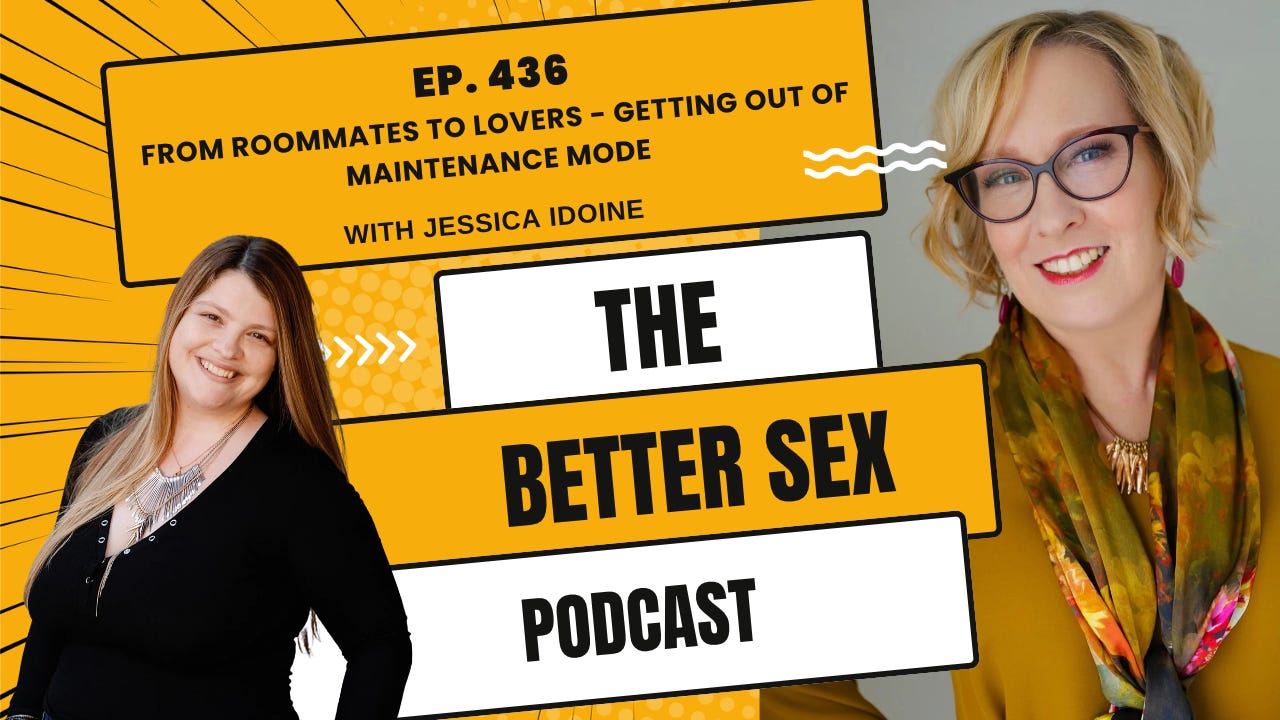
Host Jessa Zimmerman talks with sex and relationships therapist Jessica Idoine about “maintenance mode,” when a relationship functions logistically but feels flat, lonely, or emotionally distant, often leaving partners feeling like roommates. They discuss why date nights alone can fail without emotional safety and presence, and how co-regulation—reading and responding to each other’s nervous system cues—can rebuild connection and support desire. Jessica explains common signs of activation versus “rest and digest,” how mismatches create missed bids for closeness, and simple practices couples can use, including a one-minute “threshold pause,” a three-part structured check-in (feeling, need, appreciation), and brief consent-based touch rituals. They connect nervous system regulation to sexual responsiveness, offer ways to start with small daily rituals or immersive experiences, and share Jessica’s workshops, retreats, and nervous system blueprint resource.00:00 Show Intro01:45 Meet Jessica Edlund03:00 What Is Maintenance Mode04:37 Signs And Patterns07:35 Why Date Nights Fail10:09 Co Regulation Explained14:04 Midroll And Resources14:32 Mismatch And Root Causes18:04 Reading Nervous System Cues20:15 Simple Connection Rituals24:23 Desire And Sex Link27:59 Where To Start Daily31:39 Workshops And Blueprint33:31 Podcast OutroInterested in working with Jessa? Go to https://www.intimacywithease.comBio:Jessica is a licensed and certified relationship and sex therapist who helps couples cultivate deeper connection, honest communication, and emotionally fulfilling partnerships. She is a thoughtful voice in conversations around sexuality, attachment, emotional wellness, and conscious partnership. Her work is centered on supporting couples and individuals who want tomove beyond surface-level connection and create lasting intimacy through awareness, trust, and shared growth.www.jessicaidoine.comwww.expansiveconnectionsretreats.comIntimacy with Ease is a reader-supported publication. To receive new posts and support my work, consider becoming a free or paid subscriber. This is a public episode. If you'd like to discuss this with other subscribers or get access to bonus episodes, visit jessazimmerman.substack.com/subscribe
In this soapbox episode, host Jessa Zimmerman explores how focusing on wanting to feel spontaneously desired can become a painful trap when a partner has reactive desire. Jessa explains the difference between proactive desire (feeling “in the mood” and initiating) and reactive desire (desire that shows up after getting started), noting that many people shift toward reactive desire over time due to changing brain chemistry, aging, longer relationships, and life stressors—and that reactive desire is normal, not broken. She warns against taking the shift personally or using it as a measure of attractiveness, and instead recommends “measuring in the middle” by noticing whether a partner becomes engaged, aroused, and enthusiastic once intimacy begins. Jessa acknowledges grief about losing early-relationship spontaneity and encourages adapting rather than chasing a past dynamic.00:00 Show Intro00:44 Soapbox Setup01:10 Desire Trap Explained01:56 Proactive Vs Reactive03:07 Stop Taking It Personally04:36 Measure In The Middle06:01 Outro And ResourcesIntimacy with Ease is a reader-supported publication. To receive new posts and support my work, consider becoming a free or paid subscriber. This is a public episode. If you'd like to discuss this with other subscribers or get access to bonus episodes, visit jessazimmerman.substack.com/subscribe

Host Jessa Zimmerman talks with journalist and podcaster Natasha Senjanovic about how cultural myths and misinformation about sex—especially female sexuality—shape media coverage, normalize domestic and sexual violence, and distort public understanding of consent and accountability. Natasha describes how covering the Vanderbilt rape retrial pushed her toward trauma-informed reporting and later to create her myth-busting podcast Women Like Sex, featuring experts and “normies” to replace non-evidence-based stories with factual ones. They discuss how patriarchy, historical beliefs, religion, and junk science have influenced ideas about women’s desire, virginity, and “date rape,” and why reframing gender violence as the world’s most prevalent violent crimes matters. Natasha argues media coverage is crucial, urges more data-driven, less victim-centric reporting, and highlights pervasive myths like expecting pain during first intercourse and equating sexuality with “what’s in someone’s pants.”00:00 Welcome to Better Sex00:53 Meet Natasha Senjanovic02:13 Vanderbilt Case Wakeup Call04:00 Trauma Informed Reporting07:21 Why Women Like Sex12:18 Where Myths Come From13:26 Ancient Roots of Sex Stories18:12 Modern Myths and Bias24:09 Media Shapes the Narrative25:29 Domestic Violence Coverage Gaps30:11 How Common Assault Is30:34 Why News Ignores It31:21 Normalization and No Accountability33:33 Consent vs Property Lessons34:55 Reframing Gender Violence Coverage39:51 Stop the Snap Narrative40:45 Women Like Sex and Agency44:54 Virginity Myths and Double Standards46:59 Calling Out Victim Blaming48:44 Inside the Women Like Sex Podcast53:53 Closing and Listener OutroBio:Natasha Senjanovic is an award-winning journalist, storyteller, media trainer, educator, and international speaker. For more than a decade, she has produced news and features for NPR and other national and international outlets. She is also a thought leader in trauma- and data-informed gender violence reporting. In 2025, Natasha launched Women Like Sex, a myth-busting podcast dedicated to replacing harmful messaging about sexuality with healthy, inclusive, factual information.Intimacy with Ease is a reader-supported publication. To receive new posts and support my work, consider becoming a free or paid subscriber. This is a public episode. If you'd like to discuss this with other subscribers or get access to bonus episodes, visit jessazimmerman.substack.com/subscribe

Host Jessa Zimmerman explains that communication tools like “I” language, non-violent communication, reflective listening, and her “share your movies” protocol only work when paired with genuine empathy. Simply repeating a partner’s words or following a formula can leave them feeling technically heard but not understood. Jessa encourages listeners to move from parroting to truly seeking to understand by mentally stepping into a partner’s “movie,” imagining the scene exactly as described, and feeling what it might be like in their shoes. This approach does not require agreement or reacting the way you would, but it does require caring, curiosity, and a willingness to immerse yourself in your partner’s experience so they can sense that you really get it.00:00 Show Intro00:45 Reflective vs Empathetic01:15 Why Formulas Fail02:27 Movie Metaphor03:30 Feeling Without Agreeing03:48 Coaching Empathy04:43 Closing and Next StepsIntimacy with Ease is a reader-supported publication. To receive new posts and support my work, consider becoming a free or paid subscriber. This is a public episode. If you'd like to discuss this with other subscribers or get access to bonus episodes, visit jessazimmerman.substack.com/subscribe

Comments

Download from Google Play

Download from App Store
 United States