


 Claim Ownership
Better Thing
Subscribed: 0Played: 0
Subscribe

Description
Whether you are impacted by a layoff or you are simply searching for the next step in your career, everyone, at some point is ready to look for a Better Thing. We're here to help. Jason Roberts, a 25 year recruiting veteran, hosts this podcast focused on job search, how to find a job, LinkedIn and Indeed secrets, resume tips, interview strategies, navigating the job offer process and answers to questions posed by candidates over his career. Hopefully he can help you find a Better Thing.
2 Episodes
Reverse
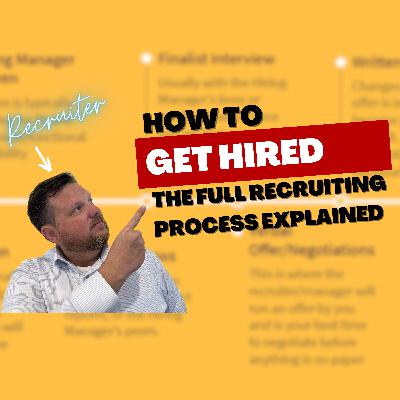
For the visual referenced in the podcast, go here: https://www.execcongress.com/hired
In the complex and often daunting world of job hunting, clarity on the hiring process can provide a substantial advantage. This post aims to simplify this process, detailing every step from the perspective of a seasoned recruiter, Jason Roberts.
Your Resume Guide for resumes that get noticed: http://execcongress.com/resume
The first step is, of course, submitting your resume. While you can find numerous job boards like Indeed, LinkedIn, and Zip Recruiter, nothing beats submitting directly to the company's career site. Geographical and industry-specific boards can also be beneficial. The Recruiter Screen After submission, your resume goes into the company's applicant tracking system (ATS) and is sorted based on keyword matches to the job description. A recruiter then reviews your resume, often generating questions about your employment history and experience related to the job description. After reviewing several resumes, the recruiter then passes a handful of qualified candidates to the hiring manager. The Hiring Manager Screen The hiring manager's screen delves deeper into your functional capabilities. Hiring managers, being closer to the role's day-to-day responsibilities, often ask more nuanced and job-specific questions than recruiters. Once the hiring manager has reviewed the candidates, the most promising ones proceed to team interviews. Team Interviews Team interviews allow future colleagues and collaborators to gauge your fit within the team. Depending on your role, you might be interviewed by future peers, the hiring manager's peers, or even your potential direct reports. This step is crucial as it can make or break your chances of progressing further. The Finalist Interview Following the team interviews, the hiring manager conducts the finalist interview, often involving the hiring manager's boss. This stage is generally a rubber stamp and a chance for you to ask intelligent questions about the company and the team. Negotiating the Offer Next comes the verbal offer stage. It's important to remember that this is your chance to negotiate. Discussions around salary and benefits take place during this phase, and it's critical to voice your expectations before receiving the written offer. The Written Offer After negotiating the verbal offer, you'll receive a written offer. This written document usually signifies the company's best and final offer. If you spot any deal-breakers, you should raise them at this point. Background Check After accepting the written offer, the company initiates a background check. This check, usually completed within two weeks, can involve criminal history, credit checks (for certain finance-based roles), and employment history. Once the background check is cleared, you're ready to start your new job. It's a journey that can often feel long and challenging, but with a clear understanding of the process, it becomes less daunting. For a visual aid to this process, download a free guide at used in this video here. Remember, knowledge is power, and understanding the hiring process can be your superpower when seeking your next role.
Free Guide to Amplify Your Resume
Transcript: Have you noticed that when you go to apply for a job, sometimes the job has been open for a mere number of hours and over a thousand people have applied? How in the world do you get your resume seen? Do you amplify your chances of getting your resume in front of a recruiter? When there's that many people looking at the same job. I want to spend this time with you going over five strategies to amplify your resume. Five strategies to amplify your resume. One thing that I'd like to do, on top of these five strategies, we'll go over in just a moment is I'd like to offer you my free guide. I don't even have a way of charging you money for this. So my free guide, for, Amplifying your resume. So I have top 10 tips that, you can click the link below to go and download. , you can use that, go through your resume, use it as a checklist and decide what changes you should or shouldn't do. But there are five key strategies I do want to go over today. And the first one is this to [00:01:00] amplify your resume. You have to realize that your resume is not. Just a resume. Your resume is many, many, many resumes. Now, what I'll say is if I go to apply for a job and actually I apply for jobs all the time. Part of my job is to implement systems and technologies that people use for hiring. So every opportunity I get to apply for a job, I do. And I've applied for jobs literally thousands of times. And I've done it on all the systems that exist today. technology that recruiters use, I've ultimately applied for a job and I can tell you a few things about them. The most important thing to know is You have to tailor your resume for every job. Now, does that mean that you fudge some things, you lie about some things, you say you did some things that you didn't do in a past role? No, you don't do that at all. Never lie on your resume. It doesn't help you. It doesn't help the company. It ends up burning everybody when it's all said and done. [00:02:00] What it does mean is that over your long and storied career, You probably have more than one or two pages worth of stuff that you've done. One or two pages of accomplishments over the last 5, 10, 15, 25 years that you can put on paper. And if you tailor your resume, you can talk about the things that are most applicable to that particular job. Now what does that mean? That means you get a job description, you read that job description, and they'll have specific keywords that are called out, specific things that they have asked for. So for example, if there's a company that I am talking to and, that I'm interested in applying to, and they have stated in the job description. That they're looking to implement technical assessments. I would add something to my resume that I normally wouldn't call out specifically that I recently implemented HackerRank as an assessment technology. So, I would lay that out, that's a technical assessment, and I would lay that out. Now normally, that's [00:03:00] not something that would make it to my resume. It's not a massive accomplishment, but it is something that's directly applicable and saying, I have experience doing this thing that you really care about and that you're doing right now. So, tailor your resume for the job itself. Every single job and what I would say is I would stick to just just a couple of pages on your resume. Now, you can go longer in this day and age, people don't actually print out resumes. So if it goes over two pages, what I would do is I would take the page count out, and just let it flow. But, I would keep it relatively short because you don't want people to get bored. You want them to see exactly what they need to see when they need to see it. And you tailor that resume to every single job. I keep a master resume, so I, I keep a resume by year. That's my master resume for the year. And what I will do is I will remove pieces that are not applicable really fast. And then I'll go through the job description and make sure that I insert pieces that I've done in my past [00:04:00] that are applicable to exactly what they're asking for. So tailor your resume to every single job. Second strategy, choose the right format. Now, part of this is making sure that you know who your audience is. Your audience for, for reading your resume, ultimately you're going to have a recruiter look at it, then a hiring manager. That's how, that's how it normally works in the process. If you get really lucky, you can get it straight to a hiring manager. We'll talk about strategies on how to do that in a later video. But, you'll have a recruiter look at it, and then the hiring manager. But before the recruiter ever gets it, A machine reads the applicant tracking system or the ATS that the company uses is going to read your resume first. And you need to have your resume in a format that the ATS can understand. What that means is choose a template. Word has templates out there all over the place. And some of this even say they're ATS friendly templates and they're not. [00:05:00] You don't want your contact information, for example, in some random text box, which one of the ATS templates has right now. You don't want to use, columns that read vertically, and not horizontally. So you, you don't want side by side columns, for example, that confuses the ATSs. In fact, I, I avoid columns altogether and keep the formatting super simple. return carriages, tabs, and that's all, to help it be, be read in the right format. On top of that, the machine is looking for like for like. Again, when I said tailor your resume, for when, I, I call myself a recruiter. I've been a recruiter for a very long time. I've done lots of things in recruiting and I've, I've built systems and I've, I've managed big teams and I've done all the things that you do as you expand in your career. But I still call myself a recruiter. Some companies call this talent acquisition. Now if I'm applying for a job at a company that uses the term talent [00:06:00] acquisition, I changed the word recruiter to talent acquisition. It's that simple. It doesn't matter one way or another. Hopefully there's technology is smart enough. To know that those are basically the same thing. But, I try not to trust the intelligence of machines. They, they aren't that smart yet. And, they're, they're lagging behind. So, I change to align with the terminology that the company is using. If it, especially if semantically, it means the same thing. Every time. The next strategy is to include a compelling summary or objective. Now, I say a summary or objective. I call mine an overview. But what I want to do is as soon as the human being gets to my resume, as soon as there's a human view, I want them to have the quickest snapshot that they can possibly have of exactly who I am, what I'm all about, what I do, what my experience is. The way that you do that is by including what I prefer is an overview statement at the very top. [00:07:00] So I'm a talent acquisition leader with 25 years, In recruiting of recruiting experience and, I've worked for these companies and that's it. I just lay that out really quickly. They know exactly who I am exactly what I'm about and they're able to, to make a decision on do I want to move forward? Hopefully the answer is yes when that happens. So include that at the very top. It will get you through the skim phase and into the, hey, I'm going to spend some time reading this and in some more detail phase. Now, what I'll tell you is recruiters, they're fast. They read fast. They skim through resumes incredibly quickly. They'll spend a few seconds, not minutes on your resume. Hiring managers tend to read the things cover to cover and they spend a lot of time. They go through the details and in interviews, they'll actually pick through those details with you. So I would spend some time when, when putting this together, making sure that you have the detail there, but you have [00:08:00] something built to the top that. Summary statement that will help the skimmer so that you get to the person who's going to read it more deeply. That compelling overview statement is really important. The next piece is highlighting relevant skills. Now, more and more systems are going to a skills framework. And when you go to apply for a job, they'll actually ask you to identify your skills because they're not smart enough to read it off your resume yet in an automated fashion. So they'll ask you to identify your skills and outline those. When you go to do that, look at the actual job posting that's there, identify the skills that they've called out, and if you have any of those skills, that's what you highlight. And again, in your resume, if there's a, if there's a bullet on that job description, you should have a skill related to that bullet listed somewhere on your resume, everywhere on your resume. And you can list as many places as you like, [00:09:00] because again, they're going to look for years of experience with that skill. So if you had that skill at three different companies spanning a 10 year period of time, like I've been a software developer for 10 years using, c plus plus, and you would put that in all three of those companies so that they can look back and say, okay, the c plus plus thing that goes back by 10 years. So I would lay that out in, in depth and in detail so that they know where you've been, where you've been doing that work. Highlighting relevant skills. The last strategy, and I think this is really important, is to showcase accomplishments. Now, when I say showcase accomplishments, here's what I mean. What you have to do is you have to go in and say, use action words for all of your bullets. So, every bullet that you have listed, you put an action word related to it. So, I implemented, I developed, [00:10:00] coded, I, Managed, I spoke, whatever you do in there, it should be the, and I wouldn't put the I in there. I would put the action word. S
Comments

Download from Google Play

Download from App Store
 United States