


 Claim Ownership
Beyond Oil: The Rise of Critical Metals
Subscribed: 3Played: 4
Subscribe

© Impossible Metals
Description
As oil fueled the 20th century, critical metals will drive the 21st century's electrification and clean energy revolution. The entire clean energy supply chain—from generation (wind, solar, nuclear) to transmission (copper) and storage (batteries)—requires massive amounts of critical metals.
impossiblemetals.substack.com
impossiblemetals.substack.com
15 Episodes
Reverse
Moderator: Eric Young, Host of the Elements of Deep Sea Mining PodcastFor: Oliver Gunasekara, CEO & Co-Founder, Impossible MetalsAgainst: Victor Vescovo, Founder and CEO of Caladan Capital🎙️ Episode OverviewIn this debate, Oliver Gunasekara and Victor Vescovo examine whether deep sea mining is necessary to meet rising global demand for critical minerals. Moderated by Eric Young, this discussion explores the environmental, economic, geopolitical, and technological dimensions of seabed resource collection.📝 Episode DiscussionAs the world accelerates toward electrification and clean technologies, demand for nickel, cobalt, manganese, and copper is surging. Can seabed minerals contribute meaningfully — and responsibly — to global supply?The speakers debate:* Whether deep sea mining provides minerals essential to the energy transition* Environmental risks, uncertainties, and the role of selective collection* Technology readiness, robotics, and operational challenges at depth* The economics of seabed mining compared to terrestrial sources* Global competition, particularly China’s supply chain dominance* Regulatory frameworks, observers, and environmental impact assessments* How little or how much seabed disturbance is acceptable* Whether the industry is inevitable — and who should lead it⏱️ Episode Timeline* Environmental impact concerns and biome uncertainty (00:16:03–00:16:48)Oliver responds with data on seafloor science and the 6% selective-removal model (00:17:00–00:17:36)Debate over whether 6% collection speed is realistic (00:18:05–00:18:14)* How essential are these minerals? Market size, value distribution, and copper/cobalt/manganese demand (00:20:48–00:22:43)Oliver’s response on copper demand and future price pressures (00:22:47–00:23:07)* Technology readiness, risk stacking, and startup innovation under uncertainty (00:47:14–00:48:22)Victor’s argument on risk multiplicativity in complex systems (00:48:03–00:49:17)* Operational challenges: sea state, lift systems, DP avoidance, subsea engineering heritage (00:43:48–00:45:29)Victor counters on deployment difficulty, untested depths, and complexity (00:45:36–00:45:58)* Power requirements for recharging AUV fleets (00:46:03–00:46:36)Oliver explains ship-based power generation and upcoming 6 km rating (00:46:42–00:47:03)* Environmental impact assessments, regulation, and precision collection (00:53:52–00:54:44)Victor’s call for independent technical and financial observers (00:55:35–00:55:56)* Selective collection economics: arm count, speed tradeoffs, and vehicle optimization (00:56:07–00:57:46)* Geopolitics: China’s supply chain dominance, strategic risks, and why nations are investing (01:03:41–01:05:14)* Closing arguments: technological feasibility, economics, and long-term relevance of DSM (01:29:11–01:30:34)Moderator’s closing thanks and wrap-up (01:30:36–01:30:46)🔑 Key Takeaways* The debate centers on whether seabed minerals are necessary or marginal in the global metals landscape.* Environmental uncertainty remains a major point of disagreement, especially regarding disturbance, sediment, and biome effects.* Selective, low-impact collection is presented as a pathway to dramatically reduce disturbance — while critics question its feasibility at scale.* The economic viability of seabed mining depends heavily on technology readiness, collection speed, and capital costs.* Geopolitical pressures, particularly China’s dominance in metal processing, influence interest in alternative mineral sources.* Regulation, transparency, and independent oversight are viewed as essential regardless of method.* Both sides agree that strong environmental laws and rigorous monitoring are required before any commercial activity proceeds. This is a public episode. If you would like to discuss this with other subscribers or get access to bonus episodes, visit impossiblemetals.substack.com
🎙️ Episode DescriptionIn this episode, Oliver Gunasekara speaks with Bob Galyen, one of the foremost experts in battery technology and electrification, to unpack the challenges and opportunities shaping the global energy transition.Bob discusses the evolution of modern batteries, the materials that power electric vehicles, and how innovations in manufacturing and automation are reshaping the supply chain. He explains why China leads battery production, what the U.S. must do to compete, and how deep-sea mineral harvesting offers a more sustainable alternative to terrestrial mining.They also explore the critical role of AI in manufacturing, the importance of circular economy models, and the essential nature of education and workforce training in securing a long-term, sustainable future for the industry.👤 GuestBob Galyen, Chairman of The Battery Show North America and veteran battery expert🎧 HostOliver Gunasekara, CEO of Impossible Metals⏱️ Episode Timeline* The evolution of modern battery technology (00:00:00–00:01:54)* Bob Galyen’s journey into the battery industry (00:01:54–00:03:15)* Honoring Dr. John Goodenough’s scientific legacy (00:03:15–00:04:26)* Core components of battery architecture (00:04:26–00:06:04)* Manufacturing technology gaps between the U.S. and China (00:06:04–00:08:51)* Global battery demand and production outlook (00:08:51–00:10:55)* China’s rise as the dominant battery producer (00:10:55–00:13:09)* The impact of government support and private investment (00:13:09–00:15:24)* Artificial intelligence in battery production and automation (00:15:24–00:17:06)* Understanding mineral supply chain dependencies (00:17:06–00:19:55)* Comparing terrestrial mining and deep-sea harvesting (00:19:55–00:22:41)* The economic importance of polymetallic nodules (00:22:41–00:25:44)* Global variations in nodule composition (00:25:44–00:27:33)* Applications of metals from deep-sea resources (00:27:33–00:30:03)* Reassessing mine tailings and resource recovery (00:42:52–00:45:15)* Resource versus reserve — economic and environmental considerations (00:43:48–00:45:37)* Education and workforce development for a sustainable battery future (00:45:43–00:46:23)🔑 Key Takeaways* Battery fundamentals still drive innovation. The chemistry and structure of anodes, cathodes, separators, and electrolytes define performance and cost.* China’s battery dominance is policy-driven. Long-term investment, state coordination, and massive manufacturing scale have set a high bar for the rest of the world.* AI is reshaping production. Automation and machine learning are improving efficiency, yield, and safety across the battery value chain.* Deep-sea nodules offer sustainable sourcing. Their high metal content and low waste potential make them a cleaner alternative to traditional mining.* Circular economy principles are essential. Recycling and re-use will be critical to meeting future global battery demand.* Education is the foundation. Building a skilled workforce through STEM education and technical training will determine long-term competitiveness.* Sustainability and economics must align. The future of batteries depends on balancing cost, efficiency, and environmental responsibility. This is a public episode. If you would like to discuss this with other subscribers or get access to bonus episodes, visit impossiblemetals.substack.com
🎙️ Episode DescriptionIn this episode, we dive into the intersection of artificial intelligence and deep-sea mineral exploration. João Carvalho, CEO of DeepFocus, shares how his team is leveraging AI-driven data processing and geological analysis to support responsible exploration of critical minerals. From demand pressures to environmental challenges, João highlights innovative methods, real-world examples, and the role startups like DeepFocus play in reshaping the future of resource discovery.👤 GuestJoão Carvalho – CEO of DeepFocus, a Portuguese startup focused on AI-powered solutions for responsible deep-sea mineral exploration.🎧 HostOliver Gunasekara – CEO of Impossible Metals.⏱️ Episode Timeline* Introduction by Oliver and handoff to João (00:00:00–00:00:17)* João introduces DeepFocus and its mission (00:00:17–00:01:16)* Services offered: consulting, target generation, asset analysis, and habitat mapping (00:01:16–00:01:44)* The growing demand for critical minerals (00:01:44–00:02:49)* Challenges in deep-sea mineral exploration (00:02:49–00:03:54)* How AI supports resource definition and exploration (00:03:54–00:04:58)* Examples of AI applications in exploration workflows (00:04:58–00:06:15)* The importance of responsible practices and sustainability (00:06:15–00:08:15)* Future outlook for AI in deep-sea exploration (00:08:15–00:10:00)* Q&A highlights: impact of AI on exploration accuracy (00:10:00–00:11:45); balancing innovation with environmental responsibility (00:11:45–00:13:30)🔑 Key Takeaways* AI is accelerating deep-sea mineral exploration. By processing vast datasets, AI identifies patterns that humans may overlook.* DeepFocus was founded in 2023 to make exploration more responsible. The startup leverages AI for geological intelligence and habitat mapping.* Critical mineral demand is rising sharply. Renewable energy and high-tech industries are fueling this growth.* Exploration challenges remain significant. Harsh environments and incomplete data pose hurdles.* AI improves resource definition accuracy. Machine learning can generate new exploration targets and refine existing data.* Environmental responsibility is central. Both companies and regulators must prioritize sustainable exploration.* AI-driven workflows streamline decision-making. From data review to habitat mapping, processes become faster and more efficient.* Collaboration is key to progress. Startups, governments, and established companies all play a role.* Sustainability builds trust with stakeholders. Responsible practices help secure social license to operate.* The future of deep-sea exploration is AI-enabled. Innovation will shape how resources are discovered and used.🔗 Links & Resources Mentioned* Impossible Metals* DeepFocus This is a public episode. If you would like to discuss this with other subscribers or get access to bonus episodes, visit impossiblemetals.substack.com
Episode DescriptionToday on the podcast, we welcome Lucia Fogler, a University of Virginia student researcher in public policy and global security. Lucia shares her research on how China is positioning itself as a leader in deep-sea mining—and what that means for U.S. national security.From mapping China’s ISA contract areas and tracking research vessel movements, Lucia highlights key trends in the Pacific that put pressure on the U.S. defense industrial base. She explains how seabed minerals could shift global supply chains, why Oceania is a critical theater for geopolitical competition, and what steps the U.S. might take to protect its strategic presence.If you’re interested in the intersection of critical minerals, defense, and geopolitics, this episode is a must-listen.GuestLucia Fogler, University of Virginia student researcher in public policy and global securityHostHolly NielsenEpisode DescriptionToday on the podcast, we welcome Lucia Fogler, a University of Virginia student researcher in public policy and global security. Lucia shares her research on how China is positioning itself as a leader in deep-sea mining—and what that means for U.S. national security.From mapping China’s ISA contract areas and tracking research vessel movements, Lucia highlights key trends in the Pacific that put pressure on the U.S. defense industrial base. She explains how seabed minerals could shift global supply chains, why Oceania is a critical theater for geopolitical competition, and what steps the U.S. might take to protect its strategic presence.If you’re interested in the intersection of critical minerals, defense, and geopolitics, this episode is a must-listen.Episode Timeline* Welcome, format, and handoff to Lucia (00:00:00)* Lucia’s background and research focus (00:00:29)* Agenda: background → positions on deep sea mining (DSM) → policy implications → recommendations (00:01:16)* Why DSM matters to U.S. defense: (1) critical minerals in DIB; (2) maintaining influence in Oceania (00:02:09)* DOD/NATO critical-minerals lists; China’s prominence across mining/refining/processing; all 16 found in the ocean (00:02:59–00:04:53)* Pacific context: island-chain theory; U.S. territories, EEZs, bases, and COFA agreements (00:05:11–00:09:03)* China’s Oceania footprint: security agreements (Solomon Islands, Kiribati, Vanuatu) and deep-sea collaborations (Cook Islands, Tonga, PNG) (00:09:10–00:11:12)* ISA contracts & dual-use concerns (Beijing Pioneer, COMRA, China MinMetals) (00:11:37–00:12:11)* U.S. vs. China posture on DSM; U.S. not an UNCLOS/ISA party; EO 14285 opens paths beyond national jurisdiction (00:12:22–00:14:24)* Method: open-source overlays of ISA polygons, U.S. sites, and vessel tracks (00:15:17–00:17:09)* Policy implications (3): countering U.S. influence; dual-use/civil-military fusion; market lock-out risk (00:17:51–00:18:58)* Case study—American Samoa & nearby PRC alignments (Tonga, Cook Islands) (00:19:34–00:20:22)* Proximity callout—Hawai‘i to CMC A5 ~600 miles; ISA sites near U.S. EEZ (00:21:03–00:21:23)* Undersea cables run through/near ISA areas; Xiangyang Hong 6 survey routes raise espionage/sabotage concerns (00:22:26–00:24:27)* What’s new: U.S. exploring EEZ permits; U.S.–Cook Islands MOU; renewed U.S. corporate interest (00:26:22–00:27:57)* Q&A highlights: provocation vs. economics (00:29:07–00:31:31); terminology (“mining” vs “harvesting”) (00:43:52–00:45:51); DSHMRA (1980) relevance (00:46:10–00:47:55); cultural/environmental concerns (00:52:10–00:55:59)Key Takeaways* Defense depends on seabed minerals: Critical minerals underpin U.S. defense tech; all 16 highlighted appear in ocean contexts (varying quantities).* China’s leverage spans sea and shore: Dominance across terrestrial supply chains is extending seaward via ISA contracts and Oceania partnerships.* Geography = strategy: PRC contract areas and partnerships frequently sit near U.S. assets or allies, challenging influence across the second/third island chains.* Dual-use risk is real: Research vessels and seabed work can coexist with ISR risks—especially where fiber-optic cables intersect ISA blocks.* U.S. legal posture is mixed: Non-participation in UNCLOS/ISA limits levers even as EO 14285 and legacy statutes (DSHMRA, 1980) create paths to act.* Race for processing & market share: If China leads DSM and processing, it could lock the U.S. out of critical-mineral markets vital to the Defense Industrial Base.* Momentum is shifting now: Fresh diplomacy (e.g., U.S.–Cook Islands) and renewed corporate interest suggest fast-moving competitive dynamics.Resources & Links* Lucia Fogler’s paper online * International Seabed Authority (ISA)* U.S. Geological Survey: Critical Minerals Review* Impossible Metals website This is a public episode. If you would like to discuss this with other subscribers or get access to bonus episodes, visit impossiblemetals.substack.com
Episode Description:In this episode, Impossible Metals hosts a forward-looking conversation with Shane Tragathon, Head of Business Development and Partnerships at ReElement Technologies. Shane explains how ReElement’s breakthrough refining technology provides a modular, scalable, and environmentally friendly alternative to China’s solvent extraction dominance. He unpacks how chromatographic separation enables ultra-high purity outputs across rare earths, battery metals, and defense-critical elements — and how these systems can process ores, brines, recycled materials, and even seabed nodules.Guest:Shane Tragathon – Head of Business Development & Partnerships, ReElement TechnologiesHost:Oliver Gunasekara – CEO & Co-Founder, Impossible MetalsEpisode Timeline:* Why refining is the real bottleneck in critical mineral supply chains (0:00 – 3:30)* How ReElement’s chromatography-based technology works (3:30 – 7:15)* Achieving 99.999% purity without toxic solvents or legacy inefficiencies (7:15 – 12:00)* Flexible inputs: from recycled EV batteries to polymetallic nodules (12:00 – 16:40)* Advantages of modular, deployable refining near ports and mining sites (16:40 – 21:10)* The role of ReElement in U.S. national security and industrial resilience (21:10 – 25:30)* Global partnerships in Africa, Europe, and with Impossible Metals (25:30 – 30:00)* The future of distributed refining and its role in decarbonization (30:00 – 34:20)Key Takeaways:* Refining, not mining, is the chokepoint. China’s grip on mineral processing is the strategic bottleneck in supply chains, and ReElement’s approach directly addresses that weakness.* Chromatography unlocks higher purity with lower impact. The system eliminates toxic solvents, recycles water, and slashes environmental risks while achieving up to 99.999% purity.* Flexibility is a strategic advantage. Being able to process multiple feedstocks — from ores to brines to recycled batteries and nodules — makes the system resilient and future-proof.* Modular refining strengthens supply chains. Deploying compact systems close to ports, mines, or recycling hubs reduces logistics costs, increases speed, and limits choke points.* This is about security as much as sustainability. U.S. defense, aviation, energy, and tech sectors all rely on stable supplies of rare earths and battery metals — and distributed refining is key to resilience.* Partnerships are accelerating deployment. From African battery hubs to European recycling and Impossible Metals’ seabed projects, ReElement is positioning globally.Links & Resources Mentioned:* ReElement Technologies* Impossible Metals This is a public episode. If you would like to discuss this with other subscribers or get access to bonus episodes, visit impossiblemetals.substack.com
Episode Description:In this episode, Impossible Metals hosts a timely and candid conversation with Frank Fannon, one of the most prominent voices on energy geopolitics and critical mineral strategy. Drawing on his July 2025 Congressional testimony, Frank unpacks how China’s dominance in mineral refining poses a national security risk, why the U.S. needs to reframe its mineral strategy around power—not just policy—and how seabed resources could offer a game-changing solution.Guest: Frank Fannon – Former U.S. Assistant Secretary of State for Energy Resources; CEO of Fannon Global AdvisorsHost: Oliver Gunasekara, Impossible Metals CEO and Co-FounderEpisode Timeline:* China’s mineral dominance as non-kinetic warfare (0:00 – 3:20)* Why the U.S. must treat critical minerals as a security—not just economic—issue (3:20 – 6:45)* Outlining strategic tools: tariffs, offtake agreements, and financial instruments (6:45 – 10:55)* Building public-private alliances and performance-based international partnerships (10:55 – 15:40)* Permitting reform and why red states are leading domestic gigafactory development (15:40 – 19:10)* How U.S. institutional financing (DFC, EXIM, DOE) must evolve (19:10 – 23:00)* The case for seabed minerals and what’s changing in U.S. executive action (23:00 – 26:40)* Global perspective: Germany, Russia, and learning from past energy dependencies (26:40 – 30:25)* How the U.S. and allies can build a diversified, stable, and ethical supply chain (30:25 – 34:45)* U.S. legal standing on UNCLOS and what needs to happen in international waters (34:45 – 37:50)* Audience Q&A: demand reduction, recycling myths, deep sea mining and China's role (37:50 – 47:10)Key Takeaways:* China’s dominance in critical mineral processing is a strategic lever, not an accident. Frank emphasizes that Beijing’s actions are deliberate tools of economic statecraft designed to reduce Western leverage without firing a shot.* The U.S. must shift from awareness to action. Awareness campaigns and convenings are not enough—only tangible investment, stockpiling, and structural reform will close the gap.* Permitting reform is a linchpin for competitiveness. Delays of 10+ years undermine U.S. viability. States that offer fast, low-cost energy and transparent permitting—often red states—are now winning investment.* Public financing tools need flexibility and teeth. Agencies like EXIM and DFC should not just fund “safe” projects—they must de-risk bold, strategic ventures through offtake agreements and first-mover backing.* Seabed mining is no longer theoretical. Executive actions now open both domestic and international waters to exploration. The U.S. cannot afford to cede leadership here to China or remain stalled by treaty inaction.* Recycling and ‘thrifting’ are helpful, but not enough. Mineral demand is simply migrating to new sectors like AI and cloud infrastructure; substitution is not a silver bullet.* Deep sea mining may not benefit China as much as expected. While China dominates processing, it currently holds a minimal share of seabed extraction—offering a rare strategic opening for the U.S. and allies.* Global alliances must be performance-based. The U.S. should prioritize countries that deploy capital and build facilities—not just sign diplomatic MOUs.* We need to reduce reliance on single-source supply chains. Just as Germany learned with Russian gas, Western economies cannot afford to depend on China for minerals without serious consequences.* The U.S. must act regardless of UNCLOS ratification. While not a party to the treaty, America still benefits from seabed access and should assert its rights proactively.* Domestic projects must be financially sound from the start. The U.S. should not subsidize marginal plays but invest in globally competitive ventures with scalable economics.* Investors must consider long-term national security risks. Chasing short-term margins without factoring in geopolitics will backfire. Sustainable sourcing is a competitive advantage, not a cost.Links & Resources Mentioned:* Frank Fannon’s Congressional Testimony (July 2025) link* Frank Fannon’s statement* Impossible Metals website This is a public episode. If you would like to discuss this with other subscribers or get access to bonus episodes, visit impossiblemetals.substack.com
Welcome to the latest episode of Beyond Oil: The Rise of Critical Metals. In this episode, Holly Nielsen from Impossible Metals Marketing presents the company’s newly released Annual Report and shares key insights. The conversation then shifts to a live Q&A with CEO and Co-Founder Oliver Gunasekara, exploring in detail topics such as environmental impact, stakeholder engagement, and economic modeling for deep-sea mining.Host:* Oliver Gunasekara, CEO & Co-Founder of Impossible Metals🕒 Episode Timeline* Intro & Agenda Overview (00:00–00:00:18)* Annual Report Highlights & Vision (00:00:18–00:01:20)* Core Values & Responsible Metals (00:01:20–00:02:43)* Year in Review: 2024 Company Milestones (00:02:43–00:06:31)* ESG Focus: Environmental Impact (00:06:31–00:10:27)* Minimizing Sediment Disruption (00:10:27–00:12:53)* Technology & Biodiversity Protections (00:12:53–00:14:27)* Social Responsibility & Stakeholder Engagement (00:14:27–00:17:20)* Governance & Transparency Practices (00:17:20–00:18:48)* Technology Roadmap: Eureka I to III (00:18:48–00:20:27)* Live Q&A: (00:20:27–00:59:32)* Environmental Impacts & Plume Modeling (00:20:27–00:24:00)* Scalability & Economic Model Discussion (00:24:00–00:27:08)* Stakeholder Representation Strategy (00:27:08–00:30:14)* U.S. Policy & American Samoa Mining Context (00:30:14–00:36:01)* Carbon Neutral Commitment & Offsetting (00:36:01–00:44:00)* Market Dynamics & Geopolitics in Critical Metals (00:44:00–00:57:06)* Programmable Robotics & Responsible Harvesting (00:57:06–00:59:32)* Closing & Wrap-Up (00:59:32–End)✅ Key Takeaways* Mission-Driven Mining: Impossible Metals will harvest critical seabed metals sustainably using robotic technology that minimizes ecological disruption.* Environmental Leadership: The Eureka system avoids sediment plumes, uses hovering robots, and leaves 60% of nodules undisturbed to protect biodiversity.* Strong ESG Commitment: Their approach integrates transparency, stakeholder engagement, and rigorous governance.* Scalable and Cost-Efficient: The Eureka system is modular and designed for efficient scaling, with lower costs than traditional land-based mining.* Open to Scientific Oversight: Ongoing environmental baseline studies and programmable collection methods allow adaptive, cautious development.* Regulatory Navigation: The team discusses upcoming opportunities and challenges with U.S. offshore mineral licensing and global geopolitics.🔗 Links/Resources Mentioned* 2024 Annual Report (Impossible Metals)* Blog Post: How the Environmental Impact Assessment is a Keystone of Decision-Making in Deep-Sea Mining* Public Data Repository (Google Drive)* Economic Model & Cost Comparison This is a public episode. If you would like to discuss this with other subscribers or get access to bonus episodes, visit impossiblemetals.substack.com
Episode Description:Welcome to another episode of Beyond Oil: The Rise of Critical Metals. Join us as Tom LaTourrette and Fabian Villalobos from RAND Corporation review their report on seabed mining, covering the drivers, study design focused on nodule extraction, and potential implications, especially concerning battery metal demand and China's supply chain dominance. They also discuss seabed mining's potential supply, barriers compared to terrestrial mining, impact on terrestrial mining income for some countries, geopolitical workshop findings, the US government's limited influence in the ISA, and implications of the recent US executive order, culminating in recommendations for the US government. Guests:* Tom LaTourrette, Senior Physical Scientist at RAND, with expertise in energy, infrastructure, and public safety.* Fabian Villalobos, Senior Researcher at the RAND Corporation, focused on US-China techno-economic competition, supply chains, the defense industrial base, and emerging technologies.Host:* Oliver Gunasekara, CEO & Co-Founder of Impossible MetalsEpisode Timeline:* Introduction to Seabed Mining (0:00 – 03:40)* Study Design (03:40 – 07:55)* Demand for Battery Metals and China's Dominance (07:55 – 10:31)* Seabed Mining's Potential Supply and Barriers (10:31 – 19:11)* Impact on Terrestrial Mining Income (19:11 – 21:47)* Geopolitical Implications Workshop (21:47 – 30:57)* US Government's Limited Influence in ISA (30:57 – 32:27)* Potential Implications of the Executive Order (32:27 – 36:26)* Recommendations for the US Government (36:26 – 42:18)* Q&A Session (42.18 - 1:08:06)Key Takeaways:* Introduction to RAND’s Seabed Mining Study: The RAND Corporation has been studying seabed mining and geopolitical implications, focusing on polymetallic nodule extraction and processing.* Growing Demand for Critical Minerals: There's a projected surge in demand for battery metals like nickel and cobalt by 2040, driven by the energy transition.* China's Dominance in Supply Chains: China currently holds a significant lead in the global supply chains for critical minerals, from mining to processing.* Seabed Mining as a Supply Diversifier: Seabed mining could offer an alternative supply source for critical minerals, potentially reducing reliance on terrestrial mining and diversifying supply chains.* Challenges and Uncertainties of Seabed Mining: The industry faces hurdles such as high infrastructure costs, regulatory complexities, public perception issues, and the need for new processing technologies for nodules.* Potential Negative Impact on Terrestrial Mining Economies: Case studies suggest seabed mining could reduce income for nations like the DRC (Democratic Republic of the Congo) due to declining cobalt prices outweighing potential ISA royalty payments.* Geopolitical Complexities and International Governance: The emergence of a seabed mining industry introduces potential geopolitical tensions, requiring careful diplomatic engagement and monitoring of international institutions like the International Seabed Authority (ISA).* US Government's Role and Recommendations: The US government, despite not being an ISA member, needs to strategically engage with allies, clarify policies, and invest in research and mapping to navigate the evolving landscape of seabed mining.Links/Resources MentionedRand research paper overviewImpossible Metals website This is a public episode. If you would like to discuss this with other subscribers or get access to bonus episodes, visit impossiblemetals.substack.com
Episode DescriptionIn this episode, we take a deep dive into the newly released Version 6 of Impossible Metals’ Techno-Economic Model. Jason Gillham, Co-founder and CTO/COO, walks through how the selective harvesting system for deep-sea mining is engineered for scalability, sustainability, and economic efficiency. Learn how Version 6 compares to earlier models, the assumptions behind the data, and what it means for the future of critical mineral supply and green energy infrastructure.Guest* Jason Gillham – CTO/COO & Co-founderModerator* Holly Nielsen🕒 Episode Timeline* Intro & Welcome (0:00 – 1:00)* Overview of V6 Economic Model (1:00 – 3:00)* System Design & Environmental Considerations (3:00 – 5:00)* Economic Objectives & System Scalability (5:00 – 6:00)* Global Demand & Economic Comparison Metrics (6:00 – 8:30)* Structure of the Techno-Economic Model (8:30 – 11:30)* Eureka 3 vs. Eureka 4 Fleet Comparison (11:30 – 13:00)* Alternative Cost Comparisons (13:00 – 16:30)* Representative Project Assumptions (16:30 – 18:30)* Financial Projections & NPV Outlook (18:30 – 20:00)* Wrap-Up & Q&A Prompt (20:00 – end)📌 Key Takeaways* Impossible Metals’ V6 model presents a scalable and sustainable alternative for deep-sea mineral harvesting.* Selective harvesting using fleets of AUVs significantly reduces habitat disturbance while improving operational efficiency.📥 Resources & Links* Blog with presentation. Links to the model are on page 4 of the presentation.* Learn more at impossiblemetals.com This is a public episode. If you would like to discuss this with other subscribers or get access to bonus episodes, visit impossiblemetals.substack.com
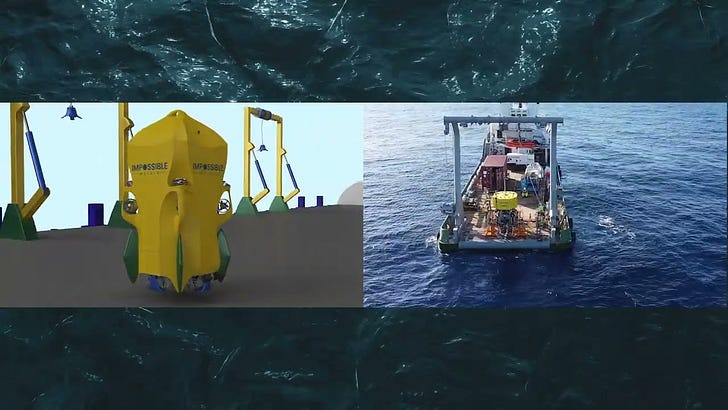
Welcome to another episode of Beyond Oil: The Rise of Critical Metals. Today, we're sharing this episode of The Elements of Deep Sea Mining, which features host Eric Young and Impossible Metals CEO and co-founder Oliver Gunasekara discussing how Impossible Metals designed its nodule mining technology from scratch to mitigate harm and avoid costs.Find it on Spotify (https://lnkd.in/dU_kkhFB), Substack (https://lnkd.in/du-2wkCj), Apple (https://lnkd.in/df8D-aQX) YouTube (https://lnkd.in/dtpwunxC) or wherever you get your podcastsThis episode & its supporting content below is shared with permission.Oliver’s team is bringing in AI, robotics, and a totally new approach that could reduce environmental impact, minimize sediment plumes, and skip a lot of the heavy infrastructure.In this conversation, Oliver Gunasekara discusses the innovative system developed by Impossible Metals aimed at addressing the environmental challenges associated with deep sea nodule mining.Oliver emphasizes the importance of modern technology in reducing the ecological impact of mining operations while ensuring the extraction of critical minerals necessary for the energy transition. The discussion also covers the regulatory landscape, the controversies surrounding deep sea mining, and the need for transparency and trust in the industry.Check out their 3D Animation of the system (90 seconds video):🔗 Resources & Links:* Impossible Metals:https://www.impossiblemetals.com* FAQ : https://impossiblemetals.com/frequently-asked-questions/faqs-environmental-and-social-responsibility-for-deep-sea-mining/* · Follow LinkedIn page for updates: https://www.linkedin.com/company/impossible-metals/* Oliver Gunasekara on LinkedIn: https://www.linkedin.com/in/gunasekara/* · Blog: https://impossiblemetals.com/blog/why-will-deep-sea-mining-be-less-expensive-than-traditional-land-based-mining/* · Blog: How the Environmental Impact Assessment is a Keystone of Decision-Making in Deep-Sea Mining* · Impossible Metals new Podcast: Beyond Oil: The rise of critical minerals* · Register for Webinar: Deep Dive into the Updated Techno Economic Model on Friday, March 21, 8:00 am PDT (11 am EDT)Timestamps00:00 – Introduction: Rethinking Deep Sea Mining01:20 – Oliver’s Background and Path to Deep Sea Mining03:09 – Why Deep Sea Mining? A Climate-Driven Pivot05:43 – Environmental Impact Starts with Technology07:28 – Designing from First Principles10:38 – The Core Architecture of Impossible Metals14:16 – The Buoyancy Engine: A New Kind of Mobility18:16 – Smart Launch and Recovery Explained20:34 – Operating in Rough Seas: More Days, Better Economics23:14 – Designing for Reduced Environmental Harm31:05 – Business Model: Partner or Operator?33:22 – Development Timeline and Readiness Level36:40 – Speed, Scale, and Collection Economics41:27 – Why the Cost Advantage is So Large46:34 – Processing Nodules: Can Existing Infrastructure Adapt?47:14 – Public Perception and Pushback50:31 – Moratorium vs Ban: Clarifying the Debate53:49 – Trade-Offs and Trust in Environmental Decision-Making57:30 – The Role of Trust and Transparency1:01:46 – Why the Spotlight on Deep Sea Mining Now?1:07:11 – Recycling, Substitution, and Demand Realities1:11:31 – Ethical Access, Global Equity, and the Climate Crisis1:13:06 – Competitors and the Long Game1:14:32 – Final Thoughts and Where to Learn MoreTheme music Tamarack by Jesse Matas This is a public episode. If you would like to discuss this with other subscribers or get access to bonus episodes, visit impossiblemetals.substack.com
Episode Description:Welcome to another episode of Beyond Oil: The Rise of Critical Metals. Today, we're exploring the fascinating realm of seabed minerals and the complexities of onshore processing. Join us as we host Niels Verbaan, Technical Services Director at SGS, who shares his expertise on the various flowsheets, the importance of risk management, and the journey towards sustainable extraction of these valuable resources.Guest:* Niels Verbaan, Technical Services Director at SGSHost: * Oliver Gunasekara, CEO & Co-Founder of Impossible MetalsEpisode Timeline:* Introduction & Welcome (0:00 – 5:00)* Background on Seabed Mineral Processing (5:00 – 10:00)* Overview of Processing Flow Sheets (10:00 – 20:00)* Challenges & Economic Considerations (20:00 – 30:00)* Risk Factors & Pilot Testing (30:00 – 40:00)* Material Handling & Operational Challenges (40:00 – 50:00)* McNulty Ramp-Up Curves & Case Studies (50:00 – 1:05:00)* Sustainability & Environmental Impact (1:05:00 – 1:15:00)* Q&A Session (1:15:00 – 1:55:00)* Closing Remarks & Next Steps (1:55:00 – End)Key Takeaways:* Nodule Composition and Processing Challenges: Niels explains the unique composition of CCZ nodules, the challenges in physical upgrading, and the need for hydrometallurgical processes.* Overview of Processing Options: The discussion covers various chemical approaches including ammonia, chlorides, and nitrates, with a focus on smelting acid leaching (TMC), reductive acid leaching (GSR), and the cuprous ammonium leach (CUPRION) process.* In-Depth Analysis of High-Pressure Acid Leaching (HPAL): Niels delves into the potential of HPAL as a mature technology for nodule processing, highlighting its benefits and addressing concerns around plant location and waste product management.* The Critical Role of Piloting and Risk Management: The discussion emphasizes the importance of pilot plants in derisking projects, understanding material handling, and ensuring operational robustness.* Analysis of Ramp-Up Curves: Niels presents a compelling analysis of ramp-up curves for various critical mineral projects, highlighting the challenges and the significance of thorough preparation and piloting.* Sustainable Considerations: The discussion touches on the sustainability aspects of nodule processing compared to traditional mining, and Impossible Metals' commitment to net-zero operations.Resources:* SGS websiteContact:* Niels Verbaan: niels.verbaan@sgs.com This is a public episode. If you would like to discuss this with other subscribers or get access to bonus episodes, visit impossiblemetals.substack.com

Episode Description:Join us as we dive into the ocean's depths with Jake Russell, CEO of Orpheus Ocean. In this episode, we explore Orpheus Ocean's innovative approach to deep ocean exploration using autonomous underwater vehicles (AUVs). Discover how Orpheus is changing the game for seabed surveys, environmental assessments, and mineral exploration.Guest:* Jake Russell, CEO of Orpheus OceanHost:* Oliver GunasekaraEpisode Timeline:* 00:00:00 - Introduction* 00:05:00 - Jake Russell introduces Orpheus Ocean* 00:10:00 - Orpheus Ocean's mission and team* 00:15:00 - The Orpheus AUV* 00:20:00 - Orpheus AUV's capabilities* 00:25:00 - Comparing Orpheus AUVs to ROVs* 00:30:00 - Q&A* 00:55:00 - Closing remarksKey Takeaways:* Orpheus Ocean is developing autonomous underwater vehicles (AUVs) for deep ocean exploration.* The Orpheus AUV is designed for flexibility, agility, and cost-effectiveness.* Orpheus AUVs can be used for seabed surveys, environmental assessments, and mineral exploration.* Orpheus Ocean offers a "robotics as a service" model.Resources:* Orpheus Ocean websiteContact:* Jake Russell: jake@orpheus-ocean.com This is a public episode. If you would like to discuss this with other subscribers or get access to bonus episodes, visit impossiblemetals.substack.com
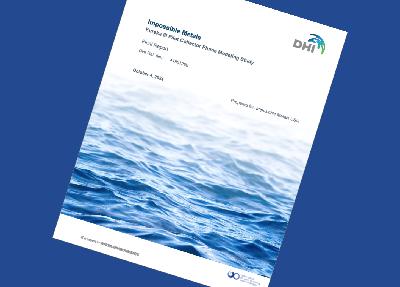
To fulfill the requirements for testing Eureka III within the BGR contract area in the Clarion Clipperton Zone, a plume modeling study is submitted to the International Seabed Authority as part of the Environmental Impact Statement.Tom Foster outlines the key assumptions and methodologies behind the sediment disturbance modeling for the proposed Eureka III test and presents the results of this analysis. This is a public episode. If you would like to discuss this with other subscribers or get access to bonus episodes, visit impossiblemetals.substack.com
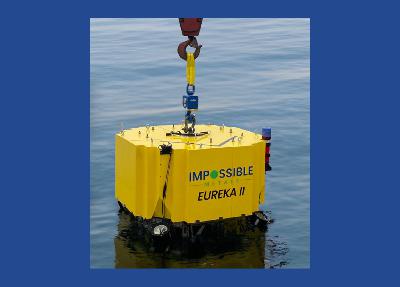
Impossible Metals CEO and Co-Founder Oliver Gunasekara recaps the Eureka II Demo Day results.We have transparently published the Demo Day presentations and video This is a public episode. If you would like to discuss this with other subscribers or get access to bonus episodes, visit impossiblemetals.substack.com
Oliver Gunasekara, CEO and Co-Founder of Impossible Metals, launches "Beyond Oil: The Rise of Critical Metals," a podcast exploring the critical role of minerals in the 21st century's electrification revolution. He discusses the growing demand for these metals, the challenges of sustainable sourcing, and how Impossible Metals is developing innovative underwater robotics to address these issues.Key Talking Points DiscussedThe Shift to Electrification: The 21st century's transition from oil to electrification.The Importance of Critical Minerals: How critical minerals power all aspects of the electrification value chain (generation, transmission, storage, and use).Growing Demand: The surge in demand for critical metals driven by electrification, sustainable energy, and AI data centers. Energy Security: The essential role of critical metals in energy security and economic development.Reducing Foreign Dependence: The need for the U.S. to secure its own supply of critical minerals.Impossible Metals' Technology: Introduction to Impossible Metals' autonomous underwater robots for sustainable seabed mineral harvesting. Environmental Impact: How AI and innovative technology minimize environmental impact and preserve marine habitats.GuestOliver Gunasekara: CEO and Co-founder of Impossible Metals. Links/Resources MentionedImpossible Metals WebsiteCalls to ActionSubscribe to "Beyond Oil: The Rise of Critical Metals" on your preferred podcast platform.Visit the Impossible Metals website to learn more about their technology and mission.Contact Impossible Metals with suggestions for podcast topics and potential guests.Episode Time Stamps0:00 - Introduction and Podcast Overview0:20 - The 21st Century and Electrification0:40 - The Importance of Critical Minerals1:10 - Growing Demand and Energy Security1:35 - Impossible Metals Introduction2:00 - Underwater Robot Technology and Environmental Impact2:35 - Podcast Content Overview3:00 - Webinar Content Conversion and Listener Engagement3:30 - Call to Action and Conclusion This is a public episode. If you would like to discuss this with other subscribers or get access to bonus episodes, visit impossiblemetals.substack.com
Comments

Download from Google Play

Download from App Store
 United States