


 Claim Ownership
Beyond Organic Wine
Subscribed: 28Played: 1,141
Subscribe

© Adam Huss
Description
Organic Wine is the gateway to explore the entire wine industry - from soil to sommeliers - from a revolutionary perspective. Deep interviews discussing big ideas with some of the most important people on the cutting edge of the regenerative renaissance, about where wine comes from and where it is going.
beyondorganicwine.substack.com
beyondorganicwine.substack.com
270 Episodes
Reverse
This is a free preview of a paid episode. To hear more, visit beyondorganicwine.substack.comWhat if the multi-year contraction in wine sales is a good thing? So much press and media attention has been given to the causes for the ongoing decline in wine sales, and are we at the bottom, and why aren’t millennials or gen Z drinking, or why they are but we mis-read the data (as if these designations represent real people in any meaningful way), an…
A prejudice-free re-telling of the evolutionary history, as well as the redacted wine history, of the world’s most popular grape. This is a free episode, but Beyond Organic Wine can’t exist without your support. Please subscribe to support. Thank you! This is a public episode. If you'd like to discuss this with other subscribers or get access to bonus episodes, visit beyondorganicwine.substack.com/subscribe
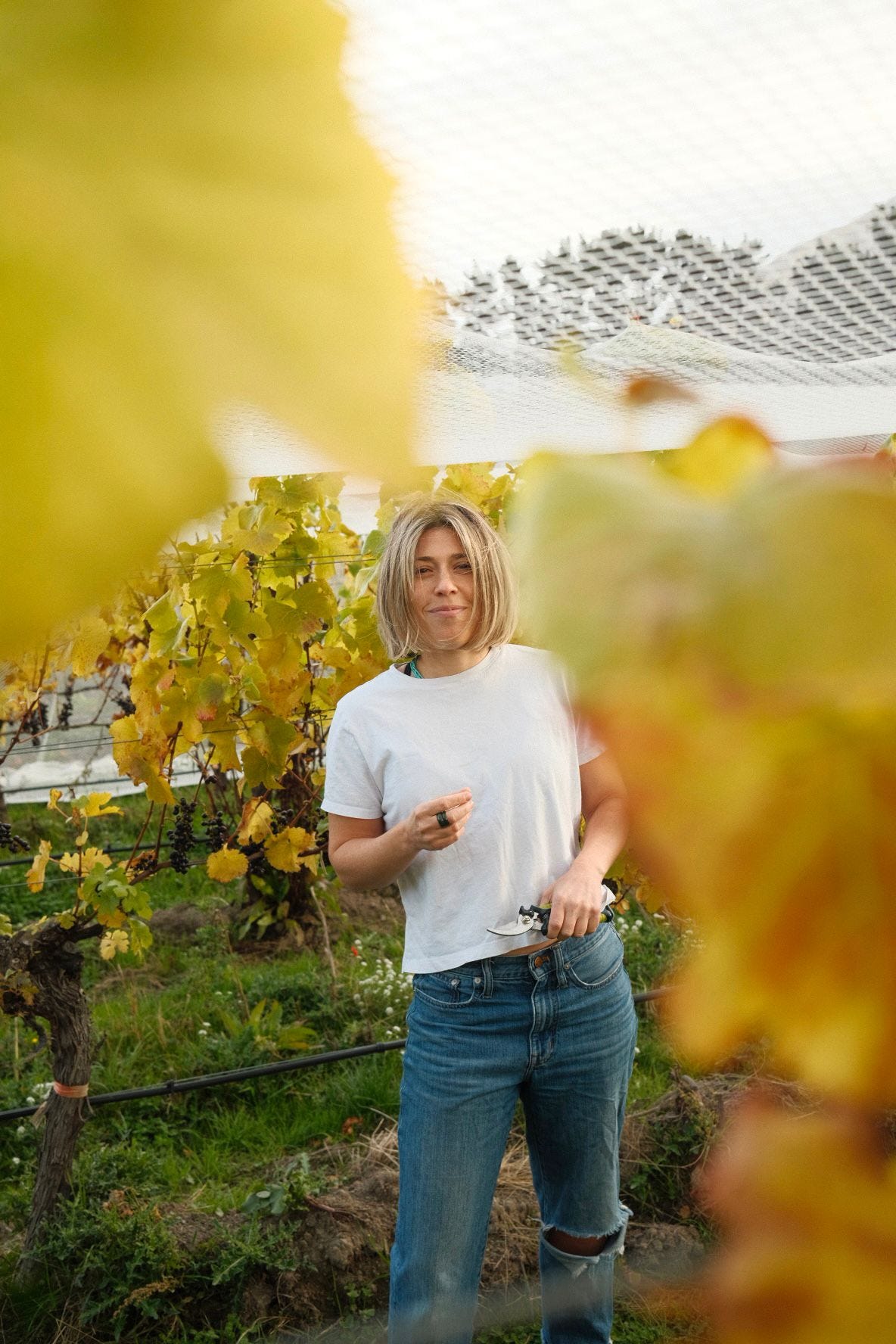
This is a free preview of a paid episode. To hear more, visit beyondorganicwine.substack.comThis episode is first interview with a New Zealand winemaker, and I’m glad to finally be taking us all on a journey to one of the most beautiful and special wine areas on earth, Aotearoa New Zealand, and the sub region of Central Otago, and the sub-sub region of Gibbston. This is Pinot Noir country, and one of the precious few areas on earth where a co…
My guests for this episode are Marta and Cristina of the the Porto Protocol, which is both a resource hub and community promoting climate action for the global wine ecosystem. Because of the emphasis on community that Marta highlights in this conversation, I recorded a special introduction for it. Here’s the text of it:Glyphosate, the main active component in RoundUp, has been considered to be safe because it acts on the shikimate pathway, and the shikimate pathway is not found in mammals. And since we humans are mammals, glyphosate was deemed virtually harmless to us.But what is a human being? Are we individual organisms? What is a grapevine? What is a tree? Who am I in relation to the world around me? Am I independent of it or completely and utterly dependent on it?The fascinating thing about glyphosate is that it has forced us to realize that we are not individual organisms. We are consortiums of myriad and diverse organisms working as a community. We have more micro-organisms in and on us than there are cells that make up our body. Even the mitochondria, that live inside the cells of our bodies are, in a way, little microbial entities with their own needs and characteristics separate from ours… whoever “We” are.As it turns out, bacteria, fungi, archaea, protozoa, and many other forms of microbial life all have the shikimate pathway, and “we” – this community of life to which we attach our human identities – need all of those other lives to be able to live and thrive. So when we use a substance like glyphosate, and saturate our world with it, and eat it, and drink it with almost every bite of food and sip of wine… what does that do to community of life that we call ourselves? When I use glyphosate I dissolve the foundation of “me.”And so glyphosate has shown us how to use the reductive perspective of science to sell corporate, political agendas. It has shown us how to monetize the omissions of faux-objectivity in an interdependent world. It has shown us how to profit off the ignorance implicit in a disconnected world-view that we bless with peer reviewed studies. The questions we don’t ask about these substances that are being sold to us to make our lives easier are the loopholes of our own dissolution.So when I talk about the soil-plant community (rather than referring to individual “plants”), when I talk about grapevines and trees as community builders, when I use the term “community of life” instead of that human-alienated term “nature,” it’s because this shift in perspective is at the root of the cultural revolution that we need to be able to see what’s happening clearly and make real change that will finally enable us to re-envision and stop the insanity of what we’ve been doing to our community in the name of agriculture. The return to a community perspective is not some feel-good phrasing. It is the revolution.In this episode with Marta and Cristina of the Porto Protocol, Marta talks about how the community aspect, the engagement, the sharing and collaborating, is the most valuable resource of all the resources the Porto Protocol has to offer. I hope what I’ve just said makes this resonate even more deeply as you listen. I hope you boycott glyphosate and all herbicides from wine. I hope you exercise extreme skepticism about anything that promotes reductive thinking, hyper-individualism, and disconnection. I hope you see yourself as a host and steward of legions of lives and begin to ask what it means to be human if being human depends on the survival of all of the lives of this world.A special thanks to Lindsay Valdez for connecting me with Marta and Cristina, and for boldly asking great questions. This is a public episode. If you'd like to discuss this with other subscribers or get access to bonus episodes, visit beyondorganicwine.substack.com/subscribe

This is a free preview of a paid episode. To hear more, visit beyondorganicwine.substack.comMy guest for this incredible episode is Michael Cook. Michael is the Viticulture Program Specialist for the 55 counties of North Texas with the Texas A&M AgriLife Extension Service.His primary function is to provide educational support for the nearly 120 commercial regional vineyards, which grow vinifera, hybrids, and muscadines, by providing workshops,…

Comments

Download from Google Play

Download from App Store
 United States