


 Claim Ownership
Beyond Personality Types
Subscribed: 4Played: 14
Subscribe

© Linda V. Berens and Olivier C. Caudron
Description
Beyond Personality Types,
The Official InterStrength Podcast
Welcome to Beyond Personality Types, the podcast that dares to challenge the status quo in the world of personality typology and personal growth.
I am your host, Olivier Caudron, a devoted self-discovery facilitator and confidence coach.
I won't be the only one to guide you on this transformative journey. At the core of our show is the remarkable Dr. Linda Berens, a beacon of wisdom in the fields of psychology, authorship, and education. Her groundbreaking work in human and organizational development has paved the way for the InterStrength approach to self-discovery, a methodology that transcends mere assessment results.
Our mission here at Beyond Personality Types is clear - we aim to shed light on the biases and limitations that often plague the world of personality typing. Through thought-provoking discussions, expert insights, and real-life anecdotes, we strive to push boundaries, broaden horizons, and ultimately propel this world out of its comfort zone.
Join us as we delve deep into the intricacies of personality typology, offering you tools and a fresh perspective and mindset to navigate this complex landscape with grace and integrity. Whether you're a seasoned type practitioner or a curious enthusiast, our goal remains to empower you with the keys to understanding yourself and others on a profound level.
So tune in, lean closer, and open your heart and mind to the transformative journey that awaits. Welcome to Beyond Personality Types, where we challenge assumptions, shatter limitations, and inspire growth. Thank you for listening.
The Official InterStrength Podcast
Welcome to Beyond Personality Types, the podcast that dares to challenge the status quo in the world of personality typology and personal growth.
I am your host, Olivier Caudron, a devoted self-discovery facilitator and confidence coach.
I won't be the only one to guide you on this transformative journey. At the core of our show is the remarkable Dr. Linda Berens, a beacon of wisdom in the fields of psychology, authorship, and education. Her groundbreaking work in human and organizational development has paved the way for the InterStrength approach to self-discovery, a methodology that transcends mere assessment results.
Our mission here at Beyond Personality Types is clear - we aim to shed light on the biases and limitations that often plague the world of personality typing. Through thought-provoking discussions, expert insights, and real-life anecdotes, we strive to push boundaries, broaden horizons, and ultimately propel this world out of its comfort zone.
Join us as we delve deep into the intricacies of personality typology, offering you tools and a fresh perspective and mindset to navigate this complex landscape with grace and integrity. Whether you're a seasoned type practitioner or a curious enthusiast, our goal remains to empower you with the keys to understanding yourself and others on a profound level.
So tune in, lean closer, and open your heart and mind to the transformative journey that awaits. Welcome to Beyond Personality Types, where we challenge assumptions, shatter limitations, and inspire growth. Thank you for listening.
15 Episodes
Reverse
Transcript
Here
ℹ️ Introduction
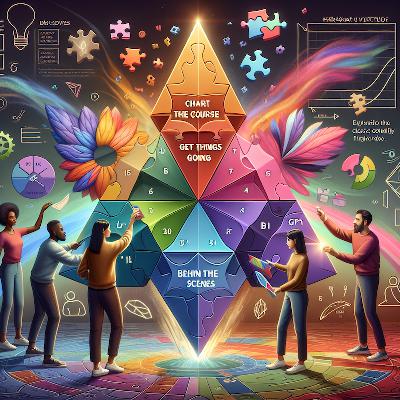
Welcome back to Beyond Personality Types, the podcast where we push past personality type labels and dive deep into practical frameworks for understanding human behavior. In this episode, hosts Linda Berens and Olivier Caudron continue their exploration of the Interaction Styles lens—a powerful approach for recognizing the subtle patterns that shape how we engage with the world and each other.
Today, you'll discover four distinct patterns of interaction: In Charge, Get Things Going, Chart the Course, and Behind the Scenes. Linda and Olivier break down what drives each style, from the need to accomplish and move things forward, to a passion for involving others, an instinct to anticipate and prepare, and the desire to integrate perspectives for the best possible outcome. They share real-life examples and team dynamics, making it easy for you to spot these patterns at work, at home, or within yourself.
Whether you’re a seasoned type practitioner or just starting your journey, this episode delivers practical wisdom and fresh insight to help you honor the diversity of interaction styles—so you can foster greater understanding, compassion, and effectiveness in any group. Let's go beyond type results and discover what truly shapes our behaviors and experiences.
📚 Timestamped overview
00:00 Drive and Motivation in Leadership
03:45 Meeting Leadership and Team Dynamics
08:27 "Structured Planning and Focused Action"
10:22 Integrative Leadership Style Explained
15:14 Optimizing Platform for Best Results
19:06 Respecting Diverse Interaction Styles
❇️ Key topics and bullets
1. Introduction to the Episode
Introduction of hosts (Linda Berens and Olivier Caudron).
Overview of the podcast’s purpose: moving beyond personality indicator results.
Framing of the episode: focusing on the Interaction Styles lens.
Promise of key takeaways: recognizing four patterns in interaction styles for increased self-awareness and understanding.
2. The Four Interaction Styles Framework: Big Picture Overview
Explanation of the Interaction Styles as practical patterns in behavior.
The importance of identifying the core needs and drives behind each style.
How recognizing these patterns can help in team environments and personal growth.
3. In-Depth Exploration of Each Interaction Style
a. In Charge Pattern
b. Get Things Going Pattern
c. Chart the Course Pattern
d. Behind the Scenes Pattern
4. Practical Implications: Observing and Applying Interaction Styles
How these patterns appear in team settings and group dynamics.
Recognizing interaction styles in public figures or news events.
The importance of looking beyond surface behavior to underlying drives.
Strategies for practitioners: respecting differences, timing, energy, and creating inclusive environments.
Value of honoring and leveraging interaction styles for group effectiveness and harmony.
5. Recap and Practical Wisdom for Practitioners
Summary of each pattern’s strengths and core needs:
In Charge: drive for results
Transcript
Here
ℹ️ Introduction
Welcome to "Beyond Personality Types," where we invite you to step outside the confines of typical typology tools and explore the artistry behind personality theory. In this premiere episode of our special series on Interaction Styles, hosts Dr. Linda Berens—internationally recognized for her groundbreaking work in typology—and Olivier Caudron, self-discovery facilitator, take you on a journey into the origins and evolution of the Interaction Styles framework.
Discover why some people naturally take charge while others shine from behind the scenes, and learn how focusing on holistic patterns—rather than isolated traits—can transform your understanding of personality. Linda takes us back to the foundational moments of Interaction Styles, revealing its connections with popular models like DISC and Social Styles, and unpacking the process of creating, validating, and continually refining this lens for real-world practice.
Whether you’re a practitioner seeking fresh ways to support growth in clients and teams, or an enthusiast curious about the deeper layers of type, this series promises to open your mind to what personality theory can truly offer. Get ready to rethink, experiment, and bring a new level of nuance to your conversations about type. Let's go beyond personality types—together.
📚 Timestamped overview
00:00 Exploring Interaction Styles in Depth
05:25 Understanding Personality: Four Social Styles
06:26 Reimagining Myers-Briggs: New Type Names
10:47 Personality Type Stereotypes Analysis
15:39 Body Language Reveals Personality Traits
18:27 "Exploring Evolving Interaction Styles"
20:15 Exploring Interaction Styles Series
❇️ Key topics and bullets
1. Introduction to the Podcast and Series
Overview of Beyond Personality Types and its purpose
Introduction of hosts: Olivier Caudron and Dr. Linda Berens
Clarification of podcast goals: going beyond MBTI and mainstream frameworks
Explanation of the series focus on Interaction Styles
2. The Origins of Interaction Styles
Early days of type exploration and involvement with personality models
Initial experience with DISC and its perceived limitations
Comparison of DISC, social styles, and Myers-Briggs type code
Influence of Robert Bolton and Dorothy Grover Bolton's work (People Styles at Work)
Experimentation with mapping MBTI types onto the four social and DISC styles
3. Clustering and Naming the Four Patterns
Inspiration from Kersey’s approach to clustering MBTI types
Identification of four patterns: Improviser, Stabilizer, Theorist, Catalyst
Development of new names for interaction styles based on user-friendliness
In Charge (correlating to Driver/High D in DISC)
Chart the Course (correlating to Analytical/C in DISC)
Behind the Scenes (correlating to Amiable/S in DISC)
Get Things Going (correlating to Expressive/I in DISC)
4. Validating and Refining the Framework
Writing and testing descriptions for each pattern
Conducting field experiments at type conferences and workshops

ℹ️ Introduction
Welcome to Beyond Personality Types, the InterStrength podcast where we challenge what you think you know about personality. In today’s episode, host Olivier Caudron and expert Dr. Linda Berens go deeper than simple labels like “introvert” and “extrovert.” Instead of boxing people in, they explore the rich history and real meaning behind these terms—how they started as ways to describe where your mental energy is focused, not your whole identity. Whether you’re a type practitioner or just fascinated by personality, you’ll learn why seeing people through a holistic lens—beyond traits and stereotypes—matters more than ever. Join us as we uncover how understanding cognitive processes can free us from limiting assumptions, and support a more nuanced, empowering view of what makes each of us unique.
Transcript:
Here
📚 Timestamped overview
00:00 Exploring True Personality Insights
04:28 Understanding Myers' Dichotomy Creation
06:52 Understanding Personality Beyond Stereotypes
12:13 Exploring Introversion vs. Extroversion
14:21 Understanding Extroversion's Duality
17:27 Extraversion vs. Introversion Misconceptions
20:35 Debunking "Ambivert" Typology
25:30 "Embrace Unique Personalities"
❇️ Key topics and bullets
1. Introduction and Purpose of the Episode
Overview of the podcast’s goal: going beyond personality type labels.
Questioning if labeling someone as an introvert or extrovert truly captures personality depth.
Intent to challenge stereotypes and oversimplifications in type theory.
2. Historical background of Introversion and Extraversion
Jung’s early exploration of extroversion and introversion.
Jung’s evolving model: from simple types to cognitive functions (perceiving and judging functions).
The transformation of extraversion/introversion from nouns to adjectives in type theory.
3. Differentiating Jung’s Ideas from Modern Test-Based Approaches
Myers’ adaptation for the MBTI (Myers-Briggs Type Indicator).
Forced choice dichotomies in testing (e.g., party vs. theater preference).
Shift toward seeing extroversion/introversion as stand-alone traits in popular usage.
4. The Holistic versus Trait-Based Perspective on Type
Limitation of viewing extraversion/introversion as isolated, fixed labels.
Introduction to holistic, systems-based thinking (pattern view).
Contrasting traits model (e.g., the Big Five) with holistic type patterns.
5. Problems and Harm Caused by Stereotyping
Negative effects of labeling (boxing people in, reinforcing stereotypes).
Examples of how context and situation can make someone appear more or less extroverted.
Importance of avoiding reductionist approaches in practice.
6. Precise Use of Type Language
The value of using adjectives: “extraverted what?” or “introverted what?”
Emphasis on the eight functions (e.g., extraverted intuiting, introverted sensing) instead of simple introvert/extrovert labels.
ℹ️ Introduction
Welcome to another episode of Beyond Personality Types, where we invite you to journey past the surface-level results of popular personality assessments and into the deeper processes of self-discovery. In today’s conversation, your host Olivier Caudron sits down with Dr. Linda Berens—an internationally renowned expert in typology—to explore the contrasts and connections between the widely recognized Myers-Briggs Type Indicator (MBTI) and the more holistic InterStrength approach.
Have you ever wondered if there’s more to personality than just test results? This episode peels back the layers, moving beyond labels to reveal the complexity and richness of individual patterns. Linda shares her decades of experience, illustrating how personality types are best unveiled through multi-faceted exploration, personal reflection, and open dialogue, rather than by simply relying on assessments.
Whether you’re a seasoned type practitioner or just beginning to explore personality theory, you’ll find practical insights into guiding clients—and yourself—toward greater self-awareness. With an emphasis on ethical practices, multiple data points, and tools for true discovery, this episode empowers you to support others with more clarity, depth, and respect for human diversity.
If you’re ready to rethink how you approach personality and help others discover what truly fits, settle in. This discussion is about moving from tests to insights, from indicators to real understanding, and ultimately, unveiling what lies beneath the surface.
Transcript
HERE
📚 Timestamped overview
00:00 Beyond Personality Podcast
06:08 Myers-Briggs Reliability Questioned
07:03 Misinterpretation of Psychological Assessments
13:15 "Mindset's Role in Instrument Accuracy"
14:23 Motivation Patterns vs. Myers-Briggs
20:05 "Skill, Temperament, and Job Suitability"
23:59 Understanding Interaction Styles in Work
25:46 Beyond Labels: Personalized Self-Discovery
28:23 "Stay Curious Until Next Time"
❇️ Key topics and bullets
1. Introduction to Personality Type Frameworks
Host introduction and podcast mission.
Overview: comparing the Myers-Briggs Type Indicator (MBTI) and the InterStrength Approach.
Importance of moving beyond surface-level personality type results.
2. Historical Background and Popularity of MBTI
Linda’s personal journey with temperament and MBTI.
Early experiences with type instruments in the 1980s.
Community and organizational context: Association for Psychological Type vs. MBTI.
3. The Nature and Limitations of Self-Report Instruments
Issues with relying solely on MBTI or self-report results.
Concept of “best fit” vs. test-assigned type.
Anecdotal evidence: the story of Andrea and reconsidering her type.
Discussion of test reliability, validity, and common misconceptions about MBTI being a test vs. an indicator.
4. The Evolution Towards Self-Discovery and Holistic Assessment
Transition from instrument-driven to self-discovery approaches.
Processes for identifying best-fit pattern using multiple data points.
The role of group dynamics and feedback in self-discovery.
Use of stories, analogies (lik
ℹ️ Introduction
Welcome to another episode of Beyond Personality Types, the show that challenges conventional thinking around personality theories and self-discovery. Today, hosts Olivier Caudron and Dr. Linda Berens explore the promise and pitfalls of using typology as a self-development tool. Together, they dive into the nuanced differences between efficiency and effectiveness when applying personality frameworks, and why a simple test result or label might not be enough to foster genuine growth. Through candid examples and expert insights, this episode unpacks ethical considerations, the risks of mislabeling, and how to ensure type approaches are truly supportive on the journey to a more satisfying, empowered life. Whether you’re a coach, practitioner, or simply passionate about self-understanding, let’s go beyond the basics and explore how to use personality typology in the most responsible and impactful way.
Transcript: HERE
📚 Timestamped overview
00:00 Understanding Efficiency and Personality
04:32 Effectiveness Over Efficiency Debate
10:25 Unexpected Counseling Journey
14:23 Typology and Career Misidentification
15:17 Understanding Myers-Briggs Limitations
18:46 Understanding Personal Preferences Efficiently
22:47 Beyond Labels: Ethical Typology Insights
25:14 Subscribe & Stay Curious
❇️ Key topics and bullets
1. Introduction to Typology as a Self-Development Tool
The enduring fascination with patterns in personality types.
The widespread appeal and use of typology in self-understanding.
Olivier Caudron introduces Dr. Linda Berens and frames the central debate: Is typology efficient or merely effective?
2. Defining Efficiency versus Effectiveness in Typology
Linda Berens explains the dictionary definitions of efficiency.
Efficiency as: best use of effort/resources, producing results, but needing causative accuracy.
The difference between getting quick results (effectiveness) and achieving desired outcomes with minimal wasted effort (efficiency).
Risks of shortcut approaches (e.g., taking a test and adopting the result uncritically).
The importance of right fit, not just a match to test labels.
3. Pitfalls of Typology: Mislabeling, Missed Fit, and Ineffective Application
The limitations of personality tests and associated risks of misfit.
Real-life examples where typology labels led to career or relational mismatches.
The danger of settling for labels instead of seeking best fit patterns.
The margin of error in simplistic interpretations (e.g., focusing only on E/I, S/N, T/F, J/P).
Efficiency can be undermined by inaccuracy or incomplete application.
4. Typology in Self-Development vs. Therapeutic Contexts
Contrast between self-administered assessment and professional, therapeutic use.
The role of a skilled practitioner or coach in supporting accurate, constructive self-understanding.
Typology as a source of forward-looking guidance, not just retrospective explanation or classification.
5. The Importance of Ethics and Training for Typology Practitioners
Historical overview of access to instruments like MBTI (initially limited to psychologists).
Emergence of ethical guidelines and formal training for non-clin
ℹ️ Introduction
Welcome to another episode of Beyond Personality Types! Today, we’re diving into a fascinating and sometimes uncomfortable truth: a “disease” we all have—but probably don’t realize. Inspired by Erik Erikson’s insight, “The more you know yourself, the more patience you have for what you see in others,” host Olivier Caudron sits down with expert Linda Berens to uncover the mysterious condition known as the “be like me” syndrome.
You’ll hear how this mindset, which has each of us subtly expecting others to approach life just as we do, plays out in our daily interactions—from something as simple as loading the dishwasher to bigger generational clashes. Linda shares personal stories, professional insights, and practical wisdom on how recognizing individual differences—beyond just knowing your own personality type—can be transformative.
We’ll discuss why the urge for others to be like us is so persistent, how it can inadvertently cause harm, and most importantly, what steps we can take to build self-awareness, break free of the “be like me” trap, and truly appreciate the diverse ways people see the world.
Whether you’re a type practitioner or just curious about human behavior, this episode will help you expand your understanding, avoid common pitfalls, and bring more patience and compassion into your relationships. Let’s get started!
Transcript
Find the transcript here
📚 Timestamped overview
00:00 "Rethinking Personality Bias"
03:32 "Dishwasher Syndrome" Concept Explained
09:35 "Understanding Self and Others"
10:31 The Limits of Labeling
15:18 Avoiding Harm from Unqualified Experts
18:17 "Self-Discovery Through Certification"
21:34 "Diversity Awareness Beyond Personality Types"
23:49 Curious Until Next Episode
❇️ Key topics and bullets
1. Introduction to the Podcast and Speakers
Overview of the podcast’s mission: going beyond just personality type indicators.
Introduction of host Olivier Caudron and expert Linda Berens.
Setting the stage: addressing the tendency to expect others to behave like ourselves—what Linda Berens calls the "Be Like Me Syndrome."
2. The Origin and Nature of the “Be Like Me Syndrome”
Historical background: How the concept came about in Linda’s early career.
The metaphor of the “dishwasher syndrome” as an everyday example.
Personal anecdote: dishwasher loading differences in Linda’s marriage.
Clarification: Even with similar personality preferences, individual differences persist (e.g., Linda and her husband’s work and talents despite both being INTPs).
3. Recognizing and Overcoming the Be Like Me Syndrome
Self-awareness: The role of noticing unconscious expectations.
Strategies for development:
Learning about individual differences.
Recognizing and appreciating skills others have that you may not.
Using typology frameworks to identify and accept diverse patterns.
Importance of moving beyond “just knowing your own type” to understanding and embracing differences in others.
4. The Role—and Limits&m
ℹ️ Introduction
In this episode, we explore the enduring appeal of Carl Jung’s eight cognitive function theory. Why has this complex system resonated so strongly, not only among Jungian analysts but also across online communities and among type enthusiasts everywhere? Together, we examine how function theory offers a sense of freedom and nuance that simpler models like dichotomies and temperaments sometimes lack.
Dr. Berens will share insights from her decades of experience, showing us why the true value of cognitive functions isn’t found in isolated definitions or labels, but in the rich, holistic patterns that make up who we are. We’ll discuss why using real names for the functions (rather than just letters) can help unlock deeper understanding—and how personality patterns are shaped by everything from culture and gender to unique life experiences.
Whether you’re a seasoned practitioner or just beginning your journey into type dynamics, this episode promises to spark new perspectives on one of the most influential theories in the personality world. So, get ready to move beyond the jargon, embrace the complexity, and discover why Jung’s eight function theory continues to captivate and inspire.
📚 Timestamped overview
00:00 Beyond Personality Types Podcast
04:59 "Understanding Temperament and Myers-Briggs"
06:40 Understanding Cognitive Function Patterns
10:54 The Role of Extroversion and Introversion
13:35 Kansas Connection: Similar Patterns, Different Looks
17:33 "Choosing Connection Over Being Right"
21:11 Freedom in Understanding Personality Functions
25:42 "Embrace Individual Complexity"
❇️ Key topics and bullets
1. Introduction to the Podcast and Episode
Overview of the "Beyond Personality Types" podcast mission
Introduction of host Olivier Caudron and expert Linda Berens
Framing the central question: Why is Carl Jung’s eight function theory so popular in the type community?
Invitation to rethink MBTI results and understand deeper patterns
2. The Holistic Nature of Personality Types
The importance of discovering personality types holistically
Discussion of patterns in living systems and how typology fits in
3. Historical Context of Type Theories
Early community focus on MBTI dichotomies (E/I, S/N, T/F, J/P)
Introduction of David Keirsey’s temperament theory and its reception
Linda’s experiences blending different theoretical approaches
4. Jung’s Eight Function Theory and Developments
Explanation of Jung’s original dichotomies and introduction of cognitive functions
The emergence and influence of John Beebe’s work, including archetype-based roles for functions (hero, parent, child, anima/animus)
Challenges of “cracking the code” of personality type using the MBTI indicator
The complexity and variability of functions depending on their role and level of skill
5. Patterns vs. Isolated Functions
Functions look different depending on their position in the pattern
Variability introduced by life experience, culture, gender, and personal development
The limitation of defining people by a single function or letter
6. The Difference Between Dichotomies and Functions
INTRODUCTION
Welcome to another episode of Beyond Personality Types. Today, hosts Olivier Caudron and Linda Berens take us on a deep dive into the concept of "InterStrength"—a unique blend of inner and interpersonal strengths that goes far beyond simply knowing your MBTI type. Drawing from Linda’s personal journey as an INTP, this episode explores how understanding your core psychological needs can help you reclaim your authentic self, navigate stress, and foster more meaningful connections with those around you.
You’ll hear how Linda’s experience with personality patterns, temperament theory, and frameworks like Myers-Briggs, DISC, and her own Essential Motivators model shaped her growth—and how anyone can use these tools to develop both personal awareness and empathy for others. Olivier and Linda share practical tips on identifying your core needs, embracing multiple perspectives, and daring to try on different “shoes” to reveal your own InterStrength.
Whether you’re a type practitioner, enthusiast, or simply seeking new ways to nurture personal evolution, this episode offers real stories and actionable insights to help you go beyond the labels—and step into your full potential.
TIMESTAMPED OVERVIEW
00:00 Cultivating Inner Strength Methodology
05:07 "Embracing Unconventional Womanhood"
10:03 Embracing Personality Type for Growth
11:30 Core Psychological Needs Overview
16:49 "Essential Motivators Model Explained"
20:32 Enhancing Interpersonal Understanding
22:15 Cultivating Inner Strength and Empathy
KEY TOPICS AND BULLETS
1. Introduction to InterStrengths
Definition and exploration of "InterStrengths"
Rationale for going beyond traditional personality type frameworks
Difference between “inner strength” and “interpersonal strength”
Explanation of why “inter strength” is not just in the dictionary sense
2. The Concept of InterStrengths
Origins of the term (credited to Nikki Joe Varner)
Integration of internal (psychological) and interpersonal strengths
The role of understanding self and others in building strength
How internal strength is influenced by environment, upbringing, and current context
Taking action based on understanding core psychological needs and drives
3. Linda Berens’ Personal Journey
Discovery of personality type and its impact (through Myers-Briggs)
Influence of David Keirsey and temperament theory
Navigating societal and familial expectations
The transformative moment of self-recognition and acceptance
4. Application: Inner vs Interpersonal Strengths
Inner Strength
Gaining personal insight through self-discovery
Reclaiming strength after feeling constrained by roles or expectations
Using knowledge of type to address unmet needs and stressors
Interpersonal Strength
Realizing the importance of differences within family dynamics
Learning to appreciate and make space for those with different perspectives
Moving from self-orientation toward openness to other people's experiences
Frameworks and methods to support

ℹ️ Introduction
Welcome back to Beyond Personality Types! In this episode, we're diving even deeper into how we talk about personality types and why it's crucial to shift our approach. Linda and Olivier take on the challenge of rethinking the way we label ourselves with acronyms like INTP or INFJ. Instead, they discuss the importance of viewing personality as themes or patterns, which capture the rich complexity of our human nature. Linda shares her insights on how these themes go beyond just being a sum of parts, and Olivier gives his perspective on the value of saying "I have preferences for" to embrace the full spectrum of who we are. This conversation is all about embracing inclusivity and a more holistic understanding of our personalities. Stay tuned to learn how you can apply these ideas to enhance your self-discovery journey!
📚 Timestamped overview
00:00 Rethinking Pattern Naming Strategies
04:53 Personal Journey Beyond INTP Pattern
07:23 INTP Misunderstandings and Perceptions
11:02 "Understanding Personal Preferences"
13:39 Custom Tailoring Process Explained
18:35 Embracing Holistic Personality Understanding
20:23 "Subscribe and Review Our Podcast"
❇️ Key topics and bullets
Introduction to the Podcast
Introduction by Olivier Caudron
Overview of the podcast's purpose and goals
Evolution of Addressing Personality Types
Explanation of the job of facilitators in type assessments
Importance of understanding the core of who we are
Linda's Approach to Naming Patterns
Logic behind naming patterns versus using acronyms
Reasons for giving a name to the pattern's theme
Importance of using "prefer" or "having preferences for"
Discussion on Pattern Themes
Explanation of essential motivator patterns by Linda
Differences in patterns within the 16 personality types
Linda’s personal example with her INTP preferences
Reference to Dario Nardi's Contributions
Introduction to Dario Nardi's work and his influence
Overview of brain-based subtypes and personality variations
Challenges in Pattern Identification
Difficulty of identifying variations in patterns
The habitual nature of using acronyms in personality types
The Holistic Approach to Patterns
Importance of holistic understanding of personality patterns
Linda's views on the use of specific language for naming patterns
Encouragement for Behavioral Change
Encouragement for listeners to use language of preference
Benefits of using "preference" language in self-discovery
Conclusion and Summary
Summary of adapting how we address personality types
Importance of recognizing the complexity of personalities
Resources and final thoughts for listeners
💬 Keywords
Types, Patterns, Personality Theories, Self Discovery, Personality Types, Facilitators, Type Assessments, Essential Motivator Patterns, 16 Personality Types, Acronyms, Type Connoisseurs, Preferences, Personality Type Assessments, MBTI Types, Neuroscience, Personality Variations, Holistic, Interstrength Lens, Naming Patterns,
ℹ️ Introduction
Welcome to another intriguing episode of Beyond Personality Types! Today, we embark on a fascinating journey as we explore the evolving landscape of personality type discussions. In part one of our two-episode series, hosts Linda Berens and Olivier Caudron dive deep into the art of moving beyond static personality labels like "I am an INTP" to a more nuanced understanding of our unique patterns and preferences. We'll explore why this shift in language is crucial for personal growth and understanding, how labeling can unintentionally box us in, and the importance of recognizing each individual's unique tapestry. Join us as we unravel the rich dynamics of personality expressions and prepare to rethink what you know about personality types. Stay tuned!
💬 Keywords
Personality Types, 2. INTP, 3. Patterns, 4. Preferences, 5. Holistic Discovery, 6. Labeling, 7. Psychological Type, 8. Human Behavior, 9. Myers-Briggs, 10. Typology, 11. Type Development, 12. Stereotypes, 13. Essential Qualities, 14. Living Systems, 15. Dynamic Processes, 16. Therapist, 17. Self-discovery, 18. Enneagram, 19. Type Patterns, 20. Personality Theories, 21. Static Labels, 22. Assumptions, 23. Growth, 24. Nuances, 25. Type Pattern Variations, 26. Temperament, 27. Essential Motivators, 28. Cognitive Functions, 29. Personalities, 30. Expression and Adaptation.
📚 Timestamped overview
00:00 Reconsidering Personality Type Labels
04:42 Critique of Personality Type Stereotyping
08:31 Identity vs. Labels
13:01 Plant Life Processes and Patterns
13:56 "The Pattern in Living Systems"
20:13 "INTP Personality Development Insight"
24:07 Understanding Personality and Temperament Variations
26:18 "Exploring Personality Type Variations"
❇️ Key topics and bullets
Introduction to Personality Types
Overview of Personality Types and Patterns
The use of personality indicators in identifying traits
Potential Consequences of Using Static Labels
Discussion on the limitations of identifying as a specific type (e.g., INTP)
The impact of assumptions and stereotypes
The Importance of Avoiding Labels
Cognitive and psychological effects of labeling
Distinction between who you are and what you are
The Concept of Patterns in Personality
Definition and explanation of patterns in living systems
Differentiating patterns from static labels
Analogy of Living Systems and Patterns
Fritjof Capra’s framework for understanding living systems
Components of living systems: pattern, process, structure, and purpose
Understanding Type Patterns and Development
The dynamic nature of type patterns
John Beebe’s eight function model in interpreting type patterns
Steve Myers's notion of mental muscles in personality patterns
Naming and Understanding Type Patterns
The reasoning behind using names for patterns instead of letters
Example of pattern variations and their expressions
Conclu
KEY TOPICS
Limitations of a Single Typology Model
Typology models can't explain everything
Importance of incorporating multiple typology lenses
Enhancing understanding by recognizing complexity
Exploration Beyond Personality Types
Influence of personality type preferences on exploration
Focus on systems influencing behavior
Complexity of human systems and patterns
Different Typology Models
Discussion of Jungian lens and temperament theory
Introduction of David Keirsey and Temperament theory
Mention of other typologies like Enneagram, DISC, and Social Styles
The Concept of "Beyond Personality Type"
Beyond the basics of Myers Briggs type code
Enneagram as additional information source
Benefits of multiple lenses in understanding personality
Controlled Examination of Typology Lenses
Different typologies with narrow and broad focuses
Validity and usefulness of different models
Test for conformity between models
Cultural Influences on Personality
Impact of cultural dimensions on personality
Differences between collectivist and individualist cultures
Examples of subcultures within broader cultures
The Influence of Family Culture
Role of family culture in shaping personality
The concept of core, developed, and contextual selves
Adaptability and cultural imprints on personality
External Factors Influencing Personality
Contextual roles impacting behavior
The importance of allowing exploration in understanding types
Factors like age, life stage, and cultural influences on personality
The Process of Identifying Personality Types
Patience in exploring and understanding personal fit
The practitioner's role in guiding self-discovery
Acknowledging the influence of life experiences and external factors
Conclusion and Takeaways
Integration of multiple frameworks for richer understanding
Consideration of cultural and personal context in assessments
Encouragement of exploration over labeling
To learn more about the three Selves follow the link here
TIMESTRIPE:
00:00 "Beyond Single Personality Typologies"
06:33 Integrating Multiple Personality Frameworks
09:23 "Adaptability and the Developed Self"
11:23 Beyond Personality: Exploring External Influences
17:27 Misleading Certainty of Personality Tests
19:33 Beyond Personality Types
21:34 "Holistic Approach to Personality Typ
Introduction
Welcome to Beyond Personality Types! In today's episode, "Navigating Typology Criticisms: Insights for Practitioners and Enthusiasts," we'll explore the criticisms surrounding popular personality assessments like the Myers Briggs Type Indicator (MBTI), Enneagram, and the Big 5. From questions of scientific validity to concerns about cultural bias, these tools have faced their fair share of scrutiny. Hosts Olivier Caudron and Linda Berens delve into how these assessments can be misused and misunderstood, offering strategies to use them more effectively and ethically. Whether you're a practitioner looking to enhance your practice or simply curious about the debate, this episode has valuable insights for you. Join us as we navigate these controversies and aim to better understand the holistic patterns of human behavior.
Keywords
MBTI criticism, personality assessments, Enneagram, Big 5, scientific validation, cultural bias, misuse of MBTI, personality type preferences, Myers Briggs Type Indicator, ethical usage, self discovery process, temperament patterns, personality typology, accuracy of MBTI, personality type practitioners, holistic patterns, contextual self, career coaching, assessment tools, type practitioners, scientific grounding, validity studies, personality label issues, self awareness, ethical considerations, personality wizard, reliability of MBTI, type verification, developmental stages, personality awareness, type patterns.
📚 Timestamped overview
00:00 Criticisms of psychological testing, misuse, and accuracy.
03:54 Practitioners should allow choice in behaviors.
06:33 Validity studies are challenging, require narrative descriptions.
10:52 Gary Hartzler and Margaret Arstler's type work.
16:49 Acceptance of result affects relationships, type patterns.
19:49 Setting the frame for instrument use.
22:14 Assessment approach at Inner Strength lacks labels.
24:42 Personality typology systems are valuable but complex.
❇️ Key topics and bullets
Comprehensive Sequence of Topics
Introduction
- Importance of ethical use of personality assessments.
- Discussion on criticisms faced by assessment tools such as MBTI.
Criticisms of Personality Assessment Tools
- Misuse in hiring, firing, and personal relationships.
- Legal concerns.
- Misinterpretation and misuse by practitioners.
- Issues of accuracy.
- Inconsistent results across different attempts.
- Situational responses affecting results.
- Negative impact of categorization.
- Resistance to being boxed in.
- Risk of self-limitation.
Effective Use of Personality Assessments
- Best practices in administering assessments.
- Framing and setup.
- Ensuring confidentiality.
- Follow-up sessions for feedback and verification.
- The importance of understanding patterns and processes.
- Influence of context on answering assessments.
- Addressing developmental and situational changes in individuals.
Case Studies and Anecdotal Evidence
- Linda Berens’ experience with inaccuracies in MBTI results.
- Group exercises revealing misfits with initial assessments.
- Need for experiential dives into the context.
- Real-life examples of shifted self-identification.
- Impact of accurate self-discovery.
- Role of comprehensive feedback in accurate type identification.
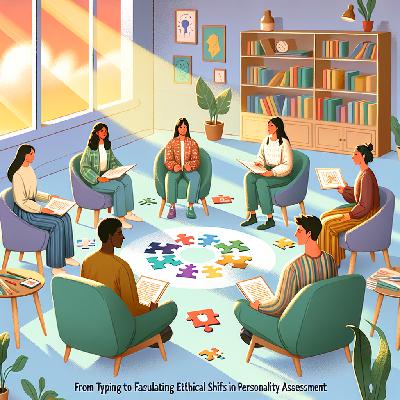
### Introduction
- Welcome message by Olivier Caudron.
- Introduction of hosts: Olivier Caudron and Linda Berens.
- Overview of the episode's focus on ethical shifts in personality assessment.
### Ethical Concerns with Typing and Profiling
- The limitations and implications of using terms like "typing" or "profiling."
- Concerns about the reliability and ethicality of one-sided assessments.
### The Facilitator's Approach to Self-Discovery
- Linda Berens' perspective on facilitating self-discovery rather than typing or profiling.
- The challenges posed by names like "profiling" and "typing."
- Importance of recognizing cultural variations and expertise limitations.
### The Role of the Facilitator
- Facilitators are not the ultimate experts; clients also hold expertise about themselves.
- Importance of using multiple lenses (e.g., 8 functions, whole type pattern) rather than a single lens.
- Need for facilitators to gather comprehensive information to provide valuable insights.
### Narrative vs. Bullet Points
- Linda Berens' use of narrative descriptions in helping clients.
- Different learning preferences (narrative, bullet points, experiential learning).
- The importance of involving others who know the client well for additional perspectives.
### Ensuring Facilitator Neutrality
- Strategies to avoid unintentional influence during sessions.
- Delving deeper into client's history for accurate insights.
- Acknowledging the inevitability of some degree of influence from the facilitator.
### Addressing Client Expectations and Authority
- The educational background and its influence on the client-practitioner dynamic.
- Providing clients with tools and freedom for self-identification.
### The Johari Window Model
- Explanation of the Johari Window matrix.
- Using the matrix to understand the known and unknown aspects of the client-facilitator relationship.
### Projections and Bias in Facilitating
- Recognizing and managing the facilitator’s own biases and projections.
- Importance of self-awareness and personal work for facilitators.
- Ensuring unbiased presentations and descriptions.
### Ethical Responsibility and Client Relationship
- Emphasizing the ethical "do no harm" approach.
- Maintaining professional ethics similar to that of doctors, psychologists, and coaches.
- Avoiding labeling and providing clients with opportunities for self-exploration.
### Facilitating vs. Typing and Profiling
- Differences between facilitating self-discovery and typing/profiling.
- Providing clients with ongoing homework and resources for continued exploration.
- Encouraging clients to read various type descriptions and reflect.
### Concluding Remarks
- Acknowledgment of the common good intentions of professionals in the field.
- Encouraging better awareness and more accurate client communication.
- Recap of key takeaways: humility, open-ended questions, bias awareness, and multi-model study.
### Call to Action
- Encouraging listeners to visit interstrengths.org for more information.
- Thanking listeners and encouraging reviews and subscriptions.
- Inviting followers to connect on social media.
This sequence outlines the main topics and subtopics discussed in the podcast transcript, highlighting the comprehensive exploration of ethical practices in personality assessment facilitation.
00:00 Guide to ethical, client-centered personality assessment practices.
05:07 Doctor's knowledge varies; consider qualifications and experience.
08:55 Seek advice from people who know you.
12:14 Teacher facil
Introduction to the Episode
Importance of understanding typology's paradox
How typology can be both helpful and harmful
Linda Berens and Olivier Caudron's roles in the episode
Overview of the episode's goals
The Paradox of Typology
Stable classification system analogy (pen, dog, chair)
Typology as a stable and accurate classification system
Distortion through shortcuts like "INTP"
Understanding Patterns
Designer Theorizer pattern
Broader patterns vs. narrow classifications
Misconceptions in typology classification
Pitfalls of Misclassification
Misleading labels ("such a P")
Harmful stereotypes and limitations
Typology's potential to cause psychological harm
Intricacies of Typology
Typology's role in interpersonal understanding
Empathy and perspective-taking
Typology as a useful but sensitive tool
Harmful vs. Helpful Typology
Anthropology and racial classification as a cautionary example
Essential qualities and core drivers
Typology's usefulness and potential for harm
Specific Typology Issues
Stereotypes like INTP vs. Theorist
Gender classification analogy
Temperament and personal observation
Application and Avoidance of Stereotypes
Practical advice on using typology
Differences between broad and specific aspects
Learning through holistic understanding and experience
Developing a Holistic View
Studying whole patterns rather than isolated traits
Recognizing type development
Avoiding limited perspectives
Conclusion and Practical Exercises
Summary of the paradox of typology
Exercises to understand and utilize typology effectively
Reflecting on useful terminology
Identifying harmful and helpful aspects of typology
Examining biases and judgments in type patterns
Developing a holistic view beyond MBTI descriptions
Resources and Further Learning
Suggestions for further reading and learning
Information about Interstrengths and Understanding Yourself and Others series booklets
Closing Remarks
Encouragement to expand knowledge beyond MBTI
Final thoughts on respecting human complexity through typology
This sequence captures the structure and major themes discussed throughout the podcast episode.
Note 1: Introduction - In this pilot episode, we introduce the concept of the show and what listeners can expect in future episodes. - We discuss the purpose of the show and how it aims to provide valuable insights and information on a specific topic. - Listeners will get a glimpse of the format of the show and how each episode will be structured. Note 2: Meet the Hosts - We introduce the hosts of the show and share their backgrounds and expertise in the industry. - Listeners will learn about the hosts
Comments

Download from Google Play

Download from App Store
 United States