


 Claim Ownership
Beyond the Paycheck
Subscribed: 0Played: 0
Subscribe

© Wizards PR
Description
Beyond the Paycheck brings you candid conversations with CHROs and top people leaders who are rethinking how compensation and benefits impact more than just employee bank accounts. From the first paycheck to financial wellness programs, we explore how money shapes identity, equity, purpose, and power at work, and how forward-thinking companies are using pay and perks to transform lives, not just attract talent.
This podcast is sponsored by Aura Finance, the financial wellness platform designed to help employees feel confident, secure, and in control of their money.
See more at aurafinance.io
This podcast is sponsored by Aura Finance, the financial wellness platform designed to help employees feel confident, secure, and in control of their money.
See more at aurafinance.io
91 Episodes
Reverse

SummaryJulie Molloy runs compensation, benefits and recognition as EVP of Total Rewards at LPL Financial, a wealth management firm of roughly 9,500 employees whose entire purpose is helping financial advisors take care of everyone else's money. On this episode of Beyond the Paycheck, she tells host Kelsey Willock what happened when the company turned that purpose inward and gave its own employees free access to an LPL financial advisor. The early numbers are already moving: people who take even one meeting are raising their 401k contributions.The conversation goes well past the program itself. Julie explains how she builds the internal case for benefits when the spreadsheet refuses to show a clean ROI, walks through a caregiver leave expansion at a prior employer that resonated so well it blew past every financial model her team had built, and names the two shifts she thinks HR is least prepared for: full pay transparency and the expectation that benefits will be personalized the way consumer apps already are. She also traces where her convictions about fair pay came from. She was raised by grandparents who lived on welfare, was the first in her family to attend college, made burgers at Burger King, and took her first grown up paycheck from a KPMG internship straight to the mall.Chapters00:00 Welcome and Julie's path through total rewards02:26 What LPL Financial does and who works there04:04 Burger King, KPMG, and the first grown up paycheck05:43 Raised by grandparents on welfare07:33 A free financial advisor for LPL employees09:45 Why financial stress follows people to work11:33 Making the case when the spreadsheet will not14:25 Small round tables over three day conferences16:43 The caregiver leave that worked too well19:00 Pay transparency and personalized benefitsTakeaways- LPL Financial gives its own employees free access to an LPL financial advisor, and employees who take even a single meeting are already increasing their 401k contributions.- Julie treats financial well-being as the third leg of well-being alongside mental and physical health, not a nice to have bolted on at the end.- Benefits investments rarely produce a clean ROI line, so total rewards leaders have to be storytellers first and back the story with engagement, turnover and internal promotion data.- A caregiver leave expansion at a prior employer resonated so widely that it blew past every financial model, a reminder to pilot benefits changes and build in real financial contingency before going all in.- The two shifts Julie thinks HR is least ready for are full pay transparency and employees expecting the same personalization from benefits that they already get from consumer apps.Connect with the GuestJulie Molloy LinkedIn: https://www.linkedin.com/in/julie-molloyCompany Website: https://www.lpl.comSponsorAura Finance helps you simplify compensation and benefits planning by bringing everything into one streamlined platform. No more juggling spreadsheets, disconnected tools, or manual calculations. Aura gives you a single place to design, compare, and communicate total rewards packages with confidence.With AI-powered insights, it takes the guesswork and busywork out of comp decisions, helps you spot pay equity gaps early, and makes it easy to model scenarios that keep your teams engaged and your budgets on track.See a demo at https://www.aurafinance.com/
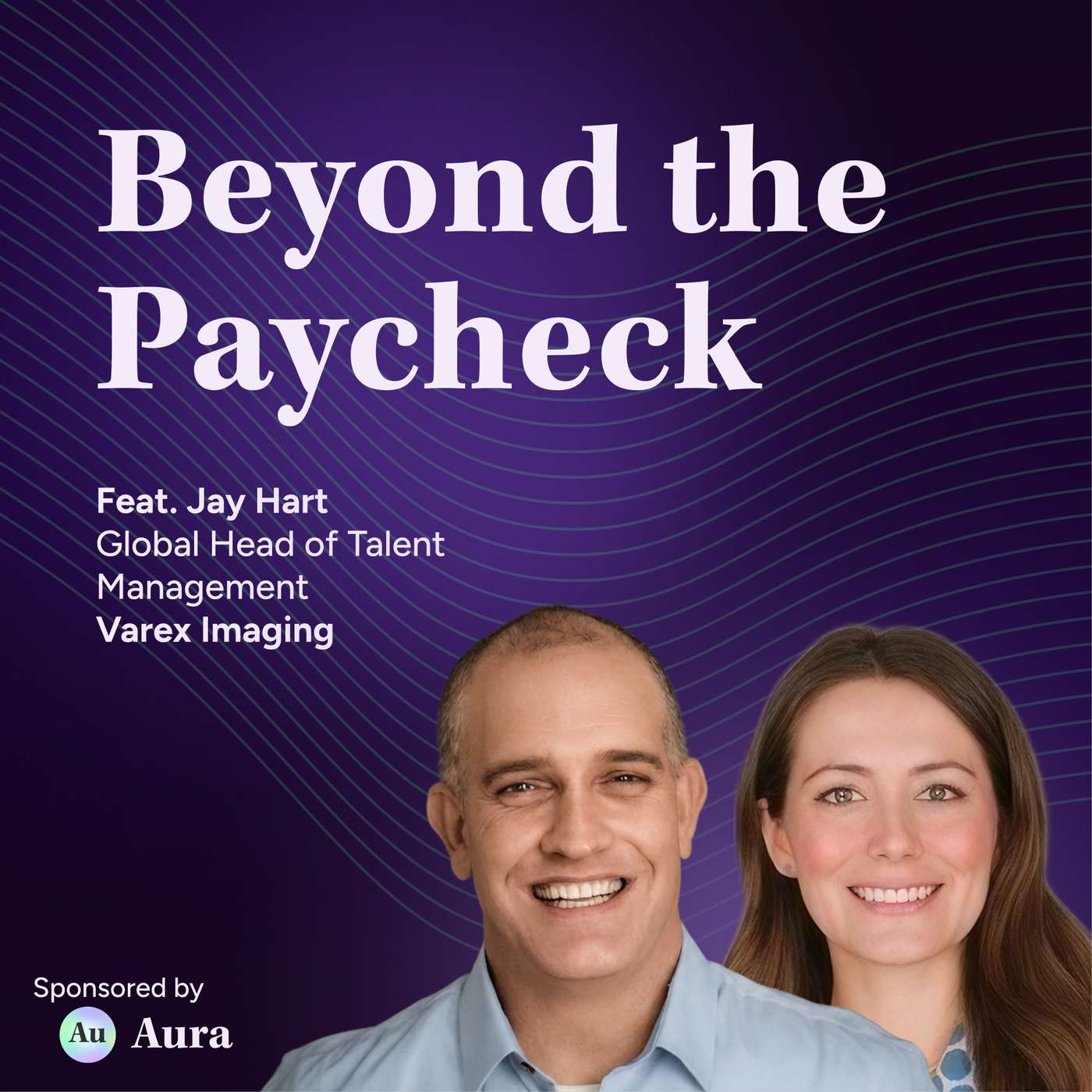
SummaryJay Hart, Global Head of Talent Management at Varex Imaging, joins host Kelsey Willock Jones on Beyond the Paycheck to make a case most HR leaders feel but rarely name: employees never experience HR the way HR is organized. Talent acquisition owns one piece, learning and development another, HR business partners a third, total rewards a fourth, and the employee only ever experiences one employment deal. He walks through a call center where turnover was high and the obvious answer was to pay more aggressively. The more his team listened, the clearer it became that people were not leaving for money, they were leaving because they could not see their careers moving. The fix pulled mentorship, formal education, spot bonuses and relocation into a single nine month cohort program: nobody enrolled left, and employees started asking how to get into the next one. He also tells the one that did not work, an expensive retention package for a team of data scientists who took the money and left anyway, because what they actually wanted was development, flexibility and air cover from leadership. Built for CHROs, total rewards teams and HR leaders who suspect their best programs are reaching employees in pieces.Chapters00:00 Intro00:42 Meet Jay Hart and Varex Imaging01:53 A 2,500 person global workforce02:31 Why HR should be industry agnostic03:49 The cost of fragmented HR programs06:08 Listening, trust and the steward of culture08:12 The call center problem pay could not fix11:04 Making the case without a clear ROI13:37 The retention package that failed15:53 Staying current as an HR leader17:53 What most HR leaders are not ready for19:39 Where to connect with JayTakeaways- Employees experience one employment deal, not four HR functions, so judge every program by what it adds up to rather than by which team owns it.- Test the pay hypothesis before funding it. Listening turned a call center turnover problem into a career visibility problem that no market adjustment would have solved.- Pull the levers together. A nine month cohort that combined mentorship, education, spot bonuses and relocation retained everyone enrolled and created a waiting list for the next one.- Retention money does not hold people who are leaving for development, flexibility or air cover, because the companies recruiting them will simply pay out whatever you tie them with.- The manager is the longest lever in the HR toolbox, because employees rarely walk into HR with a problem early enough for HR to fix it.Connect with the GuestJay Hart LinkedIn: https://www.linkedin.com/in/jaydhartCompany Website: https://www.vareximaging.comSponsorAura Finance helps you simplify compensation and benefits planning by bringing everything into one streamlined platform. No more juggling spreadsheets, disconnected tools, or manual calculations. Aura gives you a single place to design, compare, and communicate total rewards packages with confidence.With AI-powered insights, it takes the guesswork and busywork out of comp decisions, helps you spot pay equity gaps early, and makes it easy to model scenarios that keep your teams engaged and your budgets on track.See a demo at https://www.aurafinance.com/
(00:00) - Intro
(00:42) - Meet Jay Hart and Varex Imaging
(01:53) - A 2,500 person global workforce
(02:31) - Why HR should be industry agnostic
(03:49) - The cost of fragmented HR programs
(06:08) - Listening, trust and the steward of culture
(08:12) - The call center problem pay could not fix
(11:03) - Making the case without a clear ROI
(13:37) - The retention package that failed
(15:53) - Staying current as an HR leader
(17:53) - What most HR leaders are not ready for
(19:38) - Where to connect with Jay
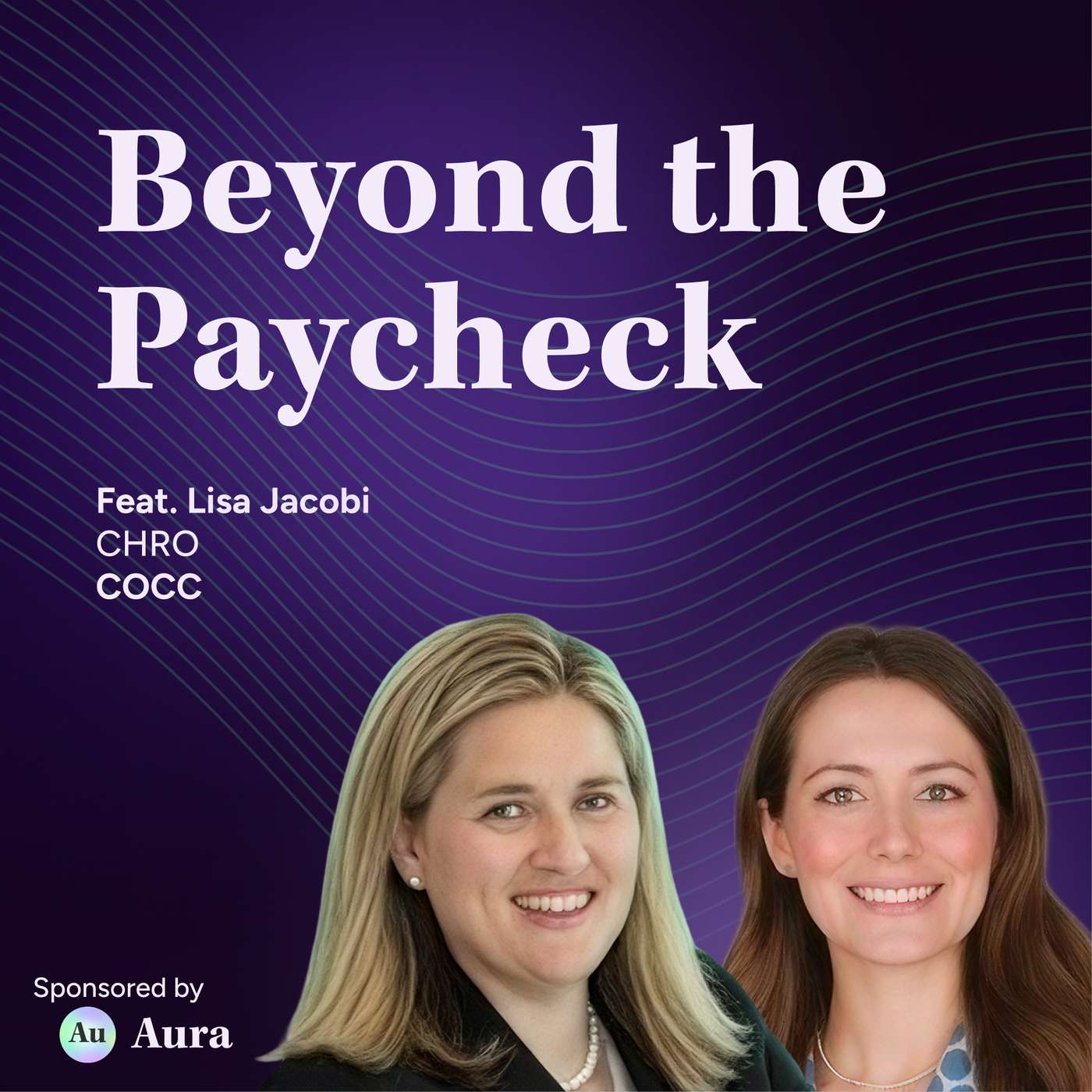
SummaryLisa Jacobi, CHRO at COCC, joins host Kelsey Willock Jones on Beyond the Paycheck with a benefits story most HR leaders will recognize: a $40 a month gym reimbursement, fully funded, sitting at 18 percent adoption and quietly serving mostly younger, single, male employees. Her team stopped curating the list of acceptable purchases and moved to lifestyle spending accounts, where the expense is only booked when someone actually uses it. Adoption went to about 95 percent. She also walks through the year COCC announced a bigger profit sharing contribution to a room of 200 people and got silence, which is what pushed the company into paying across three horizons instead of one. Along the way she offers the comparison she keeps in her pocket for skeptical leaders: employees spend more than 2,000 hours a year with their coworkers and about 25 minutes a year with their doctor. Built for CHROs, total rewards teams and benefits leaders who suspect their best-funded program is reaching the wrong half of the company.Chapters00:00 Meet Lisa Jacobi and COCC01:30 Inside a workforce that supports 150 banks02:43 Selling sneakers at 16 for $4.75 an hour04:41 What retail taught her about building relationships06:28 2,000 hours with coworkers, 25 minutes with your doctor09:03 Why people can be themselves at COCC11:07 Making the case when the spreadsheet doesn't14:53 The profit sharing announcement met with crickets18:31 The healthcare shift she isn't ready for20:55 The human is in the lead, not in the loopTakeaways- An 18 percent adoption rate is a design verdict rather than an engagement problem, so audit who is actually using a benefit before defending its budget.- Fund optionality instead of curating an approved list, and book the expense only when someone spends it so finance can say yes to covering everyone.- Pay across three horizons, because the same workforce wants cash now, flexibility soon and compounding later, and not in equal measure.- A program can be right and still fail if the organization is not ready for it, which is a sequencing problem rather than a content problem.- People rarely leave over money, so track whether employees feel they can be themselves at work and treat that score as a leading indicator.Connect with the GuestLisa Jacobi LinkedIn: https://www.linkedin.com/in/lisa-jacobi-shrm-scp-sphr-0636483/Company Website: https://www.cocc.comSponsorAura Finance helps you simplify compensation and benefits planning by bringing everything into one streamlined platform. No more juggling spreadsheets, disconnected tools, or manual calculations—Aura gives you a single place to design, compare, and communicate total rewards packages with confidence.With AI-powered insights, it takes the guesswork and busywork out of comp decisions, helps you spot pay equity gaps early, and makes it easy to model scenarios that keep your teams engaged and your budgets on track.See a demo at https://www.aurafinance.com/
(00:00) - Meet Lisa Jacobi and COCC
(01:30) - Inside a workforce that supports 150 banks
(02:43) - Selling sneakers at 16 for $4.75 an hour
(04:41) - What retail taught her about building relationships
(06:28) - 2,000 hours with coworkers, 25 minutes with your doctor
(09:03) - Why people can be themselves at COCC
(11:07) - Making the case when the spreadsheet doesn't
(14:52) - The profit sharing announcement met with crickets
(18:31) - The healthcare shift she isn't ready for
(20:55) - The human is in the lead, not in the loop

SummaryStacie Phylicia, Chief People Leader at Strategic People and Business Solutions, LLC, joins host Kelsey Willock Jones on Beyond the Paycheck to trace twenty one and a half years in the military into a people strategy built on one habit: every leader sat down with every soldier and walked through the pay stub, line by line. She argues that supporting the whole employee is not the size of your benefits catalog, it is whether the boring infrastructure, pay, defaults, time and access, works for the person who never opens the catalog. She walks through the automatic enrollment experiment that lifted every metric and still landed wrong, because a manufacturing workforce that qualified for state benefits had never come to work for benefits in the first place. She also describes building an HR AI agent with a cohort of twenty HR executives, and why the first question she had to ask them was not a technical one. Built for CHROs, total rewards teams, and benefits leaders who want a sharper test than engagement metrics for whether a program actually worked.Chapters00:00 Introduction00:41 Twenty one years in the military to Chief People Leader02:11 A first paycheck at Hardee's and half of it gone04:25 What the military pay stub taught her about leading people06:53 AI brings a tool, it cannot bring the person08:13 Benefits built for an employee who is not there10:17 The real scoreboard: hardship withdrawals and skipped care11:28 The automatic enrollment experiment that backfired15:17 Building an HR AI agent with twenty executives18:35 The death of job based payTakeaways- Supporting the whole employee is not the size of the benefits catalog, it is whether pay, defaults, time and access work for the person who never opens it.- Audit your defaults before you change them, because the power of default comes with owning every outcome it produces.- Engagement metrics on benefits communication can look healthy while behavior does not move, so measure whether the distress signals reverse instead.- Not everyone comes to work for benefits, and a workforce that already qualifies for state coverage will read automatic enrollment as something taken rather than given.- Before building an AI agent, make the company say what it is actually solving for, because most have not decided and one ask usually hides several.Connect with the GuestStacie Phylicia LinkedIn: https://www.linkedin.com/in/staciephylicia01/Company Website: https://strategicpeoplebusinesssolutions.comSponsorAura Finance helps you simplify compensation and benefits planning by bringing everything into one streamlined platform. No more juggling spreadsheets, disconnected tools, or manual calculations—Aura gives you a single place to design, compare, and communicate total rewards packages with confidence.With AI-powered insights, it takes the guesswork and busywork out of comp decisions, helps you spot pay equity gaps early, and makes it easy to model scenarios that keep your teams engaged and your budgets on track.See a demo at https://www.aurafinance.com/
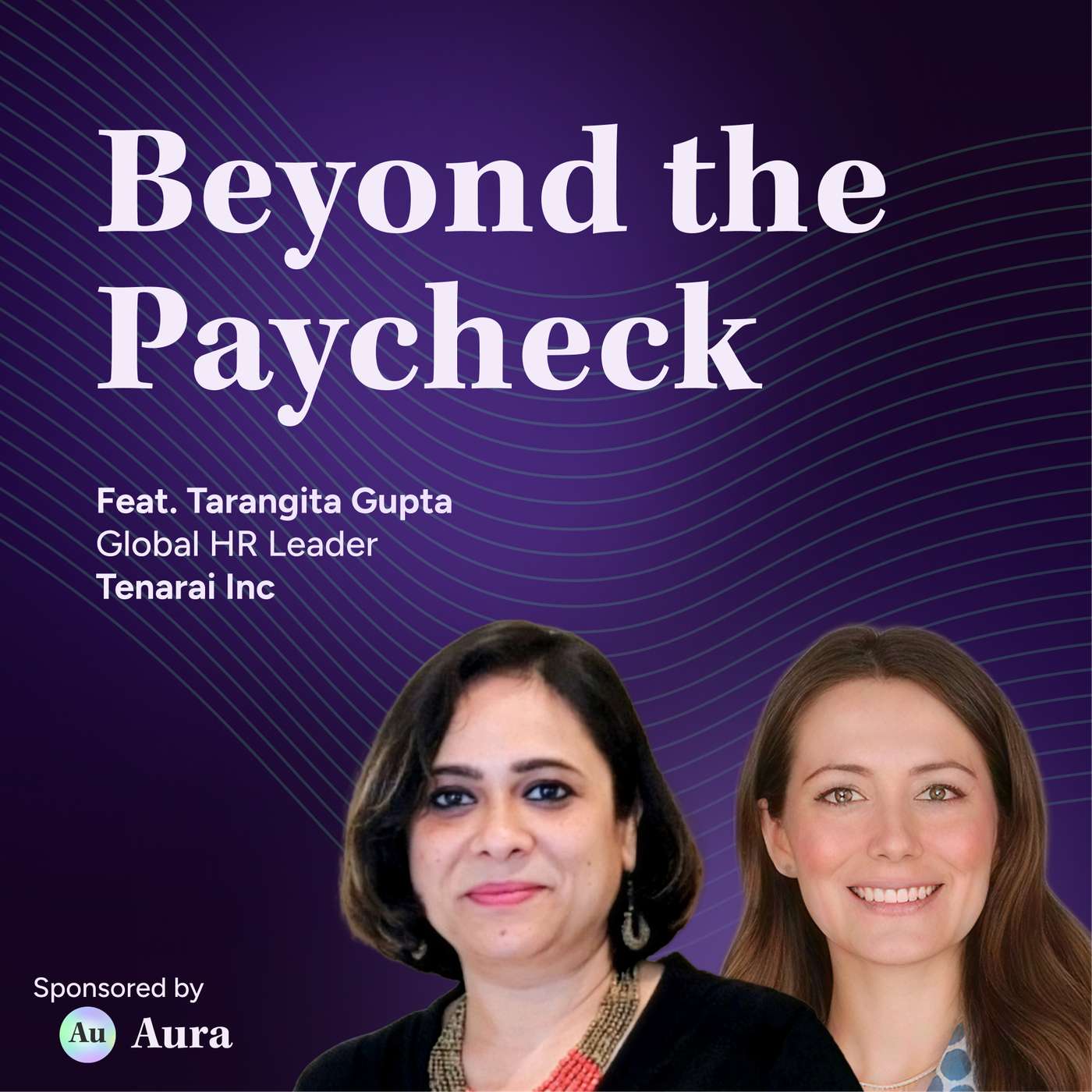
SummaryTarangita Gupta, global HR leader at Tenarai Inc, joins host Kelsey Willock Jones on Beyond the Paycheck to trace a line from her first paycheck, 6,000 rupees earned as the first working woman in her family, to the way she leads HR for a 6,000 person AI consulting firm today. She makes the case that not every people program needs a KPI, explains why 70 plus percent of employees never fully use the benefits they already have and how Tenarai's monthly vendor sessions fixed it, and describes the change most leaders are not ready for: AI-stitched performance systems that end the era of reviews built on a manager's three month memory. Along the way she shares the yoga program that flopped, the post-COVID Headspace rollout, and her 70/20/10 framework for staying current on AI. Built for CHROs, HR leaders, and total rewards teams who want practical language for defending people investments that the spreadsheet cannot see yet.Chapters00:00 Introduction00:50 Meet Tarangita Gupta and Tenarai02:10 A first paycheck and a promise to dad03:50 Balancing compliance, employees, and the organization05:50 The benefits employees never use08:55 Why not everything needs a KPI11:05 What a failed yoga program taught the team12:40 Where financial health fits in14:00 AI adoption and personalized coaching at Tenarai17:25 The future of performance reviewsTakeaways- Not every people program needs a KPI; some initiatives are justified by employee feedback, and their return arrives over time as retention, productivity, and wellbeing scores.- 70 plus percent of employees and leaders do not know how to fully use their existing benefits, so run monthly vendor-led sessions before buying anything new.- Treat employee questions as a benefits roadmap; Tenarai added pet insurance and expanded accident and family coverage because people kept asking.- Weigh every HR decision against three fixed points at once: compliance, employees, and the organization, then seek feedback at one and three months and improve the next program.- Performance reviews are moving from a manager's three month memory to AI-integrated systems that stitch together rewards, client appreciations, projects, and certifications, blending data with human sentiment.Connect with the GuestTarangita Gupta LinkedIn: https://www.linkedin.com/in/tarangitagupta/Company Website: https://www.tenarai.comSponsorAura Finance helps you simplify compensation and benefits planning by bringing everything into one streamlined platform. No more juggling spreadsheets, disconnected tools, or manual calculations—Aura gives you a single place to design, compare, and communicate total rewards packages with confidence.With AI-powered insights, it takes the guesswork and busywork out of comp decisions, helps you spot pay equity gaps early, and makes it easy to model scenarios that keep your teams engaged and your budgets on track.See a demo at https://www.aurafinance.com/

Comments

Download from Google Play

Download from App Store
 United States