


Bharatvaarta
Subscribed: 106Played: 3,988
Subscribe

© 2024 Bharatvaarta
Description
Bharatvaarta podcast is a commentary on politics, policy and culture focused on India. The podcast brings together people from different walks of life who have varied and interesting perspectives on what's happening around us.
458 Episodes
Reverse
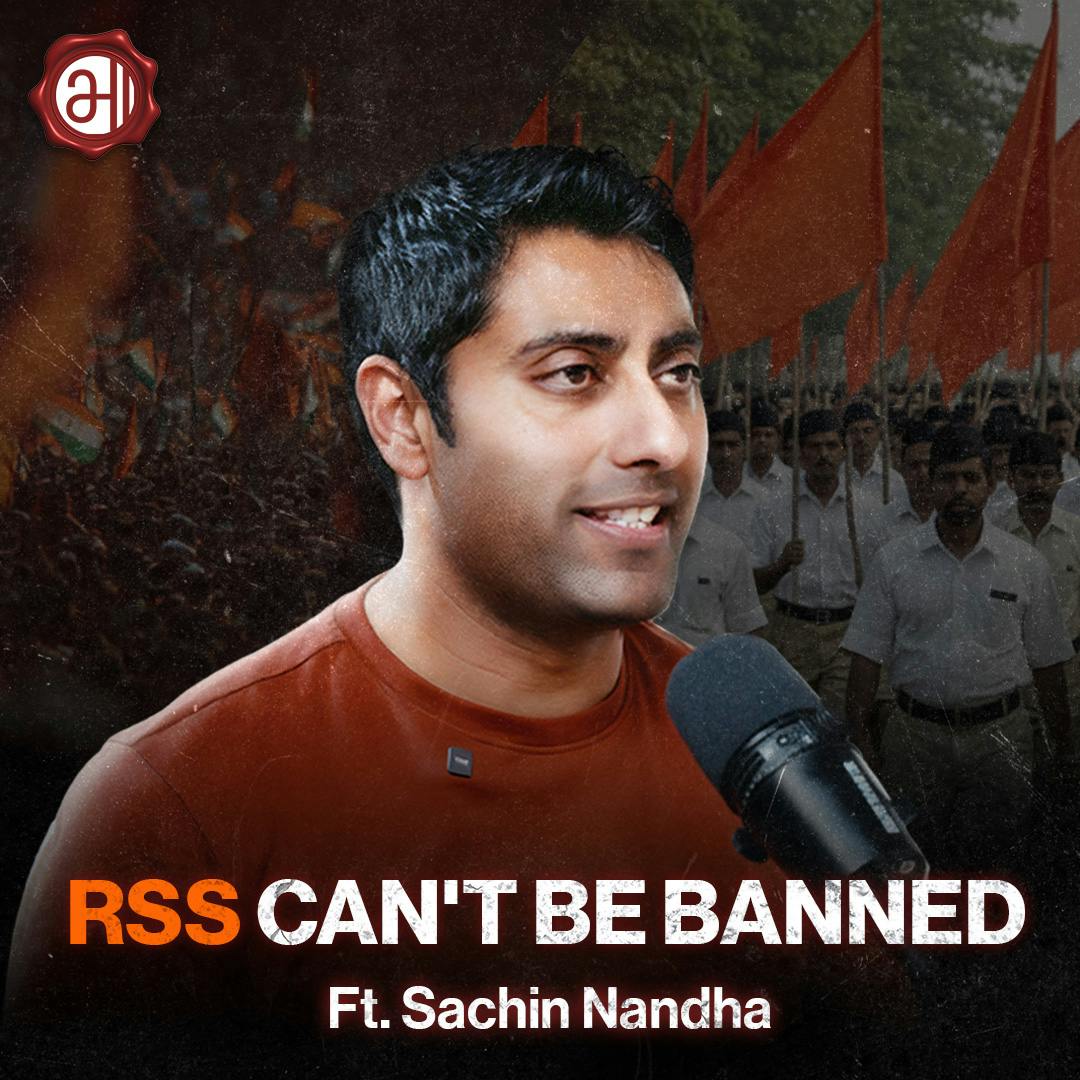
⚔️ Sachin Nandha — Inside the RSS, Rashtra vs Raja & How Power Really Works in India 🇮🇳🧠
The RSS has never contested an election — yet it remains one of the most influential forces shaping modern India.
So what exactly is the RSS?
An ideology? An organisation? A movement?
Or something far more complex?
In this deep, nuanced, and often uncomfortable conversation, Sachin Nandha breaks down how the RSS actually functions — not as a conventional institution, but as a bottom-up social movement built around the daily shakha, psychological rootedness, and the long project of rebuilding the Rashtra.
We explore how the RSS creates citizens rather than cadres, why it avoids direct control over the state, how it relates to the BJP and political power, and why tension between the Rashtra (people) and the Raja (state) is not a bug — but the point.
From caste, religion, and civilisational identity — to seva, social capital, discipline, and decentralised power — this episode goes beyond slogans to examine the RSS as it understands itself.
Not defence.
Not propaganda.
A serious attempt to understand one of the most misunderstood movements in India.
⸻
⏱️ Chapters
00:00 – 00:55 • Introduction
00:55 – 04:20 • What the RSS Really Is — Organisation or Movement?
04:20 – 07:05 • The Shakha as an Engine That Creates Citizens
07:05 – 11:20 • Rootedness vs Ideology: The Psychological Core
11:20 – 18:05 • Rashtra, Raja & Why the State Exists to Be Disciplined
18:05 – 26:50 • Caste, Class & Equality Inside the Shakha
26:50 – 36:15 • Seva, Duty & Why the RSS Is Action-First
36:15 – 44:20 • How a Bottom-Up Movement Sustains Itself
44:20 – 53:30 • The RSS and Religion: Civilisation vs Belief
53:30 – 01:02:40 • RSS, BJP & the Limits of Political Power
01:02:40 – 01:13:20 • Power, Unease & Holding the Raja to Account
01:13:20 – 01:53:06 • India’s Formative Phase & What Comes Next
⸻
🎧 Listen & Subscribe
X → https://x.com/bharatvaarta
Instagram → https://www.instagram.com/bharatvaarta/
⸻
👤 Guest — Sachin Nandha
Instagram → https://www.instagram.com/thesachinnandha/
X → https://x.com/sachinnandha
Author of Hedgewar | Researcher on the RSS, Civilisational Movements & Power Structures
Get the book 'Hedgewar'
https://www.amazon.in/Hedgewar-Founder-Rashtriya-Swayamsevak-Sangh/dp/0143467662
⸻
👤 Host — Roshan Cariappa
Instagram → https://www.instagram.com/carygottheblues/
X → https://x.com/RoshanCariappa

⚔️ Col. Pavithran Rajan — Are We Already at War? Algorithms, Sovereignty & The Future of India’s National Security 🇮🇳🛰️
War today isn’t declared — it’s engineered.
In this explosive conversation, Col. Pavithran Rajan breaks down why the world has entered a permanent state of “Persistent Unpeace.”
Battles now unfold through algorithms, digital platforms, currency shifts, and information warfare long before a single shot is fired.
From Kautilya’s systems thinking to Clausewitz’s kinetic doctrine, from NATO’s eastward push to Ukraine’s hybrid war, Col. Rajan explains how modern conflict is shaped by:
• Big Tech’s supranational power
• Algorithmic manipulation
• Platform-driven regime shifts
• Oil, currency & economic warfare
• Civil–military technology ecosystems
• India’s need for digital sovereignty
Practical. Urgent. Uncomfortable.
A masterclass in understanding the invisible war that surrounds us every day.
⸻
⏱️ Chapters
00:00 – 01:00 • Introduction
01:00 – 04:10 • Are We Already at War? The New Definition of Conflict
04:10 – 09:40 • Global Order, Currency Wars & Ray Dalio’s Framework
09:40 – 14:20 • Clausewitz vs Modern Warfare: Why Old Models Don’t Work
14:20 – 18:30 • Multi-Domain Warfare & Why Exercises Signal Escalation
18:30 – 23:50 • Ukraine, NATO Expansion & The Long War Before the War
23:50 – 28:40 • How Digital Platforms Shape Narratives & Destabilize Nations
28:40 – 33:20 • Elections, Algorithms & Foreign Influence Operations
33:20 – 37:40 • “Persistent Unpeace” — Living in a Constant Conflict Continuum
37:40 – 42:10 • Kautilya, Systems Thinking & India’s Lost Strategic Wisdom
42:10 – 47:15 • Shared vs Contested Sovereignty: Why India Must Reclaim Control
47:15 – 52:30 • Big Tech as a Supranational Force — The Real Threat
52:30 – 57:40 • Why Nations Must Own Their Platforms: China’s Model vs India
57:40 – 01:02:50 • The Danger of Algorithmic Manipulation & OODA Loops
01:02:50 – 01:08:35 • How Nations Lose Wealth & Power in the Digital Age
01:08:35 – 01:12:40 • The Path Forward — Narrative Builders, Policy Reform, Sovereignty
01:12:40 – 01:15:00 • Final Thoughts — The Future of India’s Security
⸻
🎧 Listen & Subscribe
X → https://x.com/bharatvaarta
Instagram → https://instagram.com/bharatvaarta
⸻
👤 Guest — Col. Pavithran Rajan
Linkedin → https://www.linkedin.com/in/pavithran-rajan/?originalSubdomain=in
⸻
👤 Host — Roshan Cariappa
X → https://x.com/RoshanCariappa
Instagram → https://www.instagram.com/carygottheblues/

⚔️ Vivek Krishnan & Dinesh Shivanna — India’s Defense Tech Reality, Broken Incentives & What Must Change 🇮🇳🚀 Instagram → /carygotthebluesg ambition is rising — but the gap between what we need and what we can currently produce is still dangerously wide.
In this deep and brutally honest conversation, Vivek Krishnan and Dinesh Shivanna break down the hard truths behind India’s military industrial base: our dependence on imports, the missing engine ecosystem, bureaucratic bottlenecks, the myth of “cheap India”, and why wars of the future will be won by countries that control core technologies, not just assembly lines.
From sensors, drones, radars, engines and counter-drone warfare — to the mindset shift required across startups, government, and the armed forces — this episode explains exactly what India must do to build real capability, speed, and self-reliance.
Not theory.
Not rhetoric.
Straight talk from founders who live this every day — building weapons, exports, and deep-tech platforms from India.
⸻
⏱️ Chapters
00:00 – 03:18 • Why India Still Imports Most of Its Weapons
03:18 – 05:45 • Hardware vs Services: India’s Missing R&D Culture
05:45 – 09:55 • Engines, Talent & The Brutal Math of Catching Up
09:55 – 14:50 • Sensors, Supply Chains & The Fragility of Import Dependence
14:50 – 18:05 • Why Startups Can’t Fix Defense Alone
18:05 – 22:24 • War Readiness, Mindset Shifts & The Post–Ops Ladakh Reality
22:24 – 26:50 • The Colonial Hangover: Why We Trust Foreign OEMs More
26:50 – 31:02 • Deep-Tech, Drones & India’s Counter-Drone Future
31:02 – 36:12 • Venture Capital vs National Security: Who Should Fund R&D?
36:12 – 41:48 • Engines, Aero-Systems & Why India Has No Domestic Powerplants
41:48 – 47:50 • War Logistics: What Breaks When Imports Stop
47:50 – 53:47 • L1 Procurement, Unrealistic Trials & Why Good Tech Fails
53:47 – 57:50 • The Case for Non-RFP, Outcome-Based Procurement
57:50 – 01:04:26 • Export Markets, Opportunity & India’s Untapped Strengths
01:04:26 – 01:08:07 • The Road Ahead — Hard Truths, Real Solutions
⸻
👤 Guests — Vivek Krishnan & Dinesh Shivanna
Founders, SS Defence | Building India’s Deep-Tech & Weapons Manufacturing Ecosystem
⸻
👤 Host — Roshan Cariappa
X → https://x.com/RoshanCariappa
Instagram → /carygottheblues

⚔️ Lt. Gen. Raj Shukla — Civil–Military Fusion, China’s Rise & The Future of India’s National Security 🇮🇳🚀⏱️ Chapters🎧 Listen & Subscribe👤 Guest — Lt. Gen. Raj Shukla (Retd.)👤 Host — Roshan Cariappa
Wars are no longer won only on the battlefield — they are won in labs, factories, and innovation hubs.
In this eye-opening conversation, Lt. Gen. Raj Shukla (Retd.) breaks down how India must rethink its national security strategy in an era shaped by AI, drones, defense-tech startups, and civil–military coordination.
From China’s rapid military–industrial expansion to Ukraine’s tech-driven warfare — we explore what India must do to stay secure, competitive, and future-ready.
This episode also uncovers the civilizational philosophy behind Saraswati → Lakshmi → Durga, and why our ability to convert knowledge into economic and military power will decide India’s destiny in the 21st century.
Not rhetoric.
Not theory.
Practical, urgent, and grounded in experience.
Chapters-
00:00 – 03:18 • Why Wars Are Now Won in Labs, Not Just Battlefields
03:18 – 05:45 • Saraswati → Lakshmi → Durga: India’s Civilizational Framework
05:45 – 09:55 • Nehru Era, Bureaucracy & Fear of the Military
09:55 – 14:50 • How China Leads Civil–Military Fusion
14:50 – 18:05 • Drones, AI & Startup Driven Warfare in Ukraine
18:05 – 22:24 • Israel’s Tech-Enabled Strike Model
22:24 – 26:50 • Why India Must Break Silos — Army, DRDO, Industry
26:50 – 31:02 • What the West is Redesigning — Faster R&D, Startup Access
31:02 – 36:12 • India’s Reform Momentum — But Still Not Enough
36:12 – 41:48 • Defense Procurement, Risk-Taking & Accountability
41:48 – 47:50 • A Need For Capacity, Orders, Velocity — Not Committees
47:50 – 53:47 • China’s Industrial Scale Advantage vs India
53:47 – 57:50 • National Security as Everyone’s Responsibility
57:50 – 01:04:26 • Startups, Deep Tech, AI Talent & Military Needs
01:04:26 – 01:08:07 • The Road Ahead — Innovation or Irrelevance
Spotify → https://open.spotify.com/show/6tqY8tbgQ6nGb4ZQwjX6NH
Apple → https://podcasts.apple.com/in/podcast/bharatvaarta/id1636240449
X → https://x.com/bharatvaarta
Instagram → https://instagram.com/bharatvaarta
Former Army Commander | Author – Civil Military Fusion
📘 Book Link- https://www.amazon.in/Civil-Military-Fusion-National-Comprehensive-Security/dp/B0FW4ZFL77
X → https://x.com/RoshanCariappa
Instagram → https://www.instagram.com/carygottheblues/

⚡ Men Can’t Be Feminists? | Manu Joseph on Privilege, PM Modi’s Decline & The India We Ignore 🔥
India is growing fast — economically, culturally, globally.
Yet on the ground, millions remain unseen.
In this probing conversation, Manu Joseph joins Roshan Cariappa to break down the ideas we rarely confront directly — why the poor stay invisible, why caste still determines destiny, why male feminism is contradictory, and why even towering political figures eventually lose emotional pull.
This episode is a mirror — uncomfortable at times, but necessary.
No outrage. No worship. Just clarity.
⸻
⏱ Chapters
00:00 – 01:15 • Introduction
01:15 – 07:30 • Why India’s poor remain invisible
07:30 – 13:30 • Aspiration, class & the new middle Indian
13:30 – 20:00 • Has PM Modi’s emotional pull declined?
20:00 – 27:10 • Caste: The ladder still standing
27:10 – 33:40 • Men & feminism: The contradiction
33:40 – 41:20 • Morality, guilt & the Indian elite
41:20 – 49:00 • Cinema, storytelling & uncomfortable truth
49:00 – 56:00 • Why India fears honesty more than hardship
56:00 – 01:03:20 • Closing reflections — The India we ignore
⸻
👉 If you enjoy conversations that don’t perform, but reveal — subscribe to Bharatvaarta.
Honest. Intellectual. Unfiltered.
⸻
📘 Manu Joseph’s Book
Why The Poor Don’t Kill Us
🔗 https://www.amazon.in/Why-Poor-Dont-Kill-Psychology/dp/9365234573
⸻
📢 X (Twitter): https://x.com/bharatvaarta
📸 Instagram: https://www.instagram.com/bharatvaarta/
⸻
👤 Guest – Manu Joseph
📢 X: https://x.com/manujosephsan
📸 IG: https://www.instagram.com/manujosephsan/
👤 Host – Roshan Cariappa
📢 X: https://x.com/RoshanCariappa
📸 IG: https://www.instagram.com/carygottheblues/

⚔️Did the Mahabharata actually
happen – Nilesh Oak on Evidence, Astronomy & India’s Ancient Timeline 🌌📜
For over a century, scholars have debated when the Mahabharata actually
happened — with hundreds of conflicting dates and theories.
In this episode, researcher Nilesh Nilkanth Oak joins Roshan Cariappa to break down his evidence-based method for dating India’s greatest epic using astronomy, geology, logic, and textual analysis.
Oak explains why most previous attempts fall apart, how ancient sky
observations narrow the timeline, and why understanding “time, place, and context” is essential to interpreting our epics correctly.
This conversation explores ancient Indian knowledge systems, the limits of Western Indology, the Ramayana–Mahabharata chronology, and why a scientific approach can reshape our civilizational memory.
⸻
⏱️ Chapters
00:00 – 01:00 • Introduction
01:00 – 05:00 • Why His Mahabharata Research Resonated With Youth
05:00 – 10:30 • Why Most Previous Dates Are Wrong
10:30 – 15:30 • The Arundhati–Vasishtha Breakthrough
15:30 – 20:00 • Bhishma’s Arrow Bed & Mars Observations
20:00 – 26:00 • Criticism, Logic & Scientific Method
26:00 – 32:00 • STEM vs Indology: Why Approaches Differ
32:00 – 38:00 • Ancient Indian Astronomy & Precision
38:00 – 43:00 • Evidence for Ramayana & Mahabharata
43:00 – 48:00 • What Counts as “Historical Proof”?
48:00 – 52:30 • Why Dating the Epics Matters
52:30 – 57:00 • Aryan Invasion Theory & Genetics
57:00 – 01:03:00 • Scientific Tests for Chronology
01:03:00 – 01:09:00 • Life Lessons from India’s Epics
01:09:00 – 01:15:00 • Faith, Logic & Evidence
01:15:00 – 01:19:00 • Closing Thoughts
⸻
👉 If you enjoyed this
conversation, don’t forget to subscribe to Bharatvaarta!
We bring you deep, thoughtful discussions on politics, policy, and culture
every week.
📢 X (Twitter): https://x.com/bharatvaarta
📸 Instagram: https://www.instagram.com/bharatvaarta/
⸻
👤 Guest – Nilesh Nilkanth Oak
📘 Books: https://www.amazon.in/When-Did-Mahabharata-War-
Happen-ebook/dp/B005CDXTTO
https://amzn.in/d/cDhMexJ
📢 Twitter/X: https://x.com/NileshOak
📸 Instagram: https://www.instagram.com/nileshoak5561?utm_source=ig_web_button_share_sheet&igsh=ZDNlZDc0MzIxNw=
👤 Host – Roshan Cariappa
📢 Twitter/X: https://x.com/RoshanCariappa
📸 Instagram: https://www.instagram.com/carygottheblues/

For over a century, the West has viewed Hindus through its own lens — first as mystics, now as misunderstood outsiders.
In this conversation, Vishal Ganesan, founder of Frontier Dharma and Hindoo History, joins Roshan Cariappa to unpack how old prejudices have evolved into modern bias — and why Hindus still struggle to define their story in global discourse.
The discussion covers the roots of anti-Indian stereotypes, diaspora identity, Western political framing, and the civilizational confidence needed to reclaim the narrative.
⸻
⏱️ Chapters
00:00 – 01:00 |Introduction & Context
01:00 – 06:00 | Racism Against Indians in America
06:00 – 13:00 | Historical Roots of Hindu Bias
13:00 – 20:00 | Indian Immigration & Assimilation
20:00 – 26:00 | Diaspora Identity Crisis
26:00 – 32:00 | Left & Right Converge on Anti-Hindu Bias
32:00 – 38:00 | Academia & Media Narratives
38:00 – 45:00 | The Role of Social Media
45:00 – 55:00 | American Exceptionalism & Hindu Values
55:00 – 1:05:00 | Representation & Power in the West
1:05:00 – 1:15:00 | Reclaiming the Narrative
1:15:00 – 1:25:00 | Faith, Philosophy & Pluralism
1:25:00 – 1:35:00 | Media Distortion & Selective Activism
1:35:00 – 1:45:00 | The Future of Hindu Identity Abroad
1:45:00 – 1:56:15 | Closing Reflections & Takeaways
⸻
👉 If you enjoyed this conversation, don’t forget to subscribe to Bharatvaarta!
We bring you deep, thoughtful discussions on politics, policy, and culture every week.

📢 Follow us on X: https://x.com/bharatvaarta
📸 Follow us on Instagram: https://www.instagram.com/bharatvaarta/?hl=en
👤 Guest – Vishal Ganesan
📢 Twitter/X: https://x.com/vjgtweets https://x.com/HindooHistory
📸 Instagram: https://www.instagram.com/vjgtweets/?hl=en https://www.instagram.com/hindoohistory/?hl=en
👤 Host – Roshan Cariappa
📢 Twitter/X: https://x.com/RoshanCariappa
📸 Instagram: https://www.instagram.com/carygottheblues/?hl=en

⚔️ The King Who Defeated the Dutch – Raghu & Pushpa Palat on Raja Marthanda Varma and Travancore’s Forgotten Legacy 👑
Raja Marthanda Varma was the only Indian ruler to defeat a European power — ending the Dutch ambitions to colonize India.
Yet, his story rarely finds space in Indian textbooks.
In this insightful conversation, authors Raghu and Pushpa Palat join Roshan Cariappa to rediscover the Travancore king who reshaped Kerala’s destiny — a man who built one of India’s most prosperous states, and then surrendered it all to God.
This episode unpacks the life of a ruler who combined courage, strategy, and devotion — and left behind a civilizational example of leadership grounded in humility.
⸻
⏱️ Chapters
00:00 – Intro
01:00 – Why Marthanda Varma Still Matters (And Why We Forgot Him)
05:00 – From Hunted Prince to Reformer King of Travancore
09:00 – Faith and Statecraft – Building a Kingdom with Devotion
14:00 – The Battle of Colachel – India’s Victory Over the Dutch ⚔️
19:00 – Prosperity and Reform – Trade, Pepper & Modern Governance
25:00 – The Surrender to Padmanabhaswamy – A King Who Became a Servant
32:00 – Legacy & Memory – Why Kerala’s Greatest Story Must Be Retold
⸻
👉 If you enjoyed this conversation, don’t forget to subscribe to Bharatvaarta!
We bring you thoughtful conversations on India’s politics, policy, and culture every week.
📚 About the Guests
Raghu & Pushpa Palat are authors and historians who bring India’s forgotten stories to light. Their acclaimed book, God’s Own Empire: The Story of Travancore and the Kings Who Built It, tells the extraordinary life of Raja Marthanda Varma — the king who defeated the Dutch and offered his kingdom to Lord Padmanabhaswamy.
📖 Buy their book: https://www.amazon.in/Gods-Own-Empire-Extraordinary-Travancore/dp/0143471589
📸 Follow Raghu & Pushpa Palat:
Instagram – https://www.instagram.com/raghupalat/
https://www.instagram.com/palatpushpa/
https://www.instagram.com/palatbooks/
Twitter/X – https://x.com/raghupalat
https://x.com/pushpapalat
⸻
📢 Follow Bharatvaarta:
Twitter/X – https://twitter.com/Bharatvaarta
Instagram – https://instagram.com/Bharatvaarta
👤 Follow the Host – Roshan Cariappa:
Twitter/X – https://x.com/RoshanCariappa
Instagram – https://instagram.com/carygottheblues

Aurangzeb, History & the Politics of Memory – Saurabh Lohogaonkar on India’s Distorted Past ⚔️📖
Aurangzeb remains one of the most polarizing figures in Indian history — remembered as both an emperor and a tyrant, a ruler and a destroyer. But what happens when centuries later, his legacy is rewritten to fit modern political comfort?
In this thought-provoking conversation, Saurabh Lohogaonkar joins host Roshan Cariappa to unpack how India’s history has been selectively sanitized — how tyrants became “administrators,” persecution was reframed as “policy,” and why the truth about Aurangzeb still makes us uneasy today.
Lohogaonkar argues that whitewashing history doesn’t heal wounds — it deepens them. He explores how religious orthodoxy replaced pluralism, how the Deccan wars drained the empire, and how post-independence academia rebranded a dark chapter of history as a misunderstood reign.
This episode is not about hate — it’s about honesty, memory, and reclaiming clarity from centuries of distortion.
⸻
Chapters
00:00 – Intro
01:00 – The Distorted Narrative: How History Whitewashed Aurangzeb
07:20 – Aurangzeb vs Akbar: Two Visions of Empire
14:15 – Faith, Power & Persecution: Religion as State Policy
23:00 – The Deccan Wars: Shivaji, Resistance & Civilizational Shift
33:45 – The Fall of an Empire: Greed, Exhaustion & Regret
47:10 – Modern Whitewashing: Academia, Textbooks & Denial
58:30 – The Lessons: Truth, Memory & India’s Civilizational Clarity
⸻
👉 If you enjoyed this conversation, don’t forget to subscribe to Bharatvaarta!
We bring you deep, thoughtful discussions on politics, policy, and culture every week.
📢 Follow us on Twitter: https://twitter.com/Bharatvaarta
📸 Follow us on Instagram: https://instagram.com/Bharatvaarta
👤 Follow the Host – Roshan Cariappa
📢 Twitter/X: https://x.com/RoshanCariappa
📸 Instagram: https://www.instagram.com/carygottheblues/

India’s democracy continues to puzzle the West — thriving amid diversity, faith, and chaos, yet repeatedly misjudged by global indices and foreign intellectuals.
In this wide-ranging conversation, Prof. Salvatore Babones joins host Roshan Cariappa to unpack the bias behind Western democracy rankings, the cultural roots of India’s political resilience, and why dharma, not rights, is at the heart of the Indian way.
Babones explains why India’s model of democracy isn’t an imitation of the West but an expression of its 5,000-year-old civilizational ethos — a system built on duty, pluralism, and self-restraint. From press freedom myths to the Muslim question and Hindu civil society, this episode explores how India can redefine democracy for the world on its own terms.
00:00 – Intro & Hook: Why India Ranks Below Gaza
01:15 – What is Dharma Democracy? Duty over Rights
03:20 – India’s Liberal Democracy & Western Misreadings
10:40 – Press Freedom & Media Bias Explained
19:00 – How Western Rankings Distort India’s Image
21:15 – Dharma, Duty & the Indian Idea of Citizenship
23:00 – Yogi Adityanath: The Untranslatable Indian Leader
26:30 – Hindu Civil Society: Temples, Pluralism & Democracy
31:45 – Faith & Inclusion: The Muslim Question
36:40 – Partition’s Hangover & Identity Politics
41:30 – Intellectuals, Migration & the Elite Disconnect
47:00 – Race, Discrimination & Lessons from America
52:10 – Can Dharma Include Islam? Paths to Belonging
57:00 – The Future of Dharma Democracy
01:03:25 – Party Modernization: BJP vs Congress
01:09:15 – If You Could Meet One Leader… (Rajendra Prasad)
01:11:10 – Closing Remarks & Sign-Off
👉 If you enjoyed this conversation, don’t forget to subscribe to Bharatvaarta!
We bring you deep, thoughtful discussions on politics, policy, and culture every week.
🎧 Listen on Spotify: https://open.spotify.com/show/6tqY8tbgQ6nGb4ZQwjX6NH
🎧 Listen on Apple Podcasts: https://podcasts.apple.com/in/podcast/bharatvaarta/id1636240449
📢 Follow us on Twitter: https://twitter.com/Bharatvaarta
📸 Follow us on Instagram: https://instagram.com/Bharatvaarta
👤 Follow the Host – Roshan Cariappa
📢 Twitter/X: https://x.com/RoshanCariappa
📸 Instagram: https://www.instagram.com/carygottheblues/
Chapters

India’s technology story is at a crossroads — from America’s visa games and rising protectionism, to India’s own challenges with innovation, policy, and capital. In this hard-hitting conversation, veteran investor and public intellectual Mohandas Pai joins us to decode what it all means for India’s future.
Pai explains why America’s tech dominance rests on Indian talent, why shutting doors will only hurt the US, and how India must shift from being the world’s “IT back office” to building deep-tech companies at scale. We discuss the brain drain myth, the real capital bottlenecks, and why India’s policies often stifle rather than support entrepreneurs.
Along the way, he pulls no punches — calling out “cyber coolie” stereotypes, broken tax and justice systems, and the culture of harassment that keeps India from unleashing its true potential. Yet, he remains optimistic: confident that with the right reforms, India can dream big and reach a $10 trillion economy by 2035.
This episode is a no-holds-barred dive into India’s place in the global tech order, and the choices that will decide whether we remain a service hub or become an innovation powerhouse.
⸻
Chapters
00:00 – Intro & Hook: America’s Tech Runs on India
01:01 – The H-1B Visa Debate: Myth vs Reality
04:20 – Indian Talent Powering US Companies
07:45 – Why “Make America Great Again” Could Backfire
10:15 – Will Indians Really Return? The Brain Drain Myth
14:00 – From “Cyber Coolies” to Global Tech Leaders
18:10 – The Tech Waves: IBM, Microsoft, Google… Now AI
24:00 – India’s Capital Problem: Subsidies vs Innovation
28:30 – Public vs Private Sector: Who Holds India Back?
32:00 – Policy Bottlenecks: RBI, Taxes & Broken Justice
37:45 – Fixing Procurement, Payments & MSME Growth
45:00 – Politics, Corruption & Civic Failures
50:40 – Closing Thoughts: Optimism & India’s $10T Dream
⸻
👉 If you enjoyed this conversation, don’t forget to subscribe to Bharatvaarta!
We bring you deep, thoughtful discussions on politics, policy, and culture every week.
📢 Follow us on Twitter: https://twitter.com/Bharatvaarta
📸 Follow us on Instagram: https://instagram.com/Bharatvaarta
👤 Follow the Host – Roshan Cariappa
📢 Twitter/X: https://x.com/RoshanCariappa
📸 Instagram: https://www.instagram.com/carygottheblues/

India’s neighborhood and the wider world are in flux — from youth-led protests in Nepal and regime change in Bangladesh, to Pakistan’s endless games and China’s march to 2049. In this no-holds-barred conversation, former R&AW chief Vikram Sood joins us to decode what it all means for India’s security, sovereignty, and future.
Sood explains why Pakistan’s army is driven by an Islamist mindset, why “democracy” for the West really means obedience, and how India must think beyond neighbors to play the great game of geopolitics. We dive into the turmoil in South Asia, America’s hidden hand, China’s civilizational patience, and the real lessons from the Ukraine war.
Along the way, he drops razor-sharp one-liners — including “We can’t choose our neighbors, but we can ignore them.” — that capture the essence of India’s choices in a dangerous world.
This episode is a deep dive into power, perception, and survival in the 21st century.
⸻
Chapters
00:00 – Intro: Why Geopolitics Never Sleeps
01:15 – Nepal in Chaos: Gen-Z Protests and Internet Revolt
02:40 – Bangladesh Uprising & America’s Hidden Hand
08:00 – Pakistan’s Deep State & Islamist Army Mindset
15:00 – “We Can’t Choose Our Neighbors, But We Can Ignore Them”
19:00 – Balakot, Nuclear Myths & India’s Deterrence Strategy
22:30 – Democracy vs Obedience: What the West Really Wants
25:50 – Why a Good Opposition is Critical for India’s Future
37:00 – Middle East Balancing Act: Iran, Israel & India
42:00 – China’s Long Game: Power and Patience Until 2049
48:00 – Ukraine War & Why America is Losing
54:00 – India’s Path Forward & Closing Thoughts
⸻
👉 If you enjoyed this conversation, don’t forget to subscribe to Bharatvaarta!
We bring you deep, thoughtful discussions on politics, policy, and culture every week.
📢 Follow us on Twitter: https://twitter.com/Bharatvaarta
📸 Follow us on Instagram: https://instagram.com/Bharatvaarta
👤 Follow the Host – Roshan Cariappa
📢 Twitter/X: https://x.com/RoshanCariappa
📸 Instagram: https://www.instagram.com/carygottheblues/

India’s tax system is once again at a crossroads with GST 2.0. What began as the biggest reform in independent India was riddled with compromises, complexities, and billion-rupee disputes — but what do the new changes really mean for ordinary citizens? Tax lawyer and founder of Tax Compaas, Ajay Rotti, joins us to break it all down.
In this insightful conversation, Ajay explains why GST was born more political than economic, how disputes over popcorn, KitKat, and cosmetic creams exposed deep flaws in the system, and why rate rationalisation today is less a revolution than a course correction.
We also dive into what GST 2.0 means for the real middle class — from grocery bills and dairy products to insurance and savings — and why simpler compliance could finally give relief to businesses and MSMEs. Ajay sheds light on how tax tribunals might speed up litigation, why expanding the tax base is essential, and how trust, not just revenue, is the true foundation of a fair tax system.
Finally, we turn to the larger picture: how taxation shapes India’s growth story, the balance between states and the Centre, and why reforms must go beyond collections to building confidence in governance.
Chapters
00:00 – Intro
01:00 – From Popcorn to Shampoo: Making GST Rates Simple
10:00 – Why GST Had So Many Slabs in the First Place
20:00 – Inside the GST Council: How India Decides Taxes
30:00 – One Nation, One Tax: Logistics & Compliance Gains
45:00 – Insurance, Housing & Middle Class Impact
55:00 – The Future of GST: Can We Get to One Simple Rate?
⸻
👉 If you enjoyed this conversation, don’t forget to subscribe to Bharatvaarta!
We bring you deep, thoughtful discussions on politics, policy, and culture every week.
📢 Follow us on Twitter: https://twitter.com/Bharatvaarta
📸 Follow us on Instagram: https://instagram.com/Bharatvaarta
👤 Follow the Host – Roshan Cariappa
📢 Twitter/X: https://x.com/RoshanCariappa
📸 Instagram: https://www.instagram.com/carygottheblues/

India’s foreign policy faces new challenges as the US shifts from calling us a “partner” to branding us “problematic.” What does this mean for India’s place in the world? Abhijit Chavda breaks it all down.
In this explosive conversation, Abhijit Chavda breaks down how Washington’s view of India has shifted from “most important partner” to “problematic.” We examine Peter Navarro’s outburst, why tariffs are no longer trade tools but geopolitical weapons, and how the deep state often pulls strings behind elected governments.
The discussion also covers Trump’s possible return and what it means for India, China’s long game of boxing us in, and the uncomfortable truth that superpowers have no friends—only interests. Abhijit explains how globalisation and the dollar are used as levers of control, why Europe is losing relevance in the emerging order, and how technology has become the new battlefield.
Finally, we turn the focus back to India: why we lack long-term strategic will, why short-term politics keeps us on the defensive, and what it would take for India to start thinking in centuries, not election cycles.
⸻
Chapters
00:00 – Intro
07:48 – Why India Is Suddenly “Problematic” for the US
15:51 – From Partner to Pawn: Washington’s Mask Slips
24:02 – Tariffs as Geopolitical Weapons
32:09 – The Deep State and Its Global Games
40:08 – Trump’s Return: What It Means for India
48:06 – China’s Strategy: Boxing India In
56:06 – Superpowers Have No Friends, Only Interests
01:04:11 – Globalisation and the Dollar Trap
01:12:17 – Europe’s Decline in the New World Order
01:20:24 – Technology and India’s Crossroads
01:26:40 – Final Thoughts: Can India Think in Centuries?
⸻
👉 If you enjoyed this conversation, don’t forget to subscribe to Bharatvaarta!
We bring you deep, thoughtful discussions on politics, policy, and culture every week.
🎧 Listen on Spotify: https://open.spotify.com/show/2slDFL5jAFh8k0XK3yR2sQ
🎧 Listen on Apple Podcasts: https://podcasts.apple.com/in/podcast/bharatvaarta/id1510599852
📢 Follow us on Twitter: https://twitter.com/Bharatvaarta
📸 Follow us on Instagram: https://instagram.com/Bharatvaarta
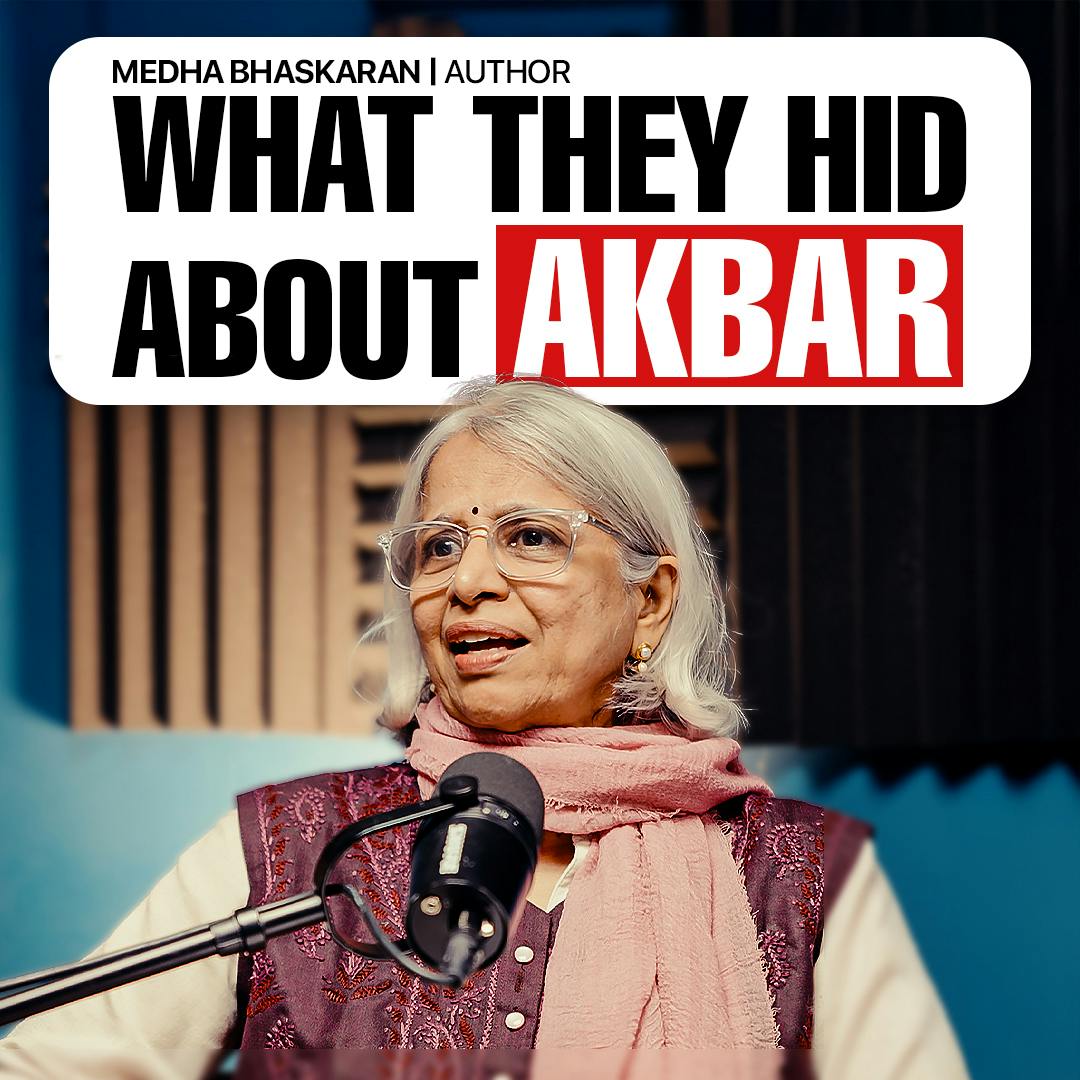
In this hard-hitting follow-up, author Medha ji dismantles pop-culture myths around the Mughals and revisits why Ch. Shivaji Maharaj’s revolution mattered. She challenges romanticized screen portrayals (Salim the “hero,” Akbar the “liberal”) with court chronicles and references, then contrasts them with Ch. Shivaji’s governance—protecting civilians, punishing molestation, and easing agrarian burdens. We also examine the human cost of imperial monuments—extraction from farmers, enslavement, famine—and ecological shifts like poppy displacing native crops, alongside Jahangir’s own tally of mass hunts. Finally, we address textbook narratives that blur the Maratha handover to the British—and why remembering accurately matters now.
Chapters-
00:00 – Intro
01:07 – Why History, Not Religion, Matters in This Discussion
03:12 – Bollywood Myths: Salim the Drunkard, Akbar’s Scouts & Harems
10:18 – Babur’s Atrocities & Guru Nanak’s Testimony
17:26 – The Massacre at Chittorgarh: 40,000 Killed
22:12 – Jahangir’s Hunts, Addictions & Obsessions
28:25 – Slavery, Eunuchs & Exploitation under the Mughals
34:47 – Ch. Shivaji Maharaj's Moral Code: Protecting Women & Civilians
35:14 – The Tax Burden: 50% vs 10% Under Shivaji
39:50 – What Did the Mughals Really Give India?
41:05 – Monuments, Temples & the Cost of Glory
43:15 – Distorted History: Who Really Ruled Before the British?
48:20 – Broken Temples, Opium Cultivation & Ecological Collapse
50:18 – Skull Mounds, Famines & Forgotten Horrors
52:30 – Final Message: Reclaiming India’s Story
👉 If you enjoyed this conversation, don’t forget to subscribe to Bharatvaarta!
We bring you deep, thoughtful discussions on politics, policy, and culture every week.
📢 Follow us on Twitter for updates: twitter.com/Bharatvaarta
📸 Follow us on Instagram: instagram.com/Bharatvaarta

In this honest and deeply inspiring episode, IPS officer and bestselling author Amit Lodha — the real-life hero behind Netflix’s Khakee: The Bihar Chapter — shares raw insights from his journey of justice, storytelling, and service.
From chasing hardened criminals across Bihar to writing bestsellers in stolen moments of silence, Amit Lodha reflects on what it means to stay principled in a world that rarely rewards it. He talks about crime, leadership, failure, and finding purpose — not just in uniform, but in everyday life.
A must-watch for anyone seeking courage, clarity, and conviction in their own journey. 👮♂️📚

In this stirring episode, author Medha Bhaskaran uncovers the brutal history of the Hindu holocaust, forgotten battles, and the rise of Shivaji — not just as a warrior, but as a revolutionary leader who transformed barren land and broken people into a thriving Swarajya.
From centuries of invasion to the emotional rebirth of nationhood, she shares vivid, unflinching stories of enslavement, resistance, and the magical connection between Shivaji and his people.
A must-watch for anyone interested in Indian history, forgotten narratives, and what it really took to build an empire from scratch. 🏹🔥

In this incredible conversation, Intel technologist and grassroots leader Ananthan Ayyasamy shares his astonishing rise—from farm labor and caste barriers in rural Tamil Nadu to becoming a top 1% realtor in the U.S. and writing patents at Intel. But the story doesn’t stop there.
Ananthan gave it all up to return to India—fighting for clean politics, rural upliftment, and systemic change through his foundation and public service. This episode is a masterclass in perseverance, service, and impact.
A must-watch for anyone who believes in the Indian dream—and wants to build it. 💪🇮🇳

In this bold and wide-ranging conversation, investor and author Saurabh Mukherjea explains how artificial intelligence is triggering the biggest shift in India’s white-collar workforce in decades. With powerful data, historical insight, and personal anecdotes, he unpacks how job roles, education models, and middle-class ambition itself must be reimagined.
From creative destruction to entrepreneurial reinvention, from social conditioning to skill-based survival, this episode offers a roadmap for anyone navigating careers, identity, and opportunity in the AI era.
A must-watch for professionals, students, parents, and policymakers who care about India’s future. 🎙️🚀

In this insightful conversation, economist Neelkanth Mishra (Chief
Economist, Axis Bank) breaks down how India can unlock its true growth
potential—and the invisible challenges holding us back. From workforce
participation to capital cycles, from China’s competitive lessons to
India’s fiscal discipline—this is a masterclass in decoding the Indian
economy.
Neelkanth also pulls back the curtain on India’s bureaucracy, governance
bottlenecks, and the difficult balance between good economics and
winning politics. A must-watch for anyone who cares about India’s future
and wants to understand how we can rise faster, smarter, stronger.
🇮🇳📈
A must-watch for every founder, policymaker, student, or citizen with a
stake in India’s economic journey. 🚀
⸻
00:00 – Intro
01:00 – India’s Potential Growth: Workforce, Capital & Productivity
07:07 – The Invisible Roadblocks to Reform
13:52 – How China Forced India’s Bureaucracy to Wake Up
20:35 – Good Economics vs. Bad Politics: Can Fiscal Prudence Win?
25:20 – How India Can Become Export Competitive
30:32 – City-Led vs Distributed Growth: What’s Better for India?
34:31 – Why Managing Urban Growth is Critical
34:42 – Rapid Fire: Past Economic Myths & Books That Changed His Thinking
35:50 – Closing: Markets vs Institutions & Final Thoughts


Download from Google Play

Download from App Store
 United States
audio quality of the guest speakers was v poor. Couldnt't understand what they were saying at all.
fantastic episode
This should have been in parts, it's too lengthy. Very good analysis although. Please keep nobody can listen continuously more than an hour. Difficult to keep continuity. Even movie has a interval.