


 Claim Ownership
Big Biology
Subscribed: 19Played: 173
Subscribe

© Art Woods and Marty Martin
Description
Big Biology is a podcast that tells the stories of scientists tackling some of the biggest unanswered questions in biology.
91 Episodes
Reverse
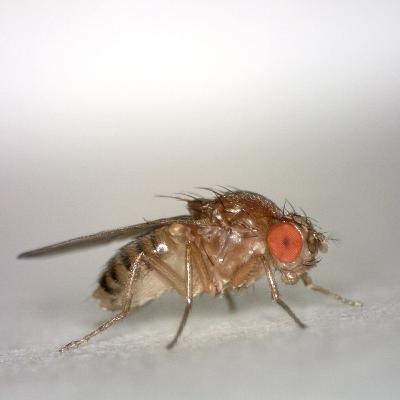
What is a germ cell and why do animals separate germ and soma (body) cells at all? What molecules determine whether cells become germ or soma, and are some such mechanisms products of horizontal gene transfer?
On this episode of Big Biology, we talk with Cassandra Extavour, an evolutionary developmental biologist at Harvard who studies the how's and why's of germ cell differentiation in insects. Recently, Cassandra's lab has been working on oskar, a novel and highly conserved gene that is indispensable for giving insect cells the ability to become sperm or eggs. She and others have found that Oskar effectively acts like a magnet in developing insect cells, keeping together molecules critical to transformation of undifferentiated cells into functional germ cells. Bizarrely, this really important gene is thought to have evolved partly through horizontal gene transfer between insects and particular bacteria. Since then, oskar has also come to have many other functions, including for nerve cell development, even though much of its history was in species without nervous systems. Cassandra thinks that genes like these with complex histories and pleiotropic effects might be very common in living systems, much more than longstanding one gene-one phenotype thinking would lead us to expect.
Photo: Hannah Davis
---
Send in a voice message: https://anchor.fm/bigbiology/message

How has the amount of artificial light changed over the last 150 years? In what ways does artificial light affect human health and wildlife? And how can new lighting technologies ameliorate the effects of light pollution?
On this episode of Big Biology we talk to Kevin Gaston (@KevinJGaston), a professor of Biodiversity & Conservation at the University of Exeter. Kevin is an expert on the ecological impacts of artificial light and in particular “sky glow”--the combined glow of all lights coming from cities and towns. In our chat, we discussed how light production has grown over the past several decades and the growing impacts that it's having on our planet. Further, we discuss some of the psychology behind the human desire for bright spaces and what we as individuals can do to reduce the impacts of light pollution on ourselves and the organisms around us.
This episode is sponsored by the Zoological Lighting Institute. Recognizing that natural light is a central aspect of animal health and ecological function, The Zoological Lighting Institute promotes scientific research to improve understanding of what artificial changes in light mean for animals and the human communities that depend on them. Through education on light pollution, ZLI hopes that proper and sustainable approaches to care and development of light sources can be taken by communities around the globe.
---
Send in a voice message: https://anchor.fm/bigbiology/message

How can local and state governments repair the damage done by COVID-19? Is there a vaccine on its way to a pharmacy near you? And what should you expect about lockdowns, facemasks, and new COVID-19 therapies in the coming months?
On this episode of Big Biology, a panel of experts discusses the virus’s trajectory and impact, and our options going forward. This conversation was recorded live at Busch Gardens in Tampa, Florida, in partnership with the University of South Florida College of Public Health and Morsani College of Medicine and the City of Tampa.
The panel consisted of Jane Castor, the mayor of Tampa, Kami Kim, a physician and professor who specializes in infectious diseases, Edwin Michael, an epidemiologist focused on the population ecology of disease transmission, and Michael Teng, an immunologist with expertise in vaccine development. We moderate as the experts look ahead, and discuss what we can expect long-term.
Photo: Allison Long
---
Send in a voice message: https://anchor.fm/bigbiology/message

What is the role of chance in explaining variation in biology? How has it shaped the history of life on Earth? And how do scientists incorporate chance into their performing experiments?
In this episode of BigBiology, we talk to Sean Caroll, an award-winning scientist, author, educator and, film-producer about his latest book, A Series of Fortunate Events, in which he writes about how chance has shaped life on Earth. In Sean’s view, chance is the creative process and contingency is the aftermath of chance. Consider the asteroid impact that killed off the dinosaurs and paved the way for the rise of mammals and ultimately humans. It could have missed our planet altogether. Or it could have hit 30 minutes earlier, or later, landing in the ocean and having effects that were much less severe.
Sean argues that chance is not limited to biology but plays a big role society including the entertainment industry. The common theme between thinkers and comedians is that they tell the truth, but in a very different way. How do comedians get away with bold statements while scientists run into a controversy for the same ideas? Do scientists have something to learn from comedians?
---
Send in a voice message: https://anchor.fm/bigbiology/message
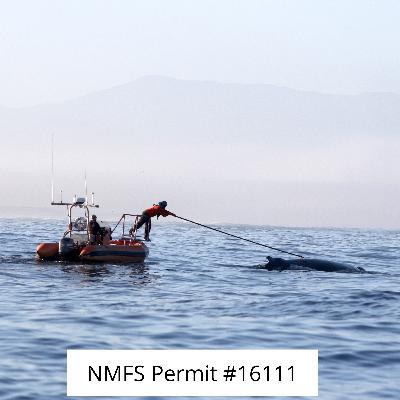
Are whales the biggest animals to have ever lived? Why have they evolved to become so gigantic? What key adaptations support their immense size?
On this episode of Big Biology, we talk to Jeremy Goldbogen (@GoldbogenLab), a scientist at the Hopkins Marine Station at Stanford University. For the past few years he has been tracking blue whales, aiming to understand how their physiology sustains their massive size, and how food and environment play a role in whale gigantism. We talk about the evolution of extreme size, whether modern whales are bigger than the largest dinosaurs, how whale hearts are adapted for deep sea diving, and the fascinating innovations that both toothed and baleen whales have evolved to get the most out of a meal.
This episode of Big Biology is sponsored by Hopkins Marine Station of Stanford University. Founded in 1892, Hopkins Marine Station is the oldest marine laboratory on America’s west coast conducting research that addresses fundamental questions at every level of marine biology, from genes to ecosystems.
---
Send in a voice message: https://anchor.fm/bigbiology/message

Comments

Download from Google Play

Download from App Store
 United States