


 Claim Ownership
Biohacker's Podcast
Subscribed: 304Played: 2,444
Subscribe

© All rights reserved
Description
Welcome to the Biohacker's Podcast, where we explore the intersection of technology, nature, and self-development.
As biohackers, we view our bodies as complex systems that can be analyzed and probed in order to gain a deeper understanding of ourselves. Through controlled experimentation, we pursue ways to optimize our physical and mental health, increase our longevity, and enhance our cognitive abilities.
Join us as we delve into the latest research and innovative techniques in biohacking, while also exploring the natural world and how it can aid in our self-development.
Produced by Biohacker Center, the leading healthspan optimization company focused on bringing you the world's best content, supplements, technologies, courses, and events to help you champion healthy habits, prolong your healthspan, and lead a productive life.
Learn more at: https://www.biohackercenter.com
82 Episodes
Reverse

In this episode of the Biohacker's Podcast, Teemu Arina speaks with Philipp von Holtzendorff-Fehling on coherence, consciousness and the ideas behind Leela Quantum Tech. Philipp shares his path from corporate leadership to exploring intuition and energy practices. Their conversation examines the company's account of its research, questions about its products, and how controls, sample size and statistical significance affect the interpretation of results.Check https://hololifesummit.com for upcoming events & tickets.Devices, supplements, guides, books & quality online courses for supporting your health & performance: https://hololifecenter.comPhilipp von Holtzendorff-Fehling, founder and CEO of Leela Quantum TechPhilipp is an entrepreneur and former T-Mobile vice president. In this conversation, he discusses his move from corporate leadership to energy-focused entrepreneurship, his understanding of coherence, and the research programme behind his company's products.Website: https://leelaq.comEurope: https://leelaq.deResearch discussed: https://quantumtechresearch.comQuantum Upgrade: https://quantumupgrade.ioInstagram: @leelaquantumGuest portrait: Leela Quantum Tech official media kit, https://leelaq.com/media-kit/- Wellbeing can include a person’s relationship with emotions and intuition alongside physical health habits.- Personal experiences can motivate exploration without settling questions about mechanisms or effectiveness.- Coherence is the central concept used to explain the technology discussed in this conversation.- Physical devices and remote services raise different practical questions about delivery and measurement.- Combining several interventions makes it harder to identify which one caused a change.- Laboratory findings in cells do not by themselves establish a treatment’s benefit in people.- Sham controls, blinding and randomization address different possible sources of bias in an experiment.- A study’s methods and statistical thresholds deserve attention alongside its abstract and headline result.- Effect size, variability and sample size all matter when interpreting statistical significance.- Curiosity is most useful when paired with clear questions and critical appraisal of evidence.00:00 - Cold Open00:35 - Biohacker’s Podcast Intro00:55 - Introducing Philipp and Leela Quantum Tech01:55 - From corporate life to intuition04:20 - The idea behind the technology04:58 - Feeling well and reconnecting with yourself06:31 - Physical health and inner experience08:17 - What Philipp means by quantum energy09:39 - Quantum Upgrade and remote effects10:54 - A practical question about wound healing15:20 - Research on cells, ATP and wellbeing17:20 - Brain studies and EEG measurements19:44 - Coherence and the nervous system21:01 - Blocking versus harmonizing EMFs24:58 - How Philipp describes the blocks26:48 - Questions about water29:11 - Water studies and their limitations31:39 - Comparing research methods34:30 - Statistical significance and study design36:24 - Proprietary technology and sham controls37:04 - Effect size and sample size38:13 - Combining approaches and staying curious40:32 - Websites and the HOLOLIFE Summit42:17 - Outro
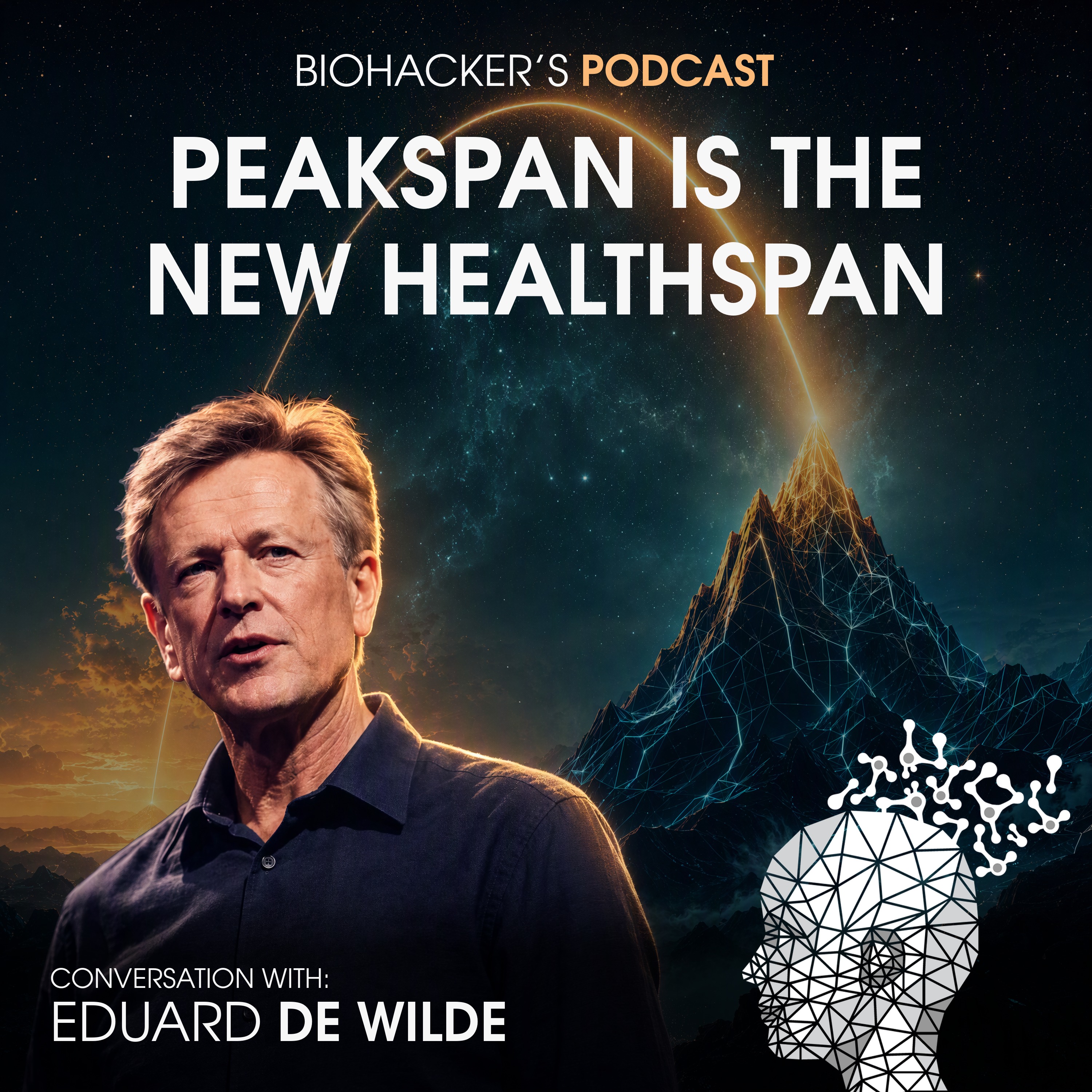
In this episode of the Biohacker's Podcast, Teemu Arina speaks with Eduard de Wilde on peakspan, the idea of extending the years you can keep doing what you love, how he healed from a medication-induced anxiety disorder through lifestyle, the 20/80 rule and five dials of his book More Good Years, and why trends in your data matter more than single numbers.Check https://hololifesummit.com for upcoming events & tickets.Devices, supplements, guides, books & quality online courses for supporting your health & performance: https://hololifecenter.comEduard de Wilde, author of More Good Years and founder of LiveHelfi and NoordCodeEduard de Wilde is a Dutch entrepreneur, biohacker and Certified Bulletproof Coach. After the antimalarial Lariam left him with a severe panic and anxiety disorder in 1999, he rebuilt his health through lifestyle and has spent the past two decades bringing biohacking to a wider audience. He founded LiveHelfi, one of Europe's largest biohacking webshops, and the supplement and functional food brand NoordCode, and is also behind a coach training school for health optimization professionals. His book More Good Years is about peakspan: keeping the things you love in your life for as long as possible. He gives a keynote on the book at HOLOLIFE Summit in Amsterdam on 14 and 15 November 2026.Website: https://www.dewilde.comInstagram: @eduarddewilde- Peakspan shifts the goal from adding years to extending the period in which you can still do the things you love.- Many people say they care less about when they die than about staying able to enjoy their favourite activities, which makes function a more motivating target than lifespan alone.- A 20/80 approach focuses on the few basics that deliver most of the benefit, while advanced protocols remain optional for enthusiasts.- Regular bedtimes and a stable circadian rhythm are a foundation that supports energy, mood and recovery.- Strength training, intervals, cardio and especially mobility help counter age-related muscle loss and keep everyday movement possible later in life.- Cooking whole foods, limiting ultra-processed products and avoiding large glucose swings covers much of what good nutrition requires, and Mediterranean-style eating has broad research support.- A system of default habits with room for occasional indulgence tends to be more sustainable than strict perfectionism, which often ends in rebound.- Mental wellbeing and relationships matter alongside the body, from stress regulation to handling difficult people and deeper emotional work.- Health data is most useful when you follow long-term trends such as heart rate variability rather than reacting to single readings, and it should support rather than override how you feel.- Small, consistent habits woven into ordinary days, such as taking the stairs instead of the escalator, compound over decades into more good years.00:00 - Cold Open00:56 - Meet Eduard de Wilde02:12 - Lifespan, healthspan and peakspan03:41 - Lariam, Cameroon and a panic disorder05:45 - The psychiatrist's verdict06:13 - Healing through lifestyle08:56 - The 20/80 rule10:07 - Biohacking for non-biohackers13:33 - How peakspan differs from healthspan15:17 - Joyspan and reframing wellness16:50 - The five dials of More Good Years18:25 - Biohacking 3.0: three layers of the mind20:41 - Hacking the ego21:55 - Nutrition tests and the nocebo effect25:32 - A system of habits beats perfection27:03 - Sleep, movement, mobility and nutrition29:41 - Biohacking built into daily life33:44 - What makes people take charge of their health35:19 - His mother, the original biohacker38:41 - Technology that simulates nature39:48 - Infrared, HeartMath and HRV trends42:23 - The tests worth doing46:07 - When to overrule your data48:24 - Informed consumers and the medical system52:10 - Where to find the book and products

In this episode of the Biohacker's Podcast, Teemu Arina speaks with Susan Bratton on sexual health as a factor of longevity, why intimacy can keep getting better with age, sexual regenerative therapies and pleasure tools, smarter STI testing, and the aphrodisiacs worth trying first.Check https://hololifesummit.com for upcoming events & tickets.Devices, supplements, guides, books & quality online courses for supporting your health & performance: https://hololifecenter.comSusan Bratton, intimacy expert and CEO of Better LoverSusan Bratton is a pleasure-based sex educator with more than two decades of experience. A former Silicon Valley tech executive, she has written 44 books and programs, including Sexual Soulmates and Relationship Magic, which have reached more than 1.5 million people. She is CEO of Better Lover, Personal Life Media and The20, and speaks at longevity conferences around the world about intimacy as the fourth factor of longevity. She speaks at HOLOLIFE Summit in Amsterdam on 14 and 15 November 2026 with the talk I'm A Holosexual, Are You?Website: https://betterlover.comInstagram: @susanbratton- Sexual health belongs in the longevity conversation, since reproductive and sexual function tend to track overall vitality.- Sex does not have to decline with age, because technique, communication and intimate wellness are skills that can keep improving over a lifetime.- Learning a structured practice first, much like a yoga or martial arts form, makes it easier to explore and improvise later.- Simple communication habits, such as sharing the best moment of a shared experience and giving audible feedback, help partners understand what feels good.- Performance anxiety is common and can affect erections and orgasm, and it often stems from not knowing what to do rather than from a physical problem.- Arousal depends on blood flow in every body, so circulation, nitric oxide and nutrition deserve attention as people age.- Options for restoring sexual tissue range from low-cost pumps and red light to lasers, PRP and stem cells, but evidence varies and the right choice depends on the problem and the budget.- Standard STI screening often misses infections such as Mycoplasma genitalium, and incubation periods mean the timing of a test matters as much as the panel.- Botanicals such as maca, fenugreek, tribulus, tongkat ali and cacao may support libido for some people, effects vary and cycling may help, while some, like yohimbe, carry real cardiovascular risks.- Treating intimacy as a learnable, lifelong part of health and relationships may support connection, wellbeing and a fuller life.00:00 - Cold Open00:48 - Sexual Health as a Longevity Marker02:42 - From Silicon Valley Executive to Intimacy Expert04:21 - The Upward Pleasure Spiral05:08 - The Orgasmonaut06:07 - Better in Bed With Age07:19 - Why Intimacy Needs a Protocol10:30 - Retention, Ejaculation and Chemistry13:19 - Tantra Versus Practical Lovemaking15:27 - Bedroom Communication and Moaning17:42 - Autoeroticism and Narcissism19:20 - Performance Anxiety21:04 - Partners, Polarity and Synergy25:29 - The Sex Life Bucket List28:39 - Risks, Porn and Dopamine31:23 - Sexual Biohacking and Reversing Atrophy33:50 - Vaginal Lasers, Stem Cells and Red Light37:21 - Matching Therapies to Your Budget39:42 - Pleasure Tools and Desensitization Myths43:49 - Sex Tech and AI46:51 - Quantified Intimacy49:21 - Ovarian Health and Menstruating at 6551:26 - STI Testing and Fluid-Bonded Circles58:41 - Aphrodisiacs and Botanicals1:05:20 - Becoming Holosexual: Her Amsterdam Talk1:07:06 - Sexuality and a Whole Life1:08:32 - A Fantastic Time to Be Alive

In this episode of the Biohacker's Podcast, Teemu Arina speaks with Sorin Schiller on turning a past of crime and a near-fatal low point into a life of service, why authenticity is more sustainable than people pleasing, how to process trauma, and why peace needs power.Check https://hololifesummit.com for upcoming events & tickets.Devices, supplements, guides, books & quality online courses for supporting your health & performance: https://hololifecenter.comSorin Schiller, founder of Scientifically SavageSorin Schiller grew up without parents, in foster care and with relatives in Romania, and found more safety in the Transylvanian forest than among people. He spent years in crime across five countries before a second chance at 25. Without finishing high school, he later worked his way up at a pharmaceutical company before leaving to teach what he calls the Scientifically Savage method, which blends science, nature and self-awareness. Known online as the protect your peace guy, he speaks at HOLOLIFE Summit in Amsterdam on 14 and 15 November 2026 with the talk Power in Peace.Website: https://scientificallysavage.comInstagram: @scisavage- Pleasing others costs willpower twice, once to suppress what you want and once to do what you think others want, and that drain can feed burnout.- Being authentic can be a practical strategy rather than a luxury, because it frees energy for growth, fun and meaningful work.- Lasting change tends to come from genuine interest or from painful experience, and long suffering often becomes the passion that drives it.- Anxiety reflects uncertainty, and building trust in yourself through new skills, physical challenges and experience may help keep it in check.- Self-sabotage usually feels like self-soothing in the moment and is only recognised in hindsight.- Owning your part in what went wrong gives you a starting point for change, while blaming others keeps the loop going.- A strong enough reason to change, often service to something beyond yourself, makes the discomfort of new habits easier to endure.- Giving feels good and builds reciprocal relationships, but directing generosity toward people who appreciate it helps prevent resentment.- Receiving something you did not ask for creates a pull to give back, which is why gifts and favours shape behaviour more than people notice.- Balance between giving and receiving, effort and rest, and competence and care supports a steadier life, and power used well can serve peace.00:00 - Cold Open00:48 - Introducing Sorin Schiller02:05 - Authenticity as a Strategy Against Burnout03:25 - The Feral Part: Standing Your Ground04:26 - Growing Up Without Parents in Transylvania05:43 - A Life of Crime and a Second Chance at 2506:51 - A Commitment to Give Others a Chance07:25 - From Pharma Promotions to Walking Away08:53 - The Wounded Healer10:32 - Change Comes From Genuine Interest or Trauma12:05 - Anxiety, Trust and the Hippocampus13:17 - Self-Sabotage and the Uncomfortable Truth14:31 - Processing Trauma by Finding Yourself Guilty16:23 - Finding a Strong Enough Why17:27 - Is Service Just People Pleasing?19:13 - Appreciation and Being Useful, Not Used20:48 - Why Receiving Feels Uncomfortable22:00 - Taking Without Giving and Depression23:03 - Kindness as an Investment23:55 - Ayni, Karma and Reciprocity25:23 - When the Character Outgrows the Person27:25 - Authenticity for Selfish Reasons29:02 - Identity, Labels and Belonging30:14 - Aggression, Creativity and Rebellion31:08 - Extreme Masculine and Feminine Online33:34 - Athena and the Balance of Masculine and Feminine36:40 - Learning to Receive37:12 - Attachment Styles and Acting From Service38:29 - Power in Peace at HOLOLIFE Summit Amsterdam39:48 - Power as the Ability to Affect41:15 - Closing Words

In this episode of the Biohacker's Podcast, Teemu Arina speaks with Valerie Orsoni on reversing "irreversible" conditions, why one biomarker never tells the whole story, her biohacking room and peptide experiences, and why chasing perfection backfires.Check https://hololifesummit.com for upcoming events & tickets.Devices, supplements, guides, books & quality online courses for supporting your health & performance: https://hololifecenter.comValerie Orsoni, biohacker and author, ValBiohackerValerie Orsoni has been biohacking since 1998. She has written 56 books, has been named one of the Top 50 Longevity Leaders and ranks number one on the Longevity World Cup leaderboard, with a biological age measured at 22.9 years below her chronological age. Born in Corsica and raised in Provence, she has lived in San Francisco for 26 years. She has climbed more than 45 peaks, skied to the South Pole and logged around 350 dives. In this conversation she describes how she approached juvenile arthritis, lung problems and brain lesions she was told were irreversible, and why she believes refusing to identify with an illness is part of getting better. She speaks at HOLOLIFE Summit in Amsterdam on 14 and 15 November 2026 with the talk Reversing the Irreversible.Website: https://www.valbiohacker.comInstagram: @valerieorsoni- A single number such as grip strength, VO2 max or cystatin C cannot define how well someone is ageing, so biomarkers are best read together and in personal context.- HbA1c depends on how long red blood cells live, so people with long-lived red cells can read as prediabetic while their blood sugar control is normal.- Common genetic variants can keep CRP elevated without meaningful inflammation, which is why genetic context can explain a stubborn lab value.- Cystatin C is gaining attention as a kidney marker in biological age clocks, and some clinicians consider it more informative than eGFR alone.- Food quality, seasonal eating and the daily walking, carrying and socialising around meals may matter as much as the diet itself.- Gray-market peptides can contain bacterial contamination and endotoxins, so anything injectable carries real risk and belongs under medical supervision.- Personal recoveries described in the episode, from brain lesions to joint and eye problems, are individual experiences rather than evidence of what works for everyone.- Self-treatment should never replace diagnosis, and a doctor should assess persistent symptoms, ear infections or neurological signs.- Piling up protocols and fearing every missed habit can raise stress and undo benefits, while social connection and enjoyment also support health.- The foundations of sleep, food, movement, stress management and relationships come before any device, supplement or peptide, and consistent small choices compound over a lifetime.00:00 - Cold Open00:54 - Welcome01:56 - Biohacking Since 198603:13 - Keto Smart, Croissants and the Mediterranean07:16 - Stop Bragging About Numbers09:14 - Mountains, Bikes and Antarctica11:25 - Kilimanjaro, 28 Years Later12:45 - Minus 22.9 Years on the Bortz Clock14:28 - When CRP Lies: Genes and Context16:15 - Born Old: Reversing Juvenile Arthritis18:30 - Inside the Biohacking Room20:22 - Salt Therapy and a VO2 Max From 29 to 4022:34 - Eat Wrong, Live Better25:15 - 100 Supplements a Day and a Binder Month26:42 - Improving Vision by 18%30:42 - The Antidote to Sitting32:48 - Peptides: Quality, Endotoxins and a Torn Shoulder36:45 - Challenges as Fuel39:13 - Don't Chase Perfection42:00 - Healthcare in the US and Europe47:07 - Moomin and Neurosonic48:33 - Naps, No Phone and Doing Nothing50:29 - Meet Valerie at HOLOLIFE Summit52:31 - Reversing the Irreversible54:23 - Don't Call It "My" Illness58:04 - Closing

Comments

Download from Google Play

Download from App Store
 United States