


 Claim Ownership
BirdNote
Subscribed: 105Played: 12,662
Subscribe

© Birdnote 2020
Description
Escape the daily grind and immerse yourself in the natural world. Rich in imagery, sound, and information, BirdNote inspires you to notice the world around you. Join us for daily two-minute stories about birds, the environment, and more.
2662 Episodes
Reverse

Las aves no solo desarrollaron alas, sino muchas otras adaptaciones que les permiten volar. Las plumas les brindan aislamiento, impermeabilidad y un medio ligero para elevarse en el aire. Sus huesos son huecos o con una estructura interna tipo panal, lo que reduce el peso corporal. Y en lugar de
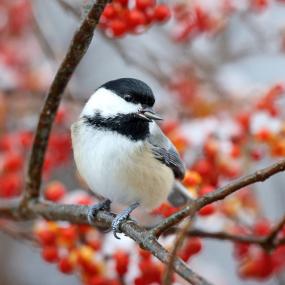
One of the biggest threats to birds is the decline in biodiversity due to habitat loss — and the traditional, manicured lawn isn’t helping. Growing native plants in your yard allows you to protect birds at home, says ecologist Douglas Tallamy, who co-founded an organization called Homegrown National
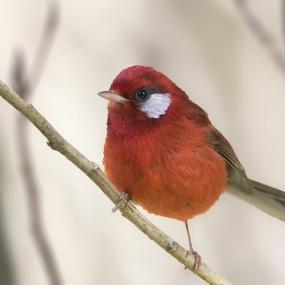
Red Warblers only sing on sunny mornings during the breeding season — so hearing their song is as good as checking the weather forecast. Weighing less than a AAA battery, Red Warblers are endemic to the highlands of Mexico and live in humid forests of pine, oak, and fir. ¡Escuche este episodio en
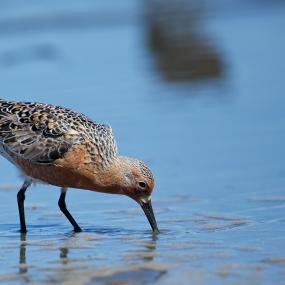
The variety of bill sizes and shapes among the sandpipers is astounding! Many sandpipers have sensitive nerve receptors in their bill tips, so they can find unseen prey through touch, odor, and pressure changes. Those sandpipers with long, straight bills — like the Long-billed Dowitcher — are often
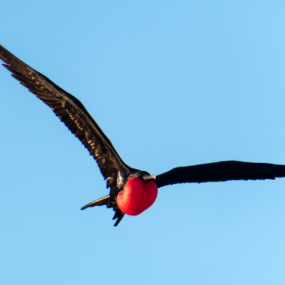
It’s National Poetry Month in the U.S., and each year we like to celebrate by sharing our favorite contemporary writers’ work about birds. Aimee Nezhukumatathil is known for writing about nature, but more than that, wonder at the natural world. In this episode, Aimee describes precious moments she’s
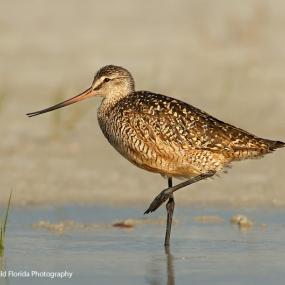
Marbled Godwits stand a foot and a half tall, on slender, dark legs. Their exquisitely long bills are pink, tipped in black, and just slightly up-curved. Altogether, a stunning bird. In April, godwits are on their way north. They have wintered along the coasts, including the Texas Gulf Coast, and

BirdNote prides itself on creating a sound-rich, immersive experience for listeners every day. Today’s episode, featuring the Tufted Puffin, the Northern Flicker, and the Canada Goose, is sure to bring you calm and get your day started on a gentle note. And one more thing before we go: Happy April

The savanna country of northern Australia is one of the most fire-prone natural habitats in the world, and its plants have evolved to thrive with frequent, low-intensity blazes. As flames sweep across the savanna, Black Kites watch for prey like grasshoppers and lizards that flee the fire

The Keel-billed Toucan, also known as the Rainbow-billed Toucan, looks like a bird with a giant banana for a beak. They have a black body, a yellow patch from the face to the breast, and a huge rainbow-colored bill. The big beaks have more than one use: they can be used for fighting with rivals, but

The Canyon Wren and Cactus Wren share common ancestry — and they’re close neighbors in the desert southwest. Yet their songs evolved along divergent acoustic lines. The rough trilled phrases of the Cactus Wren song pulse through the dense cactus, while the clear tones of the Canyon Wren echo off the

The Tui is one of New Zealand’s most remarkable birds, intelligent and with iridescent feathers. Its down-curved beak fits perfectly into native flowers. But the Tui is best known for its voice. Each Tui’s complex song is slightly different, a colorful mix of musical notes and offbeat sounds. It’s

Bananaquits are tiny songbirds with a sweet tooth. Their distinctive curved bills are perfect for sipping nectar from woodland flowers and urban hummingbird feeders. These songsters are widespread in Latin America from southern Mexico to northern Uruguay — and much of the Caribbean. Their plumage

In this episode, ornithologist J. Drew Lanham reads a letter he has written to a Kentucky Warbler, an “uber-skulky” species that’s hard to find but brings “warbler-iffic joy” when Drew hears them.

The King Eider is one of the most striking sea ducks in the Northern hemisphere. This male King Eider is trying to woo a mate with soft coos and brilliant colors — his beak and feathers are decked out in black, white, green, grey, tangerine, yellow, and ivory. Unlike her showy suitor, the female

Los ojos de un loro están ubicados a los lados de la cabeza. Así que, si el ave quiere ver algo — como un delicioso pedazo de fruta — tiene que ladear la cabeza hacia un lado o hacia el otro para hacerlo. Y si el loro observa con el ojo izquierdo, usará su pata izquierda para agarrar el bocado. Los

Dovekie are robin-sized seabirds related to auks and puffins. Their compact, black-and-white bodies are perfect for life on the water. In winter, birders and boaters can sometimes spot flocks of Dovekie as far south as coastal New England. In summer, Dovekie high-tail it to the Arctic where they

What’s the most colorful bird in the U.S.? The Scarlet Tanager? Maybe the Painted Bunting? Well, consider one more lustrous candidate: the Purple Gallinule. The Purple Gallinule’s feathers are so iridescent that they might not seem real. Despite its bold style, a Purple Gallinule can be hard to spot

The cheerful-voiced Chestnut-collared Longspur shares their northern prairie breeding range with grazing cattle. Although heavy grazing can have adverse effects, breeding densities of longspurs jump by two, three, or even 10 times when ranchers graze their cattle responsibly on native prairies. Two

For years, scientists debated whether the first flying dinosaurs, the ancestors of modern birds, began by running and making little hops off the ground, or leapt off a tree branch to glide. It’s called the “ground up vs. trees down” debate, for short. But a newer perspective on this mystery suggests

Birds make a lot of sounds — so many that author and illustrator Becca Rowland had a hard time keeping them straight. That was until Becca began picking up on familiar noises in common bird calls — like when they heard a dog’s squeaky toy in the trees. Now she’s compiled her fun and functional

Comments

Download from Google Play

Download from App Store
 United States