


 Claim Ownership
Broad History
Subscribed: 115Played: 1,116
Subscribe

©️ Isabelle Roughol
Description
The history you think you know, with women in it this time
17 Episodes
Reverse
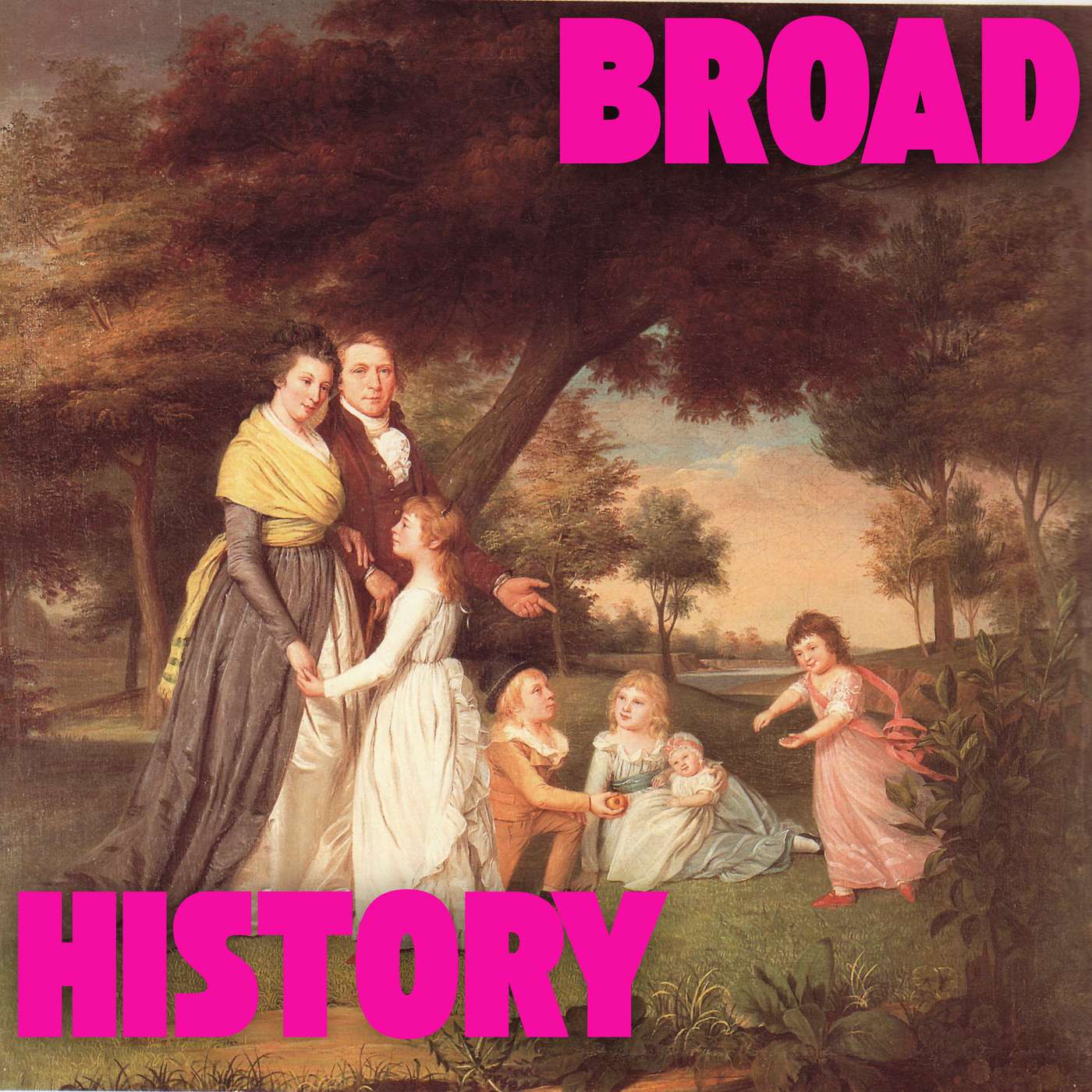
Republican motherhood is a fundamental concept of the early American republic. Women's political power, it argues, is exercised not at the ballot box but in their own separate sphere, where they raise good little patriots. Carol Berkin concludes our series with a look at the long impact of the American revolution for women and connects the dots with the United States' current political landscape, 250 years on.
★ Support this podcast ★
On this episode:
Isabelle Roughol - Host
Carol Berkin - Guest
Click here to watch on Youtube.
Reply on Bluesky
Read the book🇬🇧 Find it in the UK bookshop 🇺🇸 Find it in the US bookstore(Affiliate bookshop.org links support Broad History and indie bookstores.)Jump to:(00:00) - Carole Berkin part 2 (new)
(01:14) - Start of interview
(01:28) - The French won the American Revolution
(02:54) - The rise of girls' education
(07:34) - What Abigail Adams did not mean
(09:42) - Republican or civic motherhood
(12:15) - Separate sphere ideology is coming back in the radical right
(13:52) - "Femme couverte"
(16:00) - From the Revolution to Seneca Falls
(17:44) - The exile of loyalist women
(22:03) - The betrayal of Black loyalists
(28:52) - The fate of Black Americans who stayed
(29:56) - Indigenous women had so much more autonomy and American women knew it
(33:28) - Molly Brandt
(35:54) - The Trail of Tears
(38:11) - America's birth myth
(41:09) - The Revolution, 250 years on
(44:50) - Outro
Click here to view the episode transcript.
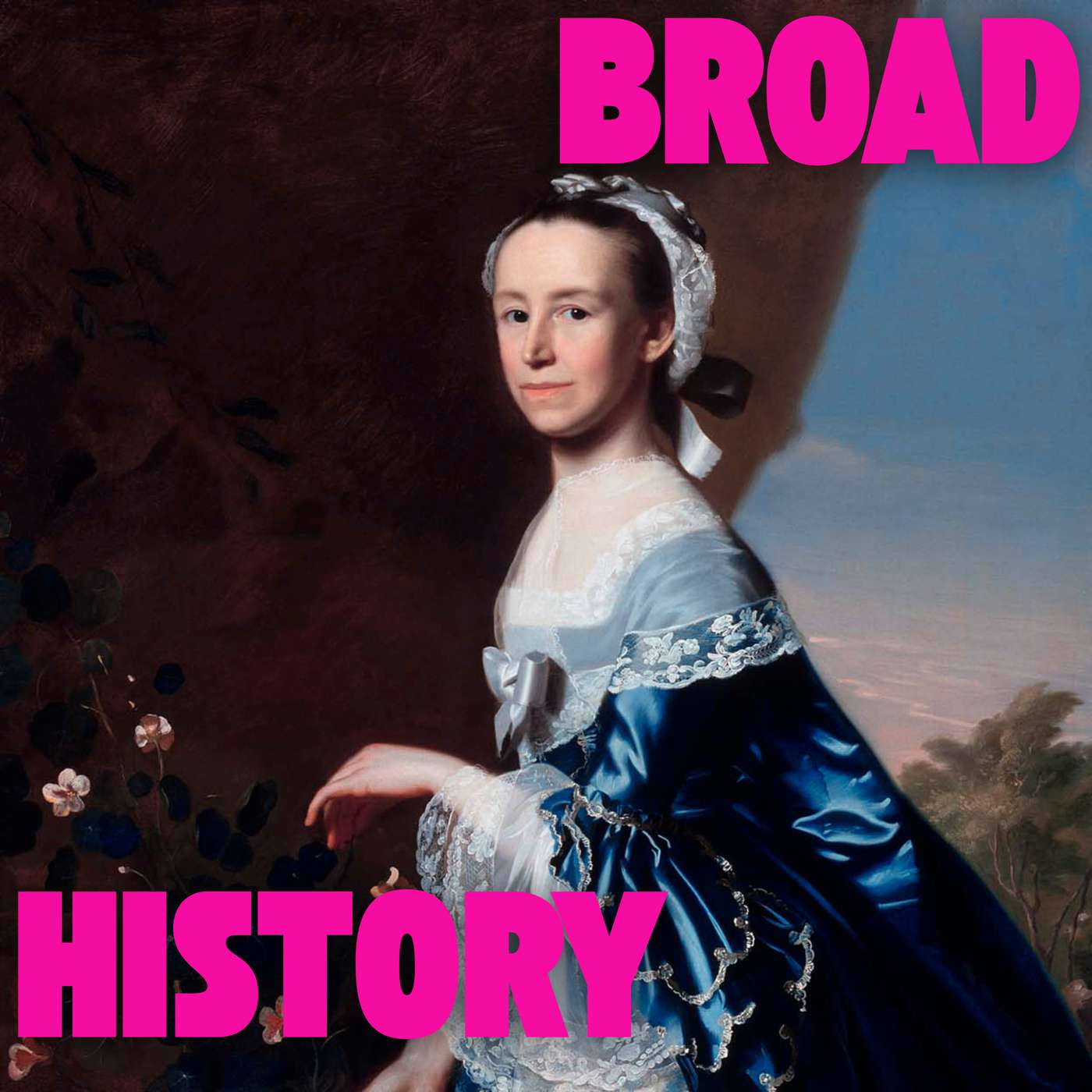
Mercy Otis Warren was what the Revolution called a "female politician" – a woman who cared about and discussed politics, a wholly new archetype for American society then. Her poems, plays and pamphlets – and ultimately her 3-volume history of the revolution – established her as a key political thinker of the movement for independence. But she walked a fine line: she never meant to "transgress the boundaries of (her) sex" and always thought of herself as a wife and mother first. To discuss her life and women's part in the political philosophy of the revolution, I'm joined by Mercy's biographer, Rosemarie Zagarri.Read the books🇺🇸 Buy Rosemarie Zagarri's books in the USA Woman's Dilemma: Mercy Otis Warren and the American Revolution: https://bookshop.org/a/79408/9781118775011Revolutionary Backlash: Women and Politics in the Early American Republic: https://bookshop.org/a/79408/9780812220735🇬🇧 Buy Rosemarie Zagarri's books in the UKA Woman's Dilemma: Mercy Otis Warren and the American Revolution: https://uk.bookshop.org/a/9178/9781118775011Revolutionary Backlash: Women and Politics in the Early American Republic: https://uk.bookshop.org/a/9178/9781666133929(Affiliate bookshop.org links support Broad History and indie bookstores.)
★ Support this podcast ★
On this episode:
Isabelle Roughol - Host
Rosemarie Zagarri - Guest
Click here to watch on Youtube.
Jump to:(00:00) - Intro
(01:33) - Start of interview
(02:00) - Mercy's unusual education
(05:25) - Coming of age in the anti-British resistance
(07:59) - A rare interest in politics
(09:15) - Men's encouragement
(12:09) - "A masculine genius"
(13:45) - Warning the colonists and encouraging sacrifice
(16:50) - The quintessential female politician
(19:06) - Defending natural rights
(21:35) - Embodying, not advocating women's rights
(27:13) - The first historian of the American Revolution
(29:25) - Why she opposed the Constitution
(33:12) - Falling out with John Adams
(39:04) - Women had the right to vote in 1776 in ONE state
(43:30) - The French Revolution and the short-lived radical transatlantic conversation about women's rights
(48:16) - Outro
Click here to view the episode transcript.

Phillis Wheatley Peters was transported to America as an enslaved 7-year-old. She quickly became a literary prodigy and an international celebrity – the unofficial first poet laureate of a new nation, says her biographer Vincent Carretta. Together we explore her life, her legacy and recent findings that transform our understanding of the final years of her too-short life. 🇺🇸 Get the books: (Affiliate bookshop.org links support Broad History and indie bookstores.)
★ Support this podcast ★
On this episode:
Isabelle Roughol - Host
Vincent Carretta - Guest
Click here to watch on Youtube.
Read the books🇺🇸 Find them in the US bookstore🇬🇧 Shop the UK bookshop(Affiliate bookshop.org links support Broad History and indie bookstores.)Jump to:Click here to view the episode transcript.
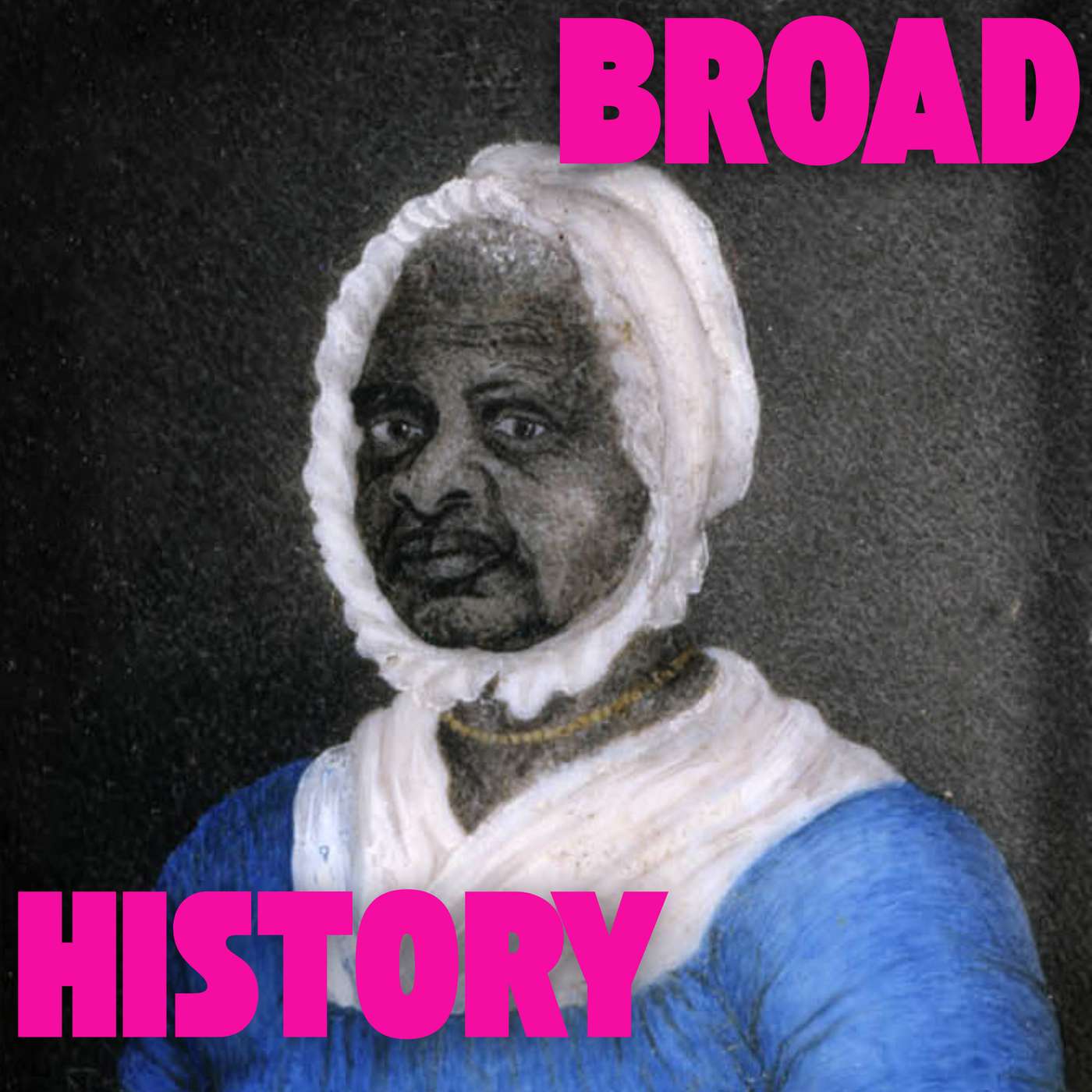
When Elizabeth "Mumbet" Freeman overheard the opening of the new Massachussetts constitution in 1780 – "all men are born free and equal" – she knew the words had to apply to her, too. Elizabeth was the first enslaved woman to sue for and win her freedom in a US court. To talk about arguably the most impactful woman in this series and the true meaning of freedom and the American promise, I'm joined by Errin Haines, co-founder and editor-at-large of The 19th*.
★ Support this podcast ★
On this episode:
Errin Haines - Guest
Isabelle Roughol - Host
Read Errin Haines' column about Elizabeth Freeman and subscribe to her newsletter for The 19th*, The AmendmentClick here to watch a video of this episode.
Get Donna Tesiero's biography of Elizabeth Freeman, "A Revolutionary Woman"🇺🇸 in the US🇬🇧 in the UK(Affiliate bookshop.org links support Broad History and indie bookstores.)Jump to:(00:00) - Intro
(02:12) - Why Elizabeth Freeman matters
(04:31) - When Mumbet overhears the Massachussetts Constitution
(06:26) - The heated shovel episode
(07:40) - Theodore Sedgwick
(09:24) - The hypocrisy of Massachussetts slavery
(11:41) - Her separation from her parents in childhood
(12:20) - Elizabeth's thriving life after slavery
(14:53) - A true founder
(18:09) - Elizabeth's double whammy as an enslaved person and a woman
(21:36) - Raising the Sedgwick children
(23:36) - Catharine Maria Sedgwick
(25:40) - Buried on the Sedgwick family plot
(27:28) - Everybody should know her name
(30:10) - Errin's 250th series
(34:27) - The next 250 days
(38:09) - Outro
Click here to view the episode transcript.
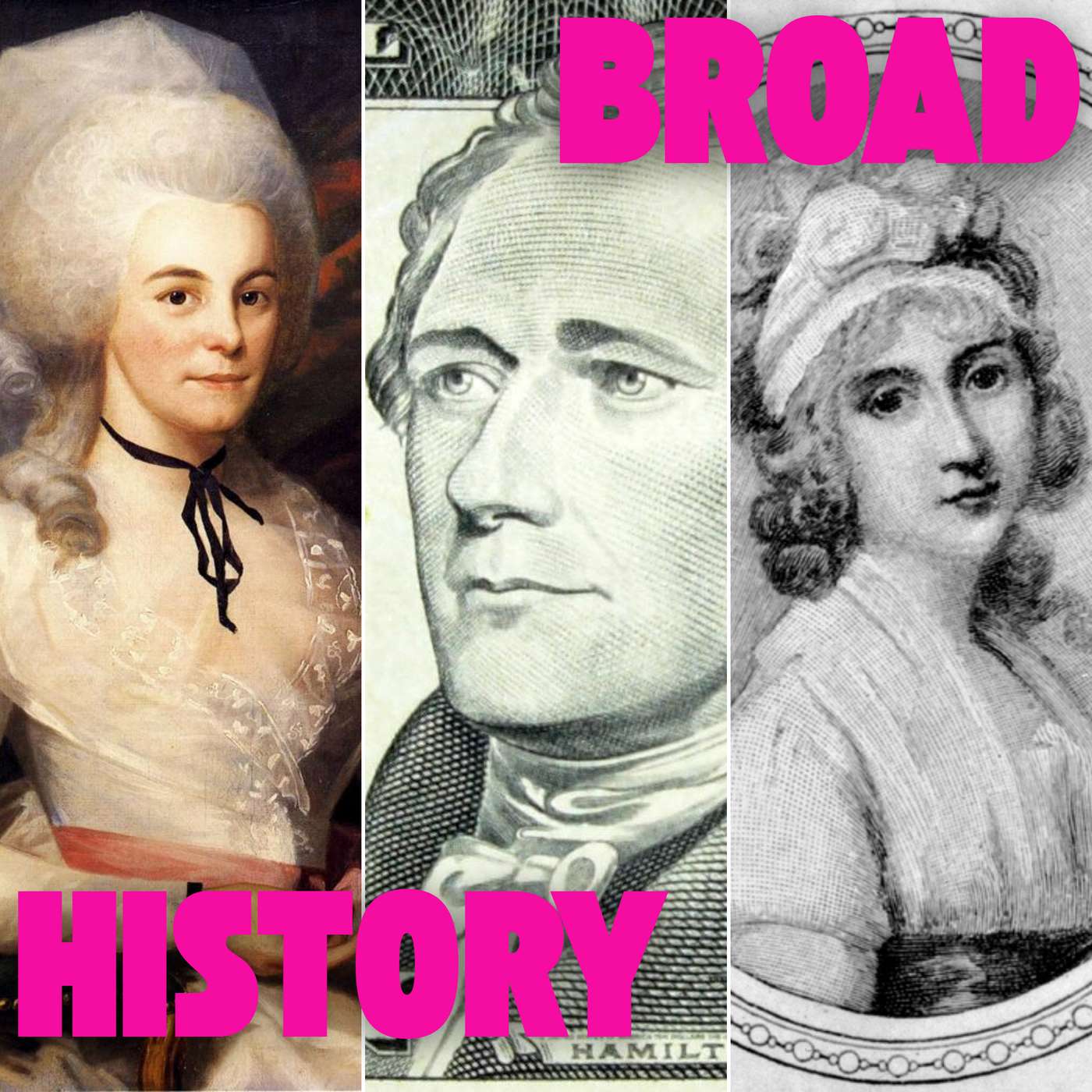
What really happened between Angelica and Hamilton? Did she really ask her sister to "lend him to me for a little while"? Why did Eliza sign her name to the Federalist papers? Did Angelica get a little too close to Jefferson? What about all the Schuyler siblings who didn't make the musical? Join me in conversation with the Schuyler sisters' Pulitzer Prize-winning biographer Amanda Vaill for a look at the real stories inside America's most famous love triangle.
★ Support this podcast ★
On this episode:
Isabelle Roughol - Host
Jump to: (00:00) - Intro
(01:51) - Failing the Bechdel test
(04:40) - Catherine and Philip Schuyler, a productive marriage
(06:42) - The story of Dutch colonisation in the Hudson Valley
(10:28) - Romance, drama and theatrics: The Schuyler family's big feelings
(13:41) - Education and why the Schuyler girls wouldn't have learned Latin
(15:45) - Angelica's elopment and deceptive husband
(23:39) - Angelica's pragmatism
(24:44) - How Eliza meets Hamilton (not through Angelica)
(30:00) - A forbidden love
(34:40) - Ad break
(34:41) - Did Angelica heighten the Jefferson-Hamilton feud?
(40:11) - What actually happened between Angelica and Hamilton?
(41:29) - Angelica's politics
(43:49) - Eliza's role as Hamilton's intellectual sparring partner
(50:39) - Eliza's widowhood
Get the book🇺🇸 Get the book in the US🇬🇧 Shop in the UK bookshop (Affiliate bookshop.org links support Broad History and indie bookstores.)Click here to view the episode transcript.
What do you think?Read & comment at broadhistory.comReply on Bluesky
Email me: [email protected]

Comments

Download from Google Play

Download from App Store
 United States