


 Claim Ownership
By Their Own Compass
Subscribed: 14Played: 175
Subscribe

© By Their Own Compass
Description
Historian Jeremiah Jenne and journalist Sarah Keenlyside explore historical travellers and the worlds they encountered, connecting past journeys to today's travel destinations.
www.bytheirowncompass.com
www.bytheirowncompass.com
30 Episodes
Reverse


Christian missionaries have regularly been at the forefront of travel adventurism over the last 500 years, sent by their churches to parts of the world few back home knew much about, and often at great personal risk.And while they were regularly showing up in regions that hadn’t invited them and weren’t always receptive to what they were selling, their stories remain some of the most fascinating that history has to offer – particularly those of the missionaries who were more ambitious than most.In this episode, we take a closer look at the efforts of Matteo Ricci, the Jesuit priest who set out to convert China from the emperor on down; Mary Slessor, who tried to personally save as many Nigerian-born twins from infanticide as she possibly could; and Samson Occom, a Mohegan convert whose fundraising tour of England aimed to fund a school for training other Native Americans – a school better known today as Dartmouth College. Yes, that one. (But also this one. And this one, too.)And yet their accounts of the places they visited didn’t just shift opinions back home or capture something significant about a moment in time – sometimes their efforts genuinely changed the lives of the people they encountered, and, just as often, ended up changing the missionaries themselves.Sarah and Jeremiah discuss the complicated legacy of missionaries like Slessor, who found herself simultaneously opposing and embedded within colonial British rule in Africa; the advantage of being a novelty in a foreign land; and whether any of the three actually converted the people they set out to bring into the house of God. This is a public episode. If you'd like to discuss this with other subscribers or get access to bonus episodes, visit www.bytheirowncompass.com/subscribe

In 1939, on the eve of the Second World War, two Swiss women decided to drive a Ford from Geneva to Kabul.One of them was running out of time, and they both knew it.The driver was Annemarie Schwarzenbach – a Swiss industrialist’s daughter, archaeologist and journalist who’d been gifted the car by her father. The other was Ella Maillart – Olympic sailor, elite skier and an intrepid traveller who’d already crossed from Beijing to India by camel, lorry and foot with Bond author Ian Fleming’s older brother.Schwarzenbach had a secret, but Maillart was eager to go, so off they went – through the Balkans, across Turkey and Iran, over the Hindu Kush, and into Kabul, arriving in Afghanistan just as war broke out in Europe behind them.When they arrived, they found a country with its own problems: a king exiled a decade earlier for unveiling Kabul, girls’ schools operating unofficially against the objections of the clergy, and women whose identities were completely erased.The women recorded the journey in two separate books: The Cruel Way (Maillart) and All the Roads Are Open (Schwarzenbach) – but readers may wonder if they’re even on the same road, never mind sitting next to each other in the same car.In this episode, Sarah and Jeremiah discuss the differing versions: Schwarzenbach’s desperate need to escape and Maillart’s doomed conviction that distance could cure any problem; travelling as women who were often read as men; and the Afghanistan they drove into. This is a public episode. If you'd like to discuss this with other subscribers or get access to bonus episodes, visit www.bytheirowncompass.com/subscribe
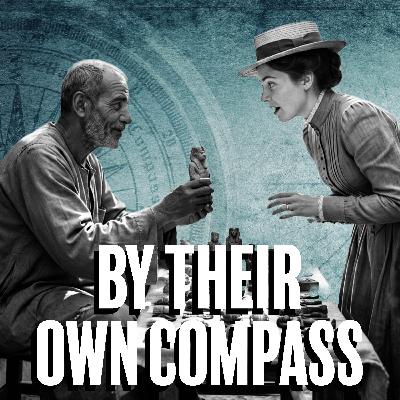
Jeremiah and Sarah are both traveling this week, but as a special treat, we’re reposting one of our favorite episodes from earlier this year. We hope you enjoy it, and we’ll be back in two weeks with a fresh episode.If you’ve ever Googled “how to avoid scams in [destination],” you already know the genre: YouTube videos breathlessly (and ominously) exposing the 15 tricks that will ruin your trip to Florence, Bangkok, or Marrakech. Full disclosure: We watch them too. But the historically minded traveler will be quick to note that almost none of these scams are new.Structurally, the “hey, did you lose your wallet” scam is identical to cons recorded in Chinese travel literature over 400 years ago. The “helpful stranger” who leads you to his friend’s shop? A porter scam from 1617. Fake antiquities? Egyptian villagers were running that play on European collectors since the days of Napoleon.In this episode, we trace the world’s most common travel scams back to their historical origins across three centuries and three continents, and then embarrass ourselves by sharing the ones we’ve fallen for personally or that have happened to people on our trips we’re supposed to be protecting.You can trust us! For a small monthly donation, join the By Their Own Compass Club for bonus content, transcripts, reading lists, and special member-exclusive offers. This is a public episode. If you'd like to discuss this with other subscribers or get access to bonus episodes, visit www.bytheirowncompass.com/subscribe

Imagine being kidnapped at the age of 11, enslaved, and made to fight another country’s war as a white man pockets your wages – only to be sold off the moment you are finally owed your freedom. This was the plight of African man Olaudah Equiano – also known as Gustavus Vassa – who was passed from master to master until in 1766, aged just 21, he bought back his own freedom.From that point on, he carved out his own destiny in a way that almost none in a similar situation before him had managed. Not only did he become one of the most widely travelled individuals of the 18th century, but a one-man publishing powerhouse.Join us as we tell the incredible story of Olaudah Equiano – Royal Navy veteran, entrepreneur, merchant, hairdresser – and the spark that lit the flame under the British abolitionist movement.In his lifetime he set foot in countries ranging from Canada and America to Barbados, Portugal, France, Turkey, Nicaragua and Italy. He even sailed to the Arctic as a lab assistant on the same expedition as a young Horatio Nelson. But it was his memoir – The Interesting Narrative of the Life of Olaudah Equiano or Gustavus Vassa, the African – that turned him into a global sensation in his own right, and led to real, lasting change.This episode traces Equiano’s life from a childhood in what is now Nigeria, through the Middle Passage and the Caribbean sugar trade, to freedom, marriage, and a self-published book that made him one of the wealthiest Black Britons of his century.We ask whether Equiano was really born in Africa, discuss what freedom actually meant for a free Black man in the Atlantic world, and delve into the perils of life on the ocean in the 1700s. Plus: a walking tour of Equiano’s London, and the Black Georgian community he called home. This is a public episode. If you'd like to discuss this with other subscribers or get access to bonus episodes, visit www.bytheirowncompass.com/subscribe

There are few women in recent history more impressive than Nellie Bly. In 1889, aged just 25, this American reporter had already pioneered undercover journalism as we know it after faking insanity to expose a poorly run asylum. Then she decided to pull off an even bigger stunt – to prove that fictional character Phileas Fogg’s achievement of going around the world in 80 days wasn’t just possible, but could be beaten.Sure enough, her record-breaking attempt for newspaper The New York World was a smash hit, and had its readers clamouring for updates day after day, collectively wondering: Where in the world is Nellie Bly?She raced by steamship and rail through England and France – including a detour to Amiens to meet Jules Verne himself – Italy, Colombo, Penang, Singapore, Hong Kong and Japan, acquired a spectacularly ill-behaved monkey en route (why is there always a monkey!?), and then embarked on a final dash across America by train to the finish line.What she didn’t know for most of her trip is that a rival newspaper had decided to pit another woman, Elisabeth Bisland, against her. So how did Nellie Bly travel around the entire world in just 72 days before the era of air travel? Who was this fearless woman, who wrote that if she failed she could never return to New York (“I would rather go in dead and successful than alive and behind.”) And what did she do with her newfound fame on her return?In this episode of By Their Own Compass, we explore the extraordinary life of Nellie Bly, the pioneering reporter who transformed investigative journalism, became one of the world’s first celebrity correspondents, smashed Phileas Fogg’s fictional record, and went on to become an inventor, industrialist and one of the most remarkable women of the Gilded age.Topics: Nellie Bly, investigative journalism, undercover reporting, Ten Days in a Mad-House, Blackwell’s Island Asylum, Around the World in 72 Days, Around the World in Eighty Days, Jules Verne, Phileas Fogg, Elisabeth Bisland, Joseph Pulitzer, New York World, Victorian travel, Gilded Age America, women in journalism, women's history, newspaper history, circumnavigation, record-breaking journeys, solo female travel, travel history.Follow By Their Own Compass on Instagram!https://www.instagram.com/bytheirowncompass/ This is a public episode. If you'd like to discuss this with other subscribers or get access to bonus episodes, visit www.bytheirowncompass.com/subscribe

Comments

Download from Google Play

Download from App Store
 United States