


 Claim Ownership
CRITICAL CONDITIONS with Dan Perry and Claire Berlinski
Subscribed: 1Played: 1
Subscribe

© Claire Berlinski
Description
Analysis of geopolitics, economy, and society, mostly by Dan Perry and Claire Berlinski. Supporting reason, culture and the liberal order now beset from all sides.
claireberlinski.substack.com
claireberlinski.substack.com
67 Episodes
Reverse
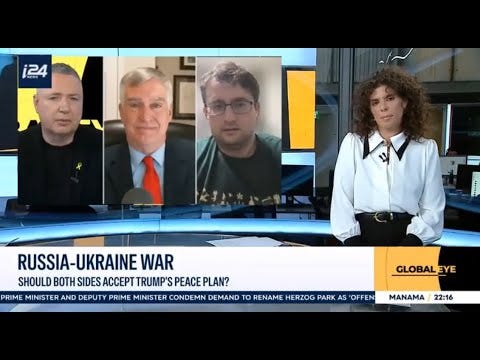
This is a free preview of a paid episode. To hear more, visit claireberlinski.substack.comFrom Dan’s show notes:In the latest Critical Conditions podcast, Claire Berlinski and I concluded that there are moments in history when the absurd stops being funny—when corruption becomes so open, so shameless, so contemptuous of both law and reason that public indifference becomes a second scandal. That is the feeling one gets reading the recent Wall Street Journal investigation into the real motives behind Donald Trump’s approach to Russia and Ukraine. The revelations have hit Europe like a bombshell; Americans, meanwhile, seem barely aware of the explosion. SAD!The reporting describes a now-infamous gathering where Kremlin fixers met Trumpworld emissaries to craft the DimWit Plan. Jared Kushner casually dropped in from his billionaire bunker nearby. The scheme sounded like something dreamed up by a kleptocrat with a NASA hobby: redirect the US$300 billion in frozen Russian central bank funds—earmarked for Ukraine’s reconstruction—into joint US-Russian business ventures in the Arctic, exploiting mineral wealth in the melting ice, reviving the notorious Nord Stream pipeline (a presently defunct vehicle for subordinating Europe to Russian energy domination), even collaborating with Elon Musk on a mission to Mars. It would be laughable if it weren’t deadly serious.The cast of characters involved reads like a sanctioned oligarch roll call. Exxon secret-meets with Rosneft. Trump family friends angling for slices of Russian gas projects, while other donors pay handsomely to pry Russian pipelines out of sanctions and into profit. The brazenness is almost refreshing in its transparency: foreign policy not as geopolitical doctrine, but as get-rich-quick scheme.And yet the larger shock is how few Americans seem to care. The rest of the world stares in open-mouthed disbelief; too many Americans change the channel.Meanwhile, delusion and coercion have become the governing principles of US power. In just the span of days, Trump has threatened wars, closed skies over foreign countries as if the planet were his fiefdom, and instructed voters in Honduras to elect his preferred candidate or suffer US reprisal. He pardoned a Honduran drug lord who once bragged about stuffing cocaine up gringos’ noses, all while proclaiming a grand crusade against narcotrafficking. It is a spectacle of dominance with no concern for legality or propriety.Trump’s interference extends everywhere, including Israel. It was just weeks ago that he appeared in the Knesset and demanded President Isaac Herzog preemptively pardon Netanyahu before conviction—a legal impossibility in Israel. Undeterred, Netanyahu has now asked for precisely that, contradicting his own earlier commitments to face the charges and respect the courts. His government has spent years waging a coordinated propaganda war against the entire rule-of-law infrastructure in Israel; now he cites the resulting distrust as justification to halt his trial. And Trump stands ready—one can almost script the threat—to condition US aid on delivering Netanyahu from accountability.Layer onto this the reports—credibly documented—that US granted a “no quarter” order in the field, resulting in the execution of two men clinging to a boat in the Caribbean. This is one of the clearest war crimes recognized by US and international law alike, the kind for which Americans once hanged Japanese commanders. Yet we debate whether it might be politically impolite to investigate.When I recently appeared in a televised debate with former John Bolton aide and current Trumpist Fred Fleitz, I witnessed a live demonstration of the Orwellian mechanism that makes all this possible. Biden is attacked for failing to arm Ukraine quickly enough, and in the same breath attacked for arming Ukraine too much. When contradictions are pointed out, the pivot is instantaneous: blame “fake news journalists like you” (he said to me). The position is the point.Republican lawmakers will eventually claim they never went along with this, Claire suggested. I basically agree, having seen how this movie ends. I arrived in Romania weeks after Ceausescu fell and could not locate a single person who admitted to having supporting the regime — even those who had had a hand in running it. Survival trumps shame no less than Trump himself.But we are not yet at the reckoning phase. We are still in the descent.Trump’s foreign policy is a global bribery operation—an attempt to turn the United States into a mafia state, its power wielded for personal gain and aggrandizement. And it is succeeding largely because millions of Americans treat the resulting madness as background noise. Or have given up. We will be back on Thursday. Who knows what will happen by then! We are living in strange and dynamic times.Here’s Dan’s article:And here’s his discussion with Fred Fleitz and Ilia Pomorenko:

This is a free preview of a paid episode. To hear more, visit claireberlinski.substack.comAlex Finley is a former officer of the CIA’s Directorate of Operations, where she served in West Africa and Europe. She now lives in Brussels and writes, on Substack, about foreign influence operations:I’ve spent the last several years screaming from the rooftops about the corrosive effects of foreign influence operations on democratic societies. Now, I’ve decided to put all that information into a newsletter so that maybe you will start screaming from the rooftops, too. The more we understand how these influence operations tie into national security and corruption, the better we can arm ourselves against them.I thought it would be interesting to have her on the podcast to discuss what we’re seeing.How Russia captured a slice of the American mindAmerica’s response to Trump’s so-called peace plan proves just how successful Russia’s influence operations in America have been. The KGB’s” active measures” system, refined in the late Soviet period and later adapted into the FSB/GRU playbook, rests on three principles: 1) Exploit existing divisions; don’t create fissures; widen them; 2) Use truth, half-truth, and lies interchangeably, whatever advances the psychological objective; 3) Obscure the source: The greatest triumph is when the target population spreads your messaging for you. Russian intelligence thinks in terms of cognitive openings: Any weakness—cultural, emotional, political, historical—becomes an entry point. America has a lot of entry points.

August 1968The Ogre does what ogres can,Deeds quite impossible for Man,But one prize is beyond his reach,The Ogre cannot master Speech:About a subjugated plain,Among its desperate and slain,The Ogre stalks with hands on hips,While drivel gushes from his lips.—WH AudenBelgium has suddenly gone wobbly about seizing Russia’s frozen assets, spooked by the thought of Russian lawyers. Pokrovst will fall imminently. The Kremlin is dismantling Ukraine’s electrical grid as the winter arrives. A sprawling corruption scandal is engulfing Zelensky’s closest allies, demoralizing soldiers on the frontlines, and handing Russia a matchless propaganda gift. Vladislav Davidzon joins me to discuss what this means for Ukraine and the war. From Vladislav’s daybook: This is a public episode. If you'd like to discuss this with other subscribers or get access to bonus episodes, visit claireberlinski.substack.com/subscribe

(Note: This is not Critical Conditions with Dan Perry. I just can’t figure out how to get rid of that logo.)Recently, I had an exchange with our subscriber Josh Rosenberg—who on Substack goes by the name Josh of Arc, and writes at Sic Semper Tyrannis—about the use of violence in resisting authoritarianism. You’ll remember his essay, Force and Freedom: Contemplating the Unthinkable, in which he argues that those opposing Trump have become dangerously alienated from the fundamental fact of political life: It rests upon force. Democrats may be capable of winning the most votes in the 2028 election, he writes. But this doesn’t mean they’ll retake the presidency, he continues, because they’re unprepared for Trump’s refusal to relinquish power:… Whether the GOP puts Donald Trump on the ballot as a final insult to the Constitution, nominates JD Vance, or props up another Medvedev-style supplicant, Trump’s power, freedom, and reputation will again be on the line. Do we really expect him to relinquish power peacefully? Will his rogues’ gallery of cabinet members, chosen above all for their servility, suddenly discover they are patriots willing to imperil themselves to defend the Constitution? Will other administration officials tell the truth now that Trump has signed executive orders targeting people like Chris Krebs—the DHS official who refused to fabricate evidence to support Trump’s election theft lies in 2020?He therefore offers the following advice:The opposition’s strategy should become two-fold. A peaceful resistance movement should organize aggressively, with a scrupulous commitment to non-violence. But concurrently, we must assemble a network of private militias to serve as an insurgency-in-waiting. Like any deterrent force, its purpose would be to ensure that it is never needed. And it’s mission would be to convince anyone in a position of public trust who might enable a full transition to an American dictatorship, that such a world would not be an oasis in which they would prosper, but a hellscape in which they’ll be hunted.I replied to this argument here in an essay titled Do Americans need an insurgency-in-waiting? Violence, non-violence, and getting rid of authoritarians. I am sympathetic to his moral point: I agree that if a usurper can’t be dislodged by peaceful and Constitutional means, force is permissible, and under some circumstances, morally obligatory. But I argue that we have by no means exhausted the peaceful means available to us. Not even close. Not even close to close. What’s more, if it’s true that we have a moral obligation to confront a usurper, it follows that we have an obligation to do so in the way that is most likely to be effective. The empirical evidence about this is surprisingly clear. Historically, those who employ disciplined non-violence are far more likely to succeed than those who use physical force—even when confronting the most brutal authoritarians. The benchmark study is Why Civil Resistance Works: The Strategic Logic of Nonviolent Conflict by Erica Chenoweth and Maria Stephan. Studying an aggregate data set of all known major nonviolent and violent resistance campaigns from 1900 to 2006, they found that campaigns of nonviolent resistance were more than twice as likely to achieve their political goals. This was true even under even the most brutal and repressive regimes. The findings were neither subtle nor ambiguous: If you’re in any doubt about whether nonviolence is an effective way to confront a lawless regime, this should settle it.There is a reason for this. Nonviolent movements are generally viewed as legitimate, both domestically and internationally. This allows a nonviolent campaign to attract broad public support and participation. Violent campaigns tend to be repulsive to the public. It’s extremely hard to convince a significant number to take up arms against the regime, even if it’s justified. All experience hath shewn that mankind are more disposed to suffer, while evils are sufferable, than to right themselves by abolishing the forms to which they are accustomed. Because the public recoils from violence, violent campaigns rarely achieve the numbers required to overwhelm an authoritarian government. Instead, they discredit their cause and offer the tyrant a justification for armed counterattack. Nonviolent protest can, when sustained and focused, attract a very high level of public participation. It’s the rare regime that can ignore sustained civic disruption. The key to success, usually, is shifting the loyalty of core supporters, especially the military. But violent campaigns serve the opposite purpose, bonding the regime, its supporters, and the military together.What’s more, successful nonviolent movements are more likely to lead to stable, durable outcomes. Compared to regimes that emerge from violent conflict, democracies that emerge from non-violent campaigns are less likely to regress to civil war. This is a particularly interesting finding: It seems that once people acquire a taste for settling their differences violently, they never fully lose it. Violent insurgency, Chenoweth and Stephan conclude, is therefore rarely justifiable on strategic grounds, never mind the moral arguments. Whether confronting a democratic or an authoritarian regime, a nonviolent campaign is far more likely to yield desirable outcomes.Josh wrote another essay recently titled The Weak: Freedom’s Undertakers. He observes what he describes as a “collective malaise and paralysis among liberals in the West,” and suggests that this collective paralysis lies “at the heart of our present crisis.”Western liberal elites continue to demonstrate an almost congenital inability to resist identity-inflected guilt trips, moral blackmail, character assassination, and other weapons of the weak—often wielded by low-level staffers. It’s as if, sometime around 2014, the editors of Teen Vogue stormed every newsroom in America, said “Alright, if nobody resists, nobody will get hurt”, and everyone just immediately surrendered.Theories differ as to how this happened. But it appears that the introduction of viral social media combined with the already risk-averse, legalistic culture of many of these institutions produced a supernova of neuroticism, pettiness, and crippling fear. Leadership positions increasingly involved putting out (or avoiding) fires, minimizing negative publicity, and avoiding being sued. This tended to attract and produce risk-averse, rule-following bureaucrats who live in a perpetually defensive posture; small, unserious people consumed with trivialities. Is it any wonder that such “leaders” cannot recognize when defining moments arrive—when half measures must be abandoned in favor of giant historical leaps?Consider the spectacle of the last few DNC meetings: In the midst of budding fascism they begin events with land acknowledgements, and meticulously document their compliance with official party quotas on the number of people from each marginalized identity group who must be appointed to leadership positions. A party that regards itself as the last bulwark against fascism turns the selection of its leaders into farcical public group therapy sessions that confirm every negative stereotype about Democrats and “the Left.” Can dingbats like this who cower in the face of the gender identity lobby rise to the challenge of reversing a process of authoritarian consolidation that is now well past its preliminary stages? Can people who flinch at the prospect of enforcing their own immigration laws or keeping violent criminals off the streets really summon the resolve to compel other people’s children to fight and die? This, I believe, gets to the heart of the crisis of modern liberalism. It has no answer to the following question: What’s worth dying for?What does his argument entail? What it means is selecting certain rules that tie Democrat’s hands in their ability to fight back in defense of their most basic rights, and setting them aside. … While Congress reduces itself to a useless appendage and the six “conservatives” on the Supreme Court beclown themselves in order to sanction a ludicrous interpretation of executive power that would even make Aileen Cannon do a double take, Trump now largely governs around the Constitution by declaring phony national emergencies. The military is selectively redeployed to blue cities for domestic law enforcement purposes based on a so-called “crime emergency.” Trade policy is dictated from the oval office, upended on a whim, and altered in exchange for personal bribes that nobody is even bothering to conceal at this point—all predicated on the idea that it’s an “emergency.” The regime’s rationale for their ongoing unconstitutional crackdown on free speech—which they’re now escalating dramatically in the wake of the Kirk killing—is again justified on the basis of a so-called “national emergency.” There’s a name for this form of government, and it isn’t democracy—regardless of what the credulous Mr. Fetterman may believe.Remarkably—starting with the outrageous immunity decision—the six monarchists on the court have sanctioned this anti-constitutional farce, and in so doing, have unleashed a bloodthirsty predator on the nation, completely unbound by law and empowered to use the military, the FBI, and every other part of the federal government to pursue his revenge fantasies against domestic enemies—be they individuals, corporations, or entire states. The monarchist majority has over the last 18 months, in effect, cancelled the Constitution in service to Donald Trump’s will to power and told those seeking their relief that their rights no longer apply when they collide with his royal prerogatives. Under these extraordinary circumstances that the court has created, it is time for Democrats to reject the cautious half-measures favored by unconditional liberals, accept that the monarchist majority has breached the social contract in abandoning their oa
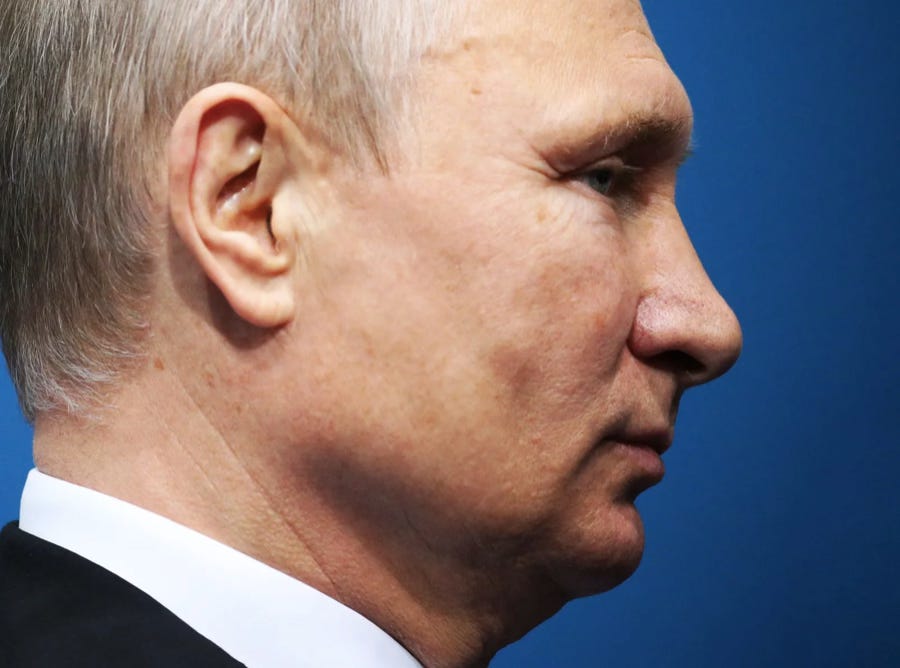
This is a free preview of a paid episode. To hear more, visit claireberlinski.substack.comChris Alexander, whose Substack I recommend with the highest enthusiasm, joined the Canadian foreign service in 1991. He spent six years at the Canadian embassy in Moscow: He was the deputy head of mission during the first three years of Putin’s presidency. He’s also the former Canadian Minister of Citizenship and Immigration, a former Parliamentary Secretary for National Defense, a former Canadian Conservative MP, and the former Canadian Ambassador to Afghanistan and Deputy Head of UNAMA. You’ll remember him from our conversation about what went wrong in Afghanistan:For those of you who prefer audio-only, here’s a podcast version:This was another blockbuster conversation. I’ve annotated the transcript below with links, comments, and examples. Claire: Hi, this is Claire Berlinski, and you’re listening to the Cosmopolitan Globalist Podcast. And we have with us, again, Chris Alexander, former Canadian ambassador to Afghanistan—but much, much more. Chris, among other things, you spent much time when you were in the foreign service studying Russia. Why don’t you tell us a little bit about your background there?Chris: Sure. Thanks for the chance to chat again, Claire. First, I went to university—I studied history and political science. I had learned some languages, but actually, in university, I never studied Russia directly. I really didn’t want to take international relations, because even then, I thought a lot of what was being taught was dogmatic and not very interesting. And this was end of the Cold War period and then edging into End of History time—the fall of the Berlin Wall, and so forth, when you and I were together [at Balliol College], but my experience of Russia, my learning about Russia, my knowledge of Russia is that of a practitioner.I was there starting in 1993, learned Russian in the Canadian Foreign Service before going. Worked on the desk literally weeks after I joined the Department of External Affairs. There was the coup, attempted coup, against Gorbachev. People needed to watch CNN all night and stay in touch with our embassy for updates to ministers and so forth. That was the kind of thing I was doing from day one. So my life as a diplomat was totally swamped with Russia, post-Soviet dynamics, transition from the Soviet Union to Russia, and then from Soviet institutions to Russian institutions through that difficult period that gets forgotten in 1993, when Yeltsin shot up the White House.I saw a lot of that firsthand. And because I had learned Russian, I was talking to everyone in that period of 10 or 15 years when Russians would talk to us frankly, because they weren’t afraid of the KGB, which was gone, or Putin and his repressive machinery of government, which hadn’t yet been put in place.So it was a really interesting time. A time of insight, a time of building new relationships with Russians, a time of hope. But to be honest, I never had that much hope for what was happening in Russia in the 1990s. Moscow was a city awash in organized crime. Privatization had been done in the dirtiest of ways across the country—“Sale of the Century,” Chrystia Freeland’s book has that hard- hitting title. Standards of living were in free fall for Russians. And so this democratic moment, when they actually had the chance to vote, to choose different candidates, was associated with economic disaster in the minds of Russians—which as we now know set the stage for Putin, and set the stage for Russians actually to like his strong man, anti-democratic approach right from the beginning.There was hope, but it was false hope in the 90s. But there was a drama playing out that has come to affect us all, because even if we didn’t believe in the end of history, a lot of people believed Russia was out of a central role in history, actually, in the 90s. And they weren’t.I just looked at this photo of Putin with his KGB buddies, in 1999, I think, when he’s Prime Minister, about to become president—acting president. Just a couple of months after all the apartment buildings had blown up in Moscow and elsewhere in Russia, with their involvement, I would say. And they’re looking pleased as punch. On the march. They’re gonna get Russia back to where they needed it to be. And they didn’t go to war in Georgia or Ukraine for another 10, 14 years. But even then, they were plotting to build influence in our countries that would help them influence decision-making in European capitals and in Washington, and if they could, pull the rug out from under democracy in our countries, which they’re now trying to do. So they were out of history. They didn’t have a lot of formal, obvious influence in those years. But they never stopped having these grand ambitions, which are the Putin version of Marxism. They really think that if they engage in enough subversion, disinformation, enough political corruption, that the whole house of cards of US society, the US Constitution, will come crashing down. And similarly in France, Germany, the UK. And in the late 90s, early 2000s, you and I would’ve laughed at that idea. Now, we’re actually involved in trying to defend our institutions against an attack that has proven to be much more formidable than we ever imagined it could be.Claire: Yeah. I’d like to talk about—first, I want to talk about why you put “Putin” in quotation marks. Let’s just start with that. Whenever I cross-post one of your posts, my readers must be wondering, “Why does he always put Putin in quotation marks?”Chris: This is a hard issue to share with anyone because it’s a judgment that I’ve come to—I’m certainly not alone: Many Russians have come to this judgment. Many other Russia watchers have come to this conclusion. But it stems from my personal experience with Putin. In Canada, I think I’m one of the only people who actually spent quite a lot of time with Putin, speaking Russian to Putin, in person, both before he became Prime Minister and then as President.Claire: How many hours in total do you think you spent with him?Chris: I would say a couple of days. Like, in the same rooms, in the same talks. The longest time I ever spent with him was at the Kananaskis G8 Summit, 2002, just after 9/11, in Alberta—where the G7 just met again, but obviously without Putin, thankfully, replaced by Zelensky, in that case.And he was not involved in all the meetings because it was the G8, but there were still G7 meetings of leaders on financial and other issues in which Russia was not included. So he had downtime, hours of it, in fact, and he didn’t really want to talk to his own people, which was amazing. I think his real friends are that old crew from St. Petersburg, the KGB officers he came up with that have stayed with him. But they weren’t on that trip. This was the Foreign Ministry types, the G7 Sherpa types, G8 Sherpa types. He wasn’t interested in them. So we walked around in the forest in Kananaskis, literally for hours, talking about nothing in particular. I think he thought he was recruiting me; I was obviously squeezing him for everything I could. But he asked about, “Where are we on the map of Alberta? Where are the Indians, Chris?” he said, meaning First Nations. And I had to get a map and show him these things.Claire: So it was just the two of you? No translator?Chris: No, I was speaking Russian to him.Claire: Yeah. So just the two of you.Chris: Just the two of us. There were security people around. We weren’t alone, but we had long, meandering discussions about lots of things. And he sounded to me pretty dumb. Like he was asking very simple questions.Obviously, he’s not dumb. People later said to me, “Oh, he’s playing that way, Chris. That’s a KGB thing that they do.” I think the truth is somewhere in between. But suffice to say, from that occasion, from seeing him in talks and translating for our prime minister, Jean Chrétien, on a couple of occasions, doing this big Team Canada visit to Russia, where we played a hockey game, reenacting the 1972 Summit Series—which kind of influenced Putin to want to learn to play hockey, which he later did. We bonded in a way that few other international players did. Canada was there a lot. A few of us, as diplomats, were there a lot. We got to know each other in those early years. So I had a strong sense of his physical presence, how he talks, how he is in conversation. And fast forward to the pandemic—maybe even a little before the pandemic, but especially the pandemic, I haven’t seen Putin in person since 2014, when I was a Canadian minister at a commemoration of the Armenian genocide in Yerevan. So by Covid, he’s looking a bit different. He’s obviously older. Lots has happened, especially with their first invasion of Ukraine.But it becomes obvious to me that sometimes, when you see these videos and photographs that are put up by the Kremlin, it’s not Putin. It’s somebody else. And, sure enough, you start to see articles, including by authoritative journalists, saying, “The Kremlin is using a double. Maybe more than one. For security reasons.” Stalin did it. Other Russian leaders have done it. Gorbachev apparently did it. Castro did it, for security reasons and so forth. But in Putin’s case, there was an additional reason, because he seems to have been, of all world leaders, one of the most paranoid about infection, germs—Covid in particular.
I’m so sorry: I meant to post this last night, but fell asleep while writing the show notes. (I don’t know why everyone goes on about the importance of not looking at screens before bedtime: I fall asleep in front of mine all the time.) Here’s the article Dan wrote for The Forward:There was no sign that the US understands what it will actually take to bring Hamas to heel.Vance, Witkoff and Kushner’s rhetoric was managerial, not martial. It conveyed commitment without urgency. The measured tones implicit in the warnings that “time” and “hard work” are needed betrayed a deeper failure to grasp what the moment demands. Because words will not disarm Hamas—the single step most necessary to any effort to create a lasting peace.Now is not the moment for carefully explaining how complex disarmament would be. It’s the moment for applying all possible pressure to get that disarmament done. If this does not occur soon, President Donald Trump’s peace plan will not just fall apart but become a joke. The best-case scenario would be the embarrassment of a prematurely declared victory. The worst would be an echo of Neville Chamberlain proclaiming “peace in our time” amid the failed effort to appease Hitler in the run-up to World War II.If the US is serious about ending this war on terms that deny Hamas any path back to power, it must respond to Hamas by replacing rhetoric with leverage. What is needed now is not patience but a dramatic and public escalation of pressure—a demonstration that Washington is prepared to wield the world’s biggest baseball bat until Hamas yields.The US should start by declaring, publicly and unequivocally, that no reconstruction money or aid will enter Gaza while any part of it remains under Hamas control. That is the red line, and it must be enforced, not implied. It’s essential to take every step possible to show Hamas that the material and political costs of them keeping their guns substantially outweigh any benefits. …And for more about Hungary’s economic, demographic, and political decline, consult the most recent edition of GLOBAL EYES. (That link will take you to the right section.) Here’s the key part, but there’s more; I recommend the whole article, which is by Attila Juhász and Bulcsú Hunyadi. (You’ll notice I didn’t even try to pronounce their names in the podcast. I know my limits.) They published this article on VSquare—the name comes from “V4,” for Visegrád Four—which was founded with a grant from the National Endowment for Democracy:Today, the network consists of the top non-profit investigative journalism centers in the region: Fundacja Reporterow and its Polish-language outlet Frontstory.pl; Investigace.cz from the Czech Republic; Átlátszó.hu and Direkt36.hu from Hungary; and The Investigative Center of Ján Kuciak from Slovakia. In 2022, VSquare set up its core team and extended into collaboration with the Baltic countries, Ukraine, and Belarus. Our aim is to be Central Europe’s leading English language investigative platform.I hope they survive the death of the NED, because they’re outstanding. They’re also one of the few places left where you can read truly independent reporting about Hungary. In any case, Attila Juhász and Bulcsú Hunyadi write:Viktor Orbán is facing political challenges the likes of which he has not seen in 20 years. His system is cracking on the levels that matter most: stability, economic performance, and governance. Consequently, the “Orbán model,” considered successful in recent years, is looking less appealing around the world. The 2026 parliamentary elections will have implications beyond Hungary. National leaders with similar political systems will likely be watching closely to see if Orbán, who has established a unique information autocracy within the European Union, will remain in power.… In recent years, the Orbán regime has devoted major public resources to promoting its political system as an exportable model and boosting its global influence. … [T]hese efforts have been successful from the regime’s perspective: Viktor Orbán has attracted far more attention than Hungary’s international weight would suggest, becoming the standard-bearer of illiberalism and a star of the global populist and far-right movement. … While this playbook has done little to advance Hungary as a country, it has worked from the regime’s perspective. The strategic goal of exporting illiberalism is to secure the long-term survival of Orbán’s political system by shaping a foreign policy environment favorable to it. With the backing of like-minded populist forces, the regime seeks an “illiberal hegemonic shift”—one in which it no longer faces criticism or sanctions for dismantling the rule of law or for systemic corruption.… Many pillars of the Orbán model have crumbled. The Hungarian economy has struggled for years, eroding the system’s stability. A cost-of-living crisis—driven by the EU’s highest inflation—has fueled voter frustration. Over the past year and a half, the opposition party TISZA (short for Respect and Freedom—and also the name of a river in Hungary) has emerged as a credible political alternative, channeling public discontent. Hungary’s political system still falls far short of fair competition, so next year’s election remains highly unpredictable. Yet those in power are clearly uneasy about the regime’s future.… Real wages began falling in late 2022, and by 2023 Hungary had the highest inflation rate in the EU. In the first quarter of 2023, real wages dropped by 15.6 percent, compared to an average 3.8 percent decline in OECD countries—the sharpest fall in Hungary in a decade. This collapse in purchasing power caused consumption to plummet, at times dropping to levels last seen during pandemic lockdowns. As always, the Orbán government deflected blame, pointing to external factors: the war, EU sanctions on Russia, “Brussels,” even the Biden administration. By 2025, the government went as far as claiming that EU funds—suspended years earlier—were blocked because of the opposition TISZA party, founded in 2024. But after 15 years in power, this ever-changing list of enemies and endless finger-pointing have lost credibility with many voters.… [T]he myth of “political governance”—the idea that professional expertise could be sidelined in favor of one man’s willpower—began to fade in 2023. Dissatisfaction has since grown sharply, especially over healthcare, social policy, public services (child protection, housing subsidies), and public transportation. On these issues, the government has lost the support of much of society. It’s no coincidence that Péter Magyar and his TISZA party have made them central to their political platform since 2024.Two areas are even more crucial for the declining international appeal of the Orbán model: migration and demographics. The regime has long presented itself as a model in both fields. … The data, however, tell a different story: the Orbán government has neither stopped migration nor reversed population decline. … Demographic policy has fared no better. … In 2024, just 77,500 children were born in Hungary—the lowest number since 1949. [D]ivorce rates are climbing, and emigration—especially among young, educated Hungarians—continues to rise. As a result, Hungary’s population is shrinking rapidly.… Paradoxically, in today’s political climate, the Orbán regime—so proud of its so-called national sovereignty—appears to be looking abroad for help to stay in power. … Fidesz openly hoped for Donald Trump’s return, expecting that it would deliver salvation: an end to the war in Ukraine, economic recovery, and a “peace budget.” … But almost none of this has happened. … Meanwhile, Trump’s trade war has created a worse environment for Europe’s economy, including Hungary’s, than before. Orbán, despite his reportedly close personal ties to Trump, was unable to point to any concrete achievements in US–Hungarian relations in his annual Băile Tușnad speech. … Instead of the expected “peace budget,” Hungary is implementing crisis measures to cope with US tariffs.… Hungary’s weakened international position is not just the result of failed diplomacy but also of its economic and military weakness. It is doubtful Hungary can meet the NATO target—agreed at the June summit in The Hague—of raising defense spending to 5 percent of GDP by 2030, with 3.5 percent for core military expenditures. Orbán himself has warned such spending would damage the economy. Systemic corruption further tarnishes Hungary’s image abroad.The next part is a bit puzzling:… It hardly reflects well on a country when its prime minister’s friends and family become inexplicably wealthy in just a few years. This, combined with frozen EU funds, slows economic growth and makes the Orbán model far less appealing compared to its regional peers. According to VSquare, right-wing populists from Eastern Europe—including those facing legal trouble at home—are now looking to Trump’s America for inspiration and protection, not to Hungary.I’m not sure why they’d turn to the US if they’re looking for a country whose leaders aren’t becoming inexplicably wealthy at a breathtaking pace. Well, whatever—good luck being inspired by Trump, right-wing European populists!Also on VSquare (and in GLOBAL EYES), by Kamilla Marton and Bence X. Szechenyi: Not only is Hungary experiencing population decline, it’s losing its most talented citizens to brain drain:[M]igration within the EU has had a dramatic impact on Hungarian society and its economy, leading to the countries’ increased reliance on foreign “guest workers.” … While the population of Hungarians in Hungary has declined, the population of Hungarians in Europe (excluding Hungary) has increased by nearly 141,997, a growth of more than 60 percent from 2014 to 2024. … Ágnes Hárs, lead researcher at the Kopint-Tárki Economic Research Institute, told Direkt36 that one of the main reasons for emigration is “the lack of prosperity and perspective.” She added that emi
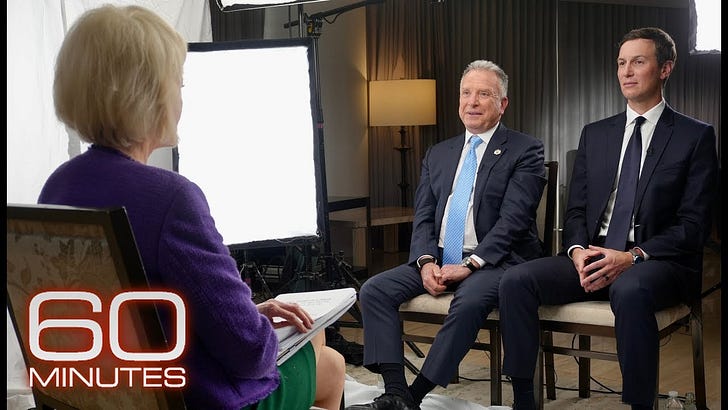
Dan and I decided to turn parts of our ME201 discussion yesterday into today’s podcast, so you’ll hear a few voices from the class asking questions. Supposedly, the ceasefire is now back on. Amit Segal is another great journalist to follow; he writes:It’s Monday, October 20, and the strikes in Gaza have stopped, the ceasefire has been renewed, and humanitarian aid has resumed—and Israel is also preparing to receive a hostage’s body from Hamas tonight. So, does that mean yesterday’s strikes in Gaza wielded the desired results?On one hand, as I wrote yesterday, just as the IDF did with Hezbollah following its immediate violation of the November 2024 ceasefire, yesterday was an opportunity for the IDF to use overwhelming force to enforce the ceasefire.Initially, that seemed to be the direction Israel was taking. Hours after the IDF began striking targets in Gaza, Hamas announced that it would hand over the body of a hostage that it had just located “if conditions on the ground allow.” Some two hours later, an Israeli source said that the political echelon instructed COGAT not to allow the transfer of humanitarian aid to Gaza today. And now, with a hostage’s body expected to be returned tonight, it seems to have worked—at least on face value.But as he writes—and as Dan and I have both stressed, repeatedly—the real problem is disarming Hamas and demilitarizing Gaza. Segal writes that there are two possibilities. First, as Trump seems (perhaps) to envision, a multinational force will enter Gaza and dismantle Hamas. Israel is dubious. It would prefer option two—sending in the IDF. Trump has said he’ll green light this if Hamas doesn’t disarm. Jared Kushner and Steve Witkoff are back in Israel, reportedly to urge Netanyahu not to take any action that could further endanger the ceasefire:The pair also met with senior IDF officials to verify progress on the deal, the report says. “Do not act in a way that would endanger the ceasefire. We want to do everything to reach the second phase,” the envoys reportedly told Netanyahu, adding that while “self-defense” is acceptable, “risking the ceasefire” is not.Netanyahu and Strategic Affairs Minister Ron Dermer, who also attended the meeting, conveyed that Israel remains committed to the ceasefire framework and expects Hamas to uphold its side of the agreement, the Hebrew network adds.In a highly unusual occurrence, the two Trump envoys also met with two IDF major generals today, Channel 12 says. According to the network, they sat down with the head of the IDF’s Technological Division and the head of Military Intelligence to assess Israel’s efforts to advance Trump framework.JD Vance, too, is on the way. I’m not sure why. Perhaps to persuade Israelis that any concession would be preferable to having him lurk around and scold them over their ingratitude. Trump, addressing the media, said that Hamas’s violation of the ceasefire “would be taken care of quickly.”“They’re going to be nice, and if they’re not ... we’re going to eradicate them if we have to. They’ll be eradicated—and they know that.” He added that at this time, he has not told Israel to resume strikes in Gaza and that the US was “taking lots of steps to maintain ceasefire.”While you’re reading Amit Segal, here’s an interesting account: Behind closed doors: How the deal with Hamas was born—the inside story:If Israelis had heard how the President of the United States spoke about the hostages, it’s doubtful that he would have received such thunderous cheers at Hostages’ Square last Saturday night. To say they were a secondary concern for him would be an understatement — and even that understates it. Donald Trump favored eliminating Hamas the American way, and 20 living hostages (he was always confused about their number and minimized it — I wonder what Sigmund Freud would have said) seemed to him a marginal matter, collateral damage.Only belatedly did he perceive how strategic the issue was for the Israelis, and therefore for their government as well. In the United States, presidents have usually not been criticized for meeting hostages’ families too little, but for doing so too often (for details, Google “Ronald Reagan”).In one of the discussions before Operation Gideon’s Chariots B began, Benjamin Netanyahu spoke about the scar that would remain in Israeli society if the IDF conquered Gaza City at the cost of the hostages’ lives. Allow me to guess that he never really believed that moment would come. Indeed, in recent months, Netanyahu and Ron Dermer’s assessment was that an operation to conquer Gaza City, if it happens, may well begin, but most certainly would not reach completion. Here is the inside story. …There’s a line in it that should really attract scrutiny: “Netanyahu called President Trump minutes [before striking Qatar], but the president was groggy after a late night of discussions. It took time to reach him. The strike went ahead.” Groggy? Too groggy to take an urgent call? How often does that happen? Journalists might want to ask.Here, by the way, is the 60 Minutes interview with Kushner and Witkoff. Lesley Stahl is anything but an incisive interviewer—what a wasted opportunity!—but I still found it interesting. The very end of the interview contains a few surprises: Apparently, Iran has been calling, asking Trump for a deal. True? I have no idea. Witkoff seems so guileless that it’s hard to imagine he’s just making that up out of whole cloth; then again, no member of the Trump Administration could be constitutionally incapable of making something up out of whole cloth. It’s a job requirement.The Ayatollah Khamenei does not seem to be of the same view. He just told Trump to “keep dreaming” if he think Iran’s nuclear facilities have been destroyed:Khamenei also rejected Trump’s offer to resume nuclear negotiations that were cut short when Israel struck the Islamic Republic on June 13, leading to 12 days of war during which Trump ordered the unprecedented strikes on Iran. “The US president proudly says they bombed and destroyed Iran’s nuclear industry. Very well, keep dreaming!” said Khamenei in comments posted to his website.Speaking of Witkoff’s guilelessness, an awfully queasy anecdote begins at about 26:40. The exchange was clearly planned in advance, because Stahl’s line of questioning indicates she’s heard this story from them before:STAHL: So, you get to the meeting in Egypt and you’re in a meeting with the chief Hamas negotiator, right? And you’re meeting him for the first time. This is just a month after the attack in Doha.WITKOFF: So, we got into the room. The lead negotiator was sitting right next to me. STAHL: That negotiator was in Doha when the Israelis struck. WITKOFF: Correct. STAHL: He survived, but his son was killed. Is that right?WITKOFF: That’s right. And we expressed our condolences to him for the loss of his son—he mentioned it—and I told him that I had lost a son and that we were both members of a really bad club: parents who had buried children. And, um, you know, Jared describes it maybe a little bit better than me—STAHL: —because you were watching. KUSHNER: Yeah. What I saw at that moment was very interesting. You had—we go into a room and you have the Qataris, the Turks, and the Egyptians. And then we meet the four representatives of Hamas, which is a terrorist organization. And I’m looking at these guys and I’m thinking, “These are hardened guys who have been through two years of war. They’ve obviously, you know, they green lit an assault that raped and murdered and did some of the most barbaric things. They’ve been holding hostages while they’re, they’re, while Gaza’s been, you know, bombed. And they’ve, they’ve withstood all the suffering. But when Steve and him spoke about their sons, it turned from a negotiation with a terrorist group to seeing two human beings kind of showing a vulnerability with each other. Bonding with a blood-soaked monster over the shared experience of losing a son is strange, but perhaps that’s the sort of thing that happens in negotiations like this. Hostage negotiators do, in fact, build rapport with disgusting people; it’s part of the trade. But they’re presenting this as if they were genuinely moved by it. They’re making a point of doing so. Why is Witkoff telling us that he and a Hamas negotiator—men separated by a canyon of blood—bonded over their dead sons? In a closed room, sure, that’s a legitimate technique of crisis bargaining; hostage negotiators have long used tactics like this to unlock concessions. But Kushner and Witkoff aren’t presenting this as an account of the artful way they manipulated a terrorist. They seem to think we’ll be moved. We’re evidently supposed to think, “Well, these Hamas fellows may be mass-murdering sadists, torturers, head-choppers, rapists, and disembowelers par excellence, but deep down they’re just loving dads.” Why would a man turn his own dead son into a prop for a K-mart catharsis on national television? Are the two of them just so deeply stewed in kitsch and Dr. Phil that this seems appropriate to them? Or are they cynically aware that their viewers are so insatiably hungry for this kind of kitsch that even an account of high-level diplomatic negotiations—with Hamas, no less—must be bathed in it? I suppose the answer is probably both: they inhabit kitsch even as they weaponize it. That bizarre emotional tonality—the syrupy, self-dramatizing “we cried together” sentimentality—is the cultural signature of the Kushner-Trump ecosystem, where vulgar capitalism meets vulgar dramaturgy. They live in a world where emotional exhibition is the only recognized proof of sincerity. They’ve mastered the manipulation of that affective economy for political effect. There’s an uncanny absence of aesthetic self-consciousness in the way they recount this vignette. They don’t hear how grotesque it sounds to stage-manage a “moment of shared fatherly grief” with a man who organized the slaughter of whole families. To them, e
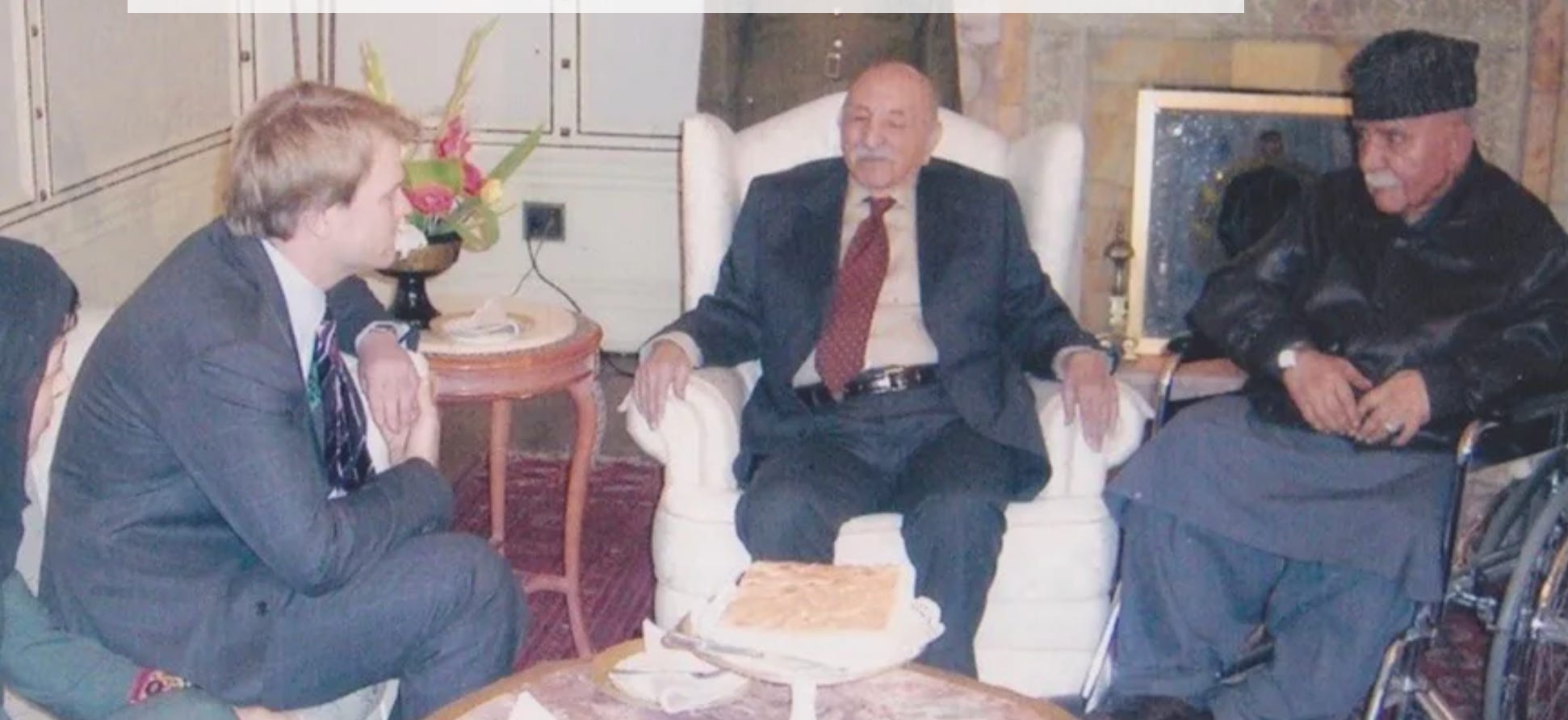
This is a free preview of a paid episode. To hear more, visit claireberlinski.substack.comThis is not, actually, an episode of Critical Conditions. It’s a regular Cosmopolicast. But I haven’t yet figured out how to separate the two.In this episode, former Canadian diplomat Chris Alexander and I discuss Russia’s post-Soviet trajectory, the rise of Vladimir Putin, and the West’s repeated misjudgments in dealing with Moscow. We discuss the endu…

Dan Perry led the AP’s coverage of Israel and the Middle East—from Pakistan through north Africa—for most of the 2010s. Before that, he led Europe, Africa, and the Caribbean for AP. He also served as the Foreign Press Association chairman in Jerusalem during the Second Intifada. He now writes at Ask Questions Later. I thought he’d be a good person to talk to about a question one of our ME201 students asked: Why does the media keep getting things wrong? I’ve written about this before—in fact, I’ve written about it in the “About” section of this newsletter, because the Cosmopolitan Globalist was founded in response to this problem. I’ve also written about it here:* The Media Revolution and the New Man: Manufactured outrage and the breakdown of liberal democracy.I have five free gift subscriptions to give away for Ask Questions Later. First come, first served.Show notesMatti Friedman’s article about the media’s coverage of Israel.Here’s where Dan gets his news:Basically, the baseline is phone alerts from the usual suspects—AP, Reuters, the NYT, the WaPo and so on. Nothing original there. I also get alerts from many Israeli media outlets, since these days I follow that story very closely. On occasion this will come at me from X as well, but I do not want to give that platform too much further credence. Then I get a variety of newsletters from a wide range of publications: These include The Hill, Newsweek’s “The Gist of It,” Semafor which does a decent roundup, and others. I also get Bloomberg newsletters for Tech and Business. And I also receive and read newsletters from The Forward, where I am a columnist.Hardly a day goes by when I do not consult the website of The Economist, which is probably my favorite publication. Every now and then I will read the NYT and WaPo opinion sections, as well as that of Haaretz, which is Israel’s liberal standard bearer and absolutely a world-class newspaper.And, of course, I get curated pushes from both Substack and Medium (I far prefer Substack, but Medium is oddly more proactive by email). And I am by now an avid consumer of quite a few Substack publications, in addition to The Cosmopolitan Globalist. Ron Fournier does a great job on US politics—more personal than Heather Cox Richardson, though I love her work (I like The Liberal Patriot’s take on things also). Chris Riback does a fantastic job of curating the news in all verticals with some style—highly recommended. David Andelman brings decades of foreign correspondent experience to a weekly analysis of global events and elections around the world. I love Cliff Schecter (Blue Amp) and Matt Robison for their passion for liberal causes. Marc Schulman’s Tel Aviv Diary is a crucial (yet these days dispiriting daily slog through the misery of the Israel-Palestine situation. Ted Anthony’s Significant But Unsorted and Nick Thorpe’s A Kind of Solution are eclectic and compelling on the cultural and societal side. And Larry Derfner (Now That’s Impressive (Not!) writes with curmudgeonly humor that I love.And here’s a sample of what you’d read if you subscribed to Ask Questions Later: * Israel is self-destructing: A harrowing read for anyone who wants Israel to continue to exist. There are very big problems:* Perhaps humanity is artificial? An unsentimental look at the challenges of AI (part of a series):* Dear Palestinians: Statehood is not a right: In which Dan, a supporter of the two-state solution, nonetheless tries to put things in some perspective.* Putin is making Trump look like a chump: On Ukraine. It's odd.* Know what? Most advances came from the “elites.” Enough with the populism:* The War on Truth: A five-part series on the Authoritarian’s Game Plan: This is a public episode. If you'd like to discuss this with other subscribers or get access to bonus episodes, visit claireberlinski.substack.com/subscribe
The UN Security Council will hold an emergency session today (it’s now Sunday in Paris) to discuss the Israeli security cabinet’s approval of a plan to seize Gaza City. The hostages’ families have called for a general strike over the decision. I spoke to Vivian Bercovici and Judith Deborah Levy to ask how they feel about this. In short: not good. It’s a long podcast—we had a lot to talk about—so I’ve posted a transcript below if you’re in a hurry. * Bucking IDF warnings, security cabinet approves Netanyahu plan to conquer Gaza City. Residents will have until October 7 to evacuate; proposal more limited than PM’s previously-stated intention to take over entire Strip, but official indicates IDF will later move on to other areas.* Masses rally against Gaza City takeover plan, urge soldiers to refuse, seek general strike. Tel Aviv’s Ayalon highway shut down as protesters light bonfires in the road; relatives of hostages bewail “eternal war-mongers” for choosing to “sacrifice” their loved ones.Claire: This is the Cosmopolitan Globalist. And I’m Claire Berlinski. I’m here with two North American Israeli women, and we’re going to talk about everything that’s been happening in Israel and Gaza. Vivian Bercovici is the author of the State of Tel Aviv, which I’ve cross-posted frequently. One of the best newsletters on Substack, if you’d like to keep up with events in Israel, Tel Aviv and Judith Lee-vee is a guest on our podcast—Judith: Leh-vy, Leh-vy.Claire: Leh-vy. I’m never gonna say that, Judith. I’m sorry. It’s too late. I’ve known her for, what, 35 years and I still can’t get her name right. I didn’t introduce Vivian as Ber-co-vee-chee at least.Vivian: No, but I do have to mention that I no longer live in Tel Aviv. So it’s now called State of Tel Aviv and Beyond. I moved a year ago to a kibbutz in Southern Israel near Sderot, and not too far from the Gaza border. So, that’s where I live now, Claire.Claire: So, Judith and Vivian are both long-term Israelis. How long have you both been there? Actually, Vivian, you’re pretty recent compared to Judith.Judith: I’ve been here about 24 years-ish.Claire: Vivian was the former Canadian ambassador to Israel. So she has a lot of insight into what’s going on on the Canada side of this.I just wanted to ask how you’re both doing?Judith: Oy. Um, you know. I feel like I say the same thing each time. That we are living this bizarre kind of duality where we are living our normal lives to the best of our ability. And so we go to the movies, and we make dinner, and we have friends over, and we cook, and we go to the cafe, and we—you know, like normal—but there is this underlying insanity, and despair, and terror that's right underneath.And so for me personally, it’s this wave, where sometimes what I’m constantly pushing down just comes roaring up. There are moments when it just comes roaring up and, then I really kind of … fall apart. Now, this I also think is an American thing, because all the Israeli-Israelis around me, they also are very aware of everything under the surface, everything that’s above the surface, but they don’t freak out the way I do and the way other Americans I know do. I’ve been here such a long time, and that will never change—that not having grown up with this kind of stuff. I will never, ever get used to it. So, the last time this occurred for me was when the snuff video of Evyatar David came out, the video of him being forced to dig his own grave.And I—the combination of the event itself and the reaction to it, or non-reaction to it, sent me into a complete tailspin for a couple of days, you know, and then I just have to shove it back in my mental closet and get on with life. And that’s what it’s been like for almost two years—for all of us.Claire: Vivian?Vivian: It’s so hard to articulate the agony that I think we’re all living with. I’m not sure that, Judith, your reaction has to do with being American or not, or it’s just maybe who you are. Most of my social and day-to-day interactions here are with Israelis, what I call real Israelis, unlike me, the people who, you know, the seventh-generation types, the kibbutznik types, the people who have lived here all their lives, the real salt of the earth.And privately, I find they feel every bit the same way as you do. I think that the level of, uncertainty, worry, concern, panic, fear about where this country finds itself today is unbearable. And one of the things that I try to do—I’m not just gonna deflect, Claire, and speak about Judith's reaction. I mean, my own is: I feel that I am living on truly on a knife edge every moment.I feel like a bunch of raw exposed nerves. And one of the things that is so important that I try to convey, in my writing and in my podcasts to people outside of Israel, is: Whenever there’s a crisis in the world, politicians and media and NGOs go out of their way to say, “It’s not the people of, let’s say, Iran, we have a problem with. It’s the government and the leadership with which we have a problem.” But no one seems to cut us that slack.And I would say that based on polls, over 80 percent—this isn’t me making things up; there are successive polls that have been coming out for months, really since the last hostage-release agreement in February—over 80 percent today of Israelis want the war to end now, all the hostages to be released, even if Hamas is left standing.And we’re never given that room to breathe. We’re all demonized as being these horrible, evil people. And our evil, of course extends to Jews around the world, right? So I feel like Judith. I mean, we go through our days, and sometimes, often, I find myself sitting there thinking, “How can you do this?”It happened last week. I went—actually, I moved to a new house, and I’ve been here for a year now, and I really need a dining set. And I entertain a lot and I like to cook. And I went and I chose a set. Then, in the store, I thought, “How can you do this? How can you even think of doing this?” And this was, Judith, days after, of course, we saw those horrific videos of Evyatar David and Rom Braslavski.And I just—I came home. I couldn’t buy it. I mean, it sounds so stupid, but it’s very hard to live and breathe when so much is at stake.Judith: I find something that helps me with that—because I have that all the time—this kind of dissonance between the small cheerful minutiae of my day, which feel like—feel like I don’t deserve to be experiencing that because I can’t solve this greater problem.Vivian: Yeah. Judith: So something that really helps me with that is actually getting out and being with Israelis. You know, hardcore, old-school, seven-generation, real-deal Israelis, because—I’ll give you an example. A couple of months ago I got invited to—do you know what urban sketching is? It’s when a bunch of artists go to a city together and just plop themselves on benches with their watercolors and their ink, and they just draw stuff, you know, draw buildings, draw people. It’s really, really fun. It’s really fun. And so I got invited to do some urban sketching in Tel Aviv. And so we went to the city and we went to the Yemenite quarter. And this was on—Vivian: Paradise, paradise for a sketch. Okay.Judith: —Friday morning. Friday morning. And I’m telling you, the place was absolutely jam-packed. And it was like every single cafe is just spilling over with cool young people with their tattoos. It was just this vision of healthy, healthy young people everywhere, singing, like suddenly, like spontaneously getting up and dancing to the music coming from the next restaurant down.It was the most wonderful thing. And this is, of course, in the middle of what’s going on. Everyone has somehow decided, “We are going to not just find a way to push it aside, but we’re going to celebrate the life that we actually are still fortunate enough to have.”And so I look at these kids—we stopped off somewhere to get something to eat. And the staff was changing over. And the new guy coming in behind the counter was a drag queen who hadn’t gone home to change, right? And he was magnificent with his gold and his leopard skin. He was magnificent. Magnificent. And he comes in and the music is playing and everybody’s dancing and we’re all stuffing our faces with this wonderful food. And it was just so unbelievably healthy. And I thought, “You know, the world doesn’t want to believe that this is us.”The world doesn’t want to believe that—this is the kind of culture that we—we’re something entirely different from this. And I, at this point, have given up on trying to convince anybody of anything because it’s too big now. It’s just too big. And so all that I can do is just jump right into the middle of that and celebrate it along with them. It’s the best I can do.Vivian: You know, it’s so interesting for so many reasons. I want to share an experience that was very intense that I had yesterday, but before that, I had been living—after my service as ambassador—in the center of the universe, the beating heart of Tel Aviv at Gordon and Rabin Square, and was deeply involved in the protests regarding judicial reform.And then disaster struck. And it changed after October 7th. So in spite of all this kind of vitality that you’re describing, which is there, it’s, it is a shadow of what it was, Tel Aviv. People have, actually, a lot of them have left the hardcore Tel Aviv who were my friends, many journalists, artists, they've leftClaire: Really?Vivian: Mm-hmm. Since October 2nd. Yeah. Because we—those of us who were really living in it—it felt very gloomy. It wasn’t the real Tel Aviv. It became almost like a bridge and tunnel thing, you know?Judith: Mm-hmm. Right.Vivian: I know, for Canadian, I laid quite a metaphor on you, huh? But what I wanted to share with you guys is yesterday, at five o’clock, there was a gathering on a moshav in central Israel called Kfar Ahim—and it’s where the Minister of Defense, Israel Katz lives.And it was convened by the Hostage Family Foru

I recorded this podcast with Vladislav Davidzon on Zoom on Wednesday. I thought we’d covered some interesting ground. But when I listened to it, I was horrified to discover that something was seriously wrong with the audio. Vlad’s voice was mostly fine, but mine was often inaudible. I don’t know why. I record conversations on Zoom several times a week, and this has never happened before. I spent yesterday trying to salvage the recording, but I could only improve it so much. Finally, tired and frustrated, I gave up and decided to deal with it today. Having slept on it, I decided that it didn’t merit my wasting another full day trying to fix it. Too much is happening in the world that I want to write about, and I didn’t want to see another day go down the tubes. So I’m putting it up as is, with the transcript, below—read the transcript, listen to as much as you feel like, or don’t. I also gave the transcript to Google’s NotebookLM, which created a completely new podcast, with perfect audio. in which two slightly dopey AI speakers discuss the transcript in a chirpy tone. It’s just as good as the original, really. Voilà:Claire: Welcome to the Cosmopolitan Globalist Podcast. I’m here with my friend Vladislav Davidson, who is in Amsterdam. Is that right?Vlad: I am in Amsterdam indeed, Claire. Hi.Claire: Hi! Are you coming back to Paris?Vlad: I should be back in about a week or so. I’m waiting for a meeting with a politician. As soon as he tells me what his schedule is, I should pop back in.Claire: Right.Vlad: I’ll stay with you. Don’t worry. I know you missed me.Claire: You going to be back for the 14th?Vlad: Um, possibly. What do you think, you mean the parade?Claire: Firemen’s ball. I thought it might be fun to go this year.Vlad: You're going? Do you have extra tickets?Claire: You don’t need tickets.Vlad: I only have a white jacket with me while I’m on the road. What do you think?Claire: Oh, you don’t need to dress up. It’s for the whole neighborhood.Vlad: Is it on the street? Where is it?Claire: It’s at the firehouse. It’s just across on the rue de Sévigné.Vlad: I think it’ll be nice.Claire: Yeah, it’s a lot of fun.Vlad: Let me know. Actually, I’ve never done that.Claire: You absolutely should.Vlad: Right?Claire: Yeah, speaking of the 14th, they’re practicing now for Bastille Day with the planes overhead, the fighter jets, and you know, when they pass overhead, the sound terrifies the cats—they run under the bed and they can’t be coaxed out for hours. And it actually terrifies me, too. I find these sounds terrifying. Just—Vlad: I have flashbacks to the war. I can’t, even now in Amsterdam, sometimes the car back stops, sometimes it takes me a few seconds to realize I’m not in Ukraine. I’m not at the frontlines that—when some alarm goes off, I’m continuously thinking, are the Shaheds firing? So, uh—Claire: It scares me and I know that they’re not coming for me. They’re just practicing for a parade. What is it like to deal with that for real, knowing that they are coming for you night after night? It’s just—Vlad: It’s terrifying. And I have an extremely high appetite for risk, more than most people. But it’s really, really scary when you are in a situation where you’re getting bombed and you know you’re getting bombed. It’s not pleasantClaire: Night after night. It must just leave people—it must just leave people beyond exhausted, beyond, beyond empty.Vlad: Yeah. Well, that’s the point. That’s why they do it. They know that this is a way to grind down the population. They purposely do it in the middle of a night in order to wake people up and not allow them to sleep and to grind out the population’s capacity to resist.Claire: I feel so bad for everyone who's living with this. I feel bad for the people in Gaza living with this. Obviously, I’m not a great enthusiast of Gaza’s political leadership, but—Vlad: One has to have empathy for ordinary people who are caught in between the bad decisions of the leaders or the decisions of other leaders, right. I support Israel’s campaign to destroy Hamas, and I also feel bad for every collateral casualty, for the suffering, by innocent people. Obviously it’s terrible. War is terrible.Claire: Yeah, I know. I—that’s not a very original observation, but I—Vlad: It’s not, it’s not.Claire: But still, I just really feel bad for everyone who’s going through this, and I don’t understand why my fellow Americans don’t seem to feel for what Ukrainians are going through.Vlad: Well, they did. They did and they still do. The polling is very obvious on this. But some people on the NatCon MAGA right have been, I wouldn’t say manipulated, but it’s become a partisan issue, and it’s easy for people not to care when they feel they're not being taken care of by the state.Claire: Well, you have to be pretty stupid to allow that to be a partisan issue. For most of American history, there was an edict that politics stopped the water’s edge. And to make this partisan issue—Vlad: It became a partisan issue because of the stupidity of some people, on both the Democratic Party and on the Ukrainian leadership side. The Ukrainians obviously have made a lot of mistakes in their dealings with Donald Trump over the last nine years.Claire: I really think you’re blaming the victim on this one.Vlad: I was a US law enforcement witness on this. I was there and I saw this, the Ukrainians got off on the wrong foot with Donald Trump from the very beginning. And obviously there was no playbook for how to deal with an insurgent Trump campaign in 2016, and the Ukrainian Embassy made some unfortunate calls in a difficult situation—I discussed this very recently with the Ukrainian ambassador at the time, and he’s very grateful to me for what I did back then.Claire: You mean by handing over the information from the Party of Regions?Vlad: That was one of the things they did. Yeah. Hmm.Claire: What else?Vlad: Uh, how discreet do I wanna be? The Ukrainians made a bad decision about, thinking that the Clinton campaign was gonna win and they made they made less effort to talk to the Trump people in the beginning, Ambassador Chaly—and I’ve told him this to his face—made a bad call with the way he published an article on The Hill in the spring of 2016, when Donald Trump was talking about Crimea as Russia—I mean, it should have been done at the level of the Foreign Ministry. It shouldn't have been the Ukrainian ambassador to Washington that made that call and wrote that op-ed.Claire: Mm-hmm. I still think you’re blaming the victim. No normal administration would pay attention to that. They would act in the American interest.Vlad: I mean, obviously he got embroiled in the Ukraine impeachment stuff. Obviously, that’s his own fault. But he did get embroiled in Russiagate, which was a lot of psychosis from the legacy media. And he saw the Ukraine stuff as an extension of Russiagate psychosis. So, he should get over it, but there’s multiple instances of things that he continuously got involved in. As a MAGA guy says to me, the Ukrainians somehow keep getting involved in Trump’s business. It’s a very vulgar but not incorrect way of explaining why Ukraine kept getting involved. And for whatever bizarre reason, as I put in one of my articles, Ukraine was fodder for presidential elections, three cycles in a row, 2016, 20 and 24, and that’s weird.Claire: I don’t want to spend all of our time on this, but I still think that you're blaming the victim. The abnormality here is—Vlad: I’m not blaming the victim because these are my people. I’m on the Ukrainian side. I think the Ukrainian leadership, before Zelensky, has a lot to answer for. Zelensky inherited a bad hand and a bad relationship. I don’t like the way they were treated. I don’t like what happened with him in the White House, that’s all terrible. But certain things happened between 2016 and 2019 that when Zelensky came into office, he already inherited a not-great relationship with the Trump administration. There’s a bad relationship, why there’s bad blood, why there’s lack of trust, you know?Claire: What are you hearing about the latest insane episode in which it was reported that Pete Hegseth and perhaps Elbridge Colby unilaterally decided to hold up arm shipments to Ukraine? Is that true?Vlad: Look, I don’t want to discuss Mr. Colby because I don’t want him to stop replying to my DMs on Twitter.Claire: At some point you’ve gotta stop DMing and report what he says, right?Vlad: Yeah. I mean, I don’t wanna—Claire: He doesn’t listen to this podcast.Vlad: I put a lot of effort into having conversations with those people and a lot of people told me it was a wasted effort, and it turns out—Claire: So your sources are so carefully cultivated that you can’t ever use them?Vlad: Yeah. Right, right. I don’t know, I tried, and a lot of other people tried to have conversations with the other side on this stuff, and some of them have come around, some of them have not, and I think it’s—Claire: Well, you don’t have to say anything. But if he’s responsible for it, chuckle. And if not, I—Vlad: I’ve read the same reporting that you have. Ha ha ha, ha ha.Claire: I see.Vlad: So, I really wish that wasn’t the case. They are really committed to their pivot away from Ukraine to Taiwan. They are committed to having the Europeans deal with this, and they are committed to offsetting this situation onto, NATO and European.Claire: But Colby isn’t committed to Taiwan. He’s said so, explicitly. He said that he doesn’t think Taiwan is a vital American interest, and he thinks we should reach some kind of accommodation with China. It’s all just stuff he say. He’s a total opportunist. I know you don’t want to ruin your relationship with him, So I—Vlad: Honestly, I don’t want to attack this gentleman. He has power, and there are a lot of vindictive people in the world, and people in power typically have egos and or sometimes thin egos. And I really hope that this is just a more of a kabuki game, which it very well co
While I’m at it, here’s the conversation you missed with Sergei Cristo. He’s the hero of the podcast Sergei and the Westminster Spy Ring, in which he offered evidence of a spy ring operating at the heart of the British establishment.I apologize for how long it took me to put this up. My computer wasn’t able to handle a file this big, so I couldn’t get it down from the cloud. Every time I tried, it crashed my computer. I finally broke down and bought a new computer. (It was time. My old computer had serious problems, including a broken keyboard—I could no longer type the letter “a,” which was a handicap in my line of work.) Then it took me a little while to reestablish all my files from the old computer. But I’m now good to go—and this will be followed by more video files that I haven’t been able to upload.I’m a bit puzzled, though, because while I have the whole audio transcript, I can only find the highlights of the video, below. Did I move the video file somewhere else in the hope of opening it? Sergei, I’ll keep looking for the complete video file—it’s very likely that I moved it somewhere clever, and it will come back to me what I did with it. For now, this is actually quite a good summary:UPDATE: I found the full video. I’d uploaded it to Dropbox in the hope it might open there. Here’s an AI summary:Russian Intelligence Operations in the WestSergei discussed the Russian intelligence operations in the UK and the West's readiness to accept these operations. He highlighted the growing realization of autocracies working together, regardless of their ideologies, and the need for a unified approach to confront this growing threat. Sergei also touched on his research into Western investments in oppressive regimes and how these investments damage the national security of democratic countries. He mentioned parallels between the recent history of Turkey and Russia and the importance of understanding the Gerasimov doctrine, which outlines the role of non-military means in achieving political and strategic goals.Russian Warfare and Western IntelligenceSergei discussed the Russian approach to warfare, emphasizing that they view their intelligence operations as part of a war plan. He suggested that the West's successful use of soft power in the Cold War was weaponized by Russia in an inhumane way. Claire expressed concern about persuading Western publics that Russia is at war with them, particularly regarding the 2016 US election. Robert and Arun discussed the difficulty of convincing people of the truth, even when faced with evidence. Kay asked why there hasn't been a factual reveal from their own intelligence agencies. Sergei suggested that the UK could conduct a proper review of the evidence they have.Trump’s Russian Organized Crime TiesSergei discussed the potential connections between Trump and Russian organized crime, highlighting Trump's business relationships with Russian criminals and the potential influence of the KGB. He also touched on the topic of cryptocurrency and its potential use for money laundering. Claire asked about the significance of Elon Musk's connections to the Kremlin, to which Sergei responded that while he doesn't have a definitive answer, there are potential links through new industries and the legalization of cryptocurrency. Andre Bauer asked about the connection between Alexander Lebedev and Boris Johnson, to which Sergei explained that Lebedev's father was a former KGB officer and that Lebedev himself was elevated into the House of Lords by Boris Johnson.Aaron Banks’ Russian Financial TiesThe discussion focused on Aaron Banks, a major donor to the Brexit campaign, and his financial connections to Russia. Sergei and other participants share information about Banks’s business practices, including his use of offshore companies and potential involvement in money laundering. They also discuss Banks’s Russian wife and his meetings with Russian diplomats. Xavier adds that Banks was known for laundering money for Russian oligarchs through Gibraltar. The conversation touches on the broader implications of Russian financial influence in British politics and the need for further investigation into Banks’s activities.Russian Influence on Trump’s BehaviorClaire discussed the influence of Russian operations on Donald Trump's behavior. The group agreed that Russia's influence is significant, but some participants, including Robert McTague and Robert Zubrin, expressed concerns about the public’s willingness to accept this fact. They suggested that a major incident, similar to the 9/11 attacks, might be needed to convince the public. The group also discussed the media’s role in educating the public about these issues, with some participants expressing frustration at the media’s failure to do so.Russian Influence in PoliticsRobert Zubrin discussed the dilemma faced by generals and politicians like McCarthy in acknowledging Trump’s potential ties to Russia, as it conflicts with their institutional loyalties. Sergei then shifted the conversation to Russian influence in politics, particularly focusing on the Brexit campaign and the harassment of journalist Carol Cadwalladr. He highlighted the role of Russian intelligence in orchestrating online abuse campaigns and the importance of exposing political figures with Russian connections, especially in Britain.Financial Deals and Political ManipulationSergei discussed the potential consequences of exposing the financial dealings of politicians and bloggers, emphasizing the damaging impact of populist figures. He also shared his concerns about the British government’s reluctance to investigate Brexit. Sergei suggested that the revelation of Trump's financial deals and alleged misconduct could lead to widespread disillusionment among his supporters. He also expressed his belief that the rule of law should be used while it still exists, and he criticized the lack of action from the British authorities. Claire agreed with Sergei’s points, highlighting the need for democracies to harden against manipulation while remaining open societies.Statesmanship and Sovereignty in DemocraciesRobert Zubrin discussed the importance of statesmanship in democracies, citing historical examples such as Pericles in Athens and Churchill in Britain. He emphasized the need for a patriotic political movement to reverse current trends. Sergei brought up the issue of sovereignty and foreign interference, while Arun highlighted the division in American society and the perception of Russia among Trump’s voters. Robert Zubrin clarified that the majority of Americans support Ukraine, not Russia. The discussion also touched on the role of media and the importance of understanding the difference between criminal and counterintelligence investigations.Russian Influence on US Political SystemLarissa expressed concern about the Russian influence on the US political system, emphasizing the need for new ways to maneuver in the face of changing political dynamics. Sergei discussed the potential for Russian interference in the US electoral system, particularly with the suspension of cyber defense operations against Russia. Western Investments in Oppressive RegimesSergei discussed his research on Western investments in oppressive regimes and its impact on national security. He is working on a case study of asset managers and sustainable funds, which often invest in regimes like Putin’s. Sergei is collaborating with investigative journalists and publications like The Economist and Berlin Times to publish his findings. The discussion also touched on the influence of Trump and other American politicians on European far-right parties like the AFD in Germany. Social Media’s Impact on American PoliticsThe group discussed the impact of social media and Russian influence on American politics, particularly in relation to Trump’s presidency. Robert Zubrin suggested that social media has created a “post-truth environment” that made Trump’s rise possible, rather than an increase in racism. Claire recommended Adam Garfinkle’s work on the effects of social media. The conversation concluded with Sergei emphasizing the importance of exposing crimes and the group agreeing on the need to find solutions to combat misinformation.Help Sergei expose Western investments in dictators here.And just for fun, here’s a briefing and a podcast created by Google’s new one-click AI podcast creator, which turns everything you feed it into banal but completely realistic podcast slop. It’s amazing.Listen to Google Slop’s podcast version of our conversationBriefing: Russian Intelligence Operations and Western InfluenceThis briefing summarizes the key themes and important points discussed in the provided transcript, focusing on Russian intelligence operations and their alleged influence in Western democracies, particularly the UK and the US.Main Themes:* Russian “Active Measures” as Warfare: The core theme is that Russia views its intelligence operations, including propaganda, covert influence, and disruption, as a form of warfare against the West, not merely espionage. This is linked to the Gerasimov Doctrine and a perceived lesson from the Soviet Union’s collapse and Western "soft power" success.* Historical Context of Russian Influence: The discussion places current Russian activities within a historical context, noting parallels with Soviet ideology and methods, as well as drawing lessons from the Cold War.* Targeting Western Democracies: Russia is seen as actively targeting Western democracies through various means, including exploiting political divisions, supporting populist movements, and using financial and commercial links.* Difficulty in Western Recognition and Response: A significant challenge is the difficulty in persuading Western publics and institutions of the reality and severity of Russian influence operations. There is a perceived reluctance to acknowledge being “at war” with Russia in this unconventional sense.* Specifi
For those of you who missed it, here’s the conversation we had on Sunday with Vivek and Raja Muneeb. Here’s an AI summary of the conversation—it’s remarkably accurate:Pakistan’s Nuclear Threat and ImplicationsThe meeting involved a discussion about the potential threat of Pakistan's nuclear weapons and the implications of their use. The participants discussed the possibility of Pakistan using nuclear weapons as a bluff and the potential consequences of such an action. They also touched on the issue of Pakistan's nuclear technology being sold to rogue states and the need to prevent this from happening. The conversation ended with a discussion about the stress and sleep deprivation experienced by the participants due to the ongoing tensions.India-Pakistan Tensions and Terror GroupsVivek and Raja discussed the recent developments between India and Pakistan, focusing on the events that took place in Pahalgam and the speech made by the Director General of Military Operations. They also touched on the history of Kashmir and the role of terror groups in the region. Raja explained the Pakistani military’s mindset and the political situation in Pakistan, while Vivek provided context on the formation of terror groups in the 1980s. The discussion also included the evidence of the terror attack and the reasons behind Pakistan's denial of involvement.Kashmiri Pandits’ Experiences and Historical ContextRaja shared his personal experiences and memories of the 1989-1990 exodus of Hindus from Kashmir. He described the violence, harassment, and terror faced by the Kashmiri Pandits, including extortion, rape, and murder. Raja also discussed the impact of the conflict on the education system and the economy in Kashmir. He mentioned the role of Jamat-e-Islami and other terrorist organizations in subverting the society and the government institutions. The meeting also touched upon the historical context of the Kashmir issue, including the Instrument of Accession and the role of Sheikh Abdullah.Pakistan’s Government and China’s InfluenceRaja explained that Pakistan’s government, feeling isolated internationally, has rekindled the conflict to boost its legitimacy. He also mentioned the influence of China in the region, particularly in Balochistan, where the China-Pakistan Economic Corridor (CPEC) is facing challenges due to the Balochistan Liberation Army’s activities. Vivek added that Pakistan's economy is in trouble, and the CPEC projects have been criticized for being poorly negotiated and expensive. The group also discussed China’s interest in keeping India destabilized, as they are competitors in the Asian space.Indus Waters Treaty ConflictThe meeting focused on the ongoing conflict between India and Pakistan, particularly regarding the Indus Waters Treaty. The participants discussed the treaty’s history, its implications, and the challenges it poses. They also touched on the role of the United States in mediating the conflict and the potential for de-escalation. The discussion also included the effect on the treaty on the region’s demography and the potential for a plebiscite. The participants also discussed the potential for international intervention. The conversation ended with a discussion on the economic interests of the United States in the region and the potential for a hyphenated approach to the conflict.Pakistan’s Identity and Military PowerThe group discussed the fundamental insecurities within Pakistan about its identity, stemming from its formation and the reasons behind it. They highlighted its psychological insecurity and the talk given by General Assi Muni on April 16th, which stated that only two nations were formed on the basis of the Kalma, one being Pakistan. The team also discussed the challenges faced by Pakistan in building a truly Islamic identity, the problems within the country, and the question of whether Pakistan needs to emerge from its religious mindset. They also touched upon the role of the Pakistan military and the myth of the threat from the Hindi, which has been a core reason for the army’s power. The speakers concluded that without othering India, Pakistan’s right to exist is questioned, as a large part of Pakistan shares the same gene pool, food, and practices as India.India-Pakistan Relations: Challenges and ReconciliationVivek and Raja discussed the complex relationship between India and Pakistan, highlighting the challenges in fostering peace due to Pakistan’s state-sponsored terrorism. They noted that India’s attempts at reconciliation have consistently been met with aggression from Pakistan. Raja emphasized that the Pakistani military’s rejection of cultural ties and its support for radical groups have hindered efforts towards peace. The discussion also touched on the role of political parties and the impact of democratic regimes in Pakistan on its relations with India.Terrorist Group Connections and FundingIn the meeting, Vivek, Raja, Robert, and Jim discussed the connections between various terrorist groups, including Al Qaeda, ISIS, and Lashkar-e-Taiba. They highlighted the complex networks and funding sources of these groups, with a particular focus on the role of ISI. The discussion also touched on the challenges of tracking and countering these groups, with Robert mentioning the division between India’s Indo-Pac Command and Pakistan’s Central Command. The conversation ended with Claire expressing interest in having Raja write about these topics. This is a public episode. If you'd like to discuss this with other subscribers or get access to bonus episodes, visit claireberlinski.substack.com/subscribe

🎟️🎭🎼➪☛☞ BUY IT HERE☚☜⇦🎼🎭🎟️You’ve heard, I’m sure, of my famous but highly elusive brother, Mischa Berlinski. He’s the author of FIELDWORK—a finalist for the National Book Award— and PEACEKEEPING. His writing has appeared in Best American Essays and Best American Travel Writing. He got a Whiting Writers’ Award and the American Academy of Arts and Letters’ Addison M. Metcalf Award. He’s the big family literary success. But he’s very shy, and until now, he has categorically refused to come on this podcast.However, he’s written a new book. He would very much like you to pre-order it, and so would I, because pre-ordering is hugely important: If it looks as if people are excited and eager to read a book, the algorithms will start flogging it. So, capitalizing on his desire to sell his book, I’ve managed to persuade him to introduce himself to you and tell you a bit about MONA ACTS OUT—a novel that just happens to take place over the course of a single Thanksgiving Day. We’d be ever so grateful if you were to pre-order it now. I promise you won’t regret it. It really is so good. I’ll add some extra motivation too: If you pre-order a copy today, I’ll comp you an extra month here at CG.Here’s the cover blurb:Both beguilingly approachable and intricately constructed, at once funny and sad and wise, MONA ACTS OUT is a novel about acting and telling the truth; about how we play roles to get through our days; and how the great roles teach us how to live.Celebrated stage actress Mona Zahid wakes up on Thanksgiving morning to the clamor of a household of guests packed into her Manhattan apartment and to a wave of dread: her in-laws are lurking on the other side of the bedroom door; she’s still fighting with her husband, who has not forgotten what happened last night; and in just a few weeks she is supposed to step into the rehearsal room as Shakespeare’s Cleopatra. It’s the hardest role in theatre—and the first role Mona has ever attempted without her sister, who died just over a year ago, by her side. When her father-in-law starts fighting with her niece about Donald Trump, Mona bounds out the door with the family dog in tow (“I forgot the parsley!”) to find the only person she doesn’t have to act for: her estranged longtime mentor, Milton Katz, who may or may not be dying and who was recently forced out of the legendary theatre company he founded amid accusations of sexual misconduct. Mona’s trek turns into an overnight adventure that brings her face to face with her past, with her creative power and its limitations, and ultimately, with all the people she has loved and still loves.A brilliant, highly-anticipated return of a writer of almost magical descriptive and imaginative powers.The reviews so far have been fabulous:Kirkus (Starred review):Berlinski follows acclaimed novels set in Thailand (Fieldwork, 2007) and Haiti (Peacekeeping, 2016) with a New York–based comedy of of manners and morals featuring a brilliantly imagined female protagonist, Mona Zahid, one of the stars of a Shakespearean theater troupe based in the East Village. Until recently, the company was led by legendary director Milton Katz, but an article in The New York Times, filled with accusations of misconduct from a slew of actresses, led to his disgrace. Mon herself “an out-and-out, unabashed Miltophile,” was not among the accusers. We meet her as she awakens in her Morningside Heights apartment on Thanksgiving Day to a full house—in addition to her surgeon husband, teenage son, and canine companion Barney, her in-laws and her college student niece, Rachel, are milling about. Absent is Rachel’s mother—Mona’s sister, Zahra—who died less than a year earlier, leaving Mona a stash of 150 pain pills of which there are now only six. Mona starts her day by taking two. Not long after, she hears the assembled family members begin to argue about Milton Katz and Donald Trump. She knows she should go out and save the day, but by then she has vaped some weed so strong she suspects it of being laced with “hallucinogenic toad drippings” and can only bring herself to put Barney on his leash and race out the front door, claiming she’s off to buy parsley. At this point the novel takes an amazing left turn; suffice to say, Mona will not be home for dinner. Readers who know their Shakespeare will thrill to Berlinski’s brilliant distillation of the power and relevance of the plays and characters, but those who don’t will find they can easily come along for the ride. And a great ride it is.Wonderfully constructed, witty, warm, wise, and filled with an extraordinary sense of the relation between theater and life.Publishers Weekly (Starred as well):In the sharp-witted and weighty latest from Berlinski (Fieldwork), #MeToo allegations roil an off-off-Broadway Shakespeare company, prompting a 50-something actor to reevaluate her life. Mona Zahid is already grappling with the difficult new role of Cleopatra and what it says about her career; after playing everyone from Juliet to Lady Macbeth, being cast as the Egyptian queen means she’s just about aged out of Shakespeare’s heroines. Mona’s also dreading hosting Thanksgiving dinner, especially after the death of her younger sister, Zahra, whose daughter, Rachel, will be in attendance. Recently, Mona learned that Rachel, following an internship at the theater company, was one of the women who accused its octogenarian founder, Milton, of sexual misconduct. On Thanksgiving Day, Mona escapes her cramped Upper West Side apartment for a last-minute grocery run, during which she frets over a recent postcard message from Milton, in which he claimed to be dying. She decides to make a detour to Brooklyn to see him, and on the way, she burrows deep into memories of her younger years as a player in Milton’s company, when scoring an audition at his dingy Avenue C squat was akin to “winning one of Willie Wonka’s Golden Tickets.” Mona’s thoughts are laced with scathing humor and piercing insight into the actor’s craft, resulting in a surprisingly moving exploration of the courage required to play life’s many roles. Berlinski deserves a standing ovation for this bravura performance. “Mischa Berlinski has written an instant-classic New York novel about theater, aging, sex and love, and the promise and price of life’s second acts.”—Joshua Cohen“After a few pages, I canceled my dinner plans rather than put this one down. I absolutely loved this novel’s stunning, almost alarming, insight into one woman’s longing. An unflinchingly honest exploration of the complexities of the human condition and the ambiguities of contemporary morality, MONA ACTS OUT epitomizes great comedy; deftly woven throughout its fabulously hilarious prose is significant wisdom and sorrow.”—Binnie Kirshenbaum“The delightful MONA ACTS OUT takes us where we all dream of going: away from the irritations of our present moment, into the open streets, to confront everything that still haunts us and reach, surely, hopefully, the Promised Land.”—Daniel HandlerA delightful, insightful, and critical view into the world of theater, New York City, and one woman’s reflection on her life as she enters her later years. Mona, one of the star performers in a Shakespearean troupe, struggles to reconcile her life as she lived it and the modern criticism of the mores of that time. The story asks, how will Mona reconcile her truth and experience while acknowledging that times have changed and she may be left behind if she does not change with them? Humorous, reflective, and insightful; I enjoyed taking the journey with Mona. A thank you to W.W. Morton for an advance readers copy. —Joanna on GoodreadsMona Zahid wakes up on Thanksgiving morning. Her in-laws are there, along with her husband (with whom she is unhappy), her son, and more. Mona is a skilled and experienced Shakespearean actor, soon to begin rehearsals for Cleopatra. Given her age, it is likely the last leading role she will have. She needs to have some time, so she heads out with the dog to buy parsley. This leads to an overnight ramble that brings past and present together. As a long-ago English major, I read most (maybe all) of Shakespeare’s plays. My roommate and I found the plays to be much more approachable and enjoyable by doing two-person readings. We were on the right track, but this novel explains so much more about how Shakespeare should be presented. (Does that sound horrible? It really is much more casually informative and fascinating than didactic.) In any case, this is quite a great novel that shows how much we learn from the roles we play. —Lee Cornell on Goodreads“I’m head over heels for this witty, tender, keenly intelligent exploration of art, artifice, and the human heart. Mischa Berlinski is a masterful and deeply empathetic storyteller, and MONA ACTS OUT is a pure delight.” —Antonia AngressOnly one bad review, so far—from a woman who also panned Shakespeare: First, I didn’t like Mona at all. I found her unsympathetic, annoying, and selfish. That makes for some tough reading. Next, I found all the Shakespeare unbearable. Too much with all the quotes and references. I had to stop halfway through. Too many wonderful books out there and for me, this was not one of them. —SylviaI loved this book so much that I made this collage for Mischa, for his birthday, with all of the book’s characters in it. When your copy arrives, you can check back to see how, exactly, I imagined everyone in the book. (The original is really big, so you have to look at the close-ups for the details.)Close up:Even closer:🎟️🎭🎼➪☛☞ BUY IT HERE☚☜⇦🎼🎭Once. you’re hooked, you can also read my brother’s first two novels: FIELDWORK and PEACEKEEPING. And you can read about how my brother tried to buy a Zombie in Haiti, too.Happy Thanksgiving, dear readers! Among the many things for which I’m deeply grateful today are you. It’s a joy to have readers to whom I can introduce my brother (on the very rare occasions he emerges from his cave)—and vice-v

I invited Bob Holley on the podcast to discuss the article he recently published here, Fracturing the Security Map, warning that the return of Donald Trump, coupled with Ukraine’s defeat, could spark a stampede to redraw the world’s nuclear security arrangements. Discussed in the podcastThis is the remarkably prescient article by John Measheimer I mentioned: The Case for a Ukrainian Nuclear DeterrentAmerica FirstI’ve been thinking about this problem since the first Trump presidency. I’ve explicated my own arguments about this risk in these and other articles:Five Alarm Fire: The 118th Congress is destroying the world our grandparents built.At 5:29 a.m. on July 16, 1945—when a ball of fire rose in gold, violet, grey, and blue over the Jornada del Muerto desert, melting the sand into light green radioactive glass and illuminating every peak and crevasse of the nearby mountain range with a searing white light—American statesmen began a frantic, desperate effort to forestall the emergence of precisely the world we are now ushering into being.“[T]he US is basically making the case to all states that they should try as hard as they can to develop nuclear weapons,” writes the war historian Phillips O’Brien … There is nothing wrong with his logic. His observations are correct and so is his reasoning. But the same logic applies to every other power in the world that would prefer not to suffer Ukraine’s fate.The United States is pursuing a feckless, shortsighted policy that will lead to moral disgrace, generational shame, global nuclear proliferation, and an uncontrolled, multipolar nuclear arms race. We’re not pursuing it deliberately. It isn’t what we mean to do. But we could not be pursuing this policy more industriously if we had dedicated all the resources of our federal bureaucracy to the goal.America First means nuclear war. The inevitable end point of losing the world's trust is uncontrolled nuclear proliferation: … Here’s where a devout cadre of Trump’s supporters jump in on Twitter and say to me, “Great! All these freeloaders can start paying for their own defense!”No. That’s not what’s going to happen. No single country can conceivably match the power of the full NATO alliance. That’s why we had it.It would be a catastrophe if every country with the ability to do it acquired the Bomb. Never mind whether they would use them in anger, it would multiply the risk of an accident, which we already know is insanely high.But they’re going to to do it if we keep this up. Any American who owns a gun, even though rationally they grasp that fewer Americans would die if there were no guns in America, should understand the calculation other countries are now apt to make. Is it a rational thing for the world to do? No. Rationally, the world will be, objectively, less safe if everyone acts on that impulse.But the world isn’t a rational place. People want safety for themselves, even if it means putting the world at greater risk. The inevitable end point is uncontrolled nuclear proliferation. What “America First” means, in the end, is “Nuclear war.”If you missed it the other day, here is the case for believing that under these circumstances, the risk of an accidental nuclear war would be insanely high. If you’re unconvinced by this case, you may be suffering from one of these common cognitive errors. It’s HappeningThis is no longer theoretical. We’re not discussing an abstruse theory in international relations, or something that might happen. It’s happening now. The news is scarcely being reported in the United States, crowded out by discussion of Trump’s Cabinet picks, but as soon as the election was called for Trump, the world began to change:“NATO or Nukes.” Why Ukraine’s nuclear revival refuses to die:Addressing a European Council meeting in Brussels on October 17, Zelensky invoked Ukraine’s decision to surrender nuclear weapons inherited from the Soviet Union in exchange for security commitments from nuclear states—the United States, United Kingdom, and Russia—recorded in the 1994 Budapest Memorandum. (China and France pledged similar security assurances in separate letters.) The Budapest Memorandum commitments failed spectacularly to prevent Russian aggression against Ukraine. So, how does Ukraine provide for its security? Zelensky outlined two options: “Either Ukraine will have nuclear weapons, and then it will be a defense for us, or Ukraine will be in NATO. NATO countries are not at war today. All people are alive in NATO countries. And that is why we choose NATO over nuclear weapons.”On the same day, Zelensky revealed that he had delivered a similar message to presidential candidate Donald Trump during his visit to the United States in late September and added that Trump responded that his reasoning made sense … the international community cannot blame [Zelensky] for stating the obvious: NATO members, under their nuclear umbrella, are at peace while Ukraine is at war. Russia and NATO exercise restraint vis-à-vis each other based on a shared understanding that a direct conventional confrontation between two nuclear-armed adversaries would carry the inherent risk of nuclear escalation and possibly a nuclear war. Russia does not exhibit a similar restraint toward a non-nuclear, non-allied Ukraine. To add insult to injury, Russia, with its nuclear saber-rattling, has succeeded in partly influencing the timing and conditions of Western arms supplies to Ukraine, hampering Ukraine’s defense effort. In short, peace is the prerogative of those who are fortunate to benefit from nuclear deterrence. The unfortunate ones must suffer war.“I was surprised by the reverence the United States has for Russia’s nuclear threat. It may have cost us the war. They treat nuclear weapons as some kind of God. So perhaps it is also time for us to pray to this God.”Could Zelensky use nuclear bombs? Kyiv could rapidly develop a rudimentary weapon similar to that dropped on Nagasaki in 1945 to stop Russia if the US cuts military aid:Ukraine could develop a rudimentary nuclear bomb within months if Donald Trump withdraws US military assistance, according to a briefing paper prepared for the Ukrainian Ministry of Defense. …With no time to build and run the large facilities required to enrich uranium, wartime Ukraine would have to rely instead on using plutonium extracted from spent fuel rods taken from Ukraine’s nuclear reactors. Ukraine still controls nine operational reactors and has significant nuclear expertise despite having given up the world’s third largest nuclear arsenal in 1996. … The paper, which is published by the Center for Army, Conversion and Disarmament Studies, an influential Ukrainian military think tank, has been shared with the country’s deputy defense minister and is to be presented on Wednesday at a conference likely to be attended by Ukraine’s ministers for defense and strategic industries. It is not endorsed by the Kyiv government but sets out the legal basis under which Ukraine could withdraw from the nuclear non-proliferation treaty, the ratification of which was contingent on security guarantees given by the US, UK and Russia in the 1994 Budapest memorandum. The agreement stated that Ukraine would surrender its nuclear arsenal of 1,734 strategic warheads in exchange for the promise of protection. “The violation of the memorandum by the nuclear-armed Russian Federation provides formal grounds for withdrawal from the NPT and moral reasons for reconsideration of the non-nuclear choice made in early 1994,” the paper states. …. Trump has pledged to cut US military aid unless Kyiv submits to peace talks with Putin. Bryan Lanza, a Trump adviser, has already said that Ukraine will have to surrender Crimea. This week Donald Trump Jr. taunted Zelensky, posting on X: “You’re 38 days from losing your allowance.”… “You need to understand we face an existential challenge. If the Russians take Ukraine, millions of Ukrainians will be killed under occupation,” said Valentyn Badrak, director of the center that produced the paper. “There are millions of us who would rather face death than go to the gulags.” Badrak is from Irpin, where occupying Russians tortured and murdered civilians, and he was hunted by troops with orders to kill him.Western experts believe it would take Ukraine at least five years to develop a nuclear weapon and a suitable carrier, but Badrak insists Ukraine is less than a year from building its own ballistic missiles. “In six months Ukraine will be able to show that it has a long-range ballistic missile capability: we will have missiles with a range of 1,000 kilometers,” Badrak said.Signatures collected in favor of stationing nuclear weapons in Latvia.The Future of the Zeitenwende: Scenario 5—Poland Becomes a Nuclear Power:… Given that Poland would have to fear Russian preemptive action, especially in a world where Washington had withdrawn from NATO, Poland’s best bet would be to hide its nuclear ambitions for as long as possible. In this regard, Poland would likely aim to present the world with a fait accompli once its nuclear weapons program has started to bear fruit. Interview with Polish Foreign Minister Radosław Sikorski: “If America cannot come together with Europe and enable Ukraine to drive Putin back, I fear that our family of democratic nations will start to break up. Allies will look for other ways to guarantee their safety. They’ll start hedging. Some of them will aim for the ultimate weapon, starting off a new nuclear race.”Center-right leader Weber supports Macron’s call for European nuclear deterrent. Germany debates nuclear weapons, again. But now it’s different.Germany and a European nuclear deterrence capabilityGermany must go nuclear! With Russia inching forward in Ukraine, the US threatening to flake out as an ally and the rest of Europe in a state of paralyzed shock over Donald Trump, Germany should waste no time in pulling together a nuclear arsenal. In a nutshell, that’s the position of Germany
This is a free preview of a paid episode. To hear more, visit claireberlinski.substack.comMy friend Ariel Cohen joined us today from Netanya, where he’s celebrating the holidays. A political analyst, Ariel focuses on Russia, Eurasia, Eastern Europe, the Middle East, and energy policy. Obviously, we had a lot to talk about. We spoke about a question that’s maddening me: Why can’t the people who make our foreign policy learn from experience? W…

This is a free preview of a paid episode. To hear more, visit claireberlinski.substack.com“There are smart pollsters, insightful pollsters, accurate pollsters … but few are all three. Christine Quirk is. She makes people who hire her look smarter than we really are.”—Christy Quirk is a more cosmopolitan globalist than most. I met her in Istanbul about twenty years ago, where I discovered she had an interesting job: She’s a public opinion res…
Vladislav Davidzon joins us to discuss his latest article in Tablet.Ukraine defies the US to launch a showy offensive into Russia: Observing Israel’s moves in the Middle East, Kyiv gambles on an American power vacuum:… What changed in July is that the Ukrainians, like other embattled US allies, were faced with a new opportunity in Washington: The cognitively impaired president had been forced out of his reelection bid in favor of his vice president, who was now out on the campaign trail, three months before the election. With this emergent power vacuum at the White House, the Ukrainians decided to bypass both the deposed occupant of the White House as well as the staff of his hypercautious National Security Council, instead of slowly bleeding to death under rules guaranteed to produce slow-motion defeat. …Kyiv observed carefully how Israel conducted its strikes immediately after Prime Minister Netanyahu returned from a triumphant speech before the US Congress. In fact, earlier this week the chair of the Ukrainian Parliamentary Committee on National Security and Defense, Roman Kostenko, explicitly referenced the Israeli example in a televised interview. “So Israel announced that they would take the advice of their partners very seriously but would afterward make their own decisions in the best interest of their own national security. I think that we can simply mirror that approach in our own case.”If you’re in a hurry, here’s a transcript:Claire: Hi, it’s Claire Berlinski, and you’re back in the Elephant Cage with my guest, Vladislav Davidson. Vladislav, let’s talk about your big scoop.Vladislav: Hi, Claire. Thank you for having me on. I have a big piece out in Tablet Magazine, and a lot of other people seemed to have missed the obvious. On August 6th, the Ukrainians began their long-awaited mechanized invasion of Russia’s Kursk Oblast. The Ukrainians had been preparing for their annual counter offensive for a long time and picking their target of convenience. And they chose to go all in into Kursk because they saw that it was very weakly protected, and it turned out to be a very good decision. A lot of the Russian border guards and conscripts just gave up as soon as they saw Ukrainian mechanized forces and combat-ready, battle-hardened divisions. A lot of those guys just ran, to a point where the Ukrainians seemed to be taking between 100 and 200 Russian POWs a day, and times10, 12 days. They already seemed to have taken two divisions worth of Russian POW conscripts, thus refurbishing their exchange fund to the point where the Russians have, according to Ukrainian sources, initiated a POW exchange for the first time in two years.Claire: Yeah, I saw that. It’s actually quite amazing. I’ve been seeing a lot of photos and a lot of videos of Russians surrendering en masse. I have not been sure whether those photos are real, but it sounds like they are.Vladislav: I think they are real. I’ve seen a lot of those videos. Those are hard to stage. And a lot of those guys are 19, 18-year-old conscripts who are technically not supposed to be fighting outside of Russia, but they’re fully usable to defend the Russian border so the Russians throw them at the Ukrainians to stop them while they bring in better forces, Interior Ministry troops, fast response guys, national guard, hardened, battle-tested troops from inside Ukraine. While they’re trading land for time, as one does in that situation, they’re throwing conscripts with four or five, six months of training under their belts directly at these really excellent Ukrainian airborne troops. It’s Soviet, Ukrainian, and Russian doctrinal policy to use airborne troops for raids. This is a textbook raid, which was transformed into a territory holding situation. The incursion is being done with the best troops, airborne troops.Claire: Tell us how the Ukrainians decided to do this. Obviously, they’d been planning this for at least three to six months. But they decided to go all in after they saw the Israelis do what they wanted to do, after Netanyahu returned from Washington, DC. On July 30th and 31st, the Israelis carried out assassinations against two high-value targets, one in Beirut, one in Tehran. These assassinations were carried out immediately upon Prime Minister Netanyahu returning from his trip to Washington, DC, where he addressed Israel, Congress, and where he had private meetings with whoever was in the White House. And he saw Harris in the White House and he saw the national security people of the Biden administration. And he nodded politely to the finger wagging that he received. And immediately upon returning to Jerusalem, he launched assassinations against high-value Hamas and Hezbollah operatives. And it was obvious that he was told to do one thing by the White House, and he did quite another thing.Claire: I don’t think that’s obvious, actually. There’s been a lot of speculation that he cleared that with the White House before doing it.Vladislav: I’m not sure he did. Why would he do this right as the Democratic Party is having its convention today? Claire: They’d do it because Haniyeh was only going to be in Iran for those days.Vladislav: And he’s not there all the time. He was there for the swearing in of a new Persian president. And he was a target of opportunity. They obviously used a lot of effort and regional resources, operatives to get that bomb smuggled into that house. And it’s not every day that you get a chance to take him out. And they had the opportunity and they took it.Claire: But what about that makes you think that he didn’t clear the White House beforehand? I don’t know whether he did or not. I’ve just seen speculation that he did. And as for Fuad Shukr, of course, we would have said, yeah, take him out. He’s responsible for the death of 242 Marines.Vladislav: Yeah, but he’d been operating for decades in Beirut.Claire: I’ve been wondering about that myself, but I just cannot imagine the Americans saying to Netanyahu, “Don’t do that.”Vladislav: Really? Just the opposite. I can’t imagine them saying, “Do it” in this situation. This is a very delicate time, and it’s a very complex situation in terms of the Americans’ internal interests, which is, obviously, this administration is carrying on the Obama-era foreign policy of normalizing relations with Tehran. They hate the Israelis. And they hate the Israelis complicating their regional foreign policy pivot, which is obviously not something the Sunni Arabs or the Israelis want.Claire: I’ve seen no evidence that the administration hates the Israelis. Biden likes the Israelis, he just doesn’t like Netanyahu.Vladislav: They see them as a problem, the thorn in their side for their big foreign policy shift.Claire: No more than every other administration always has.Vladislav: This is a really big difference. This is a continuation of Obama-era foreign policy with a lot of the same people in charge of Middle East foreign policy, people like Blinken, people like Sullivan.Claire: I don’t believe that the Biden administration is more vexed by Israel than almost every previous administration has been. Because our interest in Israeli security has always been at odds with our other interests in the region.Vladislav: There’s always been a contradiction. It’s true. But with the Obama foreign policy, there is a direct contradiction between the historical American foreign policy and what the Israelis see as their existential interests in the region of keeping Tehran boxed in. And the Obama foreign policy is to normalize Iran and bring them into the Middle East security architecture as the Americans are trying to leave the Middle East. So, this is a completely radically new situation.Claire: The radical situation is Iran’s approaching a deployable nuclear weapon. That creates all kinds of problems without easy solutions.Vladislav: Correct. That’s true.Claire: So tell me about how the Ukrainians reacted to this.Vladislav: The Ukrainians spent a few days observing the American response to the move. That is obviously not a happy situation for the White House and the National Security Council led by Mr. Jake Sullivan. The State Department under Blinken does not love it. And they made the decision that they too could run their own foreign policy, independent of their American allies’ scolding and red lines of constraint. They saw the Israelis getting away with it. Act first and apologize later, which is one of the quotes from a high level source in the Zelensky team in my piece.Claire: The people who spoke to you, they must want the administration to know what they’re thinking?Vladislav: After I reported the piece, a gentleman who is head of the Defense Intelligence and Security Committee inside the Rada went on TV and said, look, the Israelis listened very carefully, very politely, very generously, to the advice of their allies. And they said, we will act first in our own interests, and then we will answer our allies’ concerns afterwards. He said this openly. The head of a national security committee in the Ukrainian parliament, who’s one of the very few MPs inside Ukraine who knows what’s going on in terms of defense, because even Ukrainian MPs don’t know very much about operational stuff, because the army is keeping the Ukrainian parliament in the dark, most of them.Claire: Tell me how they understand what’s going on in America right now.Vladislav: They see a zombie regime in the White House and they see an overcautious National Security Council administration infrastructure, which is fulfilling the orders of a zombie regime. They see a gentleman in the White House who has Parkinson’s or dementia or Alzheimer’s or whatever, and who is no longer fulfilling the president’s duties, who has given a policy to his State Department, to his Pentagon, and to his National Security Council, but is no longer making radical decisions.Claire: Is this based on their meetings with him or publicly available information?Vladislav: Why
UPDATE: Some of you didn’t care for the sound effects, so here’s a version without them:Since I have a philosopher in the family, I thought you might enjoy hearing a conversation with my father about what it means that we’ve built machines that can think and what we might learn from them about what it means to be human. We discuss the way Large Language Models have altered our understanding of natural languages and learning algorithms, and the possibility that theoretical science may be obsolete: Perhaps it’s really data all the way down. We discuss Chomsky and Skinner, human cognition, stimulus-response models, and the parallels—if any—between biological and artificial intelligence. We also talk about the existential risks of AI, whether humans will remain the dominant species on this planet, and the broader implications for human knowledge. My father also reflects on the historical and sociological aspects of scientific innovation and the backgrounds of the key contributors to AI development.I took the opportunity to practice my podcast production skills. I experimented with a few programs I’d never used before. If the sound effects strike you as peculiar, it’s because I couldn’t quite get them to do what I wanted, but also felt I’d devoted far too much time to trying to insert the sound of a flying bird at just right point and could no longer justify the effort. Let me know what you think: Should I keep trying to master the skill of professional podcast production? Or should I just throw the raw files on your plate from now on and say, “Eat. It’s what’s for dinner?” I’m really unsure. Everyone tells me that journalists these days must have podcast and video editing skills, but acquiring them has proven awfully time consuming. On the other hand, I think probably I only have to learn once, and having learned, it won’t take nearly so much time. Then again, I could just wait another year and have an LLM do it for me. This is a public episode. If you'd like to discuss this with other subscribers or get access to bonus episodes, visit claireberlinski.substack.com/subscribe
Russia has been hard at work kicking the United States out of Africa. It’s all but chased out France, too. But anyone who imagines Russia to be a kinder, gentler superpower is out of his mind. The investigative journalist Philip Obaji has been following the activities of the Wagner group in Africa for years. He recently spent the months investigating human rights abuses by Russian paramilitaries in the Central African Republic, where he was abducted and tortured, only narrowly escaping alive. His reports of the way Russian mercenaries are behaving in Africa won’t come as a surprise to anyone who’s been studying their behavior in Ukraine. Or Syria, for that matter, or Chechnya. It appears the Russians have gone full Mr. Kurtz, mass-murdering and raping everyone in their path with impunity, hauling off the gold and diamonds from the mines, and selling them on the black market. This is how Russia manages to sustain itself despite the West’s sanctions. Their motto, writes the Sentry, is “‘leave no trace’—in other words, kill everyone, including women and children.”Because there’s so little journalism from Africa, this story is apt to be insufficiently appreciated in Western capitals. But unless you understand the African dimension of Russia’s war, you can’t understand what’s really happening and what’s at stake in Ukraine. Or vice-versa. When Ukrainians say they’re the victims of an unreconstructed colonial power, they’re absolutely right. The crimes Russia is now committing are exactly the ones for which France and the UK are incessantly apologizing. But neither France nor the UK (and certainly not the US) are committing these crimes right now. Russia is. We discuss Philip’s very brave reporting on the Russian Wagner Group’s activities in CAR, his experiences of tracking them throughout Africa, and other major stories he follows. I hope he’ll come back to talk about some of the other stories he’s covered. For those of you in a hurry, there’s a full transcript below.Articles by Philip Obaji* “Russians blindfolded us and made us dig mass graves to cover up their crimes.”Russian mercenaries dragged young men out of their homes and forced them to hide the evidence of a massacre of their friends and neighbors.* Why Putin’s private army ordered soldiers to torture me. The Daily Beast correspondent Philip Obaji Jr. was abducted and beaten by soldiers while reporting on wrongdoing by the Wagner Group.* Twins, 17: We were drugged and raped by Putin’s private army. A dozen girls have told The Daily Beast that they were kidnapped and sexually abused by Russian paramilitaries.* Putin’s private army accused of sickening new massacre. Wagner boss Yevgeny Prigozhin may be dead, but witnesses say Russian paramilitaries in the Central African Republic slaughtered dozens of people to secure access to a gold mine.* Putin’s private army filmed sex assault victims in Mali. Four witnesses describe their horrific ordeal at the hands of Russian mercenaries given a free pass by Putin’s regime.* Putin’s private army accused of most heinous massacre yet. Witnesses in the Central African Republic are pointing a finger at the Wagner Group over a series of gruesome killings that allegedly involved disemboweling several women.And more here.Further reading* All eyes on Wagner: Monitoring Wagner's activities across the globe* Bois Rouge: How the Central African Republic gave away its forest to the private military group Wagner. Because of the inefficiency of the timber controls in Europe, Wagner conflict timber cannot be stopped from reaching European clients, despite existing sanctions.* Architects of terror: The Wagner Group’s blueprint for state capture in the Central African RepublicTranscriptClaire: Hi, it’s Claire Berlinski, and you’re here in the Elephant Cage with Philip Obaji, an extremely interesting Nigerian journalist who has had some remarkable experiences in the Central African Republic, which is why I’ve invited him to speak to us today. Philip, tell me a little bit about yourself.Philip: So I live in Abuja, that’s the capital of Nigeria, and I have been a contributor at The Daily Beast, a news website based in New York. I have covered war, counter insurgency, and the activities of jihadist groups in Western Central Africa for The Daily Beast since 2015. In the last couple of years, I have focused my reporting on these issues, almost entirely on the activities of the Russian Wagner Group, whose mercenaries have spread themselves across Western and Central Africa.Claire: It’s a huge story, which is getting so much less attention than it deserves. And certainly it won’t get any attention in the US right now because of the election. Nothing’s getting any attention. I wanted to ask how you became interested in the Central African Republic.Philip: So in, 2018, three Russian journalists traveled from Russia to the Central African Republic to investigate the activities of the Wagner Group. At the time, not many people had heard about the Wagner Group. The government of the Central African Republic had just reached an agreement with the Russian Federation for the supply of arms and private military instructors to the Central African Republic. And the Russian Federation had sent a group of so-called military instructors, as the Russians like to refer to Wagner mercenaries. So these three journalists went to the country to look into the activities of the group. But sadly, they were killed somewhere around Sibut, in the central part of the country. And the journalists were close friends of one of my colleagues, Anna Nemsova, at the Daily Beast. And my then-editor , Christopher Dickey—Claire: —You knew Christopher? We miss him so much here.Philip: Exactly. He was my editor, yeah. Chris asked that I look into what really happened with these three journalists. And I started to make phone calls to contacts in the Central African Republic. And then I found that there was something interesting about this group called Wagner. So, since then, I took it upon myself to continue where the three late journalists stopped, to know exactly what these Russians were up to, and then how to report on the activities.Claire: Who killed them?Philip: It’s still not known exactly who killed them. The investigations by the Central African government didn’t come up with any clear reports. So the government believes that there were local rebel gun men who assassinated the journalists, but many accusing fingers still point at the direction of the Russians, the Russian Wagner group.Claire: It wouldn’t be a surprise, but there are a lot of candidates as I understand it. Perhaps you’d start by giving our listeners a bit of an introduction to the Central African Republic, because it’s probably not a country they’re very familiar with.Philip: That’s correct. Even here in Africa, not many people are really conversant with the country. So, it’s a small country in terms of population in the central part of Africa. It borders Cameroon to the West and the Sudan to the East. And it’s a very impoverished country. And although it’s very rich in gold and diamond resources, much of its wealth has been plundered by its leaders. The country has been under a civil war since 2013, when Christian militias and Muslim rebels, fought against each other. And soon after the civil war began, the UN imposed an arms embargo on the Central African Republic.So an election was held in 2016 that ushered in the current president, Faustin-Archange Touadéra. Unfortunately for the new president, he inherited a country that was pretty much in the hands of rebels and other militia groups. Only the capital, Bangui, was under government control at the time he took office in 2016.So he had only one option, to ask the international community for help. But he knew it would be difficult to come by, and so he ran to Russia, first, to get the Russians to ensure that the UN Security Council lifted the arms embargo, second, to get Russian military instructors in the country to provide training and even arms to fight against the rebels that were almost overrunning the capital, Bangui.Claire: Two questions, excuse me for interrupting, but I just want to make sure I understand the story. The rebels, you said, are Christians and Muslims, are they fighting each other? Or are there other issues involved?Philip: No, they’re fighting each other for control of power. It’s a country divided into Christians mostly in the south, and then Muslims predominantly in the north.Claire: So did they live peacefully before the Civil War erupted, or was there some demographic change?Philip: There were always some little pockets of conflicts in the country. But it became worse after Muslims defeated the Christian presidentClaire: Which side does the government support?Philip: The government supports no side, because, as we speak currently, the rebel groups have all somewhat come together to fight against the government. So it’s more or less about the control of resources right now, because these militia groups are seeking control of gold and diamond mines, and then the sale of gold and diamonds. Claire: Is it a conflict between Christians and Muslims, or are they allied in some places on the same side?Philip: In the beginning, it was a conflict between Christians and Muslims, but now a lot of them have come together to fight against the current government. Because they want to control resources.Claire: Does the current government support one side over the other?Philip: Not really, that’s not really the case. And so much has changed since the Russians came on board because right now, you have gold mines in the country that in the past were controlled by Christian rebels or Muslim rebels or Christian militiamen. But now, we have a situation where the Russians are targeting every gold miner, every artisanal miner, and every armed group just to take complete control of this.Claire: What was France’s role in this? Because I know they were inv

Comments

Download from Google Play

Download from App Store
 United States