



CYKIAE (Christ You Know It Ain't Easy)
Subscribed: 1Played: 14
Subscribe

© Paul Fordyce
Description
Paul spent 38 yrs as a partner of a boutique commercial litigation firm in the Sydney, Australia, CBD. He frequently appeared before the NSW Supreme Court & the Federal Court of Australia, inc having a major flaw in the Corporations Act amended by the Australian parliament. Retired, his forensic skills are now turned to the major issues in our society. Exposing the errors, or worse still, lies in behind beliefs commonly held, even taught to our children, that are seriously and dangerously wrong. The Truth is always quiet. It is lies that are loud. CYKIAE (Christ You Know It Ain't Easy).
201 Episodes
Reverse
From 1835, when Charles Darwin was travelling around the world on HMS Beagle, and then from 1842 when he put pen to paper to outline his theory, up until 1859 when he finally published his book, On the Origin of Species the two most important scientific developments that he really needed to know about, wouldn’t happen for over another 90 years. Materialist scientists, atheist, saw those developments as decisively ending all of this nonsense about God, but were they getting ahead of themselves?Tag words: Charles Darwin; HMS Beagle; On the Origin of Species; atheist; God; Rosalind Franklin; Watson and Crick; Nobel Prize; DNA; Linus Pauling; Maurice Wilkins; Walter Isaacson; The Code Breaker; Jennifer Doudna; Peter Pauling; photograph 51; Claude Shannon; Alan Turing; President Bill Clinton; Galileo; Sir Isaac Newton; human genome; Theory of Evolution; Jonathon Wells; Zombie Science; RNA; sequence hypothesis; central dogma;
Stephen Meyer, in his book, The Return of the God Hypotheses wrote:By the late 1960s, molecular biologists knew where the information for building proteins was stored and even how that information was used to build them. But they did not know where that information came from. I call this mystery "the DNA enigma," a mystery that is closely related to the question of how the first life on earth originated.And later in his book he wrote:I came across a book written by Henry Quastler, one of the early scientists who first began to apply informational concepts to molecular biology. In it, Quastler made an almost offhand and seemingly obvious observation. As he put it, "The creation of new information is habitually associated with conscious activity."From this part, I’m going to explore the DNA enigma. Where did the information, the instructions, about how to build proteins, come from and did science find itself walking down a path that was leading it, especially with enormous reluctance on the part of the atheist scientists, to God?I’m going to tell you the amazing story of how Watson and Crick, the winners of the Nobel Prize in Physiology and Medicine in 1962 for, in the words of the award: their discoveries concerning the molecular structure of nucleic acids and its significance for information transfer in living material. And how they shafted their colleague, Rosalind Russell, to do it.After General Montgomery won his historic victory at the Battle of El Alamein in 1942 Winston Churchill made one of his memorable speeches: 'This is not the end. It is not even the beginning of the end. But it is perhaps the end of the beginning.' The remarkable story of information had well and truly begun – but terrifyingly the quest for where it came from, seemed to leading to the door of the most high God who many scientists and philosophers said was a figment of people’s imaginations. How could a figment of the imagination of a deluded Christian be the source of information for living things?Tag words: Stephen Meyer; The Return of the God Hypotheses; Henry Quastler; DNA enigma; atheist; God; Watson and Crick; John Lennox; Gods’ Undertaker; matter before mind; Mind before matter;Socrates; Charles Darwin; Walter Isaacson; The Code Breaker; Theory of Evolution; , Jonathon Wells; Zombie Science; Gregor Mendel; On the Origin of Species; Marxists; William Bateson; genetics; Wilhelm Johannsen; gene; pangene; chromosomes; materialism; nucleotides; Linus Pauling; Rosalind Franklin; The Double Helix;

Richard Dawkins, in his 1986 book, The Blind Watchmaker wrote:What lies at the heart of every living thing is not a fire, not warm breath, not a 'spark of life'. It is information, words, instructions. If you want a metaphor, don't think of fires and sparks and breath. Think, instead, of a billion discrete, digital characters carved in tablets of crystal. If you want to understand life, don't think about vibrant, throbbing gels and oozes, think about information technology.Here Richard dismisses the idea that the creation of life could be the work of God. But is the dismissal of that idea scientific or based on the unscientific worldview of Richard Dawkins? That is what we need to explore.But there is one take away from this – both atheists and Judaeo Christians accept that information is the key to life – and the big question is where did the information come from.Tag words: Richard Dawkins; The Blind Watchmaker; information; Word of God; Moses; Torah; John Lennox; God’s Undertaker; Aristotle; Bill Bryson; The Body – A Guide for Occupants; Eva Bianconi; DNA; RNA; Professor DMS Watson; Stephen Meyer; The Return of the God Hypothesis; Francis Crick; Elliott Sober; Professor Ridd; CP Snow; Sir Isaac Newton; Albert Einstein;
Evolutionary biologists. Did you know that sometimes even Homer nods? That’s an expression my amazing high school teacher used to say. I don’t think it’s a common expression today. So let me explain it to you.Tag words: Darwinism; Theory of Evolution; The Return of the God Hypothesis; Stephen Myer; DNA; RNA; proteins; Neo-Darwinists; John Lennox; God’s Undertaker; Bill Gates; Stephen Jay Gould; Jonathon Wells; Zombie Science; Icons of Evolution; Massimo Pigliucci; the Altenberg 16; Richard Lewontin; Jerry Fodor; Massimo Piattelli-Palmarini; Intelligent Design; Creationism; James Shapiro; Richard Dawkins; The Blind Watchmaker; God; Denis Noble; Raju Pookottil; The Third Way of Evolution; the Oxford 50; Clarence Williams; Gerd Müller; Stuart Newman; the survival of the fittest, but not the arrival of the fittest; Galapagos finches; Darwin's finches; HMS Beagle; Peter Grant; Rosemary Grant; information;
In 1999, the editor of the prestigious scientific magazine Nature, Henry Gee wrote "it is effectively impossible to link fossils into chains of cause and effect in any valid way. To take a line of fossils and claim that they represent a lineage is not a scientific hypothesis that can be tested, but an assertion that carries the same validity as a bedtime story — amusing, perhaps even instructive, but not scientific."Tag words: Fossils; James Watson; Francis Crick; DNA; double helix; Charles Darwin; On the Origin of Species; Theory of Evolution; Stephen Myer; The Return of the God Hypothesis; Mathematical Challenges to the Neo-Darwinian Interpretation of Evolution; Wistar Institute in Philadelphia; novel protein structure; Murray Eden; John Lennox; God’s Undertaker; Stanley Ulam; Sir Peter Medawar; Ernst Mayr; Marcel-Paul Schützenberger; Fred Hoyle; microevolution; palaeontologists; Mark Ridley; David Raup; Field Museum of Natural History; Stephen Jay Gould; Niles Eldredge; Jonathon Wells; Zombie Science; Ronald Jenner; American Museum of Natural History; Gareth Nelson; Henry Gee;
Thanks to our discovery of DNA, RNA and all things associated with them, and what we know of how it operates, we now know that every living system, just like your computer, is powered by its own operating system to power what it is and what it does. Until that discovery we used to think that our universe was made up of just matter and energy. Now we know living things, besides energy and matter, also need information. A new species, for example, needs its own new operating system before it comes into existence. Understanding that has caused those evolutionary scientists, who deny the existence of God, to face a problem which they don’t have an answer for – how could such life come into existence if there is no God. As leading Harvard Paleontologist and Evolutionary biologist, Stephen Jay Gould, a leading proponent of Neo-Darwinism, declared in 1980, because of this problem:‘neo-Darwinism is effectively dead, despite its persistence as textbook orthodoxy.Neo-Darwinism is the name given to the progression of the theory of evolution after Darwin’s original idea of natural selection, was accepted as being impossible back in the late 1800s. I discussed Neo-Darwinism in Parts 4 & 6 of this series.Tag words: DNA; RNA; operating system; new species; evolutionary scientists; Stephen Jay Gould; Neo-Darwinism; natural selection; mutation; Stephen Meyer; The Return of the God Hypothesis; James Watson; Francis Crick; Theory of Evolution; Charles Darwin; On the Origin of Species; microevolutionary changes; macroevolutionary development; Jonathon Wells; Zombie Science; Richard Lewontin; materialism; John Lennox; God’s Undertaker; George Klein; Carl Sagan; Divine foot; methodological naturalism; methodological atheism; methodological theism; Geoffrey Miller; Hande; Lynn Margulis; peppered moth; Biston betularia; Jerry Coyne; Bernard Kettlewell; Scientific American; Signature in the Cell; Thomas Nagel; Why the Materialist Neo-Darwinian Conception of Nature Is Almost Certainly False; Stephen Fletcher; RNA-world hypothesis;
Darwin admitted that if an irreducibly complex form of life was found, then his Theory of Evolution would be proven to be a failure. Richard Dawkins agreed, although he lifted the bar that Darwin had set. Perhaps Dawkins was trying to keep his life’s work of promoting the still unproven theory of evolution alive. Today Darwin’s Theory of Evolution has remained unproven and increasingly dubious because over the 175 years since his Theory was announced it has not only remained unproven but because with every new scientific discovery the Theory becomes more and more implausible. Had Professor Behe found the Evolution killing irreducibly complex life form that would bring Darwin’s macro-evolution (the explanation for the creation of new species) down. Reluctantly leading atheist and agnostic scientists, James Shapiro, Cavalier-Smith and Stephen Jay Gould seem, reluctantly, to be on the brink of having to agree with him. They certainly don’t disagree with him. Here’s why.Tag words: Charles Darwin; Theory of Evolution; Richard Dawkins; Professor Behe; Bill Bryson; A Short History of Nearly Everything; adenosine triphosphate; ATP; John Lennox; God’s Undertaker; The Origin of Species; irreducible complexity; mousetrap; Tree of Life; bacterial fla; the cell; James Shapiro; Cavalier-Smith; Stephen Jay Gould; origin of life;
In my previous programmes I’ve looked at serious problems with Darwin’s still unproven Theory of Evolution. Problems that he knew about when his book On the Origin of Species was published. Here’s another one. The late Sir Charles Darwin wrote in his book: If it could be demonstrated that any complex organ existed which could not possibly have been formed by numerous, successive, slight modifications, my theory would absolutely break down.’So the question for me to now consider is has such an irreducibly complex life form that did not evolve been found to exist?Tag words: Darwin; Theory of Evolution; On the Origin of Species; irreducibly complex life; Richard Dawkins; The Blind Watchmaker; Professor Michael Behe; intelligent design; Bruce Alberts; John Lennox; God’s Undertaker; Bill Bryson;, A Short History of Nearly Everything; basic yeast cell; human cells; nitric oxide; toxin; Christian de Duve; skin cells; Robert Hooke; Microphagia; Microscopes; Antoni van Leeuwenhoek; Vermeer; Royal Society; nucleus of a cell; Robert Brown; nucula; Theodor Schwann; Louis Pasteur;
I think I’m probably right in assuming that most of you have heard of the Big Bang. It says that first there was nothing and then it exploded and became our universe. But have you heard of the Big Life Explosions. They happened mainly in the Cambrian period - 542 to 488.3 million years ago. But they also happened in other periods as well. When they happened winged insects, birds, flowering plants, mammals, and many other groups appeared suddenly in the fossil records. The sudden appearance of these new life forms had no connection to previously existing life forms. In other words this life wasn’t there one moment, and then it was. Did it arrive through Darwin’s process of evolution? There’s absolutely no evidence to support that theory about how these life forms appeared. Darwin knew that his theory had a serious problem here. What did he do to accommodate this in his Theory to stop it falling to pieces?Tag words: Big Bang Theory; Charles Darwin; The Origin of Species; Jonathon Wells; Zombie Science; Cambrian explosion; Theory of Evolution; Stephen Meyer; Return of the God Hypothesis; Darwin's Doubt; Signature in the Cell; Eugene Koonin; biological big bang; John Lennox; God’s Undertaker; Niles Eldredge; Colin Patterson; Archaeopteryx; James Valentine; Douglas Erwin; Paul Chien; God; Communism; Marxist ideology; punctuated equilibria; punctuated equilibrium; Nazism; Richard Weikart; Darwinian Racism; Walter Gross; Lamarckism;
Darwin was exactly like Einstein – only not in the good way that turned out for him. I’ll tell you about that later in this programme.Tag words: Charles Darwin; The Origin of Species; Cambrian Explosion Albert Einstein; theory of relativity; Richard Dawkins; evolution; Stephen Myer; The Return of the God Hypothesis; DNA; RNA; John Lennox; God’s Undertaker; Pierre Grasse; Michael Behe; genetic homeostasis; E. coli; Colin Patterson; Cambrian Explosion; Tree of Life; Jonathon Wells; Zombie Science; Alister McGrath; The Twilight of Atheism;
DARWIN WROTE IN THE FIRST EDITION OF THE ORIGIN OF SPECIES that North American black bears had been seen "swimming for hours with widely open mouth, thus catching, like a whale, insects in the water." What did this have to do with the subject of his book? "Even in so extreme a case as this," Darwin continued, "if the supply of insects were constant, and if better adapted competitors did not already exist in the country, I can see no difficulty in a race of bears being rendered, by natural selection, more and more aquatic in their structure and habits, with larger and larger mouths, till a creature was produced as monstrous as a whale."Critics poked fun at this, and Darwin removed it from later editions, but he defended it privately. "The bear case has been well laughed at, and disingenuously distorted by some into my saying that a bear could be converted into a whale," he wrote in an 1860 letter. "As it offended persons, I struck it out in the second edition; but I still maintain that there is no especial difficulty in a bear's mouth being enlarged to any degree useful to its changing habits, — no more difficulty than man has found in increasing the crop of the pigeon, by continued selection, until it is literally as big as the whole rest of the body.”So wrote Jonathon Wells in his book Zombie Science. But Darwin’s Theory of Evolution had problems. Problems that he knew and worried about from day one and they were as big as a whale. In fact the first and biggest , most threatening problem to his Theory of Evolution that he knew about was as big as a Blue Whale – or a 200 ton aquatic American black bear.Tag words: Charles Darwin; On the Origin of Species; Jonathon Wells; Zombie Science; Stephen Meyer; Return of the God Hypothesis; Neo-Darwinism; the modern synthesis; Richard Dawkins; The God Delusion; Bishop Samuel Wilberforce; Thomas Henry Huxley; Daniel Boorstin; The Discoverers; Alister McGrath; The Twilight of Atheism; John Lennox; God’s Undertaker;
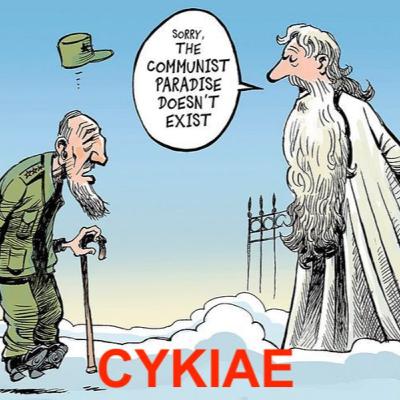
Now I’m about to enter into a discussion of Darwin’s Theory of Evolution. I’ll be putting material that doesn’t agree with that theory, and that’s very brave of me. Maybe insanely brave. Maybe mad.John Lennox, in his book, God’s Undertaker explained why recounting this story:A leading Chinese palaeontologist Jun-Yuan Chen ran into this problem when visiting the USA in 1999. His work on the remarkable discoveries in Chengjiang of strange fossil creatures led him to question the orthodox evolutionary line. In true scholarly fashion he mentioned his criticisms in his lectures but they elicited very little response. This lack of reaction surprised him and so he eventually asked one of his hosts what was wrong. He was told that scientists in the USA did not like to hear such criticism of evolution. To this he gave the delightful reply that it seemed to him that the difference between the USA and China was: 'In China we can criticize Darwin, but not the government; in America you can criticize the government, but not Darwin.'This is in line with the view in England also it would seem from my last programme, when I quoted Richard Dawkins saying that anyone who claims not to believe in evolution that person is ignorant, stupid or insane (or wicked, but he said he didn’t wish to consider that possibility.
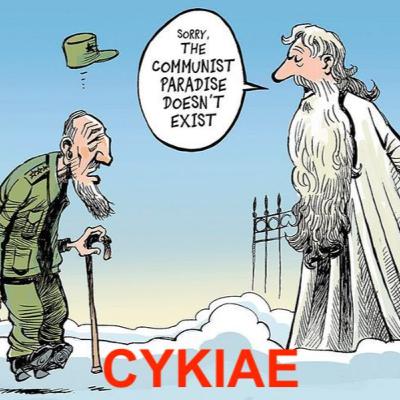
The first great fall of man, that we know about, happened with Adam and Eve. Man was expelled from paradise, the Garden of Eden. Paradise was lost.But then thousands of years later, in 1859, the world, looked at from the point of view of the British Empire, was living in another golden age, perhaps in a new Garden of Eden, as if we’d somehow managed to find our way back into Eden. But then, perhaps even more startling, a new revelation was unveiled to us when the scales fell from our eyes. God didn’t create man, man created God. Freud revealed this staggering truth to us. As we all know today, Charles Darwin’s Theory of Evolution, in his 1859 published book, The Origin of the Species, killed the very idea of God. At least that’s what we’re told, or was that just fake news. So let’s look closely at Mr Darwin and his contribution that lead to the cover story on Time magazine of 22 October 1965 asking, Is God Dead?Tag words: Adam and Eve; Garden of Eden; Charles Darwin; Theory of Evolution; The Origin of the Species; God; Is God Dead; New Atheists; Richard Dawkins; Genesis; William Whewell; natural philosophers; John Ray; Carolus Linnaeus; Daniel Solander; Captain Cook; Sir Joseph Banks; HMS Beagle; Georges-Louis Leclerc; Comte de Buffon; James Ussher; Archbishop Ussher; Daniel Boorstin The Discoverers; God of the Gaps; Sir Isaac Newton; the Creation;
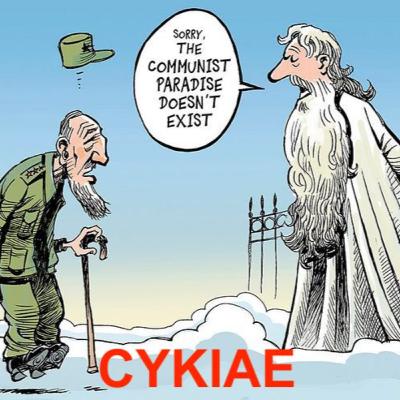
Carl Sagan was probably the best known scientist in the West in the 1970s and 1980s. In 1980 his 13 part series, Cosmos, aired and was a spectacular hit. In the very opening of the series he told his audience this:So according to Carl Sagan, the cosmos is all that is, or ever was, or ever will be. To elaborate he meant that the universe was made only from things in our universe -- matter and energy. Explicitly he was saying that there is no God. That was not a statement of the finding of science, made by him as a scientist, it was a statement of Carl Sagan’s personal belief.But then just a year later Francis Crick, one of the discoverer’s of DNA, the famous double helix, an atheist, said something quite disturbing, well for an atheist that is:"An honest man, armed with all the knowledge available to us now, could only state that in some sense, the origin of life appears at the moment to be almost a miracle, so many are the conditions which would have had to have been satisfied to get it going."Stephen Meyer’s book, The Return of the God Hypothesis, published in 2021, may have delivered the final death blow to the popularist atheism that Carl Sagan had opened his Cosmos series with. Today all the science seems to be going against any belief that there’s no Creator outside the universe. But more than that, the fall of atheism, if that’s what we’re witnessing, taken to its logical conclusion, spells the end of the West’s self loathing and weird ideologies that are based on the view that the Bible is not the truth and a return to societies based on Judaeo Christian values – which Tom Holland in his book Dominion, said was and is the reason for the success of the West – or more precisely societies that are governed in accordance with God’s laws and ethics as revealed in the Bible. For the West, and the world, I believe, this will come as a great liberation. This series will explore all of those issues and their ramifications.Tag words: Carl Sagan; Cosmos; Francis Crick; DNA; double helix; atheist; Stephen Meyer; The Return of the God Hypothesis; Tom Holland; Dominion; Bible; John Lennox; Big Bang Theory; Fred Hoyle; Charles Darwin; The Origin of the Species; Geraint Lewis; Luke Barnes; A Fortunate Universe; Cosmic Microwave Background Radiation; anthropic coincidences; Goldilocks universe; Genesis 2:7; Richard Dawkins; The Greatest Show on Earth; Dr Stephen Iacoboni; The Undying Soul;

A great thinker said that the the medieval mind was broader than ours because they believed that the ultimate realities were outside place and time and that man could commune with them through mystical experience and after the death of the body. Who was it that said that?Tag words: Dr Frankl; Man’s Search for Meaning; Nazi Death camps; the no-future generation; give-up-it is; depression; aggression; addiction; the existential vacuum; logotherapy; Harold S Kushner; When Bad Things Happen to Good People; Dr Iacoboni; The Undying Soul; Henry Bamford Parkes; The Divine Order; Telos;
In his book, 12 Rules for Life, Jordan Peterson wrote:So why not call this a book of "guidelines," a far more relaxed, user-friendly and less rigid sounding term than "rules"?Because these really are rules. And the foremost rule is that you must take responsibility for your own life. Period.One might think that a generation that has heard endlessly, from their more ideological teachers, about the rights, rights, rights that belong to them, would object to being told that they would do better to focus instead on taking responsibility. Yet this generation, many of whom were raised in small families by hyper-protective parents, on soft-surface playgrounds, and then taught in universities with "safe spaces" where they don't have to hear things they don't want to—schooled to be risk-averse—has among it, now, millions who feel stultified by this underestimation of their potential resilience and who have embraced Jordan's message that each individual has ultimate responsibility to bear; that if one wants to live a full life, one first sets one's own house in order; and only then can one sensibly aim to take on bigger responsibilities. The extent of this reaction has often moved both of us to the brink of tears.Sometimes these rules are demanding. They require you to undertake an incremental process that over time will stretch you to a new limit. That requires, as I've said, venturing into the unknown. Stretching yourself beyond the boundaries of your current self requires carefully choosing and then pursuing ideals: ideals that are up there, above you, superior to you—and that you can't always be sure you will reach.Life is not always easy, not always in your control. How would this generation have coped in the Nazi Death Camps. Dr Frankl answered that question – because he had just done exactly that.Tag words: Jordan Peterson; 12 Rules for Life; safe spaces; responsibility; life; Dr Frankl; Man’s Search for Meaning; Nazis; meaning of life; Rainer Marie Wilkie; SS; death camps; gas chambers; Auschwitz; Lord's Prayer; Shema Yisrael; victimhood; oppressed; tragic optimism; logotherapy;
Oppressors and oppressed. Victims and victimhoodr. Dr Viktor Frankl showed that there was an easy way any victim could escape their victimhood.Tag words: Oppressors and oppressed; Victims; victimhood; Dr Viktor Frankl; Man’s Search for Meaning; Auschwitz; Sigmund Freud; Alfred Adler; Darwin; Theory of Evolution; Dr Iacoboni; the mass murderer of Steinhof; Lubianka prison; Freedom; Responsibility; Arthur Miller; Incident at Vichy; Nazis; Frederick Nietzsche; Twilight of the Idols;
What’s the one thing that you wouldn’t expect to find in the Nazi death camps?Tag words: Nazi death camps; Dr Iacoboni; The Undying Soul; acute leukemia; the Lord; God; Dr Frankl; Man’s Search for Meaning; Türkheim Concentration Camp; Dachau; Cannibalism;
Dr Frankl, now liberated from the death camps, wrote in his book Man’s Search for Meaning: We came to meadows full of flowers. We saw and realized that they were there, but we had no feelings about them. The prisoners of the Nazi death camps had been gutted. Would they ever feel again?Tag words: Dr Frankl; Man’s Search for Meaning; Nazi death camps; God; Dr Iacoboni; The Undying Soul; St Paul; 2 Timothy 2; 2 Timothy 3; soul; Third Reich; depersonalization; Psalm 118:5; fear God;
Can you escape your death? Not the last one, of course, no one can escape that one, but can you escape an early death? Viktor Frankl did – by sheer chance and in this part I’m going to tell you how he managed that.Tag words: Viktor Frankl; Man’s Search for Meaning; Nazi death camps; Auschwitz; Death in Teheran; Hitler; Thousand Year Reich; Türkheim; God; soul; Red Cross; Dr Iacoboni; The Undying Soul; acute leukemia; Wolves;

Comments

Download from Google Play

Download from App Store
 United States