


Cashflow Diary™
Subscribed: 2,906Played: 63,564
Subscribe


© CashFlow Diary and West Egg Enterprises Inc 2013-2026
Description
Cashflow Diary™ is the podcast for short-term rental owners who want their properties to actually pay them.
Host J. Massey is a real estate investor, sales coach, and master facilitator of Robert Kiyosaki's CASHFLOW™ 101 game. He breaks down real numbers from real client conversations: pricing, platform fees, direct bookings, systems, and the habits that quietly cap experienced hosts.
New episodes every Tuesday.
Want a second set of eyes on your numbers? Book your complimentary one-on-one diagnostic call at cashflowdiary.com/diagnostic
Many episodes are narrated with J. Massey's own licensed AI voice clone, built from his own recordings and real client conversations.
708 Episodes
Reverse
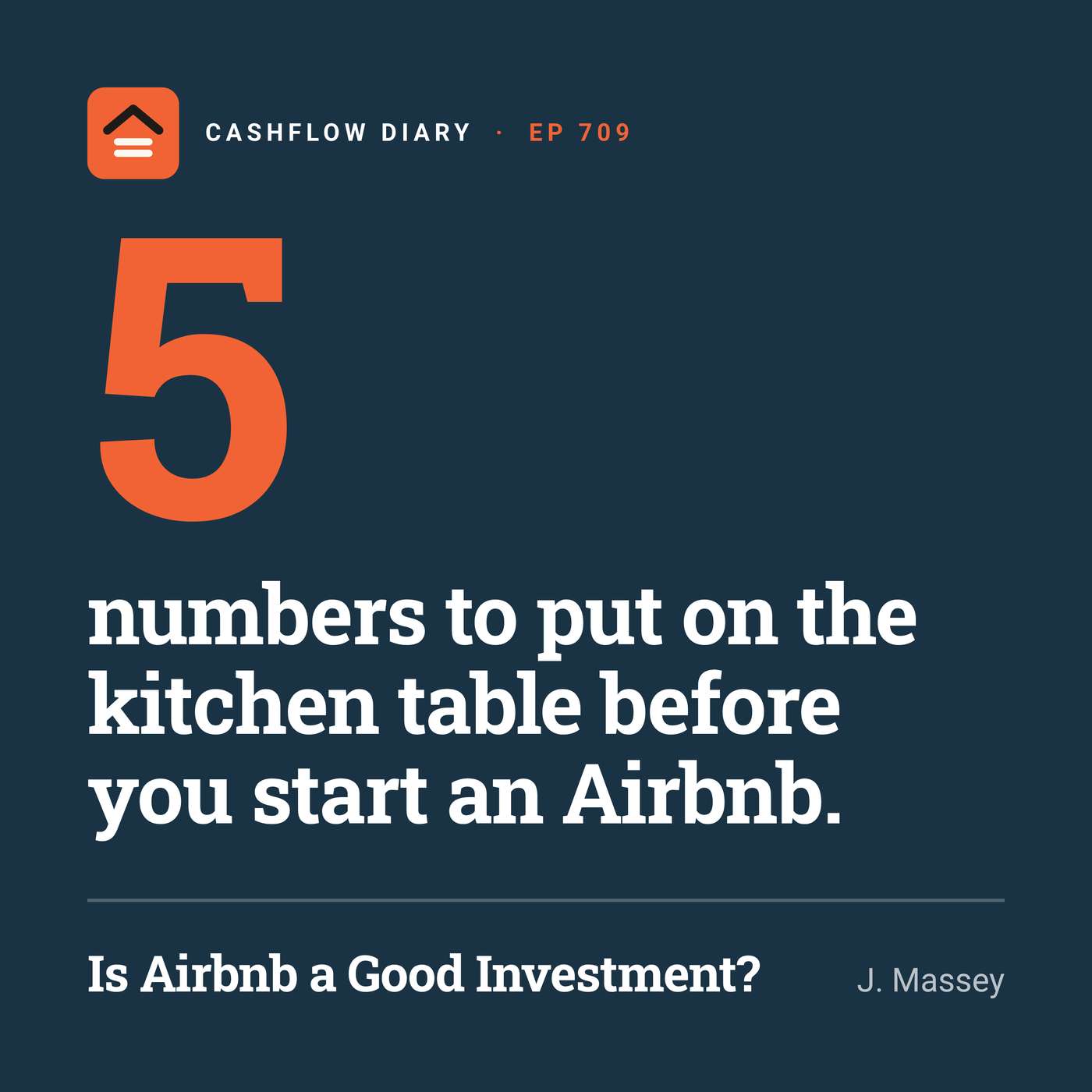
AI disclosure: This episode is narrated by an AI-generated voice.
You say it out loud at the kitchen table. What if we did an Airbnb? And the person across from you asks what happens when the water heater goes and nobody's booked. J. walks through the five numbers to put on the table before any money moves, how to let a worried partner talk first, the difference between owning and renting to rent, and how to agree on the most you'd lose and a stop rule. Any number that isn't from a published source is a hypothetical example.
What you'll learn:
Why the Federal Reserve's $400 emergency expense number belongs in this conversation (63% of adults said they would cover it with cash or its equivalent)
The 70/30 rule J. teaches for sales calls, used at the kitchen table
Number 1, the all in cost (hypothetical $14,000 furnished one bedroom)
Number 2, the reserve (hypothetical three months of fixed costs, about $7,400)
Number 3, a realistic net after Airbnb's 15.5% host service fee (hypothetical $4,500 month leaves about $850 before taxes)
Number 4, the downside month (hypothetical slow month, about $1,000 out of pocket)
Number 5, time per week, and whose hours they are
Owning vs renting to rent, and how to check your city or county code, the permit office, HOA rules and your lease
Agreeing on the most you're willing to lose, plus a stop rule
Timestamps:
00:00 63 percent and the kitchen table
01:02 Let the worried person talk first
02:02 Number 1, the all in cost
02:45 Number 2, the reserve
03:47 Number 3, a realistic net
04:44 Number 4, the downside month
05:37 Number 5, time per week
06:26 Owning or renting to rent
07:36 The most you'd lose and a stop rule
08:20 Homework, diagnostic call, sign-off
09:24 AI voice note
Want help pressure testing your five numbers for your own market? Book your complimentary one-on-one diagnostic call: go.cashflowdiary.com/ep709-call
Not ready for a call? Get the free Cashflow Diary newsletter: go.cashflowdiary.com/ep709-subscribe
Sources: Board of Governors of the Federal Reserve System, Economic Well-Being of U.S. Households in 2025 (SHED), executive summary: 63% of adults would cover a hypothetical $400 emergency expense exclusively using cash, savings, or a credit card paid off at the next statement. Airbnb Resource Center, "How much does Airbnb charge hosts?" (Oct 13, 2026): single 15.5% service fee paid by hosts, exceptions may apply, applies to the nightly price and optional fees like cleaning, deducted to calculate payout; Airbnb Help Center article 1857 (service fees). Airbnb Resource Center, "Learn about hosting regulations" (local rules, permits and taxes). All retrieved 2026-11-13; fees and policies can change, so check the current pages. J. Massey's own words from earlier Cashflow Diary Q&A episodes and trainings (2019 to 2021).
If this helped, rate the show on Apple Podcasts or Spotify.
Narrated with J. Massey's licensed AI voice, built from his own recordings.
Educational content, not legal, tax or financial advice. All dollar examples are hypothetical. Check your local rules, HOA and lease, and ask a local attorney or CPA about your situation. Rental businesses take work and money and can lose money.
(00:00) - 63 percent and the kitchen table
(01:01) - Let the worried person talk first
(02:01) - Number 1, the all in cost
(02:45) - Number 2, the reserve
(03:46) - Number 3, a realistic net
(04:43) - Number 4, the downside month
(05:37) - Number 5, time per week
(06:26) - Owning or renting to rent
(07:35) - The most you'd lose and a stop rule
(08:20) - Homework, diagnostic call, sign-off
(09:23) - AI voice note
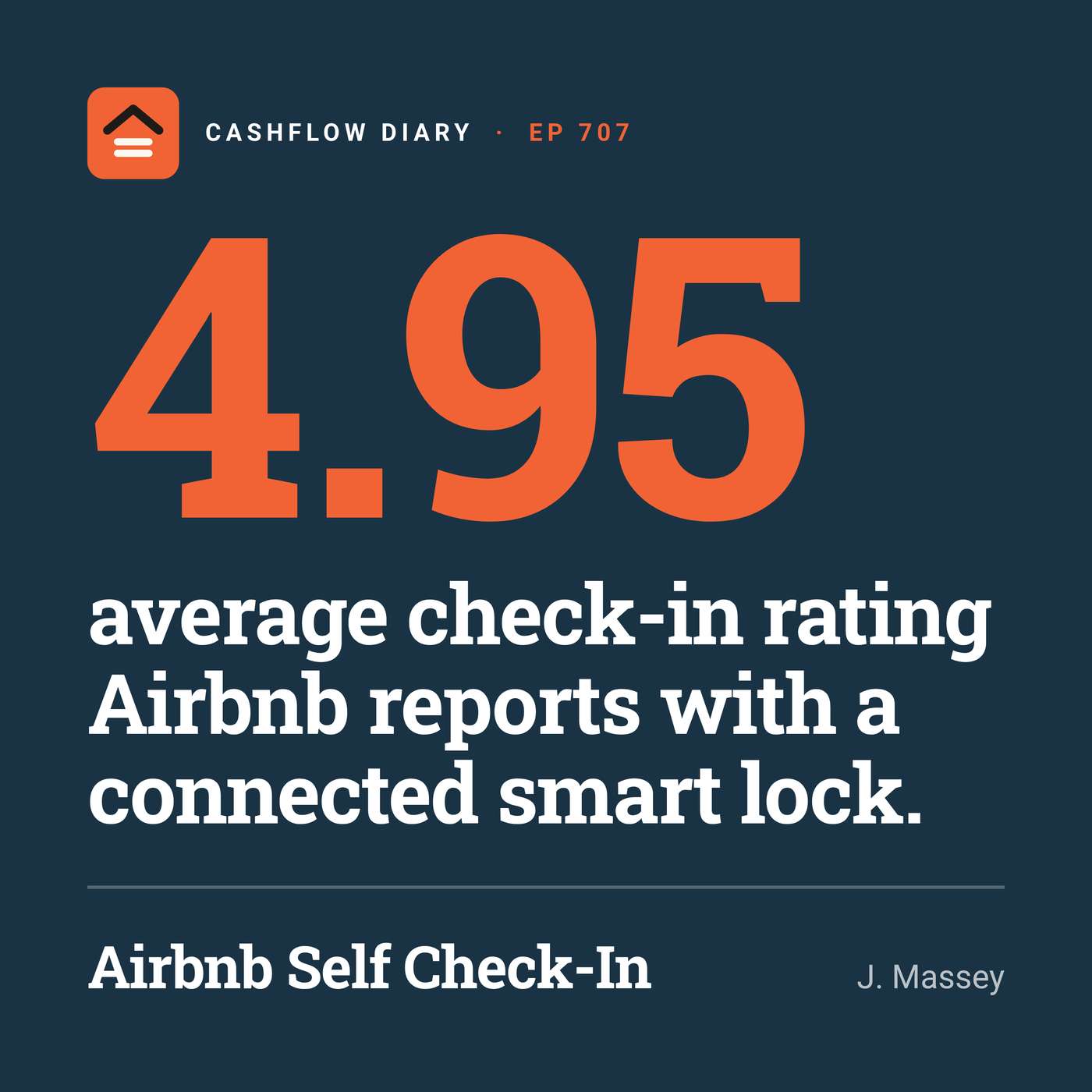
AI disclosure: This episode is narrated by an AI-generated voice.
You've got a day job, and a guest is in the driveway early. So you leave work, drive across town and hand over a key. J. walks through how to take yourself off the front door with self check-in: the three methods Airbnb lists, why every guest should get their own code, how a connected smart lock handles codes for you, the backup plan for the night the lock dies, and what to ask your landlord, HOA or building before you drill a single hole. He also tells the story of the lockbox and physical key he found as a guest in Charlotte. Any dollar figure that isn't a published price is a hypothetical example.
What you'll learn:
A hypothetical look at what meeting guests at the door costs a host with a day job (8 check-ins a month x 45 minutes = 72 hours a year)
The six check-in methods in Airbnb's Help Center, and how lockbox, keypad and smart lock differ
Why J. doesn't use physical keys, and why every guest should get a unique code
How Airbnb's connected smart lock feature works: eligible locks, when codes are sent, when they turn on and expire, and separate codes for cleaners
Backup codes and backup entry methods, plus J.'s fallback ladder when a building won't allow a smart lock
Questions to ask your landlord, HOA or building manager in writing before you change a lock or add a lockbox
Airbnb's rules on doorbell cameras, indoor cameras and noise monitors
What to put in the arrival message, and how to test it before your first guest
Timestamps:
00:00 4.95 and the front door
01:13 72 hours a year at a door
02:02 Six check-in methods, three self
02:56 A lockbox in Charlotte
04:01 How a connected smart lock works
05:21 The night the lock dies
06:32 Ask before you drill
07:28 Doorbell cameras and the rules
08:30 The arrival message, tested
09:22 Homework, diagnostic call, sign-off
10:26 AI voice note
Want help mapping out how a rental can run around your job? Book your complimentary one-on-one diagnostic call: go.cashflowdiary.com/ep707-call
Not ready for a call? Get the free Cashflow Diary newsletter: go.cashflowdiary.com/ep707-subscribe
Sources: Airbnb Resource Center, "Connect a smart lock to Airbnb for smoother check-ins" (4.95 average check-in rating for listings with a connected smart lock, Jan 1 to Jun 30, 2024; Schlage, Yale and August; lock kits typically from around $250; separate codes for hosts, co-hosts and cleaners) and "How to provide self check-in for smooth arrivals" (self check-in among the top 10 amenities, Airbnb internal search data for 2025; unique access code for each booking guest). Airbnb Help Center articles 1926 (check-in methods; instructions 48 hours before check-in), 3481 (code active times, expiry window, backup entry method), 3483 (how smart lock codes are shared), 41 (what check-in instructions include) and 3061 (security cameras, recording devices and noise decibel monitors, effective April 30, 2024). All retrieved 2026-10-21; Airbnb features and policies can change, so check the current pages. J. Massey's own words from earlier Cashflow Diary podcast episodes (2023 security episode, 2023 Q&A).
If this helped, rate the show on Apple Podcasts or Spotify.
Narrated with J. Massey's licensed AI voice, built from his own recordings.
Educational content, not legal or financial advice. Your lease, HOA, building rules and local laws come first. Rental businesses take work and money and can lose money.
(00:00) - 4.95 and the front door
(01:12) - 72 hours a year at a door
(02:02) - Six check-in methods, three self
(02:56) - A lockbox in Charlotte
(04:01) - How a connected smart lock works
(05:20) - The night the lock dies
(06:31) - Ask before you drill
(07:28) - Doorbell cameras and the rules
(08:29) - The arrival message, tested
(09:21) - Homework, diagnostic call, sign-off
(10:26) - AI voice note
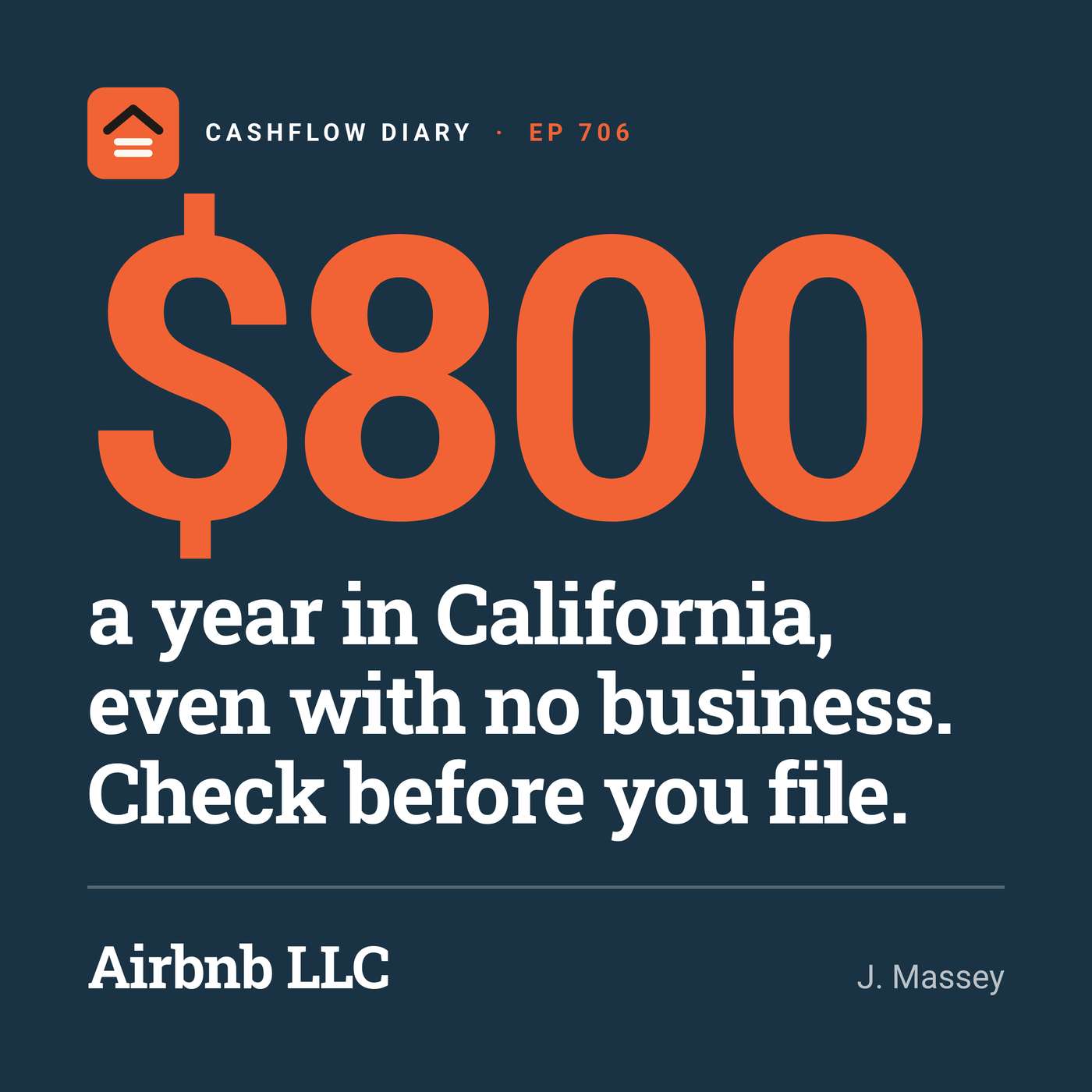
AI disclosure: This episode is narrated by an AI-generated voice.
"Put it in an LLC." You'll hear it from a cousin, a podcast and a Facebook group in the same week, and none of them have seen your lease, your loan or your state. J. walks through the business side of an Airbnb: what an LLC does and doesn't do, what to check before you file, and who to ask, in what order. He also tells the story of the mistake that cost him over six figures: waiting too long to get the bookkeepers, accountants and CPAs involved. Any dollar figure that isn't a published fee is a hypothetical example.
What you'll learn:
The three separate jobs: the LLC as a legal container, insurance that pays claims, and books that keep the container intact
How the IRS treats a one-owner LLC by default, which tax ID Airbnb asks a single-member LLC host for, and the 60-month rule on changing tax classification
Why Publication 527's "substantial services" question (Schedule C or Schedule E) is one to ask your CPA with or without an LLC
What Airbnb says AirCover doesn't replace, and why J. looks at insurance as pre-paying for legal defense
Operating agreement, separate bank account, and keeping business money in the business
Owned home vs. leased unit: due-on-sale clauses, landlord sign-off and personal guarantees
A hypothetical yearly cost per booked night, using California's published $800 annual LLC tax
What to bring, and the questions to ask your attorney first and your CPA second
Timestamps:
00:00 Over six figures, one mistake
01:02 What an LLC is, in 3 jobs
01:59 The tax side, by default
03:16 Insurance still pays the claim
04:06 Keeping the line real
05:12 Own or lease: where it changes
06:21 What it costs each year
07:34 Who to ask, in what order
08:43 Homework, diagnostic call, sign-off
09:38 AI voice note
Want help mapping out the business side of your rental? Book your complimentary one-on-one diagnostic call: go.cashflowdiary.com/ep706-call
Not ready for a call? Get the free Cashflow Diary newsletter: go.cashflowdiary.com/ep706-subscribe
Sources: IRS, "Limited liability company (LLC)" and "Single member limited liability companies" (irs.gov), for state statute and the disregarded-entity default. IRS, "Limited liability company: Possible repercussions", for the 60-month rule. IRS Publication 527, Residential Rental Property, for substantial services and Schedule C. U.S. Small Business Administration, "Choose a business structure" (sba.gov), and an SBA blog guest post (2016), "Basic Information About Operating Agreements". Airbnb Help Center, "US tax information validation" (airbnb.com/help/article/3178) and "Responsible hosting in the United States" (airbnb.com/help/article/1376). Cornell Law School LII, "Piercing the corporate veil" and 12 U.S. Code § 1701j-3. California Franchise Tax Board, "Limited liability company" (ftb.ca.gov). All retrieved 2026-10-18. J. Massey's own words from earlier Cashflow Diary podcast episodes (2019 Q&A, 2020 insurance Q&A, 2022 insurance episode).
If this helped, rate the show on Apple Podcasts or Spotify.
Narrated with J. Massey's licensed AI voice, built from his own recordings.
Educational content, not legal, tax or financial advice. Rules vary by state; your attorney and CPA make the call for your situation. Rental businesses take work and money and can lose money.
(00:00) - Over six figures, one mistake
(01:01) - What an LLC is, in 3 jobs
(01:59) - The tax side, by default
(03:16) - Insurance still pays the claim
(04:05) - Keeping the line real
(05:12) - Own or lease: where it changes
(06:21) - What it costs each year
(07:34) - Who to ask, in what order
(08:43) - Homework, diagnostic call, sign-off
(09:37) - AI voice note
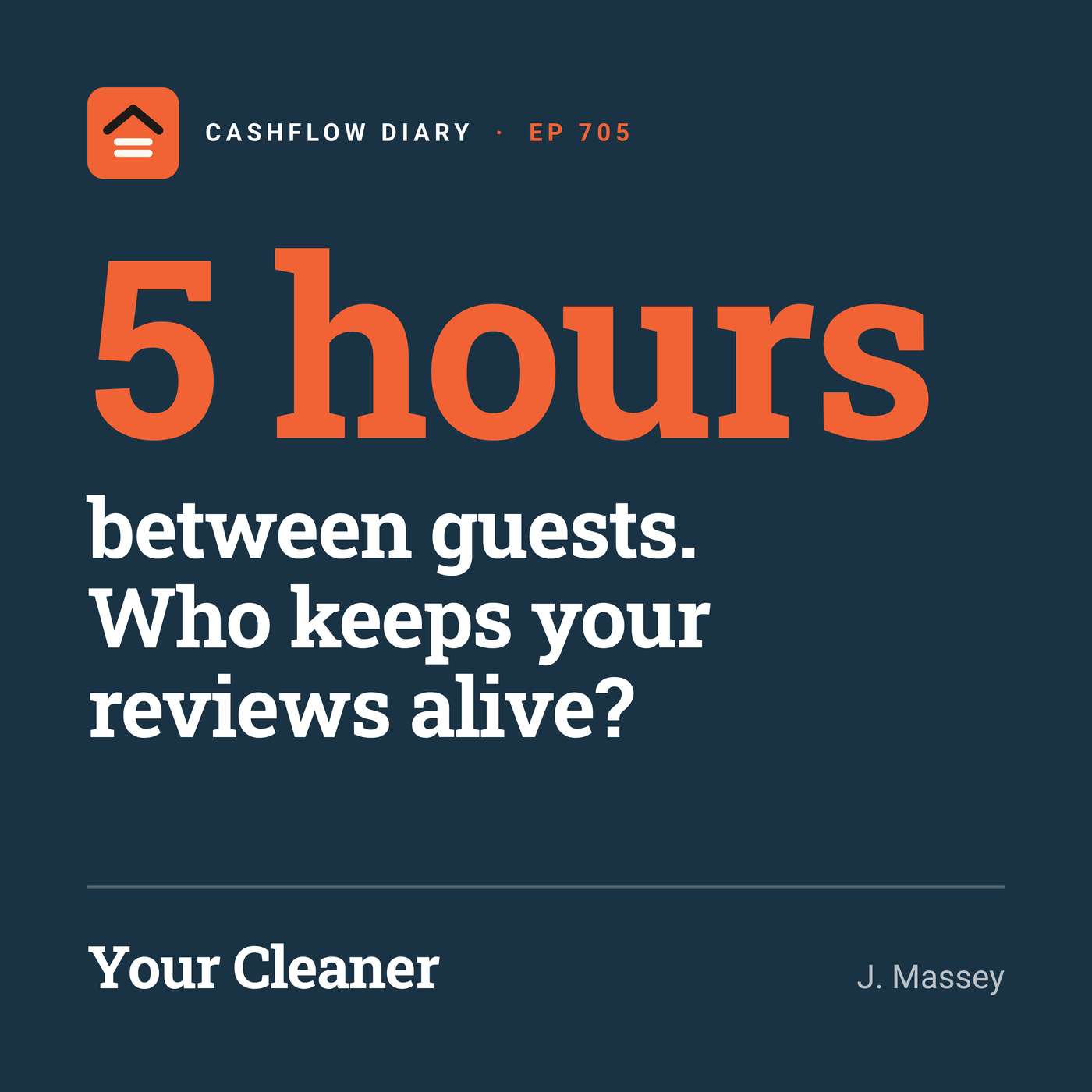
AI disclosure: This episode is narrated by an AI-generated voice.
Checkout at eleven, check-in at four. That five hour window shapes your reviews, and on most turnover days the person standing in it is your cleaner. J. makes the case that your cleaner is the most important hire in a rental business, then walks through how to keep a good one. Every dollar figure in the episode is a hypothetical example; run the math with your own numbers.
What you'll learn:
Why Airbnb names a lack of cleanliness as one of the most common reasons for reviews under five stars, and what a dirty arrival can cost you in refunds
How shopping for a cleaner on price alone can make you pay twice, and why J. shies away from asking guests to do the cleaning
What to look for in a turnover cleaner, starting with Airbnb's own vetting list
How to make the job easy to do well: spare linens in the unit, one home for supplies, and no extra jobs piled on
Pay and predictability, plus a hypothetical raise compared with the cost of one failed turnover
A six-photo check you can review from your phone before every check-in
How to build a backup cleaner before you need one, and a 10-minute homework
Timestamps:
00:00 Five hours between guests
00:57 Why the cleaner runs your reviews
01:53 Cheap can cost you twice
03:07 What to look for in a cleaner
04:17 Make the job easy to do well
05:26 Pay, predictability and a raise
06:32 Check the work without hovering
07:30 Build your backup now
08:31 Homework, diagnostic call, sign-off
09:30 AI voice note
Want a second set of eyes on your turnover setup and the numbers behind it? Book your complimentary one-on-one diagnostic call: go.cashflowdiary.com/ep705-call
Not ready for a call? Get the free Cashflow Diary newsletter: go.cashflowdiary.com/ep705-subscribe
Sources: Airbnb Resource Center, "Clean like a pro with these expert tips" (August 20, 2024), for the most common reason for reviews under five stars, Diana Cruz's spare-linens advice, the supplies caddy and the deep clean every two or three months. Airbnb Resource Center, "Ensuring your place is sparkling clean" (February 17, 2023), for running the cleaning once yourself, scheduling enough time and finding a second cleaner or backup plan. Airbnb Resource Center, "Everything you need to know about cleaning fees" (March 31, 2026), for the higher cleanliness standard, paying a fair wage and Lorna's slow-season guarantee. Airbnb Help Center, article 2993, on what guests do if a place isn't clean at check-in (photos, partial or full refund, 72 hours). Airbnb Help Center, article 2385, on not charging guests for cleaning or checkout tasks. Airbnb Help Center, article 3306, on the Host Recommendations Directory vetting list. All retrieved 2026-10-18. J. Massey's own words from Cashflow Diary podcast Q&A episodes (2019 and 2020) and his October 2020 masterclass on building your team.
If this helped, rate the show on Apple Podcasts or Spotify.
Narrated with J. Massey's licensed AI voice, built from his own recordings.
Educational content, not financial, legal or tax advice. Rental businesses take work and money and can lose money. Hiring, pay and worker classification rules vary by state; confirm them with a qualified professional.
(00:00) - Five hours between guests
(00:56) - Why the cleaner runs your reviews
(01:52) - Cheap can cost you twice
(03:07) - What to look for in a cleaner
(04:17) - Make the job easy to do well
(05:25) - Pay, predictability and a raise
(06:31) - Check the work without hovering
(07:30) - Build your backup now
(08:31) - Homework, diagnostic call, sign-off
(09:30) - AI voice note
AI disclosure: This episode is narrated by an AI-generated voice.
Airbnb says most hosts on its single fee structure pay 15.5% of every booking. The common advice is to build your own booking website and keep that money. J. walks through when a direct booking site pays, when it turns into a monthly bill for a page nobody visits, and how to start it in the right order. Every dollar figure in the episode is a hypothetical example; run the math with your own numbers.
What you'll learn:
What Airbnb's 15.5% host fee pays for (guest payments, marketing your listing, round-the-clock support), and what a card processor charges instead
Why a website is a door, and why J. brought up direct booking near the end of his growth stages
A simple break-even: fees kept per direct stay against what the site costs to run each year
What Airbnb's Off-Platform and Fee Transparency Policy prohibits, and which guests you can market to
Where direct guests come from, starting with who you serve
What moves back to you on a direct stay: lodging taxes, damage and liability cover, payments, your own terms, and calendar sync
Six steps to start, a 90-day check, and a 10-minute homework
Timestamps:
00:00 15.5% on every booking
01:00 What the fee pays for
02:05 A website is a door
02:54 When a direct site pays
04:04 Airbnb's off-platform rules
05:10 Where direct guests come from
06:20 What you take on
07:27 How to start, in 6 steps
08:38 Homework, diagnostic call, sign-off
09:26 AI voice note
Want a second set of eyes on your numbers? Book your complimentary one-on-one diagnostic call: go.cashflowdiary.com/ep704-call
Not ready for a call? Get the free Cashflow Diary newsletter: go.cashflowdiary.com/ep704-subscribe
Sources: Airbnb Help Center, "Airbnb service fees" (airbnb.com/help/article/1857), for the single fee structure and the 15.5% most hosts pay. Airbnb Resource Center, "How much does Airbnb charge hosts?", for what the fee covers. Stripe pricing page (stripe.com/pricing), for 2.9% + 30¢ per successful domestic card transaction. Airbnb Help Center, "Off-Platform and Fee Transparency Policy" (airbnb.com/help/article/2799). Airbnb Help Center, article 2509, on where Airbnb collects and remits taxes. Airbnb Help Center, "Host liability insurance" (airbnb.com/help/article/937). Google Hotel Center Help, "VR property managers: Starter guide overview", on individual homeowner eligibility. All retrieved 2026-10-18. J. Massey's own words from his live trainings and calls.
If this helped, rate the show on Apple Podcasts or Spotify.
Narrated with J. Massey's licensed AI voice, built from his own recordings.
Educational content, not financial, legal or tax advice. Rental businesses take work and money and can lose money. Read Airbnb's policies yourself and confirm tax, permit and insurance questions with your local government, your insurer and a qualified professional.
(00:00) - 15.5% on every booking
(00:59) - What the fee pays for
(02:04) - A website is a door
(02:54) - When a direct site pays
(04:03) - Airbnb's off-platform rules
(05:09) - Where direct guests come from
(06:19) - What you take on
(07:27) - How to start, in 6 steps
(08:37) - Homework, diagnostic call, sign-off
(09:25) - AI voice note

Comments

Download from Google Play

Download from App Store
 United States