


 Claim Ownership
Challenger Cities
Subscribed: 5Played: 108
Subscribe

© Challenger Cities 2024
Description
Iain Montgomery of Now or Never Ventures interviews urbanists, creatives, transit and development types to explore how cities can punch above their weight and create distinctive new futures outside of the tired playbooks.
69 Episodes
Reverse
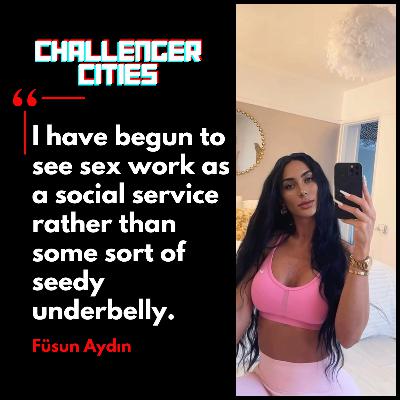
Füsun Aydın has spent twelve years reading people from a window in Amsterdam. Cities would be better places if the people planning them had half her instinct.Füsun is Turkish-born, a trans woman, a former sex worker, and now the madam of a bordello in Amsterdam's red light district. She came to the Netherlands as an asylum seeker at nineteen, having grown up in Istanbul where trans women have no legal discrimination protections and sex work on the street is both common and dangerous. The move wasn't idealism — it was survival arithmetic. In four years in Istanbul she knew fifteen women who were killed. In twelve years in Amsterdam, one. That is what regulation does.In this conversation we get into what it actually means to work behind a window in a residential neighbourhood — who walks past, how you read them, what the difference is between a local and a tourist, and what the red light district looks like from the inside at ten on a Monday morning versus nine on a Friday night. We talk about sex work as informal social infrastructure, the overlap between care work and sex work, and why the women Füsun has worked with who came from healthcare backgrounds didn't leave because the instinct to care disappeared — they left because the pay wasn't enough. And we get into the fight that matters most to her right now: Amsterdam's proposal to relocate the red light district, what it would actually mean for safety, and what it reveals about who gets listened to when cities make decisions about the places that matter most to the people who live in them.Füsun also writes about her life and work on Substack - https://substack.com/@fusunaydin, where she brings the same directness and warmth to the page that she brings to this conversation.
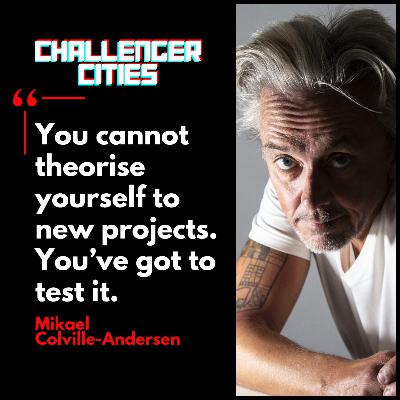
In this episode of Challenger Cities, Iain Montgomery is joined by urban designer, filmmaker, and author Mikael Colville-Andersen for a wide-ranging conversation about why cities so often know what works, yet struggle to act on it.We start with train stations and the importance of arrival, before moving through cycling, design, experimentation, Nordic urbanism, and finally Mikael’s recent work in Ukraine, where urbanism takes on a very different meaning.We cover:Why train stations are still one of the clearest signals of a city’s confidence and prioritiesWhat cities lose when arrival becomes a throughput problem rather than a civic momentWhy Copenhagen doesn’t have “cyclists,” only people on bikesHow removing friction works better than persuading or moralisingWhy design creates behaviour, and why blaming people misses the pointParis as an example of what happens when infrastructure forces constant negotiationThe limits of theory, optimisation, and data-heavy urbanismWhy pilot projects shouldn’t be scary, and how fear quietly paralyses citiesHow Copenhagen built momentum by testing ideas quickly and publiclyWhat the Nordics get right, not as a model to copy, but as a cultural operating systemDemocratic urbanism and designing cities for the five-year-old and the ninety-year-oldTrust as an overlooked form of infrastructureMikael’s work in Ukraine, where benches, trees, and shade become “urbanism as medicine”What peacetime cities should learn from urban interventions built under air-raid sirensA provocation: what would happen if one city simply did everything it already knows to be right?
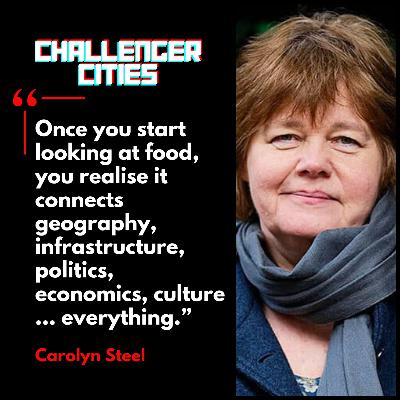
Cities are usually explained through buildings, infrastructure, policy and planning. Food rarely gets a look-in.Which is strange, because for most of human history, cities existed in the first place because we learned how to feed ourselves at scale. Farming allowed settlement. Settlement allowed specialisation. Specialisation gave us civilisation. Long before zoning codes or masterplans, food decided where cities formed, how power worked, and why empires survived or collapsed.In this episode, I’m joined by architect and writer Carolyn Steel, whose books Hungry City and Sitopia have quietly reshaped how many people think about food and place. Carolyn doesn’t approach food as lifestyle or culture. She treats it as infrastructure. A lens that connects geography, logistics, politics, economics, health and social life in ways that most urban conversations completely miss.We talk about cities as food machines, moving from Rome, Paris and London to Chicago, tracing how grain, rivers, canals, railways and refrigeration shaped very different political and economic outcomes. We explore how technology didn’t just speed food systems up, but fundamentally altered them, separating calories from nutrition and convenience from ritual.A big part of the conversation centres on Carolyn’s idea of exo-evolution: the moment when humans stopped adapting themselves to their environment and instead began redesigning the environment to suit their desires. Cities, it turns out, adapt very quickly. Human biology does not.We also dig into what was lost when markets gave way to supermarkets, how food was deliberately redesigned to remove human interaction, and why eating together remains one of our most overlooked forms of civic infrastructure.This is a conversation about food, but it’s really about cities. About how we live together, what we take for granted, and why so many urban problems make more sense once you stop looking at buildings and start following what’s on the plate.Don’t expect to walk through a supermarket in quite the same way afterwards.In this episode, we cover:• Why food is one of the fastest ways to understand how a city actually works • How Rome, Paris and London evolved very different food systems, and why that mattered politically • The role of grain, rivers and trade in shaping empires and revolutions • How Chicago became a global food hub through geography, railways and refrigeration • What exo-evolution means, and why cities adapt faster than human bodies • How ultra-processed food and constant availability changed our relationship with eating • Why markets were once the social heart of cities, and what happened when supermarkets replaced them • Eating together as low-tech civic infrastructure in an increasingly fragmented worldAbout CarolynCarolyn Steel is an architect and writer best known for Hungry City and Sitopia, two influential books exploring the relationship between food, cities and civilisation. Her work examines how food shapes the physical form of cities, the way societies organise themselves, and how modern food systems affect health, culture and everyday life.
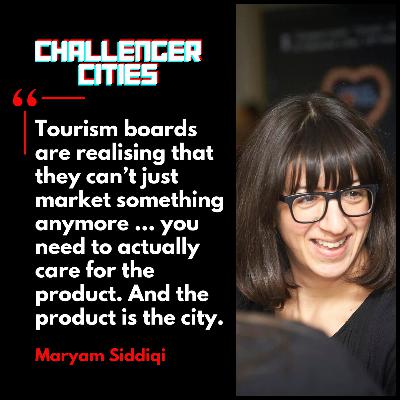
Tourism is big business. Cities spend vast sums attracting visitors, promoting landmarks and polishing their image. What they’re far less good at is thinking through the experience of actually being there. How a place works once you arrive. How you move around it. What makes sense, what doesn’t, and what quietly undermines the affection people might otherwise develop for a city.In this episode, Iain Montgomery is joined by Maryam Siddiqui, a Toronto-based travel and culture journalist who came to travel writing sideways rather than by design. Starting out in PR before moving into business journalism, then arts and culture, Maryam brings a critical, socially minded lens to how cities are marketed, experienced and lived in.Our conversation treats tourism not as leisure, but as a stress test for cities. We talk about over-tourism and the post-pandemic reckoning it forced into the open. About why cities are often better at selling themselves than explaining how they work. About transit systems that feel like puzzles, wayfinding that assumes insider knowledge, and why visitors notice problems locals have learned to tolerate.We dig into regenerative tourism, not as a buzzword but as a philosophy rooted in care, stewardship and Indigenous knowledge. If cities invite people in, what responsibility do they have for how those people move, behave and experience the place? And why are metrics like “heads in beds” still crowding out harder questions about emotion, memory and whether people actually want to come back?Toronto becomes a case study, from the confusion of its transit system to the disconnect between what’s officially promoted and what people actually love. Small theatres. Independent restaurants. Neighbourhood scenes that don’t lend themselves to brochures. As Maryam puts it, “The places that don’t need publicising are the ones with the money to do publicising.”We also talk about how people really plan trips today, bypassing official channels in favour of TikTok, Instagram, Reddit and word-of-mouth, and what that means for tourism organisations still behaving like broadcasters rather than curators.We close with Maryam’s magic wand: making it genuinely safe and easy to bike around cities, and pushing tourism organisations to show up for locals, not just visitors. Sponsoring neighbourhood festivals. Supporting cultural life. Making it obvious how tourism contributes to the everyday city.Because at its best, tourism doesn’t invent affection. It amplifies what’s already there.Topics covered:Tourism as a stress test for citiesOver-tourism and the post-pandemic shiftWhy cities sell highlights but neglect experienceTransit, wayfinding and everyday frictionRegenerative tourism and care for placeTikTok, trust and the collapse of official travel commsToronto as a case studyThe gap between what cities promote and what people loveWhy tourism organisations need to show up for locals
In this episode of Challenger Cities, we've got Pete Brown, one of the UK’s most thoughtful writers on beer, pubs, and drinking culture.Pete has spent decades writing about pubs not as lifestyle accessories or nostalgic backdrops, but as places where history, behaviour, economics and everyday social life collide. We talk about why pubs weren’t designed, branded or planned into existence, but evolved slowly through circumstance, need, and habit. Why that matters for cities obsessed with masterplans and placemaking. And why attempts to “recreate” pub culture so often feel hollow.Pete offers a compelling reframing of alcohol as a form of social technology. Dangerous if mishandled, but deeply valuable when surrounded by the right rituals, spaces, and social rules. We explore how pubs moderate behaviour, teach people how to drink, and create a crucial middle ground between sobriety and excess that many cultures understand instinctively.We also get into the overlooked design intelligence of pubs. The bar as a place for accidental conversation. The invisible queue. The unspoken rules about who you talk to, where, and for how long. How pubs create weak ties between people who would never otherwise meet, without forcing intimacy or participation.From there, the conversation widens out to loneliness, screens, and a world increasingly engineered to keep people at home. Pete makes the case that pubs sit in direct opposition to frictionless, algorithmic life, and that this discomfort is precisely what makes them socially valuable.We talk about flat-roof pubs, post-war housing estates, and why the loss of informal gathering places has left many newer neighbourhoods socially hollow. We look at how pubs are being squeezed from all sides: cheaper beer in supermarkets, rising costs, higher taxes, and policy frameworks that treat them like any other retail unit while ignoring the social work they do for free.This is a conversation about pubs, but it’s really a conversation about cities. About what we value, what we price, and what we quietly allow to disappear while wondering why public life feels thinner than it used to.
Most cities are designed around a surprisingly narrow idea of who gets to feel comfortable in public.In this episode of Challenger Cities, Iain Montgomery chats with Patti Baston, who runs a feminisation makeover service in Manchester. On the surface, her work might sound niche. In practice, it turns out to be a sharp and unexpected lens on how cities really work, who they quietly exclude, and how play, permission, and experimentation get designed out of adult life.We talk about growing up without space to express yourself, getting ready in café toilets, the freedom cities can offer through anonymity and density, and why permission might be one of the most overlooked forms of urban infrastructure. Along the way, the conversation touches on femininity, masculinity, power, vulnerability, internet culture, gentrification, and what happens when cities mistake control for care.This isn’t a culture-war conversation. It’s a human one. About joy, play, and what it means to feel at ease in public.Expect some swearing.
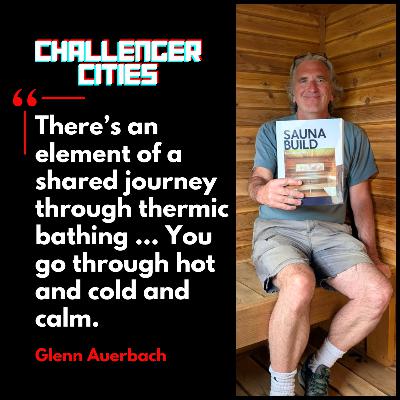
Iain Montgomery talks with Glenn Auerbach about why sauna, bathing and cold-water culture has suddenly gone mainstream in cities around the world, and why the reasons go far beyond health trends or wellness hype. From floating saunas and mobile heat rooms to dawn swims in urban rivers and harbours, we explore how shared rituals of heat, cold and recovery are reintroducing forms of social connection that cities have quietly lost. Glenn traces sauna’s roots as everyday civic infrastructure rather than luxury amenity, reflects on the risks of gatekeeping and elitism as the scene grows, and explains why inclusive, well-held sauna culture can strengthen community, public trust and even environmental stewardship. The conversation reframes sauna not as a fad, but as a clue to how cities might better balance pressure, release, togetherness and solitude.
We reconnect with Jasmine Palardy almost eighteen months after our very first conversation to reflect on what has changed in how we think and talk about cities, and what hasn’t. Exploring why real progress in cities comes not from imposing control but from embracing uncertainty, loosening the grip of over-planning and letting “accidental urbanists” and informal city builders shape change on the ground. Jasmine reframes urbanism as a messy, lived practice rather than a rigid discipline, and highlights how everyday friction and irritation are often the beginning of meaningful change. This episode reframes control, imagination and experimentation in the design of cities.
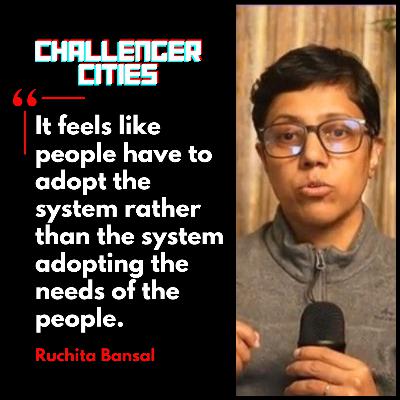
Ruchita Bansal discusses what happens when modern infrastructure projects are built at speed but don’t connect with the deep, informal systems that make cities work. Drawing on her experience across Indian urban planning and large-scale delivery, we explore how cities in India are being transformed rapidly with metros, highways and ambitious timelines, yet often miss the connective tissue of everyday life such as first-mile/last-mile walking, informal transport, street life and safety. We dig into whether building faster actually deepens resilience or erodes memory, how imported models can misfit local context, and what it means to design infrastructure that truly serves people rather than object-centric headlines.
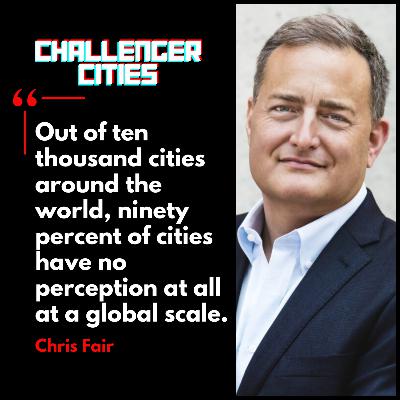
Chris Fair, CEO of Resonance and publisher of "World's Best Cities" talks about what really separates the world’s cities. As Chris explains, obsessively measured performance isn’t enough to explain why some cities feel magnetic and others feel interchangeable. We unpack the World’s Best Cities framework and how liveability, prosperity, and a often-overlooked dimension of lovability shape both the experience of place and its global perception. We explore the gap between performance and perception, why most cities lack resonance on the world stage, and how the interplay between infrastructure and experience may determine the future of urban successhttps://www.worldsbestcities.com/
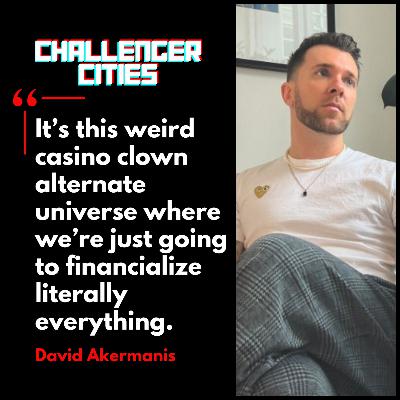
Researcher and strategist David Akermanis talks about how young people are navigating a world where traditional financial stability has eroded and cities themselves shape economic life. We explore why the familiar narratives about youth finance, savvy versus reckless, miss the deeper tension underneath. Across stories of early career precarity, the blending of gambling and investing, the limitations of traditional banking advice, and how mobility and access matter as much as income, we dig into how young people are improvising within a system that no longer feels trustworthy. The conversation reframes stability, money, and the urban experience, and challenges cities and institutions to rethink how they build opportunity and trust for future generations.https://www.fasterhorses.ca/blog/young-people-amp-money
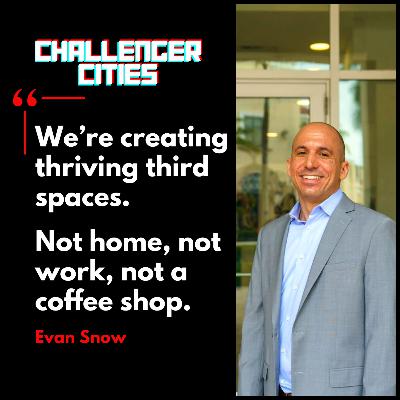
Evan Snow, co-founder of Zero Empty Spaces talks about why vacancy in cities isn’t a neutral pause but an active force shaping how we feel, move and connect in urban places. We explore how empty storefronts, abandoned commercial spaces and obsolete interiors drain confidence and disrupt movement, and how creative, low-risk activation can turn them into meaningful places without waiting for the “perfect tenant” or a grant. Evan’s work reframes empty space as opportunity, showing how activation builds momentum, restores “muscle memory” on streets, and creates social and economic life where there was none. This episode reframes how we think about vacancy, placemaking and the everyday infrastructure of cities.
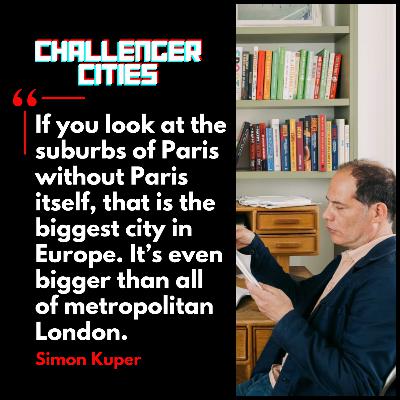
In this episode of Challenger Cities, Iain Montgomery talks with journalist and author Simon Kuper about his book Impossible City: Paris in the Twenty-First Century and what modern Paris really is beneath its postcard reputation. We start with Simon’s accidental arrival in the city and the surprising affordability and vibrancy Paris once had, and then explore how it has changed into a global powerhouse of luxury and culture while still maintaining a remarkable commitment to social housing and dense urban life. Paris’s paradoxes become a lens for thinking about cities more broadly: its suburbs are Europe’s largest urban agglomeration, massive infrastructure projects like the Grand Paris Express shape new futures, and everyday urban rituals, from playgrounds to meals, reveal a collective culture that defies typical Anglo planning assumptions. Along the way we touch on politics, identity and what it means to belong to a city that so many outsiders try to perform as insiders.
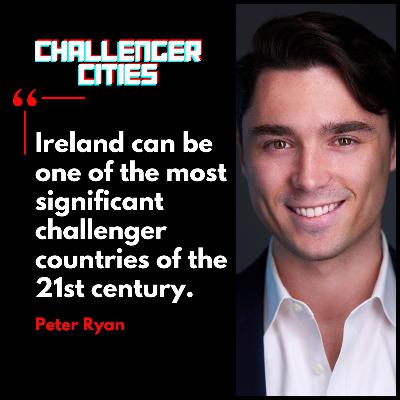
In this episode of Challenger Cities, Iain Montgomery is joined by economist and commentator Peter Ryan for a wide-ranging conversation about Ireland, a country that is often talked about but rarely understood.We dig into why Ireland’s global reputation, from tax haven clichés to headline GDP figures, obscures the lived reality on the ground. Peter unpacks how the country’s early post-independence history shaped a cautious institutional culture, why Ireland’s real constraints are political and regulatory rather than natural or financial, and how GDP growth has failed to translate into housing, infrastructure, and everyday quality of life.The conversation ranges across energy, industry, transport, housing finance, and party politics, exploring how Ireland became wealthy without becoming fully equipped, and what that tells us about the gap between economic success and civic capacity.It’s a discussion about national myths, institutional inertia, and the challenge of turning prosperity into places that actually work for people.
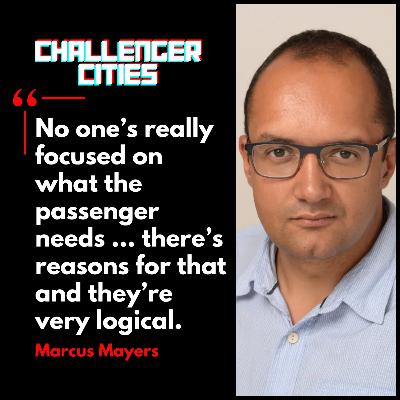
Iain Montgomery and Marcus Mayers discuss the complexities of transport systems, focusing on the balance between passenger experience and operational efficiency. They explore the impact of government regulations, the role of technology, and the need for a mindset shift in transport management. The discussion emphasises the importance of understanding passenger needs, improving accessibility and rethinking marketing strategies in the transport sector. The conversations leads to a call for a more human-centred approach to transport innovation that prioritises quality of life and effective communication.TakeawaysPassenger experience is often overlooked in transport operations.Operational efficiency is prioritized over passenger needs.Government regulations can complicate transport management.Technology can enhance the passenger experience.Quality of life should be a key focus in transport planning.Transport systems need to adapt to changing commuting patterns post-COVID.Accessibility is crucial for improving public transport usage.Marketing strategies in transport should focus on consumer needs.Innovative solutions are needed for better station navigation.Cultural challenges within transport organisations hinder progress.Chapters00:00 Introduction to Railway Innovation and Urbanism03:39 Passenger Needs vs. Operational Efficiency06:31 The Impact of Government Decisions on Train Operations09:12 Reforming Transportation Governance12:01 The Role of Digital Infrastructure in Transportation14:28 Quality of Life and Transportation Efficiency17:16 Addressing Anxiety in Public Transport20:03 The Future of Public Transport Management25:18 The Disconnect Between Governance and Transport27:14 Consumer-Centric Marketing in Transport29:37 Navigating Station Environments: The User Experience31:37 Innovative Signage Solutions for Accessibility36:27 The Impact of Historical Design on Modern Transport40:45 Rethinking Transport: A Customer-Centric Approach44:31 The Need for Bureaucratic Reform in Transport
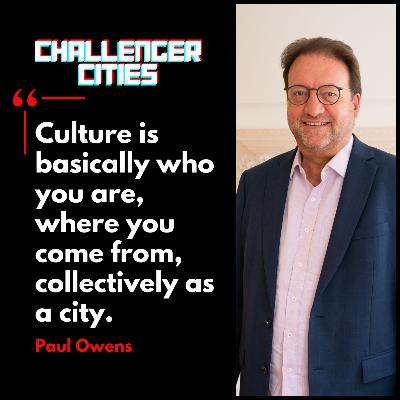
In this episode of Challenger Cities, we chat with Paul Owens, co-founder of BOP Consulting, long-time collaborator of Charles Landry, and one of the most quietly influential thinkers on culture and cities anywhere in the world.Paul has spent decades helping cities understand something most of them overlook: culture isn’t a sector or an industry, it’s an operating system of a place. It’s who you are, where you come from, and how you imagine yourself collectively as a city.We talk about:Culture as a public good, drawing on Robert Hewison’s definition and why it still cuts through the noise.Why assets don’t matter nearly as much as institutional capacity — the ability of a city to reflect on itself and act with confidence.London 2012 and how the Cultural Olympiad temporarily galvanised the UK’s cultural brain.Berlin’s cultural immune system, its resistance to monoculture, and why it remains a beacon of civic confidence.Chengdu’s “Park City” model, greenways, bike networks and how spatial planning can actively cultivate cultural life.The vanishing of cheap space and the consequences for artists, identity and civic vibrancy.Participation as democratic infrastructure, and why cultural engagement is one of the few things that strengthens both social cohesion and civic imagination.Paul’s magic wand: a permanent cultural endowment that recycles the public value culture creates back into the ecosystem.This episode is for anyone who senses that culture is doing far more work in a city than we usually acknowledge. Paul offers a way to see it, and measure it, and invest in it, that feels both urgent and hopeful.
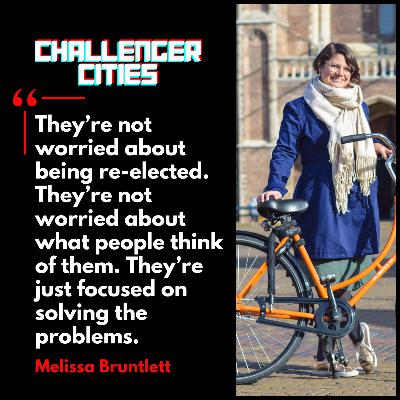
Melissa Bruntlett discusses her book 'Women Changing Cities' and the transformative role of women in urban mobility and planning. She emphasizes the importance of empathy, care, and community engagement in creating sustainable and equitable cities. The discussion covers various global cities, the challenges faced in transportation, and the impact of female leadership on urban change. Bruntlett shares insights on grassroots movements and the need for collaboration to drive positive change in urban environments.TakeawaysWomen are making significant contributions to urban mobility.Empathy and care are essential in urban planning.Cities should be designed with children and families in mind.Grassroots movements can lead to meaningful change.Female leadership often results in more inclusive policies.Transportation systems must address everyday needs, not just commutes.Collaboration and community engagement are key to success.Stories of transformation can inspire action in other cities.Urban planning should focus on creating enjoyable public spaces.Change takes time, and patience is crucial in advocacy.Chapters00:00 Introduction to Urban Mobility and Advocacy04:32 Women Transforming Cities07:06 The Inspiration Behind 'Women Changing Cities'10:09 The Role of Women in Urban Mobility12:34 Care and Mobility: A New Perspective15:14 Empathy in Urban Leadership17:57 Navigating Backlash Against Female Leaders20:25 Collective Efforts in Urban Transformation23:03 Finding Common Ground in Urban Development25:39 Global Perspectives on Urban Spaces31:18 Exploring Urban Challenges in Delhi34:04 Innovative Solutions for Women's Safety in Transportation38:46 Empowering Local Voices in Urban Change39:17 Finding Your Place in Urban Advocacy43:51 The Role of Women in Urban Leadership50:04 The Importance of Fun in Urban Spaces56:43 Exploring Urban Challenges and Innovations
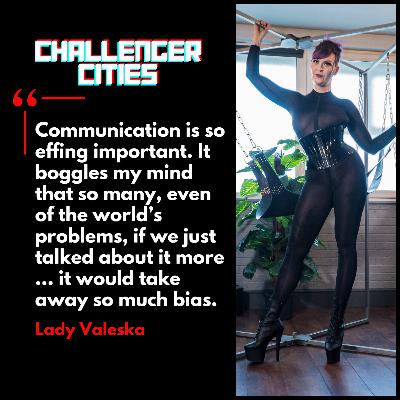
This one’s a little different. We sat down with Lady Valeska, a professional dominatrix now based in London, to talk about what cities, workplaces, and leaders could learn from the world of kink.It turns out, quite a lot!We talked about power, shame, permission, and trust, but not in the ways you’d expect. Lady Valeska’s version of dominance isn’t about control, rather it's about awareness. She reads people the way good designers read context: through signals, not assumptions.We got into:How communication and consent could fix more than just our sex lives.Why shame might be the most dangerous civic material ever invented.The death of anticipation in a world addicted to instant gratification.What the kink community understands about safety that most cities don’t.And why London’s chaos has its own erotic energy — while Toronto still plays it a little too polite.It’s not an episode about sex. It’s about systems, culture and the trust it takes to make exploration feel safe.Because whether you’re designing a city, a company, or a scene ... the rules are the same: communication, consent, boundaries, safe words and aftercare.Chapters00:00 Introduction to Kink and Dominatrix Culture04:45 The Evolution of a Dominatrix07:27 Communication and Consent in Kink10:02 Creating a Safe Space for Exploration12:43 The Dynamics of Shame and Acceptance15:03 Gender Fluidity and Societal Norms17:55 Cultural Differences in Leadership and Communication20:22 The Impact of Technology on Kink and Sex Work22:42 The Diversity of Kinks and Online Perceptions25:11 The Importance of Failure in Personal Growth27:46 Communication in Kink and Relationships30:55 Cultural Perspectives on Kink and Acceptance32:02 Comparing Life in Toronto and London36:21 Generational Differences in Acceptance39:05 Wishing for a Better Future: Free Healthcare for All39:56 Exploring Taboo Conversations40:19 Personal Growth Through Challenging Topics
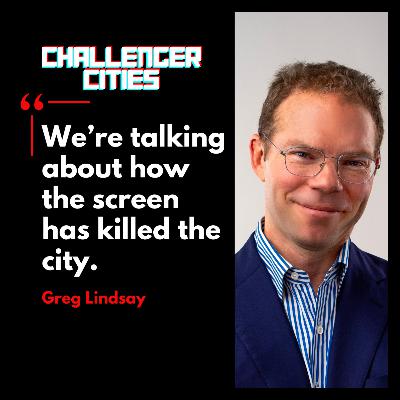
Iain Montgomery and Greg Lindsay explore the intersection of urbanism and technology, discussing how screens and AI are reshaping cities. They delve into the implications of surveillance, the concept of the 15-minute city, and the importance of social equity in urban planning. The discussion also touches on Estonia's digital governance model and the challenges posed by the Saudi urban experiment. Ultimately, they emphasize the need for community engagement and a reimagined approach to urban living.TakeawaysUrbanism is about creating spaces that foster community and connection.Screens and technology have significantly altered urban life and social interactions.AI and augmented reality present both opportunities and challenges for cities.Surveillance technologies can undermine the anonymity that cities provide.The 15-minute city concept aims to create accessible urban environments.Social equity must be considered in urban planning and development.Data privacy is a critical concern in the age of smart cities.Estonia serves as a model for digital governance and public service delivery.The Saudi urban experiment raises questions about the future of city planning.Community engagement is essential for successful urban development.Chapters00:00 Introduction to Urbanism and Podcasting05:34 The Impact of Screens on Urban Life08:19 Augmented Reality and AI in Urban Spaces11:07 The Role of Technology in Urbanism14:01 Urbanist Perspectives on Mobility and Transportation16:33 Cultural Contexts of Urban Living19:28 The Future of Urbanism and Family Living22:23 Challenges of Urban Development and Gentrification25:24 The American Dream and Urban Planning32:50 Technological Forces Shaping Urbanism34:44 The Role of Consultancies in Urban Development37:19 Data Collection and Urbanism Challenges40:10 Public vs. Private Sector in Digital Transformation43:48 Estonia's Digital Governance Model45:44 The Dystopian Nature of New Cities51:12 Housing Crisis: A Conspiracy of Affordability56:21 The 15-Minute City: A Controversial Concept01:00:57 The Future of Urbanism: High Touch vs. High Tech
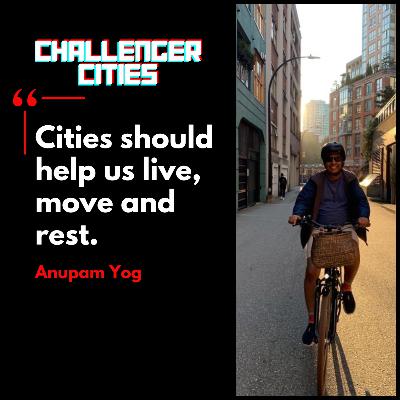
In this conversation, Iain Montgomery and Anupam Yog delve into the concept of urban mindfulness and its implications for city design. They explore how mindfulness can enhance urban living, the importance of community engagement, and the potential of lesser-known cities like Ramsgate as models for transformation. The discussion emphasizes the need for compassion in urban planning and the idea that cities should facilitate a balance between movement and stillness. Anupam shares insights from his experiences in Singapore and other cities, advocating for a new paradigm of urban living that prioritizes well-being and connection with nature.TakeawaysMindfulness can be a transformative approach for urban living.Cities should be designed to foster community and connection.Ramsgate serves as a case study for urban transformation.The concept of 'gentle density' is crucial for sustainable cities.Urban design must prioritize mental and emotional well-being.Seaside towns have unique potential for revitalization.Compassion and patience are essential in urban planning.Next cities are often neighborhoods and towns, not just major urban centers.Cities should enable a balance of live, move, and rest.Engaging with local communities is vital for effective urban design.Chapters00:00 Introduction to Urbanism and Mindfulness07:15 The Intersection of Cities and Mindfulness11:24 Mindfulness in Urban Spaces14:27 The Importance of Slowing Down19:17 Singapore as a Model for Conscious Urbanism24:08 The Future of Urbanism: Balancing Economy and Ecology31:33 Cultural Complexity in Urban Design34:24 Mindful Choices in City Planning38:32 Engaging Communities in Urban Development43:39 The Future of Tourism and Urban Living48:39 Next Cities: Beyond the Usual Suspects56:16 Magic Wand for Urban Transformation58:09 Introduction to World City and Its Initiatives58:35 Engagement and Future Conversations

Comments

Download from Google Play

Download from App Store
 United States