DiscoverChange Signal
Change Signal
Claim Ownership

Change Signal

Author: Michael Bungay Stanier

Subscribed: 54Played: 1,214
Share

Description

If you’re leading change in organizations, this will be your favourite podcast.

Change is harder than ever. Transformation is more complex, unpredictable and overwhelming than it’s ever been. Change Signal cuts through the noise to find the good stuff that works.

Michael Bungay Stanier, author of The Coaching Habit and organizational transformation student for thirty years, talks to the best thinkers, senior leaders, and experienced practitioners in the world of change, to find what works, what doesn’t, and what to try instead. With Change Signal as your guide, you’ll be more efficient and less overwhelmed, and your change projects will more likely succeed.

Change Signal: Where we cut through the blather, the BS, and the noise to find the good stuff that works. 

Sign up for weekly updates at TheChangeSignal.com
48 Episodes
Reverse
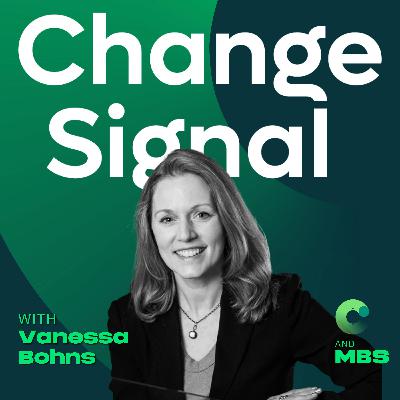
Here are three big questions that arise from this Change Signal conversation with Vanessa Bohns: Are you overlooking the influence you already have? What if social proof beats every logical argument? Could your smallest comments be shaping culture the most? Vanessa Bohns, professor of organizational behavior at Cornell and author of You Have More Influence Than You Think, has spent two decades studying how influence actually works — not in theory, but in the everyday reality of teams, leaders, and organizations. We talk about why influence isn’t instant or obvious — it’s delayed, cumulative, and often invisible — and why showing people what their peers are doing changes behaviour faster than any motivational speech. She also reveals how the tiniest inconsistencies, like a side comment or an eye roll, can quietly undo even the most polished change message. And the practical takeaway? Be present, ask directly (and in person), and make it easy for people to say no, so their yes really means yes. If you’re leading transformation or culture change, this conversation will help you see your influence — and your everyday leadership moments — in a whole new way. Change Signal. Cut through the blather, the BS, and the noise to find the good stuff that works in change. If you’re a transformational leader seeking modern change mastery, you’re in exactly the right place. *** WHEN YOU’RE READY 🎧 A new episode every week (and sometimes two!) The Change Signal newsletter. Short, practical, weekly *** CONNECT 💼Connect on LinkedIn *** SAY THANKS 💜Leave a review on Apple Podcasts 💚Leave a review on Spotify
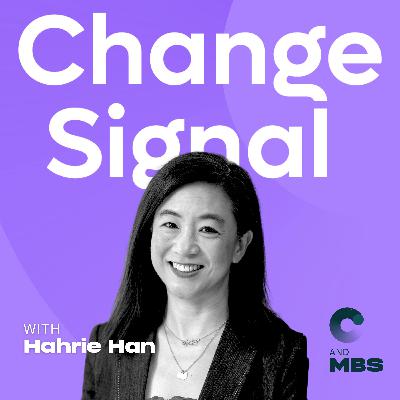
Here are three big insights that emerge from this Change Signal conversation with Hahrie Han: Are you creating value or just convenience?; Does belonging come before belief in your organization?; and Are you building agency or just compliance? Hahrie Han, political scientist at Johns Hopkins University and author of How Organizations Develop Activists and Undivided, has spent her career studying how people build power that lasts. She brings a sharp, human perspective on what drives genuine participation and why small, intentional acts often change systems more than sweeping plans. The conversation explores why engagement depends less on ease and more on meaning, how “radical belonging” can transform even divided communities, and how leaders can use small, safe failures to build confidence and agency across teams. You’ll also hear practical tools for turning involvement into influence — designing scaffolding that helps people learn from risk and own their results. If you’re leading transformation, culture, or change projects in a big organization, this conversation offers fresh, grounded insight into how participation turns into durable power. Change Signal. Cut through the blather, the BS, and the noise to find the good stuff that works in change. This is the podcast for transformational leaders seeking modern change mastery. *** WHEN YOU’RE READY 🎧 A new episode every week (and sometimes two!) The Change Signal newsletter. Short, practical, weekly *** CONNECT 💼Connect on LinkedIn *** SAY THANKS 💜Leave a review on Apple Podcasts 💚Leave a review on Spotify
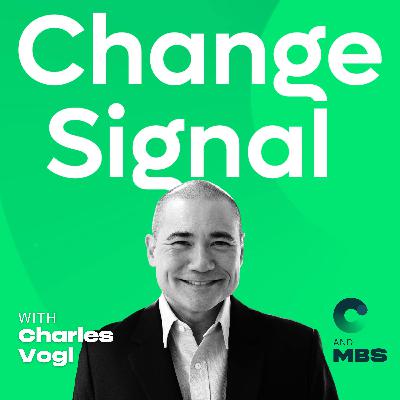
Here are three big insights that emerge from this Change Signal conversation with Charles Vogl:  Leadership maturity means rejecting the “Superman” myth of doing it all alone; Real change requires creating spaces where the rules are rewritten; and Belonging — and transformation — scale through small, steady “campfire” gatherings, not grand events. Charles Vogl, author of The Art of Community, has spent his career helping leaders move from heroic independence to interdependent impact. Drawing from his work with the Peace Corps, the military, and mission-driven organizations, Charles shows how leaders can build communities that hold trust, courage, and connection — without losing focus on performance. The conversation explores how to create “sacred spaces” where vulnerability is safe, why deep community often looks boring on the surface, and how scaling change means working in small units with intention. If you’re leading transformation, culture, or organizational change, this episode offers grounded, practical insight into how belonging becomes your most powerful change strategy — and why it’s time to put the Superman cape away. Change Signal. Cut through the blather, the BS, and the noise to find the good stuff that works in change. This is the podcast for transformational leaders seeking modern change mastery. *** WHEN YOU’RE READY 🎧 A new episode every week (and sometimes two!) The Change Signal newsletter. Short, practical, weekly *** CONNECT 💼Connect on LinkedIn *** SAY THANKS 💜Leave a review on Apple Podcasts 💚Leave a review on Spotify
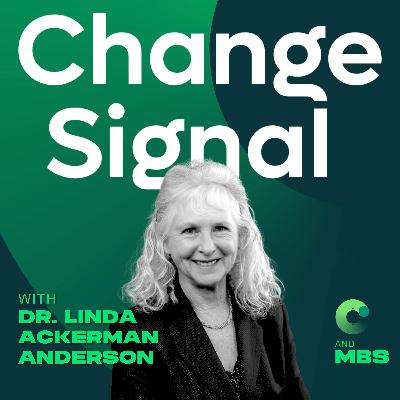
Here are three provocative questions that arise from this Change Signal conversation with Dr. Linda Ackerman Anderson: What if change were treated like finance? Are your leaders modelling the change — or just managing it? And what hidden costs are you paying for “too much change, too fast”? For forty-plus years, Linda has studied what actually derails transformational change. Her insights aren’t about tools or templates — they’re about discipline, mindset, and meaning. She shows why relevance and personal connection drive real engagement, and why most organizations still treat change as an event instead of a strategic function. We dig into the trap of leaders who delegate transformation without transforming themselves, and the illusion that people can “add” change on top of already full plates. It’s an unflinching look at how organizations overload, under-resource, and unintentionally resist the very change they want. If you lead change projects in a large organization, this episode will help you see the patterns behind slow traction and surface-level buy-in — and how to lead change that actually sticks. Change Signal. Where transformational change leaders seek and find modern change wisdom. Cut through the blather, the BS, and the noise to find the good stuff that works. *** WHEN YOU’RE READY 🎧 A new episode every week (and sometimes two!) The Change Signal newsletter. Short, practical, weekly *** CONNECT 💼Connect on LinkedIn *** SAY THANKS 💜Leave a review on Apple Podcasts 💚Leave a review on Spotify
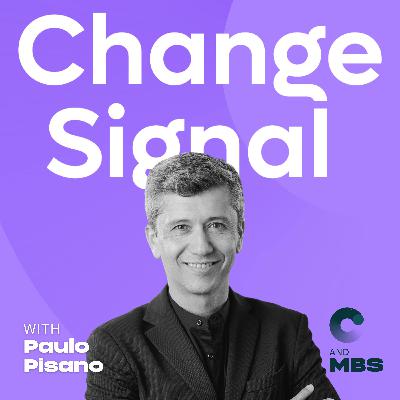
Here are three big questions that arise from this Change Signal conversation with Paulo Pisano: Is complexity masking your real priorities?; What sacrifices are you pretending aren’t happening?; and How are you building protagonist mindsets? Paulo Pisano, CHRO at Booking.com, has spent his career leading transformation in large, global organizations where change is never simple. He brings a grounded perspective on how to simplify without dumbing down, and why leaders need the discipline to stop saying “yes” to everything. The conversation explores why honest change leadership means naming losses and trade-offs instead of painting everything as a win. Paulo shows how acknowledging sacrifice reduces victim mindsets and keeps people engaged in the process. You’ll also hear about the mindset shifts he’s championing — helping people move from victim to protagonist, from knower to learner, and from silos to true one-team collaboration. These are practical, human tools for embedding change in ways that actually last. If you’re navigating transformation or change leadership in a big organization, this conversation offers fresh, pragmatic insights into what really makes change stick. Change Signal. Cut through the blather, the BS, and the noise to find the good stuff that works in change. This is the podcast for transformational leaders seeking modern change mastery. *** WHEN YOU’RE READY 🎧 A new episode every week (and sometimes two!) The Change Signal newsletter. Short, practical, weekly *** CONNECT 💼Connect on LinkedIn *** SAY THANKS 💜Leave a review on Apple Podcasts 💚Leave a review on Spotify
Here are three provocative questions that emerge from this Change Signal conversation with Dave Ulrich: Why do so many leaders know what to do in change but fail to actually do it? If change is always messy and iterative, how can leaders set expectations without killing momentum? What does it really take to lead through paradox instead of choosing sides? Most change leaders treat transformation like a neat plan: set the strategy, communicate the vision, and drive execution. Dave Ulrich, one of the most influential HR and leadership thinkers of the past 30 years, argues that this mindset misses the real challenge. In this conversation, he explains why the knowing–doing gap is the biggest barrier to transformation, how to embrace experimentation and failure as part of the process, and why courage in leadership often means knowing when not to act. The most provocative idea? Great leaders don’t eliminate tension — they learn to navigate the paradoxes between instinct and data, boldness and patience, top-down direction and bottom-up energy. If you’re leading change management or organizational transformation, this conversation offers a practical, human, and honest look at what leadership really requires. Change Signal. Cut through the blather, the BS, and the noise to find the good stuff that works in change. If you’re a transformational leader seeking modern change mastery, you’re in the right place. *** WHEN YOU’RE READY 🎧 A new episode every week (and sometimes two!) The Change Signal newsletter. Short, practical, weekly *** CONNECT 💼Connect on LinkedIn *** SAY THANKS 💜Leave a review on Apple Podcasts 💚Leave a review on Spotify
Here are three provocative questions that emerge from this Change Signal conversation with Kirstin Ferguson: Why does character matter more than competence when it comes to inspiring transformation? Do everyday leadership moments shape culture more than big, staged gestures? What happens when leaders ask better questions instead of always giving answers? Kirstin Ferguson, leadership thinker, board director, and author of Blindspotting: How to See What Others Miss, knows the difference between leaders who drive lasting change and those who unintentionally stall it by leaning too heavily on expertise. In this episode, she explains why character-driven leadership sparks trust, how small daily interactions quietly accumulate into culture, and how curiosity creates the conditions for real transformation. Most provocatively, Kirstin shows why competence on its own isn’t enough — and how the most effective leaders unlock momentum by asking better questions. If you’re leading change management or organizational transformation, this conversation offers a practical, human, and transformative approach to leadership. Change Signal. Cut through the blather, the BS, and the noise to find the good stuff that works in change. If you’re a transformational leader seeking modern change mastery, you’re in the right place. *** WHEN YOU’RE READY 🎧 A new episode every week (and sometimes two!) The Change Signal newsletter. Short, practical, weekly *** CONNECT 💼Connect on LinkedIn *** SAY THANKS 💜Leave a review on Apple Podcasts 💚Leave a review on Spotify
Dan Pontefract’s three big insights on modern change mastery and leading meaningful organizational transformation: Managing up is a critical part of change leadership, and there are smarter ways to do it; Culture isn’t “soft” — it’s the real work of change and can’t be delegated away; and Purpose, balance, and generational shifts are forces shaping how transformation actually succeeds. Dan, formerly CLO at Telus and SAP, didn’t just improve engagement — he shifted it dramatically and built transformation capability that lasted. Today, as an author and advisor, he’s helping senior leaders connect strategy, culture, and humanity in ways that stick. If you’re steering change management or organizational transformation, this conversation speaks directly to your challenges. You’ll hear practical strategies for navigating executives who quietly resist, cultures that talk engagement but don’t live it, and projects that risk burning people out. This is about change leadership that’s grounded, human, and effective. 👉RESOURCES:Dan’s website: https://www.danpontefract.comLearn more about his books: https://geni.us/danpontefract Change Signal. Cut through the blather, the BS, and the noise to find the good stuff that works in change. If you’re a transformational leader seeking modern change mastery, you’re in the right place. *** WHEN YOU’RE READY 🎧 A new episode every week (and sometimes two!) The Change Signal newsletter. Short, practical, weekly *** CONNECT 💼Connect on LinkedIn *** SAY THANKS 💜Leave a review on Apple Podcasts 💚Leave a review on Spotify
Here are three provocative questions that emerge from this Change Signal conversation with Kate Lye: Why do executive teams excel at functional expertise but falter at systems thinking? Can CEOs transform their organizations without first transforming themselves? What happens if change leaders never secure permission to call out executive sabotage? For decades, Kate Lye has watched change programs fade into irrelevance, and she knows why. As a performance partner to CEOs, she’s seen how even the sharpest executives unintentionally sabotage transformation by clinging to their comfort zones. The real obstacle isn’t employee resistance. It’s leaders who mistake cheerleading for leadership, or strategic talk for actual work. Lye explains how to spot the moment when a change effort quietly slips from priority one to priority nowhere. She argues that contracting conversations with CEOs — where you establish the right to challenge and hold them accountable — aren’t optional. They’re essential. Most provocatively, she points out that while executives thrive in functional expertise, they struggle with systems thinking. That’s why they so often hand off the heavy lifting of change to others while reserving for themselves the figurehead role. If you’re tired of watching transformation initiatives stall, Kate’s insights will shift how you see executive engagement. This isn’t about winning buy-in — it’s about getting leaders to own the role they play in whether change succeeds or fails.  Change Signal. Cut through the blather, the BS, and the noise to find the good stuff that works in change. If you’re a transformational leader seeking modern change mastery, you’re in the right place. *** WHEN YOU’RE READY 🎧 A new episode every week (and sometimes two!) The Change Signal newsletter. Short, practical, weekly *** CONNECT 💼Connect on LinkedIn *** SAY THANKS 💜Leave a review on Apple Podcasts 💚Leave a review on Spotify
Here are three provocative questions that arise from this Change Signal conversation with Todd Kashdan:  Are you cooperating too much for change to succeed?  What personal costs are you willing to pay for principled rebellion?  Why do people hide their real beliefs just to fit in? My friend Todd Kashdan, psychology professor and author of The Art of Insubordination, brings some unexpected wisdom about what it really takes to lead transformational change in organizations. Todd argues that early cooperation actually destroys the cognitive diversity you need for breakthrough solutions. Instead of seeking harmony, change leaders should encourage criticality, independence, and productive conflict. But here’s the trade-off nobody talks about: effective insubordination means accepting real personal costs — hits to your wellbeing, relationships, and peace of mind in service of meaning and purpose. The most powerful insight? Change leaders can amplify unheard voices by leveraging their organization’s “socially attractive” people — and by separating ideas from their originators to overcome bias. If you’re tired of change initiatives that revert to the mean, this conversation offers a fresh perspective on principled rebellion. Todd shows why being a transformational leader sometimes means being the rebel your organization needs, even when it’s uncomfortable. Change Signal. Cut through the blather, the BS, and the noise to find the good stuff that works in change. This is the podcast for transformational leaders seeking modern change mastery. *** WHEN YOU’RE READY 🎧 A new episode every week (and sometimes two!) The Change Signal newsletter. Short, practical, weekly *** CONNECT 💼Connect on LinkedIn *** SAY THANKS 💜Leave a review on Apple Podcasts 💚Leave a review on Spotify
Here are three provocative questions that emerge from this Change Signal conversation with Michael Norton: Can we ever escape ritual? Why is ambiguous loss harder to process than clear grief? How can we honour the past while creating a new identity? Most change leaders assume ritual is all incense and corporate retreats. Harvard Business School professor Michael Norton sees it differently. His research shows that the most powerful organizational rituals aren’t the big, top-down ones imposed by leadership. They’re the small, everyday practices teams invent for themselves — like who brings lunch on which day, or clicking emojis at the start of Zoom calls. Norton also introduces the idea of ambiguous loss: the grief we feel when something hasn’t clearly ended but has fundamentally changed. Think of keeping old business cards from a company that no longer exists. This kind of loss is everywhere during organizational change — yet it’s rarely acknowledged. The answer isn’t to erase all the old or dictate the new. Like blended families inventing fresh holiday traditions, successful change preserves meaningful parts of the past while creating new rituals for the future. If you’re leading transformation and wondering why people resist seemingly small changes, this conversation will reshape how you think about the human side of organizational change. Change Signal. Cut through the blather, the BS, and the noise to find the good stuff that works in change. If you’re a transformational leader, this is where you seek and find modern change mastery. *** WHEN YOU’RE READY 🎧 A new episode every week (and sometimes two!) The Change Signal newsletter. Short, practical, weekly *** CONNECT 💼Connect on LinkedIn *** SAY THANKS 💜Leave a review on Apple Podcasts 💚Leave a review on Spotify
Here are three big questions that Loran Nordgren asks in the question for modern change mastery: Are you accidentally creating resistance by making your ideas sound too revolutionary? What if the anxieties you're avoiding are exactly what you need to address? Why does pushing harder on change often make things worse? Loran Nordgren, a behavioural theory professor at Northwestern's Kellogg School, flips change management on its head. Instead of focusing on making ideas more appealing, he argues we should be removing psychological friction. His "fuel versus friction" framework reveals why breakthrough changes often fail. The issue isn't that people don't see the value — it's that invisible barriers are holding good ideas back. You'll discover why framing change as "evolution" works better than "revolution." Loran shares practical tactics like the South by Southwest email templates that doubled attendance without flashy marketing. Most provocatively, he suggests that many of our change intuitions don't just fail — they actually amplify resistance. This conversation challenges how you think about urgency, buy-in, and the role of anxiety in organizational change. If you're tired of change initiatives stalling despite obvious benefits, this episode offers a different lens for diagnosing what's really going wrong. Change Signal. Cut through the blather, the BS, and the noise to find the good stuff that works in change, transformation, and growth. *** WHEN YOU’RE READY 🎧 A new episode every week (and sometimes two!) The Change Signal newsletter. Short, practical, weekly *** CONNECT 💼Connect on LinkedIn *** SAY THANKS 💜Leave a review on Apple Podcasts 💚Leave a review on Spotify
Here’s what Larissa Conte asks us about modern change mastery: Is “power” something that’s learned and usable? What might happen if we focused on possibilities rather than problems? How can you expand your ability to handle more success “wattage”? My guest Larissa Conte calls herself a "power alchemist" — which will either intrigue you or make you roll your eyes. Either way, stick with this conversation. Larissa argues that "power literacy" is the skeleton key that unlocks every other leadership skill. She distinguishes between "shadow power" (the stuff that creates headwinds and dysfunction) and "power that serves the whole" (the energy that creates flow and momentum). Here's what's provocative: she suggests that as change leaders, we're often unconsciously sabotaging our own efforts. We resist not just threats to our ego, but also being truly seen and acknowledged for our capabilities. The practical insight? If you want transformation to stick, you need to give at least 51% of your focus to what you want to create, not what you're trying to fix. This isn't your typical change management conversation. Larissa brings embodied wisdom to organizational transformation, helping you recognize when you're creating headwinds versus flow in your change initiatives. Change Signal. Cut through the blather, the BS, and the noise to find the good stuff that works in change. If you’re a transformational leader seeking modern change mastery, you’re in exactly the right place. WHEN YOU’RE READY 🎧 A new episode every week (and sometimes two!) The Change Signal newsletter. Short, practical, weekly *** CONNECT 💼Connect on LinkedIn *** SAY THANKS 💜Leave a review on Apple Podcasts 💚Leave a review on Spotify
Here are three big questions that arise from this Change Signal conversation with Chris Taylor:  Are your high-stakes moments sabotaging skill development? Why practice once when you could daily? What if home practice beats workplace training? My friend Chris Taylor, founder of Actionable, has spent eighteen years obsessing over what Bob Sutton calls the "knowing-doing gap." Why do people get inspired in training rooms but then struggle to change their actual behaviour? Chris shares a simple but profound matrix that reveals why so much workplace development creates "brittle commitments" that shatter under pressure. The problem isn't the content — it's that we're asking people to try new behaviours only when the stakes are highest and stress hormones are flooding their systems. His data from 7,000 programs shows something counterintuitive: the secret isn't better training content, it's turning situational commitments into foundational daily practice. Think of it like sports—professionals don't practice when they're playing. The most powerful insight? When people practice workplace skills in their personal relationships, success rates double again because the meaning deepens and opportunities multiply. If you're leading change initiatives, this conversation will shift how you think about embedding new behaviours in your organization. Change Signal. Where transformational change leaders seek and find modern change wisdom. Cut through the blather, the BS, and the noise to find the good stuff that works. *** WHEN YOU’RE READY 🎧 A new episode every week (and sometimes two!) The Change Signal newsletter. Short, practical, weekly *** CONNECT 💼Connect on LinkedIn *** SAY THANKS 💜Leave a review on Apple Podcasts 💚Leave a review on Spotify
Here are three big questions that arise from this Change Signal conversation with Scott D. Anthony:  What's systematically killing curiosity in your organization? Can you hold your team in that sweet spot between comfort and chaos? And Are your excuses actually avoiding the real work of transformation? Scott D. Anthony, Clinical Professor of Business Administration at Tuck and innovation strategist, challenges how we think about change leadership in large organizations. Most companies lose their curiosity, focusing only on whether spreadsheet numbers add up — a pretty boring question. The real work is building adaptive capacity through deliberate discomfort. You need people uncomfortable enough to learn but not so uncomfortable that they shut down or find scapegoats. Scott shares the remarkable DBS Bank transformation story, from Singapore's lowest-ranked bank to globally recognized innovator. Their secret weapon? The Gandalf scholarship program that generated 30x returns on learning investments. And here's where it gets interesting: successful leaders develop paradoxical thinking. They perceive danger while staying optimistic, allocate resources while avoiding rigidity. Here’s where he gets helpfully provocative: When leaders say, "I wish I could, but my shareholders won't let me," that's just avoiding hard work. Every organization claims its situation is uniquely difficult — it's not. Change management isn't about finding better excuses. It's about building curiosity, managing productive discomfort, and developing the mental agility to hold competing truths. Change Signal. For transformational leaders seeking modern change mastery. Cut through the blather, the BS, and the noise to find the good stuff that works. *** WHEN YOU’RE READY 🎧 A new episode every week (and sometimes two!) The Change Signal newsletter. Short, practical, weekly *** CONNECT 💼Connect on LinkedIn *** SAY THANKS 💜Leave a review on Apple Podcasts 💚Leave a review on Spotify
Here are three big questions that arise from this Change Signal conversation with Lisa Reynolds: Are you actually enabling resistance? When did you last grieve something? How many individual changes are you actually managing? Lisa Reynolds leads change management at Christus Health, where her small team punches way above their weight across a massive healthcare system. She's learned that change work is fundamentally about relationships, not processes. Her approach flips conventional wisdom. Instead of treating resistance as the enemy, she sees it as valuable feedback that can be mitigated by 50% through proactive people strategies. Rather than rolling out enterprise-wide initiatives, she focuses on the individual human experience of walking through change. The conversation gets delightfully practical. Lisa shares everything from "potty training" (posting flyers in bathroom stalls for busy nurses) to the symbolic power of cutting down dead trees on day one of acquisitions. She reveals why face-to-face communication trumps system emails every time. But it's her philosophy that shines brightest: change is humanistic at its core. You can't bypass the relationship-building work, and you can't skip the grief process when people leave familiar systems behind. This is change management stripped of corporate speak and grounded in what actually works with real humans. Change Signal. Where ambitious leaders seek and find modern change mastery. Cut through the blather, the BS, and the noise to find the good stuff that works. WHEN YOU’RE READY 🎧 A new episode every week (and sometimes two!) The Change Signal newsletter. Short, practical, weekly *** CONNECT 💼Connect on LinkedIn *** SAY THANKS 💜Leave a review on Apple Podcasts 💚Leave a review on Spotify
Julie Dirksen’s three key insights about modern change mastery: most training fails because it ignores immediate relevance; organizational change temporarily destroys people's competence and professional identity; corporate learning only addresses logic while ignoring the emotional brain that actually drives decisions. Julie Dirksen joins me to dissect why most corporate training feels like "high school, but worse." She's spent years figuring out how to design learning that actually changes behavior, not just fills heads with information. Her printer repair experiment reveals why engagement isn't about jazzing up content—it's about timing and immediate application. When your printer's broken and you need it fixed, suddenly that boring YouTube video becomes fascinating. But here's what really stuck with me: change doesn't just alter what people do, it shatters who they are. Take someone who's unconsciously competent at their job and force them to learn new processes, and you've just broken their professional identity. Julie introduces the elephant-rider metaphor to explain why purely rational training approaches fail. Your logical brain might understand why change is necessary, but your emotional, experiential brain—the elephant—often has other plans. If you're leading transformation efforts and wondering why smart people resist obviously good ideas, this conversation will shift how you think about supporting behavior change in organizations. Change Signal. Cut through the blather, the BS, and the noise to find the good stuff that works in change. If you’re a transformational leader seeking modern change mastery, you’re in exactly the right place. *** WHEN YOU’RE READY 🎧 A new episode every week (and sometimes two!) The Change Signal newsletter. Short, practical, weekly *** CONNECT 💼Connect on LinkedIn *** SAY THANKS 💜Leave a review on Apple Podcasts 💚Leave a review on Spotify
Here are three big questions that arise from this Change Signal conversation with Dan Cable:  Are you leading with fear-based management?; How much "freedom within the frame" are you offering? and How do you use dopamine to best fuel your change efforts? Dan Cable, Professor of Organizational Behaviour at London Business School, argues that as the world moves faster, leaders can no longer afford to use fear as the primary tool to drive change. The conversation explores how neuroscience reveals what actually works in transformation. Cable introduces his "seeking system" concept — a part of our brain that's naturally wired to love learning and minimize future surprise. You'll discover why organizations systematically beat curiosity out of people, even though curiosity is exactly what they need for change. Cable shares practical examples, including a fascinating KLM social media experiment that cost just €10,000 but generated over a million visits. The discussion challenges conventional wisdom about control, compliance, and execution. Instead of trying to turn humans into robots, Cable suggests we embrace the messy, unpredictable, emotional reality of how people actually thrive during change. Change Signal. Where transformational leaders find modern change mastery. Cut through the blather, the BS, and the noise to find the good stuff that works. *** WHEN YOU’RE READY 🎧 A new episode every week (and sometimes two!) The Change Signal newsletter. Short, practical, weekly *** CONNECT 💼Connect on LinkedIn *** SAY THANKS 💜Leave a review on Apple Podcasts 💚Leave a review on Spotify
A CEO, a counsellor, and a consultant share a key question each about change:  How do you really make things safe for people? Could powerlessness actually, ironically, be a superpower? What’s the difference between guardrails and control layers? What if everything you know about leading change is backwards? Garry Ridge turned WD-40 into a global phenomenon by doing something that sounds like career suicide — actively encouraging people to share their mistakes. Ian Cron watched a wildly successful private equity executive hit rock bottom and say five words that changed everything: "I'm out of ammo." That moment revealed why admitting powerlessness might be the most powerful thing a leader can do. Mark Smith faced a massive change initiative spiralling toward chaos with 280+ people across multiple programs. Instead of adding more governance, he did the opposite — gave teams complete autonomy within clear boundaries. If change has ever felt like you're pushing water uphill, you'll find something here that flips the script. These aren't your typical change management playbooks. They're counterintuitive approaches from a CEO, a counsellor, and a consultant who've learned that sometimes the path to transformation runs directly through what feels like failure. The insights might make you uncomfortable. That's probably a good sign. Change Signal. Where transformational change leaders seek modern change wisdom. Cut through the blather, the BS, and the noise to find the good stuff that works. *** WHEN YOU’RE READY 🎧 A new episode every week (and sometimes two!) The Change Signal newsletter. Short, practical, weekly *** CONNECT 💼Connect on LinkedIn *** SAY THANKS 💜Leave a review on Apple Podcasts 💚Leave a review on Spotify
The three key insights from this episode: change is orienteering through unknown territory, not following a GPS route; organizations are addicted to efficiency when they desperately need experimentation; and the best experiments are designed to fail safely, not succeed predictably. I'm diving solo into why small experiments might be the only sane approach to change in these chaotic times. After 30 years in this game, I've learned that "change management" is mostly a delusion — you can't manage your way through the unknown. Most organizations want Google Maps for transformation, but what we're actually facing is orienteering through a misty valley with no clear path. Your company is probably designed to exploit what it knows, not explore what it doesn't, which creates a fundamental tension for anyone trying to lead change. I'll walk you through what makes a good experiment, share some strategies for convincing skeptical stakeholders, and explain why you might need to run "two books" — one official, one real. Plus, why kindergarteners consistently outperform MBA students at innovation challenges. If you're tired of change plans that feel more like wishful thinking than actual strategy, this episode offers a different way forward. Change Signal. Cut through the blather, the BS, and the noise to find the good stuff that works in change and transformation. *** WHEN YOU’RE READY 🎧 A new episode every week (and sometimes two!) The Change Signal newsletter. Short, practical, weekly *** CONNECT 💼Connect on LinkedIn *** SAY THANKS 💜Leave a review on Apple Podcasts 💚Leave a review on Spotify
loading
Comments